 Скачать презентацию Manchester s unplanned urbanisation was brought on by a
Manchester.pptx
- Количество слайдов: 11



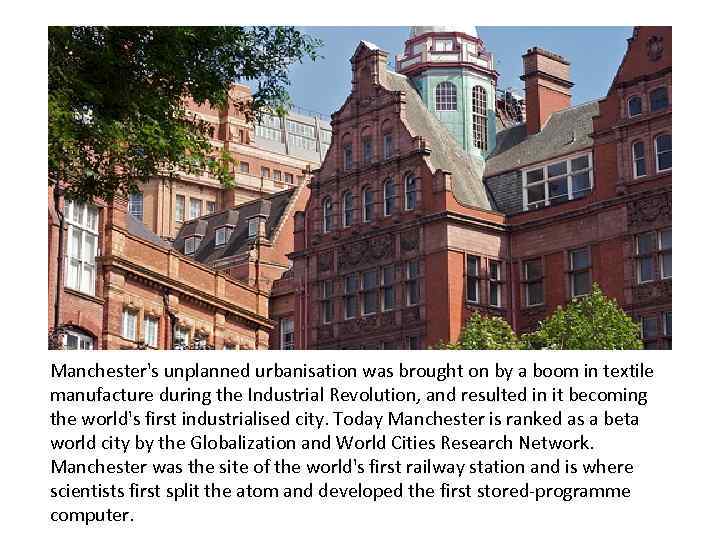
Manchester's unplanned urbanisation was brought on by a boom in textile manufacture during the Industrial Revolution, and resulted in it becoming the world's first industrialised city. Today Manchester is ranked as a beta world city by the Globalization and World Cities Research Network. Manchester was the site of the world's first railway station and is where scientists first split the atom and developed the first stored-programme computer.
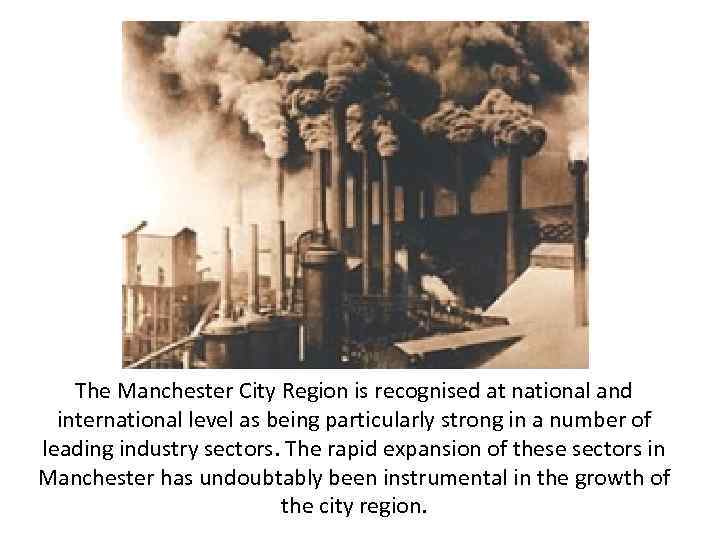
The Manchester City Region is recognised at national and international level as being particularly strong in a number of leading industry sectors. The rapid expansion of these sectors in Manchester has undoubtably been instrumental in the growth of the city region.
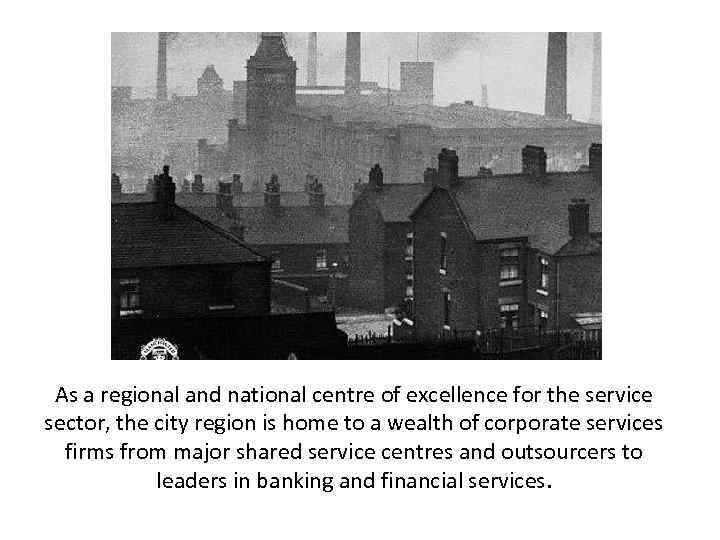
As a regional and national centre of excellence for the service sector, the city region is home to a wealth of corporate services firms from major shared service centres and outsourcers to leaders in banking and financial services.
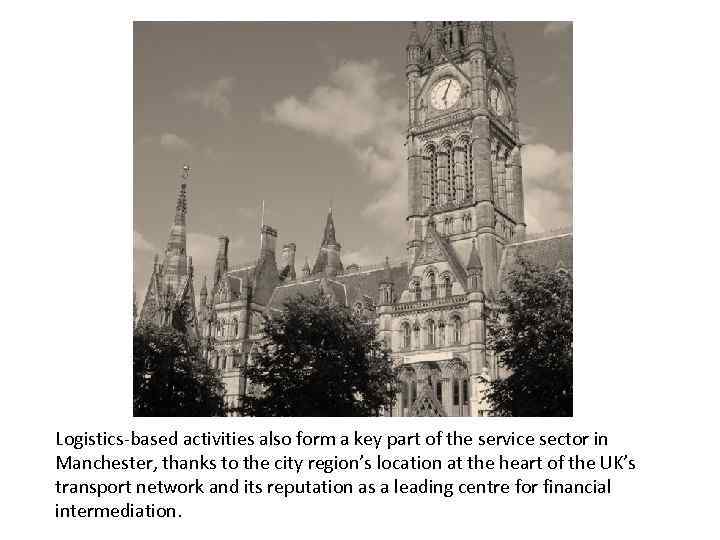
Logistics-based activities also form a key part of the service sector in Manchester, thanks to the city region’s location at the heart of the UK’s transport network and its reputation as a leading centre for financial intermediation.
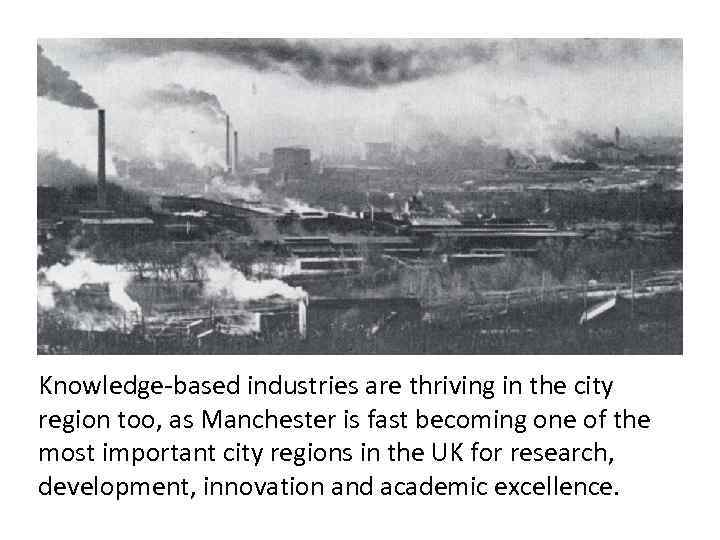
Knowledge-based industries are thriving in the city region too, as Manchester is fast becoming one of the most important city regions in the UK for research, development, innovation and academic excellence.
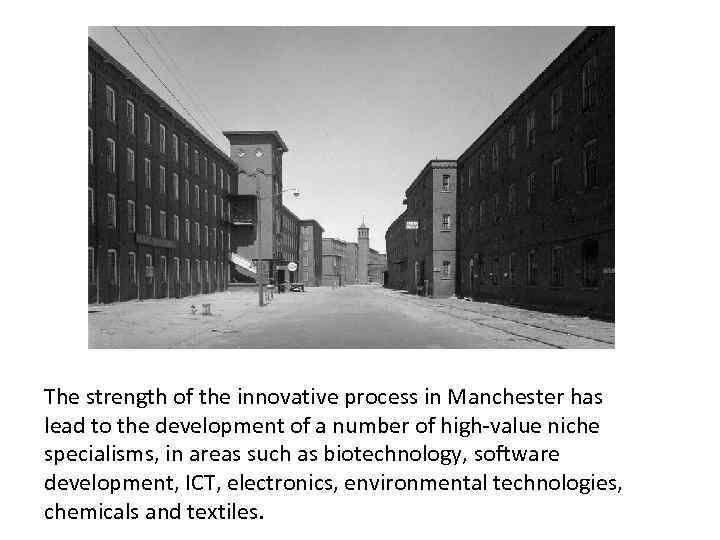
The strength of the innovative process in Manchester has lead to the development of a number of high-value niche specialisms, in areas such as biotechnology, software development, ICT, electronics, environmental technologies, chemicals and textiles.
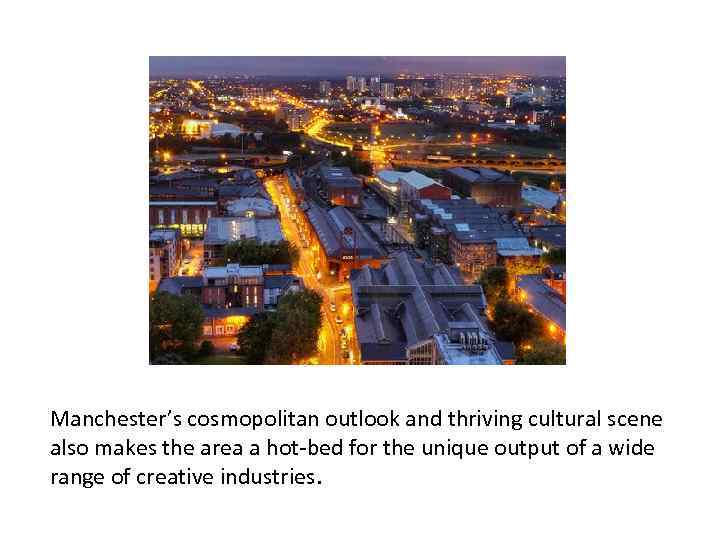
Manchester’s cosmopolitan outlook and thriving cultural scene also makes the area a hot-bed for the unique output of a wide range of creative industries.
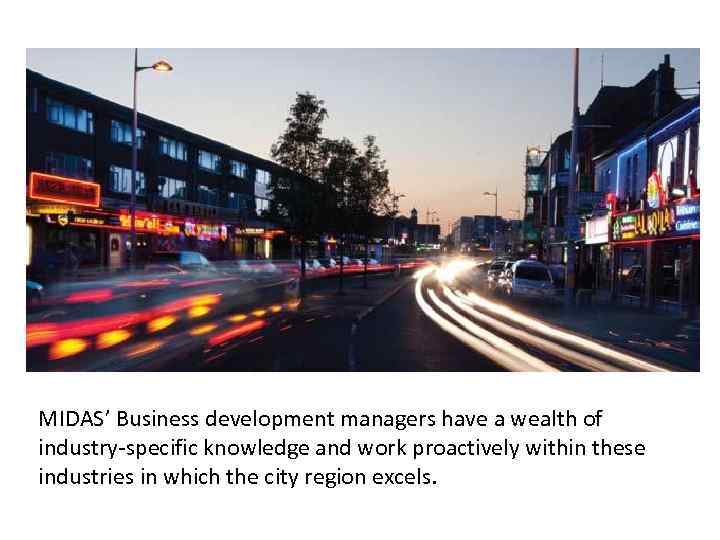
MIDAS’ Business development managers have a wealth of industry-specific knowledge and work proactively within these industries in which the city region excels.
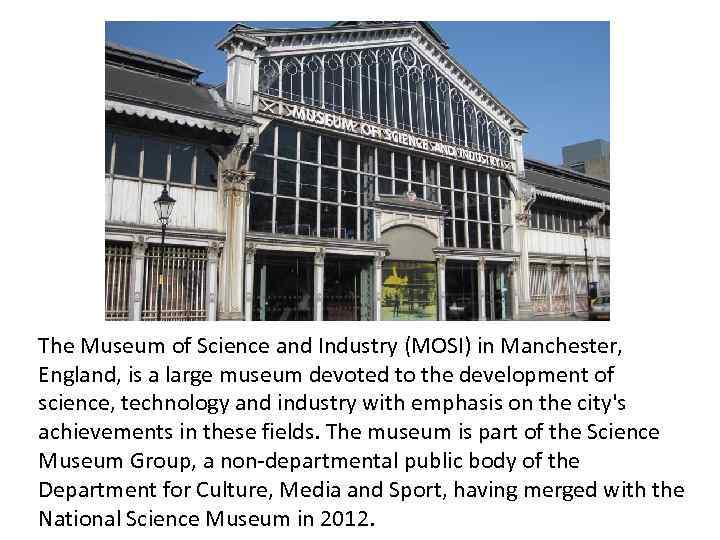
The Museum of Science and Industry (MOSI) in Manchester, England, is a large museum devoted to the development of science, technology and industry with emphasis on the city's achievements in these fields. The museum is part of the Science Museum Group, a non-departmental public body of the Department for Culture, Media and Sport, having merged with the National Science Museum in 2012.
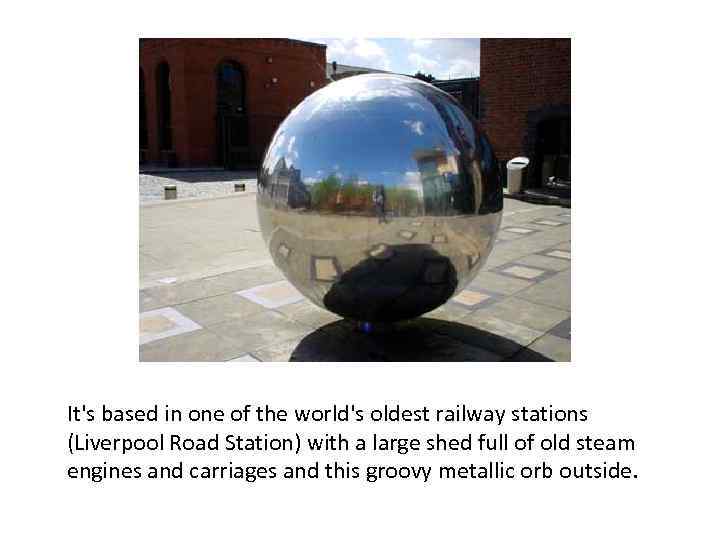
It's based in one of the world's oldest railway stations (Liverpool Road Station) with a large shed full of old steam engines and carriages and this groovy metallic orb outside.
Скачать презентацию Manchester s unplanned urbanisation was brought on by a
Manchester.pptx