 Скачать презентацию Managing your money Budgeting Savings Strategies Hao
929f30e17b425a8584a14668e1fcbc00.ppt
- Количество слайдов: 22



Managing your money Budgeting & Savings Strategies Hao Hoang, Wells Fargo Financial Advisor Xiomara Arroyo, Wells Fargo Program Manager January 12 th, 2017 © 2015 Wells Fargo Bank, N. A. All rights reserved. Member FDIC.
Workshop goals 1. Learn specific steps you can take to help you develop a financial plan 2. Discover tools and tips you can use for money management “By failing to prepare, you are preparing to fail. ” - Benjamin Franklin 3. Set financial goals and make a commitment to implement at least one idea you hear today 1
Take an inventory • How is your overall financial health? • What are your spending habits? • What are your savings habits? 2
Determine your net worth • Create a personal balance sheet • “Assets” are what you own • “Liabilities” are what you owe • Your “Net Worth” is your assets minus your liabilities 3
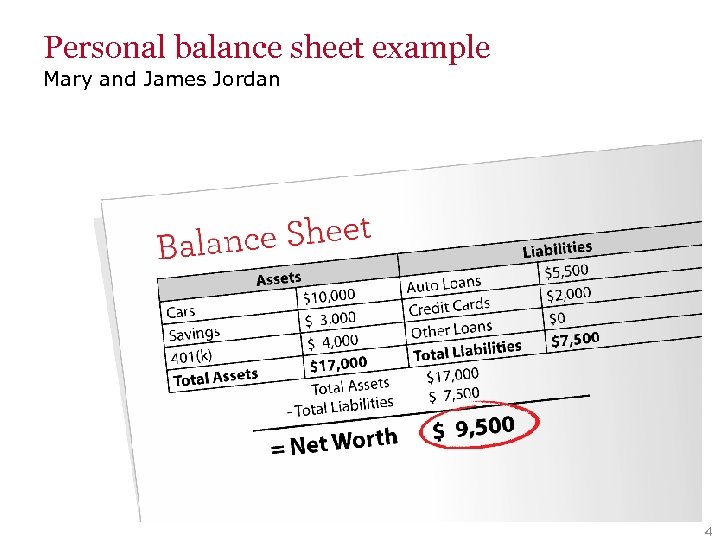
Personal balance sheet example Mary and James Jordan 4
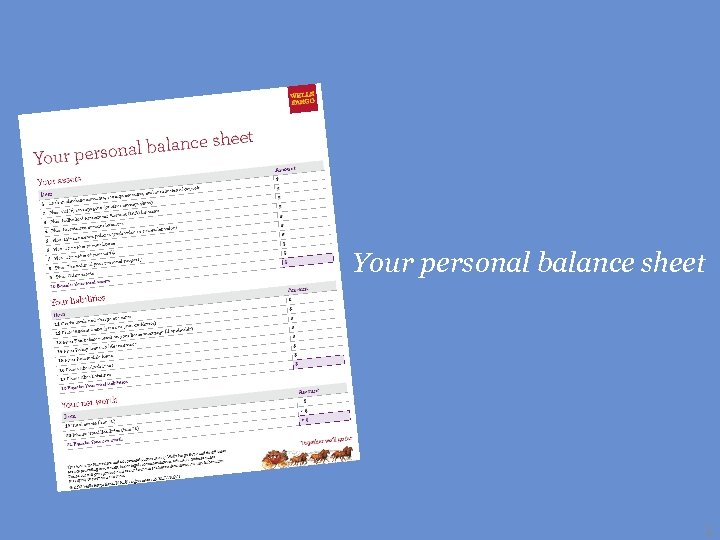
Your personal balance sheet 5
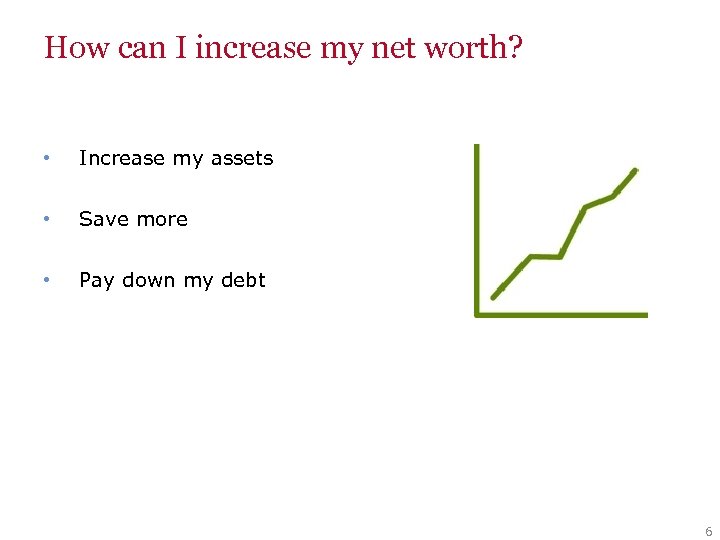
How can I increase my net worth? • Increase my assets • Save more • Pay down my debt 6
Set financial goals • Build an emergency fund • Save for a vacation • Save for a child’s college education • Save for a home purchase • _____________________ 7
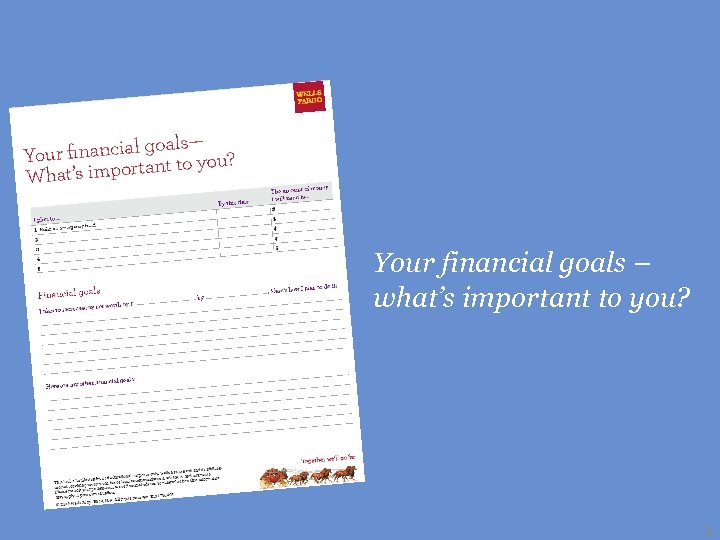
Your financial goals – what’s important to you? 8
Money saving tips 1. Obtain buy-in from family 2. Focus on the number of dollars you need to save per day 3. Look at lower-cost alternatives 4. Shop around for the best interest rate 5. Pay yourself first 6. Take advantage of your company’s payroll deductions, if possible 7. Save bonus income 8. Save coupon money 9. Collect loose change 10. Review cell phone costs 11. Save lunch money 12. Save money from sales 13. Have a “Buy Nothing” week 9
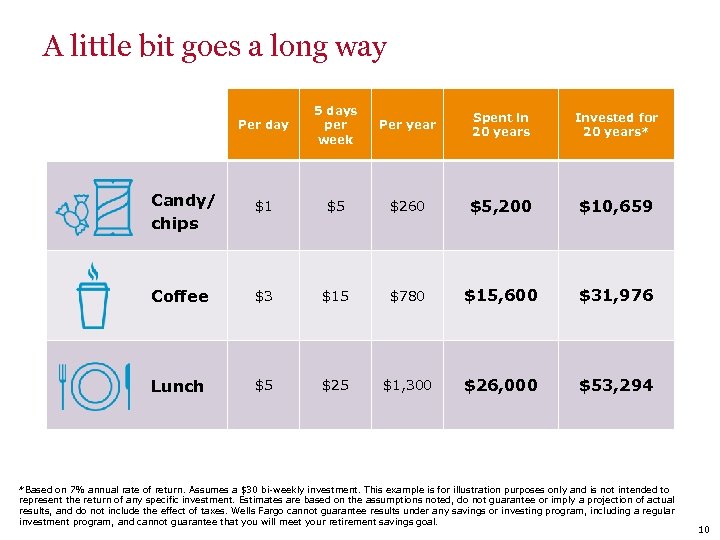
A little bit goes a long way Per day 5 days per week Per year Spent in 20 years Invested for 20 years* Candy/ chips $1 $5 $260 $5, 200 $10, 659 Coffee $3 $15 $780 $15, 600 $31, 976 Lunch $5 $25 $1, 300 $26, 000 $53, 294 *Based on 7% annual rate of return. Assumes a $30 bi-weekly investment. This example is for illustration purposes only and is not intended to represent the return of any specific investment. Estimates are based on the assumptions noted, do not guarantee or imply a projection of actual results, and do not include the effect of taxes. Wells Fargo cannot guarantee results under any savings or investing program, including a regular investment program, and cannot guarantee that you will meet your retirement savings goal. 10
Maximizing Your Savings Hao Hoang, Financial Advisor Hao Hoang is a Financial Advisor for Wells Fargo Advisors, LLC. He started his banking career in 2001 before joining Wells Fargo Bank in 2008. His expertise spans the areas of investment management, estate planning, and managing 401(k) retirement plans. Hao uses an integrated, holistic approach that allows him to develop and implement strategies to address his client’s needs. He proudly carries a Bachelor’s degree in Finance, Associate of Arts in Economics, and is currently working towards his Certified Financial Planner designation at the University of California, Irvine The Power of Compounding and Maximizing your Savings 11
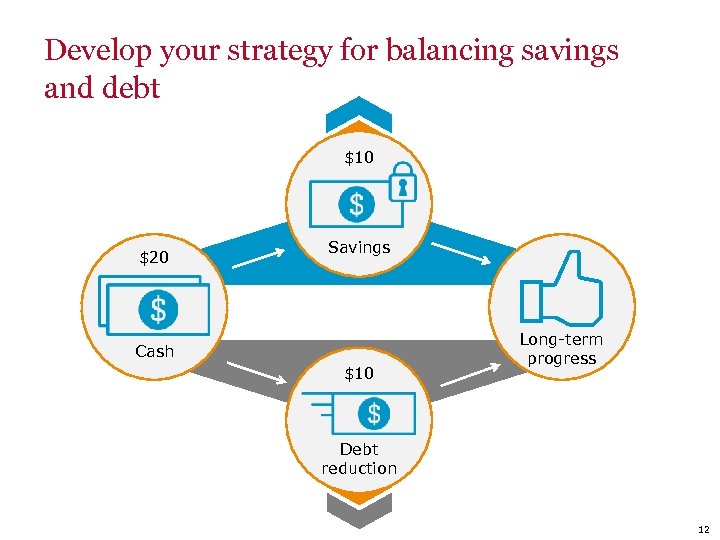
Develop your strategy for balancing savings and debt $10 $20 Savings Cash $10 Long-term progress Debt reduction 12
Ten leading causes of overspending 1. The “latest and greatest” syndrome 2. Using credit instead of cash 3. Eating out 4. Borrowing from the future 5. Keeping up with the Joneses 6. Impulse buying 7. Money “burning a hole in your pocket” 8. Not knowing how much you have to spend 9. Rationalizing spending = “I need it because. . . ” 10. Not knowing what you are spending your money on 13
What is the purpose of a spending plan? Spending plans help you to: • Reach your goals • Stay focused • Show where you need additional help • Include family members in money management 14
Creating a spending plan Spending plans help you to: 1. Track your spending 2. Itemize your income and expenses 3. Total and compare the income and expense columns to create your spending plan 15
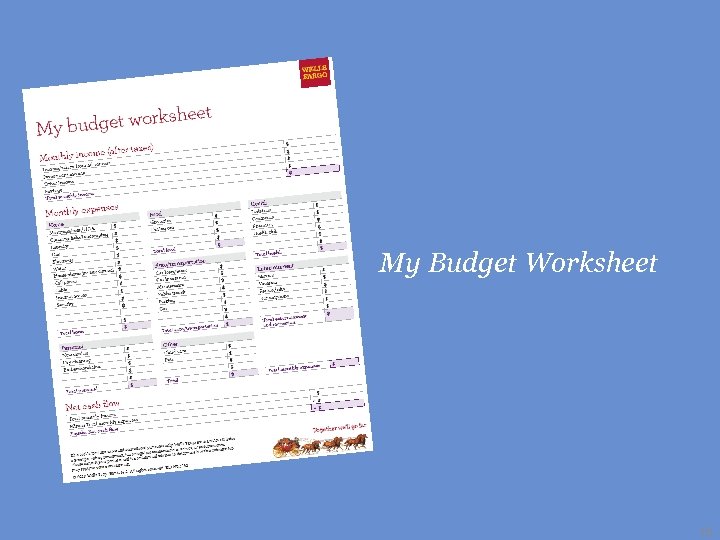
My Budget Worksheet 16
Spending plan tips • Keep it simple—don’t get too detailed with your spending plan • Set aside money each pay period to cover large expenses that are not monthly (insurance bills, car repairs, holiday gifts, etc. ) • Before you make a purchase ask yourself: • Do I really need it? • What would happen if I didn’t buy it right now? • Can I meet this need less expensively? • Limit your installment debts (car loans, credit card bills, other loans) to 10 -20% of your monthly spending plan 1 • Review your bank and credit card statements to monitor where your money is going 1 Source: Hands on Banking ® financial education website 17
Monthly spending plan review Review your spending plan monthly and ask yourself: • Am I over or under my spending target? • Are my variable expenses in line? • What are my “budget busters”? • Are any expenses out of control? • Will I make my planned savings goal by year’s end? 18
In summary Getting ahead financially requires a long-term effort. • Consider today: • Where do I stand right now? • Where do I want to be one year from today? • Where do I want to be five years from today? • Reevaluate one year from today: • Calculate your net worth again and track it from year to year • Create a new balance sheet • Set goals and develop a new spending plan for the next twelve months Remember, if your net worth is growing, you are getting ahead! 19
Moving forward • What did you learn today? • What will you take away from this seminar and put to use in your financial life? (Don’t forget to write it down) • Questions? 20
Thank you for participating in today’s Wells Fargo At Work workshop. Please complete our evaluation form to tell us what you thought of our presentation and how we can make it better. 21
Скачать презентацию Managing your money Budgeting Savings Strategies Hao
929f30e17b425a8584a14668e1fcbc00.ppt