 Скачать презентацию Managing Water in the Shared Jordan River Basin
ccd70d75cb586055f45eb462e71a75de.ppt
- Количество слайдов: 31



Managing Water in the Shared Jordan River Basin Hydro. Economics, Engineering, Environment, Drought & Politics David E. Rosenberg NRM 1
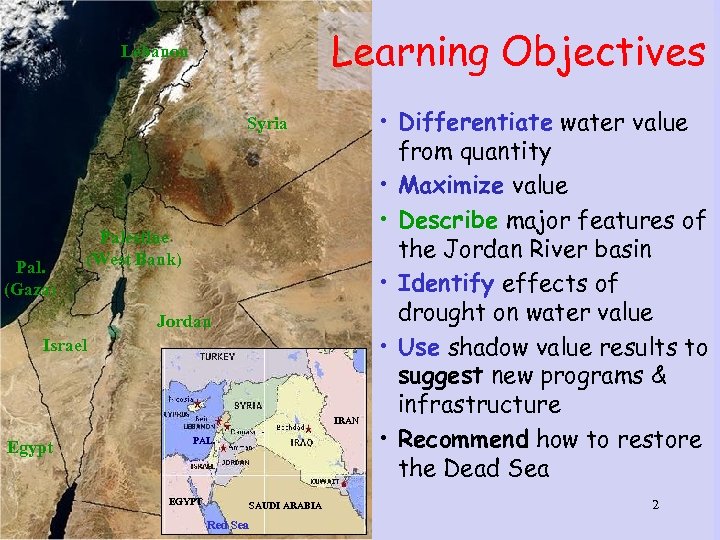
Learning Objectives Lebanon Syria Pal. (Gaza) Palestine (West Bank) Jordan Israel IRAN Egypt PAL. EGYPT SAUDI ARABIA Red Sea • Differentiate water value from quantity • Maximize value • Describe major features of the Jordan River basin • Identify effects of drought on water value • Use shadow value results to suggest new programs & infrastructure • Recommend how to restore the Dead Sea 2
Economic Principles • “Water is a scarce resource. Scarce resources have value. ” Gideon Fishelson • Desalinating seawater (plus conveying from the seacoast) puts an upper bound on the value of water in dispute • Think about water values not quantities • Maximize this value 3
Maximizing value • Water allocation decisions – Amount, where, when, and to which users • Benefits from use – Users -- agricultural, urban, industrial, etc. – Location and time • Costs – Extract, treat, and convey to point of use – Treat, reuse, and convey wastewater • Limitations on allocations – Physical -- availability, infrastructure, losses, etc. – Policy – min. requirements, set-asides, pricing, etc. 4
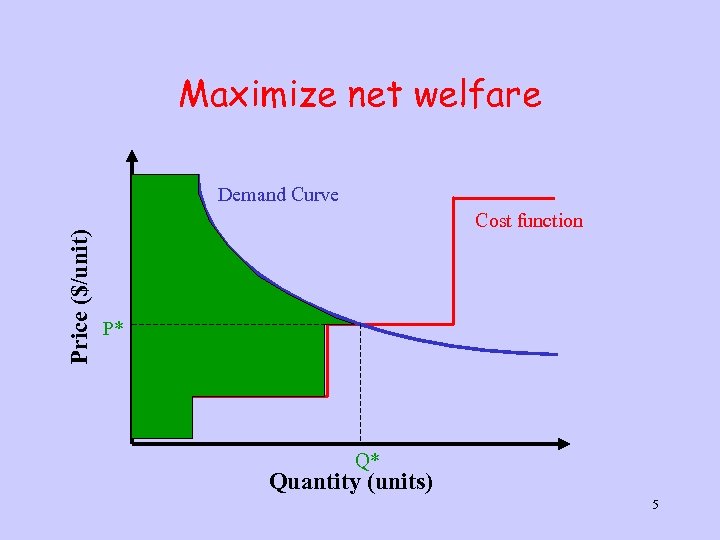
Maximize net welfare Price ($/unit) Demand Curve Cost function P* Q* Quantity (units) 5
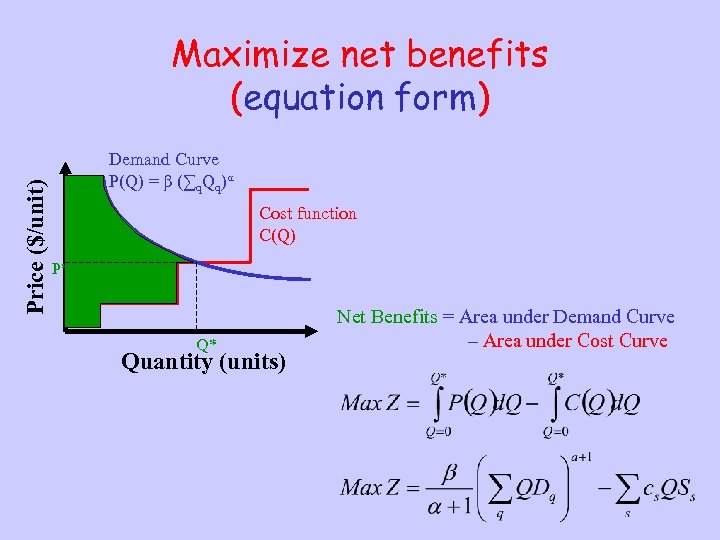
Price ($/unit) Maximize net benefits (equation form) Demand Curve P(Q) = β (∑q. Qq)α Cost function C(Q) P* Q* Quantity (units) Net Benefits = Area under Demand Curve – Area under Cost Curve
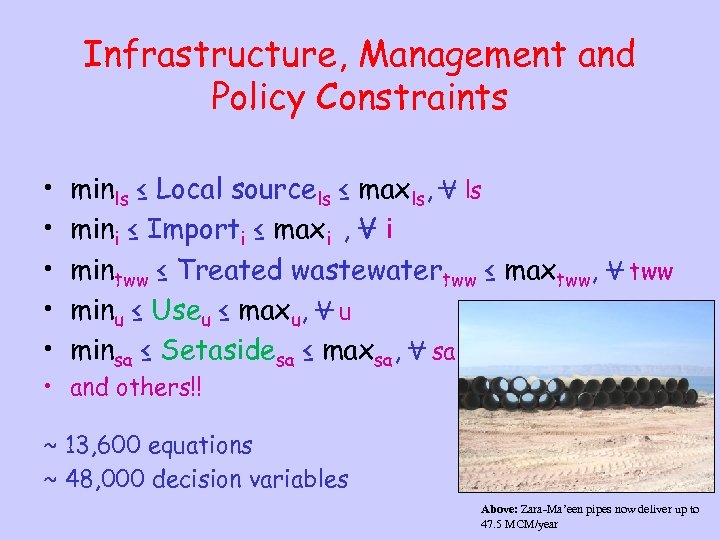
Infrastructure, Management and Policy Constraints • • • minls ≤ Local sourcels ≤ maxls, V ls mini ≤ Importi ≤ maxi , V i mintww ≤ Treated wastewatertww ≤ maxtww, V tww minu ≤ Useu ≤ maxu, V u minsa ≤ Setasidesa ≤ maxsa, V sa • and others!! ~ 13, 600 equations ~ 48, 000 decision variables Above: Zara-Ma’een pipes now deliver up to 47. 5 MCM/year
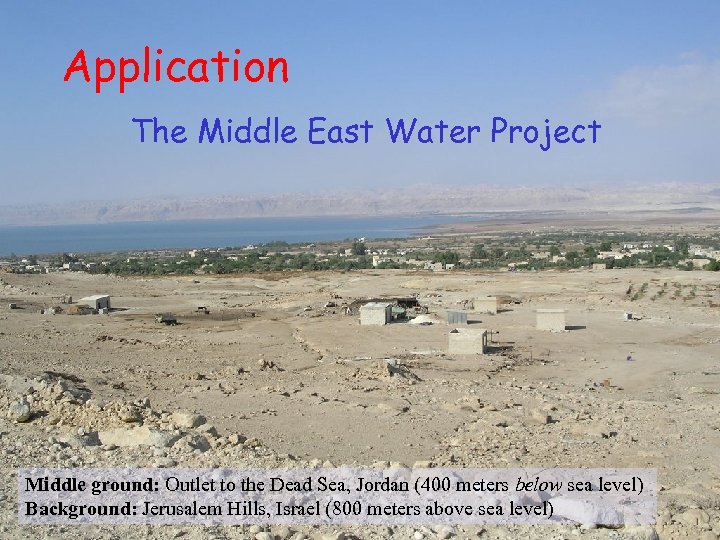
Application The Middle East Water Project Middle ground: Outlet to the Dead Sea, Jordan (400 meters below sea level) Background: Jerusalem Hills, Israel (800 meters above sea level)
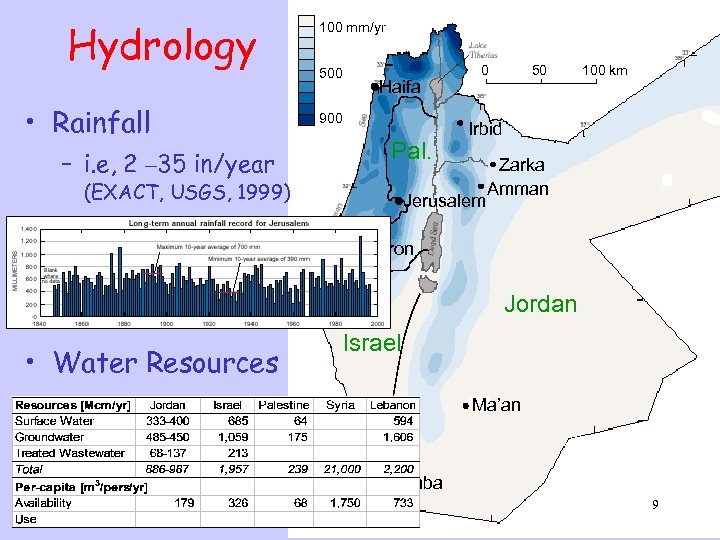
Hydrology • Rainfall 100 mm/yr 500 Haifa 900 Pal. – i. e, 2 – 35 in/year (EXACT, USGS, 1999) 0 50 100 km Irbid Jerusalem Zarka Amman Hebron Jordan • Water Resources Israel Ma’an Eilat Aqaba 9
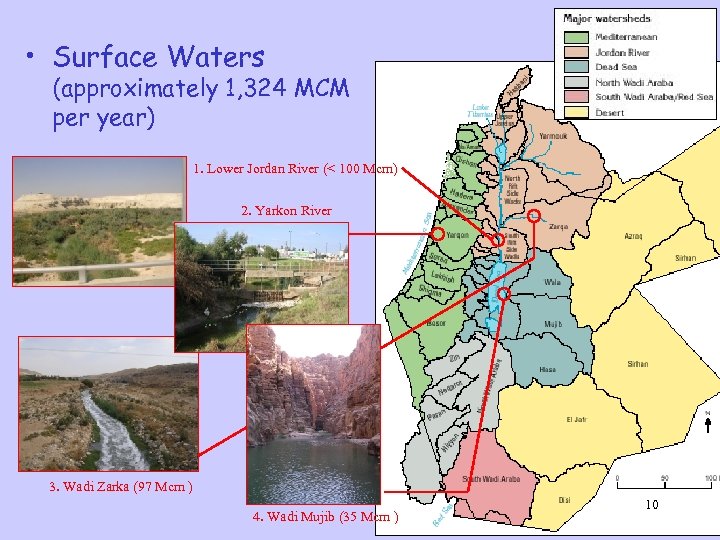
• Surface Waters (approximately 1, 324 MCM per year) 1. Lower Jordan River (< 100 Mcm) 2. Yarkon River 3. Wadi Zarka (97 Mcm ) 4. Wadi Mujib (35 Mcm ) 10
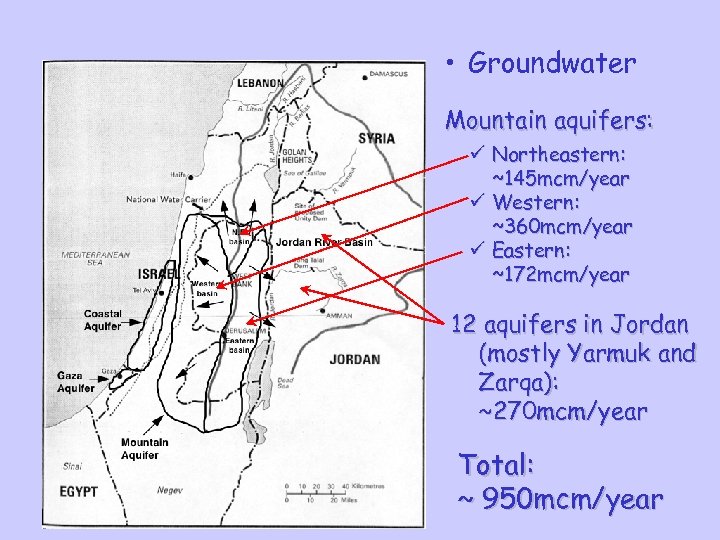
• Groundwater Mountain aquifers: ü Northeastern: ~145 mcm/year ü Western: ~360 mcm/year ü Eastern: ~172 mcm/year 12 aquifers in Jordan (mostly Yarmuk and Zarqa): ~270 mcm/year Total: ~ 950 mcm/year
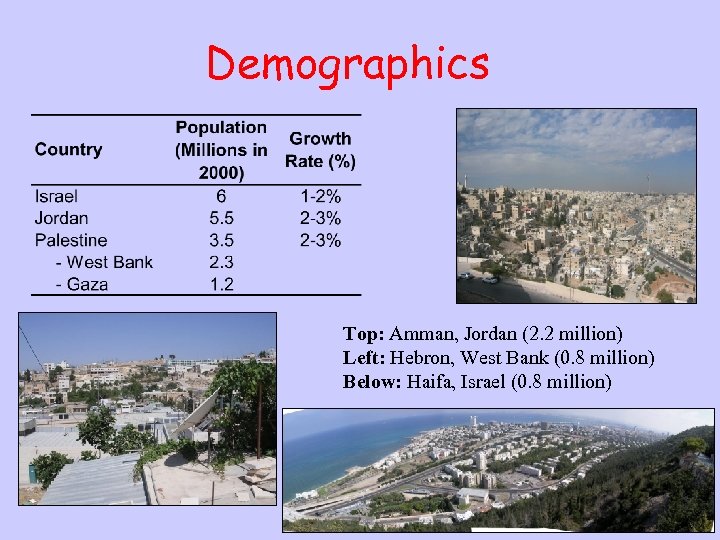
Demographics Top: Amman, Jordan (2. 2 million) Left: Hebron, West Bank (0. 8 million) Below: Haifa, Israel (0. 8 million)
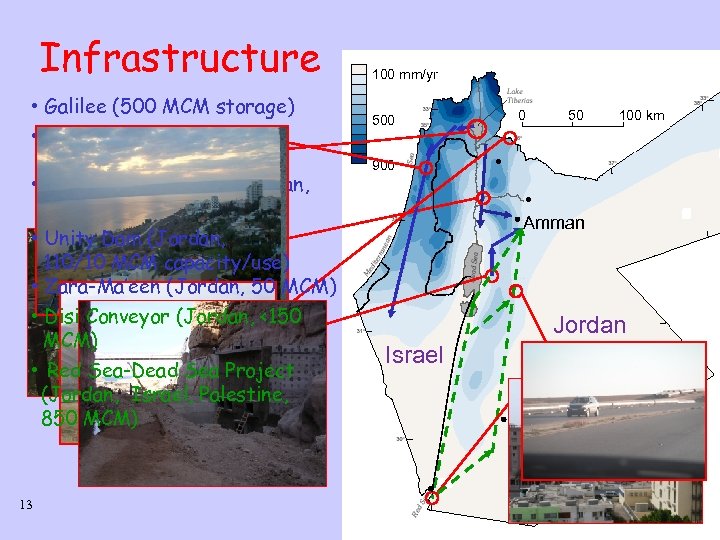
Infrastructure • Galilee (500 MCM storage) • National water carrier (Israel, 300 -400 MCM) • King Abdullah Canal (Jordan, 100– 120 MCM) • Unity Dam (Jordan, 110/10 MCM capacity/use) • Zara-Ma’een (Jordan, 50 MCM) • Disi Conveyor (Jordan, <150 MCM) • Red Sea-Dead Sea Project (Jordan, Israel, Palestine, 850 MCM) 13 100 mm/yr 500 0 50 100 km 900 Amman Jordan Israel
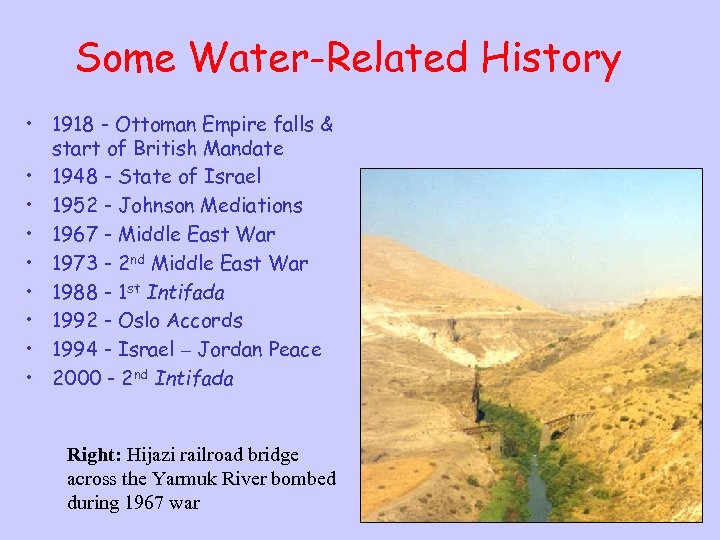
Some Water-Related History • 1918 - Ottoman Empire falls & start of British Mandate • 1948 - State of Israel • 1952 - Johnson Mediations • 1967 - Middle East War • 1973 - 2 nd Middle East War • 1988 - 1 st Intifada • 1992 - Oslo Accords • 1994 - Israel – Jordan Peace • 2000 - 2 nd Intifada Right: Hijazi railroad bridge across the Yarmuk River bombed during 1967 war
Current issues • Contested water rights (Mountain Aquifer, 600 MCM, and lower Jordan River). • Role for water conservation • Water resources to support future population growth & environmental needs? • Share or build private desalination plants? • Links to other disputes over land, security, partitioning Jerusalem, and right for Palestinian refugees to return. 15
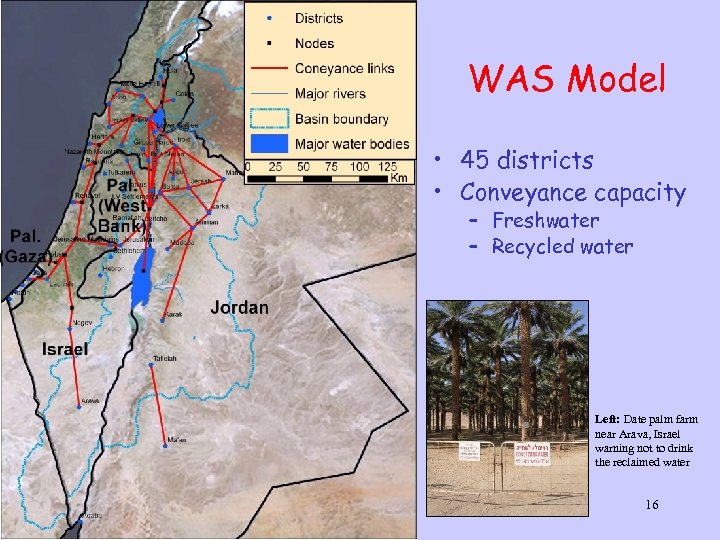
WAS Model • 45 districts • Conveyance capacity – Freshwater – Recycled water Left: Date palm farm near Arava, Israel warning not to drink the reclaimed water 16
Model Use • It’s complicated – You may not fully understand implications of your inputs • Experiment with choices – Interact with model • The model does not “make” water policy • Rather – You impose policies – Model respects these policies absolutely – Model shows how to efficiently implement policies and policy consequences 17
Model Outputs • Demand served to each use in each district • Water transfers • Shadow value / scarcity rent for water in each district • Benefits to add/expand infrastructure • Gains from trading water & money 18
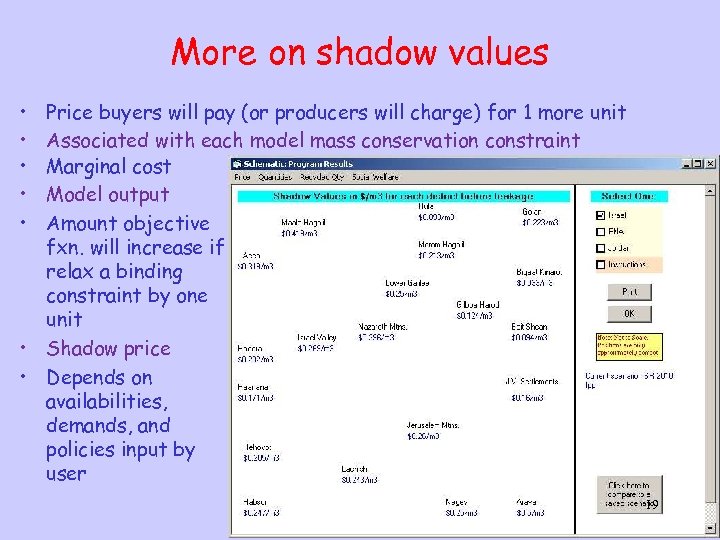
More on shadow values • • • Price buyers will pay (or producers will charge) for 1 more unit Associated with each model mass conservation constraint Marginal cost Model output Amount objective fxn. will increase if relax a binding constraint by one unit • Shadow price • Depends on availabilities, demands, and policies input by user 19
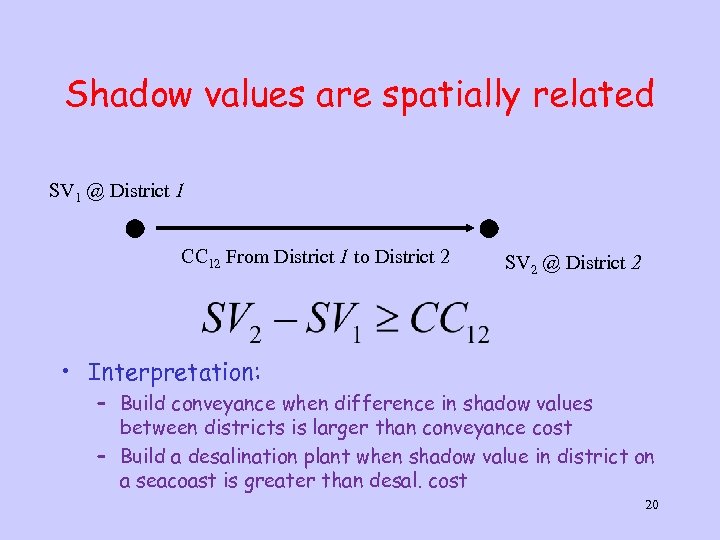
Shadow values are spatially related SV 1 @ District 1 CC 12 From District 1 to District 2 SV 2 @ District 2 • Interpretation: – Build conveyance when difference in shadow values between districts is larger than conveyance cost – Build a desalination plant when shadow value in district on a seacoast is greater than desal. cost 20
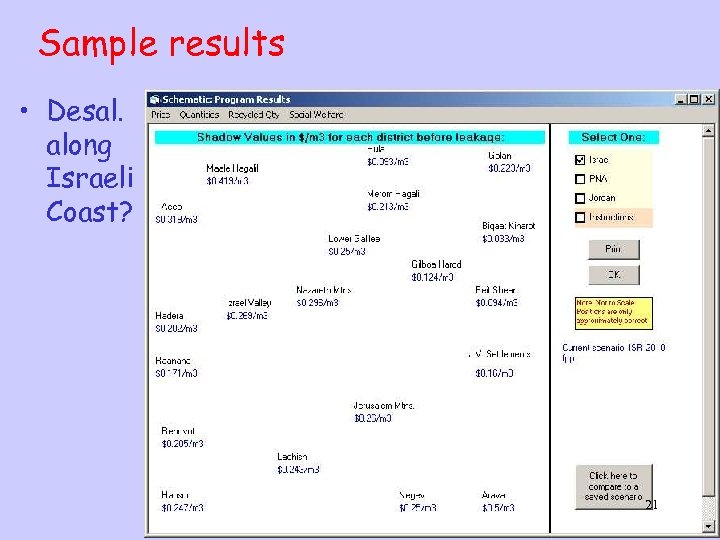
Sample results • Desal. along Israeli Coast? 21
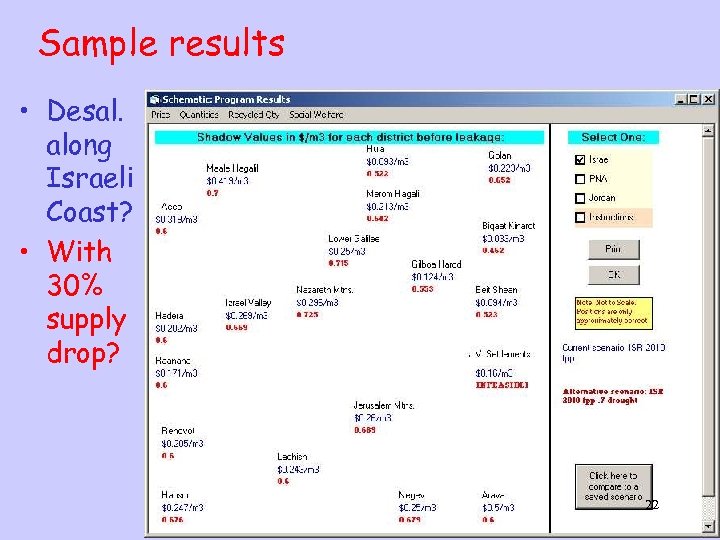
Sample results • Desal. along Israeli Coast? • With 30% supply drop? 22
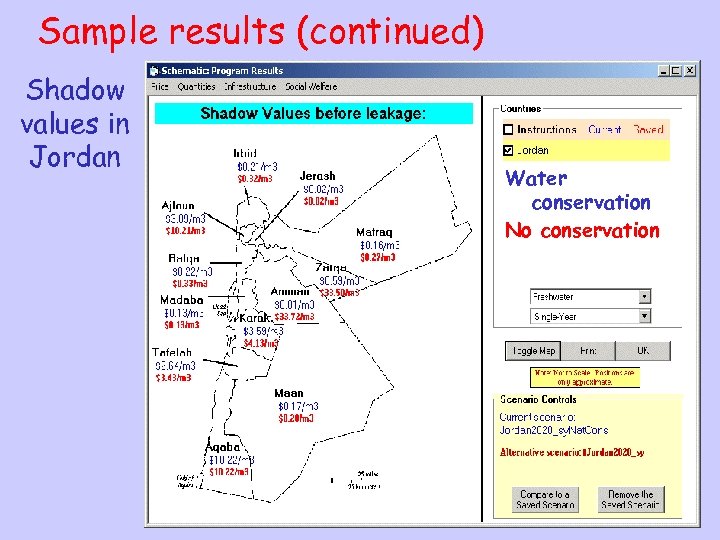
Sample results (continued) Shadow values in Jordan Water conservation No conservation 23
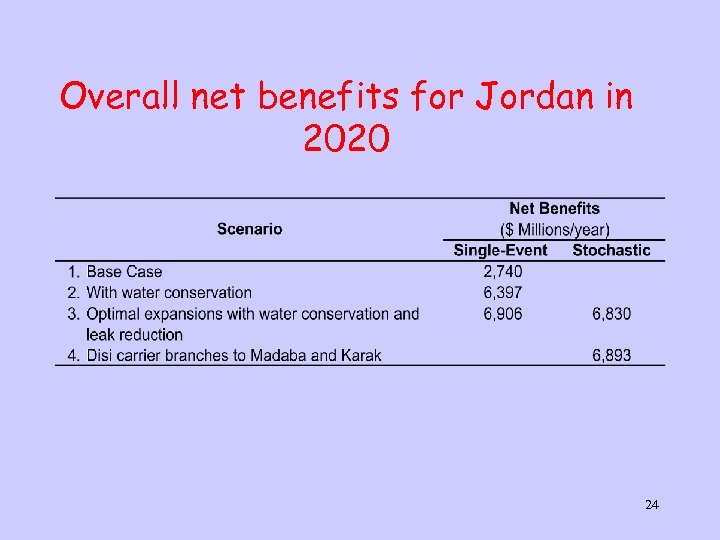
Overall net benefits for Jordan in 2020 24
![Raise the Dead [Sea]? • 30 m drop since 1960 • 33% decline in](https://present5.com/presentation/ccd70d75cb586055f45eb462e71a75de/image-25.jpg "Raise the Dead [Sea]? • 30 m drop since 1960 • 33% decline in")
Raise the Dead [Sea]? • 30 m drop since 1960 • 33% decline in surface area • Problems – – Sink holes GW contamination Reduced tourism Decreased mineral extraction 25
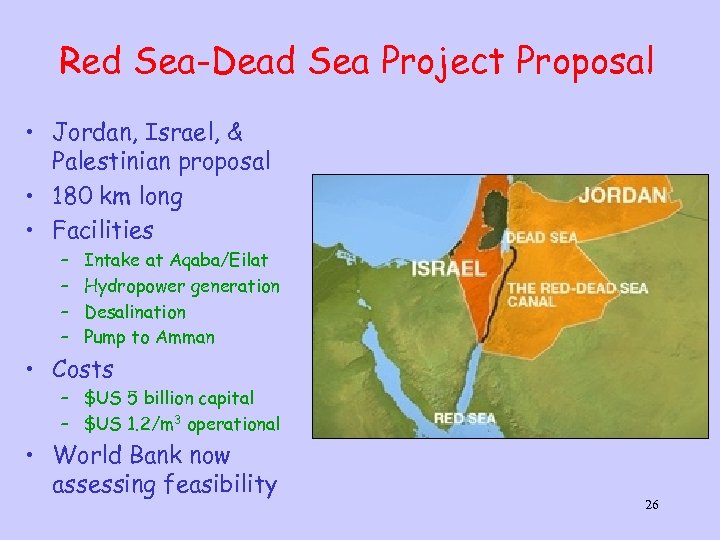
Red Sea-Dead Sea Project Proposal • Jordan, Israel, & Palestinian proposal • 180 km long • Facilities – – Intake at Aqaba/Eilat Hydropower generation Desalination Pump to Amman • Costs – $US 5 billion capital – $US 1. 2/m 3 operational • World Bank now assessing feasibility 26
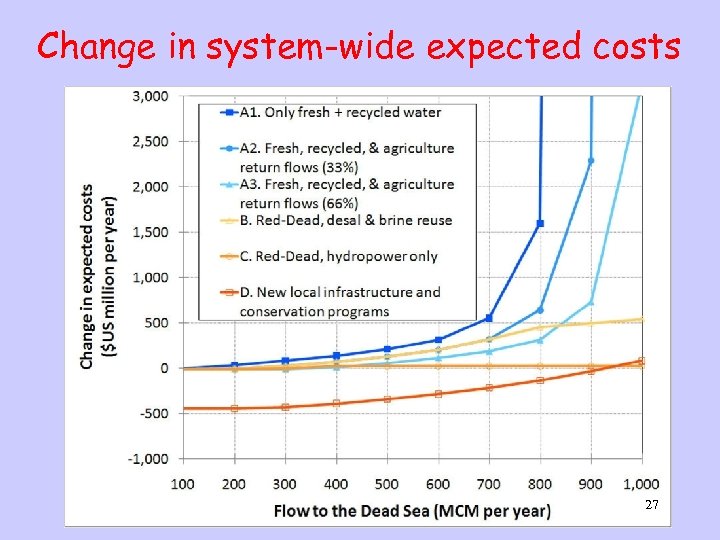
Change in system-wide expected costs 27
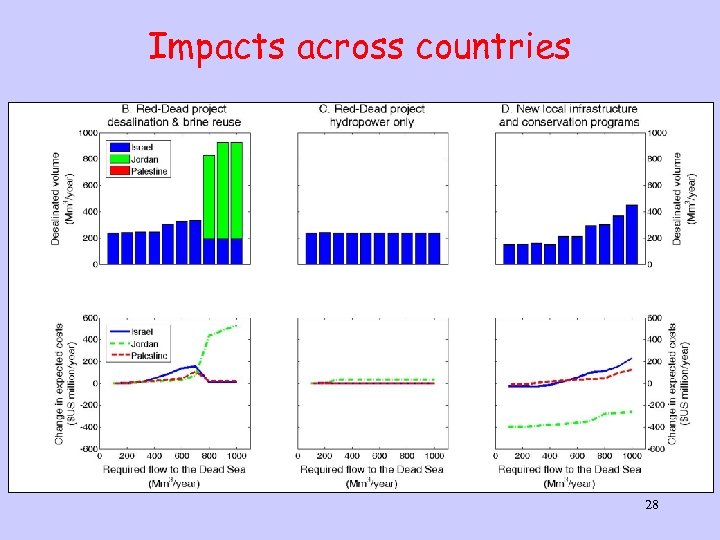
Impacts across countries 28
Conclusions • • • Allocate water by value not quantity Separate water ownership from water use Separation allows transfers of water and money Monetize and de-emotionalize water conflicts The value of waters in dispute by Palestinians and Israelis is small Water should not be a cause for war Water conservation can generate substantial national and regional benefits Infrastructure alone will not raise the Dead Droughts can change things 29
Postscript • 10+ year collaboration by Israeli, Palestinian, Jordanian, American, and Dutch scientists • Separate participation by each government • Water not included in the Geneva Accord • Continuing work to improve model – Multi-year – Capacity expansion, conservation programs, and stochastic water availability (Rosenberg et al, 2008) 30
References Fisher et al. (2002). Water Resources Research 38(11), 1243, doi: 10. 1029/2001. Fisher et al. (2005). “Liquid Assets…” (Resources for the Future, Washington, D. C. ). Rosenberg et al. (2008) Water Resources Research 44, W 11402, doi: 10. 1029/2007 WR 006519. Rosenberg (2011). "Raising the Dead without a Red Sea-Dead Sea project? Hydro-economics and governance. " Hydrology and Earth System Sciences, 15, 1243 -1255, doi: 10. 5194/hess-151243 -2011. 31
Скачать презентацию Managing Water in the Shared Jordan River Basin
ccd70d75cb586055f45eb462e71a75de.ppt