


 Скачать презентацию Managing Trust and Security in Online Auctions Samira
ea098871573671189f438dc469ca676a.ppt
- Количество слайдов: 13
 Managing Trust and Security in Online Auctions Samira Sadaoui Computer Science Department University of Regina March 6, 2012
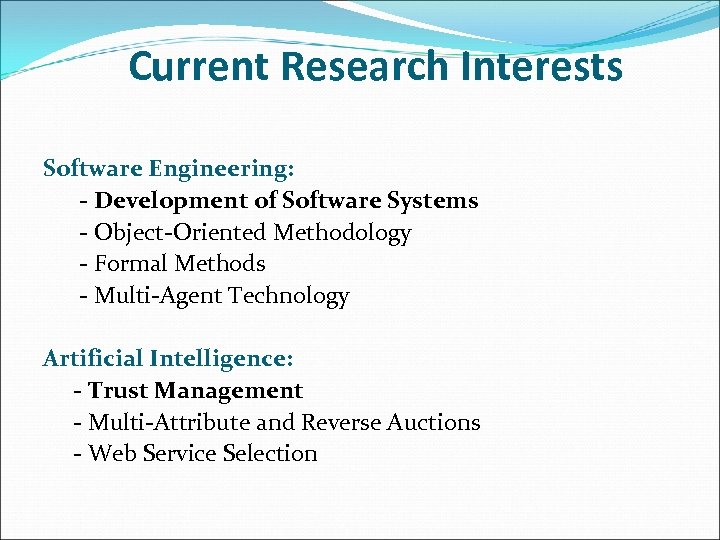 Current Research Interests Software Engineering: - Development of Software Systems - Object-Oriented Methodology - Formal Methods - Multi-Agent Technology Artificial Intelligence: - Trust Management - Multi-Attribute and Reverse Auctions - Web Service Selection
 Software Systems Development Ø Problem Requirements Specification: - Functional requirements - Quality requirements (correctness, robustness, usability, portability, performance, maintainability). Ø Software Design/Architecture: a high-quality solution. Ø Complex systems: distributed, dynamic, concurrent software systems.
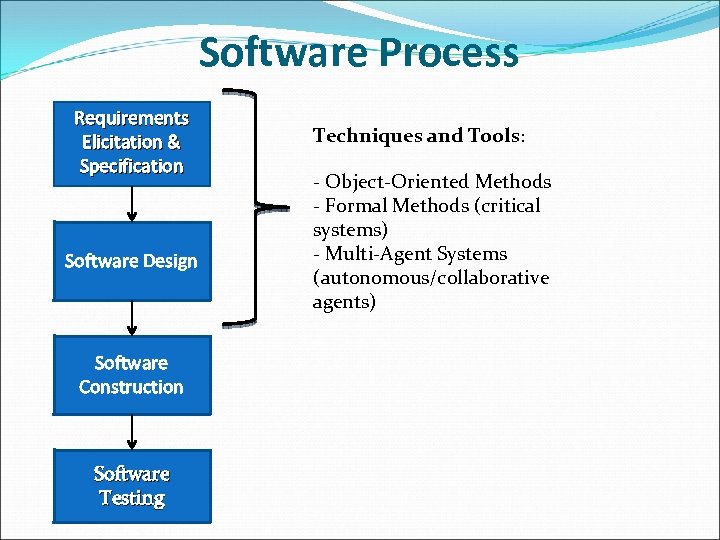 Software Process Requirements Elicitation & Specification Software Design Software Construction Software Testing Techniques and Tools: - Object-Oriented Methods - Formal Methods (critical systems) - Multi-Agent Systems (autonomous/collaborative agents)
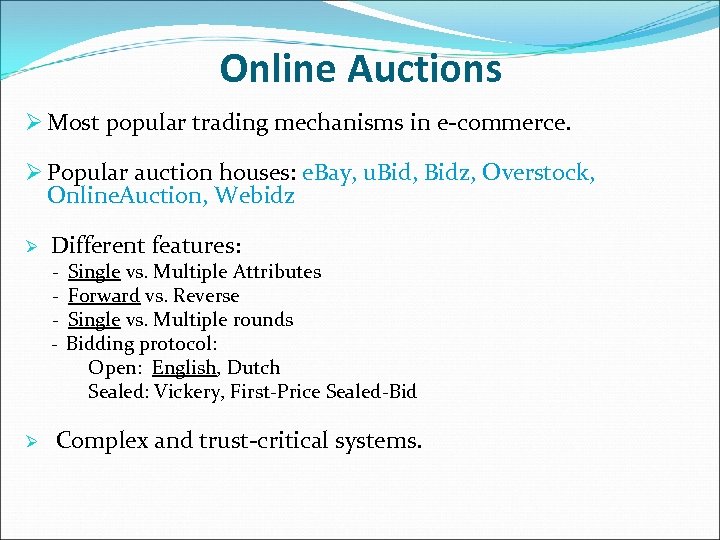 Online Auctions Ø Most popular trading mechanisms in e-commerce. Ø Popular auction houses: e. Bay, u. Bid, Bidz, Overstock, Online. Auction, Webidz Ø Different features: - Ø Single vs. Multiple Attributes Forward vs. Reverse Single vs. Multiple rounds Bidding protocol: Open: English, Dutch Sealed: Vickery, First-Price Sealed-Bid Complex and trust-critical systems.
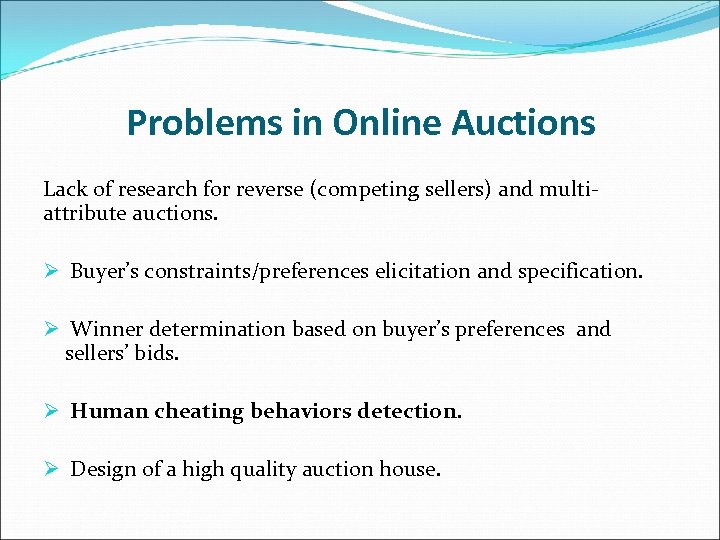 Problems in Online Auctions Lack of research for reverse (competing sellers) and multiattribute auctions. Ø Buyer’s constraints/preferences elicitation and specification. Ø Winner determination based on buyer’s preferences and sellers’ bids. Ø Human cheating behaviors detection. Ø Design of a high quality auction house.
 Auction Frauds Ø Online auction frauds: the largest part of all Internet crimes. Ø Trust is difficult to establish because transactions occur among complete strangers. Ø Number of Internet users is increasing. Ø Many opportunities for cheating: siphoning, shielding, shilling, sniping, auctioneer-bidder collusion, lack of bid privacy, non-delivery and non-payment of goods, information misrepresentation.
![Online Crimes [Internet Fraud Complaint Center] http: //www. secureputer. com/series-do-not-fall-victim-to-internet-auction-fraud/](https://present5.com/presentation/ea098871573671189f438dc469ca676a/image-8.jpg "Online Crimes [Internet Fraud Complaint Center] http: //www. secureputer. com/series-do-not-fall-victim-to-internet-auction-fraud/") Online Crimes [Internet Fraud Complaint Center] http: //www. secureputer. com/series-do-not-fall-victim-to-internet-auction-fraud/
Online Crimes [Internet Fraud Complaint Center] http: //www. secureputer. com/series-do-not-fall-victim-to-internet-auction-fraud/
 Research goal: - prevent frauds and increase trust in online auctions. - build a trustful (multi-attribute & reverse) auction house. Proposed Solutions: ØMulti-round & semi-sealed protocol to cope with bid snaping shielding and siphoning, auctioneer cheating and lack of bid privacy. ØAn efficient trust management framework: - to maintain the reputation of bidders, - to ensure security in the auction protocol.
 Proposed Solutions Ø Agent technology to reduce misconduct: - automate the entire auction house with software agents (all the security rules are implemented) - to achieve efficiency, robustness and maintainability of the entire auction house. Ø Formal methods to specify and verify different patterns of abnormal behaviors.
 Security Management Behavior-based: - monitor in run time the bidding activities to detect shill behaviors. Ø Ø Signature-based: - using Internet communication protocols (IP address tracking).
 Shill Behaviors Ø The most severe fraud. Ø The hardest type of frauds to detect. Ø Shill bidder creates fake identities to provoke war among bidders and generate an interest for the item. Ø Auction failure, buyer pays more for the item, seller gets less payment. Ø Around $250 million may have been lost to shilling in 2008 [P. Cohen. Shill Bidding on e. Bay: a Case Study (Or, the facilitating and concealing of fraud by e. Bay). In Auction. Bytes Forum, Online Auction News Forum, August 2009]
 Run-Time Monitoring of Shills Ø Detection of shills: - large volume of data are analyzed at the end of the auction, which is too late as the auction has already resulted in losses for bidders. - live auctions is harder than offline auctions. Ø Reaction to shills: stop the auction, send warnings, remove the shill bidder, update its reputation score, Suspend shill bidders' account temporarily/permanently, etc