


 Скачать презентацию MANAGING MEDICARE California Society of Pathologists San Francisco
8af9e2313728da5c3a918489c1df36cd.ppt
- Количество слайдов: 44
 MANAGING MEDICARE California Society of Pathologists San Francisco, California December 4, 2009 1
 WE WILL DISCUSS • • National and Local Lab Policies Requesting Reconsiderations Referral Rules Enrollment: PECOS • • HIGLASS—December Payment Changes On-Line Viewing of Claims—soon a reality Signature Rules Coverage for New Lab Tests – Revalidation – Reporting any Changes – – National Versus Local Coverage Meet with CMDs & Others Thoughts on Pricing & Coding Time Factors for Decisions • Some 2010 Reimbursement Changes • Questions and answers 2
 NATIONAL COVERAGE DECISIONS • National: NCDs come from CMS – Based on scientific studies & data collected – Presented often at MCAC-open meetings – Notice and comment welcome – Reconsiderations always possible • NCDs cover entire country – May specify services always covered – May specify services never covered – Published in CMS Coverage Manual – May change as science changes, new studies emerge, or as laws change. 3
 NATIONAL COVERAGE DECISIONS • Examples of NCDs (over 300 currently) – Alpha-fetoprotein – Collagen crosslinks, any method – Cytogenic studies – Digoxin therapeutic drug assay – Fecal occult blood testing – Genetic testing for warfarin – HIV testing – Prostate cancer screening tests – Sweat test • National Laboratory Coverage Determinations (23 currently) 4
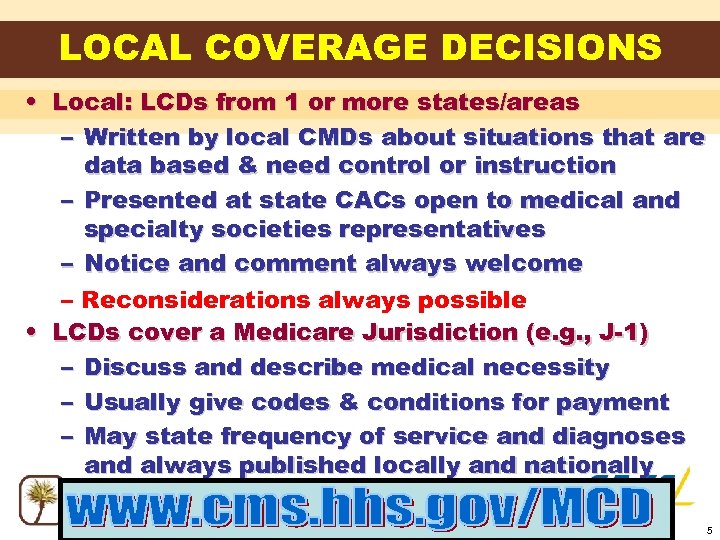 LOCAL COVERAGE DECISIONS • Local: LCDs from 1 or more states/areas – Written by local CMDs about situations that are data based & need control or instruction – Presented at state CACs open to medical and specialty societies representatives – Notice and comment always welcome – Reconsiderations always possible • LCDs cover a Medicare Jurisdiction (e. g. , J-1) – Discuss and describe medical necessity – Usually give codes & conditions for payment – May state frequency of service and diagnoses and always published locally and nationally 5
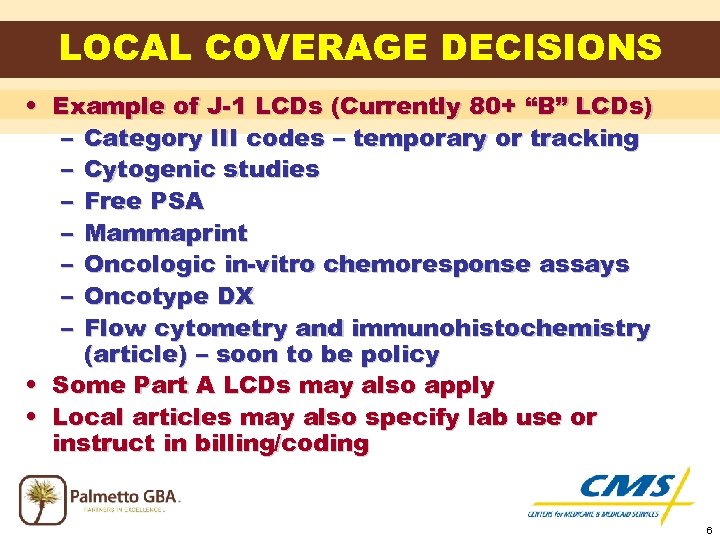 LOCAL COVERAGE DECISIONS • Example of J-1 LCDs (Currently 80+ “B” LCDs) – Category III codes – temporary or tracking – Cytogenic studies – Free PSA – Mammaprint – Oncologic in-vitro chemoresponse assays – Oncotype DX – Flow cytometry and immunohistochemistry (article) – soon to be policy • Some Part A LCDs may also apply • Local articles may also specify lab use or instruct in billing/coding 6
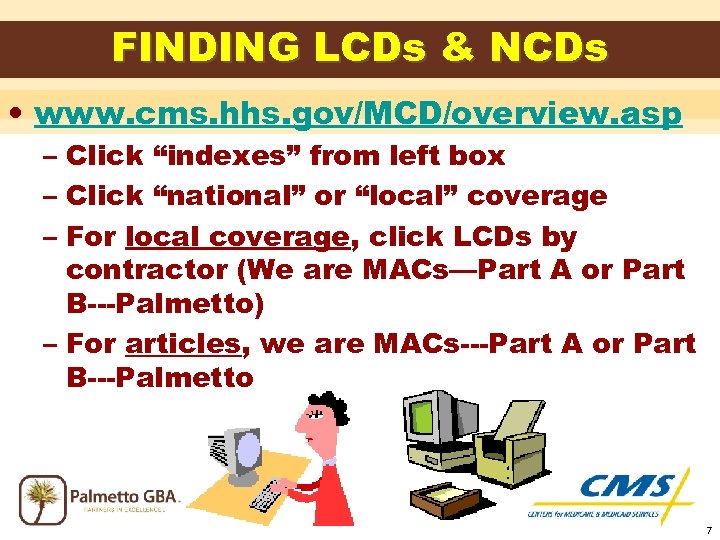 FINDING LCDs & NCDs • www. cms. hhs. gov/MCD/overview. asp – Click “indexes” from left box – Click “national” or “local” coverage – For local coverage, click LCDs by contractor (We are MACs—Part A or Part B---Palmetto) – For articles, we are MACs---Part A or Part B---Palmetto 7
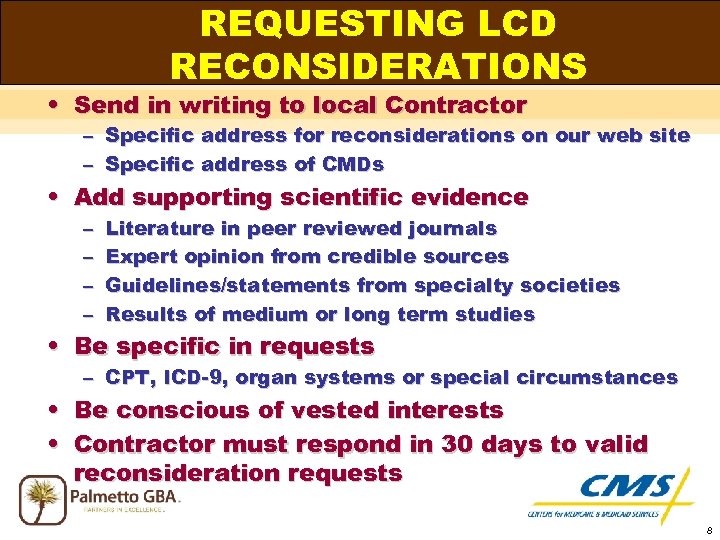 REQUESTING LCD RECONSIDERATIONS • Send in writing to local Contractor – Specific address for reconsiderations on our web site – Specific address of CMDs • Add supporting scientific evidence – – Literature in peer reviewed journals Expert opinion from credible sources Guidelines/statements from specialty societies Results of medium or long term studies • Be specific in requests – CPT, ICD-9, organ systems or special circumstances • Be conscious of vested interests • Contractor must respond in 30 days to valid reconsideration requests 8
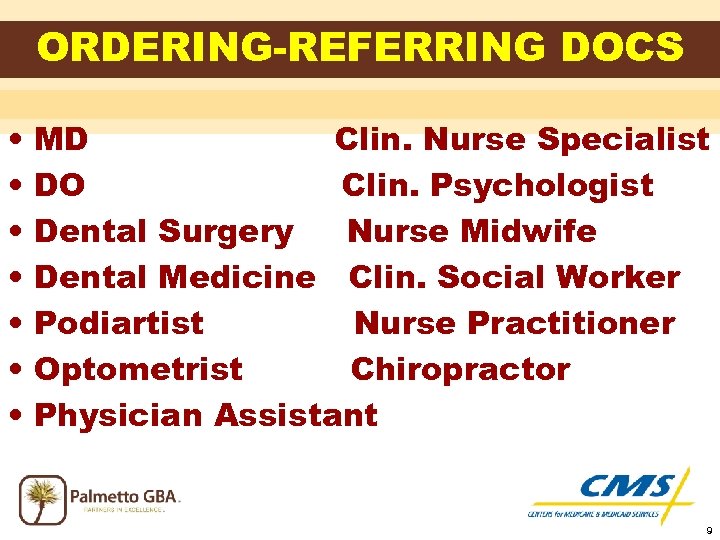 ORDERING-REFERRING DOCS • • MD Clin. Nurse Specialist DO Clin. Psychologist Dental Surgery Nurse Midwife Dental Medicine Clin. Social Worker Podiartist Nurse Practitioner Optometrist Chiropractor Physician Assistant 9
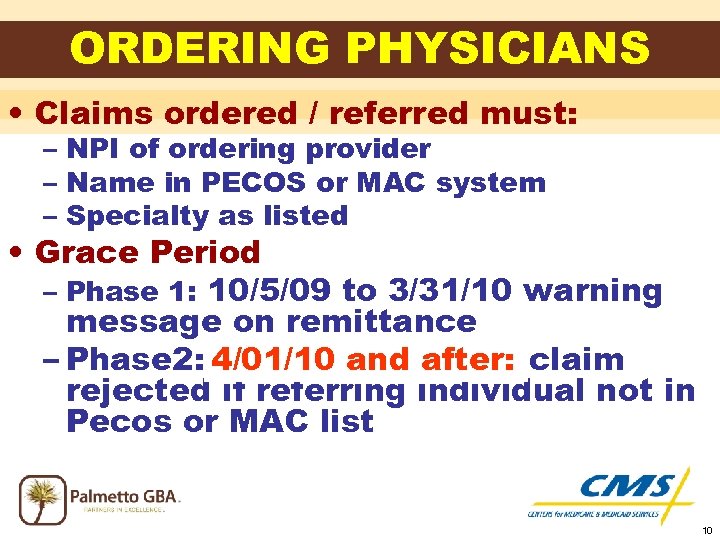 ORDERING PHYSICIANS • Claims ordered / referred must: – NPI of ordering provider – Name in PECOS or MAC system – Specialty as listed • Grace Period – Phase 1: 10/5/09 to 3/31/10 warning message on remittance – Phase 2: 4/01/10 and after: claim 4/01/10 and after: rejected if referring individual not in Pecos or MAC list 10
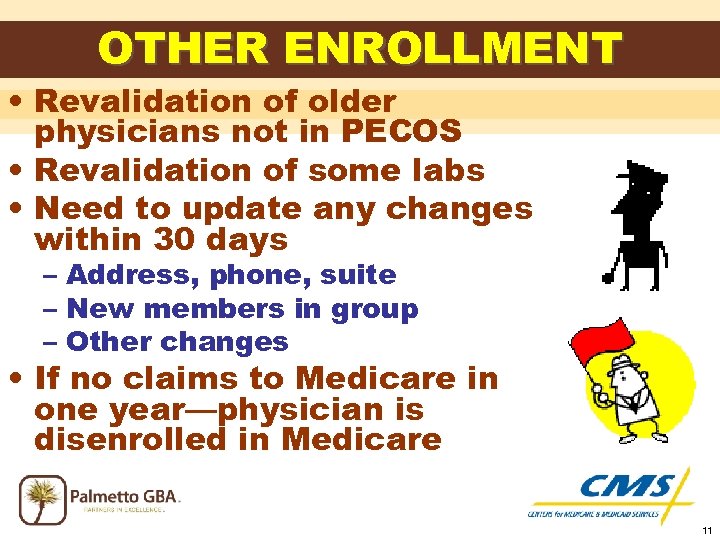 OTHER ENROLLMENT • Revalidation of older physicians not in PECOS • Revalidation of some labs • Need to update any changes within 30 days – Address, phone, suite – New members in group – Other changes • If no claims to Medicare in one year—physician is disenrolled in Medicare 11
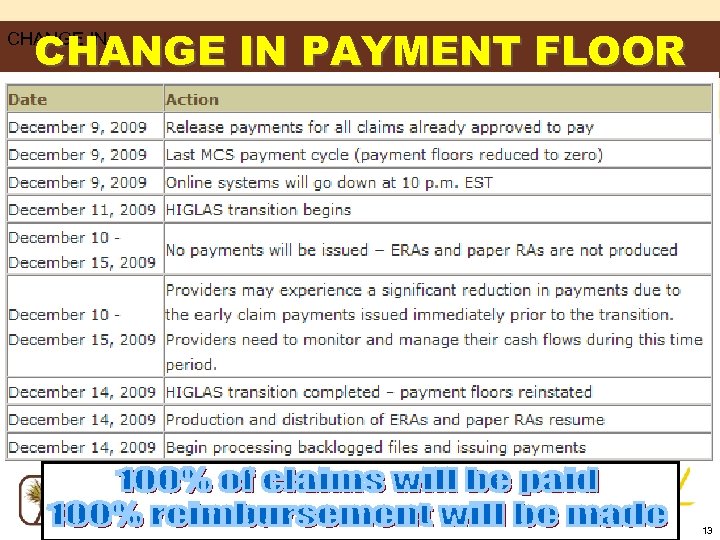
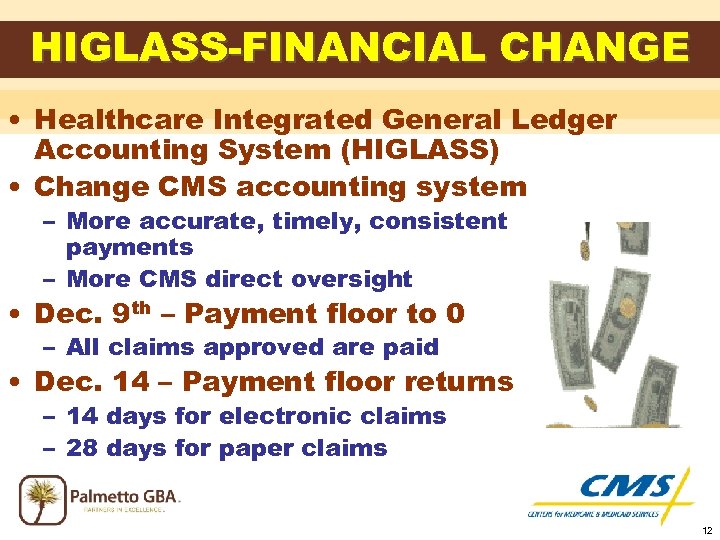 HIGLASS-FINANCIAL CHANGE • Healthcare Integrated General Ledger Accounting System (HIGLASS) • Change CMS accounting system – More accurate, timely, consistent payments – More CMS direct oversight • Dec. 9 th – Payment floor to 0 – All claims approved are paid • Dec. 14 – Payment floor returns – 14 days for electronic claims – 28 days for paper claims 12
 CHANGE IN PAYMENT FLOOR CHANGE IN 13
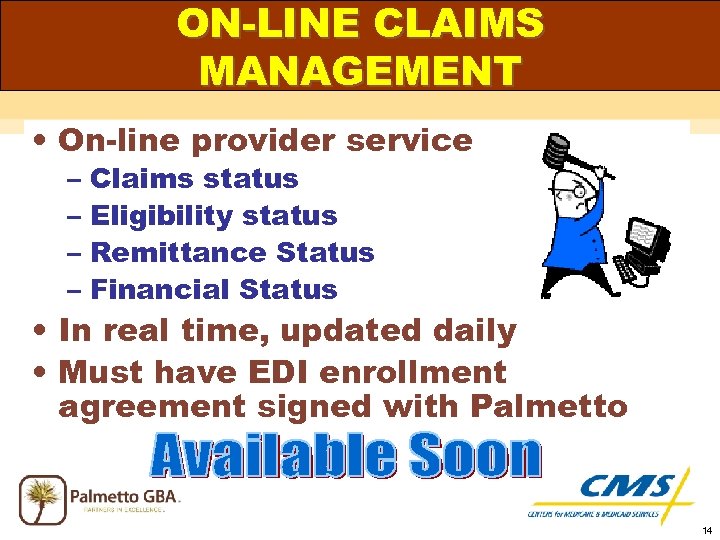 ON-LINE CLAIMS MANAGEMENT • On-line provider service – Claims status – Eligibility status – Remittance Status – Financial Status • In real time, updated daily • Must have EDI enrollment agreement signed with Palmetto 14
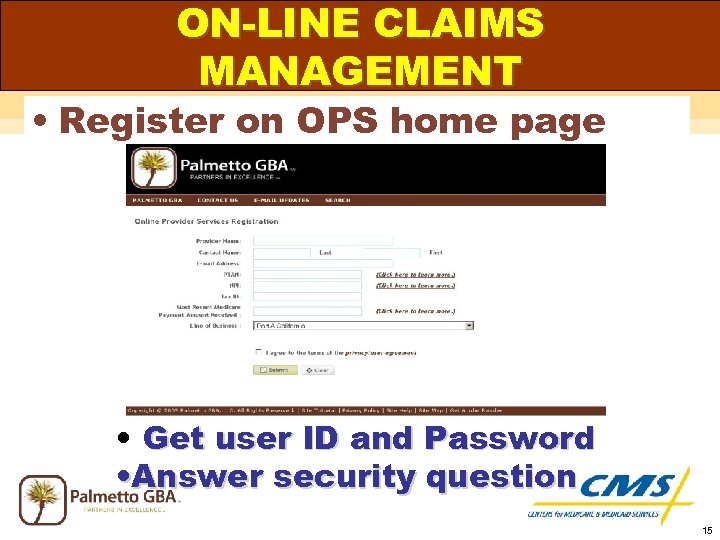 ON-LINE CLAIMS MANAGEMENT • Register on OPS home page • Get user ID and Password • Answer security question 15
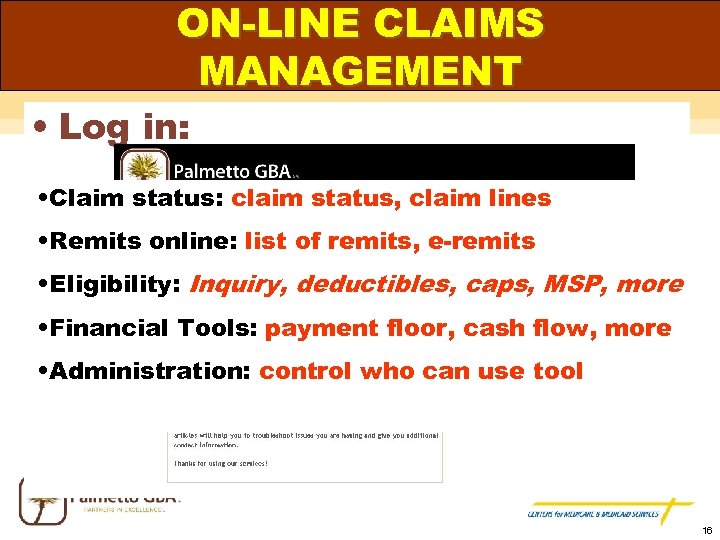 ON-LINE CLAIMS MANAGEMENT • Log in: • Claim status: claim status, claim lines • Remits online: list of remits, e-remits • Eligibility: Inquiry, deductibles, caps, MSP, more • Financial Tools: payment floor, cash flow, more • Administration: control who can use tool 16
 SIGNATURES • • – – Handwritten signatures or initials Must be legible Electronic signatures: Digitized- an electronic image of an individual’s handwritten signature reproduced in its identical form using a pen tablet Electronic signatures usually contain date & timestamps and include printed statements, e. g. , 'electronically signed by, ' or 'verified/ reviewed by, ' followed by physician’s name & preferably a professional designation. Note: The responsibility and authorship related to the signature should be clearly defined in the record Digital signature - an electronic method of a written signature typically generated by encrypted software that allows for sole usage 17
 SIGNATURES Chart 'Accepted By' with provider’s name 'Electronically signed by' with provider’s name 'Verified by' with provider’s name 'Reviewed by' with provider’s name 'Released by' with provider’s name 'Signed before import by' with provider’s name 'Signed: John Smith, M. D. ' with provider’s name Digitalized signature: Handwritten & scanned into the compute. 'This is an electronically verified report by John Smith, M. D. ' 'Authenticated by John Smith, M. D. ' 'Authorized by: John Smith, M. D. ' 'Digital Signature: John Smith, M. D. ' 'Confirmed by' with provider’s name 'Closed by' with provider’s name 'Finalized by' with provider’s name 'Electronically approved by' with provider’s name 18
 Unacceptable Signatures • • See unacceptable signature examples: 'Signing physician' when provider's name is typed Example: Signing physician: ___________ John Smith, M. D. 'Confirmed by' when a provider's name is typed Example: Confirmed by: ___________ John Smith, M. D. 'Signed by' provider's name typed and the signing line above, but done as part as the transcription. 'This document has been electronically signed in the surgery department' with no provider name. 'Dictated by' when provider's name is typed Example: Dictated by: ___________ John Smith, M. D. Signature stamp 'Signature On File' 19
 SIGNATURES: WHAT WE FIND • Illegible, unrecognizable handwritten signatures or initials • Unsigned “typewritten” progress notes with a typed name only • Unverified or unauthorized electronic signatures • No indication of the rendering physician/practitioner • Required for all labs, progress notes, orders and the like 20
 IF SIGNATURE IS AN ILLEGIBLE SCRAWL… • Have an official signature page with name and signature OR • Send an attestation statement certifying that physician saw patient and wrote note on that date 21
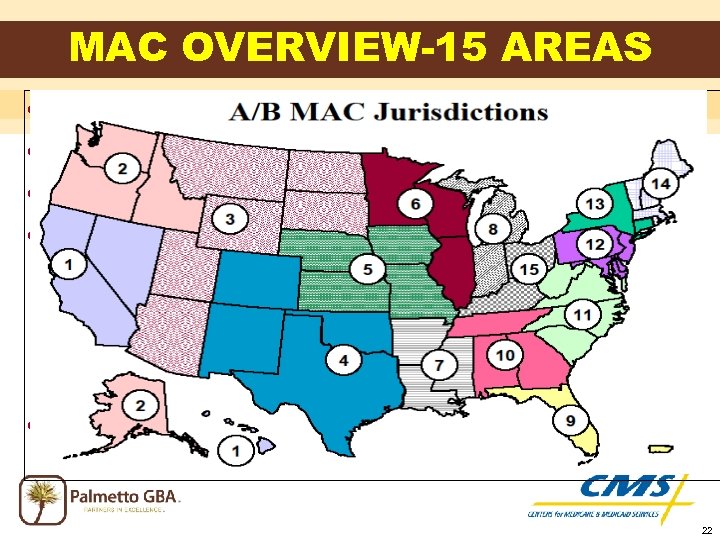 MAC OVERVIEW-15 AREAS • • 15 MACs, 4 DMACs, 4 RHHIs Companies may have > 1 MAC may have >1 CMDs work together – Within MACs – Within Companies – Across MACs – Within CMS Committees, Workgroups • Many MAC Contracts in Dispute 22
 NATIONAL VS LOCAL LAB COVERAGE • Advantages – Policies, coverage, coding and pricing same everywhere – More publicity, fewer local hassles – More likely private insurance accepts • Disadvantages of National – – – Requires more evidence, studies Longer time frame for acceptance Usually requires FDA clearance Increased marketing costs required Access across all states/territories when lab not large enough for tests 23
 NATIONAL VS LOCAL COVERAGE • Advantages of Local – Home brew possible, without FDA approval needed – Quicker, less intensive reviews – Easier to convince CMDs – Can select areas for introduction – Can use 1 -2 MACs to influence others • Disadvantages of Local – – Less uniform coding, coverage, pricing Variation in payment, acceptance Private insurance may not go along Have to repeat work with each MAC 24
 MEETING WITH LOCAL CMD • CMDs are very busy – – Policies, articles, coverage Med Review and chart adjudication Education, outreach to societies / groups Contact with CMS & other organizations • Most CMDs will find time for meeting – In Person: office, hotel, other location – Telephone, Web, etc. may be more efficient • Time is always a consideration –Send info, data, literature in advance – Allows CMDs to be prepared, shortens meeting, allows quicker resolution – Must fit between CMDs travel, outreach, teleconferences with CMS and home office 25
 MEETING WITH LOCAL CMD • Show us the data – Published peer reviewed data – Statistically significant differences – Demonstrate effect on patient diagnosis or patient therapy • Bottom Line – – Does it work & affect patient care Sensitivity, specificity & related Outcomes for patients Cost (and more important: pricing) 26
 HELP US WITH PRICING • Show us the pricing – – Prefer single pricing vs code stacking Reality versus imagination: • What is included in pricing • What should not be included • Can it be cross walked to existing CPT codes – – Easier to determine prices May use NOC codes at first to describe its use – Remember least costly alternative situations 27
 SELECTING CPT CODES • Stacking codes problematic – Don’t define test to us – May give inaccurate prices--- too high or too low • Use NOC code (e. g. 84999) – Use with name of test (e. g. “Wonder. Test”) – We can assign specific price – We can follow use of test for policy – Less confusing for ordering MD • We can consider development costs or small quantity costs 28
 LONGER TERM CODING • Real CPT Code Helps Define Test – Can take years – Usually associated with national coverage and national pricing • Consider HCPCS or Category III – HCPCS comes from CMS – Category III easy to obtain • Allows national tracking of data • Can allow for payment also • Category III can progress to regular CPT • Consider Coverage With Evidence Development – Obtained from CMS 29
 GENETIC TESTING • Consider the science – Same proof & science as other tests – Same clinical validity – Same peer reviewed data • Consider the ethics – Who gets tested – Under what circumstances – When tests done • Consider the costs – Once per lifetime? 30
 GENETIC TESTING • Consider if the test is screening-& not covered – Each screening test requires new law from Congress – When is screening not screening but disease management – gray area • Future CMS & legal issues dealing with genetic testing 31
 OTHER ASPECTS OF NEW TESTS • Coverage for a new test (service) may be positively influenced by – Requests from physicians in practice – Clinical society white papers or guidelines – Technical Advisory Committees – Other Medicare MACs or insurers • Coverage for a new test (service) may be negatively influenced by – Over-marketing by manufacturer – Inadequate data with “spin” by consultants – Ridiculous pricing demands – Use of stacking codes when other coding more appropriate 32
 TIME FACTORS FOR DECISIONS • • Review (re-review) literature Discuss with staff Review other Contractors for like policies Add as article: 3 -6 weeks – Includes code decision, price decision – Claims personnel education • Formal Policy due to restrictions of use or diagnoses: 3 -6 months – – – Write & review policy Draft on web for public review CAC and open meetings required Open for comments from anyone Notice of final policy before effect date 33
 Welcome to The ACP Advocate Our second story, as promised, is an analysis of the Medicare Fee Schedule for next year. ACP’s Advocacy Web Site also has answers to your frequently asked questions about the new rule. While the new schedule is considered final, we still expect that Congress will step in to stop the 21 percent overall fee cut that is supposed to start Jan. 1. On Thursday afternoon, the House passed H. R. 3961, a bill that would fix the problems in Medicare payments caused by the sustainable growth rate formula. If they manage to work with the Senate to pass similar legislation, this would provide a fix for not only the 21 percent cut; it would pave the way for the long-term fix we’ve been waiting for. 34
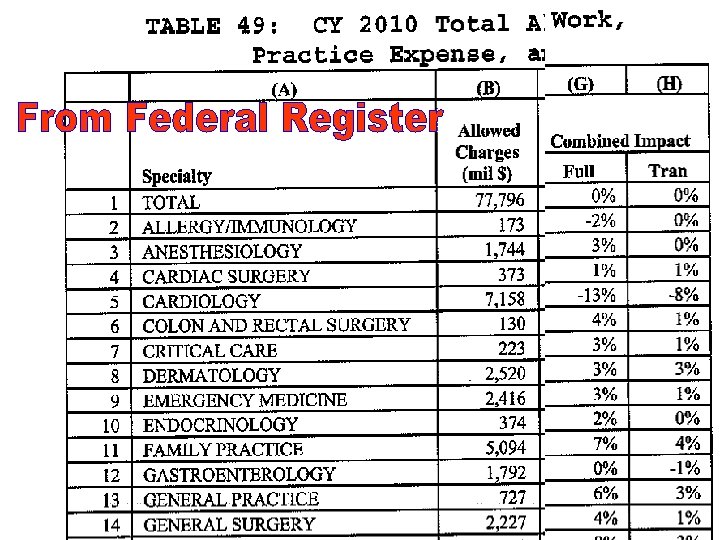
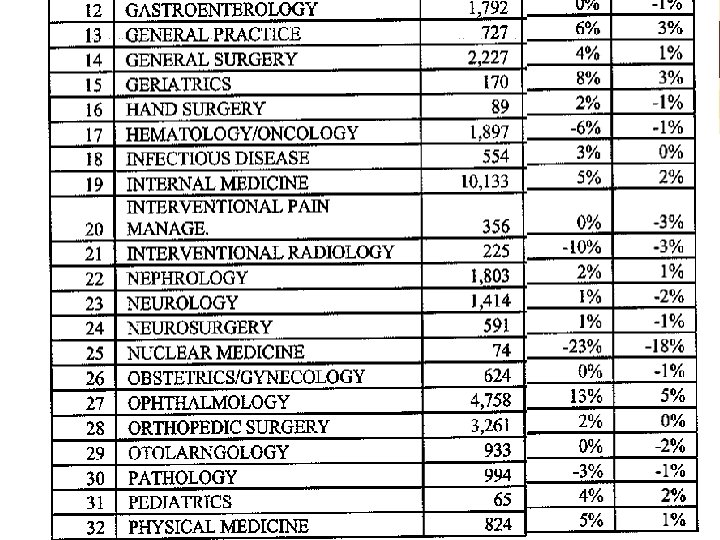
 MAJOR PRICING CHANGES 2010 • PPIS (AMA Physician Practice Information Survey) data • Change in utilization rate • ? ? ? Medicare Consultations eliminated – some other CPT changes • 5 year review of malpractice RVUs • Implementation of MIPPA provisions • Not many changes for routine lab 35
 PPIS SURVEY FOR PRACTICE EXPENSE INFORMATION • PPIS is multispecialty survey of physicians and NPPs – Used consistent survey instrument – 3, 656 across 51 specialties and professional groups • New survey conducted by AMA – Expanded to include NPPs – CMS purchased updated specialty specific PE / hr data for PE RVUs • Most consistent source of practice expense survey information to date 36
 PPIS SURVEY FOR PE • PPIS data has effects of redistribution with negative aspects to some groups – – Cardiology Radiology Oncology Urology • Positive aspects for primary care • PPIS data transitioned over 4 years • Supplemental survey data also used – Clinical labs – IDTFs – Oncology and Drug Administration 37
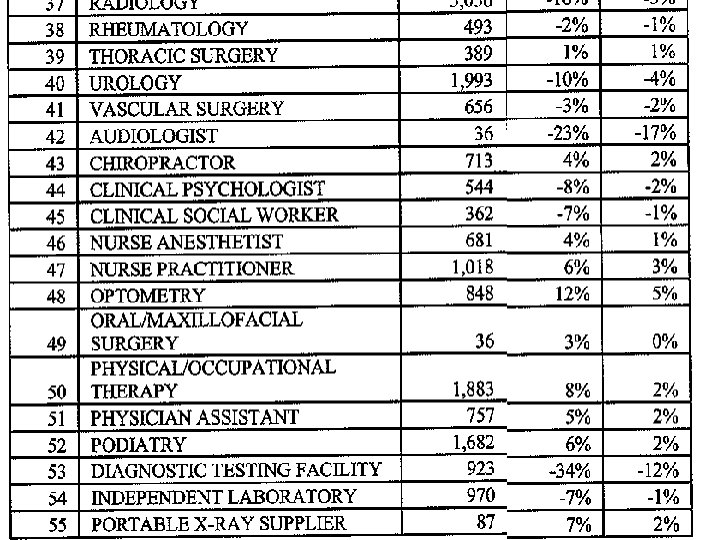
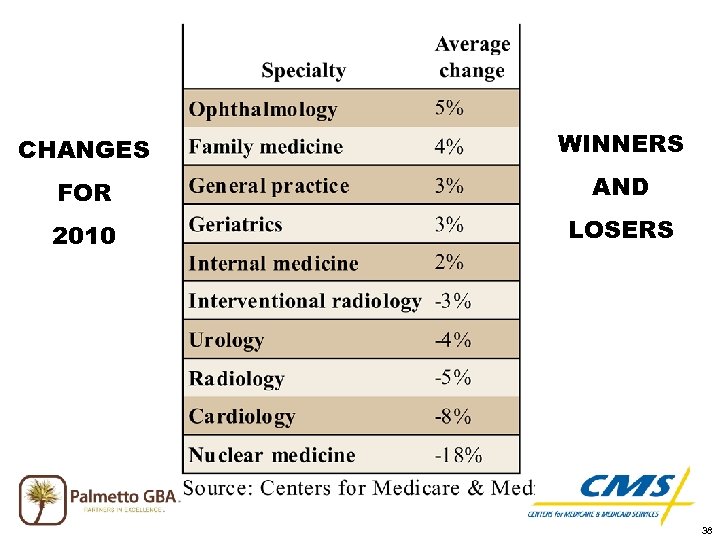 CHANGES WINNERS FOR AND 2010 LOSERS 38
 39
39
 40
40
 41
41
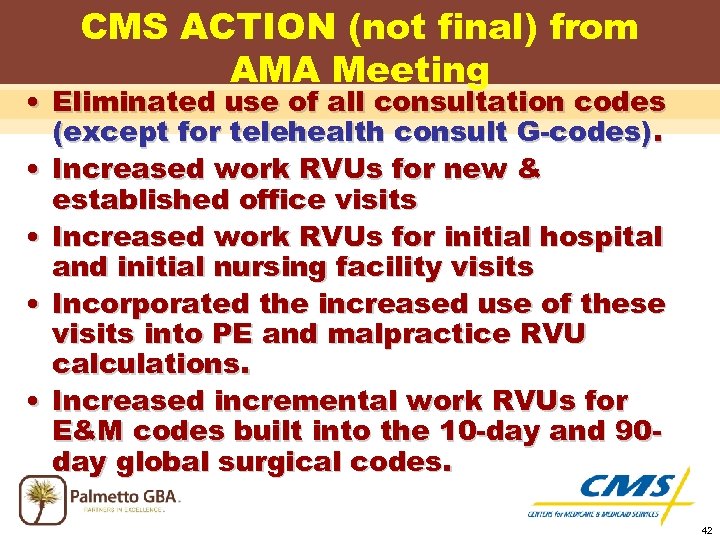 CMS ACTION (not final) from AMA Meeting • Eliminated use of all consultation codes (except for telehealth consult G-codes). • Increased work RVUs for new & established office visits • Increased work RVUs for initial hospital and initial nursing facility visits • Incorporated the increased use of these visits into PE and malpractice RVU calculations. • Increased incremental work RVUs for E&M codes built into the 10 -day and 90 day global surgical codes. 42
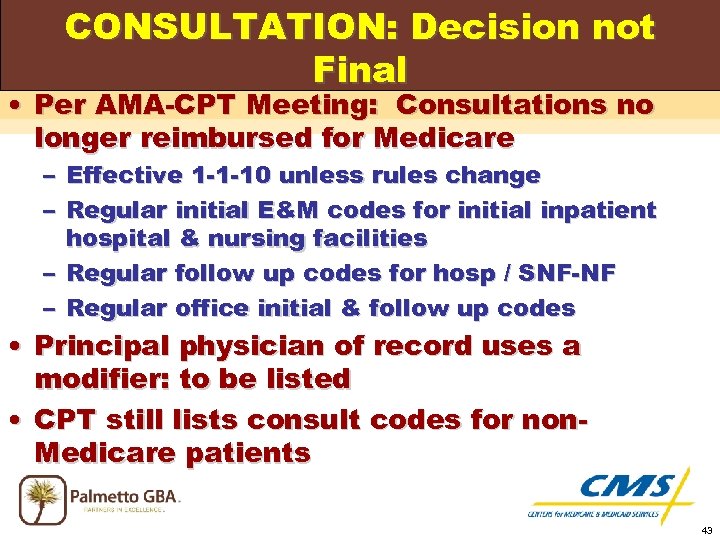 CONSULTATION: Decision not Final • Per AMA-CPT Meeting: Consultations no longer reimbursed for Medicare – Effective 1 -1 -10 unless rules change – Regular initial E&M codes for initial inpatient hospital & nursing facilities – Regular follow up codes for hosp / SNF-NF – Regular office initial & follow up codes • Principal physician of record uses a modifier: to be listed • CPT still lists consult codes for non. Medicare patients 43
 QUESTIONS 44