 Скачать презентацию Management CONFLICTS 13 February 2018 Submitted by Dr
Management 6.ppt
- Количество слайдов: 21



Management CONFLICTS 13 February 2018 Submitted by Dr. Vladlena E. Zarembo
CONFLICT Øa serious disagreement or argument, typically a protracted one, or Ø an incompatibility between two or more opinions, principles, or interests, or Øa condition in which a person experiences a clash of opposing wishes or needs
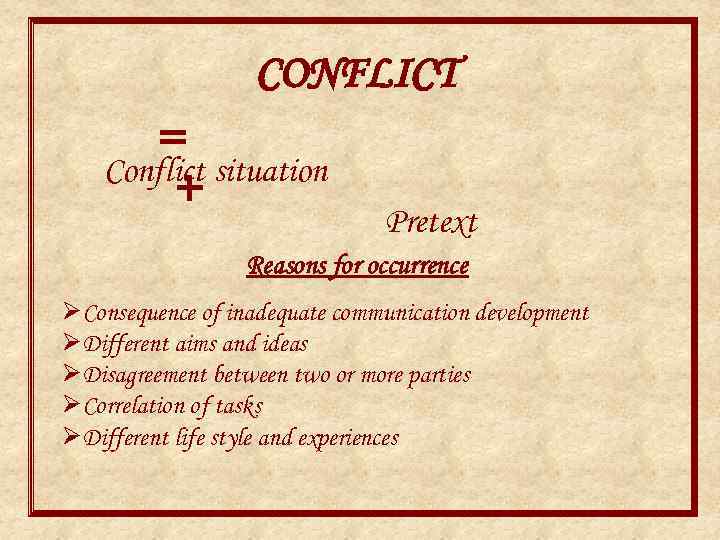
CONFLICT = situation Conflict + Pretext Reasons for occurrence ØConsequence of inadequate communication development ØDifferent aims and ideas ØDisagreement between two or more parties ØCorrelation of tasks ØDifferent life style and experiences
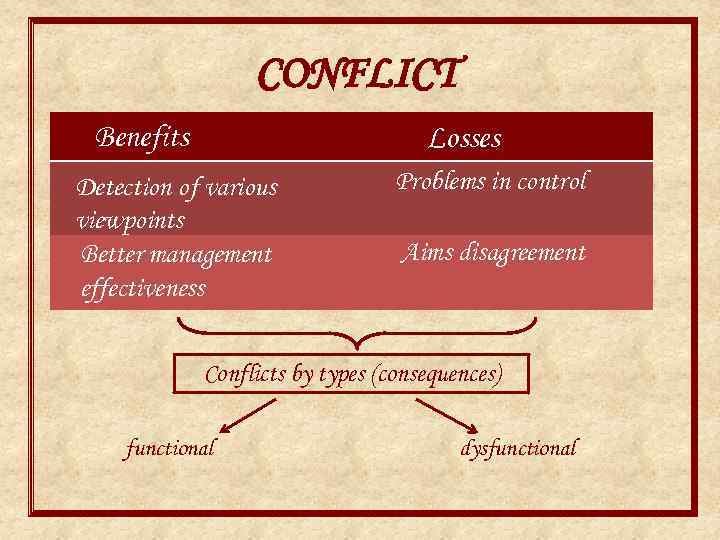
CONFLICT Benefits Losses Detection of various viewpoints Better management effectiveness Problems in control Aims disagreement Conflicts by types (consequences) functional dysfunctional
CONFLICT Conflicts by types (by participants) interpersonal between a person and a group (f. i. by not popular measures) long-term short-term (conflict situation) (conflict pretext)
CONFLICT Conflicts by types (by participants) interpersonal between a person and a group (f. i. by not popular measures) long-term short-term (conflict situation) (conflict pretext)
CONFLICT Conflicts by types (by participants) interpersonal between groups between a person and a group (f. i. by not popular measures)
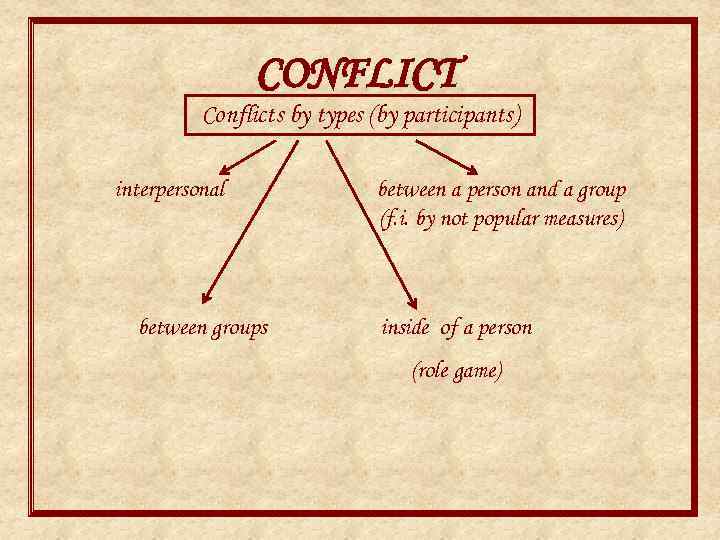
CONFLICT Conflicts by types (by participants) interpersonal between groups between a person and a group (f. i. by not popular measures) inside of a person (role game)
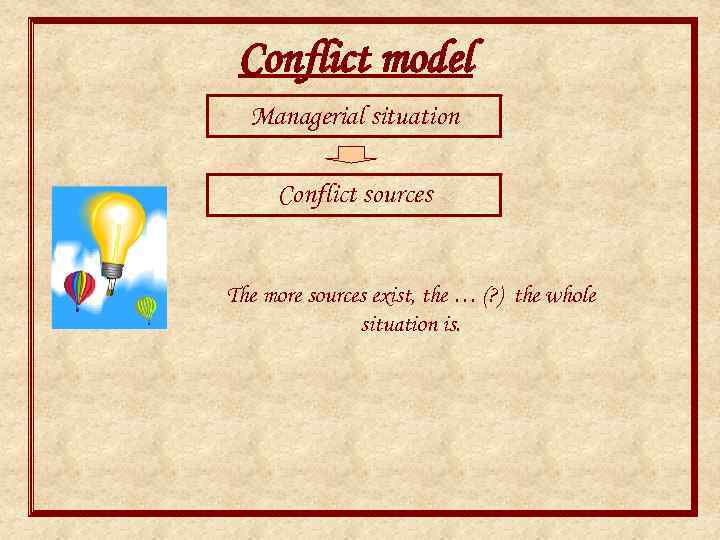
Conflict model Managerial situation Conflict sources The more sources exist, the … (? ) the whole situation is.
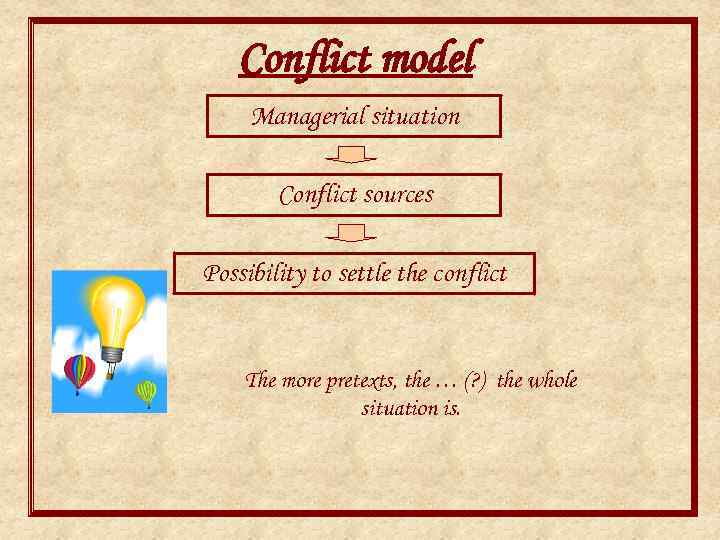
Conflict model Managerial situation Conflict sources Possibility to settle the conflict The more pretexts, the … (? ) the whole situation is.
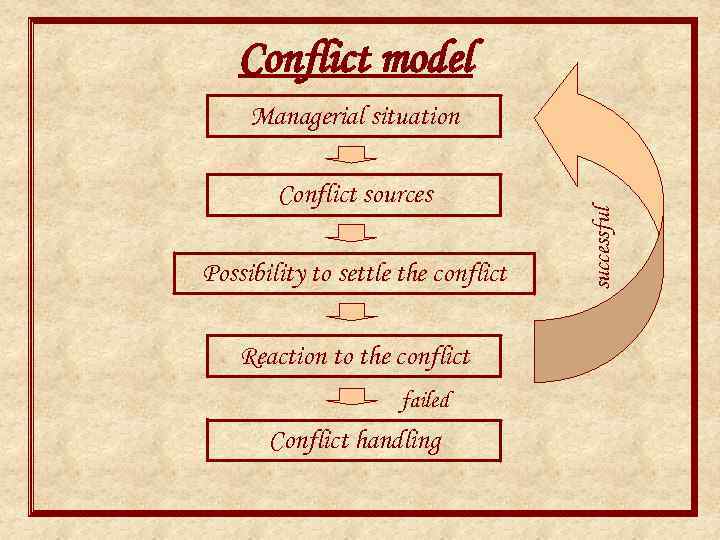
Conflict model Conflict sources Possibility to settle the conflict Reaction to the conflict failed Conflict handling successful Managerial situation
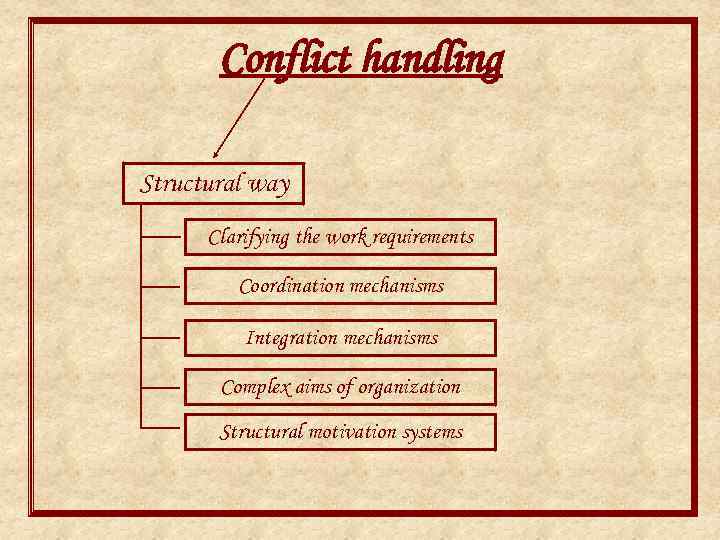
Conflict handling Structural way Clarifying the work requirements Coordination mechanisms Integration mechanisms Complex aims of organization Structural motivation systems
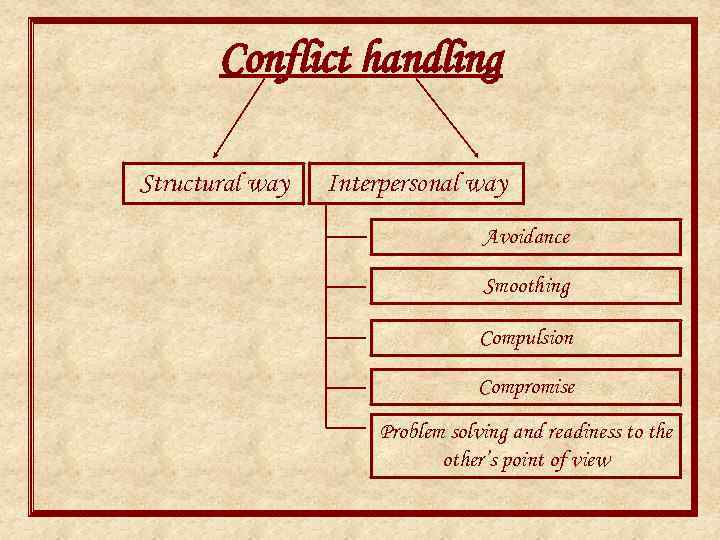
Conflict handling Structural way Interpersonal way Avoidance Smoothing Compulsion Compromise Problem solving and readiness to the other’s point of view
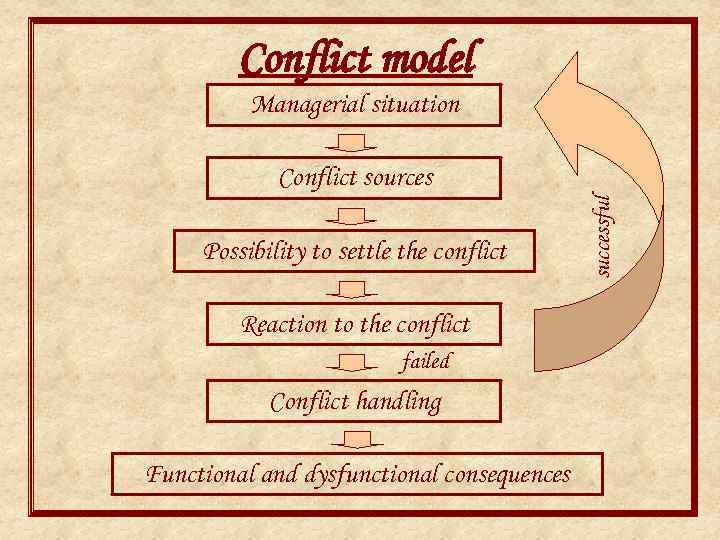
Conflict model Managerial situation Possibility to settle the conflict Reaction to the conflict failed Conflict handling Functional and dysfunctional consequences successful Conflict sources
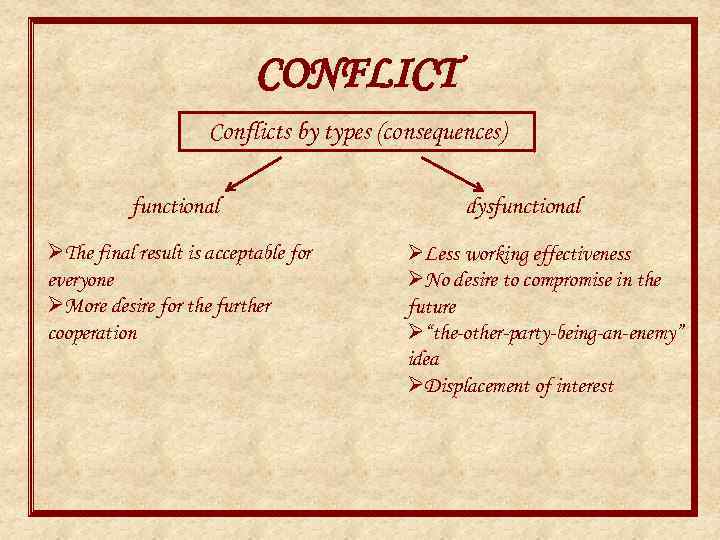
CONFLICT Conflicts by types (consequences) functional ØThe final result is acceptable for everyone ØMore desire for the further cooperation dysfunctional ØLess working effectiveness ØNo desire to compromise in the future Ø“the-other-party-being-an-enemy” idea ØDisplacement of interest
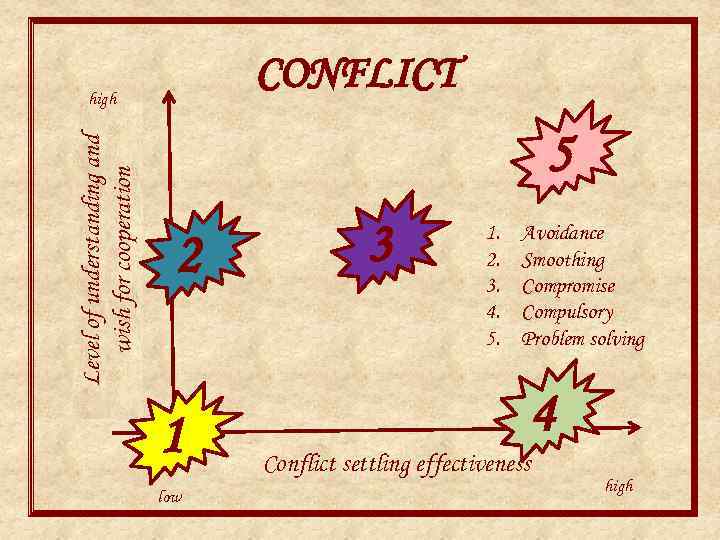
CONFLICT Level of understanding and wish for cooperation high 5 2 1 low 3 1. 2. 3. 4. 5. Avoidance Smoothing Compromise Compulsory Problem solving 4 Conflict settling effectiveness high
Mostly common ways The trial of Solomon Mc. Carthyism
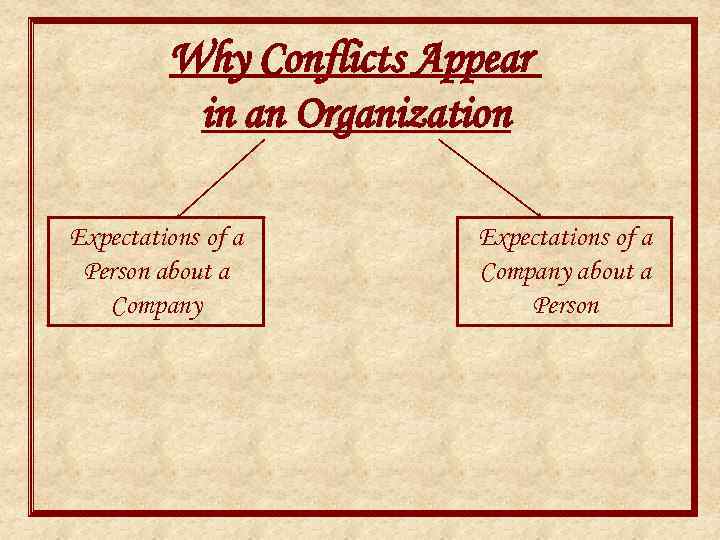
Why Conflicts Appear in an Organization Expectations of a Person about a Company Expectations of a Company about a Person
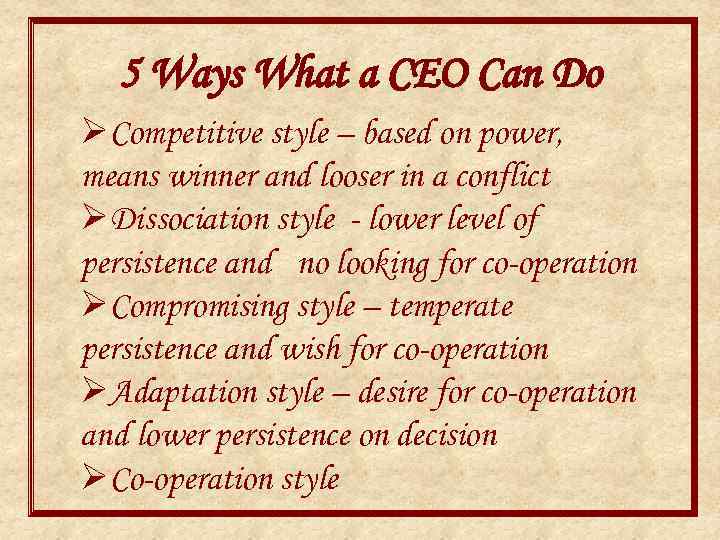
5 Ways What a CEO Can Do ØCompetitive style – based on power, means winner and looser in a conflict ØDissociation style - lower level of persistence and no looking for co-operation ØCompromising style – temperate persistence and wish for co-operation ØAdaptation style – desire for co-operation and lower persistence on decision ØCo-operation style
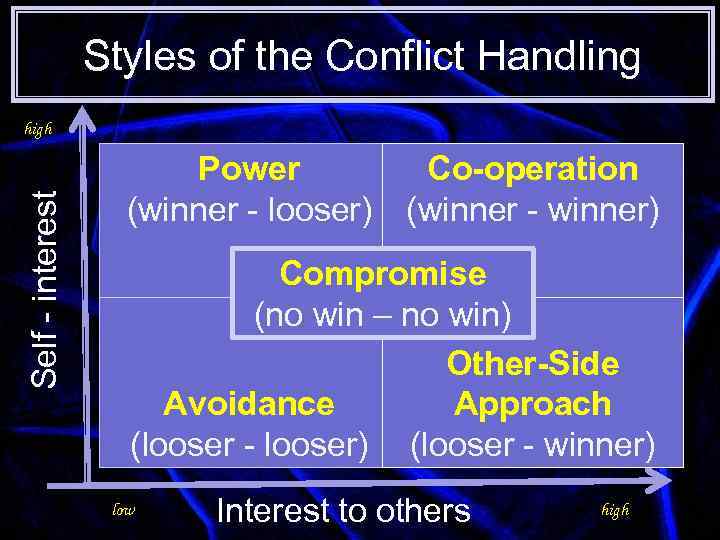
Styles of the Conflict Handling Self - interest high Power (winner - looser) Co-operation (winner - winner) Compromise (no win – no win) Other-Side Avoidance Approach (looser - looser) (looser - winner) low Interest to others high
Sincerely yours, Vladlena Zarembo
Скачать презентацию Management CONFLICTS 13 February 2018 Submitted by Dr
Management 6.ppt