 Скачать презентацию Management Arab World Edition Robbins Coulter Sidani Jamali
42e272735419d00ab35fd74875bbd8cd.ppt
- Количество слайдов: 33




Management: Arab World Edition Robbins, Coulter, Sidani, Jamali Chapter 16: Managers As Leaders Lecturer: [Dr. Naser Al-Khdour]
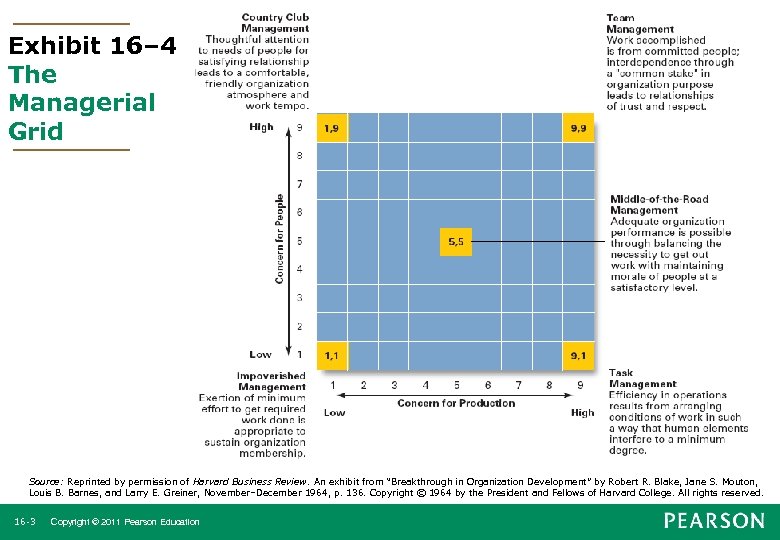
Exhibit 16– 4 The Managerial Grid Source: Reprinted by permission of Harvard Business Review. An exhibit from “Breakthrough in Organization Development” by Robert R. Blake, Jane S. Mouton, Louis B. Barnes, and Larry E. Greiner, November–December 1964, p. 136. Copyright © 1964 by the President and Fellows of Harvard College. All rights reserved. 16 -3 Copyright © 2011 Pearson Education
Contingency Theories of Leadership 1. Explain Fiedler’s contingency model of leadership. 2. Describe situational leadership theory. 3. Discuss how path–goal theory explains leadership. 16 -4 Copyright © 2011 Pearson Education
The Fiedler Model - 16 -5 Proposes that effective group performance depends upon the proper match between the leader’s style of interacting with followers and the degree to which the situation allows the leader to control and influence. Copyright © 2011 Pearson Education
The Fiedler Model Assumptions: - A certain leadership style should be most effective in different types of situations. - Leaders do not readily change leadership styles. - Matching the leader to the situation or changing the situation to make it favorable to the leader is required. 16 -6 Copyright © 2011 Pearson Education
The Fiedler Model • Situational factors in matching leader to the situation: • Leader–member • Task structure • Position 16 -7 power Copyright © 2011 Pearson Education relations
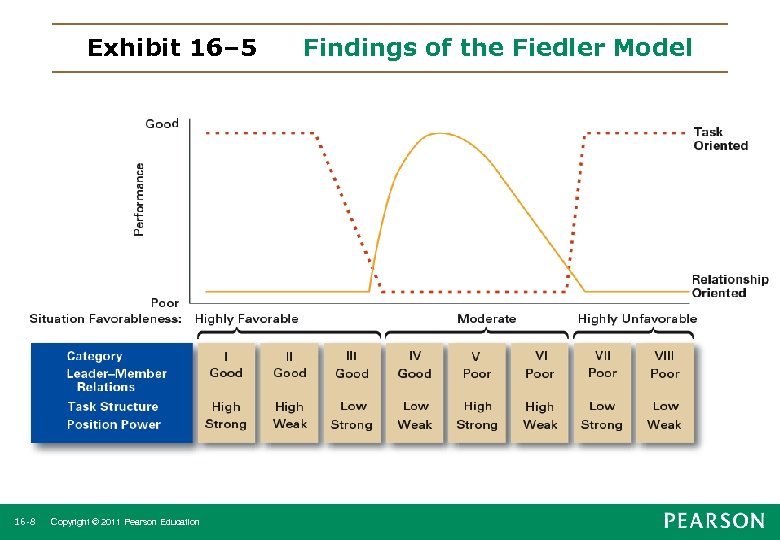
Exhibit 16– 5 16 -8 Copyright © 2011 Pearson Education Findings of the Fiedler Model
Hersey and Blanchard’s Situational Leadership Theory (SLT) • Argues that successful leadership is achieved by selecting the right leadership style which is contingent on the level of the followers’ readiness. • Acceptance: leadership effectiveness depends on whether followers accept or reject a leader. • Readiness: the extent to which followers have the ability and willingness to accomplish a specific task. • 16 -9 Leaders must relinquish control over and contact with followers as they become more competent. Copyright © 2011 Pearson Education
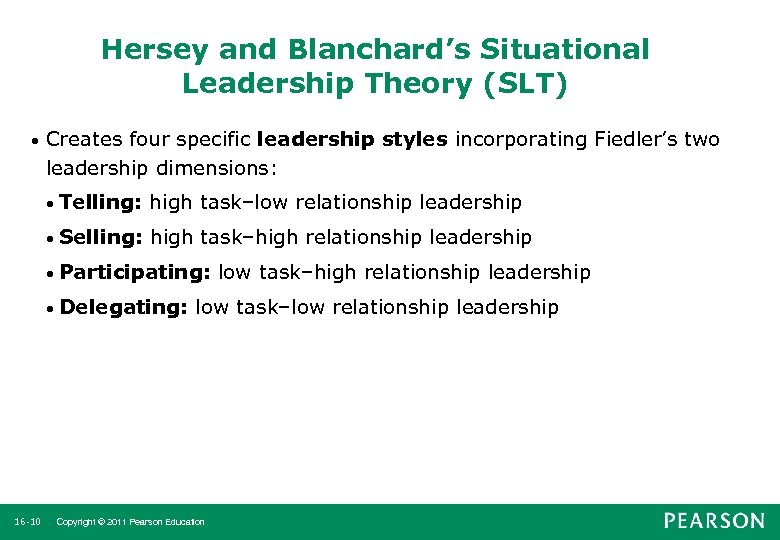
Hersey and Blanchard’s Situational Leadership Theory (SLT) • Creates four specific leadership styles incorporating Fiedler’s two leadership dimensions: • Telling: high task–low relationship leadership • Selling: high task–high relationship leadership • Participating: • Delegating: 16 -10 low task–high relationship leadership low task–low relationship leadership Copyright © 2011 Pearson Education
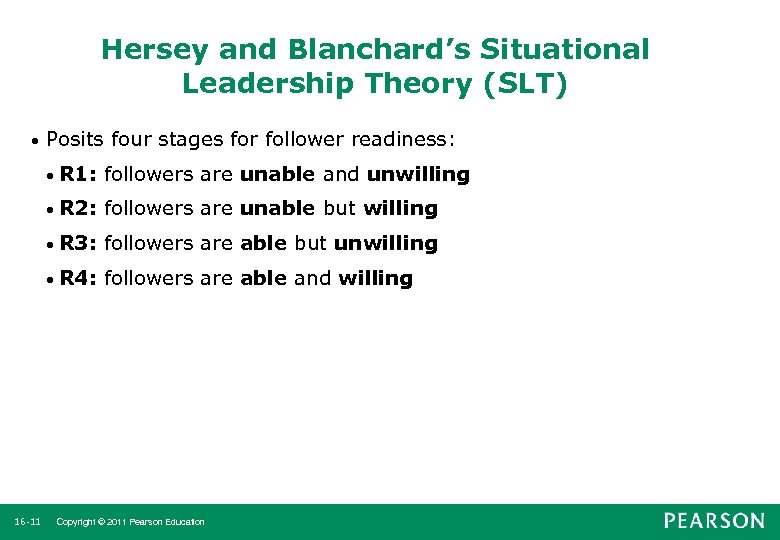
Hersey and Blanchard’s Situational Leadership Theory (SLT) • Posits four stages for follower readiness: • R 1: • R 2: followers are unable but willing • R 3: followers are able but unwilling • R 4: 16 -11 followers are unable and unwilling followers are able and willing Copyright © 2011 Pearson Education
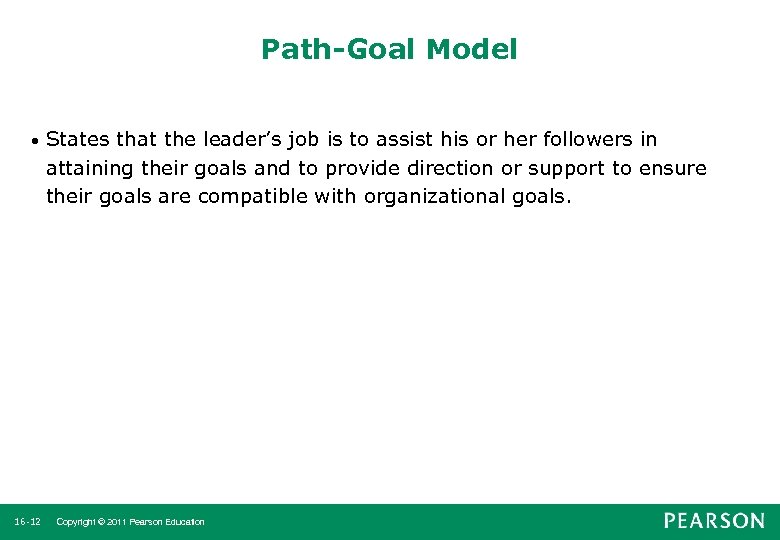
Path-Goal Model • 16 -12 States that the leader’s job is to assist his or her followers in attaining their goals and to provide direction or support to ensure their goals are compatible with organizational goals. Copyright © 2011 Pearson Education
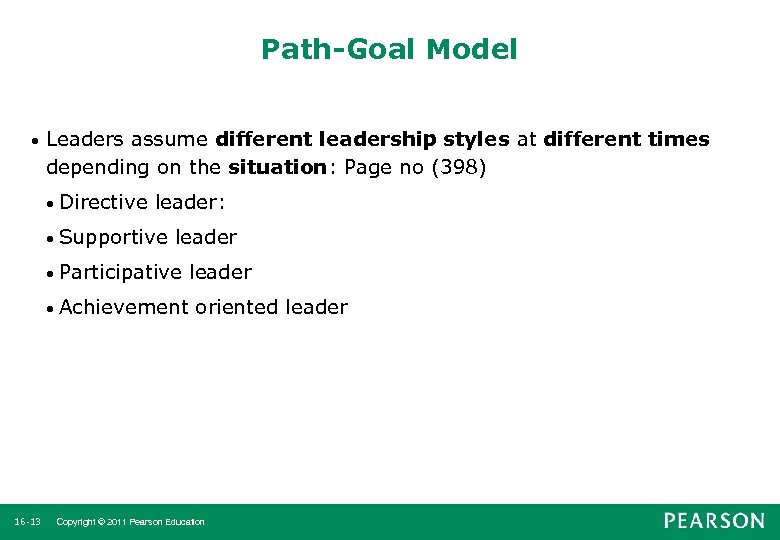
Path-Goal Model • Leaders assume different leadership styles at different times depending on the situation: Page no (398) • Directive leader: • Supportive leader • Participative • Achievement 16 -13 leader oriented leader Copyright © 2011 Pearson Education
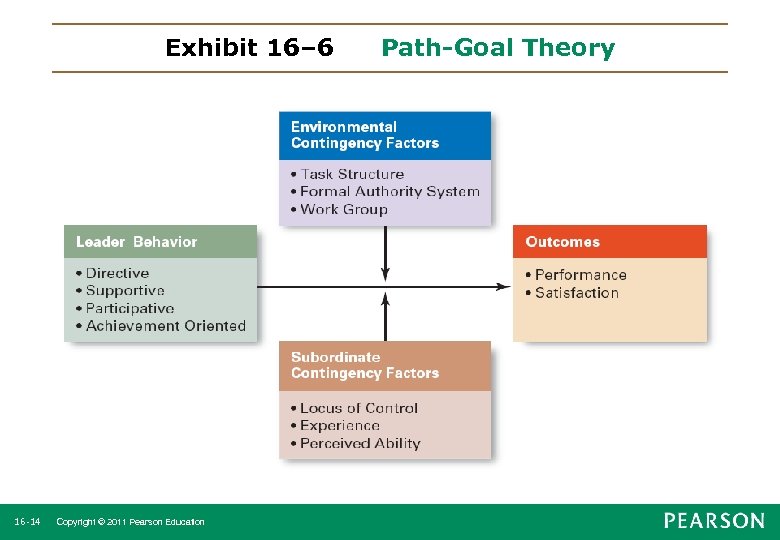
Exhibit 16– 6 16 -14 Copyright © 2011 Pearson Education Path-Goal Theory
Contemporary Views of Leadership 1. Differentiate between transactional and transformational leaders. 2. Describe charismatic and visionary leadership. 3. Discuss what team leadership involves. 16 -15 Copyright © 2011 Pearson Education
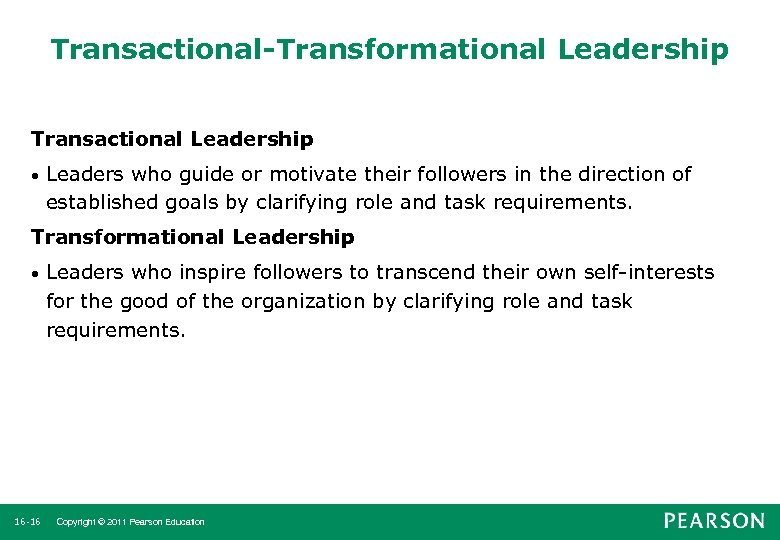
Transactional-Transformational Leadership Transactional Leadership • Leaders who guide or motivate their followers in the direction of established goals by clarifying role and task requirements. Transformational Leadership • 16 -16 Leaders who inspire followers to transcend their own self-interests for the good of the organization by clarifying role and task requirements. Copyright © 2011 Pearson Education
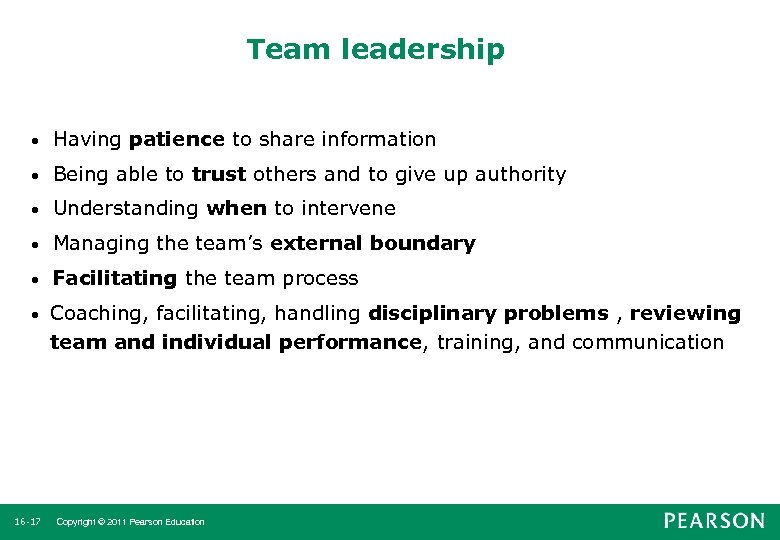
Team leadership • Having patience to share information • Being able to trust others and to give up authority • Understanding when to intervene • Managing the team’s external boundary • Facilitating the team process • Coaching, facilitating, handling disciplinary problems , reviewing team and individual performance, training, and communication 16 -17 Copyright © 2011 Pearson Education
Leadership Issues in the Twenty-First Century 1. Managing Power 2. Developing Trust 3. Empowering Employees 4. Leading across Cultures 5. Understanding Gender Differences 6. Gender differences in the Arab World 7. Becoming an Effective Leader 16 -18 Copyright © 2011 Pearson Education
Managing Power Legitimate power • The power a leader has as a result of his or her position. • Coercive power • The power a leader has to punish or control. • Reward power • The power to give positive benefits or rewards. • 16 -19 Copyright © 2011 Pearson Education Expert power • The influence a leader can exert as a result of his or her expertise, skills, or knowledge. • Referent power • The power of a leader that arises because of a person’s desirable resources or admired personal traits. •
Developing Trust Credibility (of a Leader) - The assessment of a leader’s honesty, competence, and ability to inspire by his or her followers. Trust - Is the belief of followers and others in the integrity, character, and ability of a leader. - Is related to increases in job performance, organizational citizenship behaviors, job satisfaction, and organization commitment. 16 -20 Copyright © 2011 Pearson Education
Dimensions of Trust Integrity: Honesty and truthfulness Competence: Technical and interpersonal knowledge and skills Consistency: Reliability, predictability, and good judgment in handling situations Loyalty: Willingness to protect a person, physically and emotionally Openness: Willingness to share ideas and information freely 16 -21 Copyright © 2011 Pearson Education
Empowering Employees Empowerment involves increasing the decision-making discretion of workers such that teams can make key operating decisions that directly affect their work. • Why empower employees? • Quicker responses to problems and faster decisions • Addresses the problem of increased spans of control in relieving managers to work on other problems 16 -22 Copyright © 2011 Pearson Education
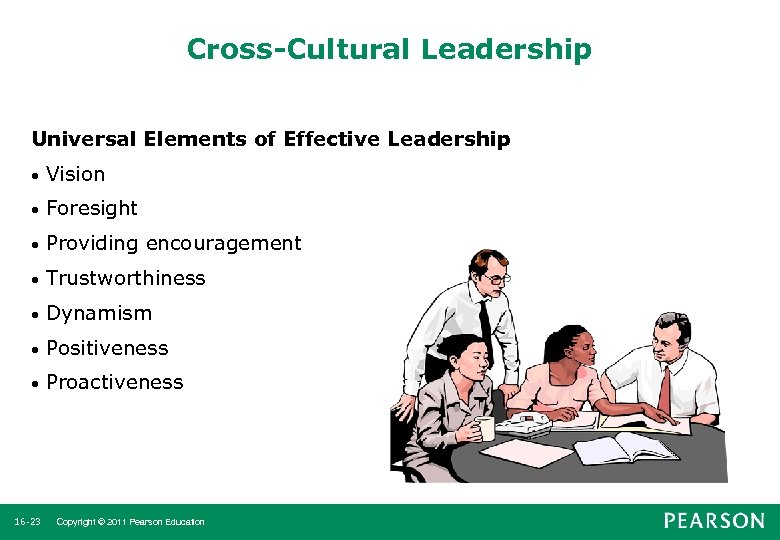
Cross-Cultural Leadership Universal Elements of Effective Leadership • Vision • Foresight • Providing encouragement • Trustworthiness • Dynamism • Positiveness • Proactiveness 16 -23 Copyright © 2011 Pearson Education
Exhibit 16– 7 Selected Cross-Cultural Leadership Findings • Korean leaders are expected to be paternalistic toward employees. • Arab leaders who show kindness or generosity without being asked to do so are seen by other Arabs as weak. • Japanese leaders are expected to be humble and speak frequently. • Scandinavian and Dutch leaders who single out individuals with public praise are likely to embarrass, not energize, those individuals. Source: Based on J. C. Kennedy, “Leadership in Malaysia: Traditional Values, International Outlook, ” Academy of Management Executive, August 2002, pp. 15 – 16; F. C. Brodbeck, M. Frese, and M. Javidan, “Leadership Made in Germany: Low on Compassion, High on Performance, ” Academy of Management Executive, February 2002, pp. 16– 29; M. F. Peterson and J. G. Hunt, “International Perspectives on International Leadership, ” Leadership Quarterly, Fall 1997, pp. 203– 31; R. J. House and R. N. Aditya, “The Social Scientific Study of Leadership: Quo Vadis? ” Journal of Management, vol. 23, no. 3, (1997), p. 463; and R. J. House, “Leadership in the Twenty-First Century, ” in A. Howard (ed. ), The Changing Nature of Work (San Francisco: Jossey-Bass, 1995), p. 442. 16 -24 Copyright © 2011 Pearson Education
Exhibit 16– 7 (cont’d) Selected Cross-Cultural Leadership Findings • Effective leaders in Malaysia are expected to show compassion while using more of an autocratic than a participative style. • Effective German leaders are characterized by high performance orientation, low compassion, low selfprotection, low team orientation, high autonomy, and high participation. Source: Based on J. C. Kennedy, “Leadership in Malaysia: Traditional Values, International Outlook, ” Academy of Management Executive, August 2002, pp. 15 – 16; F. C. Brodbeck, M. Frese, and M. Javidan, “Leadership Made in Germany: Low on Compassion, High on Performance, ” Academy of Management Executive, February 2002, pp. 16– 29; M. F. Peterson and J. G. Hunt, “International Perspectives on International Leadership, ” Leadership Quarterly, Fall 1997, pp. 203– 31; R. J. House and R. N. Aditya, “The Social Scientific Study of Leadership: Quo Vadis? ” Journal of Management, vol. 23, no. 3, (1997), p. 463; and R. J. House, “Leadership in the Twenty-First Century, ” in A. Howard (ed. ), The Changing Nature of Work (San Francisco: Jossey-Bass, 1995), p. 442. 16 -25 Copyright © 2011 Pearson Education
Gender Differences and Leadership: Research findings - Males and females use different styles. - Women tend to adopt a more democratic or participative style unless in a male-dominated job. - Women tend to use transformational leadership. - Men tend to use transactional leadership. - Even if men and women differ in their leadership styles, we should not assume that one is always preferable to the other. 16 -26 Copyright © 2011 Pearson Education
Gender Differences In Leadership In The Arab World • Leadership positions in the Arab world have traditionally been monopolized by men. • The dominant leadership prototype in Arab culture is a male figure. • However, many prominent women leaders have managed to reach top decision-making positions. 16 -27 Copyright © 2011 Pearson Education
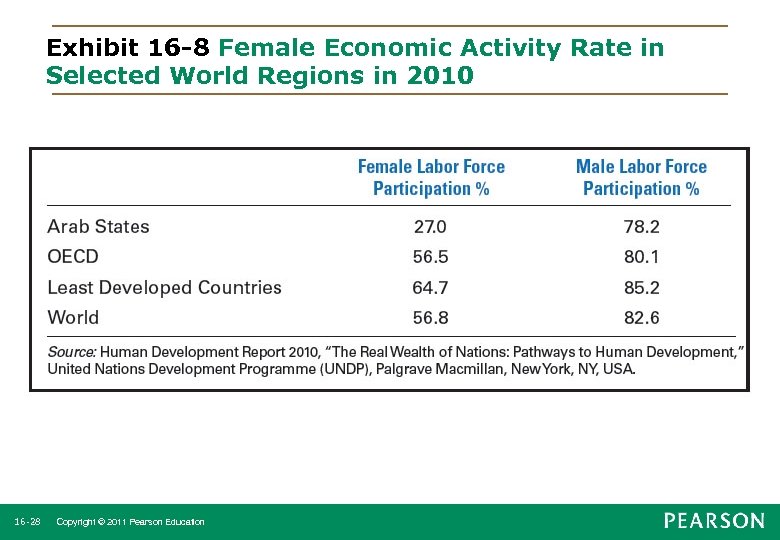
Exhibit 16 -8 Female Economic Activity Rate in Selected World Regions in 2010 16 -28 Copyright © 2011 Pearson Education
Becoming an Effective Leader: Leader Training • More likely to be successful with individuals who are high selfmonitors than with low self-monitors. • Individuals with higher levels of motivation to lead are more receptive to leadership development opportunities What can be taught: – – Trust-building – Mentoring – 16 -29 Implementation skills Situational analysis Copyright © 2011 Pearson Education
Becoming an Effective Leader: Substitutes for Leadership Sometimes, leadership may not be important! Follower characteristics - Experience, training, professional orientation, or the need for independence Job characteristics - Routine, unambiguous, and satisfying jobs Organizational characteristics - 16 -30 Explicit formalized goals, rigid rules and procedures, or cohesive work groups Copyright © 2011 Pearson Education
Terms to Know leadership leader-member relations task structure behavioral theories autocratic style democratic style laissez-faire style initiating structure consideration high-high leader managerial grid Fiedler contingency model position power situational leadership theory (SLT) readiness leader participation model path–goal theory transactional leaders transformational leaders 16 -31 Copyright © 2011 Pearson Education
Terms to Know legitimate power coercive power reward power expert power referent power credibility trust empowerment 16 -32 Copyright © 2011 Pearson Education

This work is protected by local and international copyright laws and is provided solely for the use of instructors in teaching their courses and assessing student learning. Dissemination or sale of any part of this work (including on the World Wide Web) will destroy the integrity of the work and is not permitted. The work and materials from this site should never be made available to students except by instructors using the accompanying text in their classes. All recipients of this work are expected to abide by these restrictions and to honor the intended pedagogical purposes and the needs of other instructors who rely on these materials. 16 -33 Copyright © 2011 Pearson Education
Скачать презентацию Management Arab World Edition Robbins Coulter Sidani Jamali
42e272735419d00ab35fd74875bbd8cd.ppt