


 Скачать презентацию МАКРОЭКОНОМИКА ТЕМА 3 МОДЕЛЬ РЫНКА ТОВАРОВ И УСЛУГ
Tema_3_Model_rynka_tovarov_i_uslug.pptx
- Количество слайдов: 16
 МАКРОЭКОНОМИКА ТЕМА 3. МОДЕЛЬ РЫНКА ТОВАРОВ И УСЛУГ (КЕЙНСИАНСКИЙ КРЕСТ)
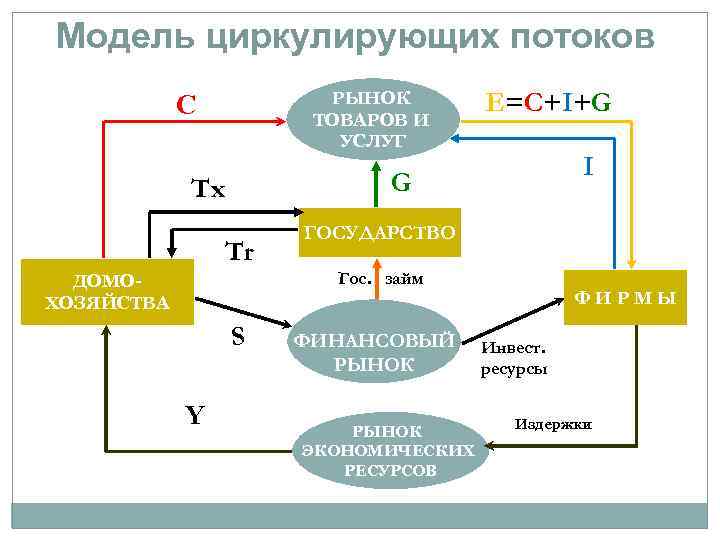 Модель циркулирующих потоков РЫНОК ТОВАРОВ И УСЛУГ C E=C+I+G I G Tx Tr ГОСУДАРСТВО Гос. займ ДОМОХОЗЯЙСТВА S Y ФИНАНСОВЫЙ РЫНОК ЭКОНОМИЧЕСКИХ РЕСУРСОВ ФИРМЫ Инвест. ресурсы Издержки
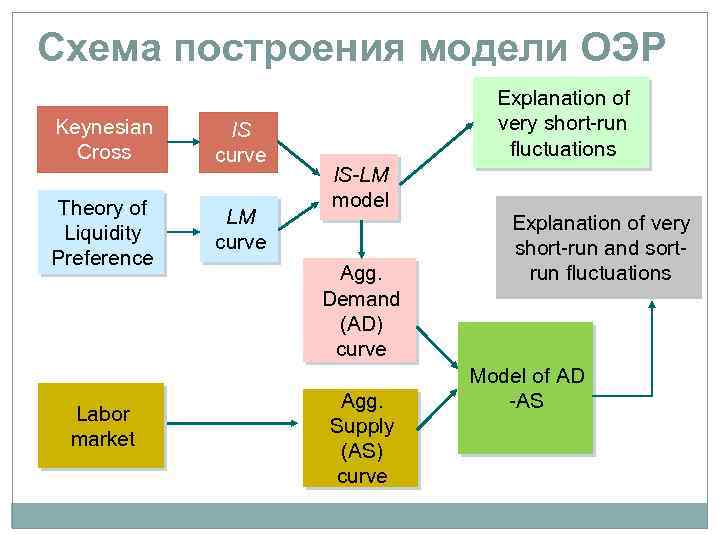 Схема построения модели ОЭР Keynesian Cross IS curve Theory of Liquidity Preference LM curve Labor market Explanation of very short-run fluctuations IS-LM model Agg. Demand (AD) curve Agg. Supply (AS) curve Explanation of very short-run and sortrun fluctuations Model of AD -AS
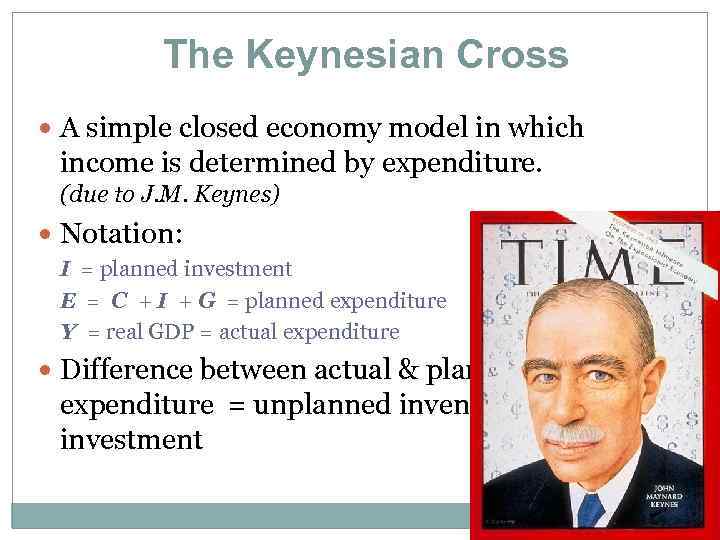 The Keynesian Cross A simple closed economy model in which income is determined by expenditure. (due to J. M. Keynes) Notation: I = planned investment E = C + I + G = planned expenditure Y = real GDP = actual expenditure Difference between actual & planned expenditure = unplanned inventory investment
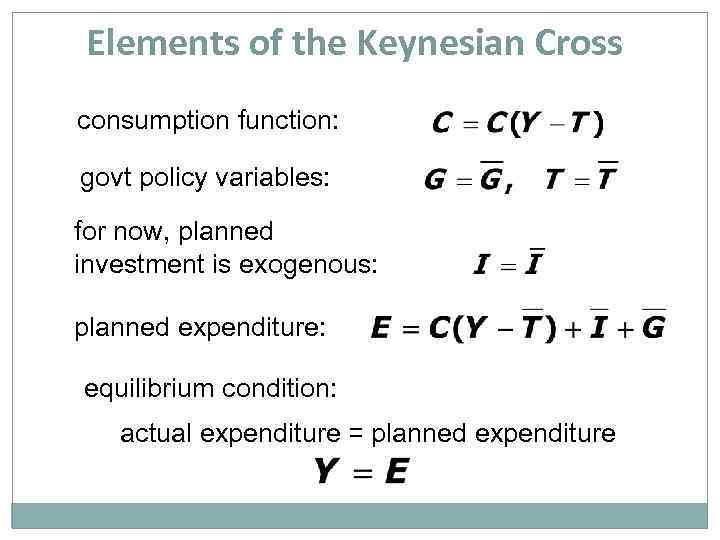 Elements of the Keynesian Cross consumption function: govt policy variables: for now, planned investment is exogenous: planned expenditure: equilibrium condition: actual expenditure = planned expenditure
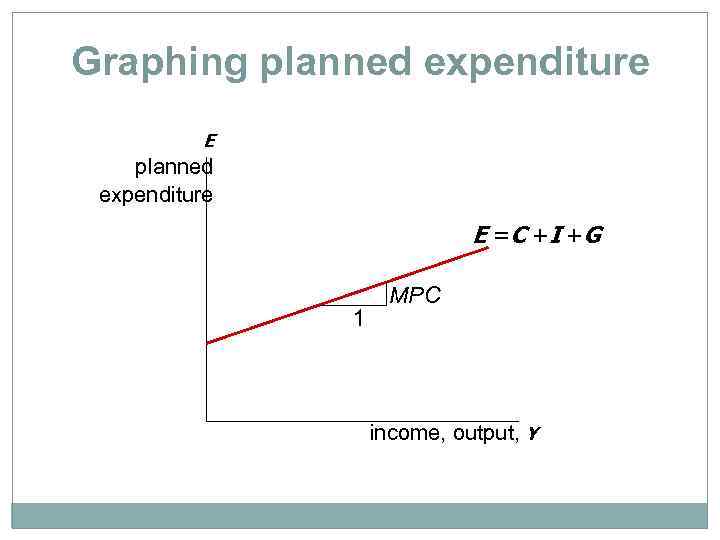 Graphing planned expenditure E =C +I +G 1 MPC income, output, Y
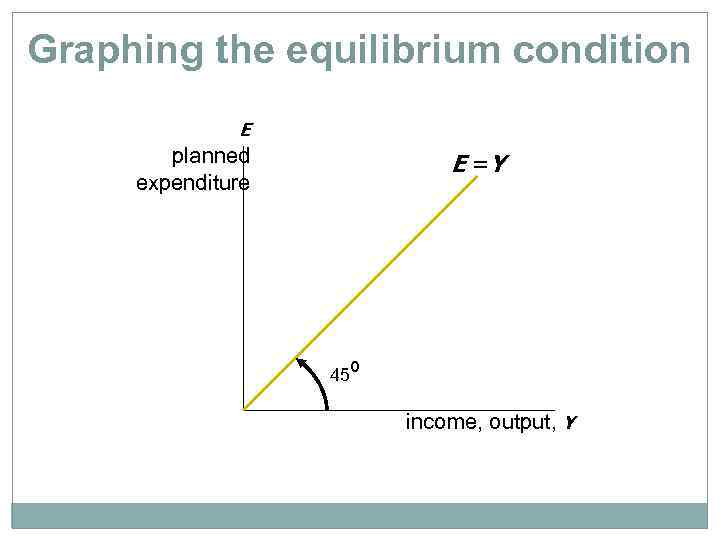 Graphing the equilibrium condition E planned expenditure E =Y 45º income, output, Y
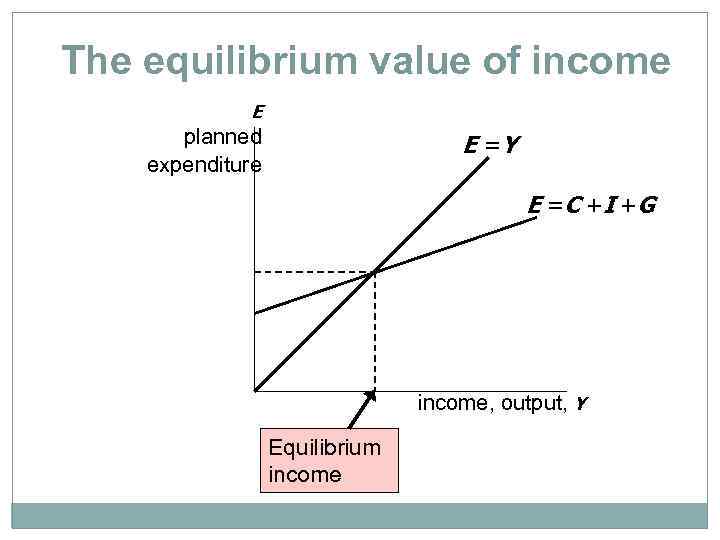 The equilibrium value of income E planned expenditure E =Y E =C +I +G income, output, Y Equilibrium income
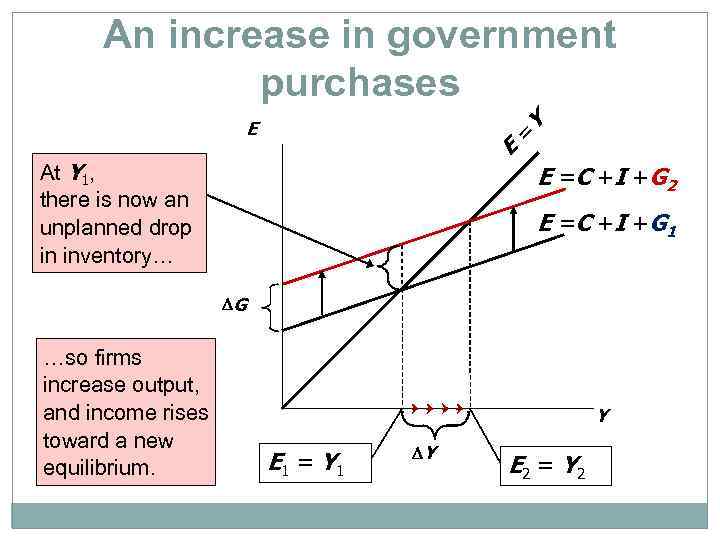 An increase in government purchases = E E At Y 1, there is now an unplanned drop in inventory… Y E = C + I + G 2 E = C + I + G 1 G …so firms increase output, and income rises toward a new equilibrium. Y E 1 = Y 1 Y E 2 = Y 2
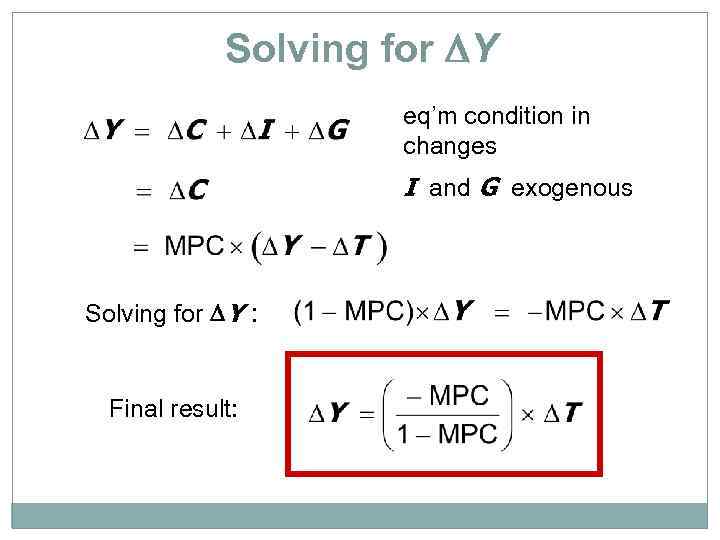
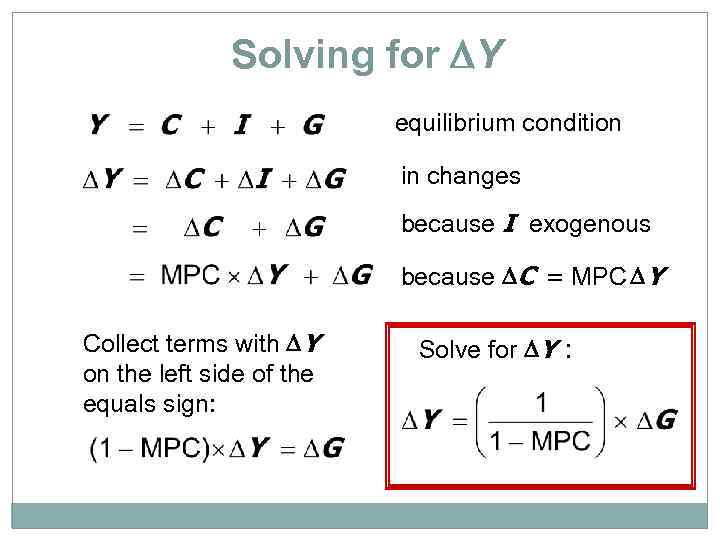 Solving for Y equilibrium condition in changes because I exogenous because C = MPC Y Collect terms with Y on the left side of the equals sign: Solve for Y :
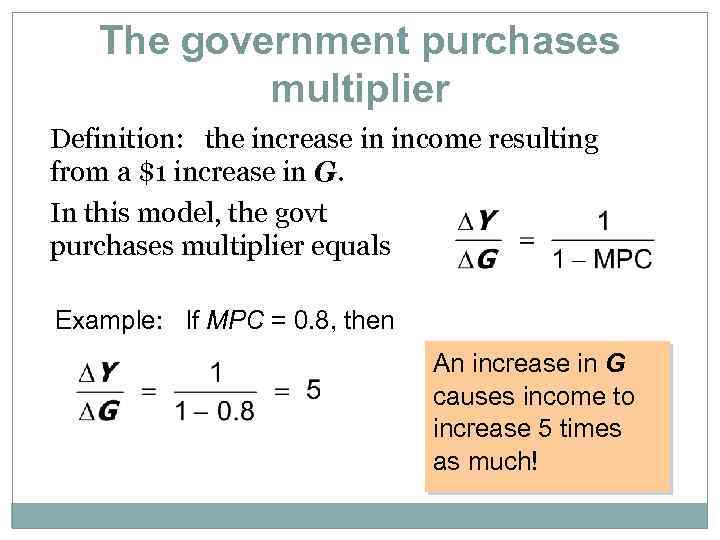 The government purchases multiplier Definition: the increase in income resulting from a $1 increase in G. In this model, the govt purchases multiplier equals Example: If MPC = 0. 8, then An increase in G causes income to increase 5 times as much!
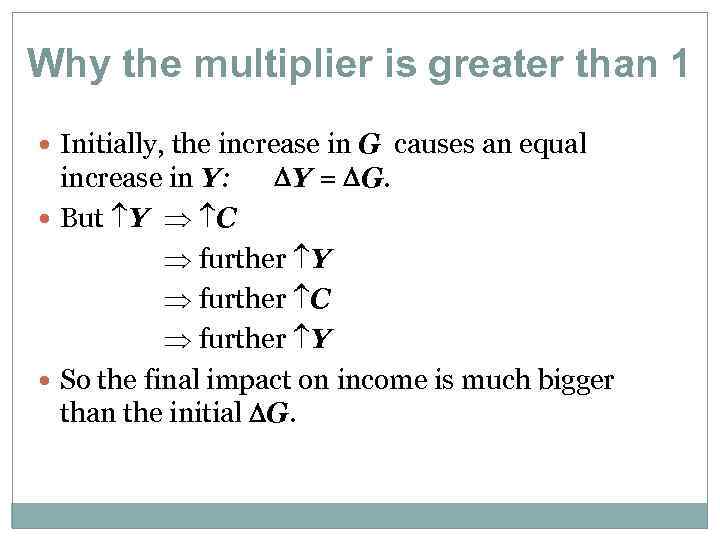 Why the multiplier is greater than 1 Initially, the increase in G causes an equal increase in Y: Y = G. But Y C further Y further C further Y So the final impact on income is much bigger than the initial G.
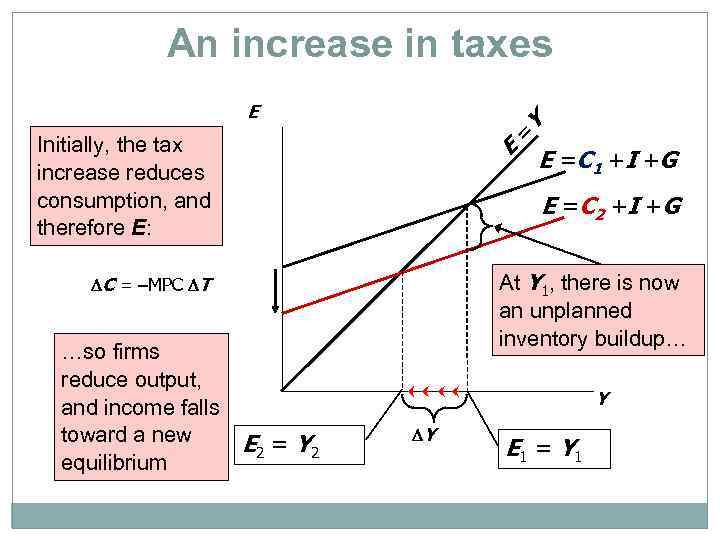 An increase in taxes = E Initially, the tax increase reduces consumption, and therefore E: E E =C +I +G 1 E =C 2 +I +G At Y 1, there is now an unplanned inventory buildup… C = MPC T …so firms reduce output, and income falls toward a new E 2 = Y 2 equilibrium Y Y Y E 1 = Y 1
 Solving for Y eq’m condition in changes I and G exogenous Solving for Y : Final result:
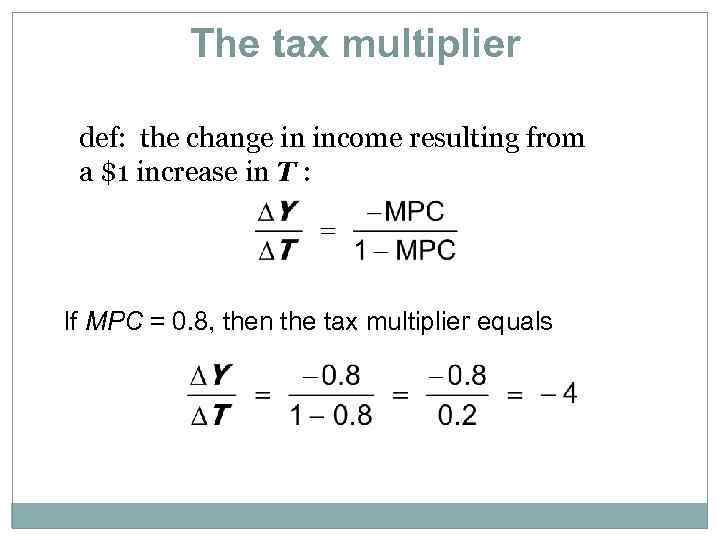 The tax multiplier def: the change in income resulting from a $1 increase in T : If MPC = 0. 8, then the tax multiplier equals
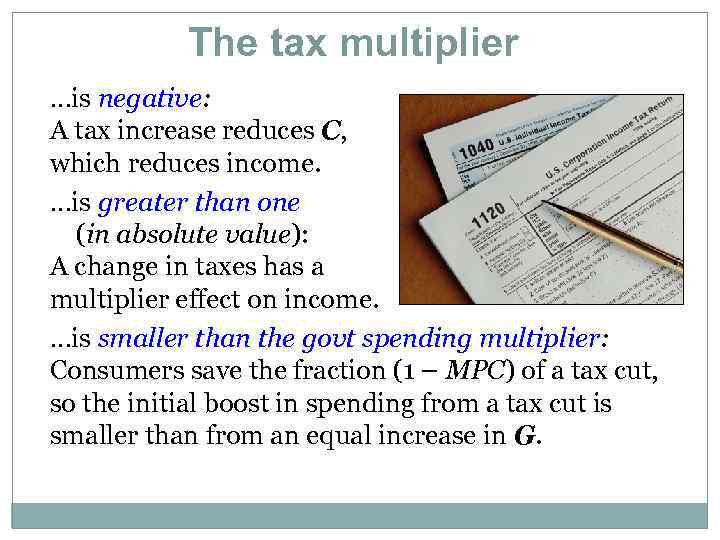 The tax multiplier …is negative: A tax increase reduces C, which reduces income. …is greater than one (in absolute value): A change in taxes has a multiplier effect on income. …is smaller than the govt spending multiplier: Consumers save the fraction (1 – MPC) of a tax cut, so the initial boost in spending from a tax cut is smaller than from an equal increase in G.