 Скачать презентацию Making The Most of Short Term Study Abroad
7a093fd3cd76878e3f0f48eaa5ac1f7c.ppt
- Количество слайдов: 28



Making The Most of (Short. Term) Study Abroad Experiences: From Tourism to Engagement Jacqueline M. Moore December 1 , 2010
Why Do It? • Short-term faculty-led courses potentially offer exciting possibilities in content and pedagogy. • Short-term courses can serve more students. • Faculty-led courses engage faculty members. • But … study-abroad professionals have reservations about short-term, faculty-led International courses.
The Challenge • How to design and administer programs that can engage students in a higher level of learning? Some Keywords: – – Cultural integration Partnerships Immersion Engagement
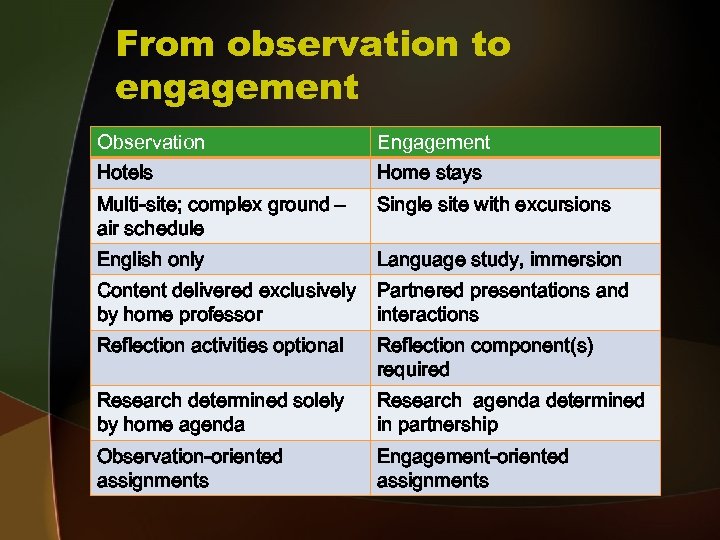
From observation to engagement Observation Engagement Hotels Home stays Multi-site; complex ground – air schedule Single site with excursions English only Language study, immersion Content delivered exclusively by home professor Partnered presentations and interactions Reflection activities optional Reflection component(s) required Research determined solely by home agenda Research agenda determined in partnership Observation-oriented assignments Engagement-oriented assignments
Sites • Often, the more sites you visit, the fewer the opportunities for engagement with local people and institutions. • With many sites on the itinerary special planning is required to create the conditions for experiential cultural learning
Pre-Departure Preparation • Readings and lectures on home campus • Student research into sites for onsite presentation • Language lessons
Onsite Engagement tasks • Drop offs • Active inquiry (go, find out, interact, come back and report/Observation sheets) • Partnered debates, presentations, focused discussions, etc. • Service learning (includes structured reflection)
Observation Sheet # 1 • What is the site? When was it constructed or developed? For what purpose? Are there distinctive architectural traits (i. e. religious, ethnic, regional)? How is it used now? • Who is there (i. e. local or tourist, men, women, families)? How many people are there? Where are they (i. e. inside, outside)? • Why are they there? What are they doing? • Are there religious instructions? If so, what kind? By whom? To whom? • What is the atmosphere (i. e. solemn, social)?
Observation Sheet #2 • Who is at this market? Who are the buyers? The sellers? (i. e. local, out of town, tourist? men, women? Han, minority? ) • What is being sold? Is there a market specialty? • How is the market organized? • How are transactions carried out? (i. e. fixed price or negotiated? silently [hand signals], quietly, loudly for all to hear? cash, credit, in kind? )
Putting It Into Practice
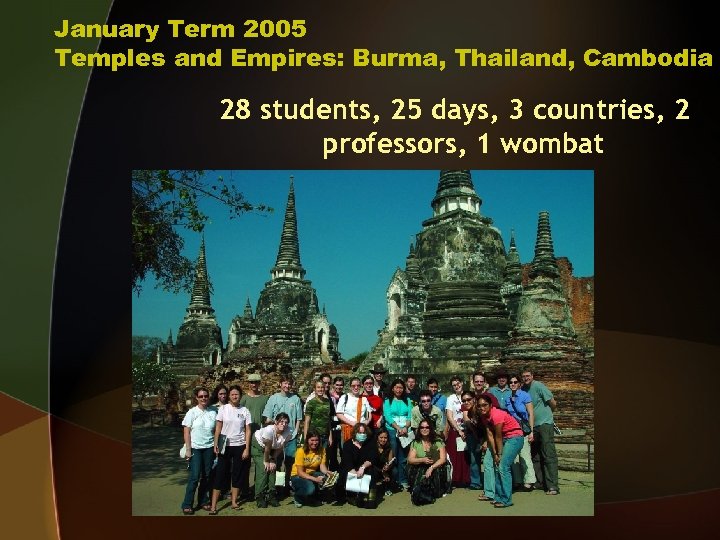
January Term 2005 Temples and Empires: Burma, Thailand, Cambodia 28 students, 25 days, 3 countries, 2 professors, 1 wombat

Wombat: An Australian marsupial about the size of a pig, (Likes to travel with history professors, seen here at the Eiffel Tower in Paris)
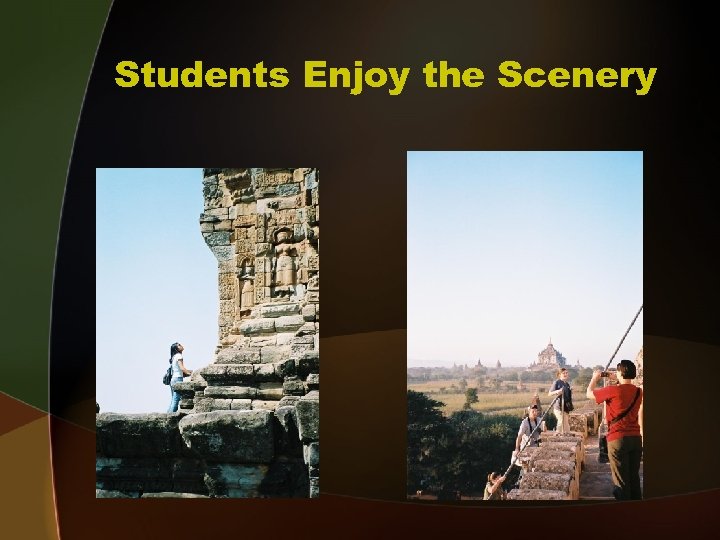
Students Enjoy the Scenery
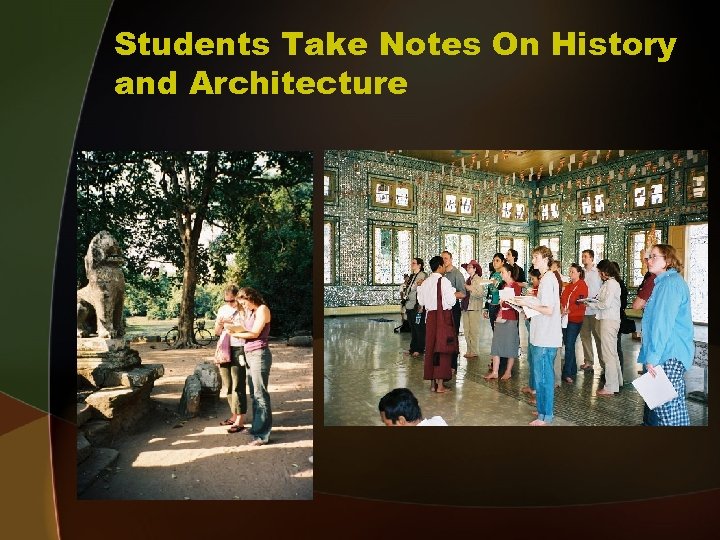
Students Take Notes On History and Architecture
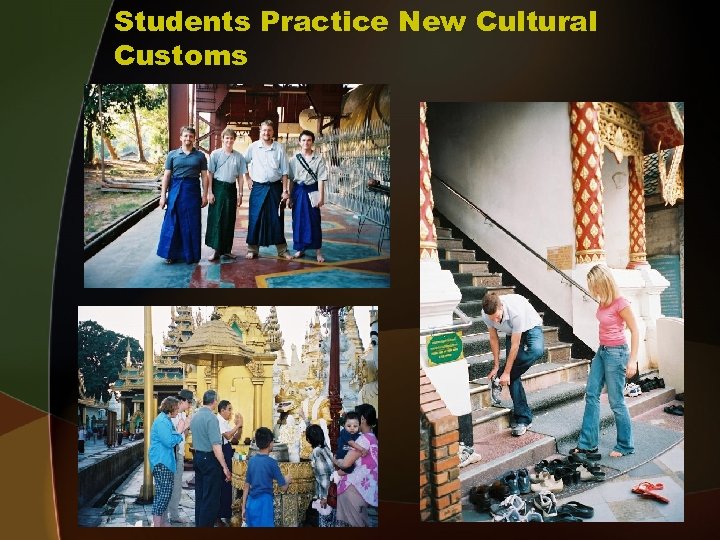
Students Practice New Cultural Customs
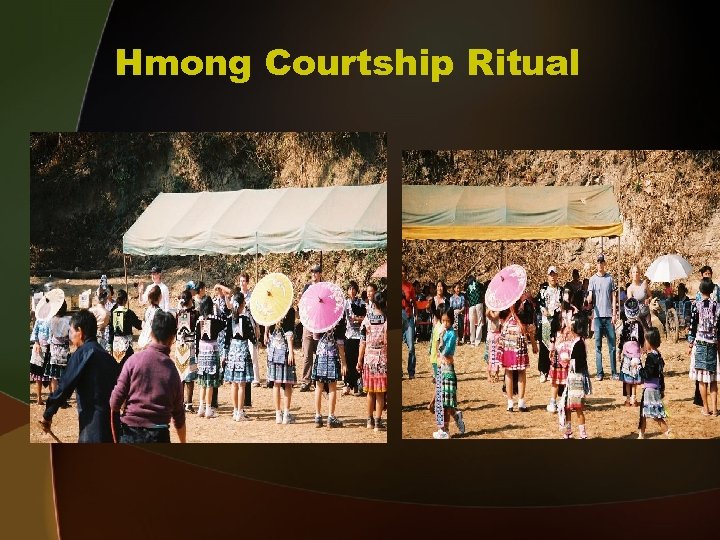
Hmong Courtship Ritual
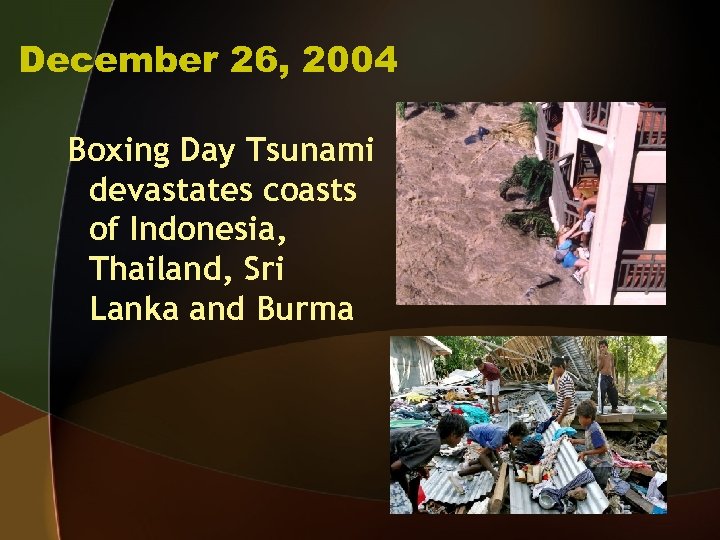
December 26, 2004 Boxing Day Tsunami devastates coasts of Indonesia, Thailand, Sri Lanka and Burma
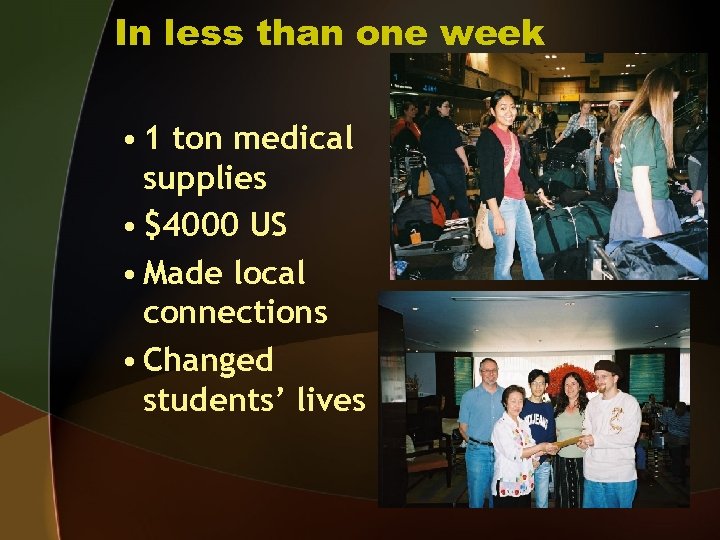
In less than one week • 1 ton medical supplies • $4000 US • Made local connections • Changed students’ lives
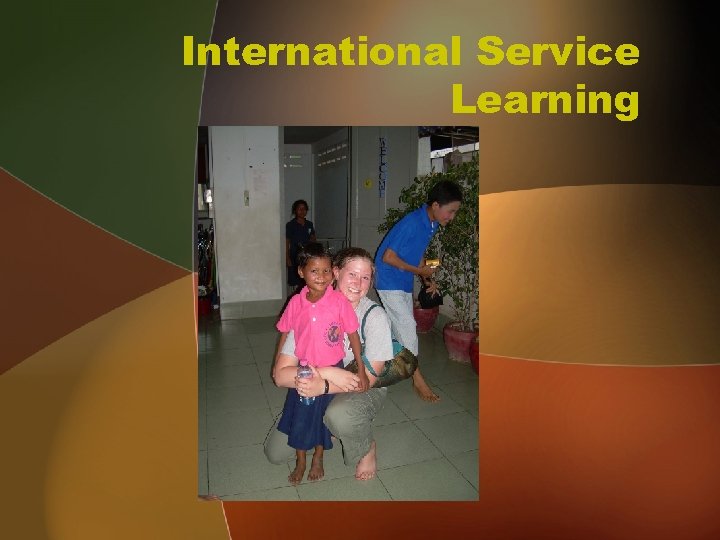
International Service Learning
Components of International Service Learning (With Thanks to Nancy Janus, Eckerd College) • Designed to help students to experience hands-on cultural awareness, to serve, and to become better global citizens. • Generally short-term in nature
The International Service. Learning Players • The college or university – Commitment to service learning pedagogy • Understanding the differences between service learning and study abroad – International travel policies for student • The Professor – Organizes service learning experience • Establishes partnership with international agency • Supervises students • Facilitates reflection
The Players (cont. ) • The Students – Willing workers – Open reflectors • The international receiving agency – Defines useful service – Fully partners in planning the service – Acts as on-site monitor of service
The Role of the Professor in International Service Learning • Establish connections with the field site where students will provide service – What needs to be done? – Will the work be project-based? – Will the work take opportunity away from needy locals? – Can the work be done in the short time frame?
Limits of Short-Term Service Learning for Receiving Agencies • Often more beneficial to students than to receiving agencies • Time and benefit in service must be greater than time in preparing learners • Potential danger in establishing relationships with children or youth • With the increase in “voluntourism” more and more agencies are specifying minimum service time frames. Often 6 months to a year
Selection of Agency • Locate agencies through contacts, web search, websites such as idealist. org • Agency contact needs to begin early with a back-up plan in the event of change • Start small at first
The Reflection Component Various models – Evening debriefing sessions – Structured questions for students to respond to in their rooms or small groups – Journals/Observation Sheets • General questions – – – What have you seen What have you learned What do you think What do you make of it all How have you changed
For Help with Creating Service Learning in Syllabi • www. compact. org/category/syllabi

So Where Will You Go?
Скачать презентацию Making The Most of Short Term Study Abroad
7a093fd3cd76878e3f0f48eaa5ac1f7c.ppt