 Скачать презентацию Making Killarney s Tourism More Sustainable 1 Introductions
72b496d4d6e5359be505e2af9153f0b1.ppt
- Количество слайдов: 46



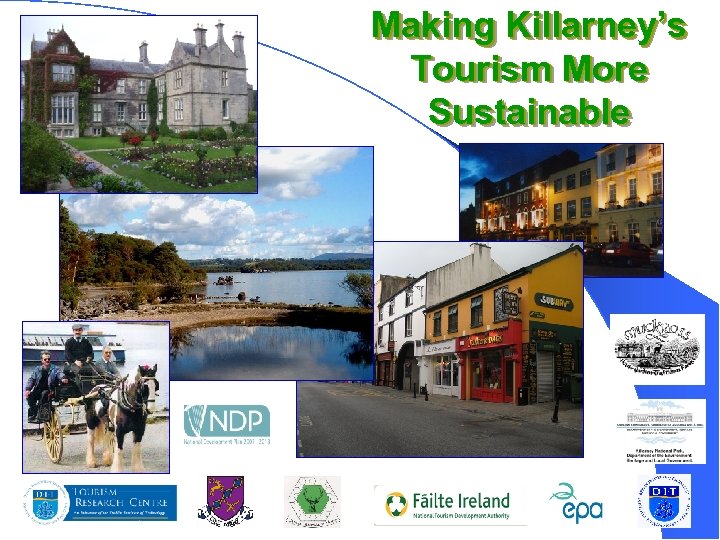
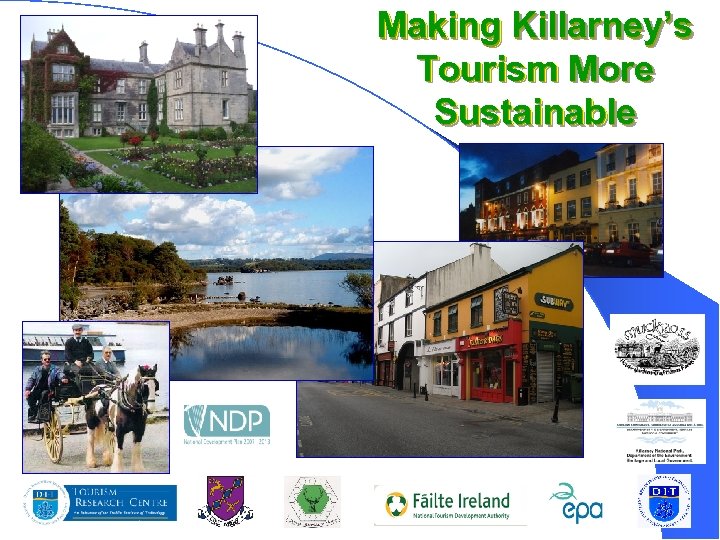
Making Killarney’s Tourism More Sustainable
1) Introductions Making Killarney’s Tourism More Sustainable Project Launch 20 March 2009
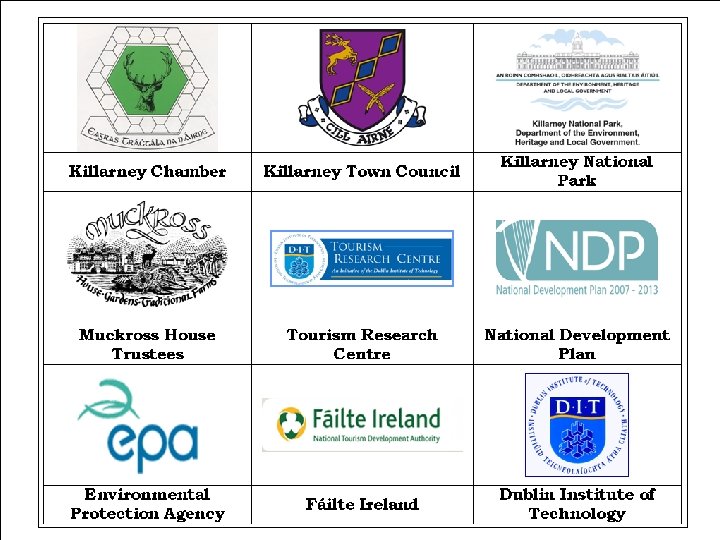
Making Killarney’s Tourism More Sustainable Project Launch 20 March 2009

2) Overview of Project Making Killarney’s Tourism More Sustainable Project Launch 20 March 2009
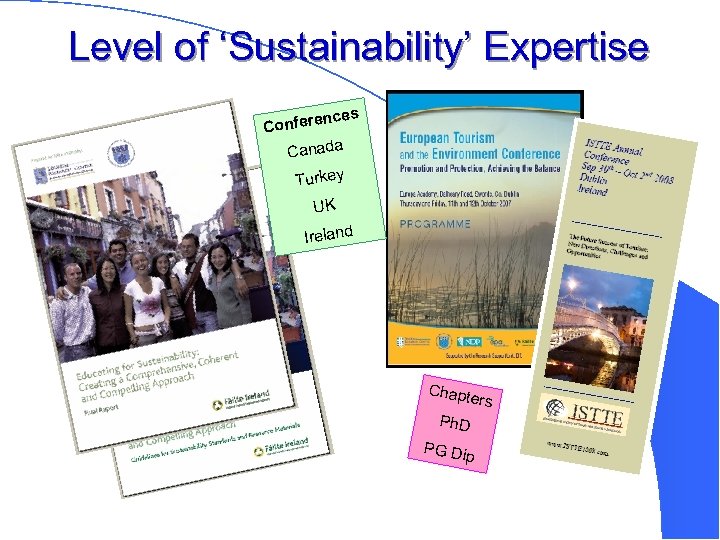
Level of ‘Sustainability’ Expertise s ence Confer Canada Turkey UK Ireland Chapt ers Ph. D PG Di p
Original ‘Indicator’ Project Sustainable Tourism Development: Toward the Mitigation of Tourism Destination Impacts Making Killarney’s Tourism More Sustainable Project Launch 20 March 2009
Challenge ‘The development of an environmentally integrated tourism destination management model’ Funding Irish Environmental Protection Agency under national scheme - € 317, 000 funding

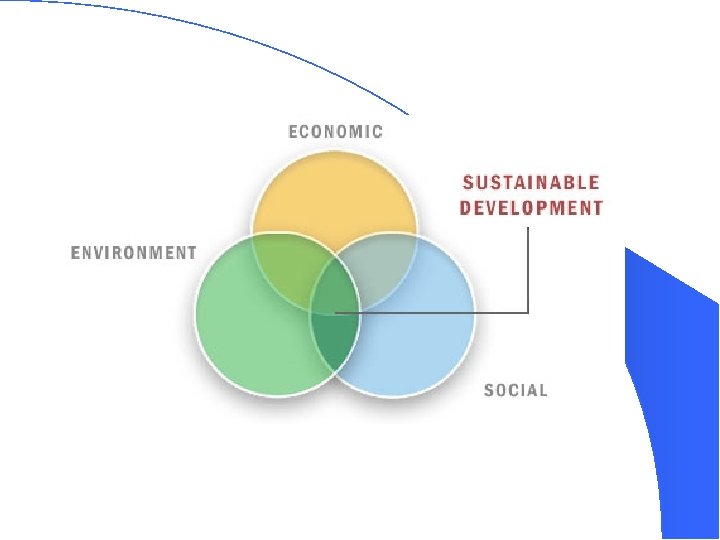
How to Conceptualise Sustainability ? Making Killarney’s Tourism More Sustainable Project Launch 20 March 2009

OR Making Killarney’s Tourism More Sustainable Project Launch 20 March 2009
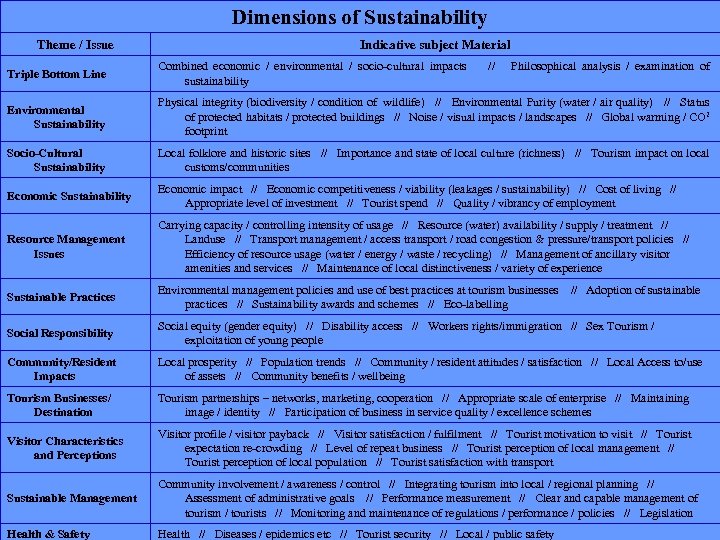
Dimensions of Sustainability Theme / Issue Indicative subject Material Triple Bottom Line Combined economic / environmental / socio-cultural impacts sustainability // Philosophical analysis / examination of Environmental Sustainability Physical integrity (biodiversity / condition of wildlife) // Environmental Purity (water / air quality) // Status of protected habitats / protected buildings // Noise / visual impacts / landscapes // Global warming / CO 2 footprint Socio-Cultural Sustainability Local folklore and historic sites // Importance and state of local culture (richness) // Tourism impact on local customs/communities Economic Sustainability Economic impact // Economic competitiveness / viability (leakages / sustainability) // Cost of living // Appropriate level of investment // Tourist spend // Quality / vibrancy of employment Resource Management Issues Carrying capacity / controlling intensity of usage // Resource (water) availability / supply / treatment // Landuse // Transport management / access transport / road congestion & pressure/transport policies // Efficiency of resource usage (water / energy / waste / recycling) // Management of ancillary visitor amenities and services // Maintenance of local distinctiveness / variety of experience Sustainable Practices Environmental management policies and use of best practices at tourism businesses practices // Sustainability awards and schemes // Eco-labelling Social Responsibility Social equity (gender equity) // Disability access // Workers rights/immigration // Sex Tourism / exploitation of young people Community/Resident Impacts Local prosperity // Population trends // Community / resident attitudes / satisfaction // Local Access to/use of assets // Community benefits / wellbeing Tourism Businesses/ Destination Tourism partnerships – networks, marketing, cooperation // Appropriate scale of enterprise // Maintaining image / identity // Participation of business in service quality / excellence schemes Visitor Characteristics and Perceptions Visitor profile / visitor payback // Visitor satisfaction / fulfilment // Tourist motivation to visit // Tourist expectation re-crowding // Level of repeat business // Tourist perception of local management // Tourist perception of local population // Tourist satisfaction with transport Sustainable Management Community involvement / awareness / control // Integrating tourism into local / regional planning // Assessment of administrative goals // Performance measurement // Clear and capable management of tourism / tourists // Monitoring and maintenance of regulations / performance / policies // Legislation Health & Safety Health // Diseases / epidemics etc // Tourist security // Local / public safety // Adoption of sustainable
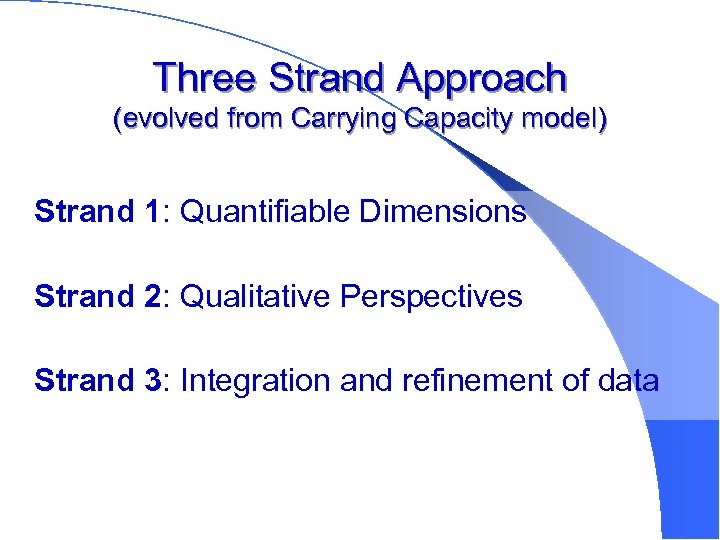
Three Strand Approach (evolved from Carrying Capacity model) § Strand 1: Quantifiable Dimensions § Strand 2: Qualitative Perspectives § Strand 3: Integration and refinement of data
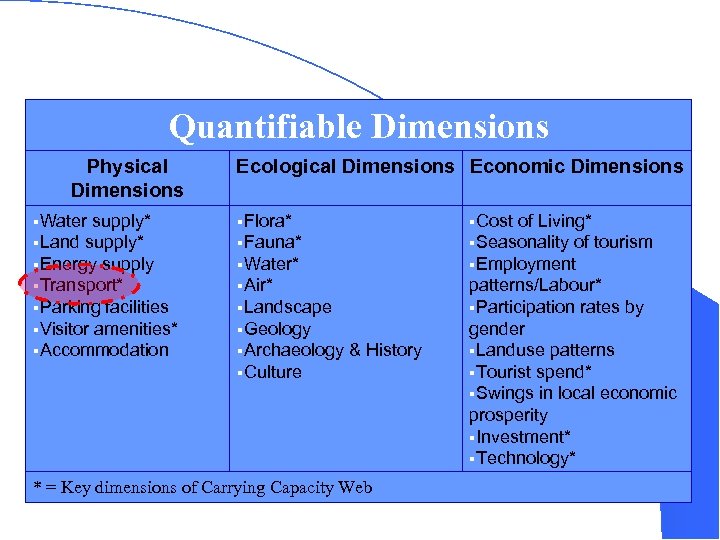
Quantifiable Dimensions Physical Dimensions §Water supply* §Land supply* §Energy supply §Transport* §Parking facilities §Visitor amenities* §Accommodation Ecological Dimensions Economic Dimensions §Flora* §Fauna* §Water* §Air* §Landscape §Geology §Archaeology & History §Culture * = Key dimensions of Carrying Capacity Web §Cost of Living* §Seasonality of tourism §Employment patterns/Labour* §Participation rates by gender §Landuse patterns §Tourist spend* §Swings in local economic prosperity §Investment* §Technology*
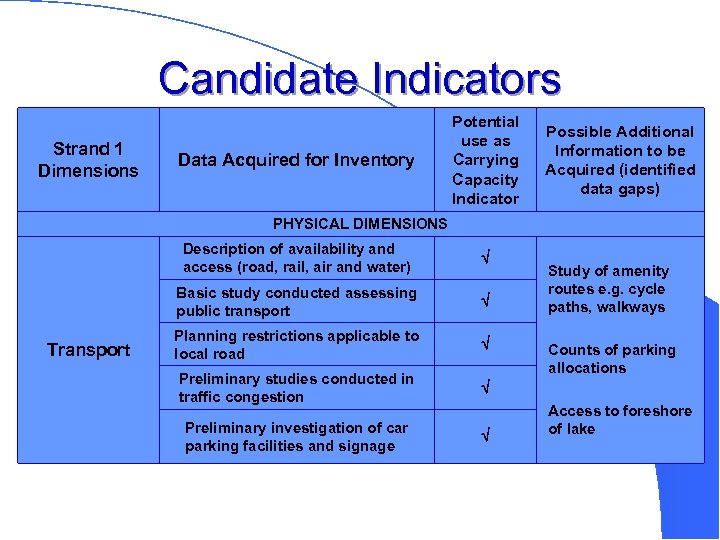
Candidate Indicators Strand 1 Dimensions Data Acquired for Inventory Potential use as Carrying Capacity Indicator Possible Additional Information to be Acquired (identified data gaps) PHYSICAL DIMENSIONS Description of availability and access (road, rail, air and water) Basic study conducted assessing public transport Transport Planning restrictions applicable to local road Preliminary studies conducted in traffic congestion Preliminary investigation of car parking facilities and signage Study of amenity routes e. g. cycle paths, walkways Counts of parking allocations Access to foreshore of lake
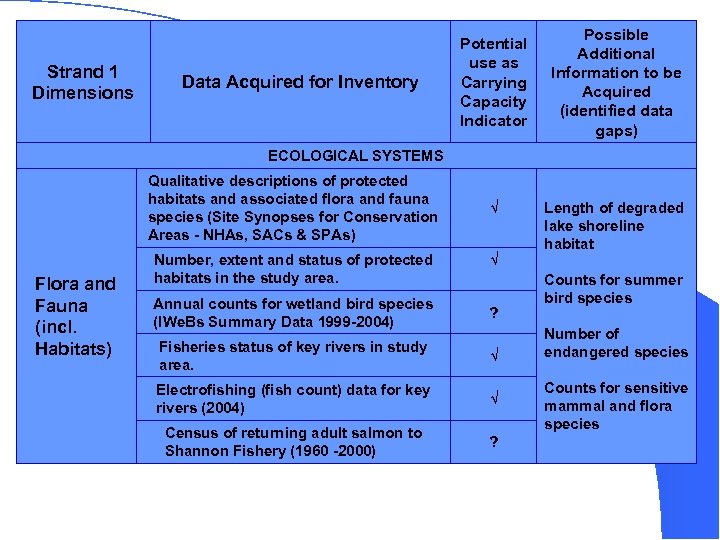
Strand 1 Dimensions Data Acquired for Inventory Potential use as Carrying Capacity Indicator Possible Additional Information to be Acquired (identified data gaps) ECOLOGICAL SYSTEMS Qualitative descriptions of protected habitats and associated flora and fauna species (Site Synopses for Conservation Areas - NHAs, SACs & SPAs) Flora and Fauna (incl. Habitats) Number, extent and status of protected habitats in the study area. √ √ Annual counts for wetland bird species (IWe. Bs Summary Data 1999 -2004) ? Fisheries status of key rivers in study area. √ Electrofishing (fish count) data for key rivers (2004) √ Census of returning adult salmon to Shannon Fishery (1960 -2000) ? Length of degraded lake shoreline habitat Counts for summer bird species Number of endangered species Counts for sensitive mammal and flora species
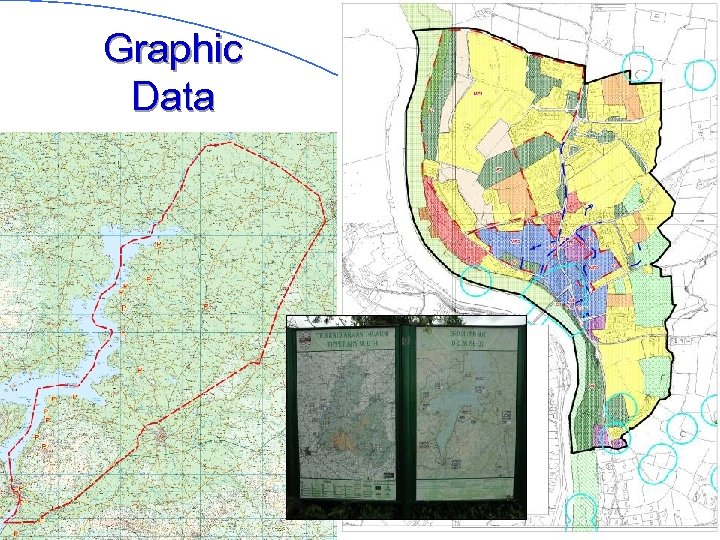
Graphic Data
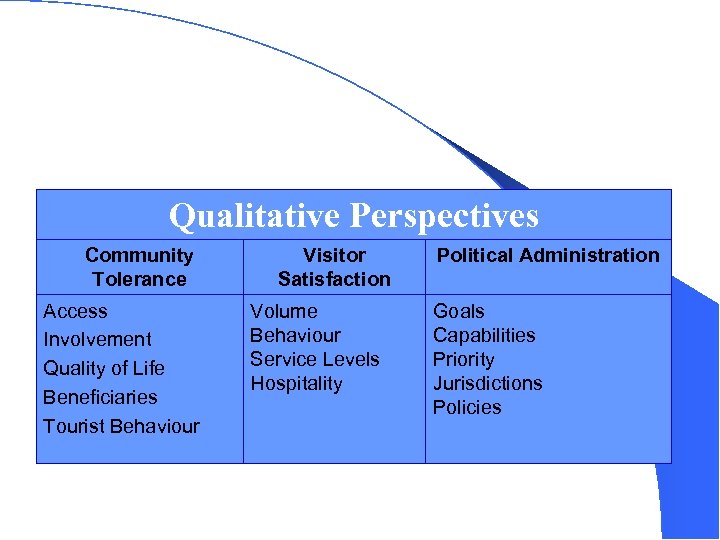
Qualitative Perspectives Community Tolerance Access Involvement Quality of Life Beneficiaries Tourist Behaviour Visitor Satisfaction Volume Behaviour Service Levels Hospitality Political Administration Goals Capabilities Priority Jurisdictions Policies
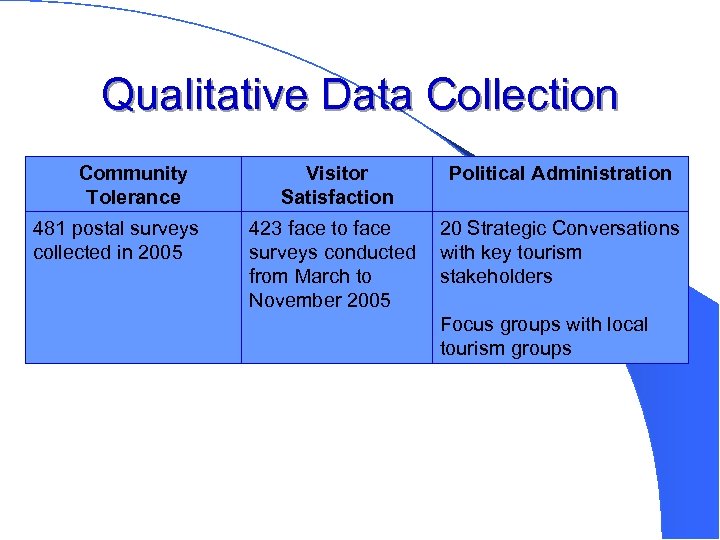
Qualitative Data Collection Community Tolerance 481 postal surveys collected in 2005 Visitor Satisfaction Political Administration 423 face to face 20 Strategic Conversations surveys conducted with key tourism from March to stakeholders November 2005 Focus groups with local tourism groups
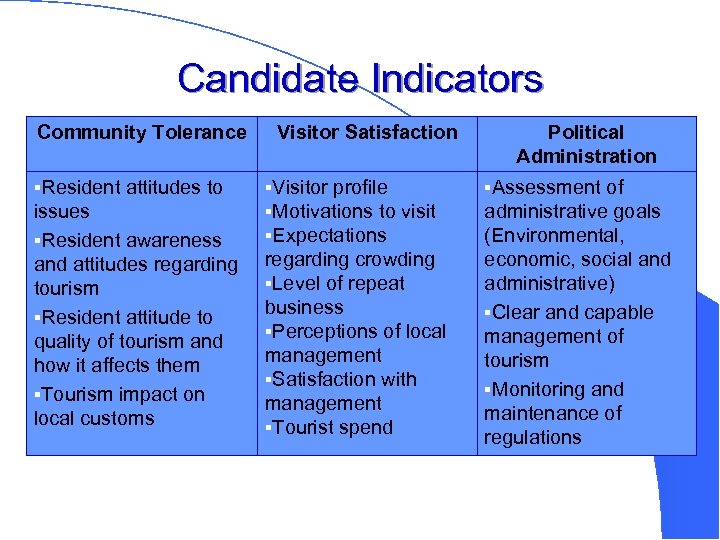
Candidate Indicators Community Tolerance §Resident attitudes to issues §Resident awareness and attitudes regarding tourism §Resident attitude to quality of tourism and how it affects them §Tourism impact on local customs Visitor Satisfaction §Visitor profile §Motivations to visit §Expectations regarding crowding §Level of repeat business §Perceptions of local management §Satisfaction with management §Tourist spend Political Administration §Assessment of administrative goals (Environmental, economic, social and administrative) §Clear and capable management of tourism §Monitoring and maintenance of regulations
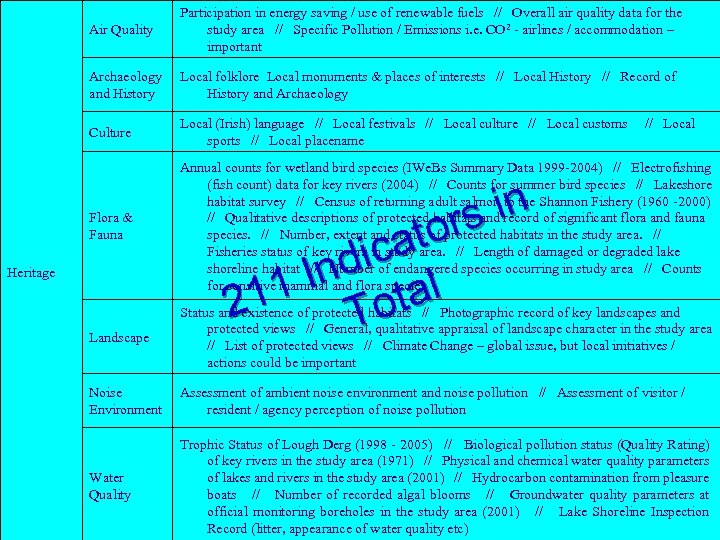
Air Quality Participation in energy saving / use of renewable fuels // Overall air quality data for the study area // Specific Pollution / Emissions i. e. CO 2 - airlines / accommodation – important Archaeology and History Local folklore Local monuments & places of interests // Local History // Record of History and Archaeology Culture Local (Irish) language // Local festivals // Local culture // Local customs sports // Local placename Flora & Fauna Annual counts for wetland bird species (IWe. Bs Summary Data 1999 -2004) // Electrofishing (fish count) data for key rivers (2004) // Counts for summer bird species // Lakeshore habitat survey // Census of returning adult salmon to the Shannon Fishery (1960 -2000) // Qualitative descriptions of protected habitats and record of significant flora and fauna species. // Number, extent and status of protected habitats in the study area. // Fisheries status of key rivers in study area. // Length of damaged or degraded lake shoreline habitat // Number of endangered species occurring in study area // Counts for sensitive mammal and flora species Landscape Status and existence of protected habitats // Photographic record of key landscapes and protected views // General, qualitative appraisal of landscape character in the study area // List of protected views // Climate Change – global issue, but local initiatives / actions could be important Noise Environment Assessment of ambient noise environment and noise pollution // Assessment of visitor / resident / agency perception of noise pollution Water Quality Trophic Status of Lough Derg (1998 - 2005) // Biological pollution status (Quality Rating) of key rivers in the study area (1971) // Physical and chemical water quality parameters of lakes and rivers in the study area (2001) // Hydrocarbon contamination from pleasure boats // Number of recorded algal blooms // Groundwater quality parameters at official monitoring boreholes in the study area (2001) // Lake Shoreline Inspection Record (litter, appearance of water quality etc) Heritage // Local in rs ato dic In tal 11 To 2
What to do with these ‘Candidate Indicators’ ? Making Killarney’s Tourism More Sustainable Project Launch 20 March 2009
Development of Indicator Model An integrated management approach towards the mitigation of tourism impacts Making Killarney’s Tourism More Sustainable Project Launch 20 March 2009
Sustainable Tourism
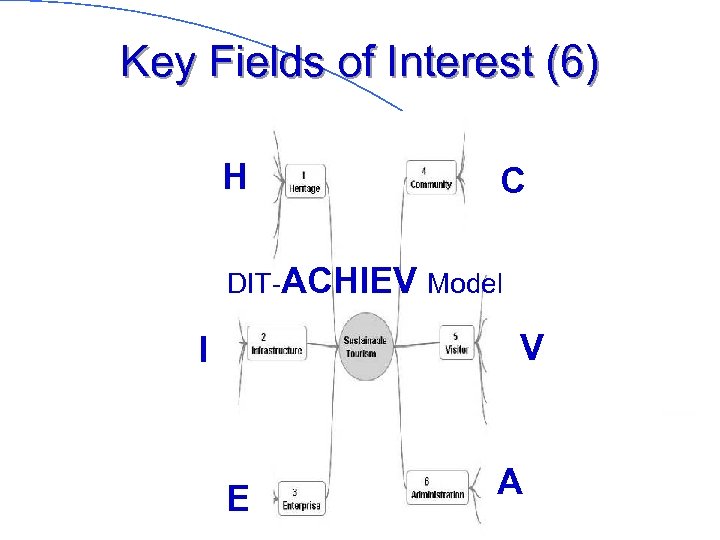
Key Fields of Interest (6) H C DIT-ACHIEV Model V I E A
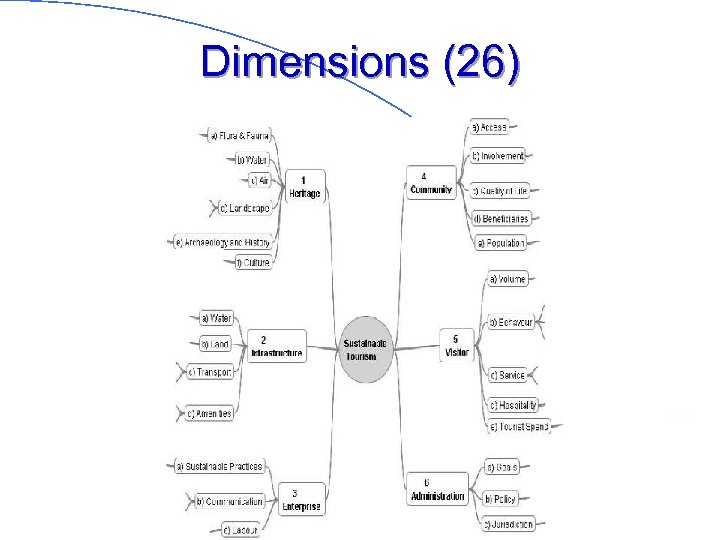
Dimensions (26)
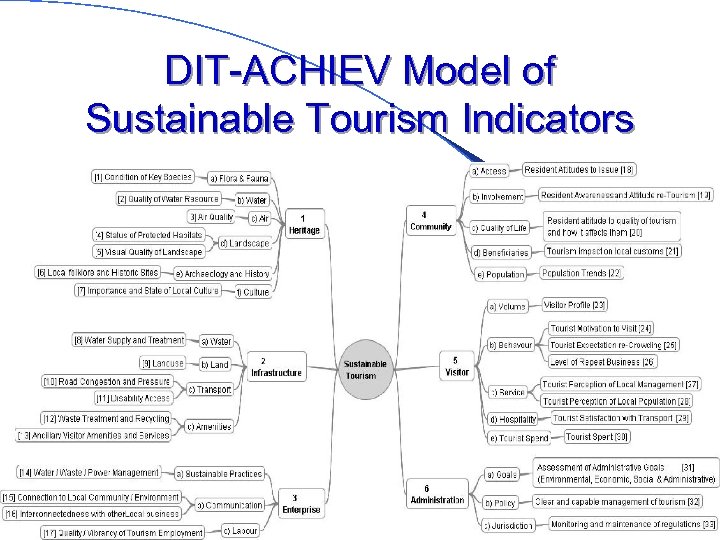
DIT-ACHIEV Model of Sustainable Tourism Indicators
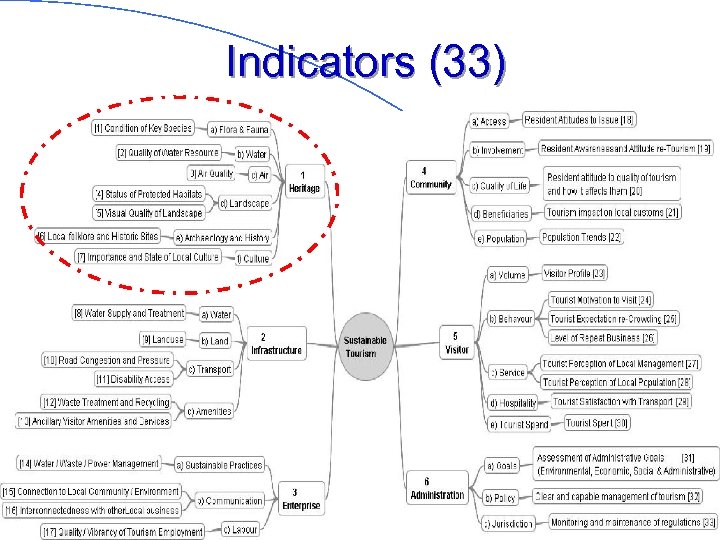
Indicators (33)
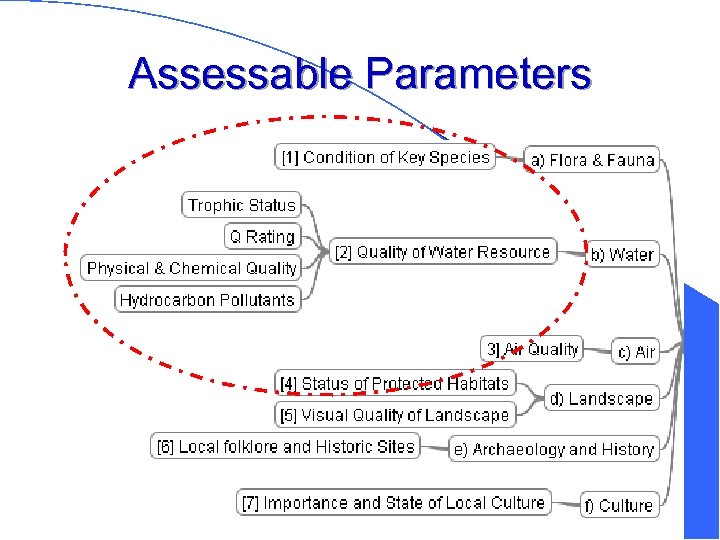
Assessable Parameters
![Example of Data [10] Road Congestion & Pressure Assessable Parameter(s) (i) Congestion – indication](https://present5.com/presentation/72b496d4d6e5359be505e2af9153f0b1/image-29.jpg "Example of Data [10] Road Congestion & Pressure Assessable Parameter(s) (i) Congestion – indication")
Example of Data [10] Road Congestion & Pressure Assessable Parameter(s) (i) Congestion – indication of pressure (ii) Number of vehicles on various types of roads (iii) Parking - Number/ distribution of parking spaces available / Cost of parking Availability Example - ‘Shannon Bridge Crossing Feasibility Study and Preliminary Report’ (RPS MCOS) Some ‘counts’ but generally unavailable Preliminary investigation conducted Unknown Responsibility /Source North Tipperary County Council Development Plan, 2004 - 2010 County Council – Roads Dept, North Tipperary Co. – Newport Office Gardai - (privacy issue) – need to relate to tourism / smooth over time. Comments / Justification Good measures of seasonality and congestion – need data to be seasonal / diff days seasons etc. Both a tourist and a local issues (iv) Accident Data
All this led to: New Project – 2009 -2011 Putting the DIT-ACHIEV Model into Practice Making Killarney’s Tourism More Sustainable Project Launch 20 March 2009
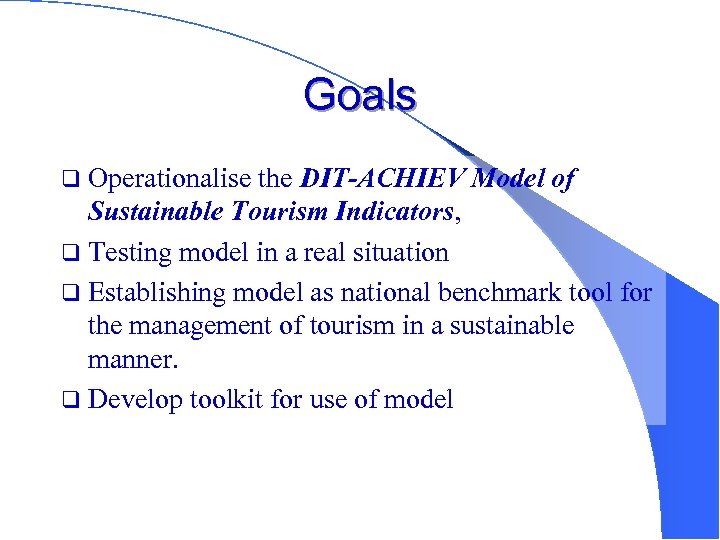
Goals q Operationalise the DIT-ACHIEV Model of Sustainable Tourism Indicators, q Testing model in a real situation q Establishing model as national benchmark tool for the management of tourism in a sustainable manner. q Develop toolkit for use of model
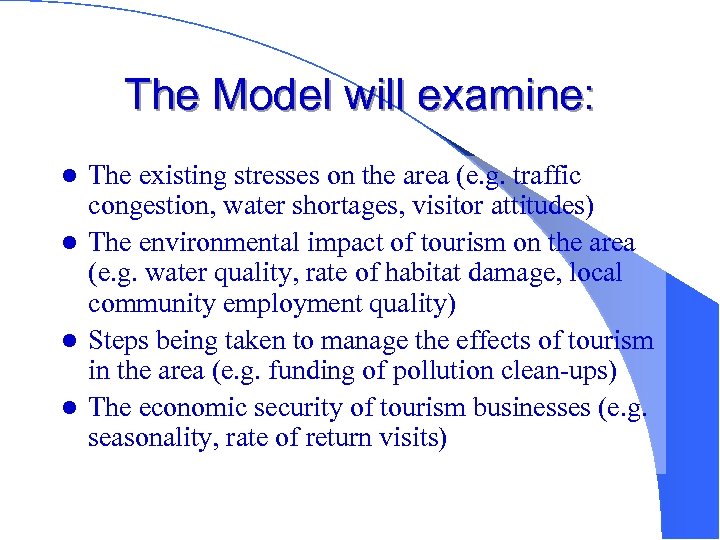
The Model will examine: The existing stresses on the area (e. g. traffic congestion, water shortages, visitor attitudes) l The environmental impact of tourism on the area (e. g. water quality, rate of habitat damage, local community employment quality) l Steps being taken to manage the effects of tourism in the area (e. g. funding of pollution clean-ups) l The economic security of tourism businesses (e. g. seasonality, rate of return visits) l
Benefits for Killarney l Self evaluation l Benchmarking versus competition l Framework for future development l Identification of risks (potential) l Leadership nationally / internationally l Participation
What is Benefit for Killarney l l l l Will inform on current situation in Killarney re-sustainable tourism (Self Evaluation) Will play a leading role in influencing the development of a sustainable tourism strategy for Killarney. Stakeholder participation particularly important for gathering information. Stakeholders instrumental in identifying sustainability concerns Identification of sustainable issues & indicators - assist in risk avoidance. Enormous contribution in establishing benchmark tool for the identification, and monitoring of tourism impacts leading to management of more sustainable levels of tourism Tourism may have an impact on other aspects of life in Killarney e. g. policy development, water treatment etc… Tourism is everyone’s business - Fabric of YOUR society.
Examples of Best Practice in Killarney l Killeen House Hotel / Loch Lein Country House - Tripadvisor l Killarney Park Hotel – Green Hosp Award – Silver (Ecotourism Growing) l National Park (UNESCO Biosphere)
Why Participating in this should Help Killarney - Examples l l l Venice / NZ / Inca Trails - management of walks to maintain ecology – book in advance – controls numbers Galapagos / Taj Mahal / Spanish Coastline – all over-developed Greenbox – capturing audience through ‘ecoflower’ cluster Westport – planning as driver for tourism development Dublin – Dublin Visitor Survey – litter monitoring
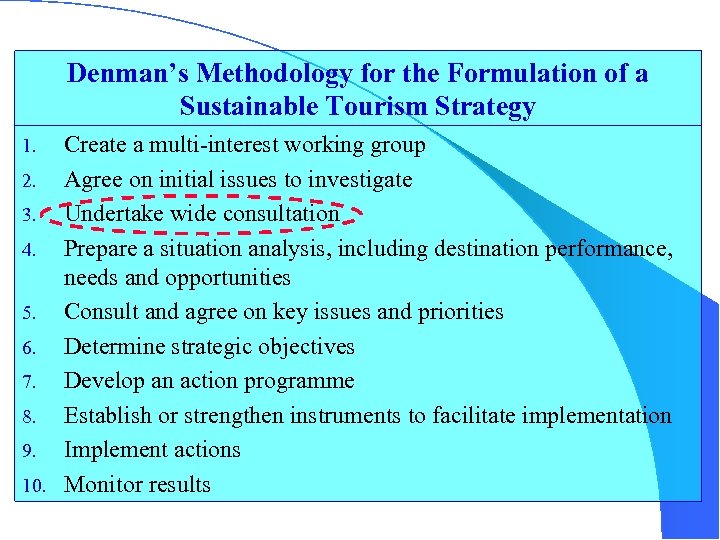
Denman’s Methodology for the Formulation of a Sustainable Tourism Strategy Create a multi-interest working group 2. Agree on initial issues to investigate 3. Undertake wide consultation 4. Prepare a situation analysis, including destination performance, needs and opportunities 5. Consult and agree on key issues and priorities 6. Determine strategic objectives 7. Develop an action programme 8. Establish or strengthen instruments to facilitate implementation 9. Implement actions 10. Monitor results 1.
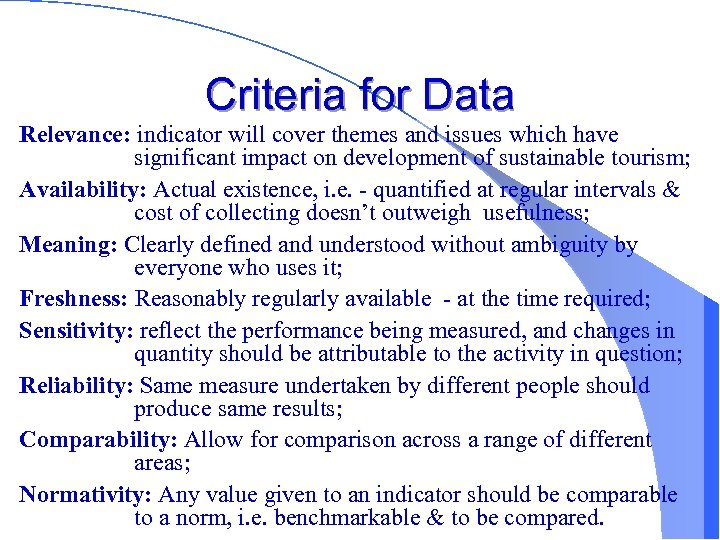
Criteria for Data Relevance: indicator will cover themes and issues which have significant impact on development of sustainable tourism; Availability: Actual existence, i. e. - quantified at regular intervals & cost of collecting doesn’t outweigh usefulness; Meaning: Clearly defined and understood without ambiguity by everyone who uses it; Freshness: Reasonably regularly available - at the time required; Sensitivity: reflect the performance being measured, and changes in quantity should be attributable to the activity in question; Reliability: Same measure undertaken by different people should produce same results; Comparability: Allow for comparison across a range of different areas; Normativity: Any value given to an indicator should be comparable to a norm, i. e. benchmarkable & to be compared.
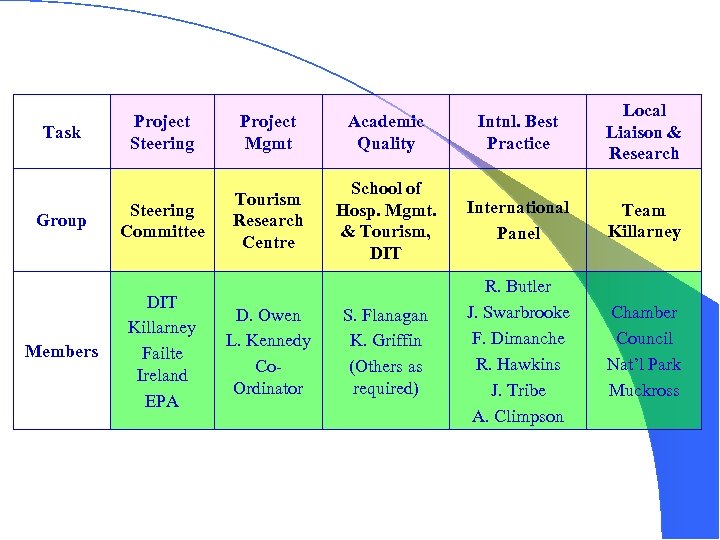
Project Steering Project Mgmt Academic Quality Intnl. Best Practice Local Liaison & Research Group Steering Committee Tourism Research Centre School of Hosp. Mgmt. & Tourism, DIT International Panel Team Killarney Members DIT Killarney Failte Ireland EPA S. Flanagan K. Griffin (Others as required) R. Butler J. Swarbrooke F. Dimanche R. Hawkins J. Tribe A. Climpson Chamber Council Nat’l Park Muckross Task D. Owen L. Kennedy Co. Ordinator
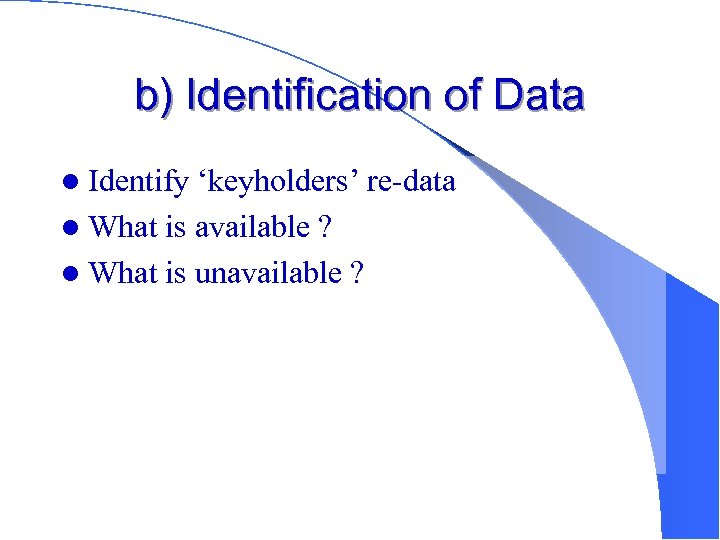
b) Identification of Data l Identify ‘keyholders’ re-data l What is available ? l What is unavailable ?
c) Set-up data collection system l Who l How often l Validity etc…
Deadlines l Fri 29 May – Steering Group Meeting l Early July meeting of International Review Panel
Making Killarney’s Tourism More Sustainable
Sustainability Concerns NATIONAL PARK l Background: KNP is designated as a UNESCO Biosphere, SAC, SPA (Birds). l Absence of reliable “Tourism Industry Intelligence”. l Trails Surface Erosion – Mountains & Woodlands – Walking & Biking. l Damage to important Flora l Disturbance of important Fauna & Habitats l Lake & River Water Quality Issues – Lough Lein specific. l Invasive Species l Litter & Waste Management l Non-Pedestrian/Non Motorised Traffic Issues (Bikes / Horses) l Loss of Tranquillity. MUCKROSS HOUSE TRUSTEES l Background: “Estimated” – 1 m p. a. visit House, Crafts, Restaurant, Research Library, Traditional Farms and Gardens. l Absence of reliable “Tourism Industry Intelligence” l Preparing for and Managing Visitor numbers. l Delivering the appropriate visitor experience – not a conveyor belt. l Ensuring that the appropriate heritage, stories & experiences are revived and told. l Preserving & Enhancing Traditional Farms Experience. l Enable optimum use of Archive/Research Library. l Preserving structural integrity of house. l Preserving condition of house interior and furnishings.
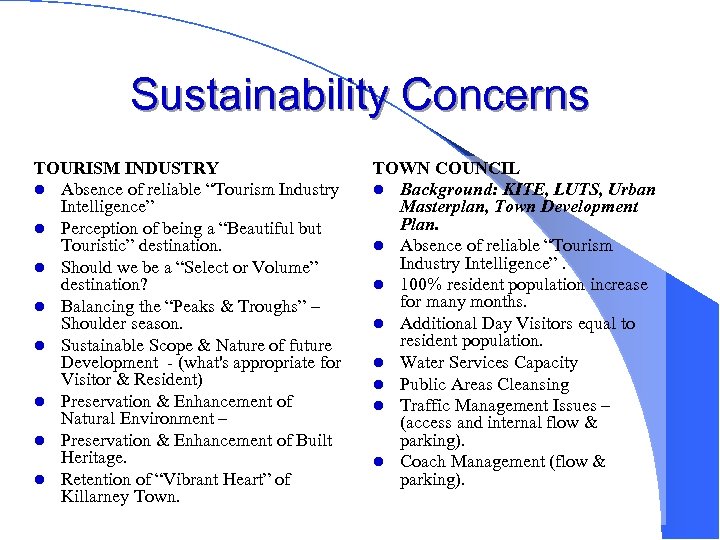
Sustainability Concerns TOURISM INDUSTRY l Absence of reliable “Tourism Industry Intelligence” l Perception of being a “Beautiful but Touristic” destination. l Should we be a “Select or Volume” destination? l Balancing the “Peaks & Troughs” – Shoulder season. l Sustainable Scope & Nature of future Development - (what's appropriate for Visitor & Resident) l Preservation & Enhancement of Natural Environment – l Preservation & Enhancement of Built Heritage. l Retention of “Vibrant Heart” of Killarney Town. TOWN COUNCIL l Background: KITE, LUTS, Urban Masterplan, Town Development Plan. l Absence of reliable “Tourism Industry Intelligence”. l 100% resident population increase for many months. l Additional Day Visitors equal to resident population. l Water Services Capacity l Public Areas Cleansing l Traffic Management Issues – (access and internal flow & parking). l Coach Management (flow & parking).
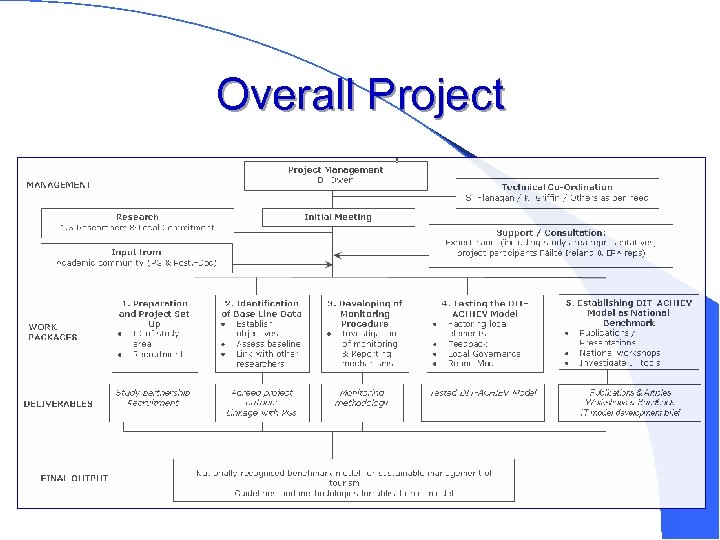
Overall Project
Скачать презентацию Making Killarney s Tourism More Sustainable 1 Introductions
72b496d4d6e5359be505e2af9153f0b1.ppt