


 Скачать презентацию Major Disasters Fire Initiated Toxic Release HAZARD
1283604fd92f3cfdfbd4e5fe079497db.ppt
- Количество слайдов: 51
 Major Disasters Fire Initiated Toxic Release
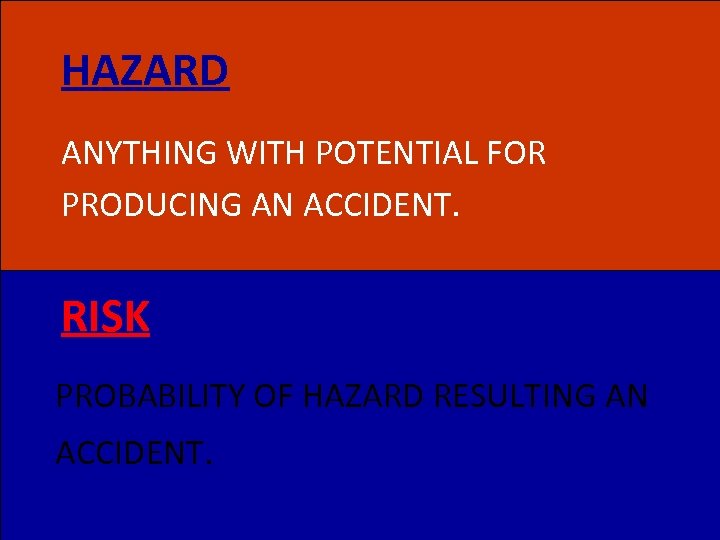 HAZARD ANYTHING WITH POTENTIAL FOR PRODUCING AN ACCIDENT. RISK PROBABILITY OF HAZARD RESULTING AN ACCIDENT.
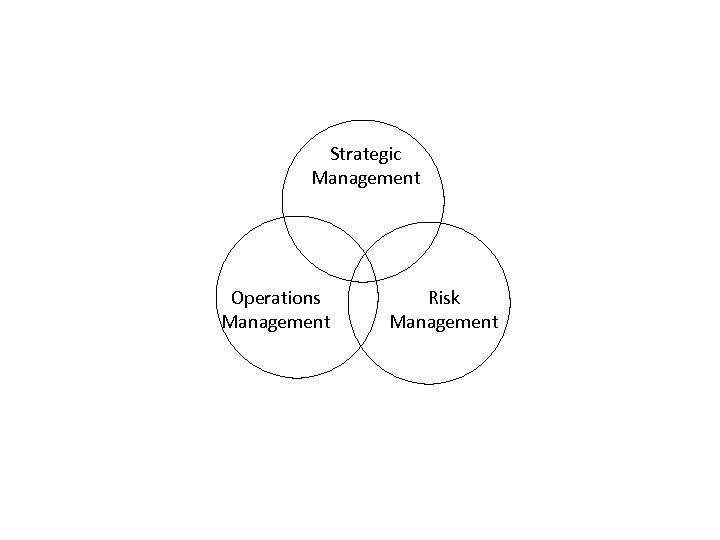 Strategic Management Operations Management Risk Management
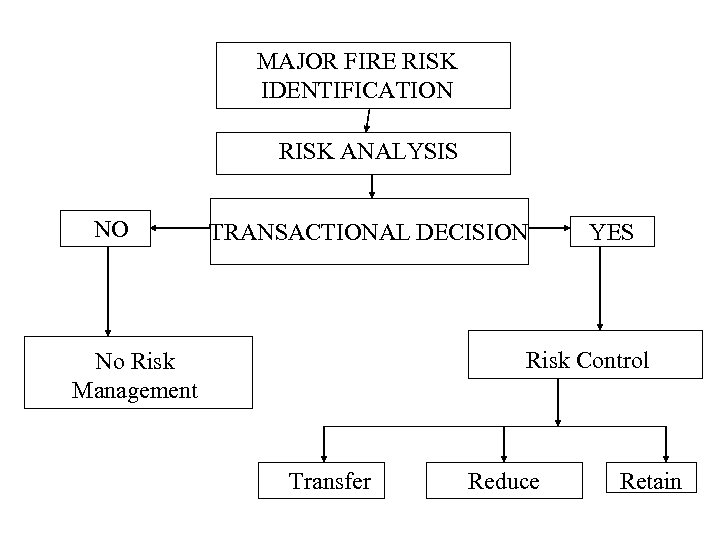 MAJOR FIRE RISK IDENTIFICATION RISK ANALYSIS NO TRANSACTIONAL DECISION YES Risk Control No Risk Management Transfer Reduce Retain
 For any Industrial Process Plant Following questions must be asked answered 1. What are the Hazards ? 2. What can go wrong and how? 3. What are the chances? 4. What are the consequences?
 CONESQUENCES OF HAZARDOUS EVENT • FIRE/ EXPLOSION • VAPOUR CLOUD EXPLOSION • FORMATION OF TOXIC ATMOSPHERE
 Different Terminologies of Hazardous Situations • Pool Fire • Jet Fire • Flash/ Cloud Fire • Vapour Cloud Explosion (VCE) • High Pressure Rupture • BLEVE • Release of Toxic Gases/ Liquids
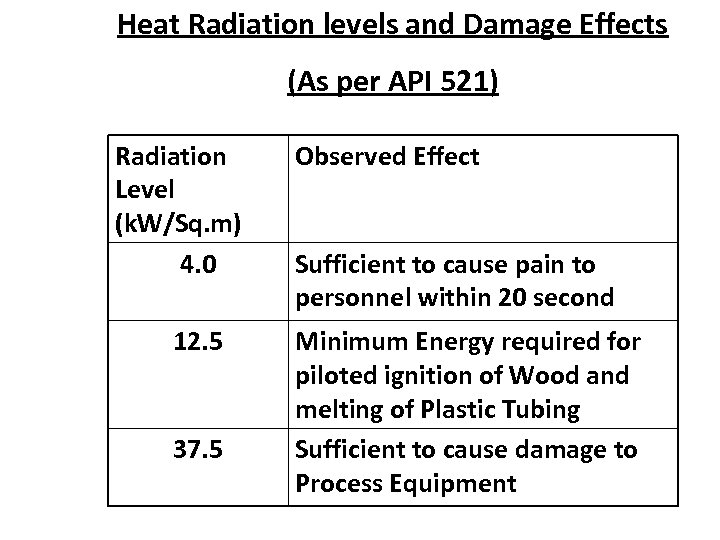 Heat Radiation levels and Damage Effects (As per API 521) Radiation Level (k. W/Sq. m) 4. 0 12. 5 37. 5 Observed Effect Sufficient to cause pain to personnel within 20 second Minimum Energy required for piloted ignition of Wood and melting of Plastic Tubing Sufficient to cause damage to Process Equipment
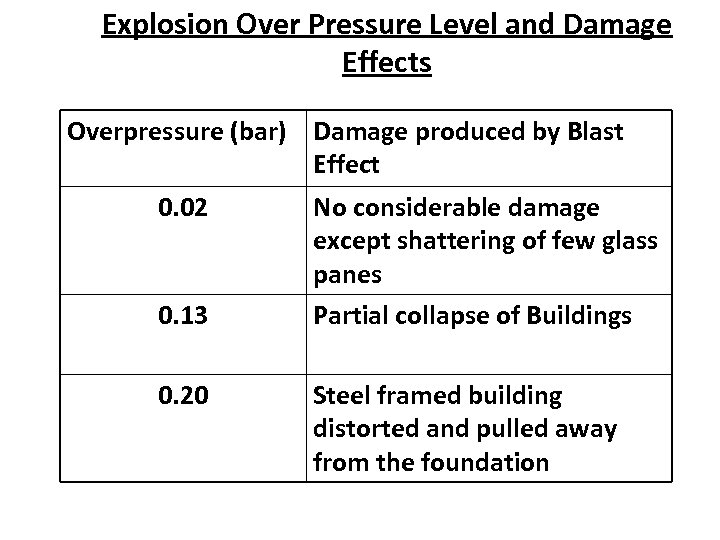 Explosion Over Pressure Level and Damage Effects Overpressure (bar) Damage produced by Blast Effect 0. 02 0. 13 0. 20 No considerable damage except shattering of few glass panes Partial collapse of Buildings Steel framed building distorted and pulled away from the foundation
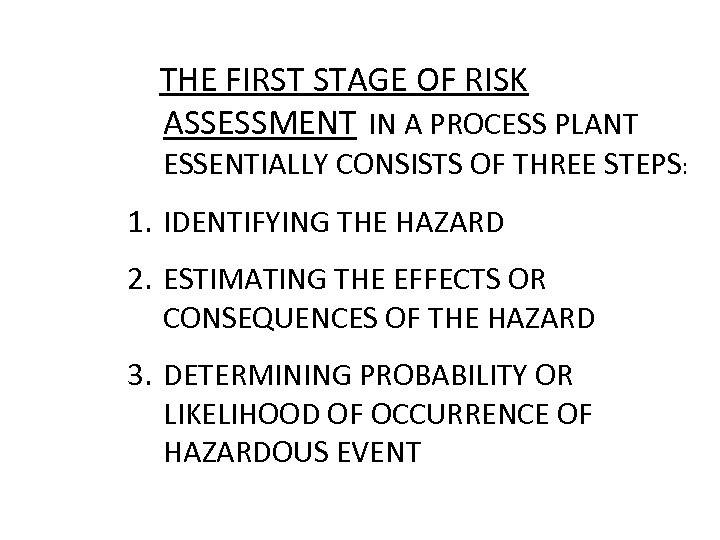 THE FIRST STAGE OF RISK ASSESSMENT IN A PROCESS PLANT ESSENTIALLY CONSISTS OF THREE STEPS: 1. IDENTIFYING THE HAZARD 2. ESTIMATING THE EFFECTS OR CONSEQUENCES OF THE HAZARD 3. DETERMINING PROBABILITY OR LIKELIHOOD OF OCCURRENCE OF HAZARDOUS EVENT
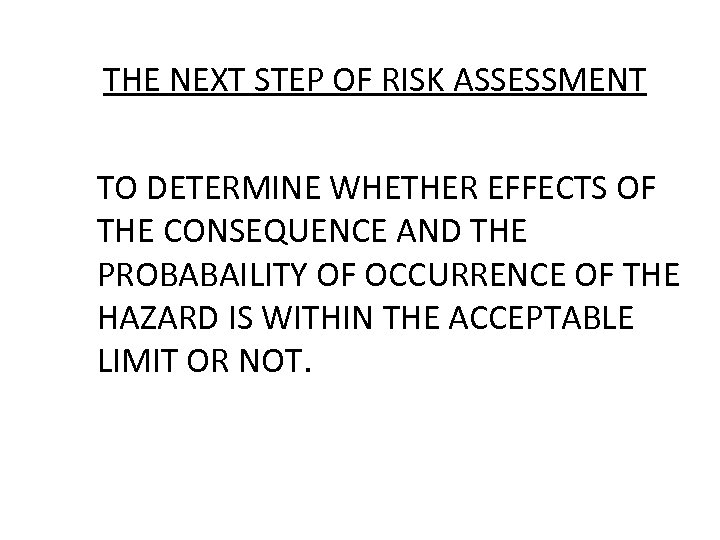 THE NEXT STEP OF RISK ASSESSMENT TO DETERMINE WHETHER EFFECTS OF THE CONSEQUENCE AND THE PROBABAILITY OF OCCURRENCE OF THE HAZARD IS WITHIN THE ACCEPTABLE LIMIT OR NOT.
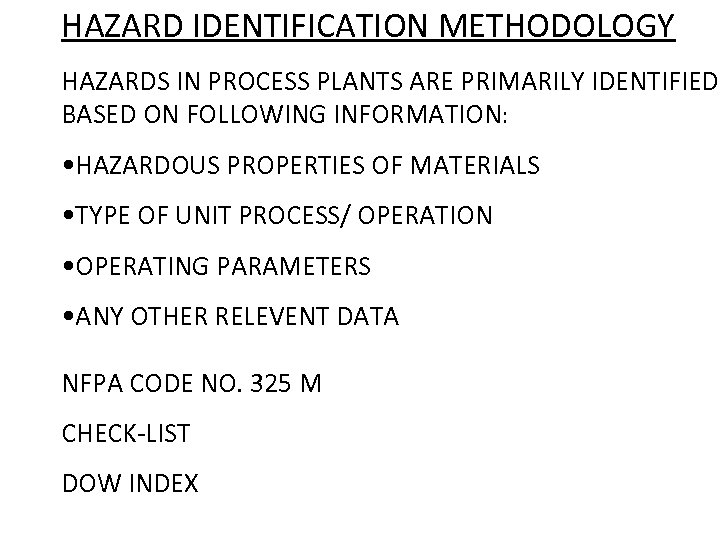 HAZARD IDENTIFICATION METHODOLOGY HAZARDS IN PROCESS PLANTS ARE PRIMARILY IDENTIFIED BASED ON FOLLOWING INFORMATION: • HAZARDOUS PROPERTIES OF MATERIALS • TYPE OF UNIT PROCESS/ OPERATION • OPERATING PARAMETERS • ANY OTHER RELEVENT DATA NFPA CODE NO. 325 M CHECK-LIST DOW INDEX
 COMMONLY USED STRUCTURED HAZARD IDENTIFICATION TECHNIQUES 1. WHAT IF ? ANALYSIS: • What if the Raw Material contains impurities? • What if Cooling Water is Lost? • What if the Vessel Agitation Stops? • What if Power Supply Fails? • What if the Temp. / Press. Sensor Fail? • What if the Pump Stops? etc.
 2. HAZOP STUDY GUIDE WORDS • NO • MORE • LESS • AS WELL AS • PART OF • REVERSE • OTHER THAN, etc.
 3. FAILURE MODE AND EFFECTS ANALYSIS (FMEA) FMEA evaluates the ways in which an Equipment can Fail and the Effects of such Failures on an Installation 4. FAULT TREE ANALYSIS (FTA) Deductive Reasoning Process 5. EVENT TREE ANALYSIS (ETA) Inductive Process
 RISK ACCEPTABILITY CRITERIA Statistical Experience Shows • Chance of Death due to Risk of Driving, Flying or Smoking is 1 in 100000 or 10 – 5 • Chance of Death from Lightning or Falling of Aircraft is around 10 – 7 or 1 in 10000000 It is therefore generally accepted that the Risk of Death 1 in 100000 or 10 – 5 per Year is Alarming. Action needs to be taken to Reduce the Risk BELOW the level 1 in 1000000 or 10 – 6 per Year and it is generally accepted without concern for Industrial People.
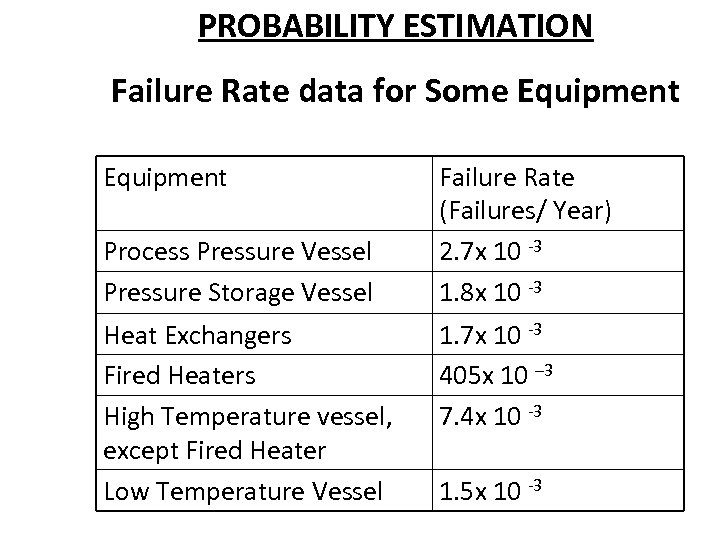 PROBABILITY ESTIMATION Failure Rate data for Some Equipment Process Pressure Vessel Pressure Storage Vessel Heat Exchangers Fired Heaters High Temperature vessel, except Fired Heater Low Temperature Vessel Failure Rate (Failures/ Year) 2. 7 x 10 -3 1. 8 x 10 -3 1. 7 x 10 -3 405 x 10 – 3 7. 4 x 10 -3 1. 5 x 10 -3
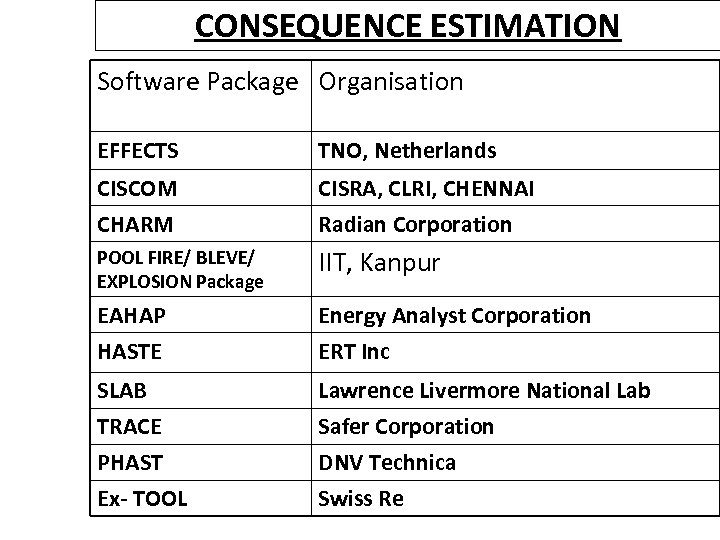 CONSEQUENCE ESTIMATION Software Package Organisation EFFECTS TNO, Netherlands CISCOM CISRA, CLRI, CHENNAI CHARM Radian Corporation POOL FIRE/ BLEVE/ EXPLOSION Package IIT, Kanpur EAHAP Energy Analyst Corporation HASTE ERT Inc SLAB TRACE PHAST Ex- TOOL Lawrence Livermore National Lab Safer Corporation DNV Technica Swiss Re
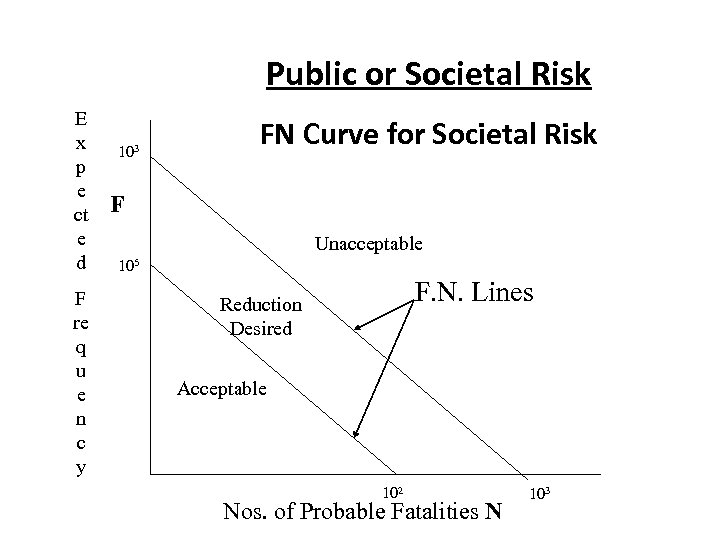 Public or Societal Risk E x p e ct e d F re q u e n c y 103 FN Curve for Societal Risk F Unacceptable 105 F. N. Lines Reduction Desired Acceptable 102 Nos. of Probable Fatalities N 103
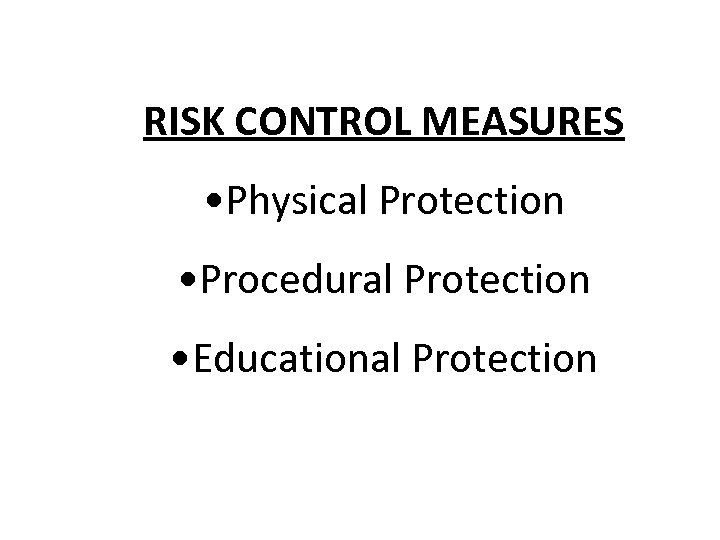 RISK CONTROL MEASURES • Physical Protection • Procedural Protection • Educational Protection
 Physical Protection • Strict & Rigorous approach in following the Relevant Standards , Codes & Practices • Built in Safety Devices and Safety System • Venting through Tall stacks • Field Monitors for Different Toxic Gases • Burning Waste gases in a Flare System • Provision of Wind Cones • Fire Proofing of Steel Structures • PPE • Passive Protection System • Active Protection system • Automatic Protection system • Improved Waste Water Management
 PROCEDURAL PROTECTION • Fire Emergency Procedure • Disaster Preparedness Plan • Mutual Aid Scheme • No Smoking Policy • Investigation of All Accidents • Hazard Identification through Safety Committee, House Keeping Committee, Safety audit Committee • Conducting Plant Survey, safety survey • Work Permit System • Statutory Requirement • Safety Promotional Activities
 Contd. • Information notes on Unsafe conditions • MSDS • Annual Medical Check up of Employees • Safe Start up & Shut Down Procedure • Regular and Preventive Maintenance • Periodic testing of Fire Fighting Appliances
 EDUCATIONAL PROTECTION • Periodic Training Programme on Safety, Fire Safety and Hazardous properties of materials • Mock Fire Drill • Safety Manuals • Health & Safety News Bulletins • Safety Motivation schemes • Plant Operating Manual
 GROWING IMPORTANCE OF RISK MANAGEMENT DUE TO • LEGISLATION • CUSTOMER ATTITUDE • SOCIETAL EXPECTATIONS • MANAGEMENT ATTITUDES
 The Science of Fire vkx dk fo. Kku
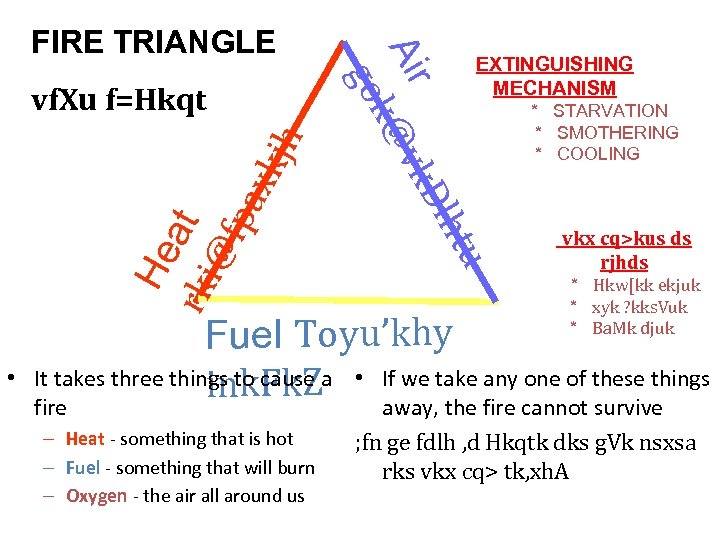 • EXTINGUISHING MECHANISM u He at rki @f pa xk jh vf. Xu f=Hkqt t Dlh vk Air k@ go FIRE TRIANGLE * STARVATION * SMOTHERING * COOLING vkx cq>kus ds rjhds * Hkw[kk ekjuk * xyk ? kks. Vuk * Ba. Mk djuk Fuel Toyu’khy It takes three things to cause a • If we take any one of these things ink. Fk. Z away, the fire cannot survive fire – Heat - something that is hot – Fuel - something that will burn – Oxygen - the air all around us ; fn ge fdlh , d Hkqtk dks g. Vk nsxsa rks vkx cq> tk, xh. A
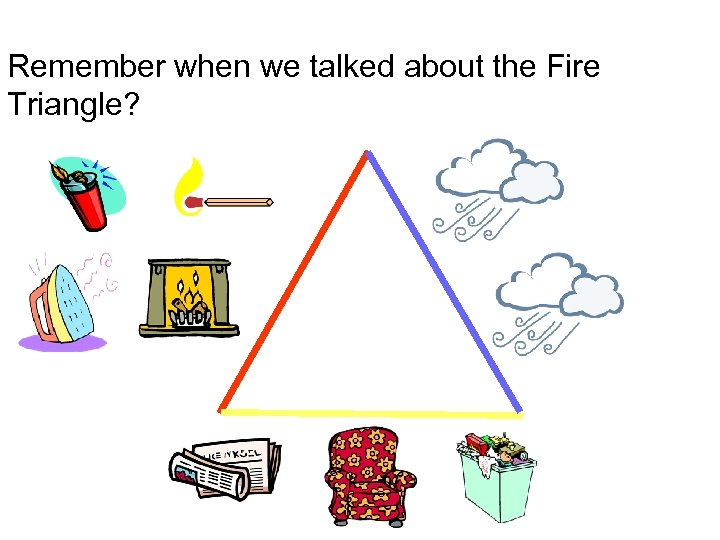 Remember when we talked about the Fire Triangle?
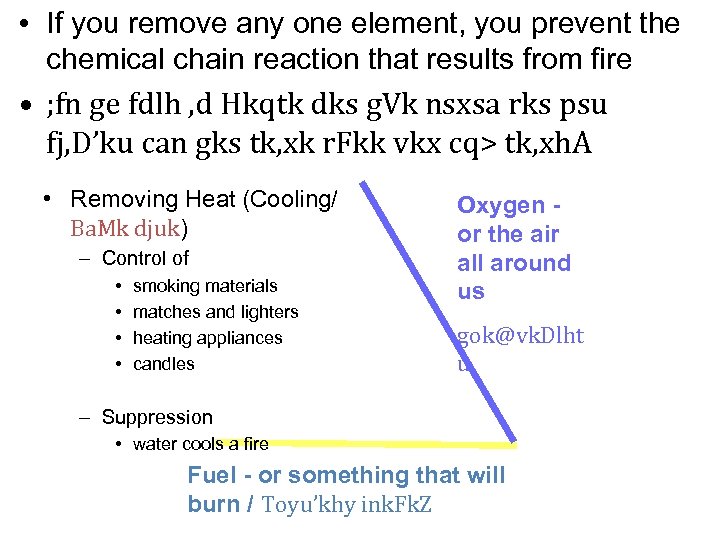 • If you remove any one element, you prevent the chemical chain reaction that results from fire • ; fn ge fdlh , d Hkqtk dks g. Vk nsxsa rks psu fj, D’ku can gks tk, xk r. Fkk vkx cq> tk, xh. A • Removing Heat (Cooling/ Ba. Mk djuk) – Control of • • smoking materials matches and lighters heating appliances candles Oxygen or the air all around us gok@vk. Dlht u – Suppression • water cools a fire Fuel - or something that will burn / Toyu’khy ink. Fk. Z
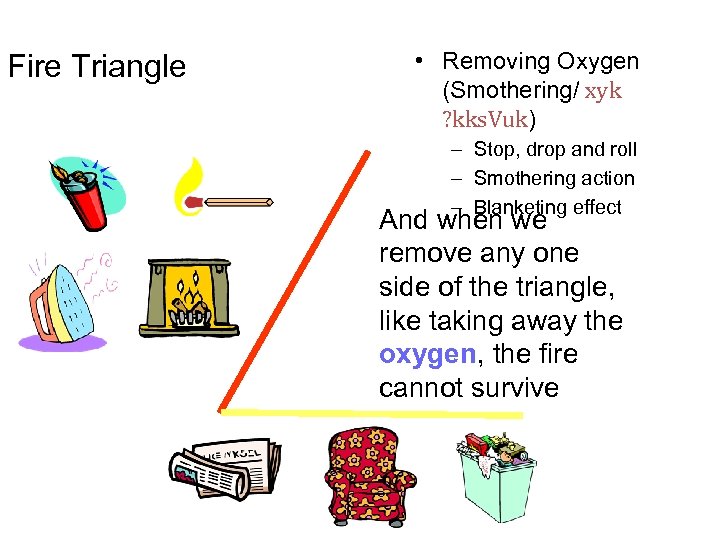 Fire Triangle • Removing Oxygen (Smothering/ xyk ? kks. Vuk) – Stop, drop and roll – Smothering action – Blanketing effect And when we remove any one side of the triangle, like taking away the oxygen, the fire cannot survive
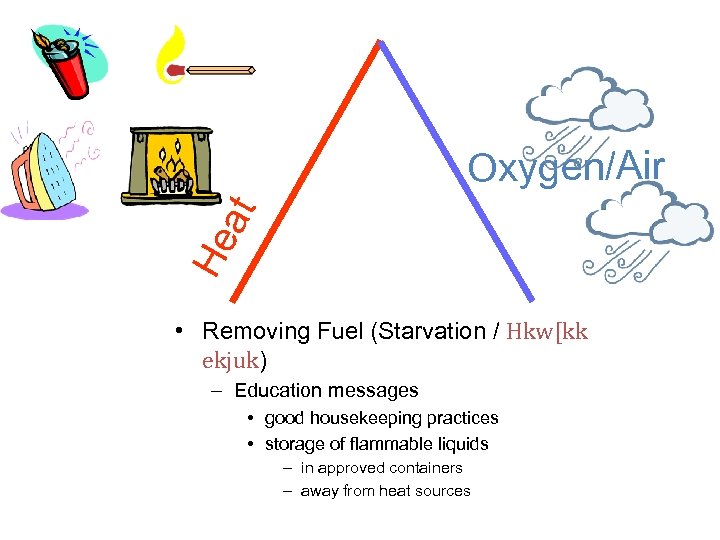 He at Oxygen/Air • Removing Fuel (Starvation / Hkw[kk ekjuk) – Education messages • good housekeeping practices • storage of flammable liquids – in approved containers – away from heat sources
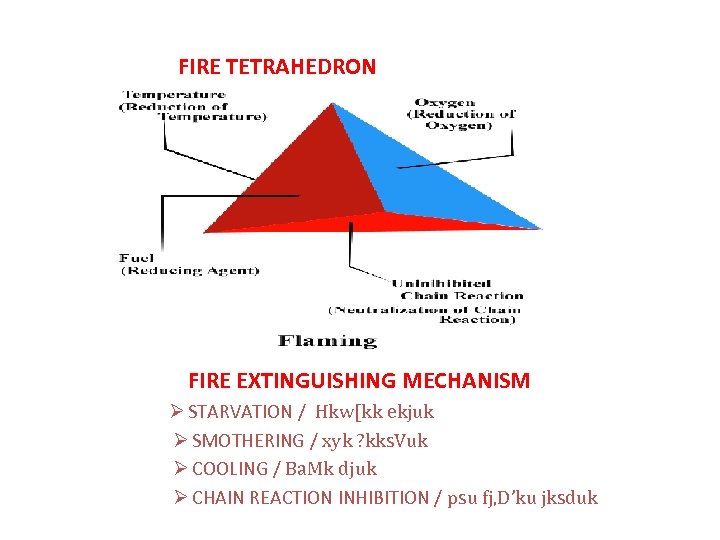 FIRE TETRAHEDRON FIRE EXTINGUISHING MECHANISM Ø STARVATION / Hkw[kk ekjuk Ø SMOTHERING / xyk ? kks. Vuk Ø COOLING / Ba. Mk djuk Ø CHAIN REACTION INHIBITION / psu fj, D’ku jksduk
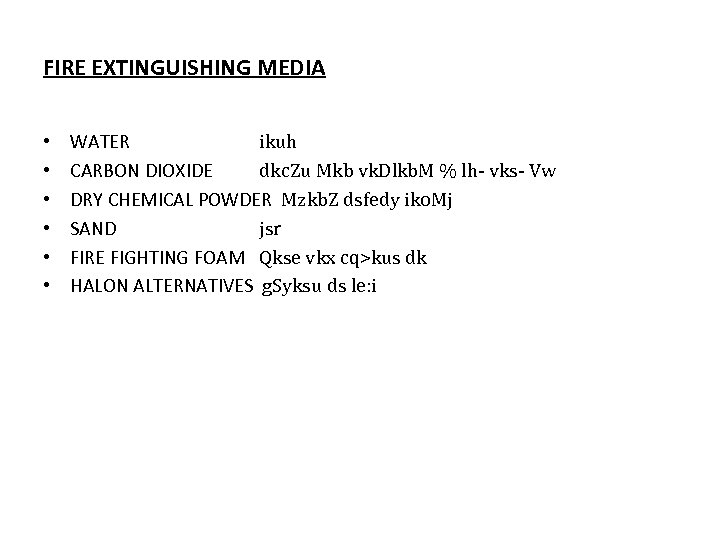 FIRE EXTINGUISHING MEDIA • • • WATER ikuh CARBON DIOXIDE dkc. Zu Mkb vk. Dlkb. M % lh- vks- Vw DRY CHEMICAL POWDER Mzkb. Z dsfedy iko. Mj SAND jsr FIRE FIGHTING FOAM Qkse vkx cq>kus dk HALON ALTERNATIVES g. Syksu ds le: i
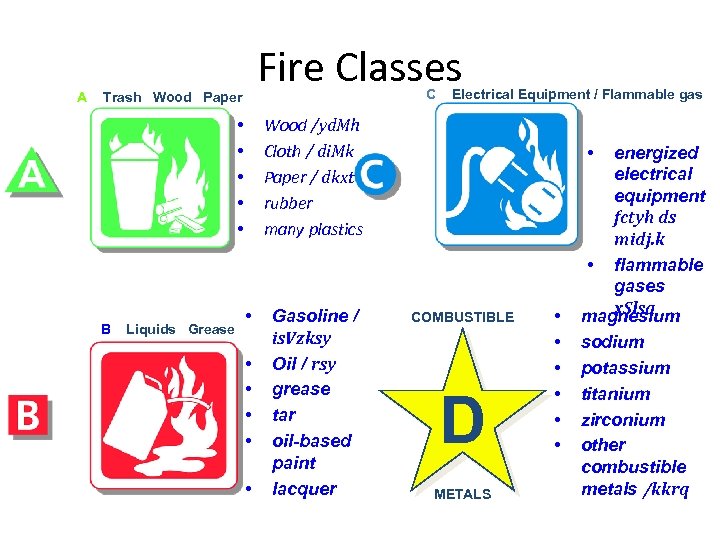 A Fire Classes C Trash Wood Paper Wood /yd. Mh Cloth / di. Mk Paper / dkxt rubber many plastics • • • B Liquids Grease Electrical Equipment / Flammable gas • • • Gasoline / is. Vzksy Oil / rsy grease tar oil-based paint lacquer • COMBUSTIBLE D METALS • • • energized electrical equipment fctyh ds midj. k • flammable gases x. Slsa magnesium sodium potassium titanium zirconium other combustible metals /kkrq
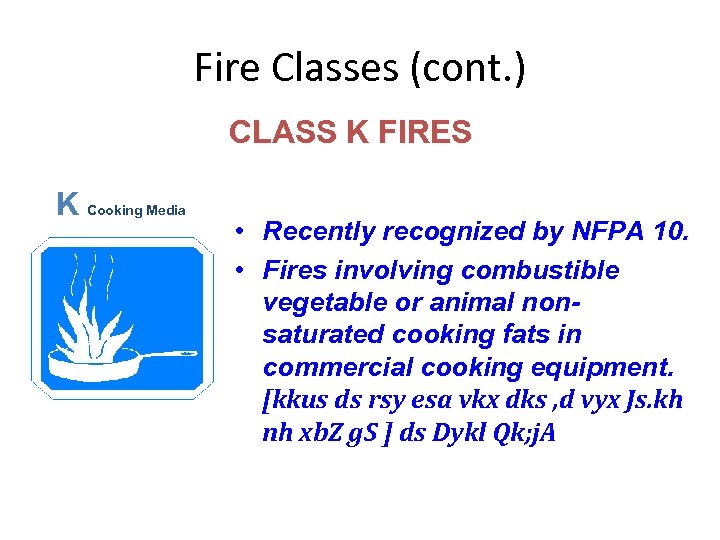 Fire Classes (cont. ) CLASS K FIRES K Cooking Media • Recently recognized by NFPA 10. • Fires involving combustible vegetable or animal nonsaturated cooking fats in commercial cooking equipment. [kkus ds rsy esa vkx dks , d vyx Js. kh nh xb. Z g. S ] ds Dykl Qk; j. A
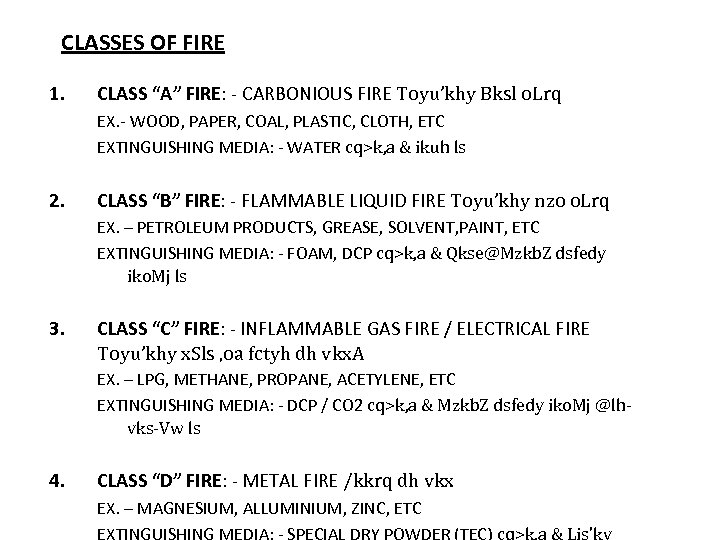 CLASSES OF FIRE 1. CLASS “A” FIRE: - CARBONIOUS FIRE Toyu’khy Bksl o. Lrq EX. - WOOD, PAPER, COAL, PLASTIC, CLOTH, ETC EXTINGUISHING MEDIA: - WATER cq>k, a & ikuh ls 2. CLASS “B” FIRE: - FLAMMABLE LIQUID FIRE Toyu’khy nzo o. Lrq EX. – PETROLEUM PRODUCTS, GREASE, SOLVENT, PAINT, ETC EXTINGUISHING MEDIA: - FOAM, DCP cq>k, a & Qkse@Mzkb. Z dsfedy iko. Mj ls 3. CLASS “C” FIRE: - INFLAMMABLE GAS FIRE / ELECTRICAL FIRE Toyu’khy x. Sls , oa fctyh dh vkx. A EX. – LPG, METHANE, PROPANE, ACETYLENE, ETC EXTINGUISHING MEDIA: - DCP / CO 2 cq>k, a & Mzkb. Z dsfedy iko. Mj @lhvks-Vw ls 4. CLASS “D” FIRE: - METAL FIRE /kkrq dh vkx EX. – MAGNESIUM, ALLUMINIUM, ZINC, ETC EXTINGUISHING MEDIA: - SPECIAL DRY POWDER (TEC) cq>k, a & Lis’ky
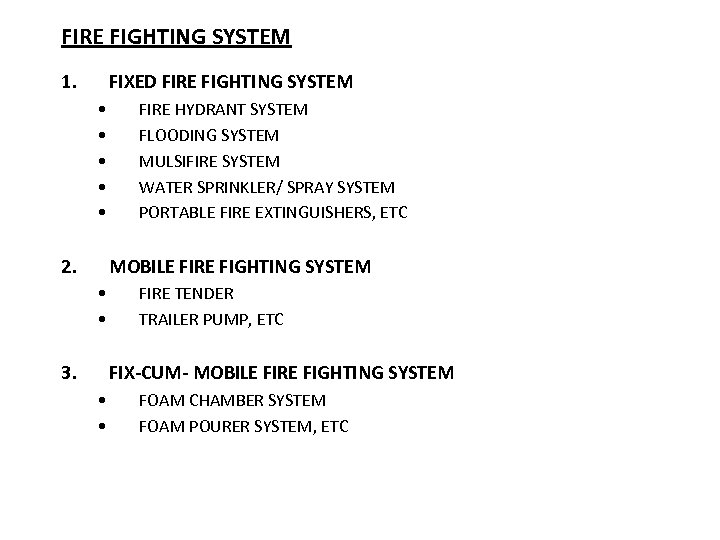 FIRE FIGHTING SYSTEM 1. FIXED FIRE FIGHTING SYSTEM • • • 2. FIRE HYDRANT SYSTEM FLOODING SYSTEM MULSIFIRE SYSTEM WATER SPRINKLER/ SPRAY SYSTEM PORTABLE FIRE EXTINGUISHERS, ETC MOBILE FIRE FIGHTING SYSTEM • • 3. FIRE TENDER TRAILER PUMP, ETC FIX-CUM- MOBILE FIRE FIGHTING SYSTEM • • FOAM CHAMBER SYSTEM FOAM POURER SYSTEM, ETC
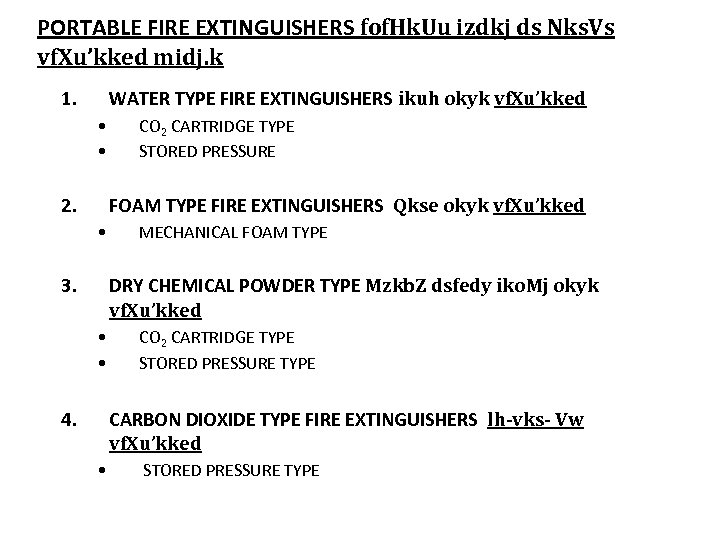 PORTABLE FIRE EXTINGUISHERS fof. Hk. Uu izdkj ds Nks. Vs vf. Xu’kked midj. k 1. WATER TYPE FIRE EXTINGUISHERS ikuh okyk vf. Xu’kked • • 2. CO 2 CARTRIDGE TYPE STORED PRESSURE FOAM TYPE FIRE EXTINGUISHERS Qkse okyk vf. Xu’kked • 3. MECHANICAL FOAM TYPE DRY CHEMICAL POWDER TYPE Mzkb. Z dsfedy iko. Mj okyk vf. Xu’kked • • 4. CO 2 CARTRIDGE TYPE STORED PRESSURE TYPE CARBON DIOXIDE TYPE FIRE EXTINGUISHERS lh-vks- Vw vf. Xu’kked • STORED PRESSURE TYPE
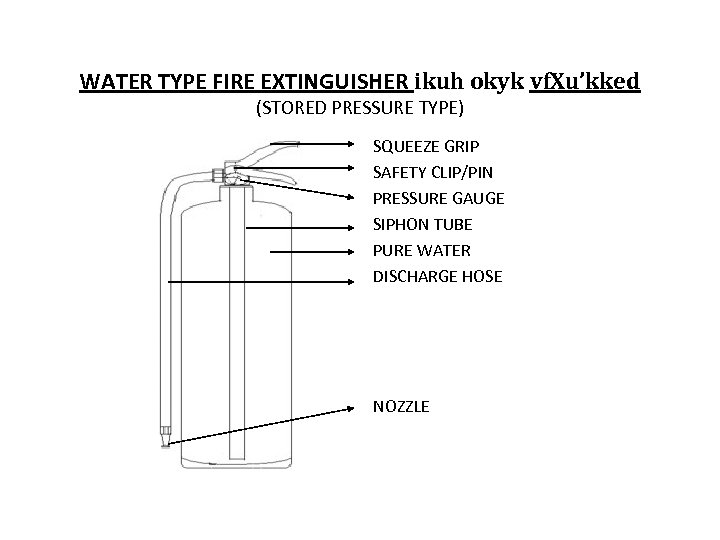 WATER TYPE FIRE EXTINGUISHER ikuh okyk vf. Xu’kked (STORED PRESSURE TYPE) SQUEEZE GRIP SAFETY CLIP/PIN PRESSURE GAUGE SIPHON TUBE PURE WATER DISCHARGE HOSE NOZZLE
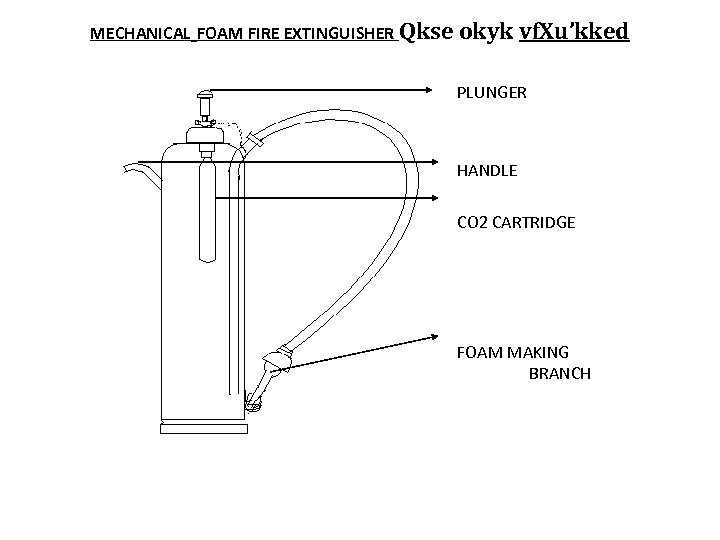 MECHANICAL FOAM FIRE EXTINGUISHER Qkse okyk vf. Xu’kked PLUNGER HANDLE CO 2 CARTRIDGE FOAM MAKING BRANCH
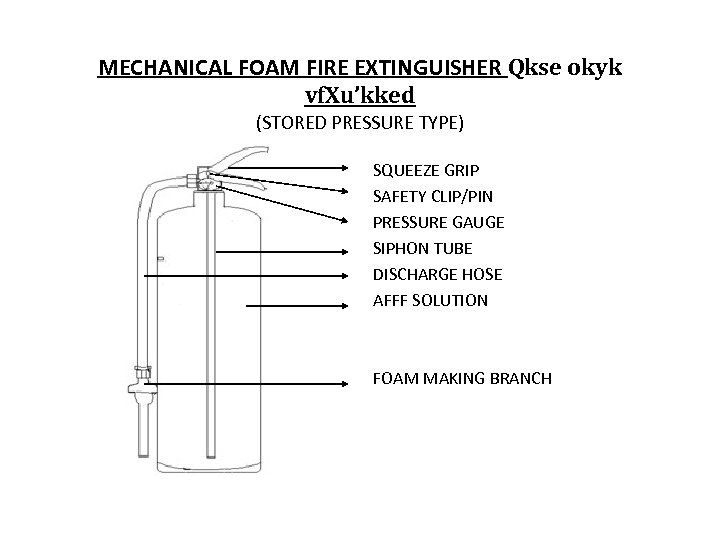 MECHANICAL FOAM FIRE EXTINGUISHER Qkse okyk vf. Xu’kked (STORED PRESSURE TYPE) SQUEEZE GRIP SAFETY CLIP/PIN PRESSURE GAUGE SIPHON TUBE DISCHARGE HOSE AFFF SOLUTION FOAM MAKING BRANCH
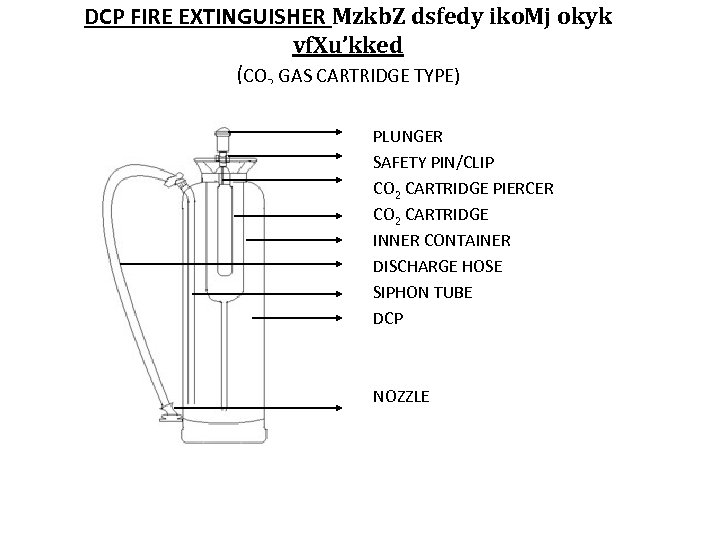 DCP FIRE EXTINGUISHER Mzkb. Z dsfedy iko. Mj okyk vf. Xu’kked (CO 2 GAS CARTRIDGE TYPE) PLUNGER SAFETY PIN/CLIP CO 2 CARTRIDGE PIERCER CO 2 CARTRIDGE INNER CONTAINER DISCHARGE HOSE SIPHON TUBE DCP NOZZLE
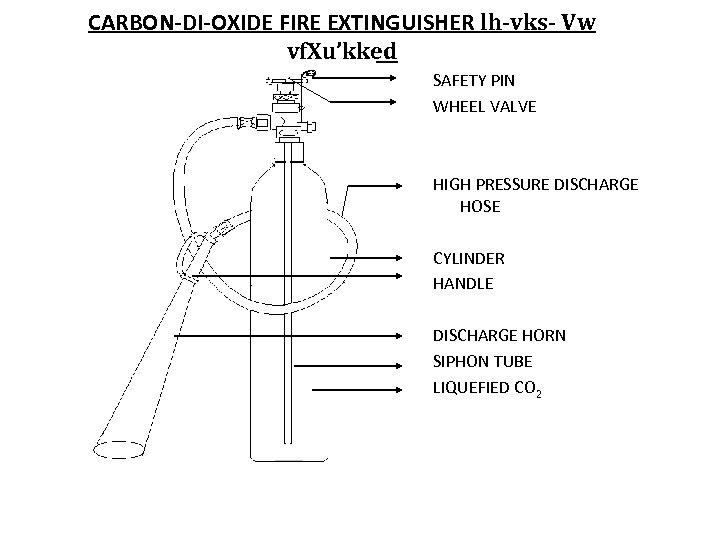 CARBON-DI-OXIDE FIRE EXTINGUISHER lh-vks- Vw vf. Xu’kked SAFETY PIN WHEEL VALVE HIGH PRESSURE DISCHARGE HOSE CYLINDER HANDLE DISCHARGE HORN SIPHON TUBE LIQUEFIED CO 2
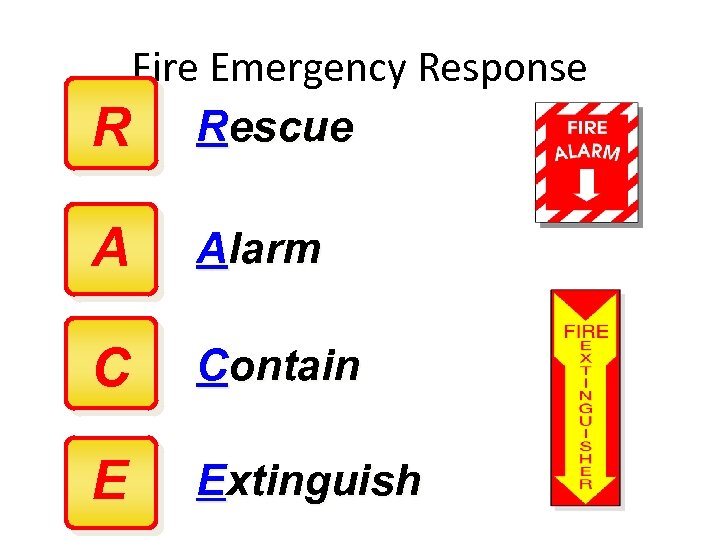 Fire Emergency Response R Rescue A Alarm C Contain E Extinguish
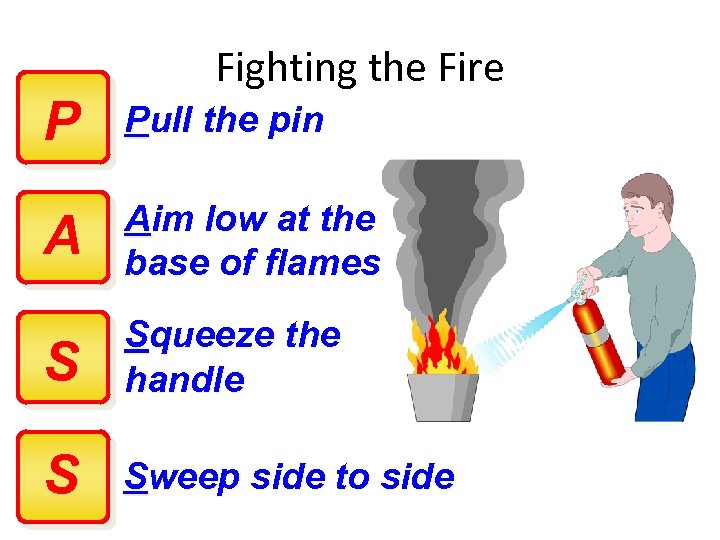 Fighting the Fire P Pull the pin A Aim low at the base of flames S Squeeze the handle S Sweep side to side
 Flash point • The flash point of a liquid fuel is the temperature at which vapour given off by fuel will ignite momentarily when an external flame is applied • At flash point the liquid fuel vapour will not continue to burn • Determines the risk in storing a given liquid fuel at given temperature
 Fire point • The fire point of a liquid fuel is the temperature at which vapour given off by fuel will ignite and continue to burn when an external flame is applied • In most of liquid fuels, fire point is not as clearly demarcated as flash point
 Ignition point • The ignition temperature is the lowest temperature at which the liquid fuel will spontaneously combust in a normal atmosphere, such as a flame or spark. • This temperature is required to supply the activation energy needed for combustion.
 Flammability limit • The minimum concentration of vapor of liquid fuel in air below which propagation of flame does not occur on contact with a source of ignition. This is known as lower flammability limit ( LFL). • There is also upper flammability limit (UFL) • Flammability is generally expressed as percentage of vapour volume in air
 Flammability limit cont. • If the vapour –air mixture temperature is higher, the LFL is reduced. increasing the temperature by 100 C decreases the LFL value about 8%. • Lower flammability for HSD is approximately 9 %