 Скачать презентацию MACROECONOMICS AND THE GLOBAL BUSINESS ENVIRONMENT 2 nd
c60755e931cf0d07a75d8ed4684bca54.ppt
- Количество слайдов: 24



MACROECONOMICS AND THE GLOBAL BUSINESS ENVIRONMENT 2 nd edition Monetary Policy 1
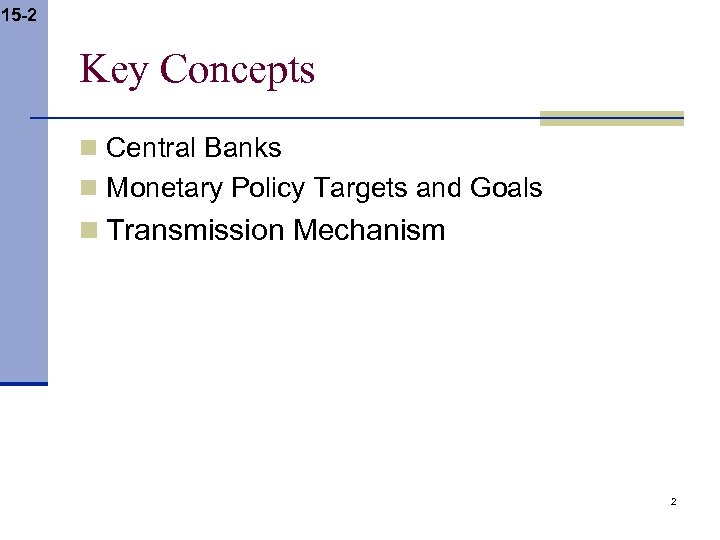
15 -2 Key Concepts n Central Banks n Monetary Policy Targets and Goals n Transmission Mechanism 2
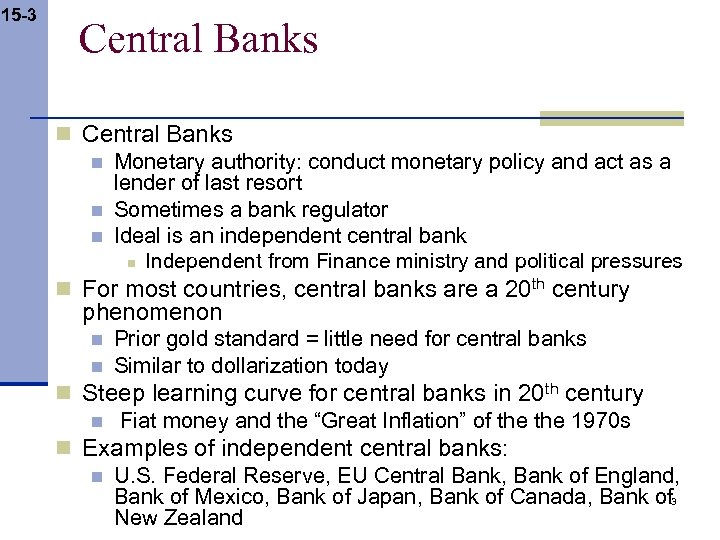
15 -3 Central Banks n Monetary authority: conduct monetary policy and act as a lender of last resort n Sometimes a bank regulator n Ideal is an independent central bank n Independent from Finance ministry and political pressures n For most countries, central banks are a 20 th century phenomenon n n Prior gold standard = little need for central banks Similar to dollarization today n Steep learning curve for central banks in 20 th century n Fiat money and the “Great Inflation” of the 1970 s n Examples of independent central banks: n U. S. Federal Reserve, EU Central Bank, Bank of England, Bank of Mexico, Bank of Japan, Bank of Canada, Bank of 3 New Zealand
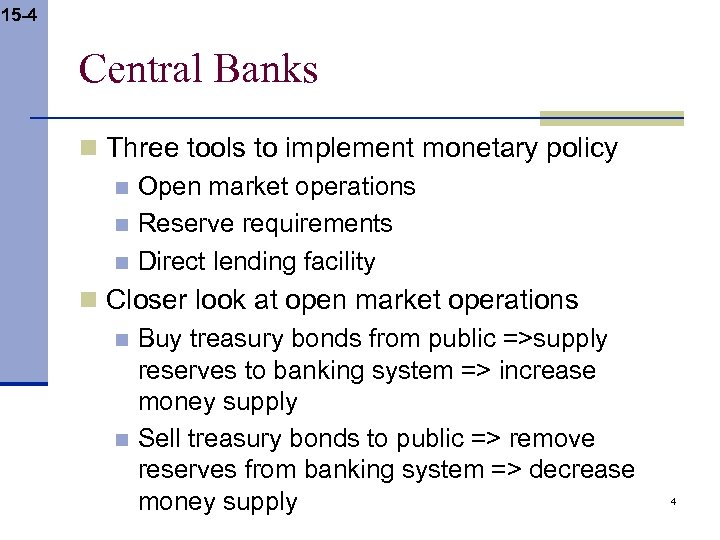
15 -4 Central Banks n Three tools to implement monetary policy n Open market operations n Reserve requirements n Direct lending facility n Closer look at open market operations n Buy treasury bonds from public =>supply reserves to banking system => increase money supply n Sell treasury bonds to public => remove reserves from banking system => decrease money supply 4
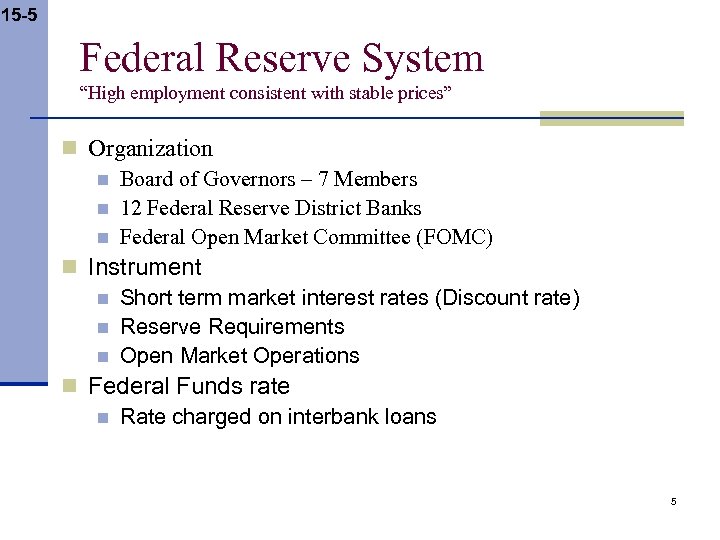
15 -5 Federal Reserve System “High employment consistent with stable prices” n Organization n Board of Governors – 7 Members n 12 Federal Reserve District Banks n Federal Open Market Committee (FOMC) n Instrument n Short term market interest rates (Discount rate) n Reserve Requirements n Open Market Operations n Federal Funds rate n Rate charged on interbank loans 5
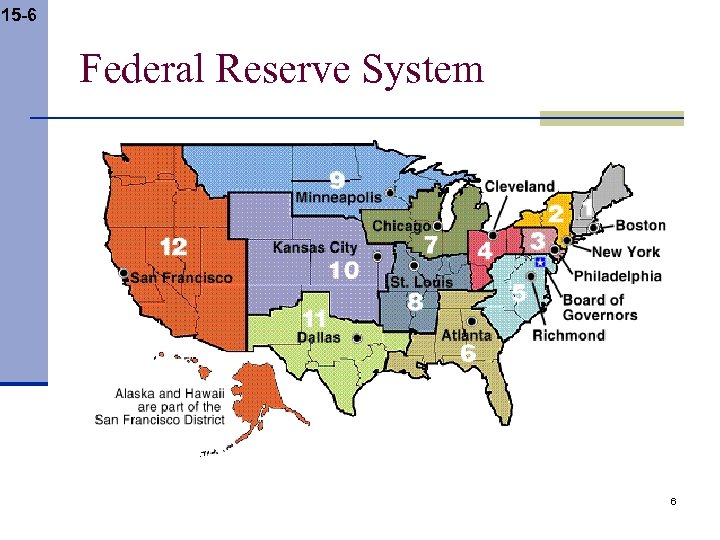
15 -6 Federal Reserve System 6
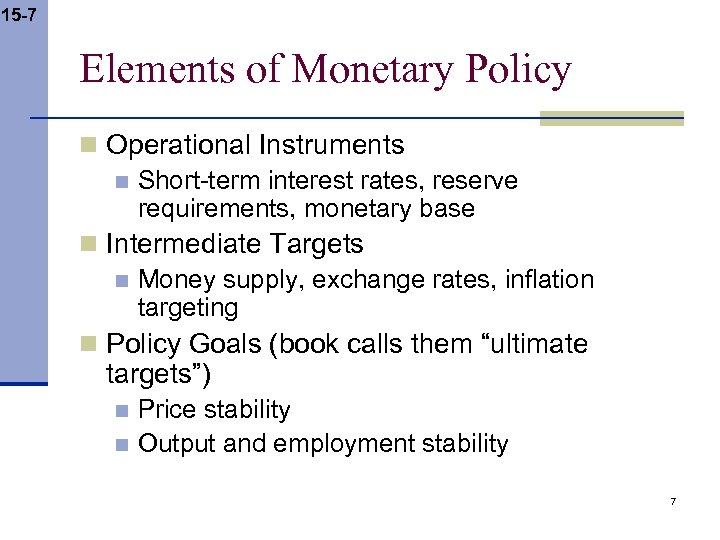
15 -7 Elements of Monetary Policy n Operational Instruments n Short-term interest rates, reserve requirements, monetary base n Intermediate Targets n Money supply, exchange rates, inflation targeting n Policy Goals (book calls them “ultimate targets”) Price stability n Output and employment stability n 7
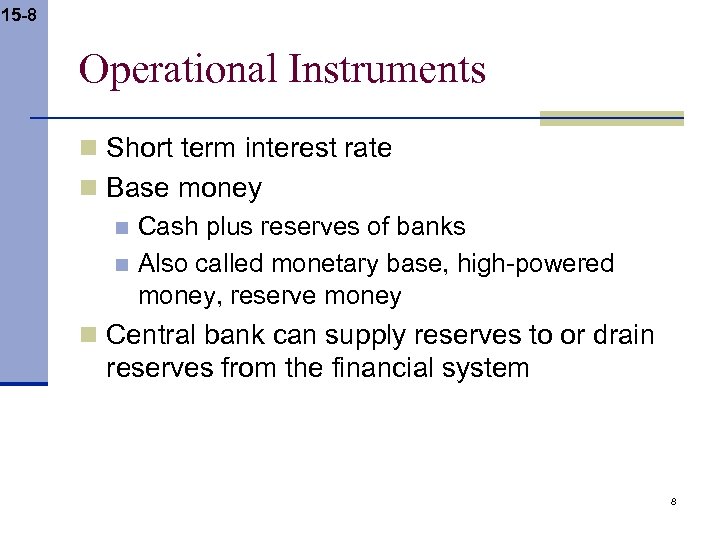
15 -8 Operational Instruments n Short term interest rate n Base money n Cash plus reserves of banks n Also called monetary base, high-powered money, reserve money n Central bank can supply reserves to or drain reserves from the financial system 8
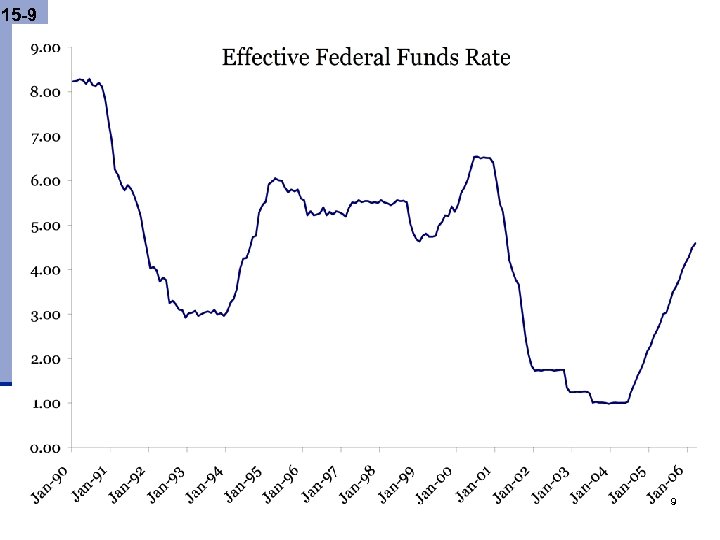
15 -9 9
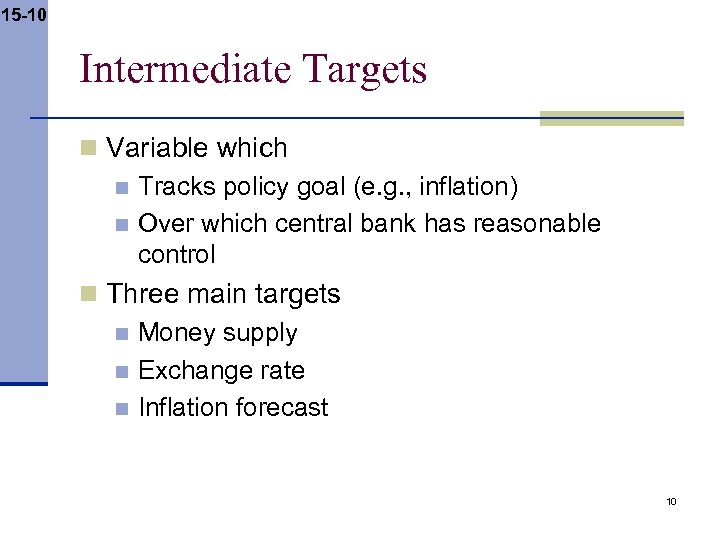
15 -10 Intermediate Targets n Variable which n Tracks policy goal (e. g. , inflation) n Over which central bank has reasonable control n Three main targets n Money supply n Exchange rate n Inflation forecast 10
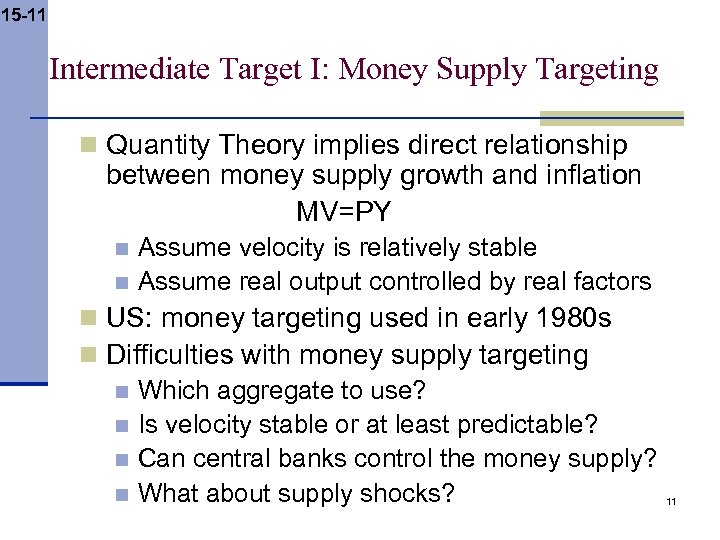
15 -11 Intermediate Target I: Money Supply Targeting n Quantity Theory implies direct relationship between money supply growth and inflation MV=PY Assume velocity is relatively stable n Assume real output controlled by real factors n n US: money targeting used in early 1980 s n Difficulties with money supply targeting n Which aggregate to use? n Is velocity stable or at least predictable? n Can central banks control the money supply? n What about supply shocks? 11
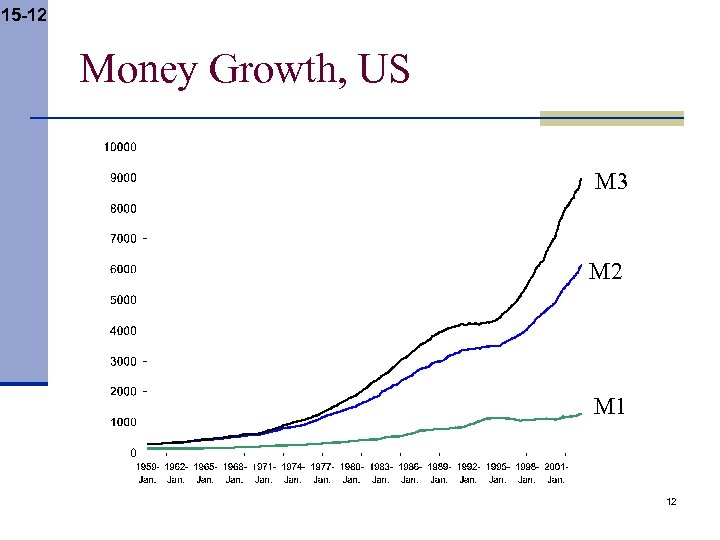
15 -12 Money Growth, US M 3 M 2 M 1 12
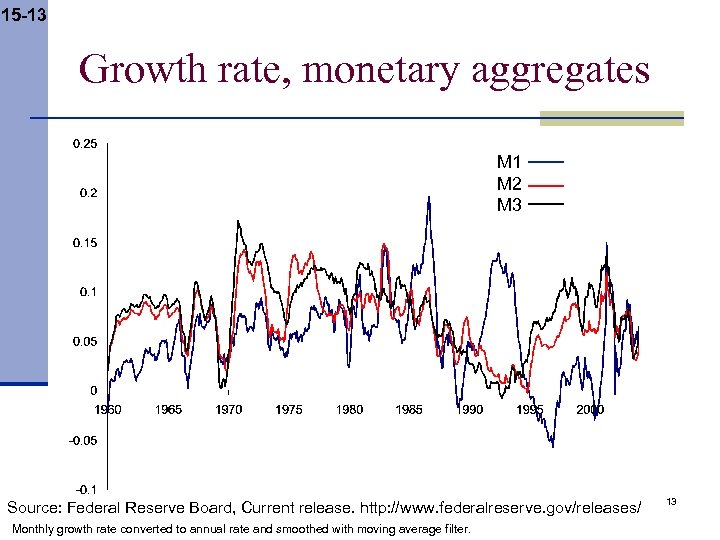
15 -13 Growth rate, monetary aggregates M 1 M 2 M 3 Source: Federal Reserve Board, Current release. http: //www. federalreserve. gov/releases/ Monthly growth rate converted to annual rate and smoothed with moving average filter. 13
15 -14 Intermediate Target II: Exchange Rate Targets n Fix exchange rate against another currency n Will tie domestic inflation to foreign inflation n Cost is lack of flexibility in influence on domestic economy n The Exchange Rate as a Tool of Monetary Policy n When the exchange rate is flexible: n Tighter monetary policy reduces net exports. § How? § higher interest rates => increased capital inflows => dollar appreciate => U. S. exports more expensive to foreigners (higher real exchange rate) n n Easier monetary policy stimulates net exports. Monetary policy affects consumption, investment, and net exports in open economy 14
15 -15 Intermediate Target III: Inflation Targeting n Specified a target range for realized inflation n Common measure of 2% annual inflation n n Specific targets for Bank of Canada, Bank of New Zealand Some allow band around target n Allows for discretion in implementation n Use inflation forecast which may incorporate many variables n Discretion comes at a price 15
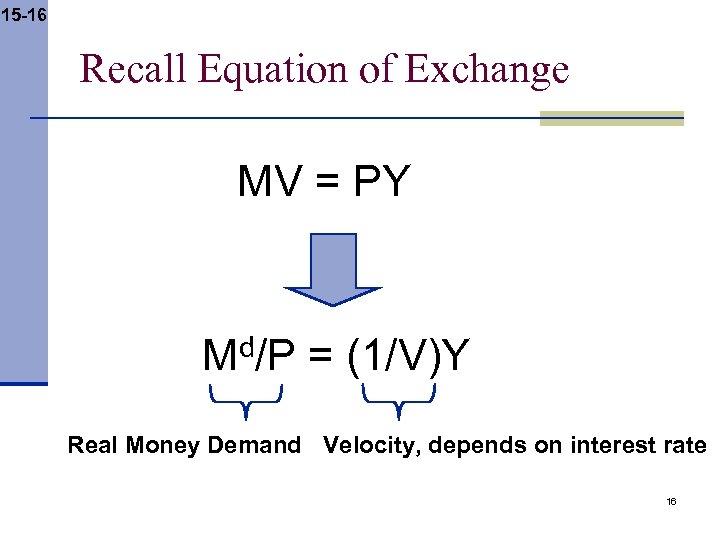
15 -16 Recall Equation of Exchange MV = PY Md/P = (1/V)Y Real Money Demand Velocity, depends on interest rate 16
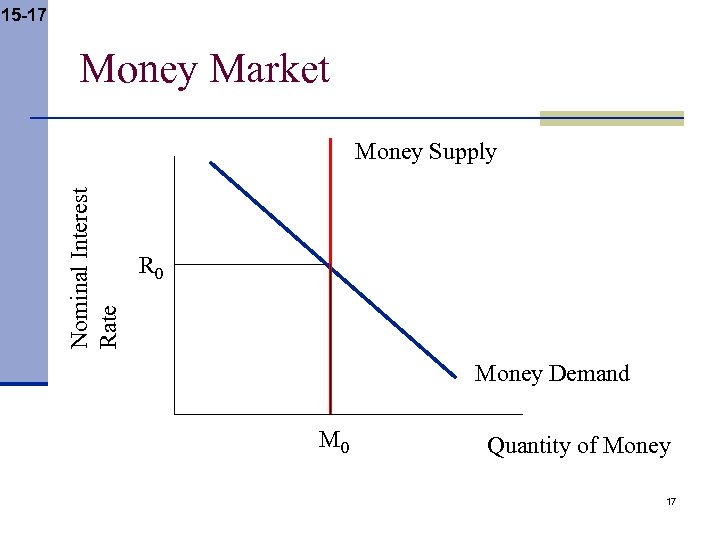
15 -17 Money Market Nominal Interest Rate Money Supply R 0 Money Demand M 0 Quantity of Money 17
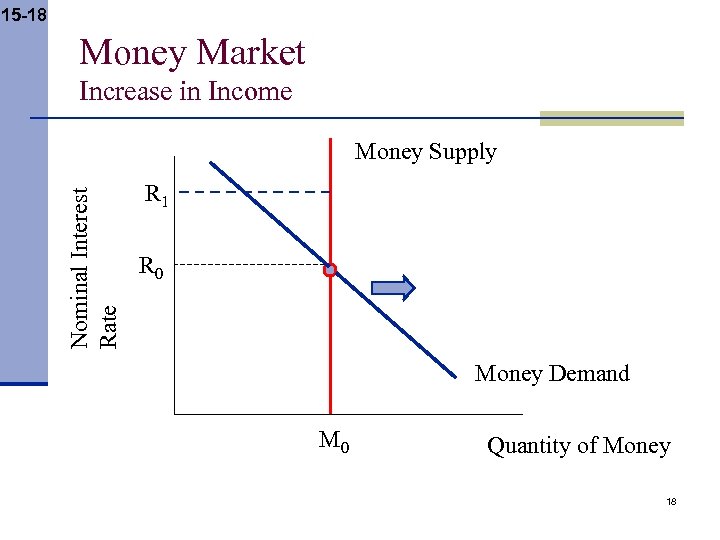
15 -18 Money Market Increase in Income Nominal Interest Rate Money Supply R 1 R 0 Money Demand M 0 Quantity of Money 18
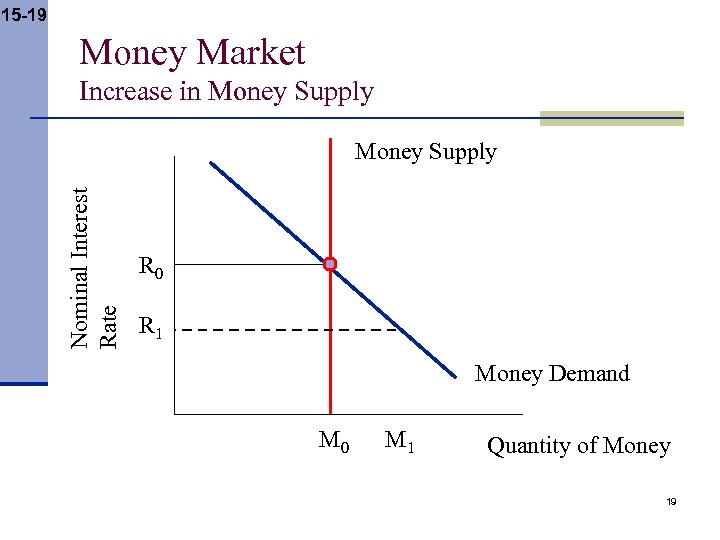
15 -19 Money Market Increase in Money Supply Nominal Interest Rate Money Supply R 0 R 1 Money Demand M 0 M 1 Quantity of Money 19
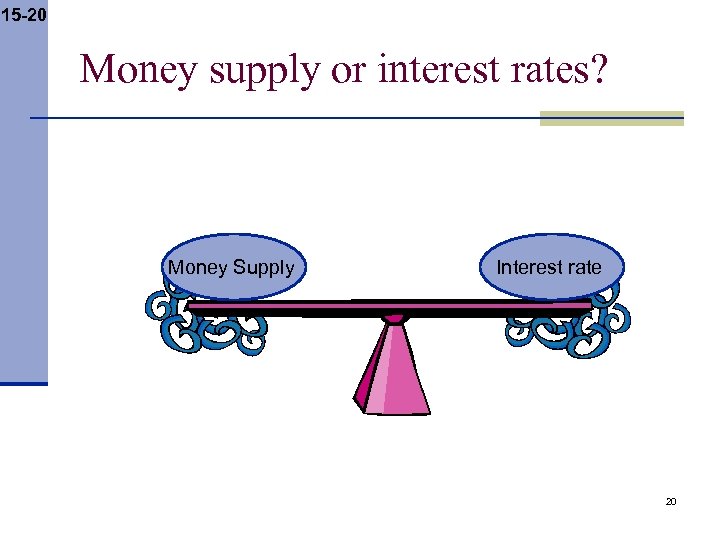
15 -20 Money supply or interest rates? Money Supply Interest rate 20
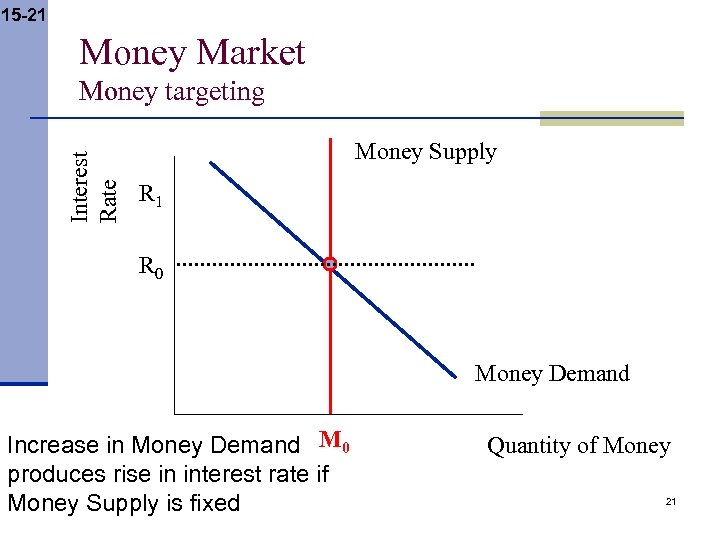
15 -21 Money Market Interest Rate Money targeting Money Supply R 1 R 0 Money Demand Increase in Money Demand M 0 produces rise in interest rate if Money Supply is fixed Quantity of Money 21
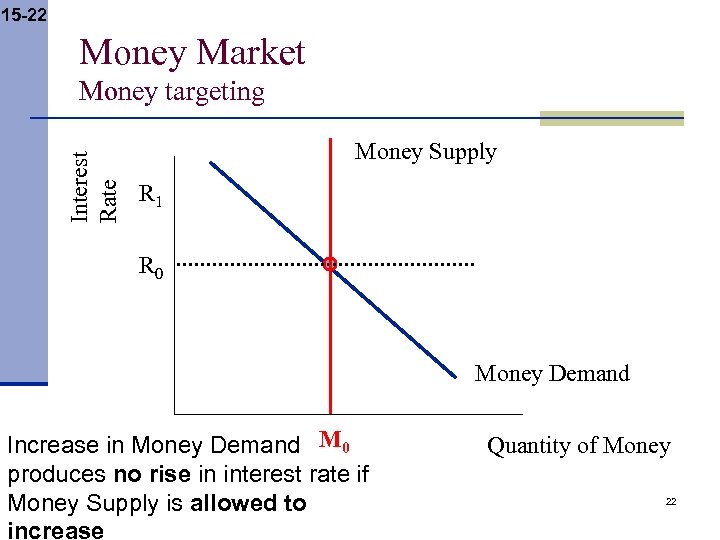
15 -22 Money Market Interest Rate Money targeting Money Supply R 1 R 0 Money Demand Increase in Money Demand M 0 produces no rise in interest rate if Money Supply is allowed to increase Quantity of Money 22
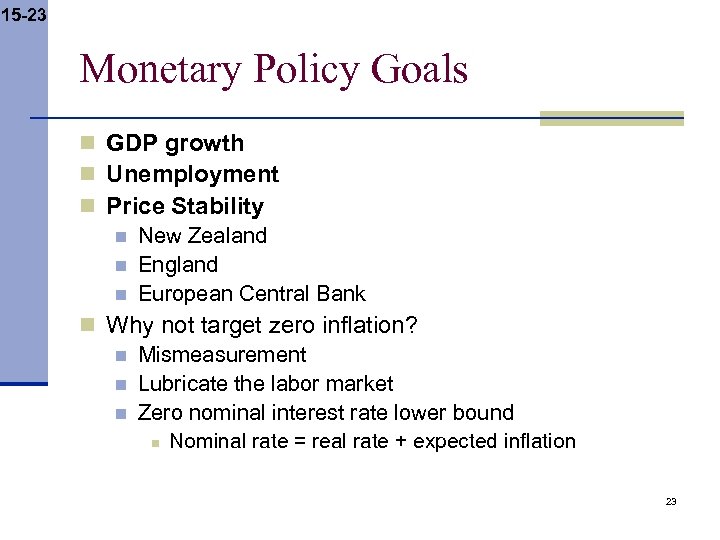
15 -23 Monetary Policy Goals n GDP growth n Unemployment n Price Stability n New Zealand n England n European Central Bank n Why not target zero inflation? n Mismeasurement n Lubricate the labor market n Zero nominal interest rate lower bound n Nominal rate = real rate + expected inflation 23
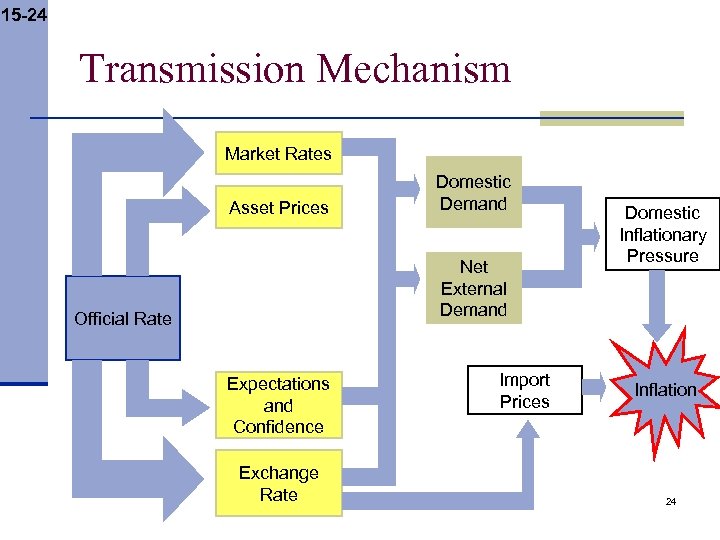
15 -24 Transmission Mechanism Market Rates Asset Prices Domestic Demand Net External Demand Official Rate Expectations and Confidence Exchange Rate Import Prices Domestic Inflationary Pressure Inflation 24
Скачать презентацию MACROECONOMICS AND THE GLOBAL BUSINESS ENVIRONMENT 2 nd
c60755e931cf0d07a75d8ed4684bca54.ppt