


 Скачать презентацию Macroeconomic Coordination in Latin America Some Lessons from
fa764880ed930483bdfe0a7a482a697a.ppt
- Количество слайдов: 48
 Macroeconomic Coordination in Latin America: Some Lessons from the Mercosur Experience José Luis Machinea and Guillermo Rozenwurcel ECONOMIC COMMISSION FOR LATIN AMERICA AND THE CARIBBEAN Seminar on Regional Financial Arrangements New York, July 14 th 2004
 Main topics • • • Incentives for coordination Costs and difficulties of coordination Volatility of real exchange rates Monetary Union Macroeconomic coordination – The European experience – The Latin American experience • Conclusions
 Incentives for coordination • • • Interdependence (trade and financial) Political support for a deeper integration Discipline under domestic pressure Improvement of credibility (buy reputation) Elimination of distortions and reduction of fiscal costs • Reduction of volatility in the block
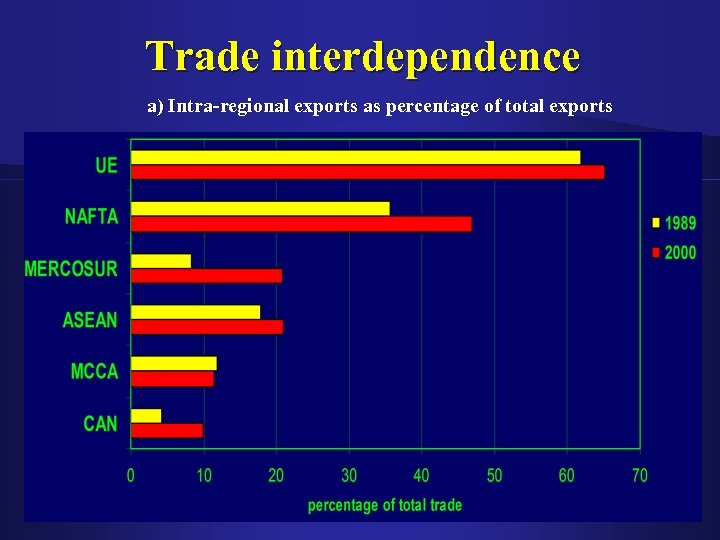 Trade interdependence a) Intra-regional exports as percentage of total exports
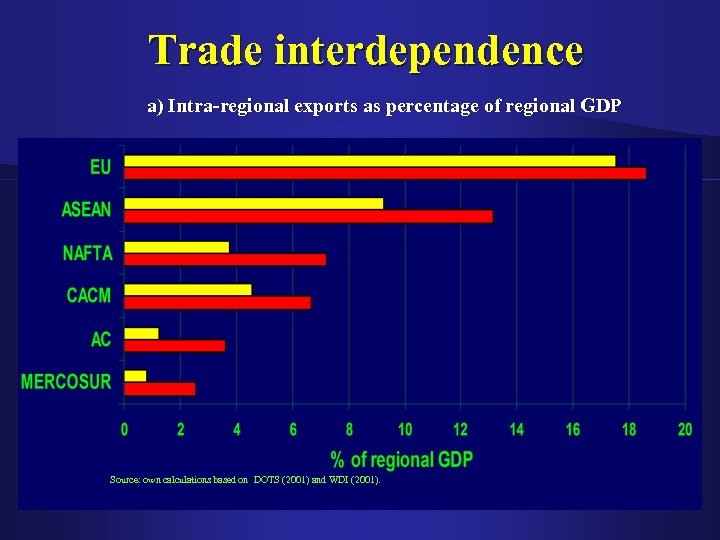 Trade interdependence a) Intra-regional exports as percentage of regional GDP Source: own calculations based on DOTS (2001) and WDI (2001).
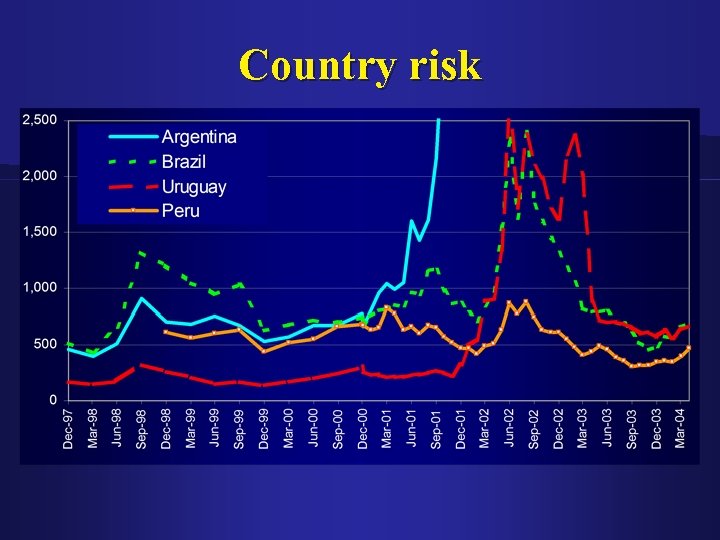
 Financial interdependence • Lack of financial relations • But – Similar external financial shocks – Contagion
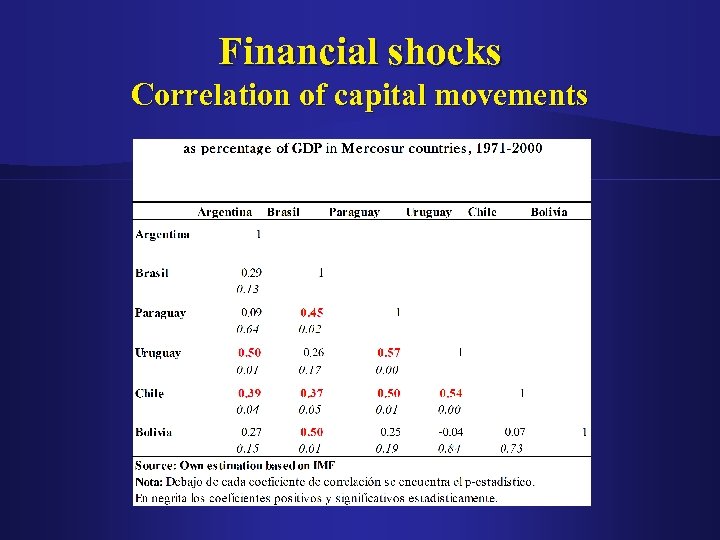 Financial shocks Correlation of capital movements
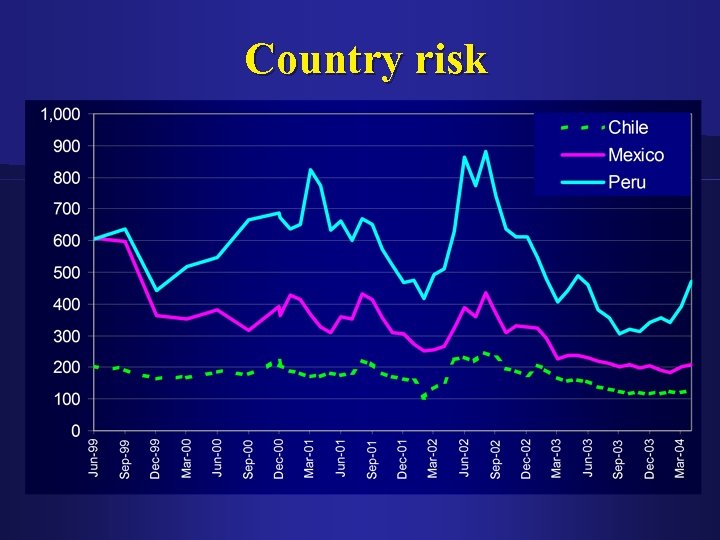 Country risk
 Country risk
 Incentives for coordination • • Interdependence (trade and financial) Political support for a deeper integration Discipline under domestic pressure Improvement of credibility (buy reputation) • Elimination of distortions and reduction of fiscal costs • Reduction of volatility in the block – Nobody wants to have a partner with a highly volatile economy. Alternatives: reduce interdependence or find cooperation mechanism to reduce volatility
 Main topics • • • Incentives for coordination Costs and difficulties of coordination Volatility of real exchange rates Monetary Union Macroeconomic coordination – The European experience – The Latin American experience • Conclusions
 Coordination: costs and difficulties • Autonomy • Cyclical Synchronism • Differences in the underlying model (Argentina and Brazil during the nineties) • Long-run benefits and a high discount rate during crises • Doubts about the cooperative behavior of partners (prisoner’s dilemma)
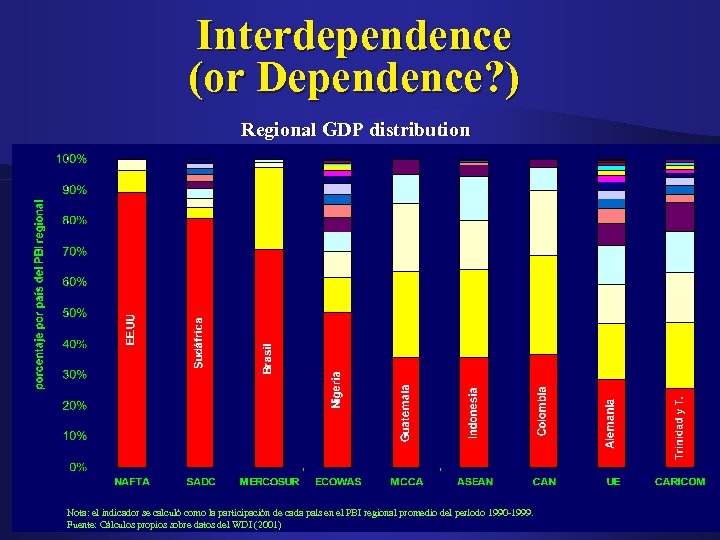 Interdependence (or Dependence? ) Regional GDP distribution Nota: el indicador se calculó como la participación de cada país en el PBI regional promedio del período 1990 -1999. Fuente: Cálculos propios sobre datos del WDI (2001)
 Coordination: costs and difficulties • Autonomy • Cyclical Syncronism • Differences in the underlying model (Argentina and Brazil during the nineties) • Long-run benefits and a high discount rate during crises • Doubts about the cooperative behavior of partners (prisoner’s dilemma)
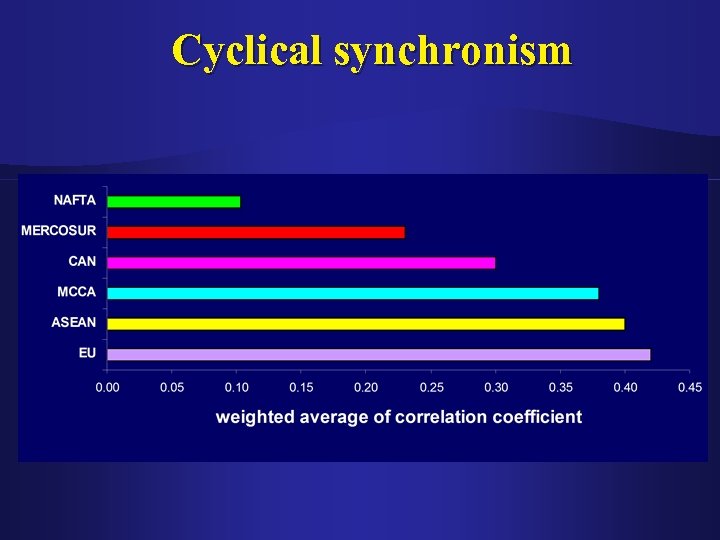 Cyclical synchronism
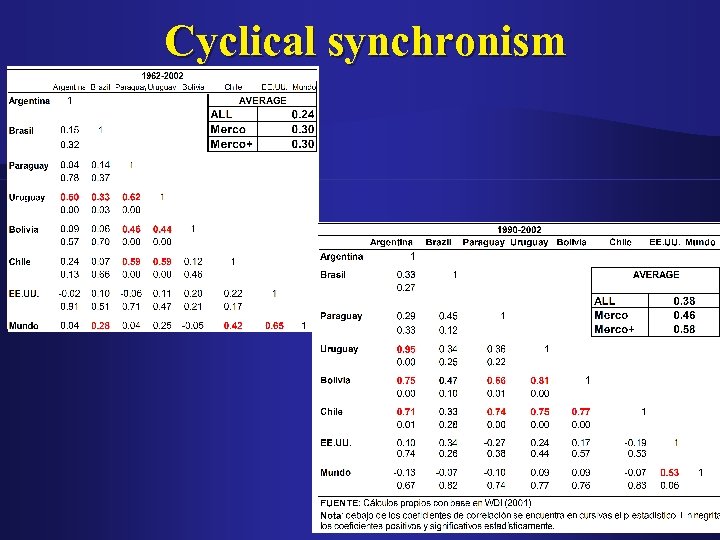 Cyclical synchronism
 Coordination: costs and difficulties • Autonomy • Cyclical Synchronism • Differences in the underlying model (Argentina and Brazil during the nineties) • Long-run benefits and a high discount rate during crises • Doubts about the cooperative behavior of partners (prisoner’s dilemma)
 Main topics • • • Incentives for coordination Costs and difficulties of coordination Volatility of real exchange rates Monetary Union Macroeconomic coordination – The European experience – The Latin American experience • Conclusions
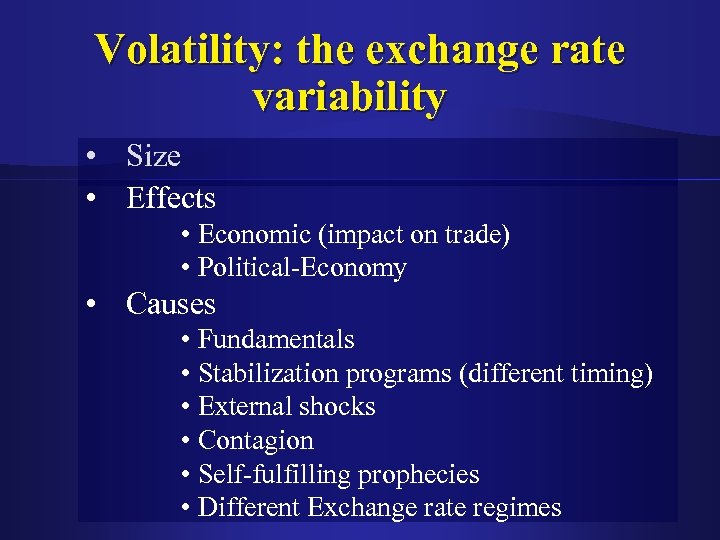
 Volatility: the exchange rate variability • Size • Effects • Economic (impact on trade) • Political-Economy • Causes • Fundamentals • Stabilization programs (different timing) • External shocks • Contagion • Self-fulfilling prophecies • Different Exchange rate regimes
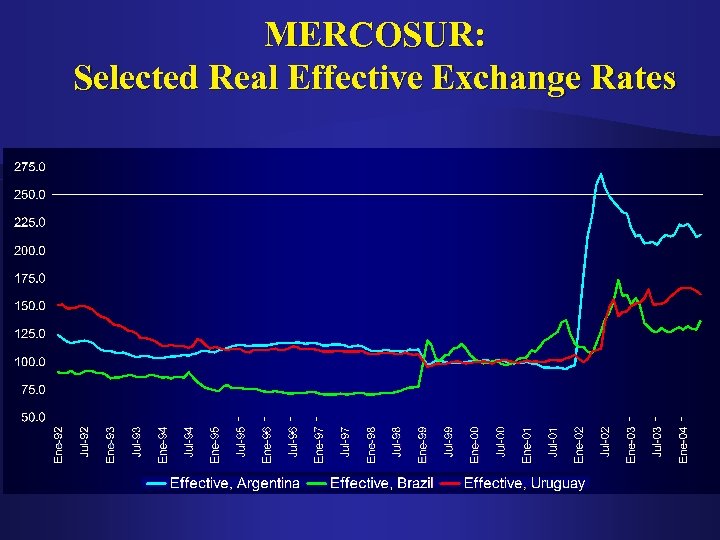 MERCOSUR: Selected Real Effective Exchange Rates
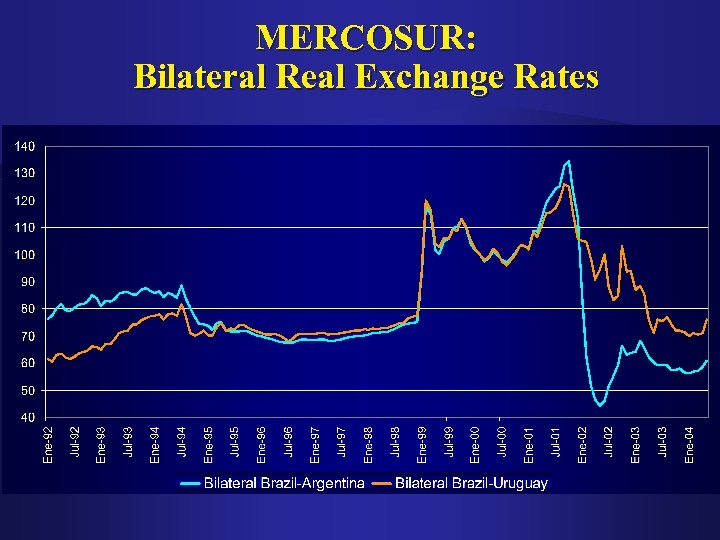 MERCOSUR: Bilateral Real Exchange Rates
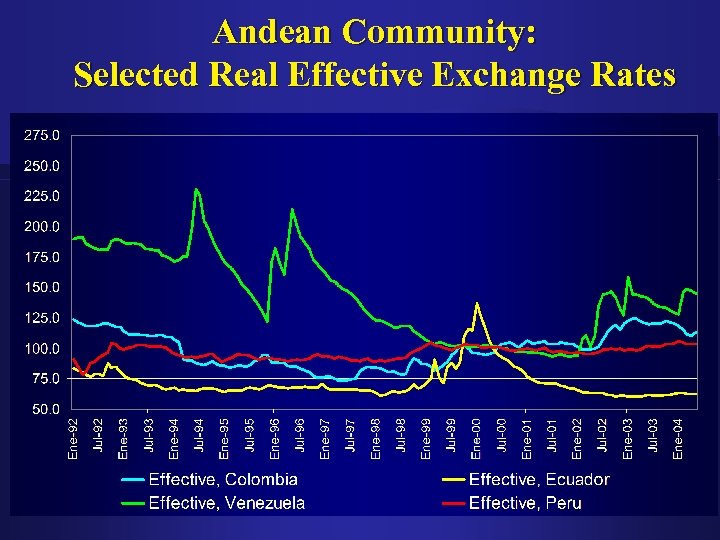 Andean Community: Selected Real Effective Exchange Rates
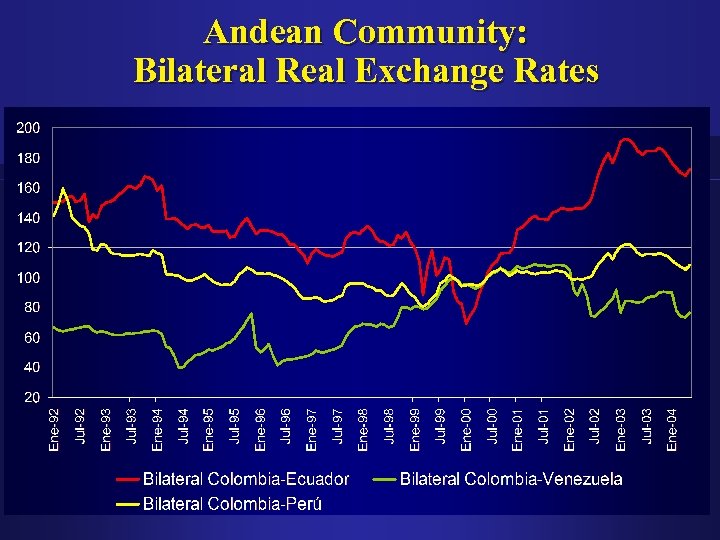 Andean Community: Bilateral Real Exchange Rates
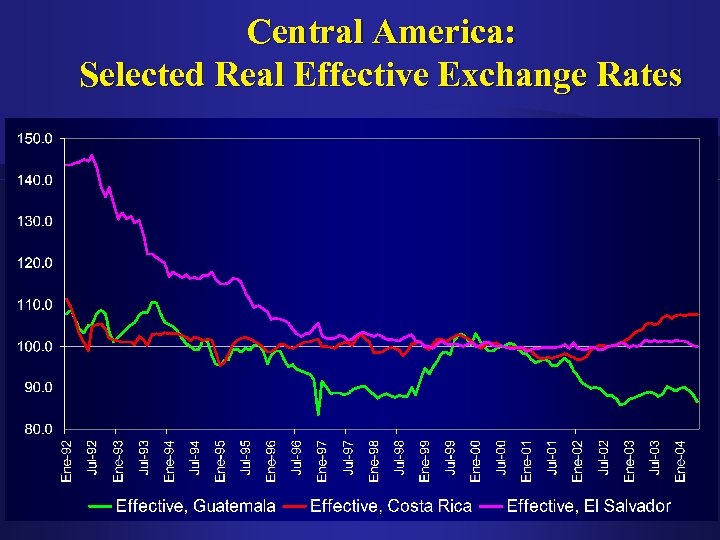 Central America: Selected Real Effective Exchange Rates
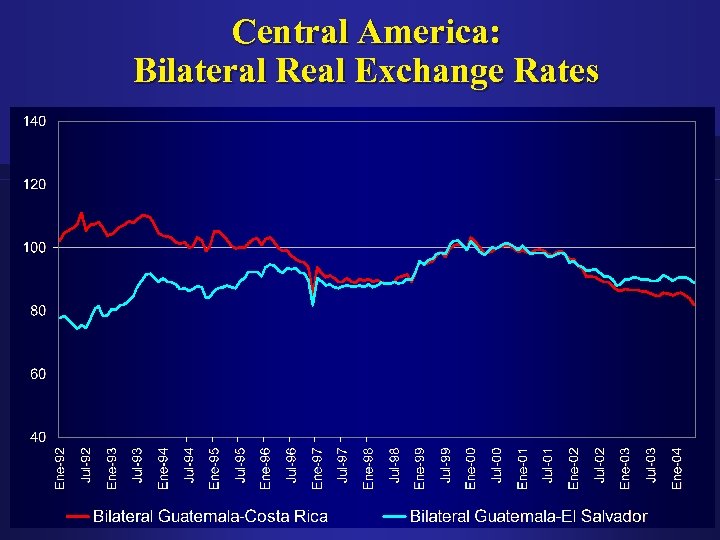 Central America: Bilateral Real Exchange Rates
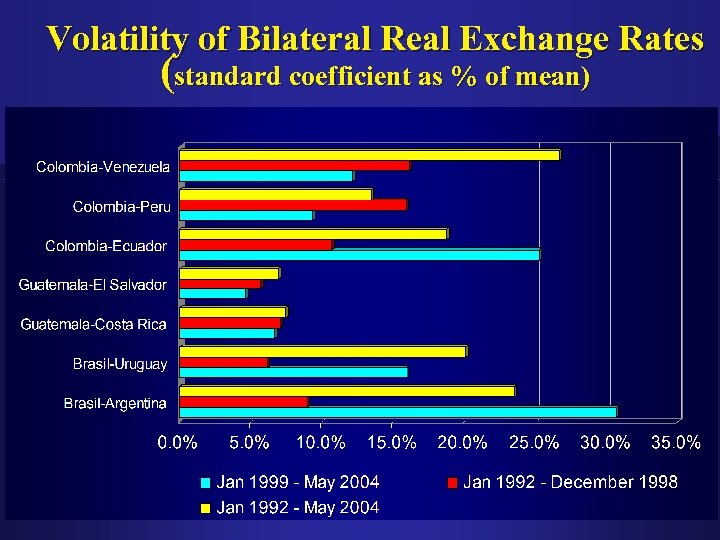 Volatility of Bilateral Real Exchange Rates (standard coefficient as % of mean)
 Volatility: the exchange rate variability • Size • Effects • Economic (impact on trade) • Political-Economy • Causes • Fundamentals • Stabilization programs (different timing) • External shocks • Contagion • Self-fulfilling prophecies • Different Exchange rate regimes
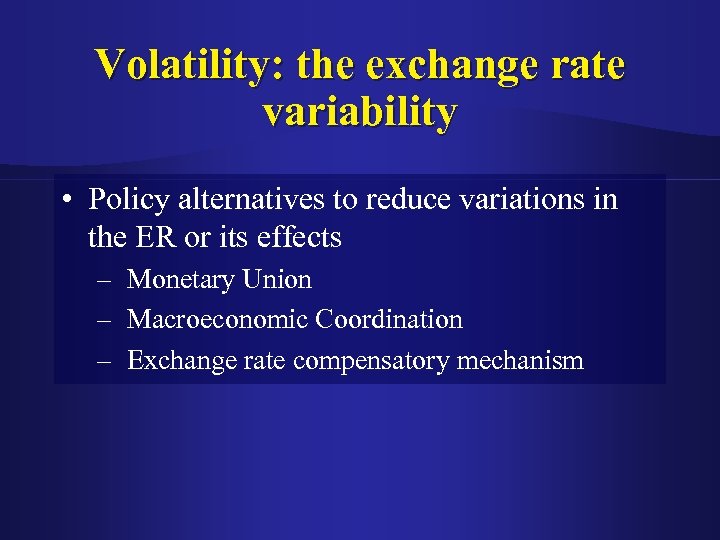 Volatility: the exchange rate variability • Policy alternatives to reduce variations in the ER or its effects – Monetary Union – Macroeconomic Coordination – Exchange rate compensatory mechanism
 Main topics • • • Incentives for coordination Costs and difficulties of coordination Volatility of real exchange rates Monetary Union Macroeconomic coordination – The European experience – The Latin American experience • Conclusions
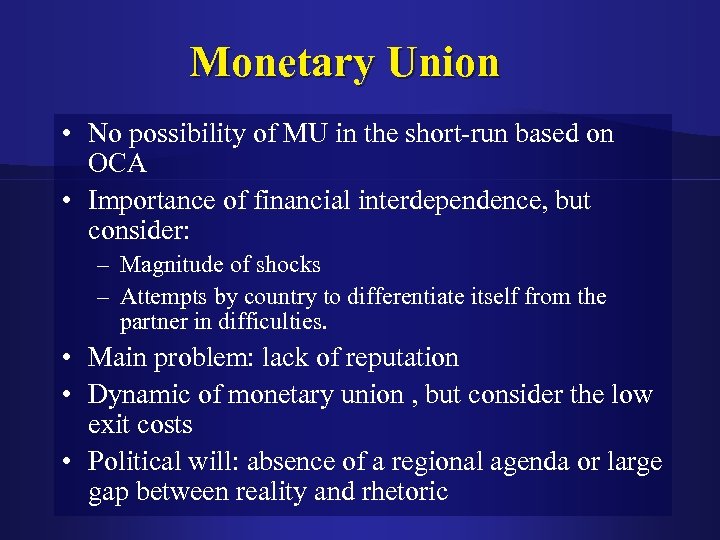 Monetary Union • No possibility of MU in the short-run based on OCA • Importance of financial interdependence, but consider: – Magnitude of shocks – Attempts by country to differentiate itself from the partner in difficulties. • Main problem: lack of reputation • Dynamic of monetary union , but consider the low exit costs • Political will: absence of a regional agenda or large gap between reality and rhetoric
 Main topics • • • Incentives for coordination Costs and difficulties of coordination Volatility of real exchange rates Monetary Union Macroeconomic coordination – The European experience – The Latin American experience • Conclusions
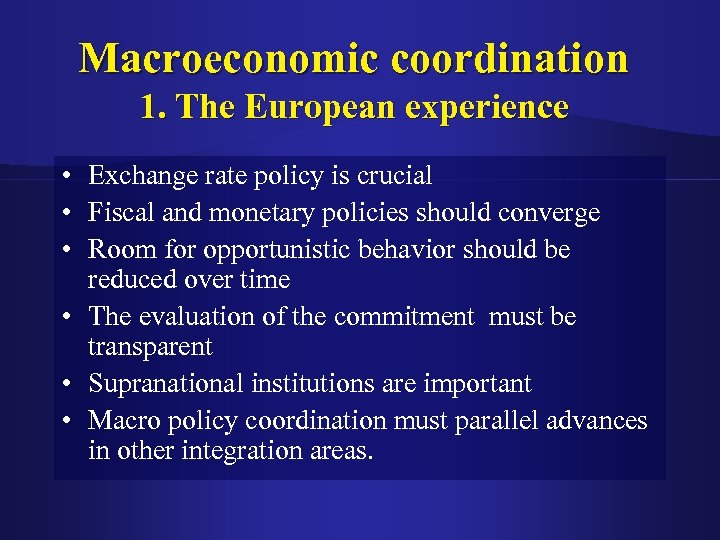 Macroeconomic coordination 1. The European experience • Exchange rate policy is crucial • Fiscal and monetary policies should converge • Room for opportunistic behavior should be reduced over time • The evaluation of the commitment must be transparent • Supranational institutions are important • Macro policy coordination must parallel advances in other integration areas.
 Main topics • • • Incentives for coordination Costs and difficulties of coordination Volatility of real exchange rates Monetary Union Macroeconomic coordination – The European experience – The Latin American experience • Conclusions
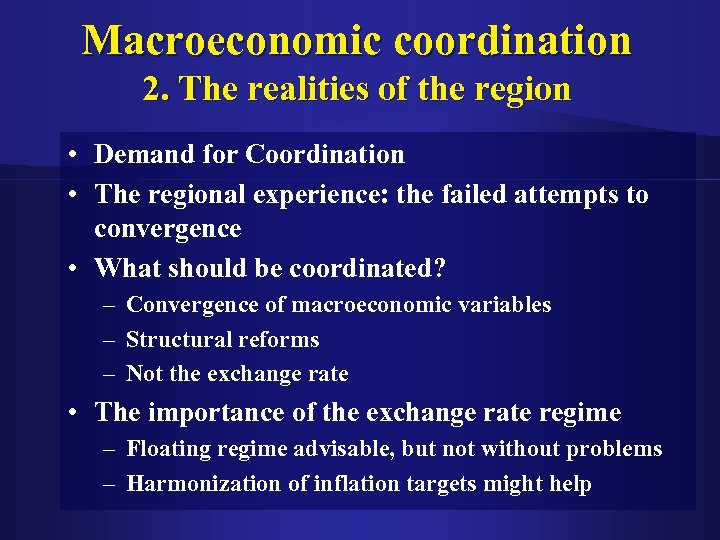 Macroeconomic coordination 2. The realities of the region • Demand for Coordination • The regional experience: the failed attempts to convergence • What should be coordinated? – Convergence of macroeconomic variables – Structural reforms – Not the exchange rate • The importance of the exchange rate regime – Floating regime advisable, but not without problems – Harmonization of inflation targets might help
 Macroeconomic coordination 2. The realities of the region • External Factors: – Volatility of terms of trade
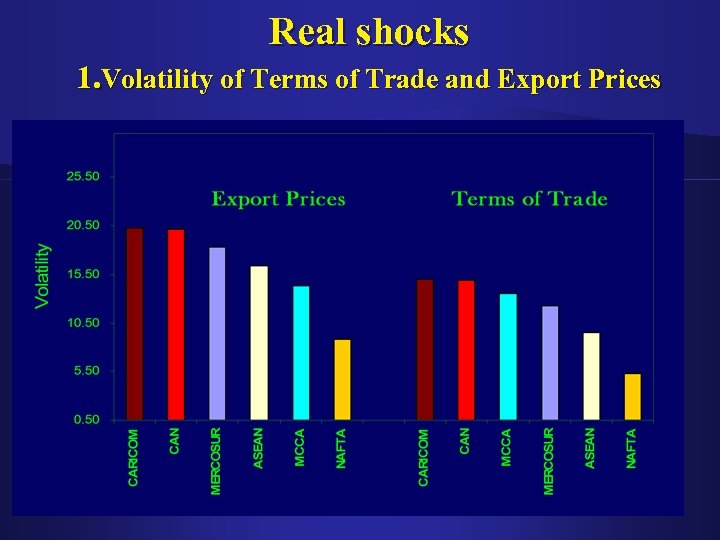 Real shocks 1. Volatility of Terms of Trade and Export Prices
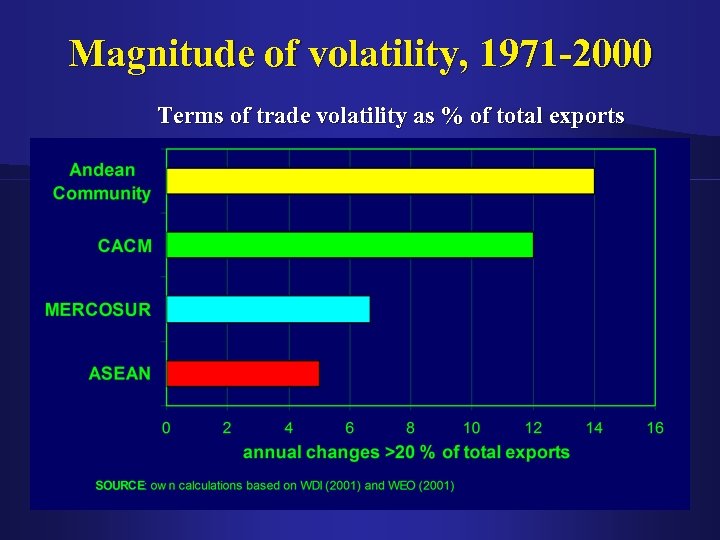 Magnitude of volatility, 1971 -2000 Terms of trade volatility as % of total exports
 Macroeconomic coordination 2. The realities of the region • Volatility of external environment: – Volatility of terms of trade – Volatility of capital flows
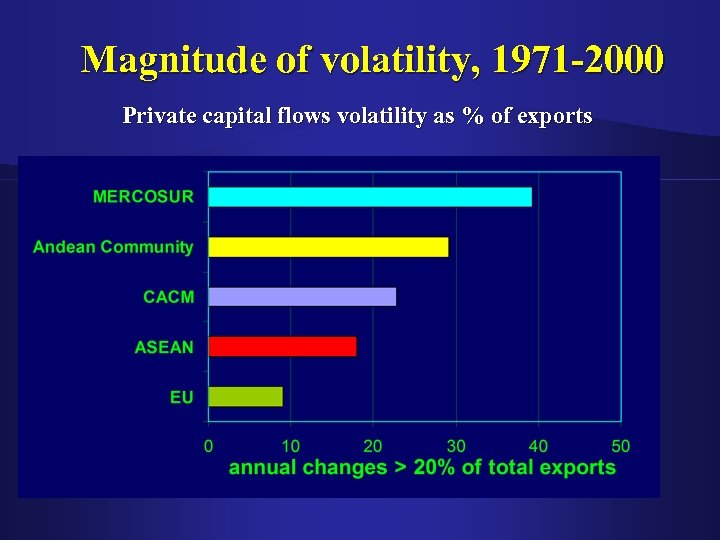 Magnitude of volatility, 1971 -2000 Private capital flows volatility as % of exports
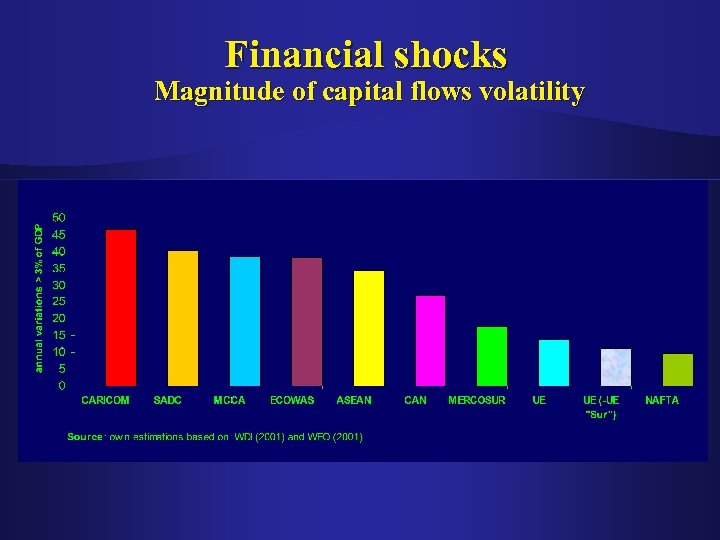 Financial shocks Magnitude of capital flows volatility
 Macroeconomic coordination 2. The realities of the region • External Factors: – Volatility of terms of trade – Volatility of capital flows • Liquidity funds • Counter-cyclical funds • Regional stabilization funds
 Macroeconomic coordination 2. The realities of the region • Incentives for coordination – Political will: the missing link – The lack of incentives – Lack of reputation (Being considered a responsible country is not tied to meeting commitments within the area) – Volatility of the exchange rate and little trade interdependence – Financial contagion induces differentiation – Europe had exogenous coordination and external shocks were less important
 Macroeconomic coordination 2. The realities of the region What can be done? • Internal incentives • Transparency of Commitments is crucial • But, effective sanctions are not credible • Committee of Experts: peer pressure • Deepening integration: increase the demand for coordination • Counter-cyclical policies: the role of structural deficit and stabilization funds
 Macroeconomic coordination 2. The realities of the region • External incentives – International stabilization funds (real and financial shocks) – The role of Multilateral Banks (loans related to the integration process) – Regional financing: a key actor if enough funds are available (needs of support from multilateral) • Lack of correlations of terms of trade helps • But the problems could be: – Asymmetry of Size (Brazil) – Similar financial shocks
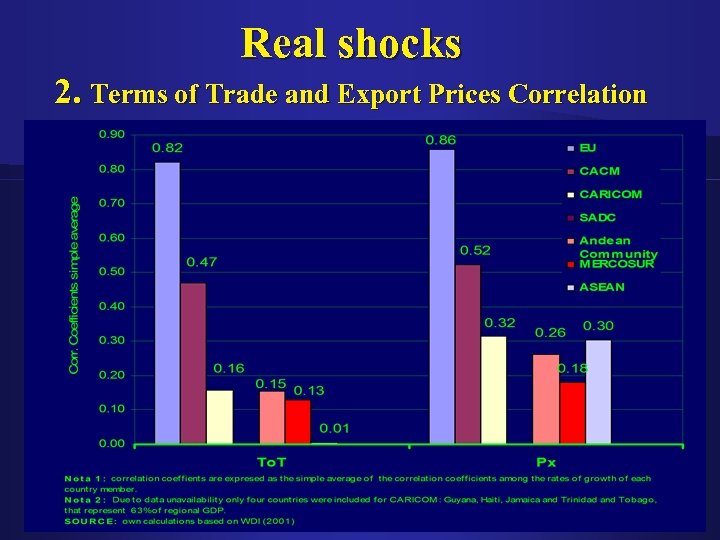 Real shocks 2. Terms of Trade and Export Prices Correlation
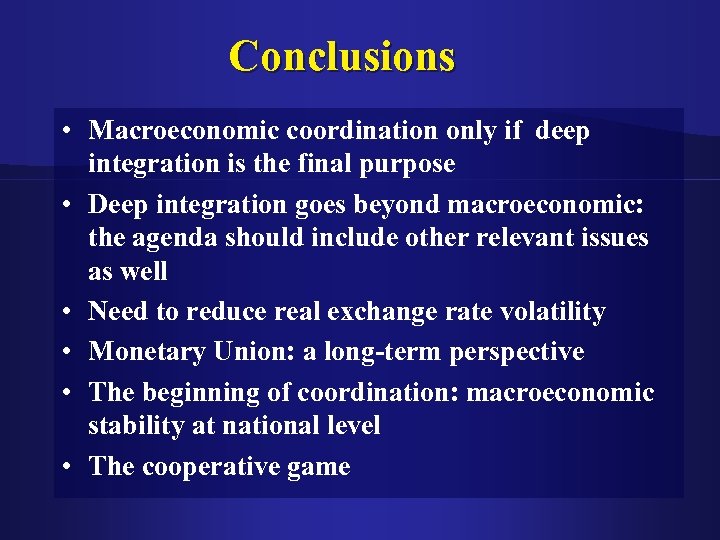 Conclusions • Macroeconomic coordination only if deep integration is the final purpose • Deep integration goes beyond macroeconomic: the agenda should include other relevant issues as well • Need to reduce real exchange rate volatility • Monetary Union: a long-term perspective • The beginning of coordination: macroeconomic stability at national level • The cooperative game
 Conclusions • External environment – Multinational Institutions – Regional Funds • External incentives: the role of Multilateral Banks • Macroeconomic coordination and FTAA
 Macroeconomic Coordination in Latin America: Some Lessons from the Mercosur Experience José Luis Machinea and Guillermo Rozenwurcel ECONOMIC COMMISSION FOR LATIN AMERICA AND THE CARIBBEAN Seminar on Regional Financial Arrangements New York, July 14 th 2004