


 Скачать презентацию M-SPAN Middle School Physical Activity and Nutrition
0079f0cbaeecbc9d26224a30ab780983.ppt
- Количество слайдов: 27
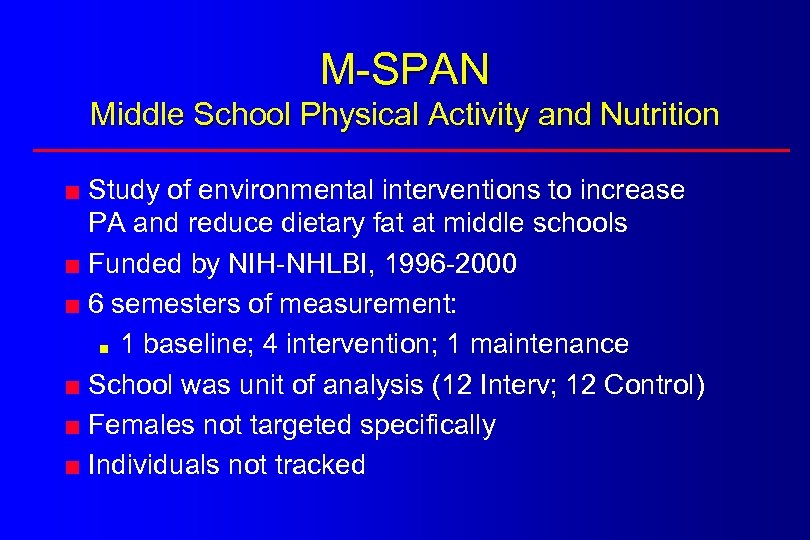 M-SPAN Middle School Physical Activity and Nutrition < Study of environmental interventions to increase PA and reduce dietary fat at middle schools < Funded by NIH-NHLBI, 1996 -2000 < 6 semesters of measurement: < 1 baseline; 4 intervention; 1 maintenance < School was unit of analysis (12 Interv; 12 Control) < Females not targeted specifically < Individuals not tracked
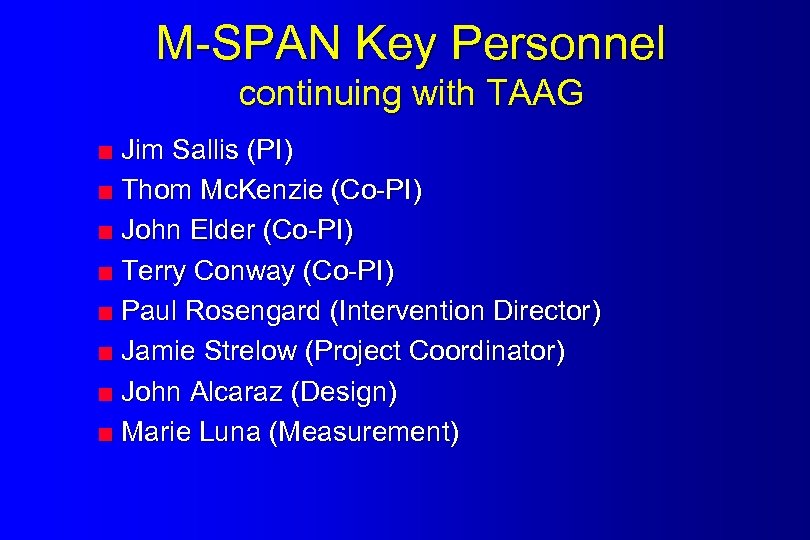 M-SPAN Key Personnel continuing with TAAG < Jim Sallis (PI) < Thom Mc. Kenzie (Co-PI) < John Elder (Co-PI) < Terry Conway (Co-PI) < Paul Rosengard (Intervention Director) < Jamie Strelow (Project Coordinator) < John Alcaraz (Design) < Marie Luna (Measurement)
 Physical Education/Activity Intervention Vision: Initiate and facilitate environmental changes to increase the physical activity levels of students
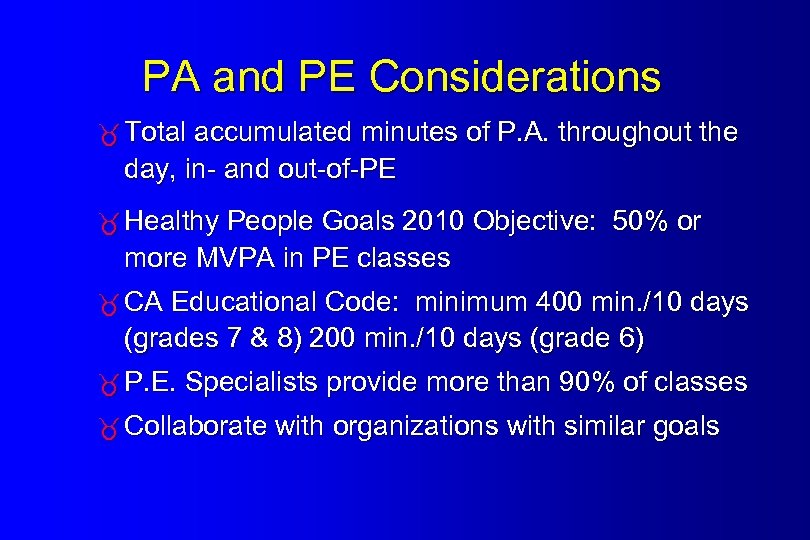 PA and PE Considerations Total accumulated minutes of P. A. throughout the day, in- and out-of-PE Healthy People Goals 2010 Objective: 50% or more MVPA in PE classes CA Educational Code: minimum 400 min. /10 days (grades 7 & 8) 200 min. /10 days (grade 6) P. E. Specialists provide more than 90% of classes Collaborate with organizations with similar goals
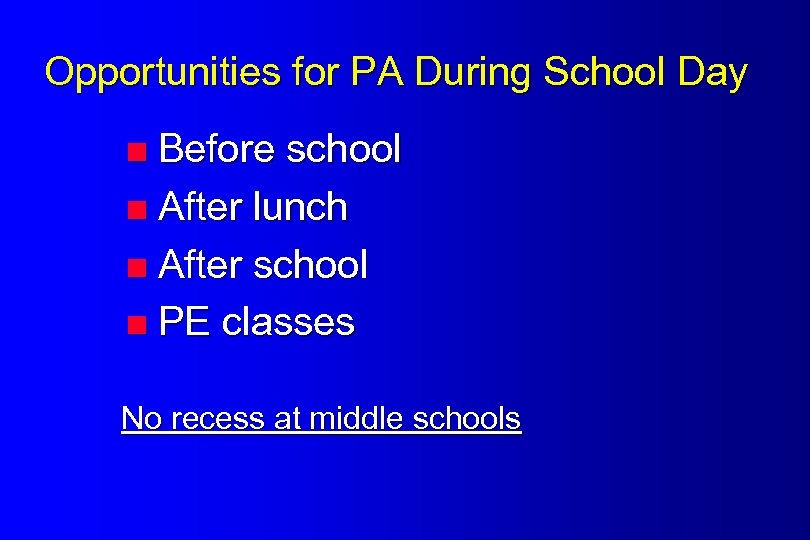 Opportunities for PA During School Day < Before school < After lunch < After school < PE classes No recess at middle schools
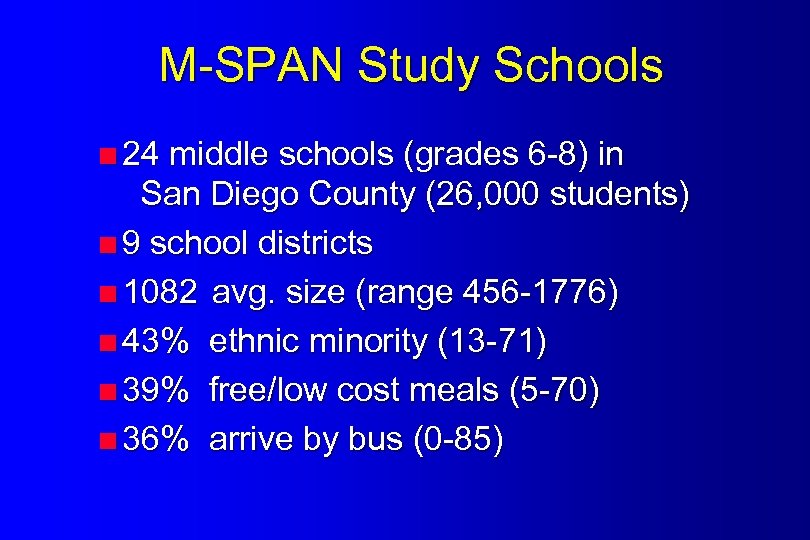 M-SPAN Study Schools <24 middle schools (grades 6 -8) in San Diego County (26, 000 students) <9 school districts <1082 avg. size (range 456 -1776) <43% ethnic minority (13 -71) <39% free/low cost meals (5 -70) <36% arrive by bus (0 -85)
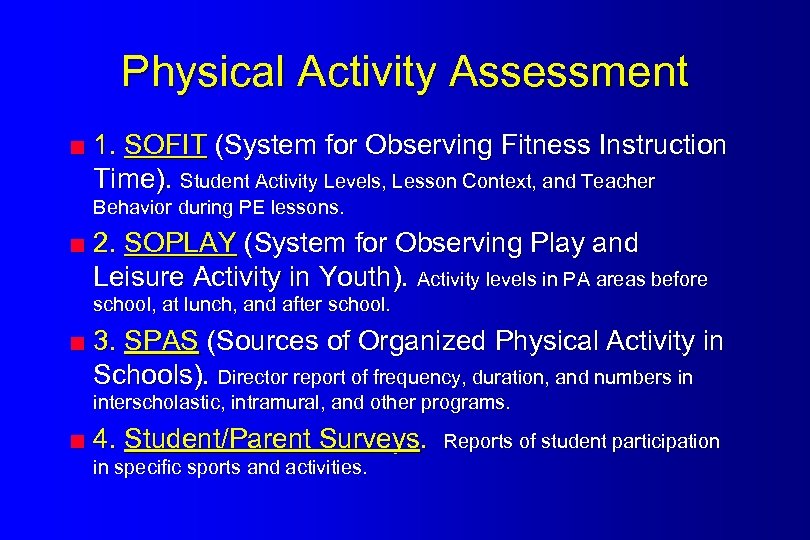 Physical Activity Assessment < 1. SOFIT (System for Observing Fitness Instruction Time). Student Activity Levels, Lesson Context, and Teacher Behavior during PE lessons. < 2. SOPLAY (System for Observing Play and Leisure Activity in Youth). Activity levels in PA areas before school, at lunch, and after school. < 3. SPAS (Sources of Organized Physical Activity in Schools). Director report of frequency, duration, and numbers in interscholastic, intramural, and other programs. < 4. Student/Parent Surveys. Reports of student participation in specific sports and activities.
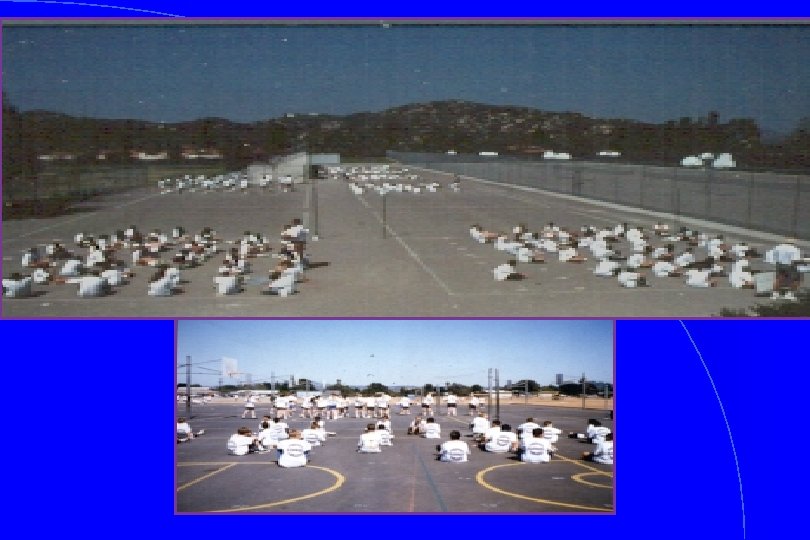
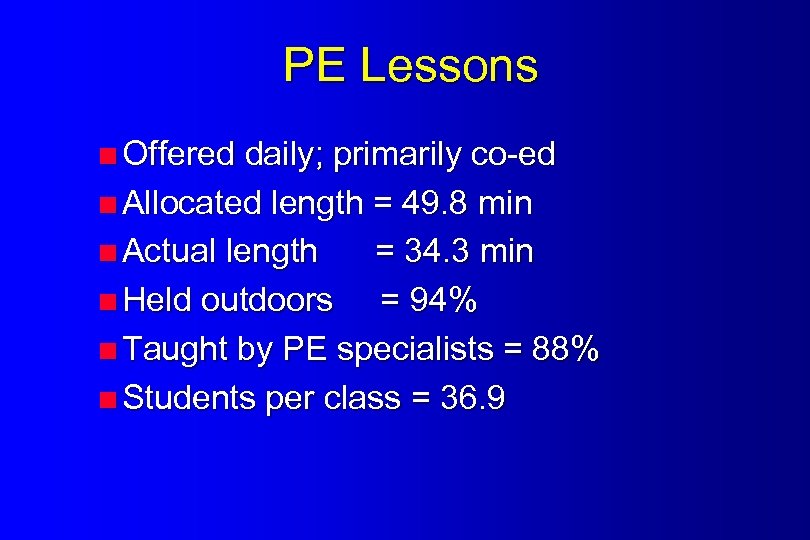 PE Lessons
 PE Intervention < Five, < < < 3 -hour, staff development workshops conducted at schools by M-SPAN staff focus on active PE curriculum and instruction efficient management & appropriate activities < Sample active curricula < On-site follow-up visits (~ 1. 5 per month)
 Parent Involvement (minimal)
 Focus of PE Staff Development < Assist teachers with developing & implementing curricula & instruction that: provide many opportunities for PA during class < are effective for boys & girls at all skill levels < are enjoyable < teach generalizable movement skills < encourage present & future physical activity < have minimum “down time” <
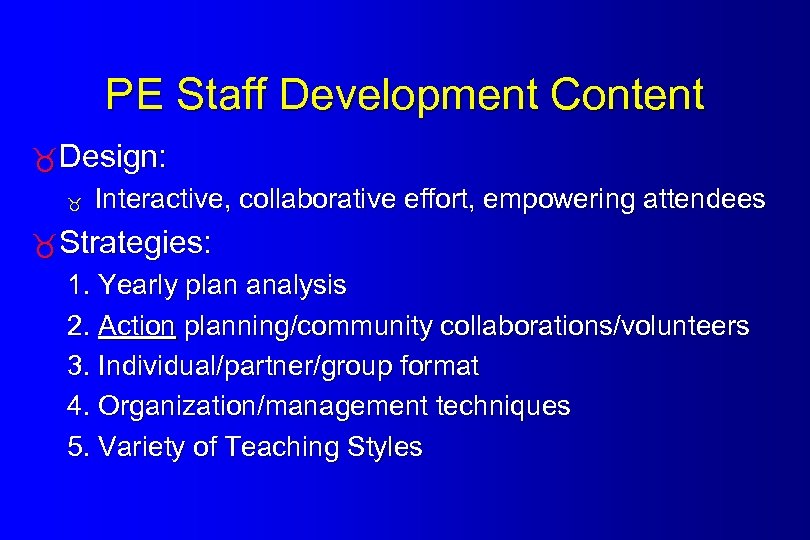 PE Staff Development Content Design: Interactive, collaborative effort, empowering attendees Strategies: 1. Yearly plan analysis 2. Action planning/community collaborations/volunteers 3. Individual/partner/group format 4. Organization/management techniques 5. Variety of Teaching Styles
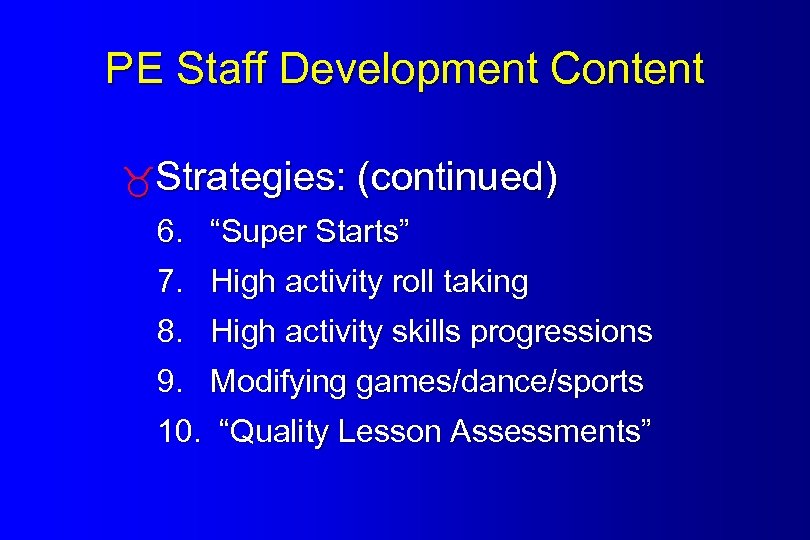 PE Staff Development Content Strategies: (continued) 6. “Super Starts” 7. High activity roll taking 8. High activity skills progressions 9. Modifying games/dance/sports 10. “Quality Lesson Assessments”
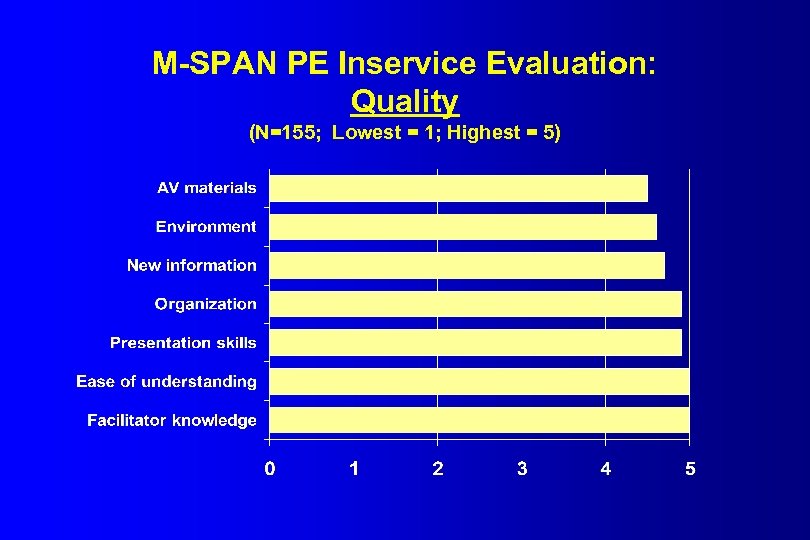 M-SPAN PE Inservice Evaluation: Quality (N=155; Lowest = 1; Highest = 5)
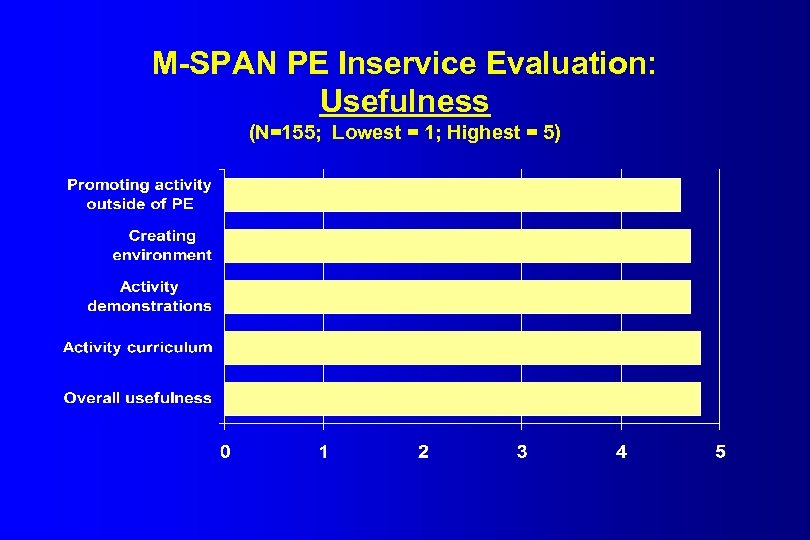 M-SPAN PE Inservice Evaluation: Usefulness (N=155; Lowest = 1; Highest = 5)
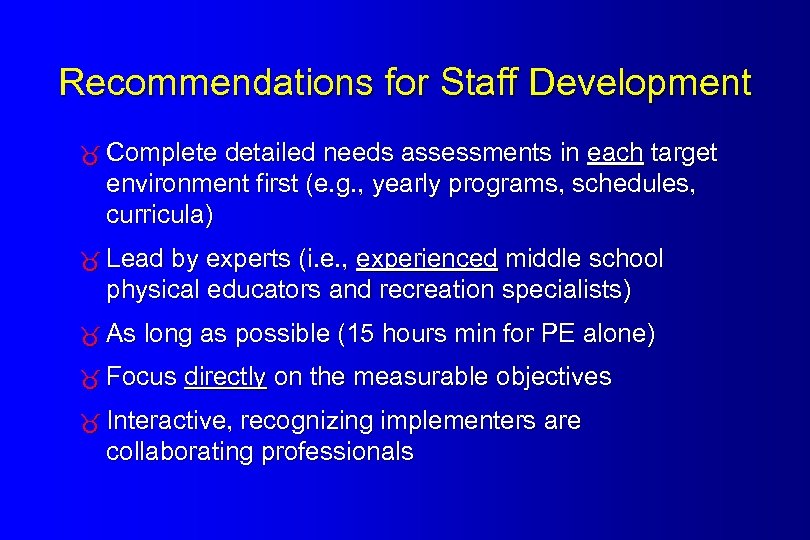 Recommendations for Staff Development Complete detailed needs assessments in each target environment first (e. g. , yearly programs, schedules, curricula) Lead by experts (i. e. , experienced middle school physical educators and recreation specialists) As long as possible (15 hours min for PE alone) Focus directly on the measurable objectives Interactive, recognizing implementers are collaborating professionals
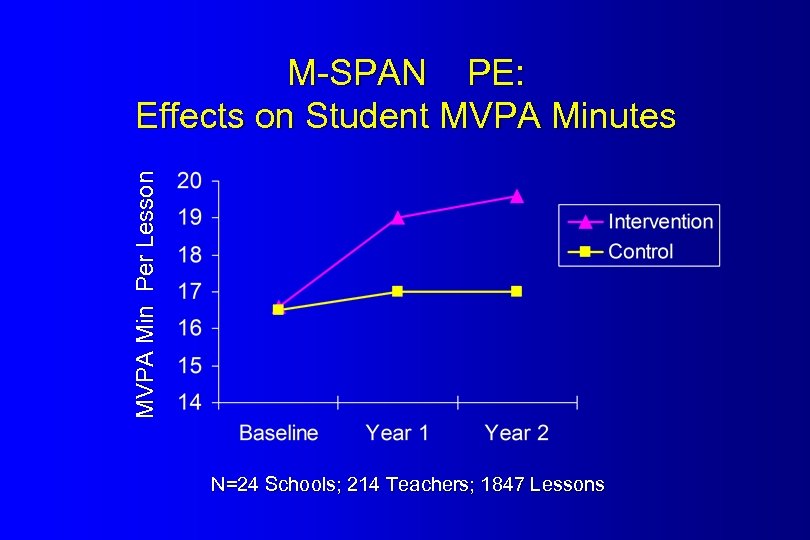 MVPA Min Per Lesson M-SPAN PE: Effects on Student MVPA Minutes N=24 Schools; 214 Teachers; 1847 Lessons
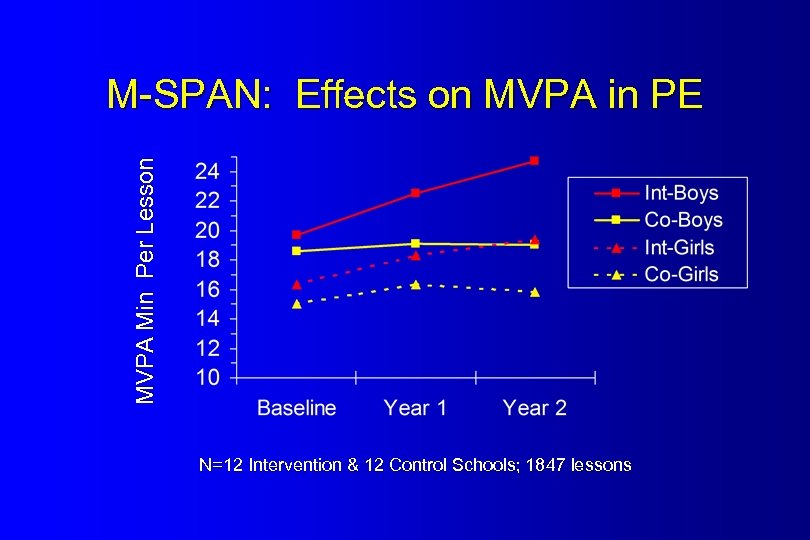 MVPA Min Per Lesson M-SPAN: Effects on MVPA in PE N=12 Intervention & 12 Control Schools; 1847 lessons
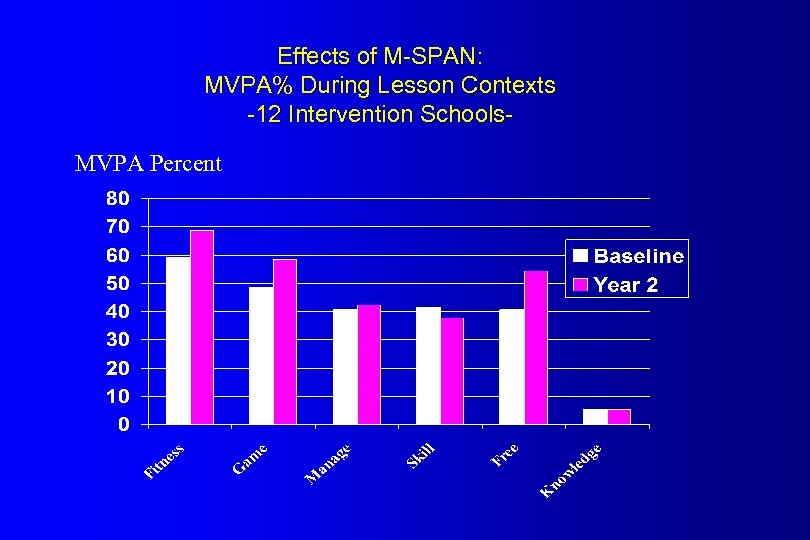 Effects of M-SPAN: MVPA% During Lesson Contexts -12 Intervention Schools. MVPA Percent
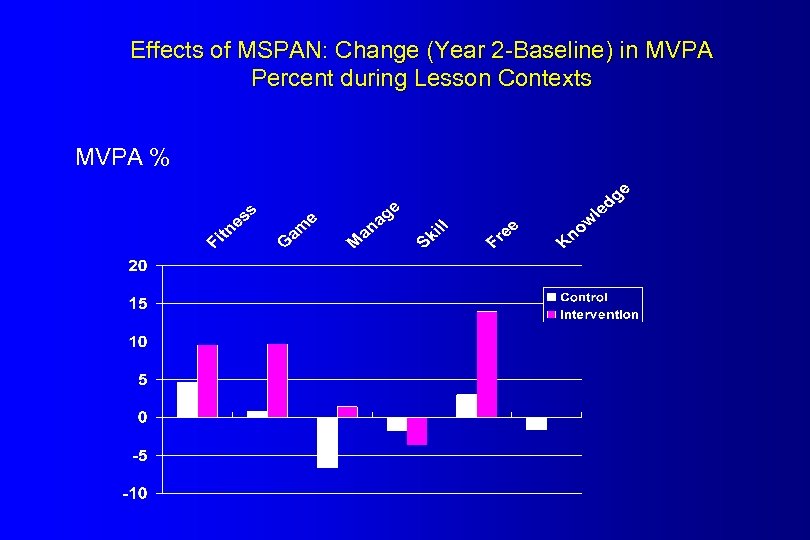 Effects of MSPAN: Change (Year 2 -Baseline) in MVPA Percent during Lesson Contexts MVPA %
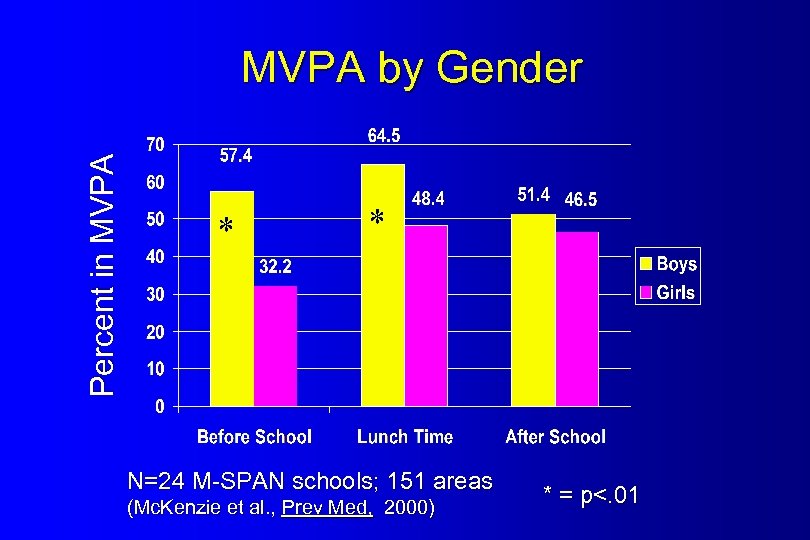 Percent in MVPA by Gender * * N=24 M-SPAN schools; 151 areas (Mc. Kenzie et al. , Prev Med, 2000) * = p<. 01
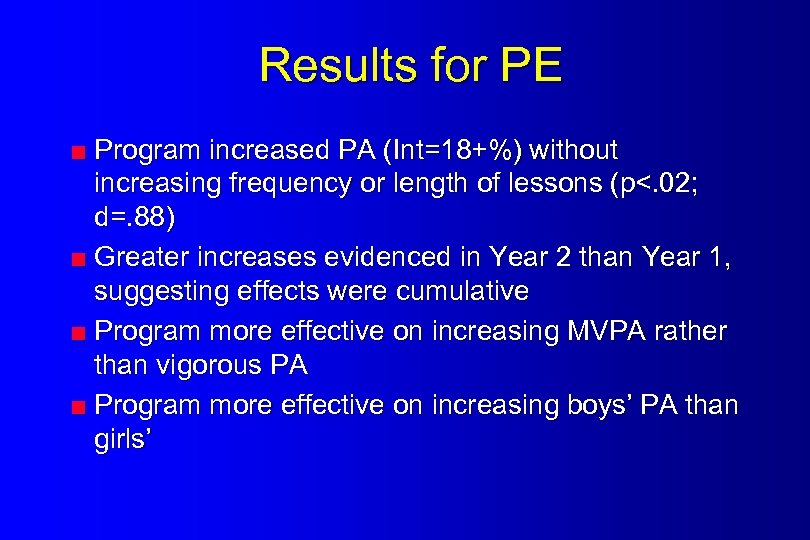 Results for PE < Program increased PA (Int=18+%) without increasing frequency or length of lessons (p<. 02; d=. 88) < Greater increases evidenced in Year 2 than Year 1, suggesting effects were cumulative < Program more effective on increasing MVPA rather than vigorous PA < Program more effective on increasing boys’ PA than girls’
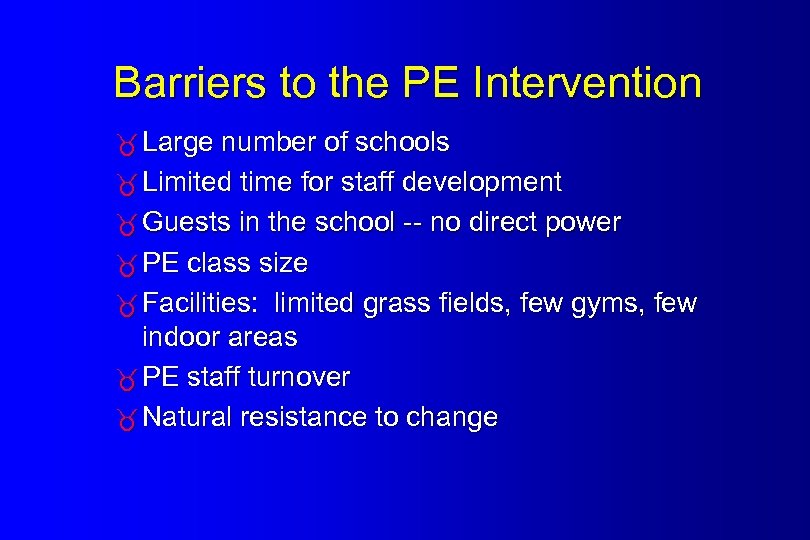 Barriers to the PE Intervention Large number of schools Limited time for staff development Guests in the school -- no direct power PE class size Facilities: limited grass fields, few gyms, few indoor areas PE staff turnover Natural resistance to change
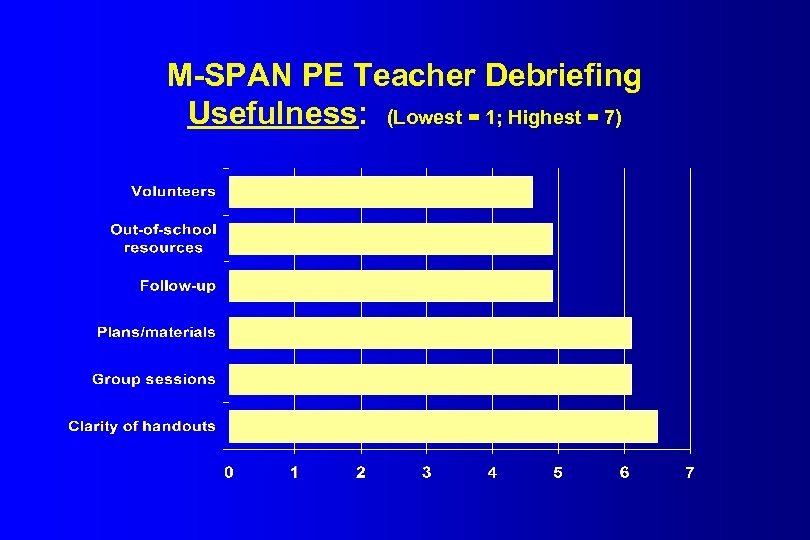 M-SPAN PE Teacher Debriefing Usefulness: (Lowest = 1; Highest = 7)
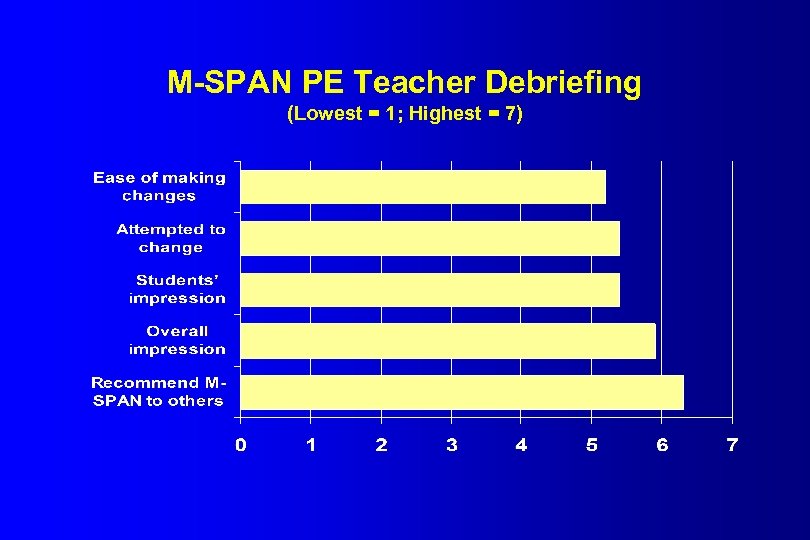 M-SPAN PE Teacher Debriefing (Lowest = 1; Highest = 7)
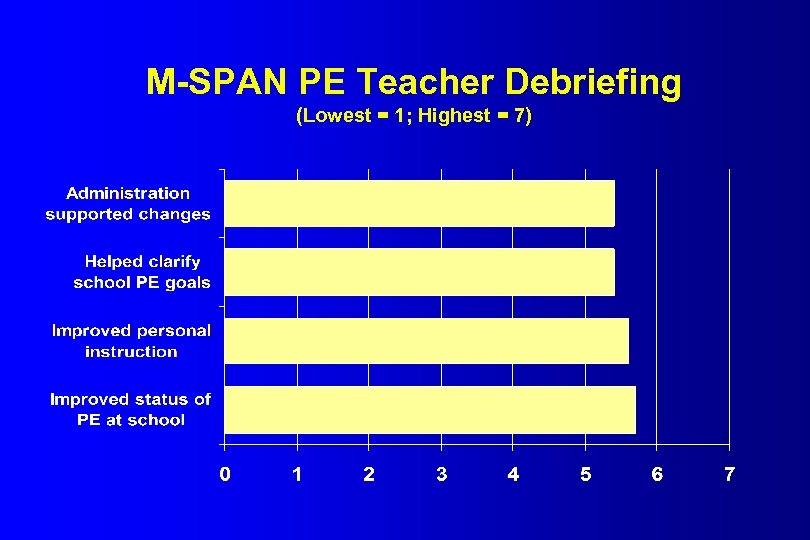 M-SPAN PE Teacher Debriefing (Lowest = 1; Highest = 7)