 Скачать презентацию M 1 Sustainable Procurement Key Tools and Tips
e7ebc595bc11118fa2bf3ceff79fb8f7.ppt
- Количество слайдов: 25



M 1 Sustainable Procurement Key Tools and Tips! Ian Barham, Defra, Sustainable Public Procurement EAUC March 2012
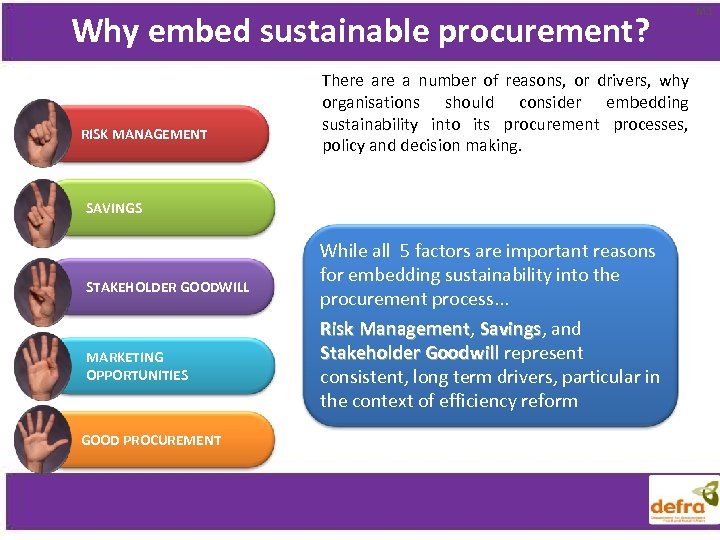
Why embed sustainable procurement? RISK MANAGEMENT M 1 There a number of reasons, or drivers, why organisations should consider embedding sustainability into its procurement processes, policy and decision making. SAVINGS STAKEHOLDER GOODWILL MARKETING OPPORTUNITIES While all 5 factors are important reasons for embedding sustainability into the procurement process. . . Risk Management, Savings, and Management Savings Stakeholder Goodwill represent consistent, long term drivers, particular in the context of efficiency reform GOOD PROCUREMENT 2
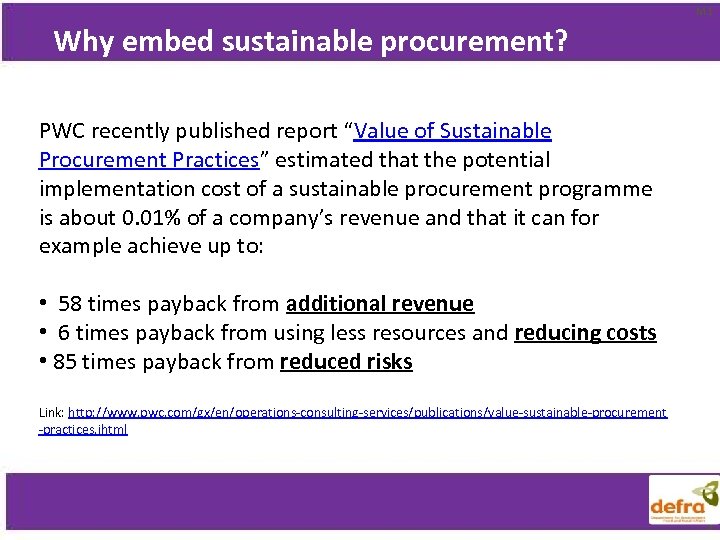
M 1 Why embed sustainable procurement? PWC recently published report “Value of Sustainable Procurement Practices” estimated that the potential implementation cost of a sustainable procurement programme is about 0. 01% of a company’s revenue and that it can for example achieve up to: • 58 times payback from additional revenue • 6 times payback from using less resources and reducing costs • 85 times payback from reduced risks Link: http: //www. pwc. com/gx/en/operations-consulting-services/publications/value-sustainable-procurement -practices. jhtml 3
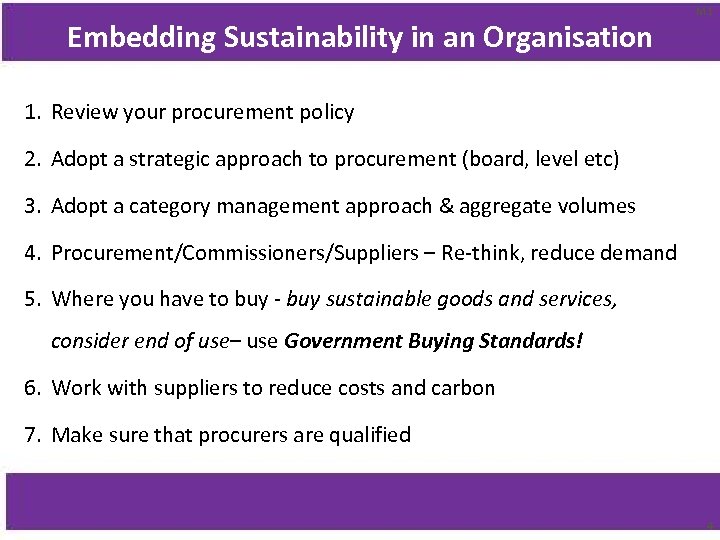
Embedding Sustainability in an Organisation M 1 1. Review your procurement policy 2. Adopt a strategic approach to procurement (board, level etc) 3. Adopt a category management approach & aggregate volumes 4. Procurement/Commissioners/Suppliers – Re-think, reduce demand 5. Where you have to buy - buy sustainable goods and services, consider end of use– use Government Buying Standards! 6. Work with suppliers to reduce costs and carbon 7. Make sure that procurers are qualified 4
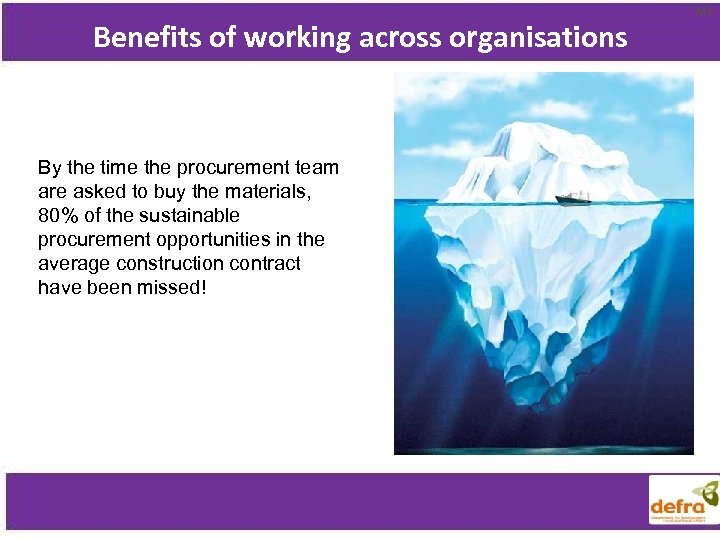
Benefits of working across organisations M 1 By the time the procurement team are asked to buy the materials, 80% of the sustainable procurement opportunities in the average construction contract have been missed! 5
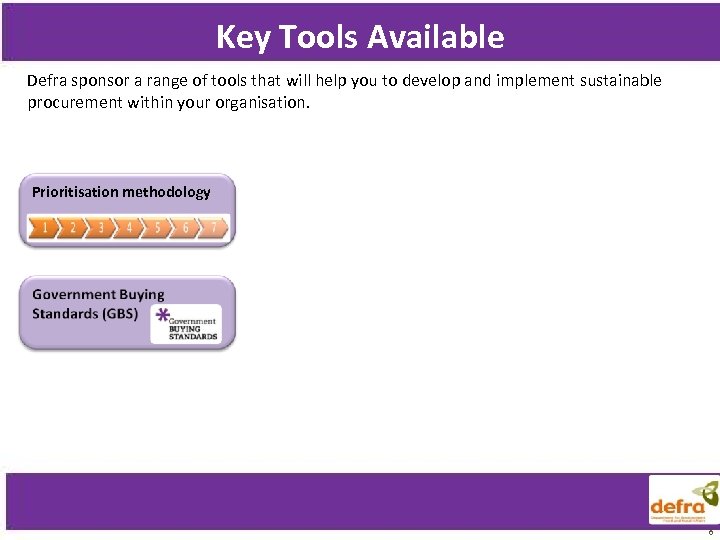
Key Tools Available M 1 Defra sponsor a range of tools that will help you to develop and implement sustainable procurement within your organisation. Prioritisation methodology 6
Prioritisation Methodology M 1 • This is Risk and Opportunity Based • Helps focus resources • Helps to integrate sustainability throughout the procurement process ØThis is an essential first step when deciding which are the most important categories or product groups to focus on. 7
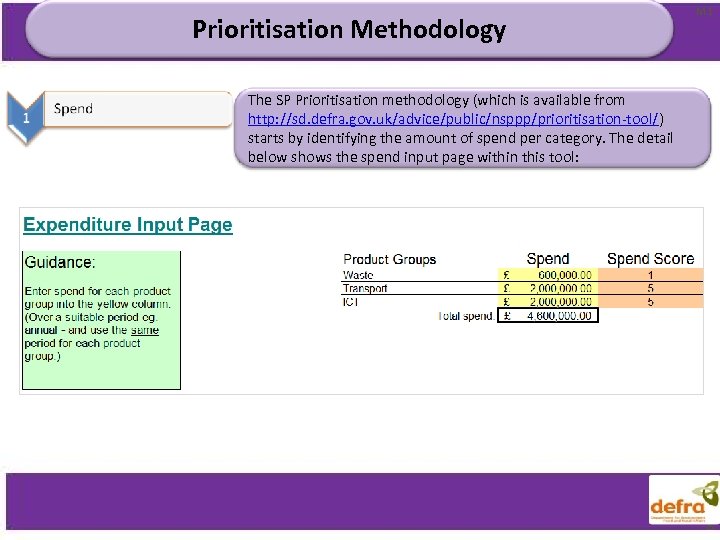
Prioritisation Methodology M 1 The SP Prioritisation methodology (which is available from http: //sd. defra. gov. uk/advice/public/nsppp/prioritisation-tool/) starts by identifying the amount of spend per category. The detail below shows the spend input page within this tool: 8
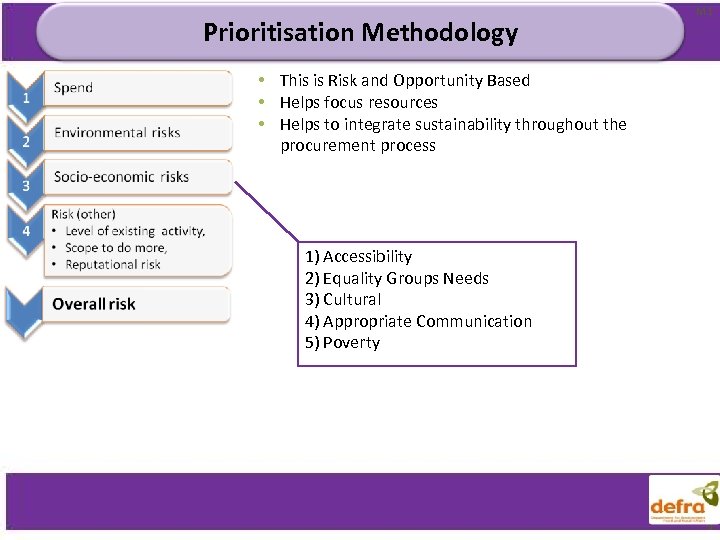
Prioritisation Methodology M 1 • This is Risk and Opportunity Based • Helps focus resources • Helps to integrate sustainability throughout the procurement process 1) Accessibility 2) Equality Groups Needs 3) Cultural 4) Appropriate Communication 5) Poverty 9
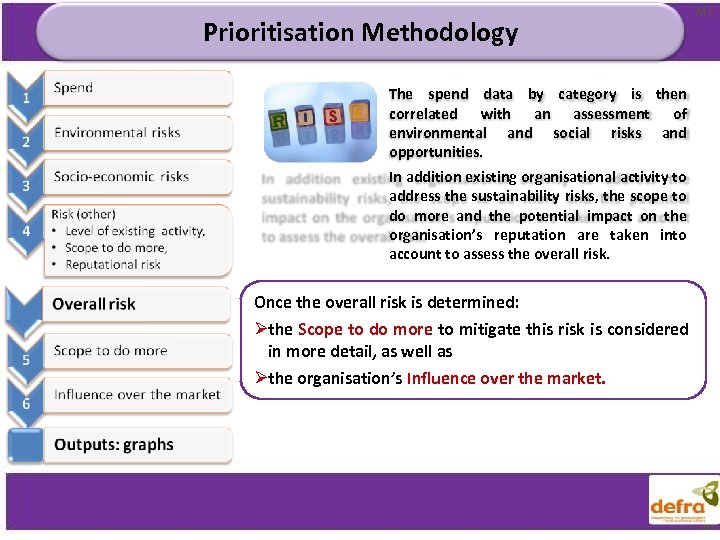
Prioritisation Methodology M 1 The spend data by category is then correlated with an assessment of environmental and social risks and opportunities. In addition existing organisational activity to address the sustainability risks, the scope to do more and the potential impact on the organisation’s reputation are taken into account to assess the overall risk. Once the overall risk is determined: Øthe Scope to do more to mitigate this risk is considered in more detail, as well as Øthe organisation’s Influence over the market. M 10
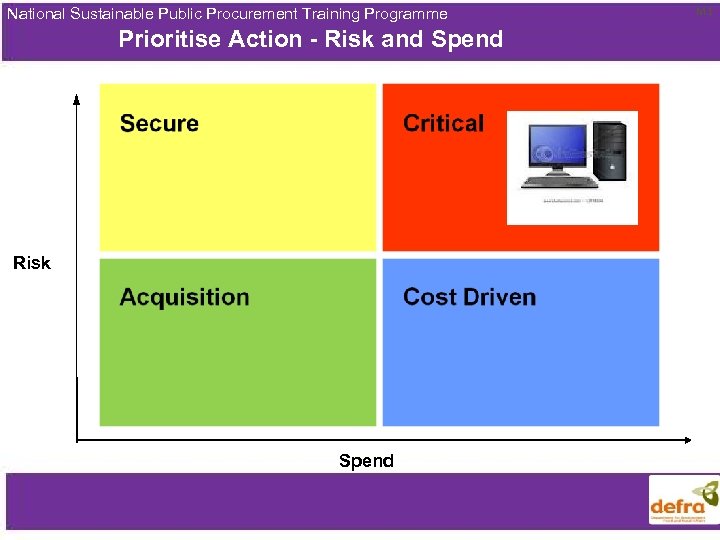
National Sustainable Public Procurement Training Programme Prioritise Action - Risk and Spend Risk Spend M 1
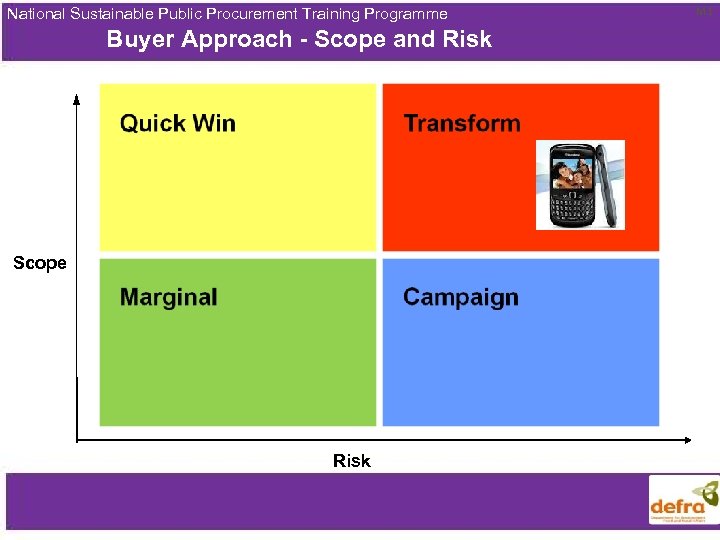
National Sustainable Public Procurement Training Programme Buyer Approach - Scope and Risk Scope Risk M 1
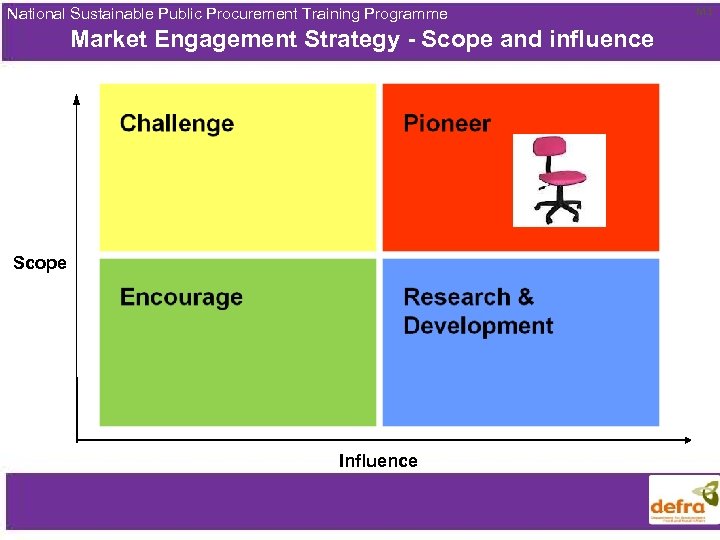
National Sustainable Public Procurement Training Programme Market Engagement Strategy - Scope and influence Scope Influence M 1
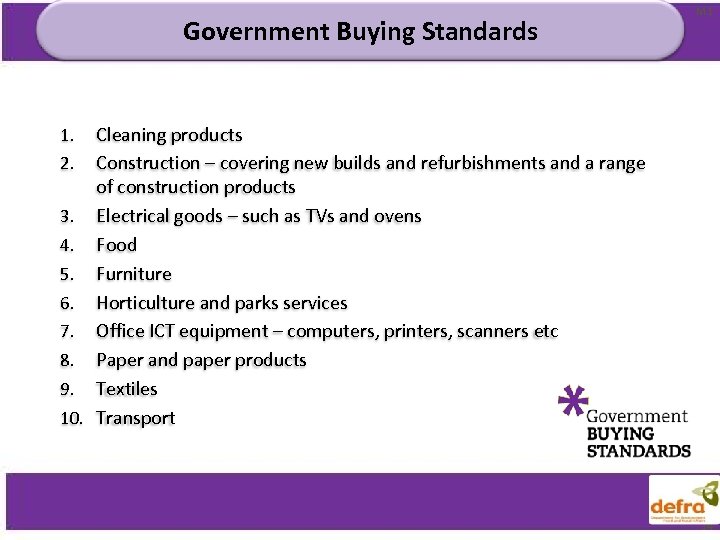
Government Buying Standards M 1 Cleaning products 2. Construction – covering new builds and refurbishments and a range of construction products 3. Electrical goods – such as TVs and ovens 4. Food 5. Furniture 6. Horticulture and parks services 7. Office ICT equipment – computers, printers, scanners etc 8. Paper and paper products 9. Textiles 10. Transport 1. 14
Government Buying Standards M 1 Government Buying Standards are designed to make it easier for public sector buyers to buy sustainably But why would a procurer bother to use the GBS? ? ? For more information on GBS see http: //sd. defra. gov. uk/advice/public/buying 15
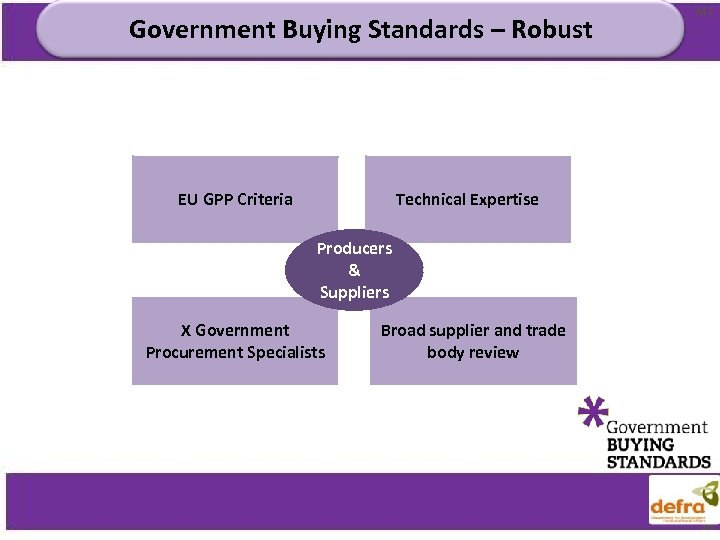
Government Buying Standards – Robust EU GPP Criteria M 1 Technical Expertise Producers & Suppliers X Government Procurement Specialists Broad supplier and trade body review 16
Government Buying Standards M 1 Barrier - Legal advice Compliance with the EU Procurement Directives 17
Government Buying Standards M 1 Barrrier – VFM? Cost/Benefit Analysis • The UK are the only country in the EU to carry out a full CBA on sustainable procurement specifications. We: Ø Market assessment Ø Gathering of evidence and analysis Ø Quantification of costs and benefits over life 18
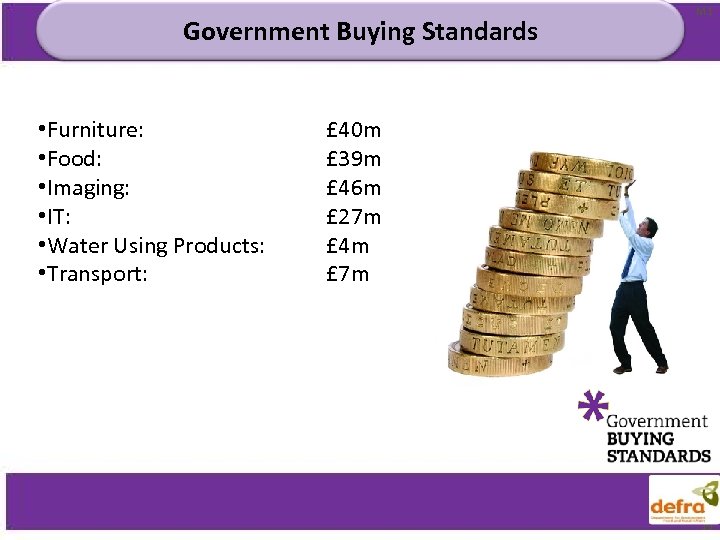
Government Buying Standards • Furniture: • Food: • Imaging: • IT: • Water Using Products: • Transport: M 1 £ 40 m £ 39 m £ 46 m £ 27 m £ 4 m £ 7 m 19
Government Buying Standards M 1 Procurer’s Note Ø Gives procurer’s the understanding to discuss the specifications with suppliers. Ø Explains what the criteria mean Ø How information on the criteria can be gathered Ø How verification can be achieved 20
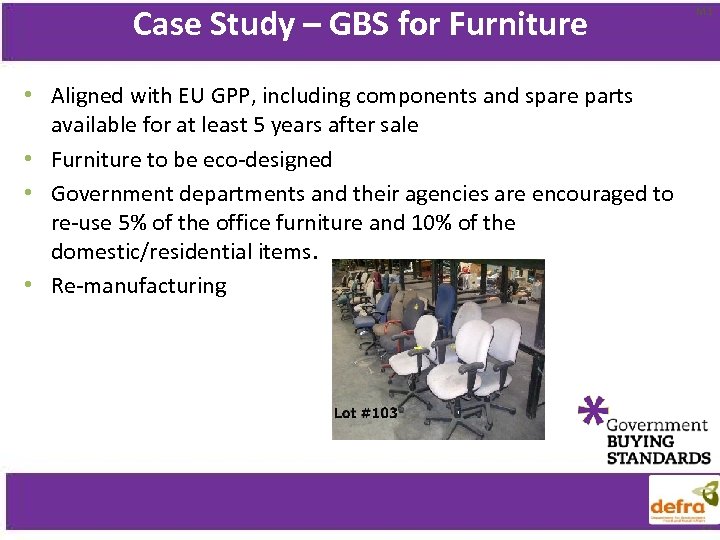
Case Study – GBS for Furniture M 1 • Aligned with EU GPP, including components and spare parts available for at least 5 years after sale • Furniture to be eco-designed • Government departments and their agencies are encouraged to re-use 5% of the office furniture and 10% of the domestic/residential items. • Re-manufacturing 21
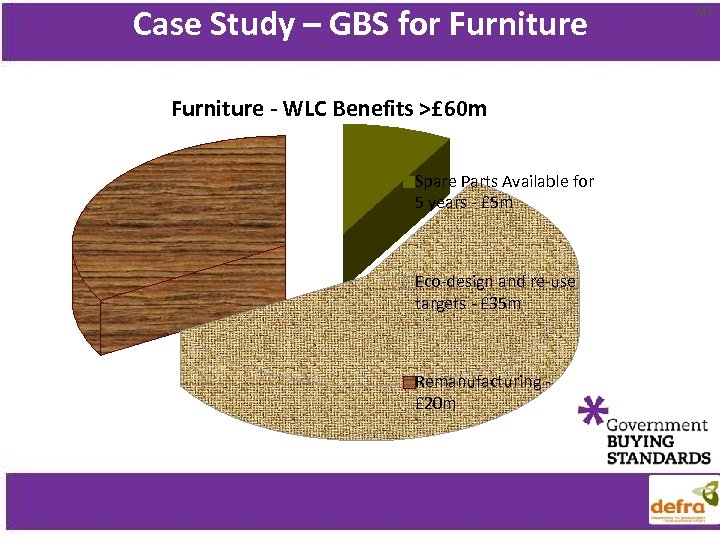
Case Study – GBS for Furniture M 1 Furniture - WLC Benefits >£ 60 m Spare Parts Available for 5 years - £ 5 m Eco-design and re-use targets - £ 35 m Remanufacturing - £ 20 m 22
What do I use? M 1 23
M 1 Further information Ian Barham Sustainable procurement policy and standards Area 5 c, Ergon House, Defra London SW 1 P 2 AL Ian. barham@defra. gsi. gov. uk Government Buying Standards http: //www. defra. gov. uk/sustainable/government/advice/public/buying/index. htm 24
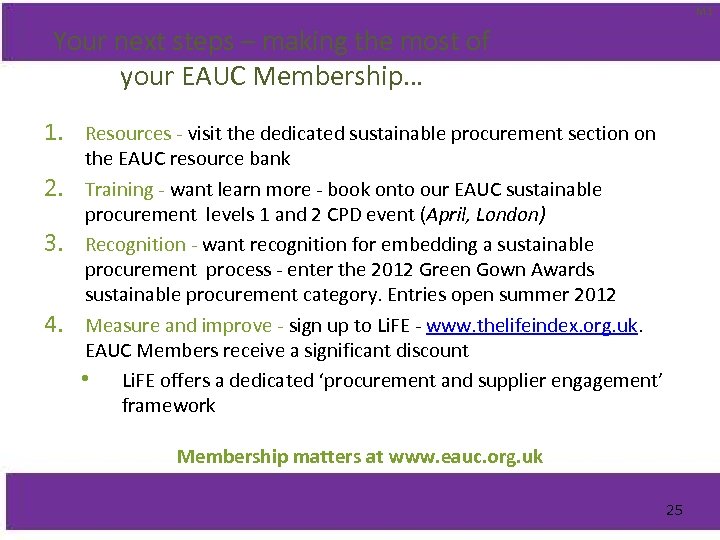
M 1 Your next steps – making the most of your EAUC Membership… 1. Resources - visit the dedicated sustainable procurement section on 2. 3. 4. the EAUC resource bank Training - want learn more - book onto our EAUC sustainable procurement levels 1 and 2 CPD event (April, London) Recognition - want recognition for embedding a sustainable procurement process - enter the 2012 Green Gown Awards sustainable procurement category. Entries open summer 2012 Measure and improve - sign up to Li. FE - www. thelifeindex. org. uk. EAUC Members receive a significant discount • Li. FE offers a dedicated ‘procurement and supplier engagement’ framework Membership matters at www. eauc. org. uk 25
Скачать презентацию M 1 Sustainable Procurement Key Tools and Tips
e7ebc595bc11118fa2bf3ceff79fb8f7.ppt