 Скачать презентацию Looking Back Looking Ahead Cotton Varieties and Fiber
c6e23adda1d906d3dd7ea9874a6f541d.ppt
- Количество слайдов: 43



Looking Back, Looking Ahead: Cotton Varieties and Fiber Quality Selecting Cotton Varieties for 2003 Steve Brown and Philip Jost
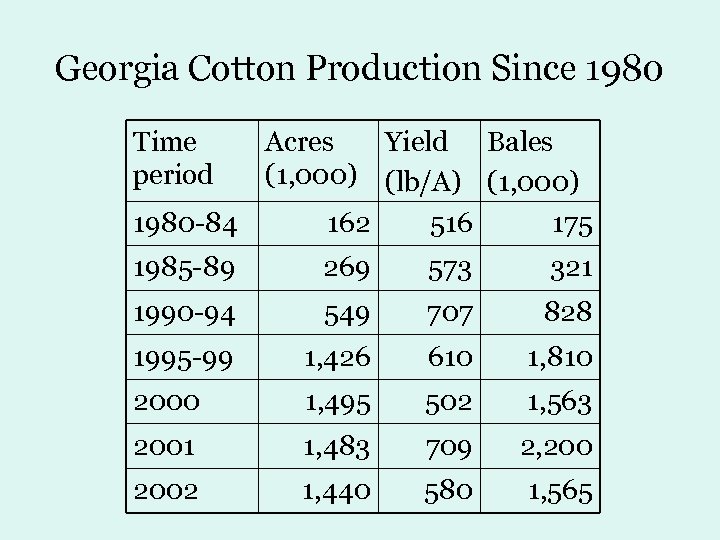
Georgia Cotton Production Since 1980 Time period Acres Yield Bales (1, 000) (lb/A) (1, 000) 1980 -84 162 516 175 1985 -89 269 573 321 1990 -94 549 707 828 1995 -99 1, 426 610 1, 810 2000 1, 495 502 1, 563 2001 1, 483 709 2, 2002 1, 440 580 1, 565
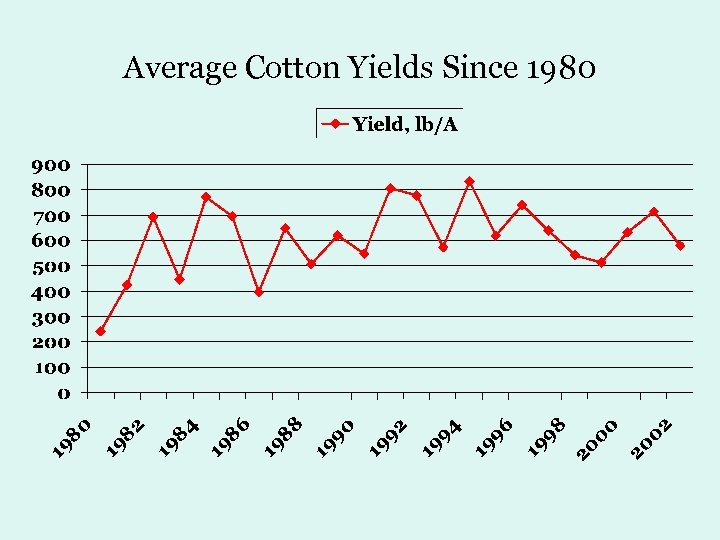
Average Cotton Yields Since 1980

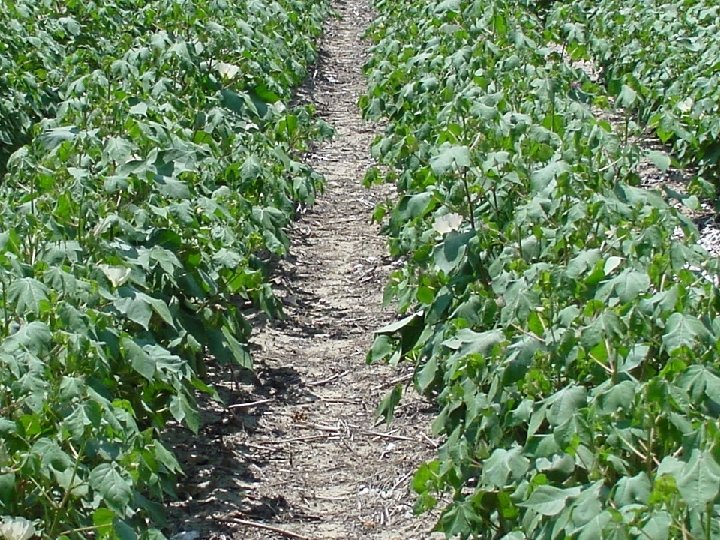
DROUGHT
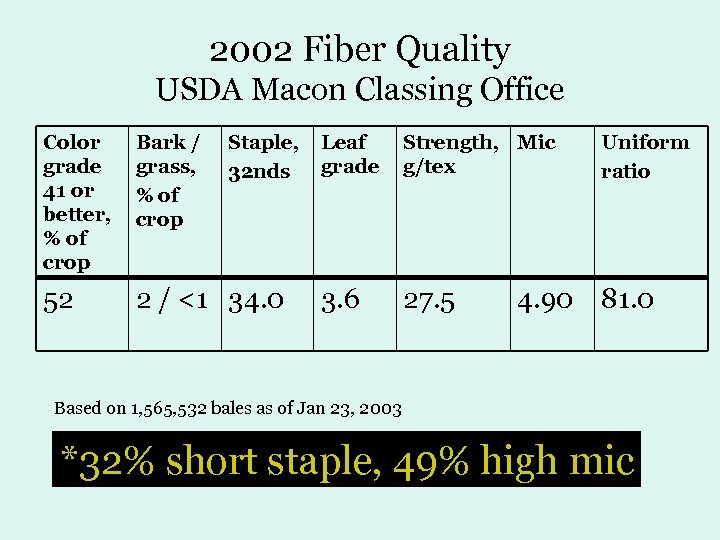
2002 Fiber Quality USDA Macon Classing Office Color grade 41 or better, % of crop Bark / grass, % of crop Staple, 32 nds 52 2 / <1 34. 0 Leaf grade Strength, Mic g/tex 3. 6 27. 5 Uniform ratio 4. 90 81. 0 Based on 1, 565, 532 bales as of Jan 23, 2003 *32% short staple, 49% high mic
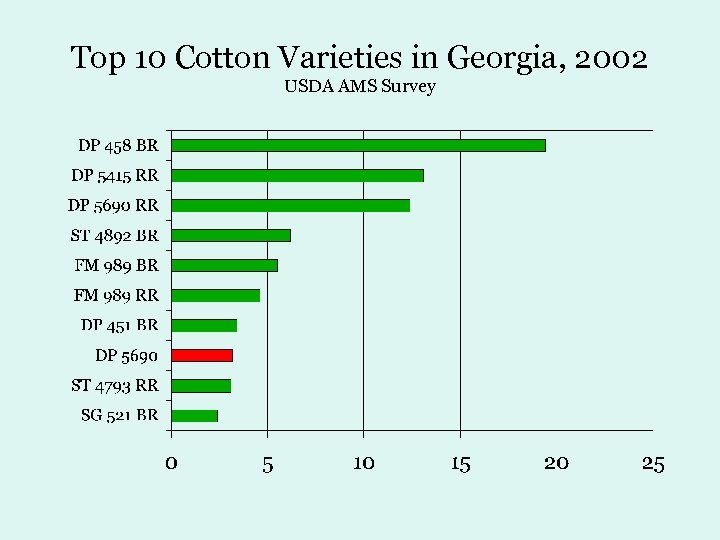
Top 10 Cotton Varieties in Georgia, 2002 USDA AMS Survey
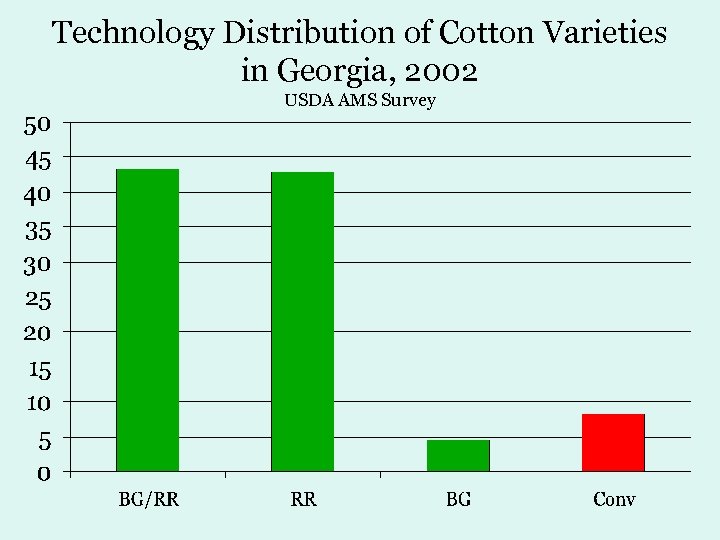
Technology Distribution of Cotton Varieties in Georgia, 2002 USDA AMS Survey
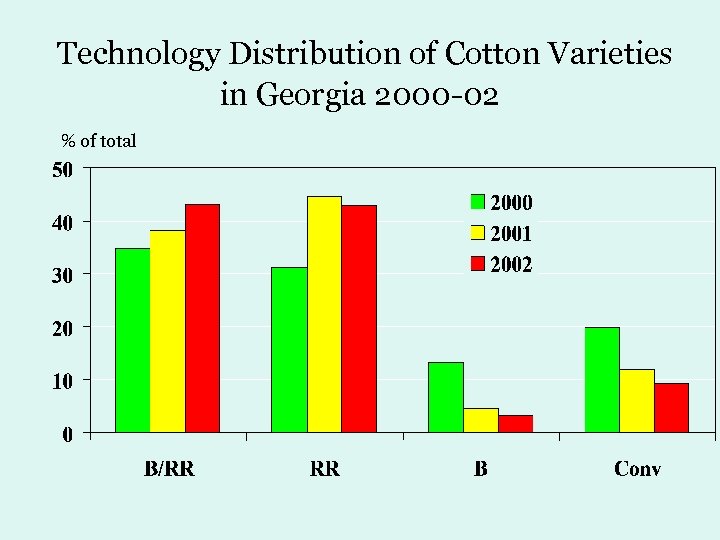
Technology Distribution of Cotton Varieties in Georgia 2000 -02 % of total
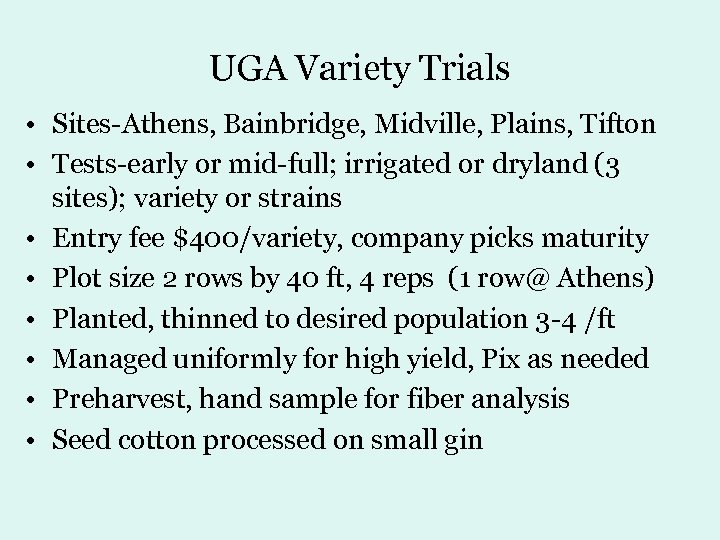
UGA Variety Trials • Sites-Athens, Bainbridge, Midville, Plains, Tifton • Tests-early or mid-full; irrigated or dryland (3 sites); variety or strains • Entry fee $400/variety, company picks maturity • Plot size 2 rows by 40 ft, 4 reps (1 row@ Athens) • Planted, thinned to desired population 3 -4 /ft • Managed uniformly for high yield, Pix as needed • Preharvest, hand sample for fiber analysis • Seed cotton processed on small gin
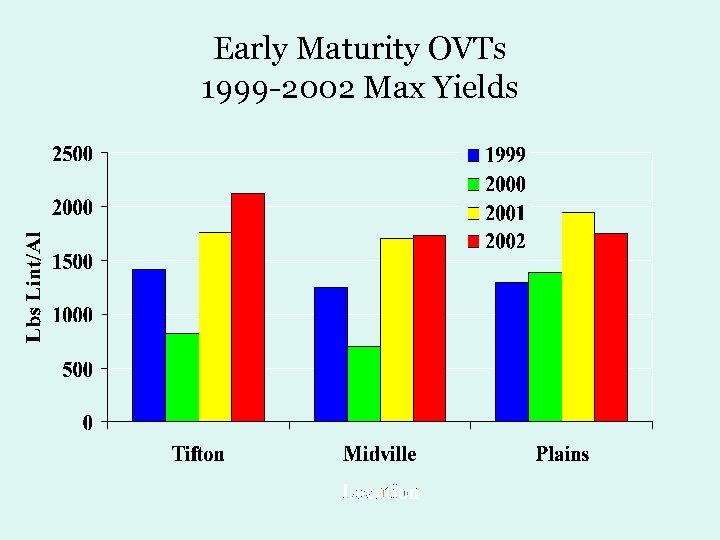
Early Maturity OVTs 1999 -2002 Max Yields
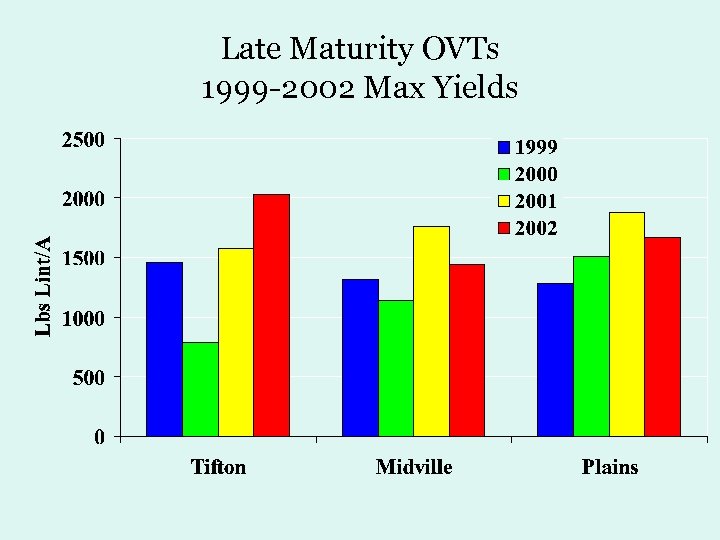
Late Maturity OVTs 1999 -2002 Max Yields

UGA Variety Trial Data available on UGA Cotton Web page www. griffin. peachnet. edu/caes/cotton page managed by Dr. Phil Jost
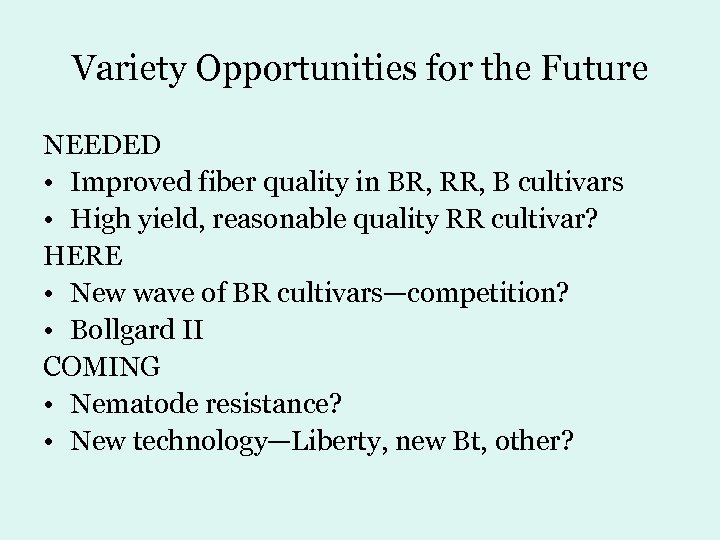
Variety Opportunities for the Future NEEDED • Improved fiber quality in BR, RR, B cultivars • High yield, reasonable quality RR cultivar? HERE • New wave of BR cultivars—competition? • Bollgard II COMING • Nematode resistance? • New technology—Liberty, new Bt, other?
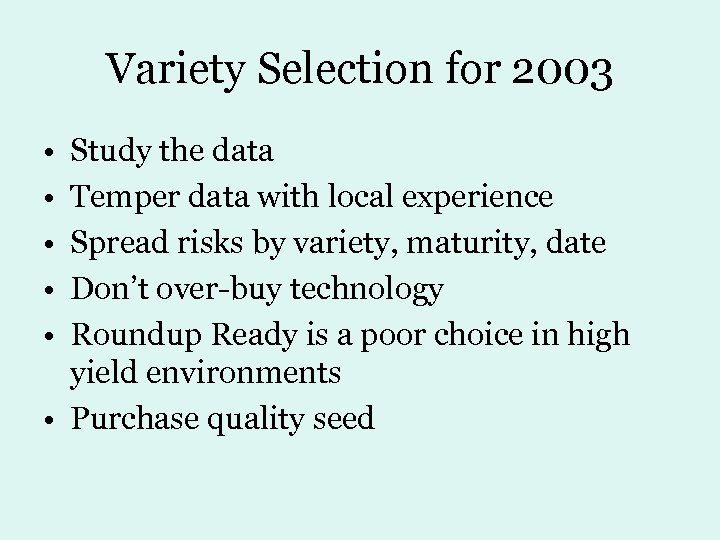
Variety Selection for 2003 • • • Study the data Temper data with local experience Spread risks by variety, maturity, date Don’t over-buy technology Roundup Ready is a poor choice in high yield environments • Purchase quality seed
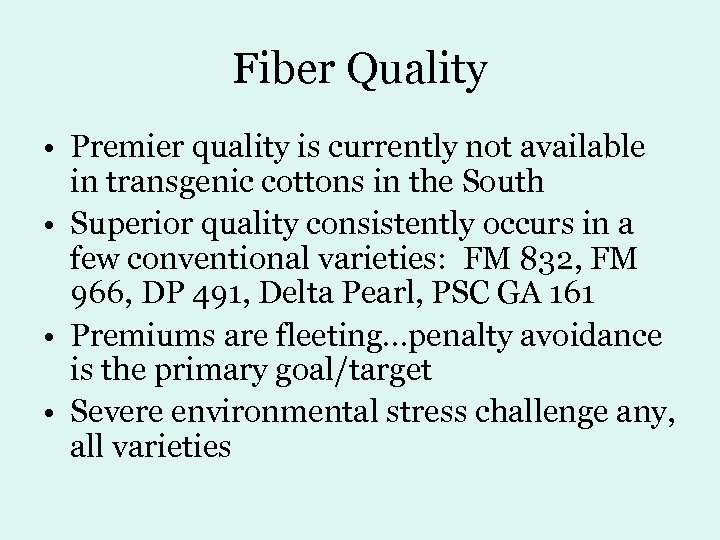
Fiber Quality • Premier quality is currently not available in transgenic cottons in the South • Superior quality consistently occurs in a few conventional varieties: FM 832, FM 966, DP 491, Delta Pearl, PSC GA 161 • Premiums are fleeting…penalty avoidance is the primary goal/target • Severe environmental stress challenge any, all varieties
Do’s and Don’ts with RR Cotton Don’t • Plant in high yield situations • Abuse with tardy over-top or sloppy post direct treatments Do • Include dinitroaniline PPI or PRE • Control weeds EARLY • Consider/Use standard herbicides post direct and layby
RR Varieties While there are several RR varieties to choose from, none are outstanding in • YIELD • QUALITY

RR Varieties are MEDIOCRE – “of moderate to low quality” The American Heritage Dictionary
Old / New BR Transgenic Varieties • Considerable experience with DP 458 BR, DP 451 BR, ST 4892 BR, etc. “New” mid to full cultivars • DP 555 B/RR • FM 989 BR • ST 5599 BR
DP 555 B/RR STRENGTHS • High yield (150+ lb/A) • Reasonable quality • True full season WEAKNESSES/ISSUES • Small seed (~ 6, 000/lb) • Vigorous growth (aggressive Pix regime) (extra defoliation? ) • Not “storm proof” • Cost $120/bag vs $7075/bag
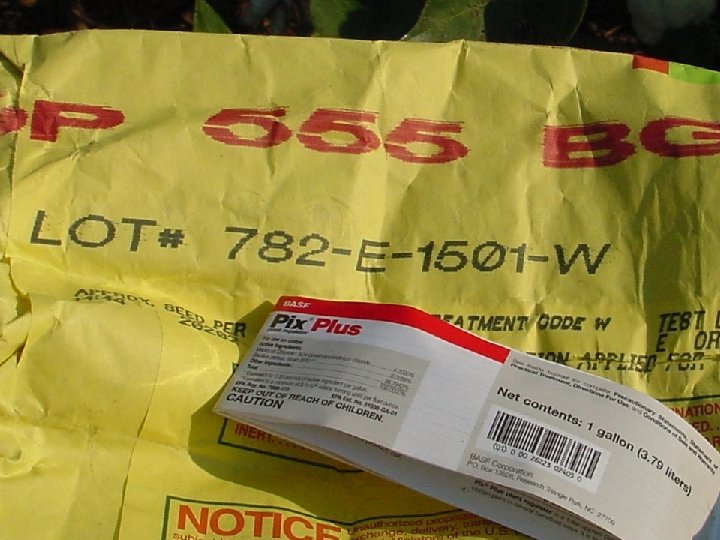
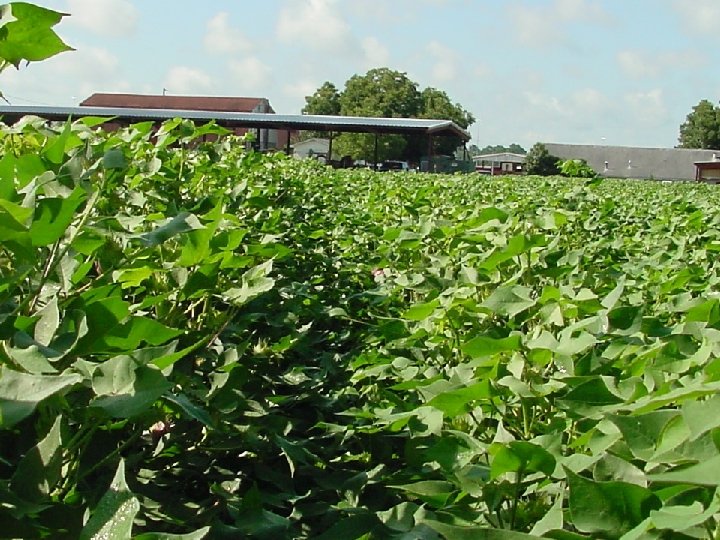
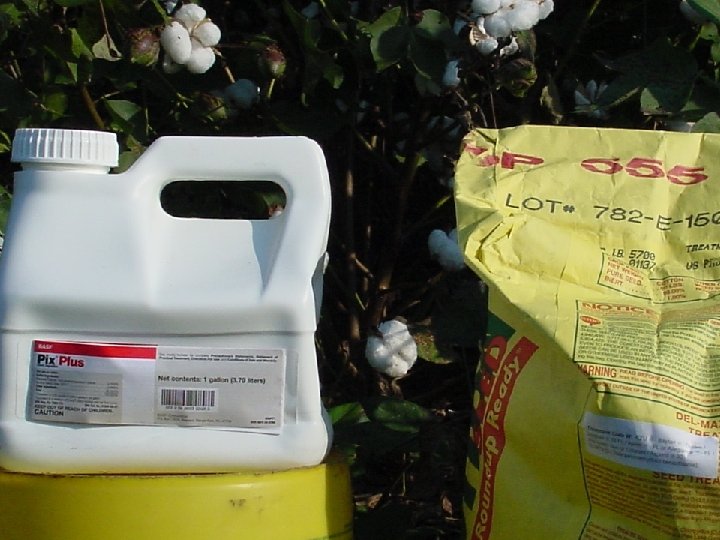
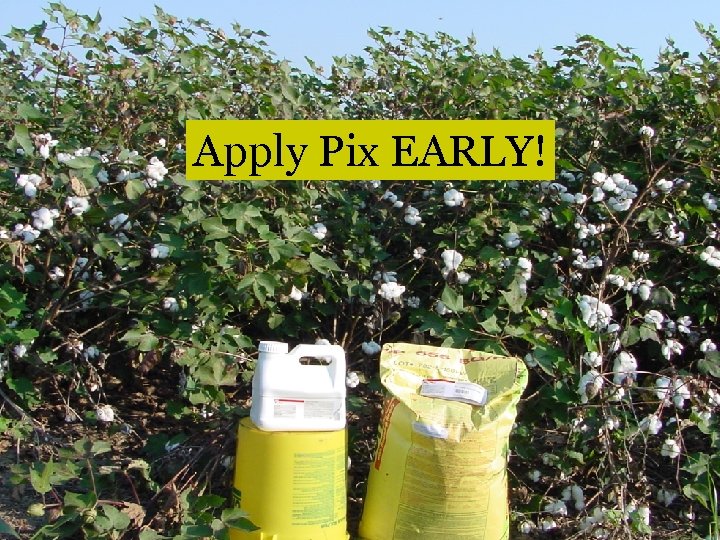
Apply Pix EARLY!
Because DP 555 B/RR has extra small seed full season maturity • Don’t plant it too early • Don’t subject it to significant emergence challenges • Don’t forget to set seed spacing • Don’t plant it too late • Don’t abuse it with glyphosate • Don’t let insects take early fruit
FM 989 BR STRENGTHS • Mid maturity • Good seedling vigor • Moderate to short stature (less Pix) • Large bolls WEAKNESSES • Lodging • Drought tolerance?
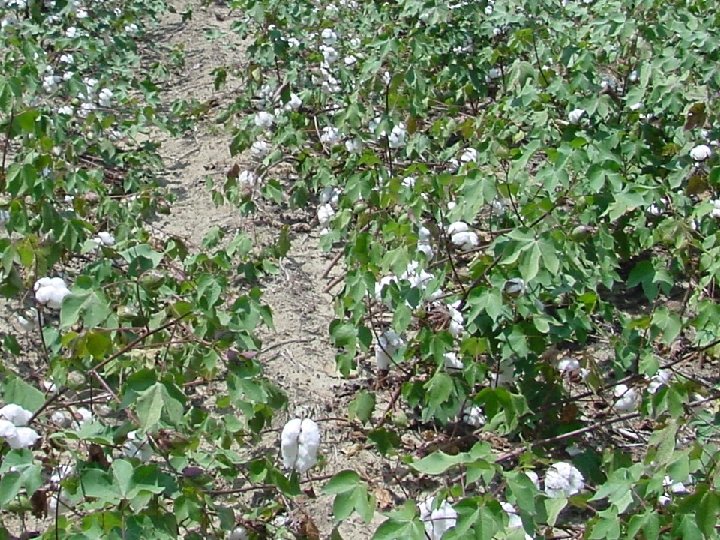
ST 5599 BR STRENGTHS • Medium maturity • Vigorous growth (earlier Pix program) • ST LA 887 background (nematode tolerance) WEAKNESSES • Bronze wilt
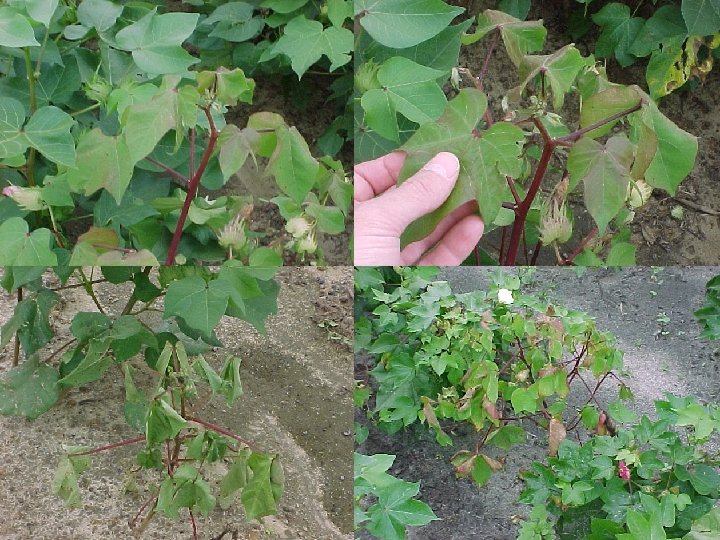
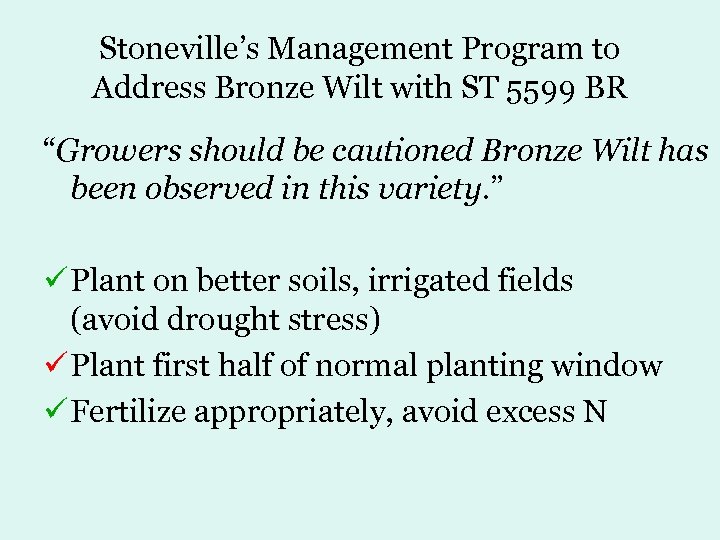
Stoneville’s Management Program to Address Bronze Wilt with ST 5599 BR “Growers should be cautioned Bronze Wilt has been observed in this variety. ” ü Plant on better soils, irrigated fields (avoid drought stress) ü Plant first half of normal planting window ü Fertilize appropriately, avoid excess N
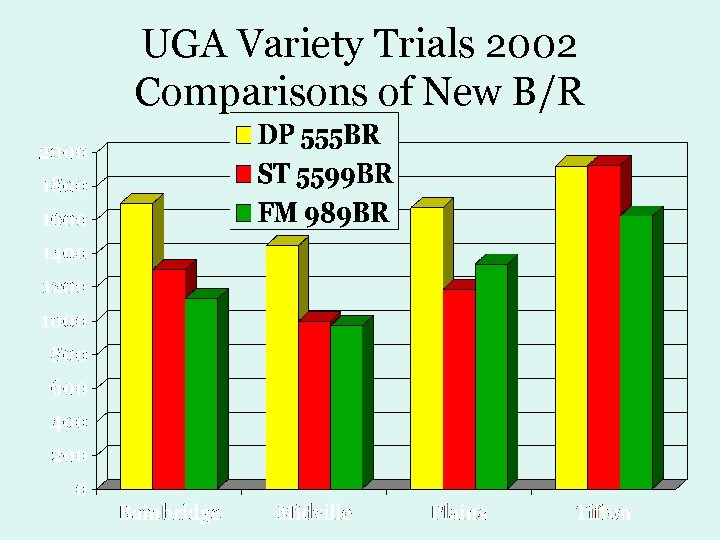
UGA Variety Trials 2002 Comparisons of New B/R
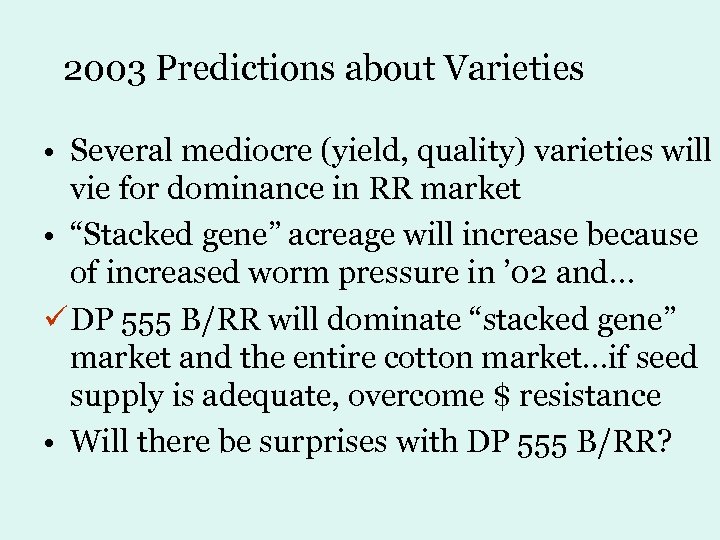
2003 Predictions about Varieties • Several mediocre (yield, quality) varieties will vie for dominance in RR market • “Stacked gene” acreage will increase because of increased worm pressure in ’ 02 and… ü DP 555 B/RR will dominate “stacked gene” market and the entire cotton market…if seed supply is adequate, overcome $ resistance • Will there be surprises with DP 555 B/RR?

It’s GOT to be Roundup Ready! BR or RR?
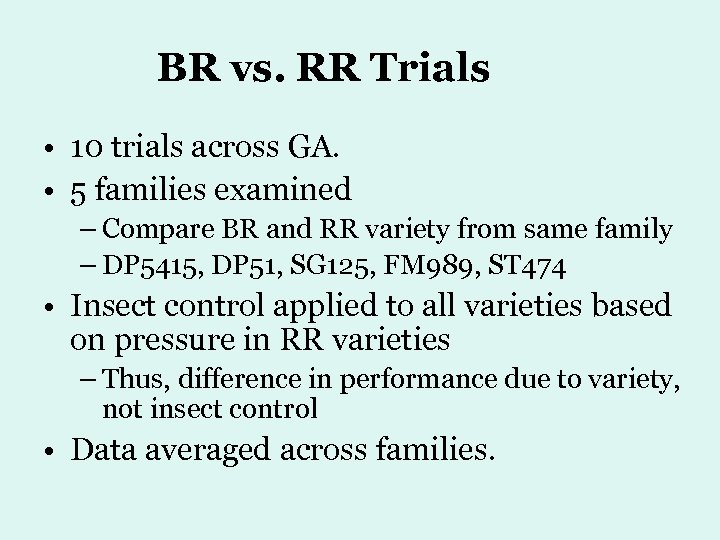
BR vs. RR Trials • 10 trials across GA. • 5 families examined – Compare BR and RR variety from same family – DP 5415, DP 51, SG 125, FM 989, ST 474 • Insect control applied to all varieties based on pressure in RR varieties – Thus, difference in performance due to variety, not insect control • Data averaged across families.
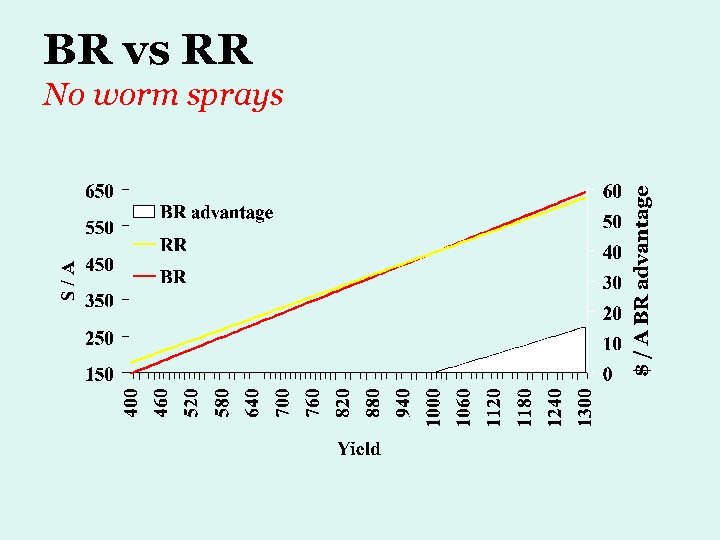
BR vs RR No worm sprays
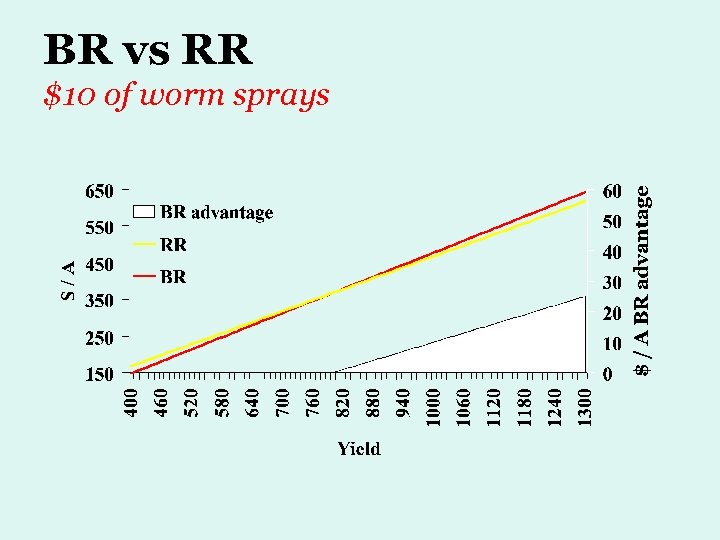
BR vs RR $10 of worm sprays
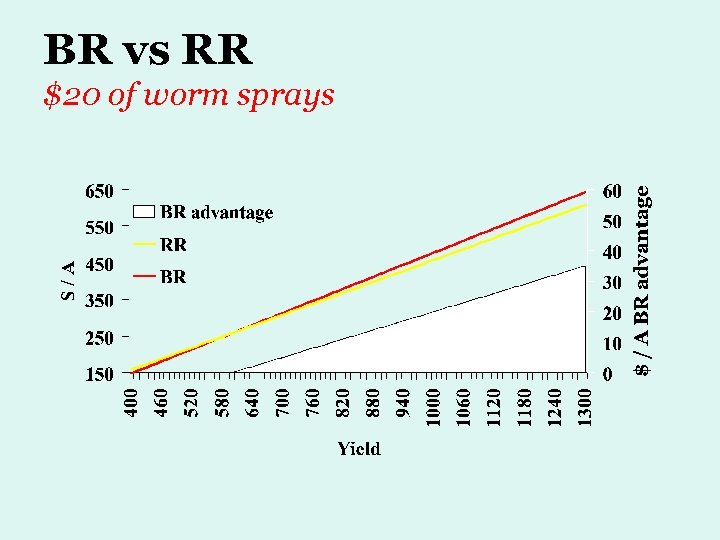
BR vs RR $20 of worm sprays
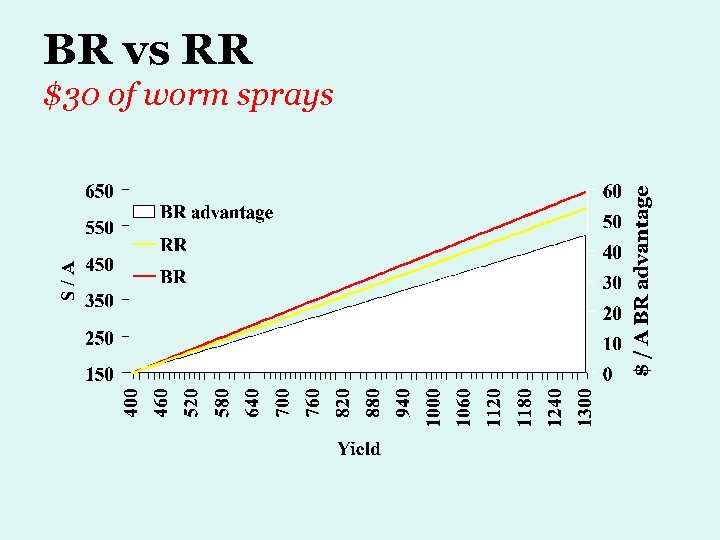
BR vs RR $30 of worm sprays
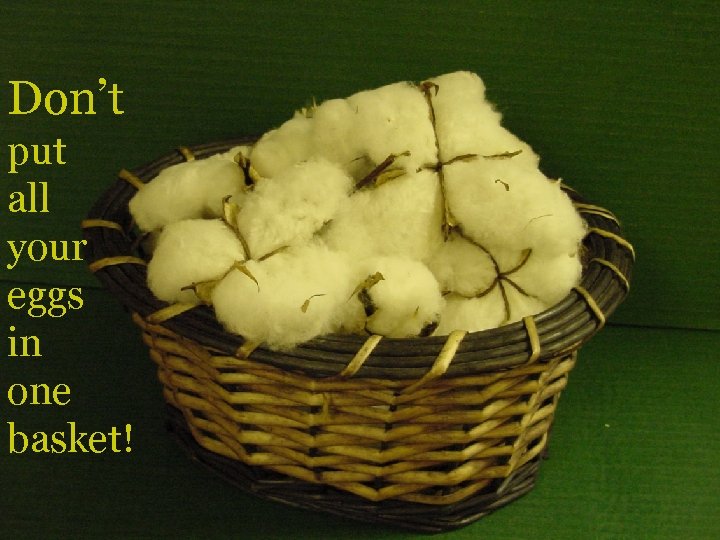
Don’t put all your eggs in one basket!
 Скачать презентацию Looking Back Looking Ahead Cotton Varieties and Fiber
c6e23adda1d906d3dd7ea9874a6f541d.ppt