


 Скачать презентацию Look and Listen Reflect and Teach Pat Johnson Reading
7381bb4c353340e1b93164b70c11d40f.ppt
- Количество слайдов: 52
 Look and Listen/Reflect and Teach Pat Johnson Reading Recovery and Early Literacy Conference April, 2016, Canada patjohnson 222@gmail. com
 “Sensitive observation of children making slow progress must take into account what is being learned by children making satisfactory progress in classrooms. ” Marie Clay Literacy Lessons I, p. 29
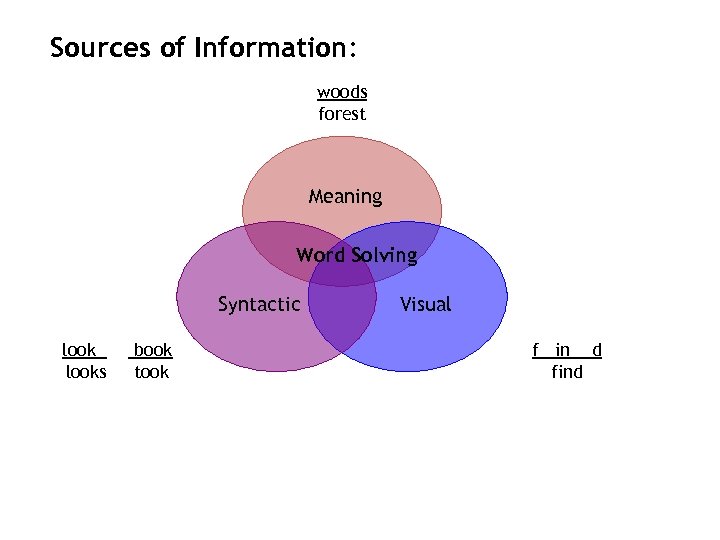 Sources of Information: woods forest Meaning Word Solving Syntactic looks book took Visual f in d find
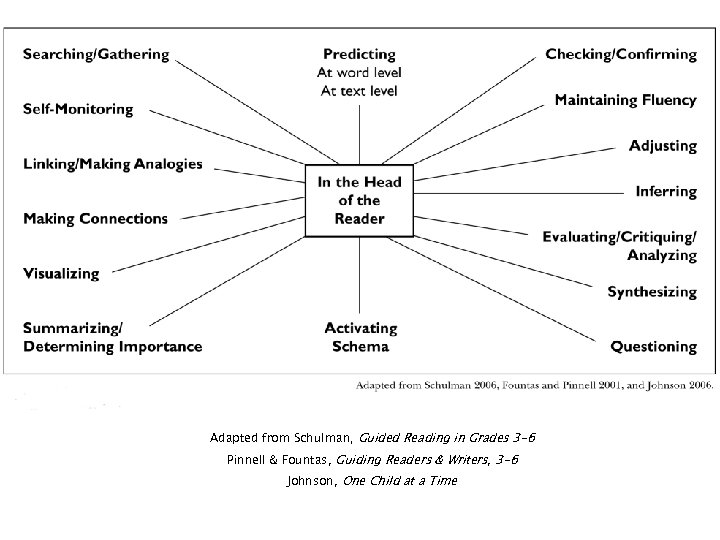 Adapted from Schulman, Guided Reading in Grades 3 -6 Pinnell & Fountas, Guiding Readers & Writers, 3 -6 Johnson, One Child at a Time
 Integration “Reading is a complex process involving a network of cognitive actions that work together to construct meaning. ” Dorn and Soffos, Teaching for Deep Comprehension, 2005
 Observation and assessment must drive instruction.
 What does the child do when he is stuck? § § § § Predict Search Self-Monitor Active or Passive Flexible Use multiple attempts Fluent in his problem-solving
 Running records ØCoding ØCalculations ØAnalysis
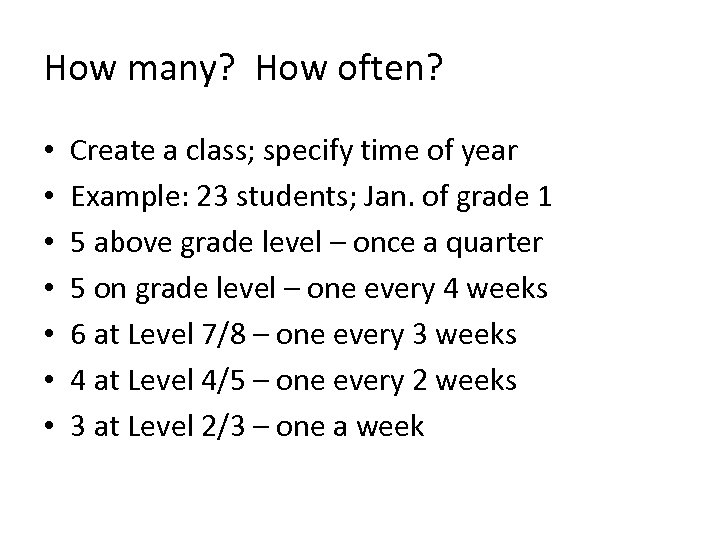 How many? How often? • • Create a class; specify time of year Example: 23 students; Jan. of grade 1 5 above grade level – once a quarter 5 on grade level – one every 4 weeks 6 at Level 7/8 – one every 3 weeks 4 at Level 4/5 – one every 2 weeks 3 at Level 2/3 – one a week
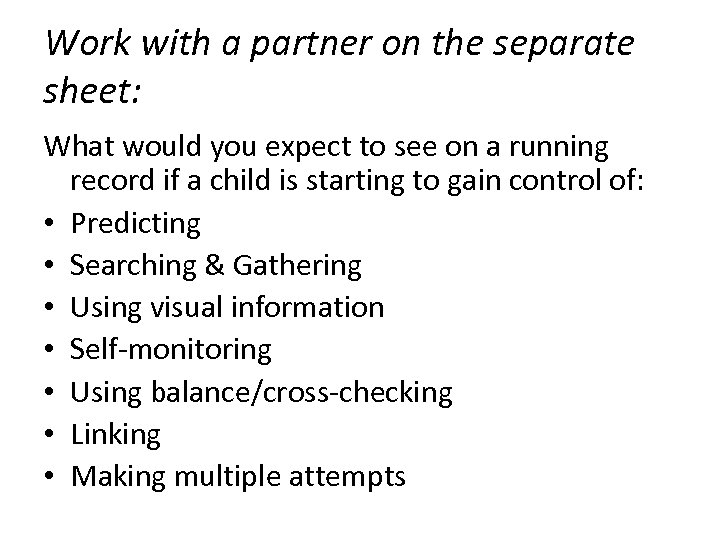 Work with a partner on the separate sheet: What would you expect to see on a running record if a child is starting to gain control of: • Predicting • Searching & Gathering • Using visual information • Self-monitoring • Using balance/cross-checking • Linking • Making multiple attempts
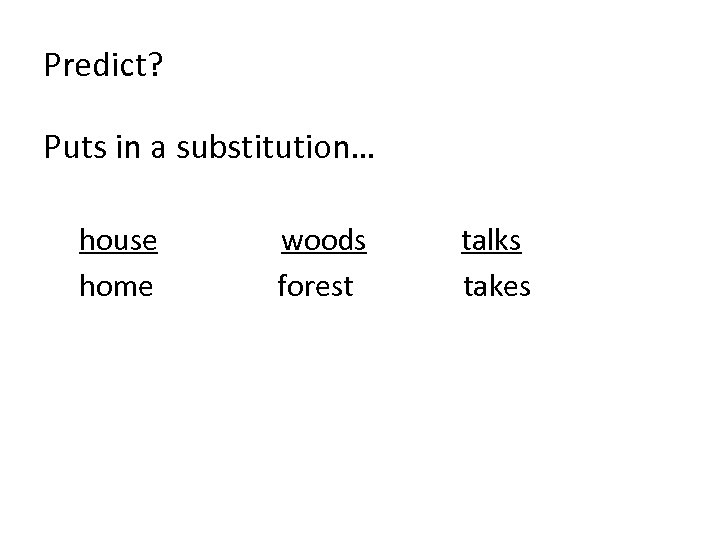 Predict? Puts in a substitution… house home woods forest talks takes
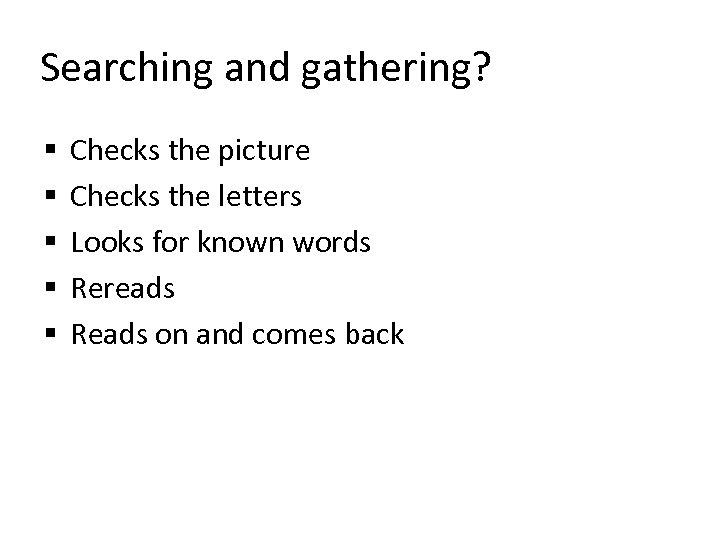 Searching and gathering? § § § Checks the picture Checks the letters Looks for known words Rereads Reads on and comes back
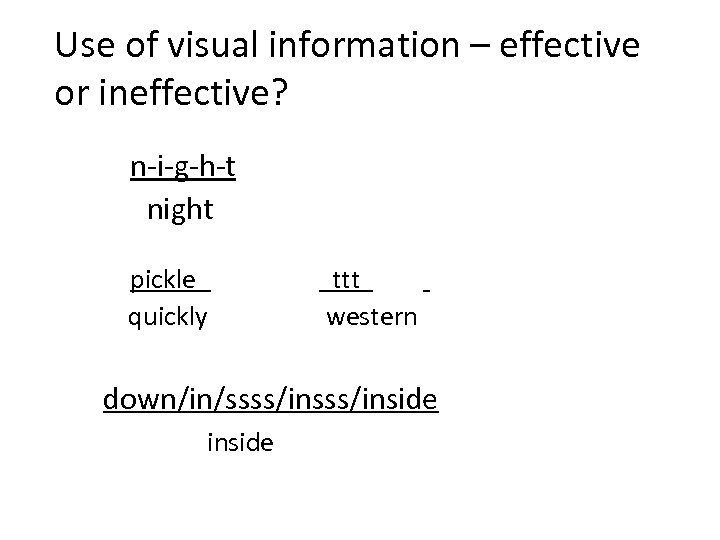 Use of visual information – effective or ineffective? n-i-g-h-t night pickle quickly ttt western down/in/ssss/inside
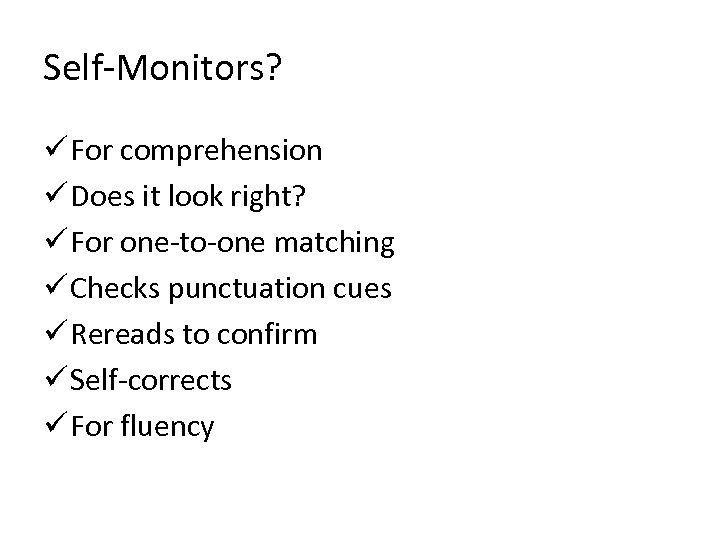 Self-Monitors? ü For comprehension ü Does it look right? ü For one-to-one matching ü Checks punctuation cues ü Rereads to confirm ü Self-corrects ü For fluency
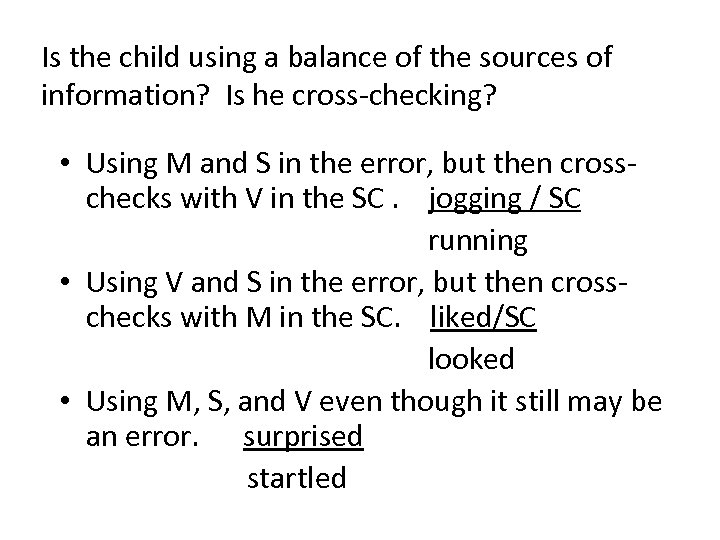 Is the child using a balance of the sources of information? Is he cross-checking? • Using M and S in the error, but then crosschecks with V in the SC. jogging / SC running • Using V and S in the error, but then crosschecks with M in the SC. liked/SC looked • Using M, S, and V even though it still may be an error. surprised startled
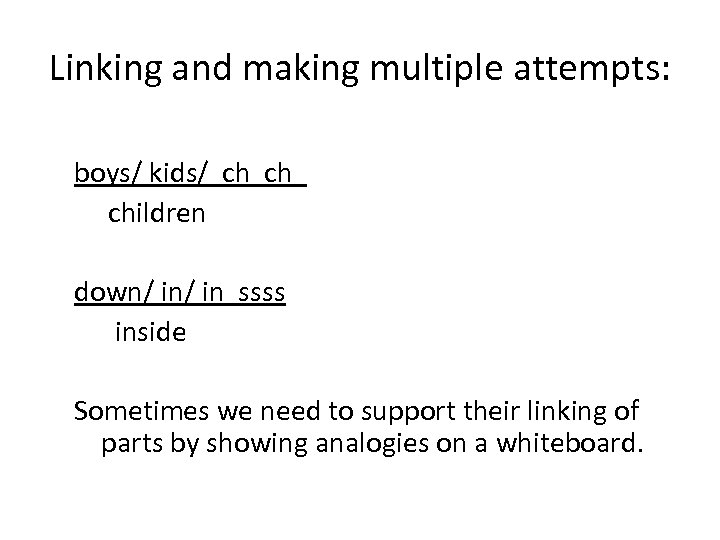 Linking and making multiple attempts: boys/ kids/ ch ch children down/ in ssss inside Sometimes we need to support their linking of parts by showing analogies on a whiteboard.
 “The habit of linking needs to start early. ” Lee Skandalaris We want kids to say, “this is like that. ” • • • I have that word in my other book ‘brother’ – that’s like Brian’s name This story is like that other book Hey, ‘shoe/too’ – they rhyme That word has ‘and’ in it ---standing
 When reviewing running records, think about: What is the child able to do? What is his processing like? (think strategies) What does he do at the point of difficulty? What does he need to learn? How will you teach that? What prompt might you use? How will you determine if the child “took on” what you are teaching for? § Was there a fluency issue? § Was there a comprehension issue? § § § §
 Fluency is not always coded on a running record, however… • Put dashes under the check marks in a place where the student read in a very choppy manner. • Loop several check marks together in a place where a student read in groups of words/fluently.
 Comprehension is not marked/coded explicitly on a running record. However… • • • Discussions with the student Self-monitoring behaviors Self-corrections Word substitutions The child’s phrasing The child’s reactions All of the above will give you indications of comprehension.
 Teaching Points • Immediately after the running record • Looking for patterns across several running records
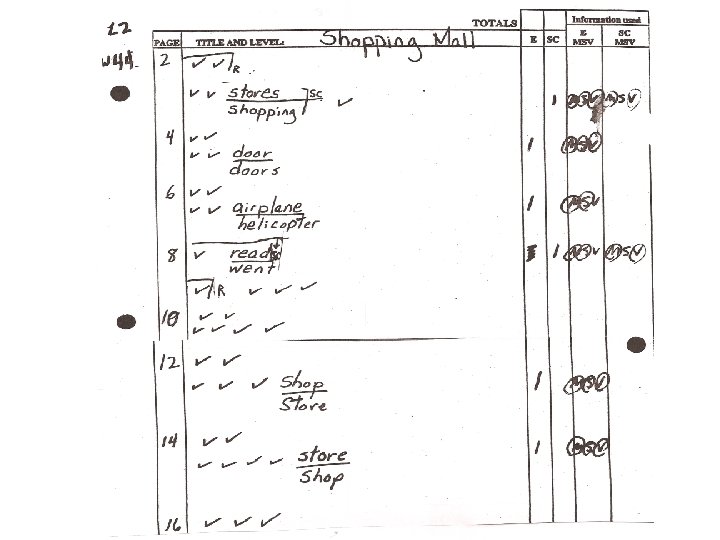
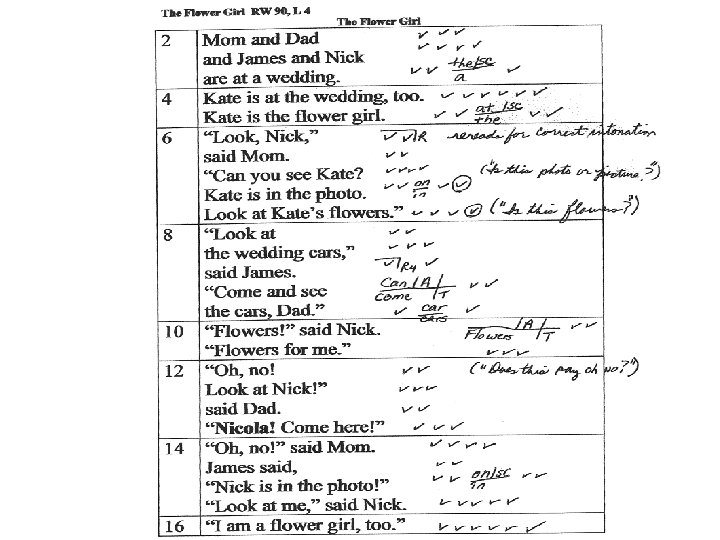
 Examine the running records at your table and discuss: • What is this child able to do? Control or partial control? • What does she need to learn how to do? • Talk about how you teach, model, support, or prompt for that strategic action. • What would you expect to see on future running records?
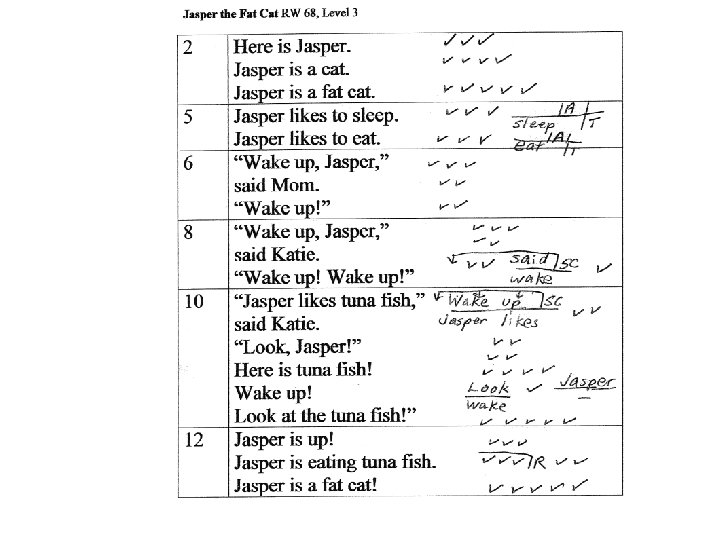
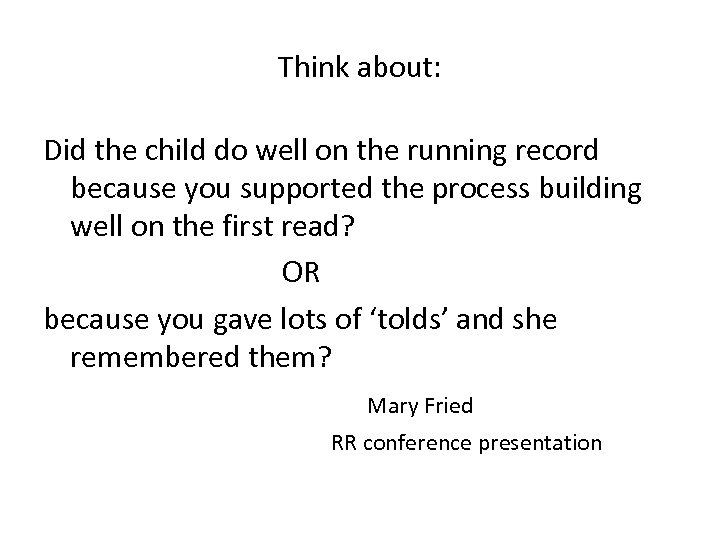 Think about: Did the child do well on the running record because you supported the process building well on the first read? OR because you gave lots of ‘tolds’ and she remembered them? Mary Fried RR conference presentation
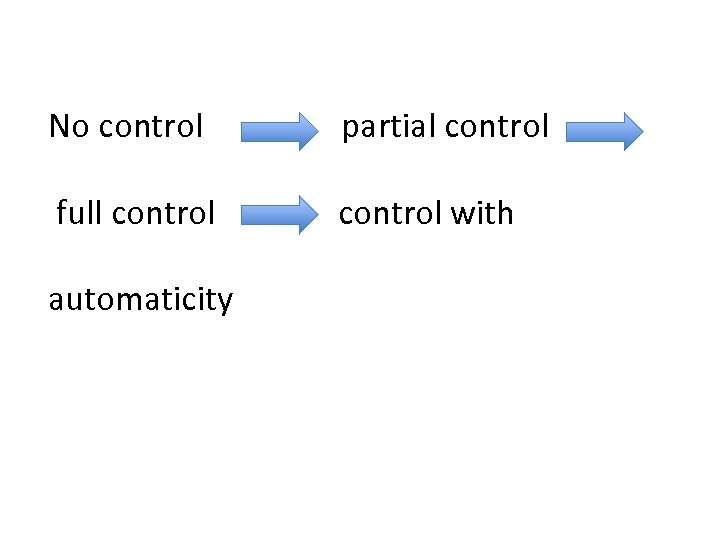 No control partial control full control with automaticity
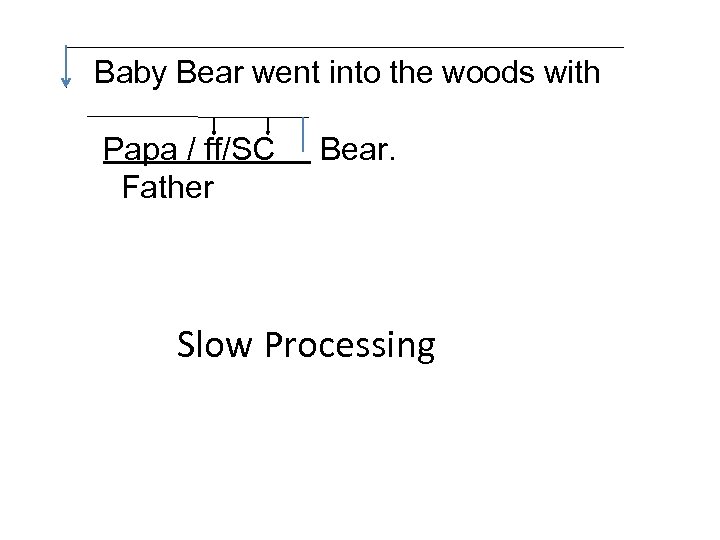 Baby Bear went into the woods with Papa / ff/SC Father Bear. Slow Processing
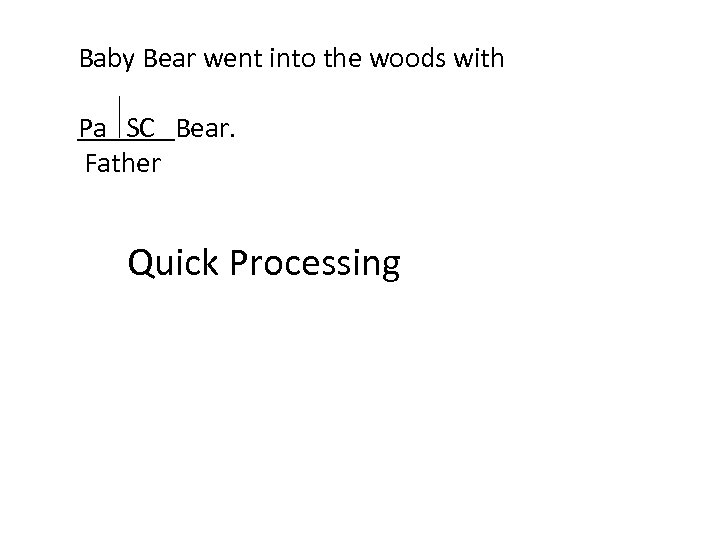 Baby Bear went into the woods with Pa SC Bear. Father Quick Processing
 Slow processing is necessary for problem solving when the strategies in the system are newly acquired. More and more practice will get it going faster. We want that system to get bigger, better, faster, more efficient, automatic!
 With a partner, choose one of the following scenarios. Think about how you will teach this child. Consider modeling, shared demonstrations, guided practice, prompts for 1: 1 work, etc. • • Not self-monitoring; not checking on self Not using a balance of cues Not using proper pacing and phrasing Not using punctuation to help Not predicting at the word level Not using visual information effectively Not linking
 Scenario: The child is not self-monitoring, not checking on himself. Use the 3 questions – does it make sense, look right, sound right? Teach running your finger under the word. Teach rereading. Use the scaffolding symbol card. Ask “are you being the checker? ” Discourage looking at you for confirmation. Repeat what the child said that made no sense. See chapters 5 & 6 in One Child at a Time
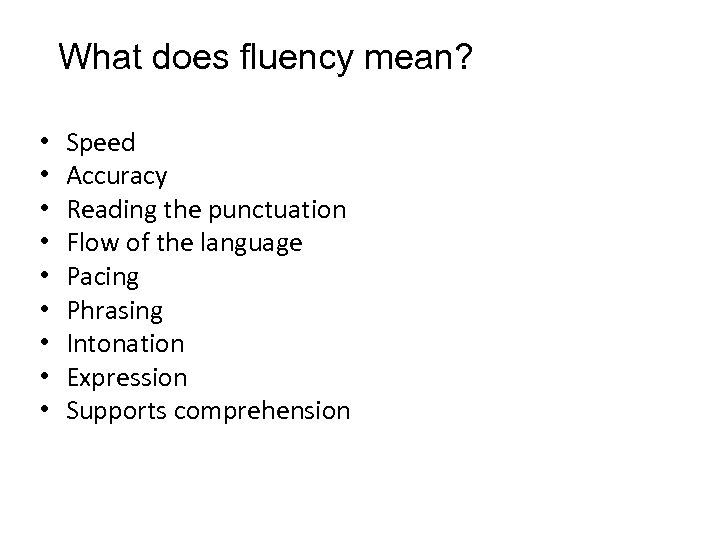 What does fluency mean? • • • Speed Accuracy Reading the punctuation Flow of the language Pacing Phrasing Intonation Expression Supports comprehension
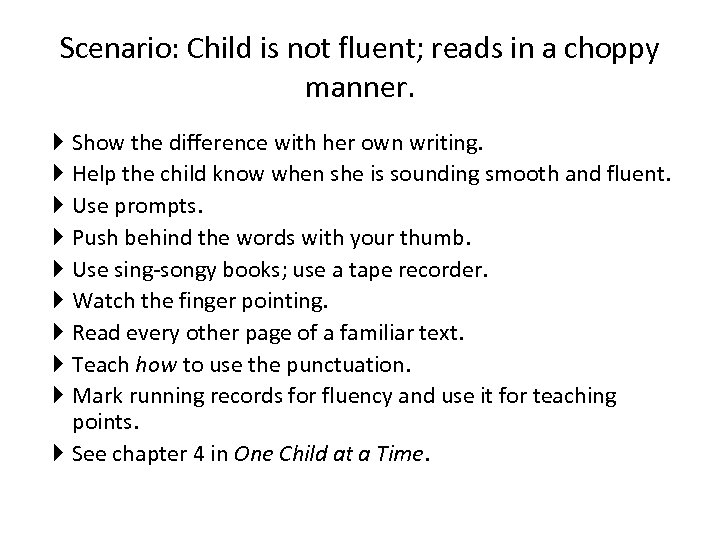 Scenario: Child is not fluent; reads in a choppy manner. Show the difference with her own writing. Help the child know when she is sounding smooth and fluent. Use prompts. Push behind the words with your thumb. Use sing-songy books; use a tape recorder. Watch the finger pointing. Read every other page of a familiar text. Teach how to use the punctuation. Mark running records for fluency and use it for teaching points. See chapter 4 in One Child at a Time.
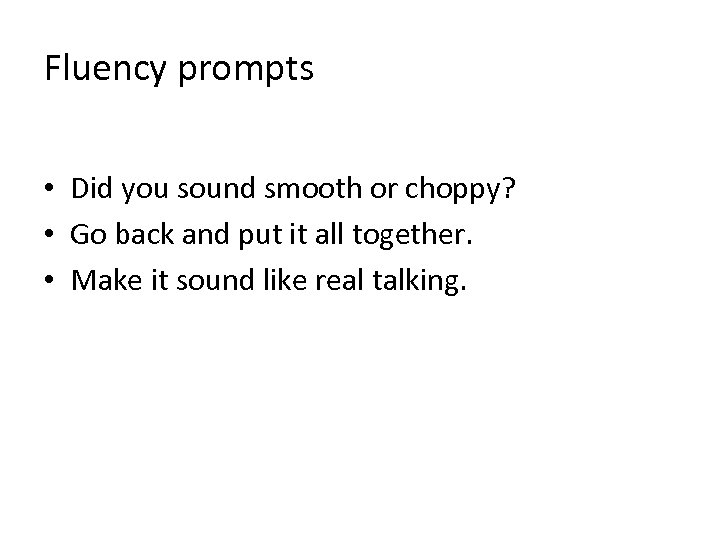 Fluency prompts • Did you sound smooth or choppy? • Go back and put it all together. • Make it sound like real talking.
 Imagine Dick’s disappointment, then, when he reached London at last and found that the streets were nothing but dirt and mud. Dick wandered through the city, hungry and tired, until at last he stopped outside a fine house and sat down to rest.
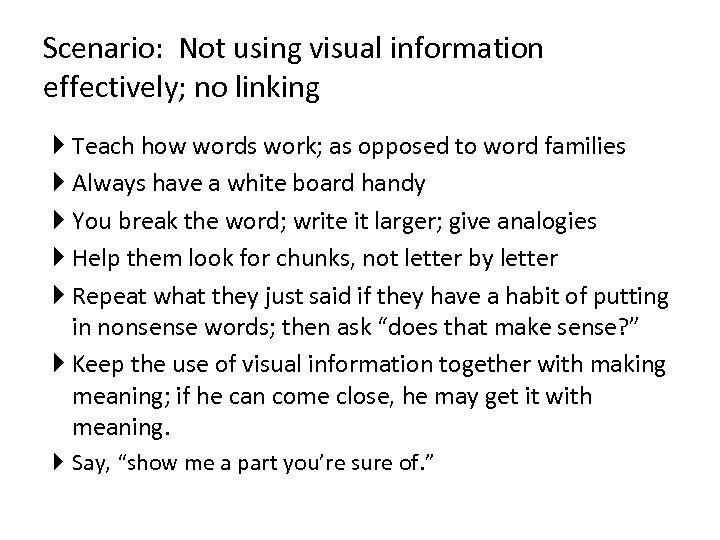 Scenario: Not using visual information effectively; no linking Teach how words work; as opposed to word families Always have a white board handy You break the word; write it larger; give analogies Help them look for chunks, not letter by letter Repeat what they just said if they have a habit of putting in nonsense words; then ask “does that make sense? ” Keep the use of visual information together with making meaning; if he can come close, he may get it with meaning. Say, “show me a part you’re sure of. ”
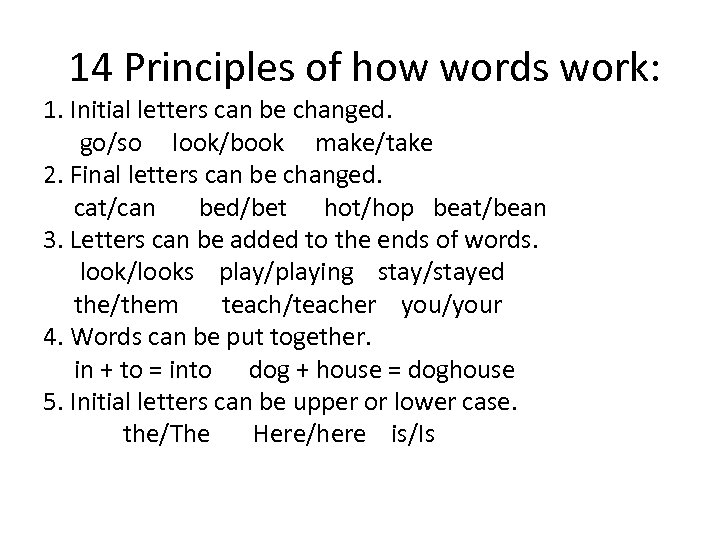 14 Principles of how words work: 1. Initial letters can be changed. go/so look/book make/take 2. Final letters can be changed. cat/can bed/bet hot/hop beat/bean 3. Letters can be added to the ends of words. look/looks play/playing stay/stayed the/them teach/teacher you/your 4. Words can be put together. in + to = into dog + house = doghouse 5. Initial letters can be upper or lower case. the/The Here/here is/Is
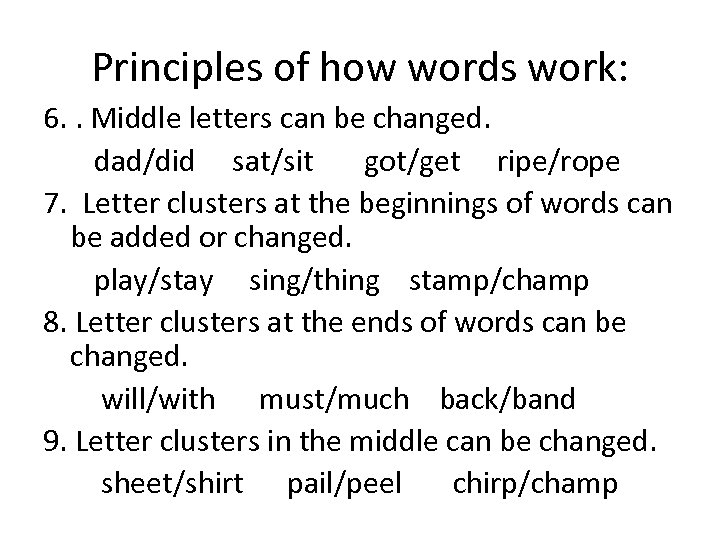 Principles of how words work: 6. . Middle letters can be changed. dad/did sat/sit got/get ripe/rope 7. Letter clusters at the beginnings of words can be added or changed. play/stay sing/thing stamp/champ 8. Letter clusters at the ends of words can be changed. will/with must/much back/band 9. Letter clusters in the middle can be changed. sheet/shirt pail/peel chirp/champ
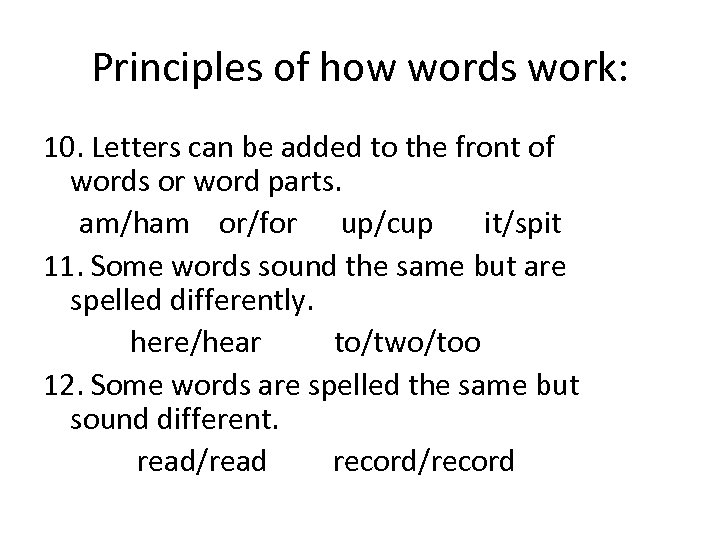 Principles of how words work: 10. Letters can be added to the front of words or word parts. am/ham or/for up/cup it/spit 11. Some words sound the same but are spelled differently. here/hear to/two/too 12. Some words are spelled the same but sound different. read/read record/record
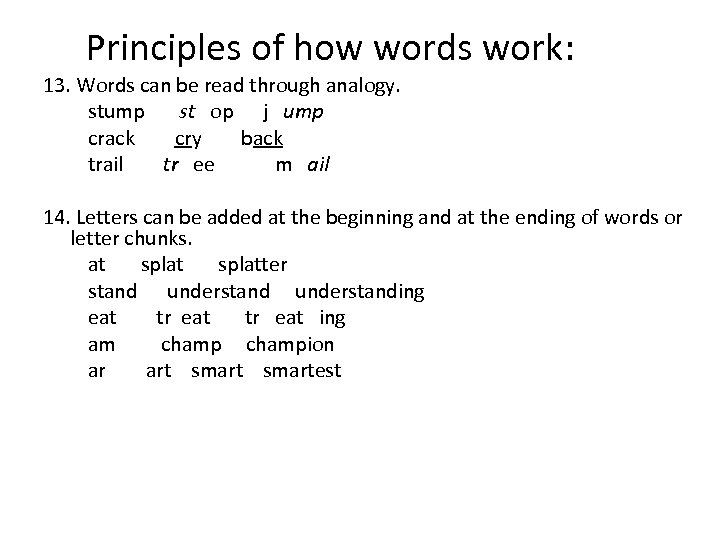 Principles of how words work: 13. Words can be read through analogy. stump st op j ump crack cry back trail tr ee m ail 14. Letters can be added at the beginning and at the ending of words or letter chunks. at splatter stand understanding eat tr eat ing am champion ar art smartest
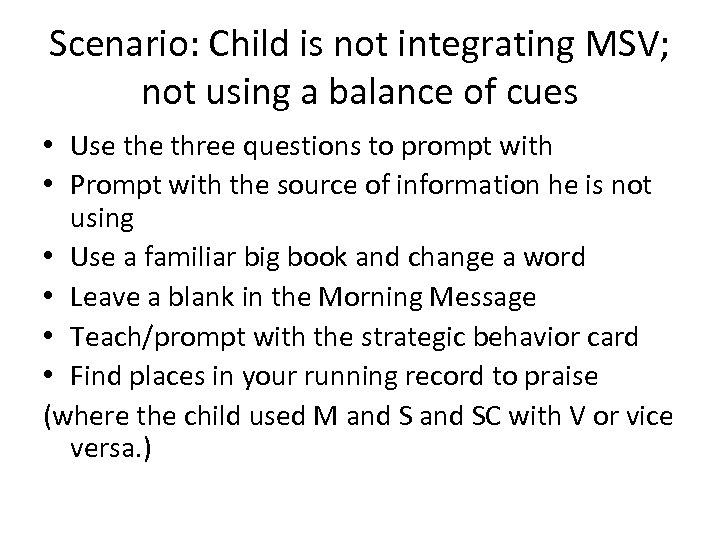 Scenario: Child is not integrating MSV; not using a balance of cues • Use three questions to prompt with • Prompt with the source of information he is not using • Use a familiar big book and change a word • Leave a blank in the Morning Message • Teach/prompt with the strategic behavior card • Find places in your running record to praise (where the child used M and SC with V or vice versa. )
 In terms of struggling readers: What is it about the kids who make the most progress? What kind of teacher is most successful?
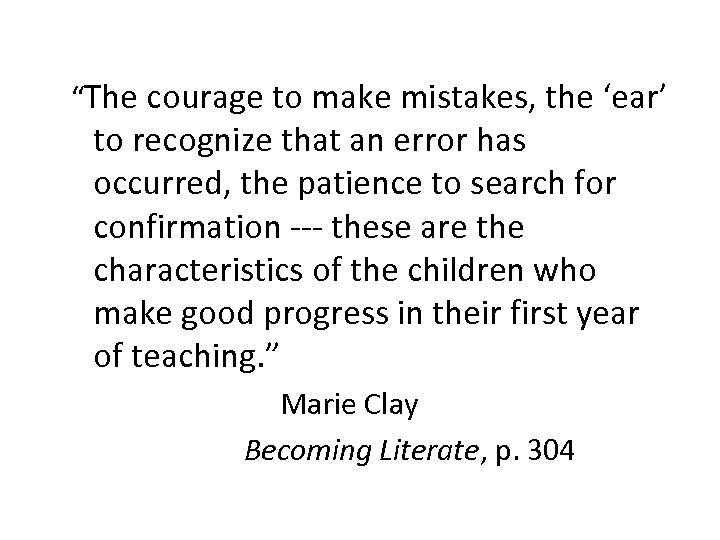 “The courage to make mistakes, the ‘ear’ to recognize that an error has occurred, the patience to search for confirmation --- these are the characteristics of the children who make good progress in their first year of teaching. ” Marie Clay Becoming Literate, p. 304
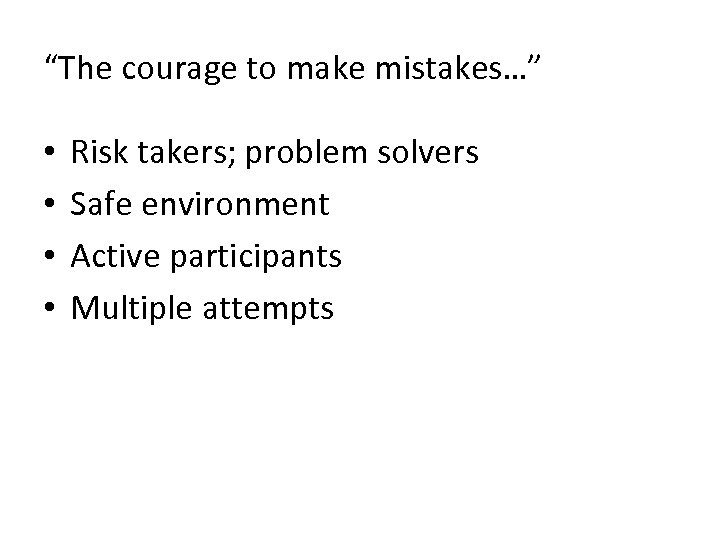 “The courage to make mistakes…” • • Risk takers; problem solvers Safe environment Active participants Multiple attempts
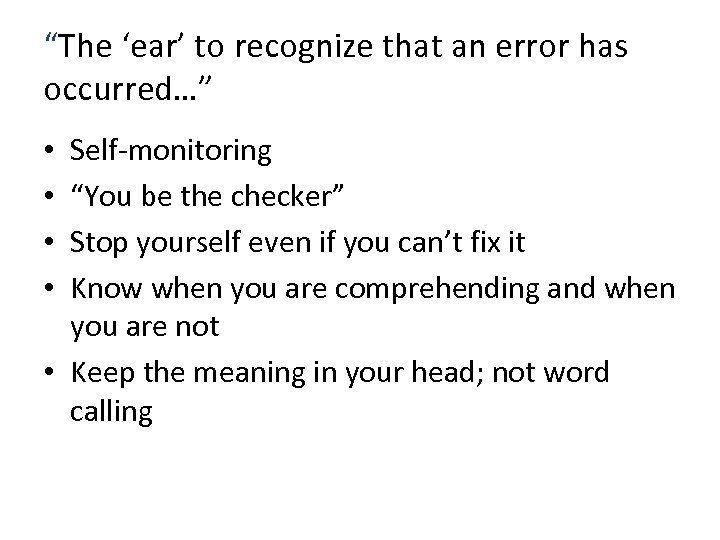 “The ‘ear’ to recognize that an error has occurred…” Self-monitoring “You be the checker” Stop yourself even if you can’t fix it Know when you are comprehending and when you are not • Keep the meaning in your head; not word calling • •
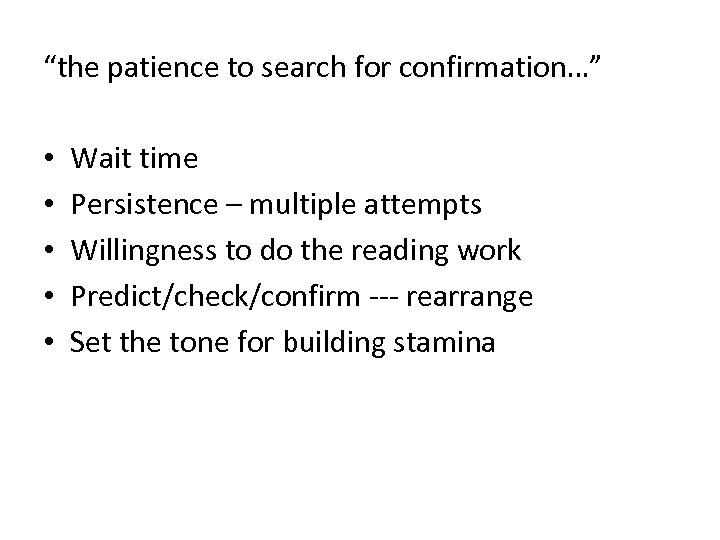 “the patience to search for confirmation…” • • • Wait time Persistence – multiple attempts Willingness to do the reading work Predict/check/confirm --- rearrange Set the tone for building stamina
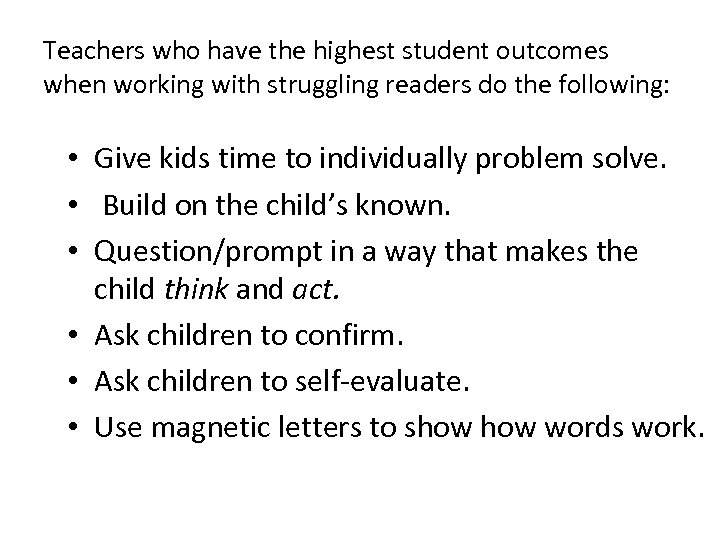 Teachers who have the highest student outcomes when working with struggling readers do the following: • Give kids time to individually problem solve. • Build on the child’s known. • Question/prompt in a way that makes the child think and act. • Ask children to confirm. • Ask children to self-evaluate. • Use magnetic letters to show words work.
 “A teacher's job is always to bridge from the known to the new. Because there really is no other choice. Kids are who they are. They know what they know. They bring what they bring. ” P. David Pearson
 “Literacy is inseparable from opportunity, and opportunity is inseparable from freedom. The freedom promised by literacy is both freedom from - from ignorance, oppression, poverty - and freedom to - to do new things, to make choices, to learn. ” Koichiro Matsuura Former Director General UNESCO
 patjohnson 222@gmail. com (@Pat. J 222 on Twitter) katieannkeier@gmail. com (@bluskyz on Twitter) www. catchingreaders. com Follow our Catching Readers page on Facebook