


 Скачать презентацию Longitudinal Employer Household Dynamics LEHD Program Jeremy S
1f626c38a7cf85b26d3a34b99fd29acc.ppt
- Количество слайдов: 21
 Longitudinal Employer. Household Dynamics (LEHD) Program Jeremy S. Wu U. S. Census Bureau May 11, 2005 1
 “LEHD … is the next generation of data collection and dissemination for the Census Bureau. ” Charles Louis Kincannon Director U. S. Census Bureau Before the House Subcommittee on Federalism and the Census May 10, 2005 2
 Overview ü Background ü The LEHD concept ü Where we are üMapping pilot ü What LEHD offers ü How LEHD may supplement ACS 3
 Background • Started in 1998 -1999 • Research project to maximize data availability while protecting confidentiality • Seed funding from – National Science, Sloan, and other Foundations – the Census Bureau – BLS, BTS, ETA, HHS, NIA, SSA, and others 4
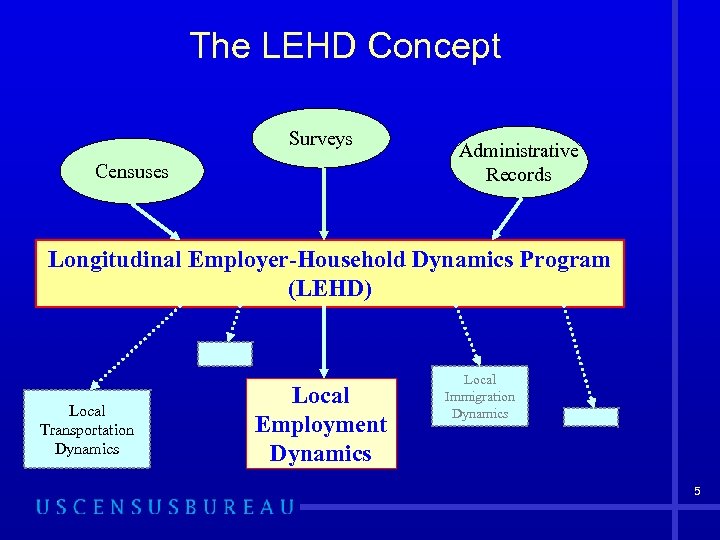 The LEHD Concept Surveys Censuses Administrative Records Longitudinal Employer-Household Dynamics Program (LEHD) Local Transportation Dynamics Local Employment Dynamics Local Immigration Dynamics 5
 Local Employment Dynamics (LED) 1. A voluntary partnership between state Labor Market Information agencies and the Census Bureau 2. States supply quarterly 1. unemployment insurance wage records 2. ES-202 business establishment records 3. The Census Bureau merges quarterly 1. the records with other data to produce Quarterly Workforce Indicators (QWI) 6
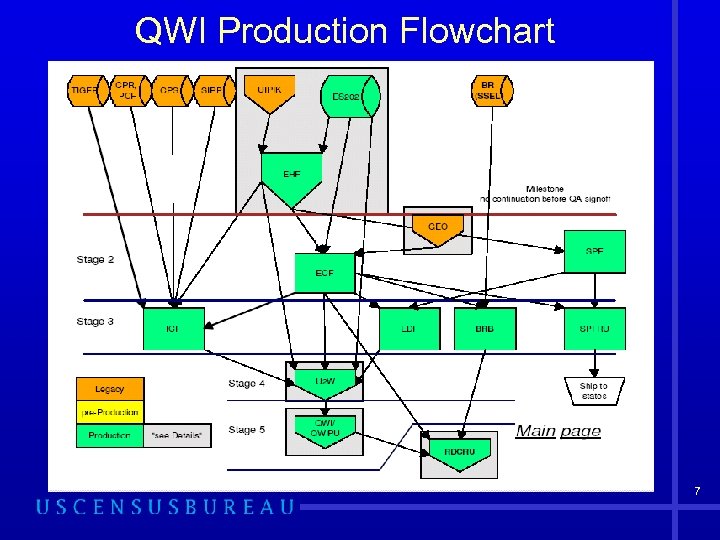 QWI Production Flowchart 7
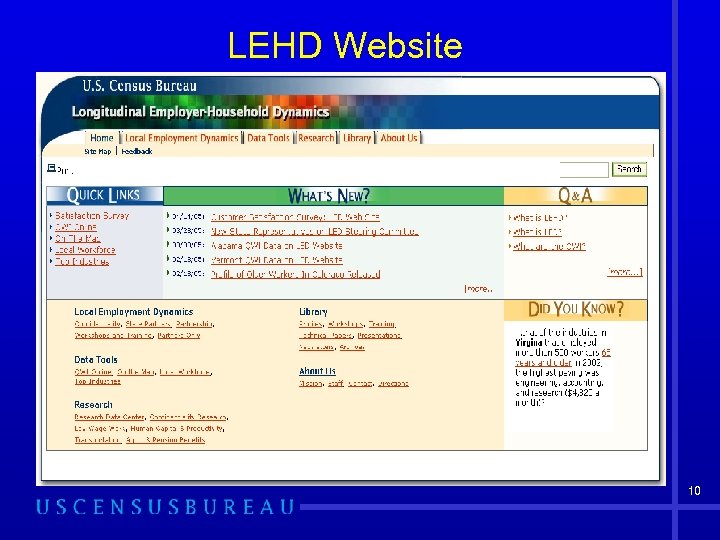
 Status of LED ü 38 states and DC are partners, about 83% of population ü 32 states sending in data for processing, about 71% of population ü 27 states have data posted on the website, almost 63% of population 8
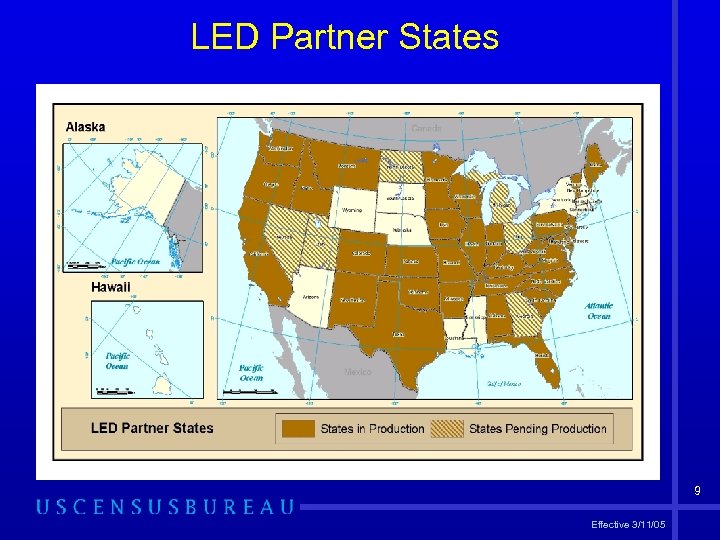 LED Partner States 9 Effective 3/11/05
 LEHD Website 10
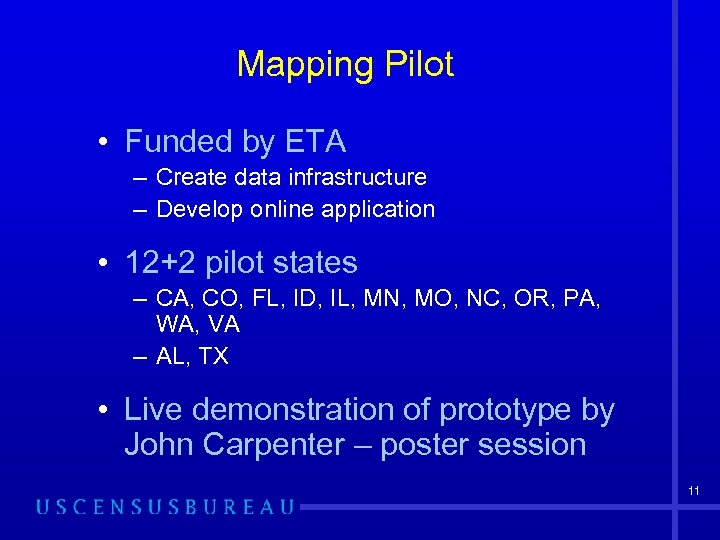 Mapping Pilot • Funded by ETA – Create data infrastructure – Develop online application • 12+2 pilot states – CA, CO, FL, ID, IL, MN, MO, NC, OR, PA, WA, VA – AL, TX • Live demonstration of prototype by John Carpenter – poster session 11
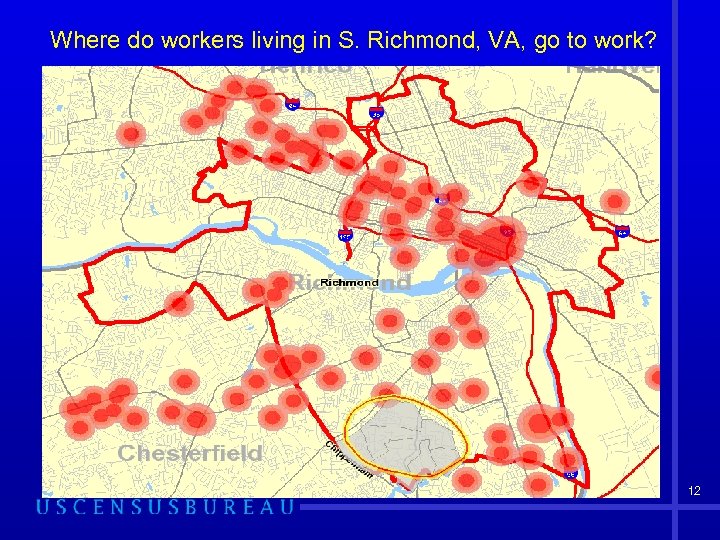 Where do workers living in S. Richmond, VA, go to work? 12
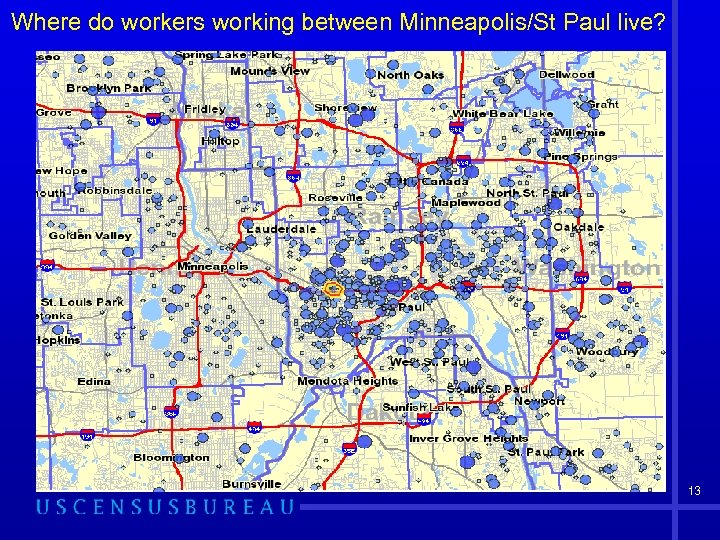 Where do workers working between Minneapolis/St Paul live? 13
 Some Additional Features • Multiple, optional mapping layers • Companion reports on places of work and residence • Potential selection criteria on age, gender, earnings, industry • Longitudinal data to show trends and patterns of worker migration and regional or business growth 14
 What LEHD Offers • Proven concept with track record on LED • Potential supplier of new, timely, and low cost data for transportation planning and analysis • Dynamics of trends and patterns • Demographic info on age and gender • Research to integrate with transportation -related administrative records and surveys 15
 Small Area Estimation 1. Covers private, non-agricultural workers under unemployment insurance in small and large areas 2. Includes about 98% of private, nonag workers 3. Alleviates concern about small sample size or large sampling errors 1. Session 6 - R. Eash 4. Is available as frequently as quarterly 16
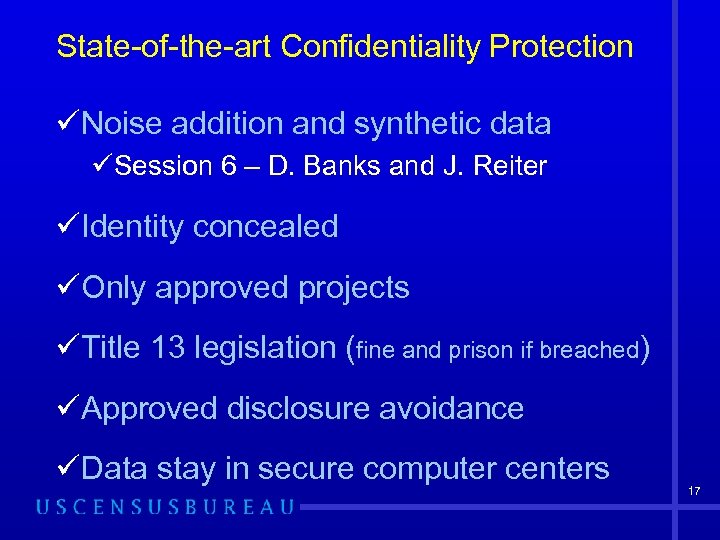 State-of-the-art Confidentiality Protection üNoise addition and synthetic data üSession 6 – D. Banks and J. Reiter üIdentity concealed üOnly approved projects üTitle 13 legislation (fine and prison if breached) üApproved disclosure avoidance üData stay in secure computer centers 17
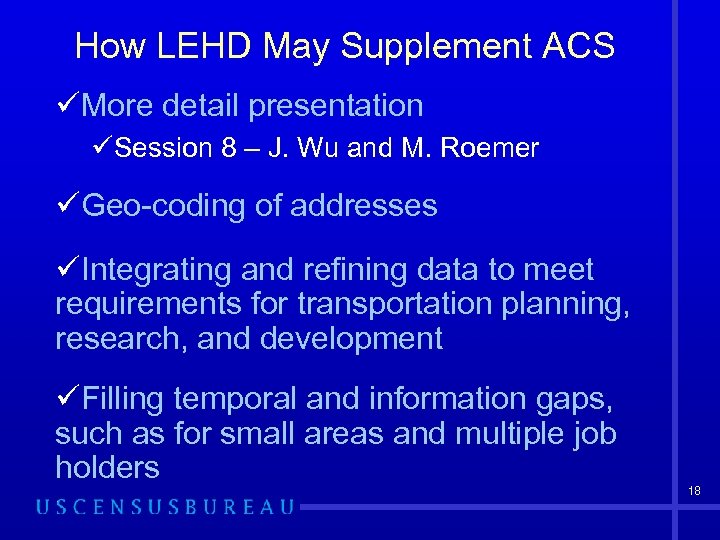 How LEHD May Supplement ACS üMore detail presentation üSession 8 – J. Wu and M. Roemer üGeo-coding of addresses üIntegrating and refining data to meet requirements for transportation planning, research, and development üFilling temporal and information gaps, such as for small areas and multiple job holders 18
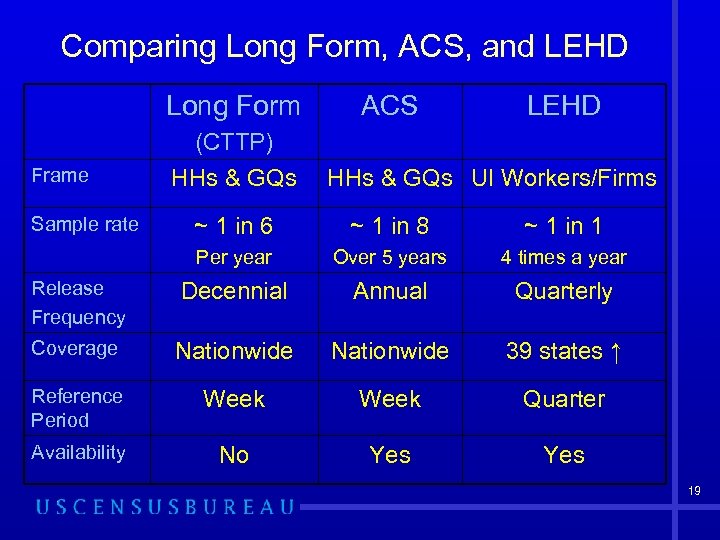 Comparing Long Form, ACS, and LEHD Long Form Frame Sample rate (CTTP) HHs & GQs ACS LEHD HHs & GQs UI Workers/Firms ~ 1 in 6 ~ 1 in 8 ~ 1 in 1 Per year Over 5 years 4 times a year Release Frequency Decennial Annual Quarterly Coverage Nationwide 39 states ↑ Reference Period Week Quarter Availability No Yes 19
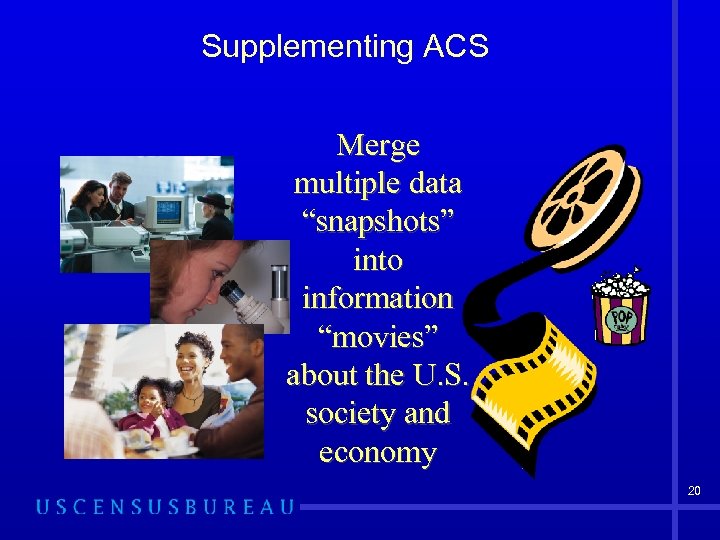 Supplementing ACS Merge multiple data “snapshots” into information “movies” about the U. S. society and economy 20
 LED Contact Information Program Manager Jeremy Wu Jeremy. S. Wu@census. gov Communications & Marketing Manager Jennifer Marks Jennifer. P. Marks@census. gov http: //lehd. dsd. census. gov 21