


 Скачать презентацию LONG-TERM SURVIVAL WITH CARDIAC RESYNCHRONIZATION THERAPY IN MILD
dd1ce25e9bf0509555e878eed32e5021.ppt
- Количество слайдов: 24
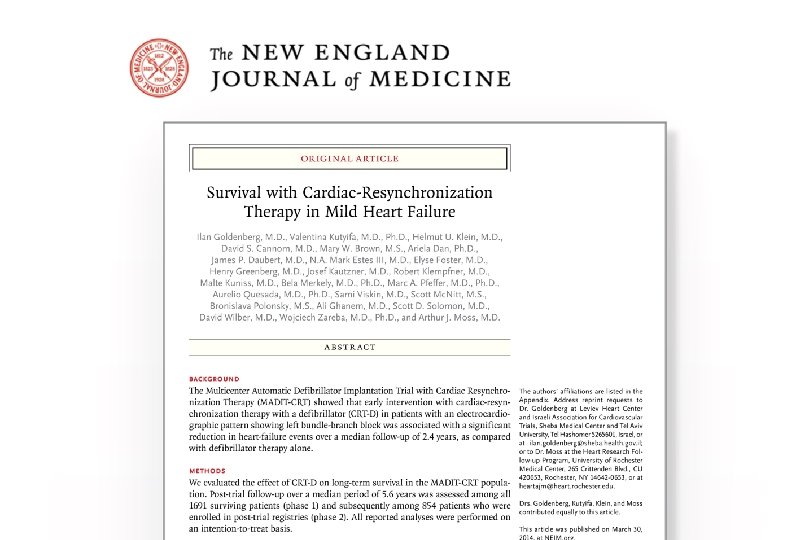
 LONG-TERM SURVIVAL WITH CARDIAC RESYNCHRONIZATION THERAPY IN MILD HEART FAILURE PATIENTS Ilan Goldenberg, MD, Valentina Kutyifa, MD, Ph. D, Helmut Klein, MD, Scott Mc. Nitt, MA, Mary Brown, MA, Arthur J. Moss, MD; and the MADIT-CRT LTFU Executive Committee From the Cardiology Division of the Department of Medicine (I. G. , VK, HK, SM, AJ. M) University of Rochester Medical Center, Rochester, N. Y. ; and Leviev Heart Center, Sheba Medical Center and Tel Aviv University, Israel (I. G. )
 Presenter Disclosure Information Ilan Goldenberg, MD Long-Term Survival with Cardiac Resynchronization Therapy in Mild Heart Failure Patients DISCLOSURE INFORMATION: The following relationships exist related to this presentation: The long-term follow-up of MADIT-CRT was supported by an unrestricted research grant from Boston Scientific to the University of Rochester Medical Center and to the Israeli Association for Cardiovascular Trials
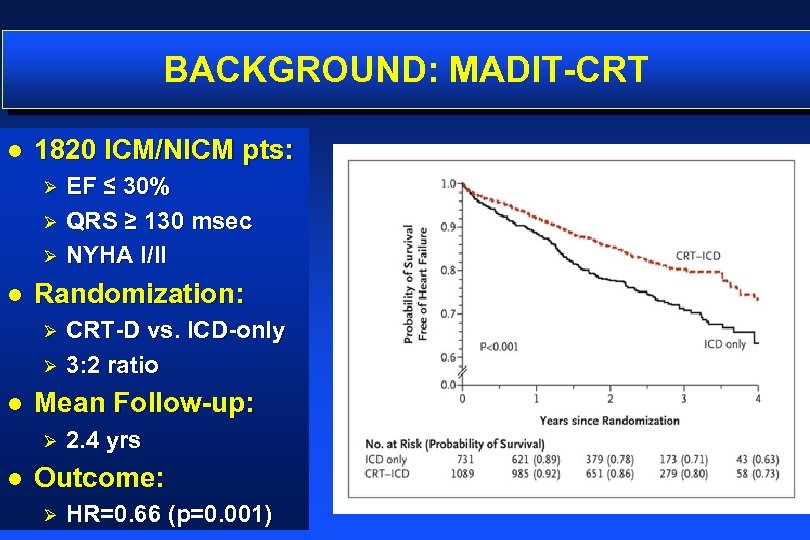 BACKGROUND: MADIT-CRT l 1820 ICM/NICM pts: EF ≤ 30% Ø QRS ≥ 130 msec Ø NYHA I/II Ø l Randomization: CRT-D vs. ICD-only Ø 3: 2 ratio Ø l Mean Follow-up: Ø l 2. 4 yrs Outcome: Ø HR=0. 66 (p=0. 001)
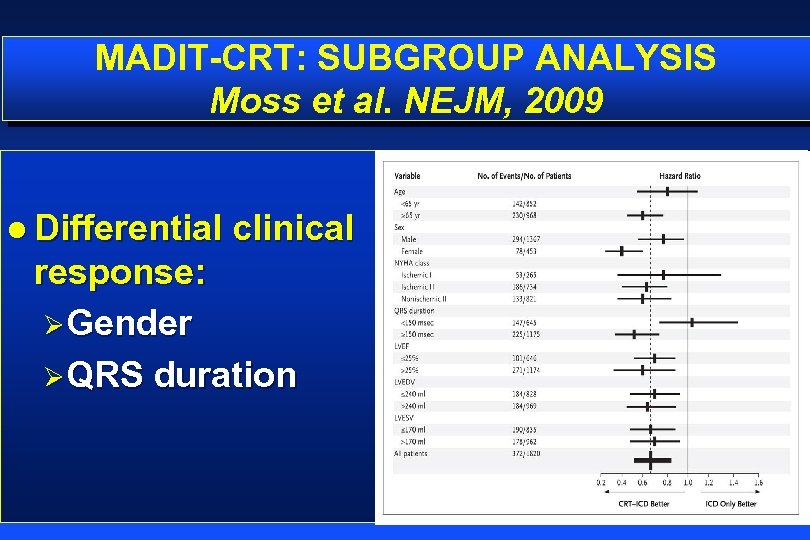 MADIT-CRT: SUBGROUP ANALYSIS Moss et al. NEJM, 2009 l Differential clinical response: ØGender ØQRS duration
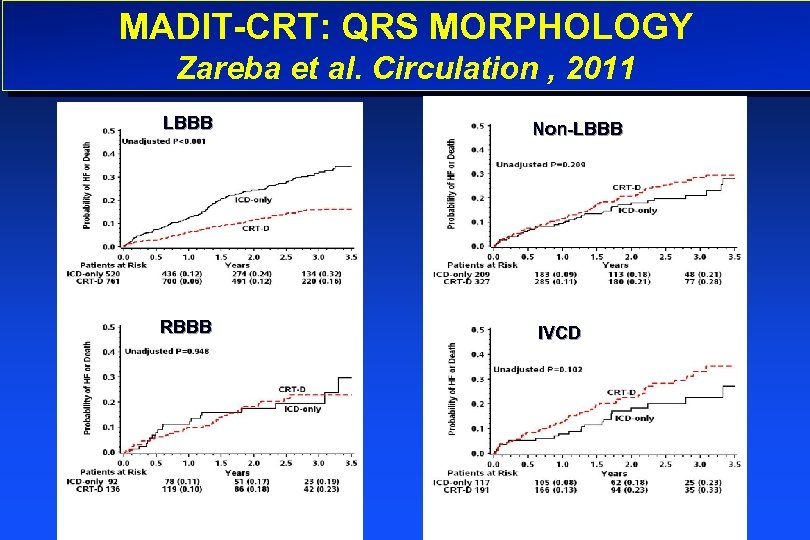 MADIT-CRT: QRS MORPHOLOGY Zareba et al. Circulation , 2011 LBBB RBBB Non-LBBB IVCD
 STUDY PURPOSE We hypothesized that the pronounced reduction in heart failure events associated with CRT during the in-trial period of MADIT-CRT would translate into a long-term survival benefit
 METHODS
 POPULATION AND TRIAL PERIODS l 1820 MADIT-CRT patients: Ø 88 US Centers; 1, 271 pts (70%) Ø 24 Non-US Centers; 549 pts (30%) l MADIT-CRT: In-trial period Ø December l 22, 2004 – June 20, 2009 MADIT-CRT LTFU: Post-trial period Ø Last in-trial FU visit – September 30, 2013
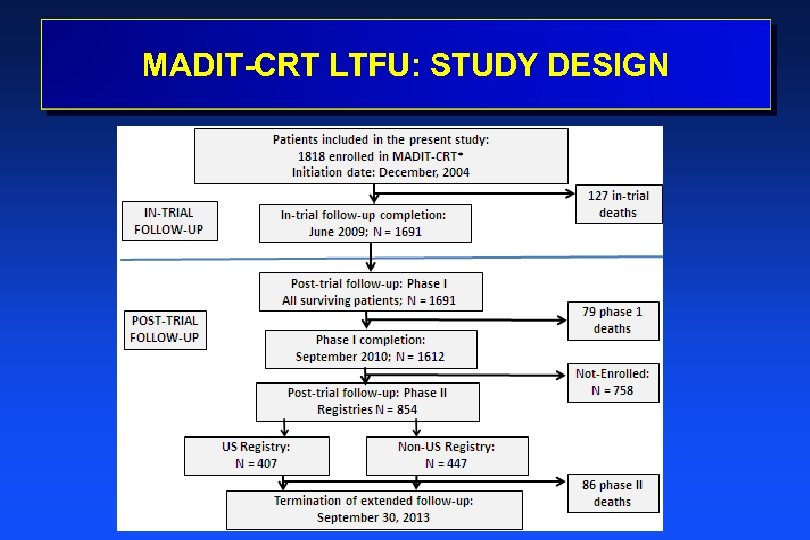 MADIT-CRT LTFU: STUDY DESIGN
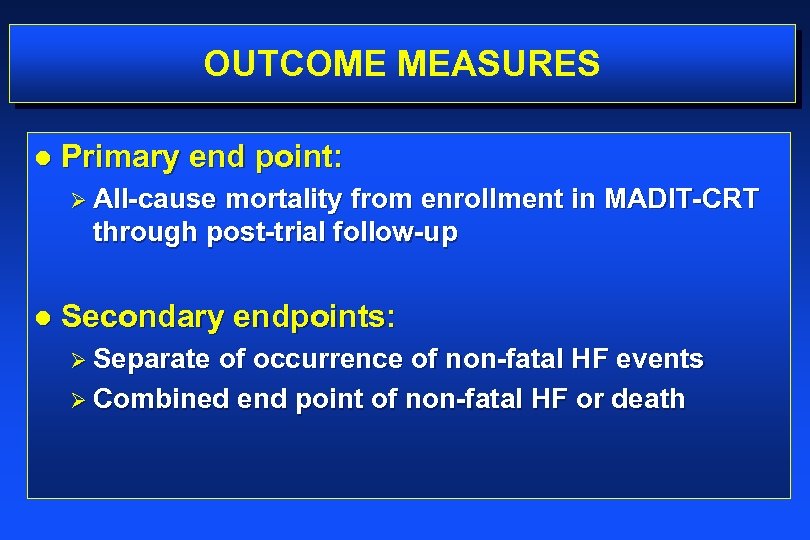 OUTCOME MEASURES l Primary end point: Ø All-cause mortality from enrollment in MADIT-CRT through post-trial follow-up l Secondary endpoints: Ø Separate of occurrence of non-fatal HF events Ø Combined end point of non-fatal HF or death
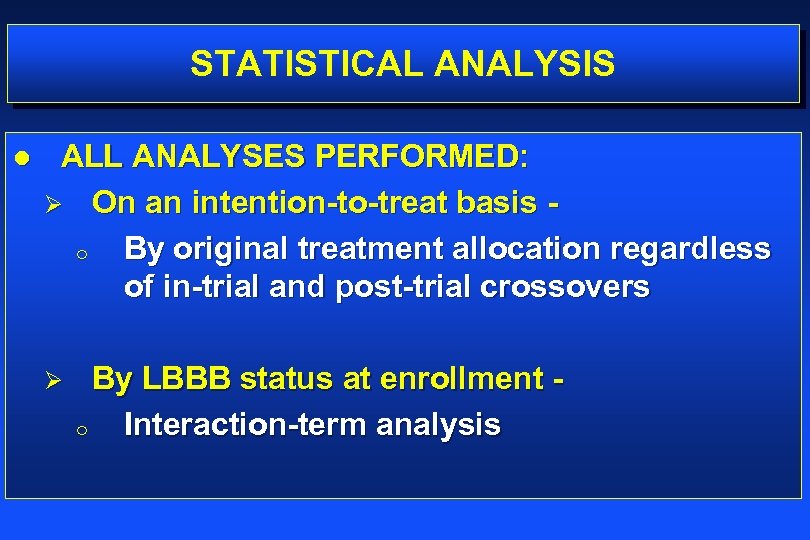 STATISTICAL ANALYSIS l ALL ANALYSES PERFORMED: Ø On an intention-to-treat basis o By original treatment allocation regardless of in-trial and post-trial crossovers Ø By LBBB status at enrollment o Interaction-term analysis
 RESULTS
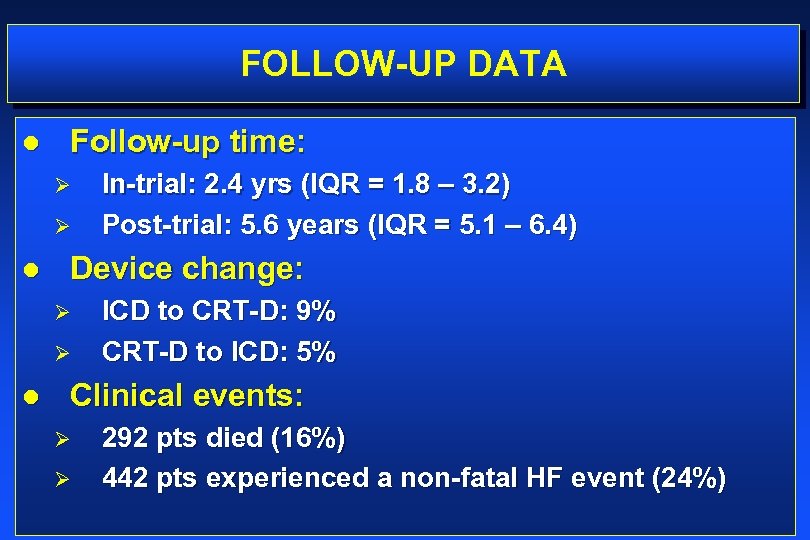 FOLLOW-UP DATA l Follow-up time: Ø Ø l Device change: Ø Ø l In-trial: 2. 4 yrs (IQR = 1. 8 – 3. 2) Post-trial: 5. 6 years (IQR = 5. 1 – 6. 4) ICD to CRT-D: 9% CRT-D to ICD: 5% Clinical events: Ø Ø 292 pts died (16%) 442 pts experienced a non-fatal HF event (24%)
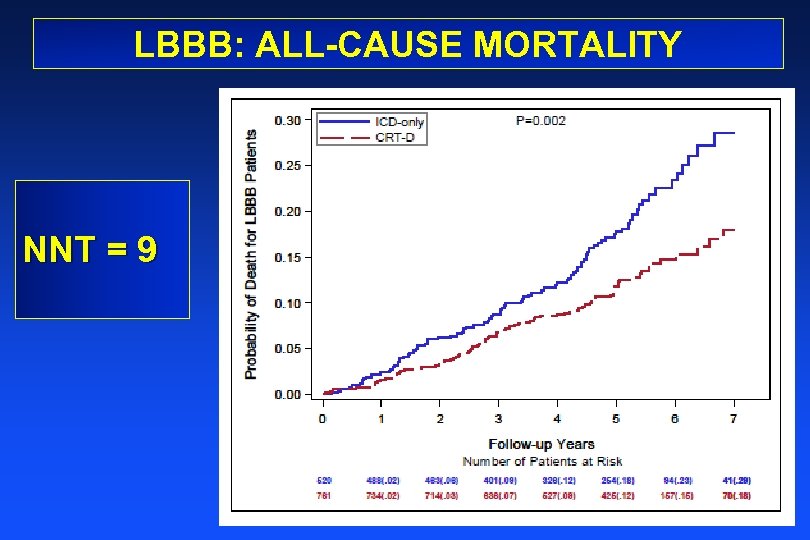 LBBB: ALL-CAUSE MORTALITY NNT = 9
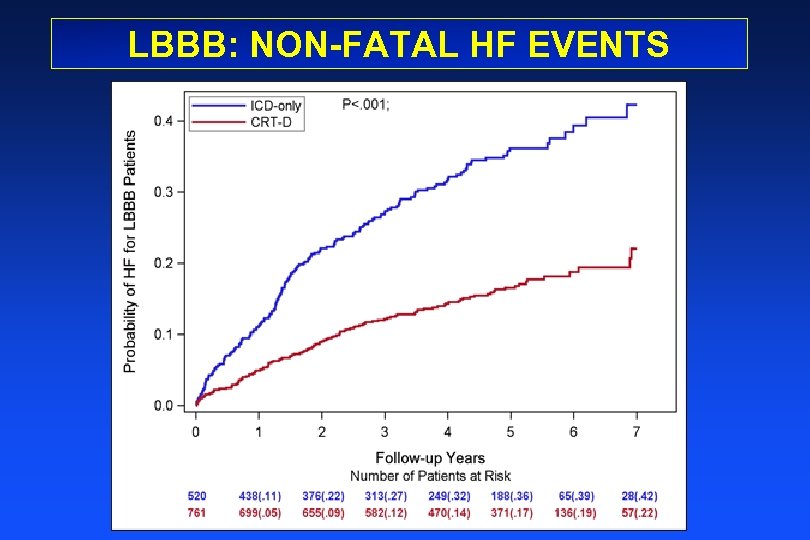 LBBB: NON-FATAL HF EVENTS
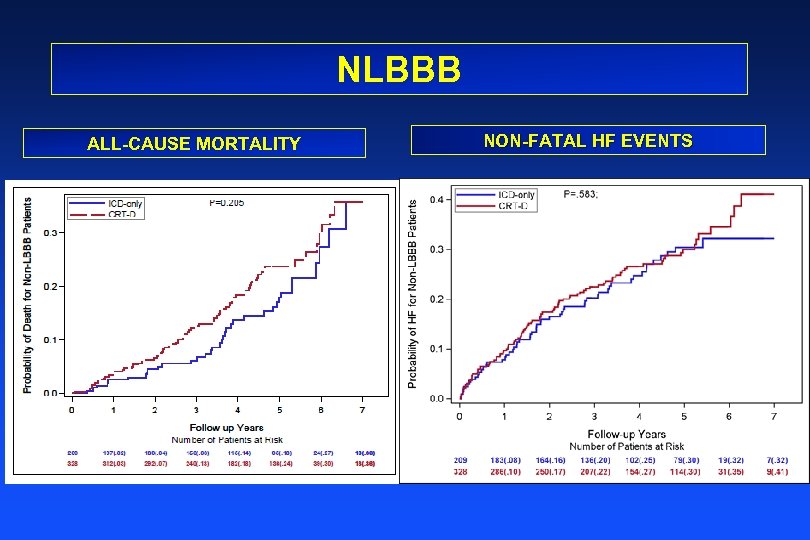 NLBBB ALL-CAUSE MORTALITY NON-FATAL HF EVENTS
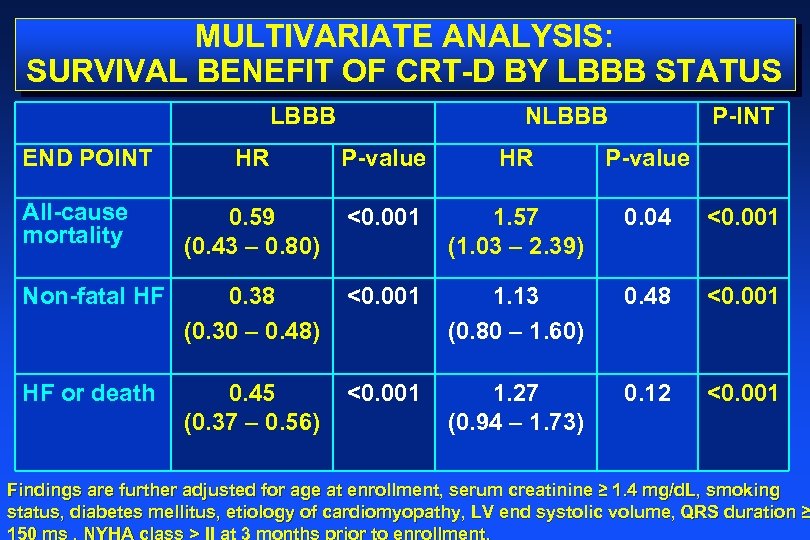 MULTIVARIATE ANALYSIS: SURVIVAL BENEFIT OF CRT-D BY LBBB STATUS LBBB END POINT NLBBB P-INT HR P-value All-cause mortality 0. 59 (0. 43 – 0. 80) <0. 001 1. 57 (1. 03 – 2. 39) 0. 04 <0. 001 Non-fatal HF 0. 38 (0. 30 – 0. 48) <0. 001 1. 13 (0. 80 – 1. 60) 0. 48 <0. 001 HF or death 0. 45 (0. 37 – 0. 56) <0. 001 1. 27 (0. 94 – 1. 73) 0. 12 <0. 001 Findings are further adjusted for age at enrollment, serum creatinine ≥ 1. 4 mg/d. L, smoking status, diabetes mellitus, etiology of cardiomyopathy, LV end systolic volume, QRS duration ≥ 150 ms , NYHA class > II at 3 months prior to enrollment.
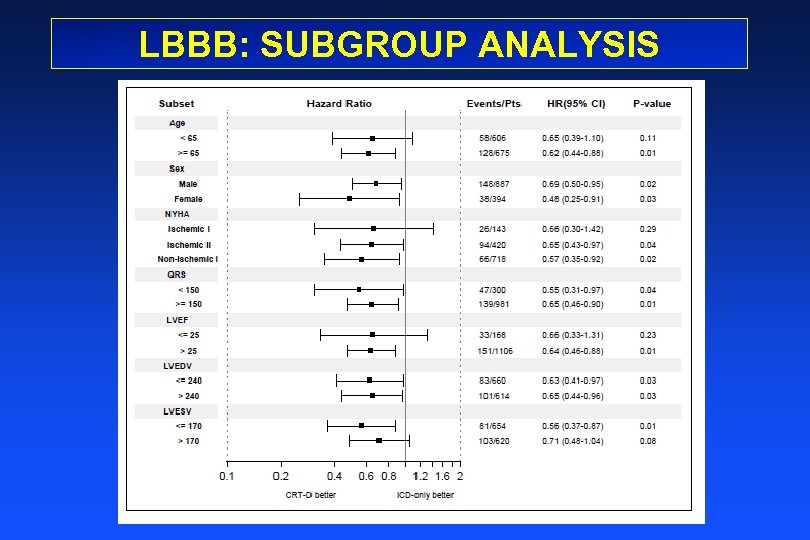 LBBB: SUBGROUP ANALYSIS
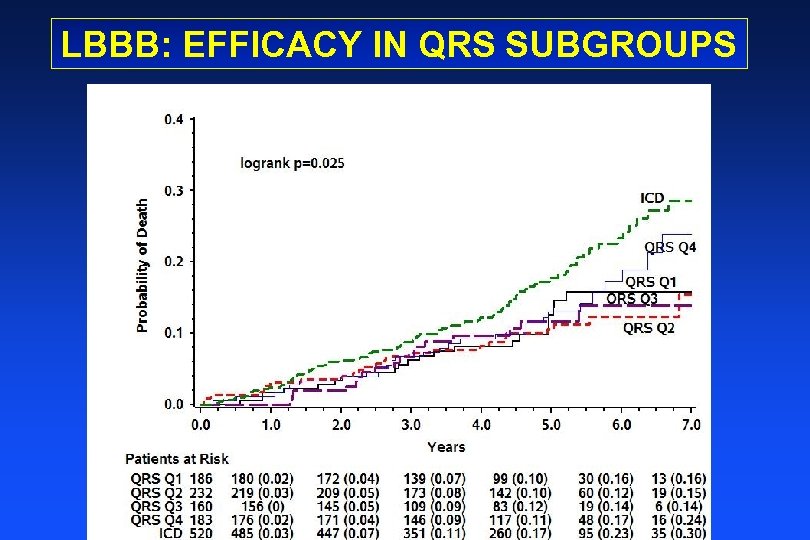 LBBB: EFFICACY IN QRS SUBGROUPS
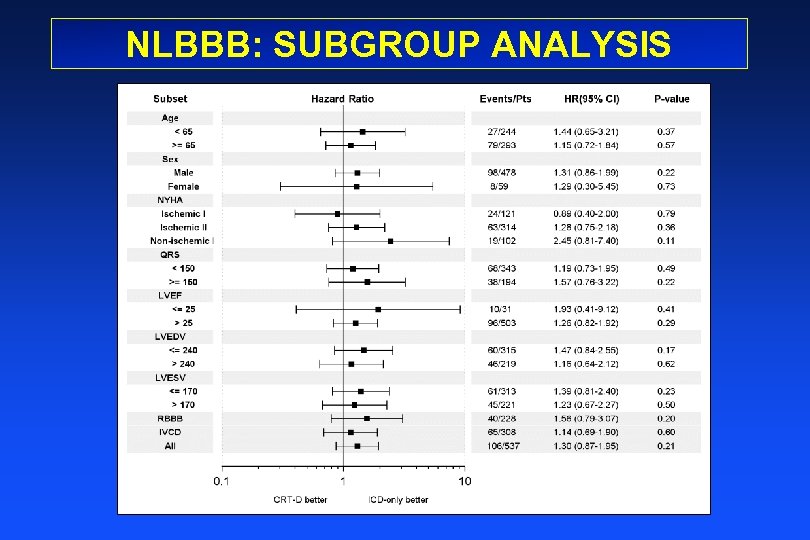 NLBBB: SUBGROUP ANALYSIS
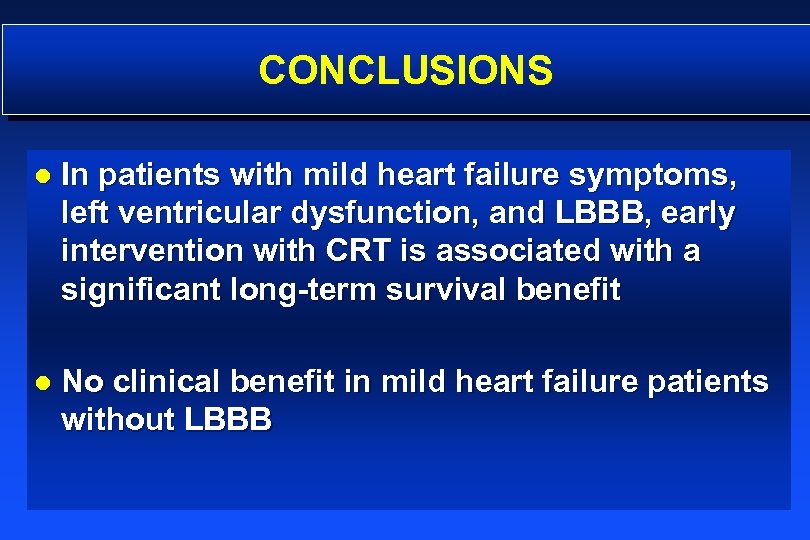 CONCLUSIONS l In patients with mild heart failure symptoms, left ventricular dysfunction, and LBBB, early intervention with CRT is associated with a significant long-term survival benefit l No clinical benefit in mild heart failure patients without LBBB
 MADIT-CRT LTFU EXECUTIVE COMMITTEE Arthur J. Moss, MD (University of Rochester, Rochester NY, USA) Ilan Goldenberg, MD (Sheba Medical Center, Israel and Rochester NY, USA) Helmut Klein, MD (University of Rochester, Rochester NY, USA) Valentina Kutyifa, MD (University of Rochester, Rochester NY, USA) David S. Cannom, MD (Cedars-Sinai Heart Institute, USA) Scott D. Solomon MD (WBH, Havard Medical School, USA) Ariela Dan, Ph. D, (Sheba Medical Center, Israel) Robert Klempfner, MD (Sheba Medical Center, Israel) James P. Daubert, MD (Duke University Medical Center, Durham NC, USA) Mark Estes III, MD (Tufts New England Medical Center, Boston, MA) Mark A. Pfeffer MD, Ph. D (WBH, Havard Medical School, USA) Elyse Foster, MD (University of California at SF, CA, USA) Henry Greenberg, MD (St. Luke’s Roosevelt Hospital, New York, NY, USA) Aurelio Quesada MD (Hospital General de Valencia, Spain); Josef Kautzner MD (Institute for Clinical and Experimental Medicine, Prague, Czech Republic) Bela Merkely, MD, Ph. D (Semmelweis University, Budapest, Hungary) Malte Kuniss, MD (Kerchhoff Klinik, Bad Nauheim, Germany) Sami Viskin MD (Tel Aviv Medical Center, Tel Aviv, Israel) Mary W. Brown, MS (University of Rochester, Rochester NY, USA) Wojciech Zareba, MD, Ph. D (University of Rochester, Rochester NY, USA)
 THANK YOU