

Long-term, short-interval monitoring of the seasonal activity of


 Скачать презентацию Long-term, short-interval monitoring of the seasonal activity of
14568-aaa_kahl_tr_kemerovo_2013-09-26b.ppt
- Количество слайдов: 48
Long-term, short-interval monitoring of the seasonal activity of the vector tick Ixodes ricinus in Germany with some surprising results Olaf Kahl, Hans Dautel tick-radar GmbH (Berlin, Germany) (www.zeckenwetter.de)
Contents of this talk Here: Presentation of a new monitoring system for the host-seeking (questing) activity of Ixodes ricinus (and related ixodid ticks) Some results obtained with this monitoring system: Part I: Seasonal activity curves of I. ricinus 2008–2013 (Berlin) Part II: The (unusual) tick year 2012 in Germany Part III: New data on the I. ricinus life cycle Monitoring the seasonal activities of arthropod vectors (transmitters) of human and animal diseases is a basic task in epidemiology and prevention.
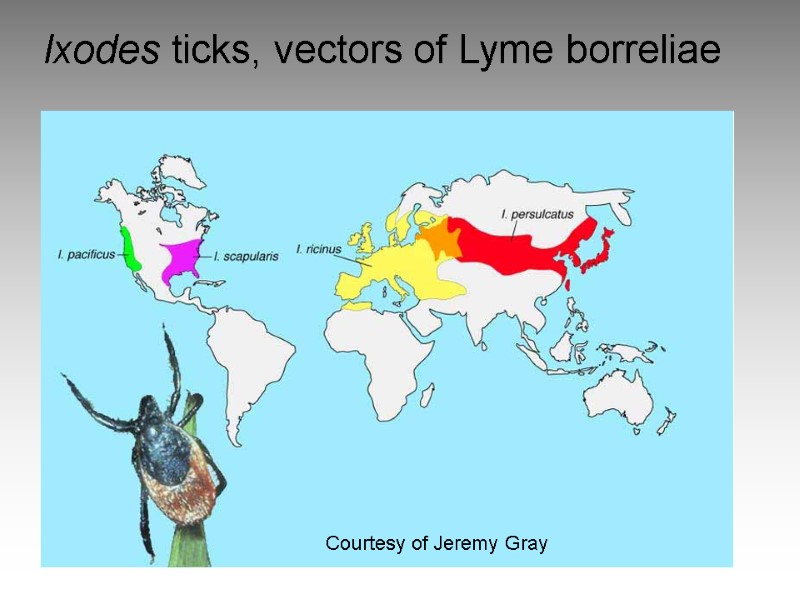
Ixodes ticks, vectors of Lyme borreliae Courtesy of Jeremy Gray
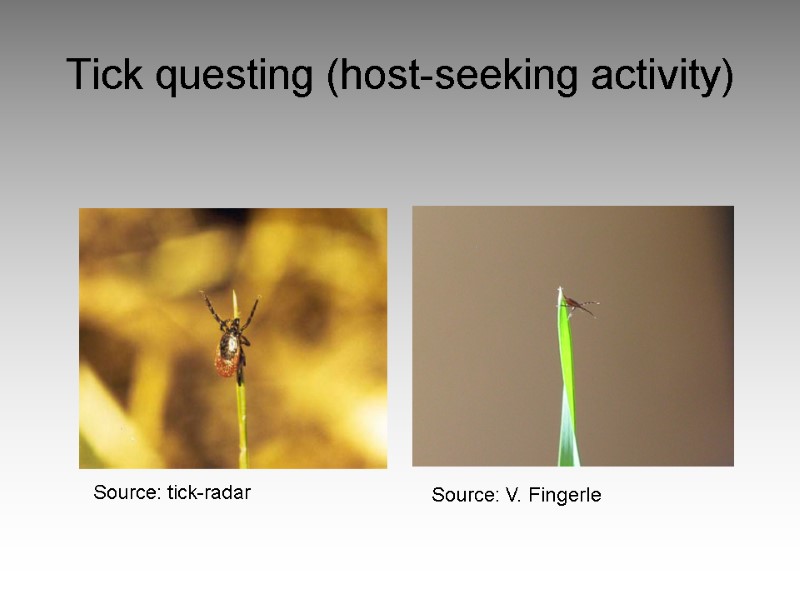
Tick questing (host-seeking activity) Source: V. Fingerle Source: tick-radar
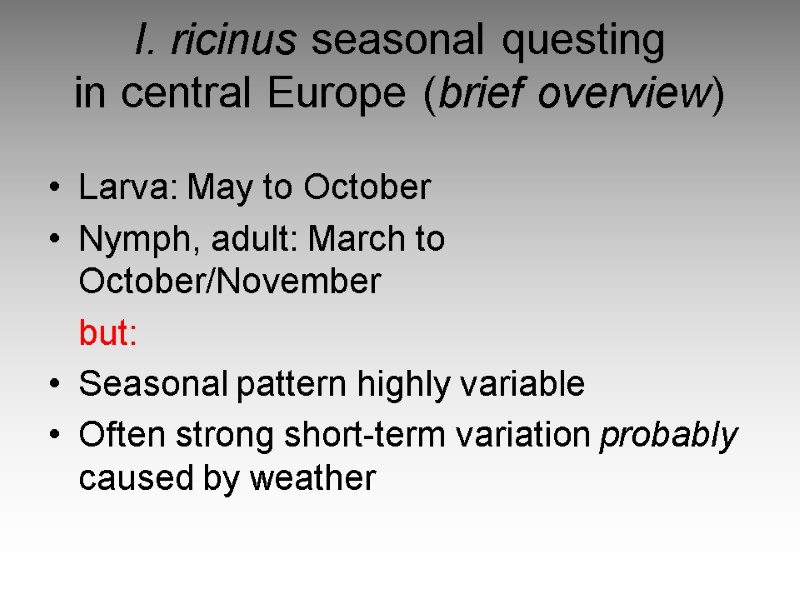
I. ricinus seasonal questing in central Europe (brief overview) Larva: May to October Nymph, adult: March to October/November but: Seasonal pattern highly variable Often strong short-term variation probably caused by weather
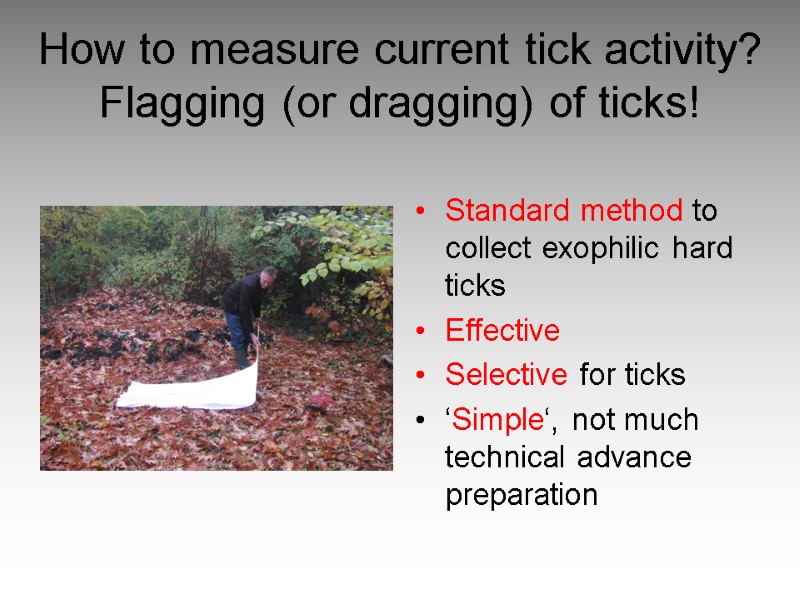
How to measure current tick activity? Flagging (or dragging) of ticks! Standard method to collect exophilic hard ticks Effective Selective for ticks ‘Simple‘, not much technical advance preparation
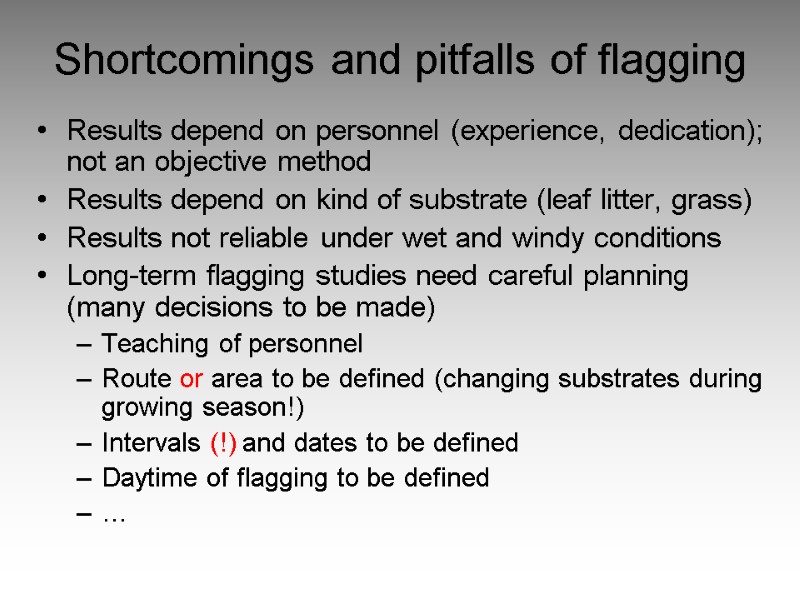
Shortcomings and pitfalls of flagging Results depend on personnel (experience, dedication); not an objective method Results depend on kind of substrate (leaf litter, grass) Results not reliable under wet and windy conditions Long-term flagging studies need careful planning (many decisions to be made) Teaching of personnel Route or area to be defined (changing substrates during growing season!) Intervals (!) and dates to be defined Daytime of flagging to be defined …
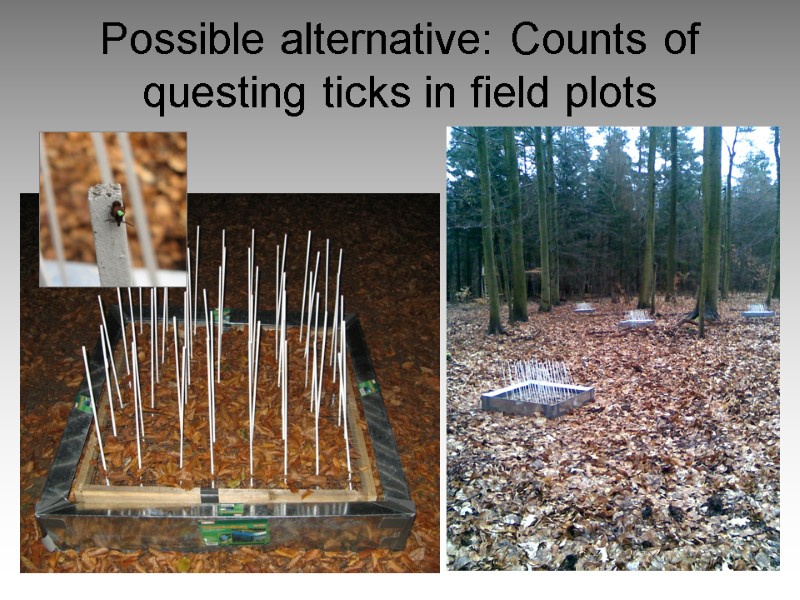
Possible alternative: Counts of questing ticks in field plots
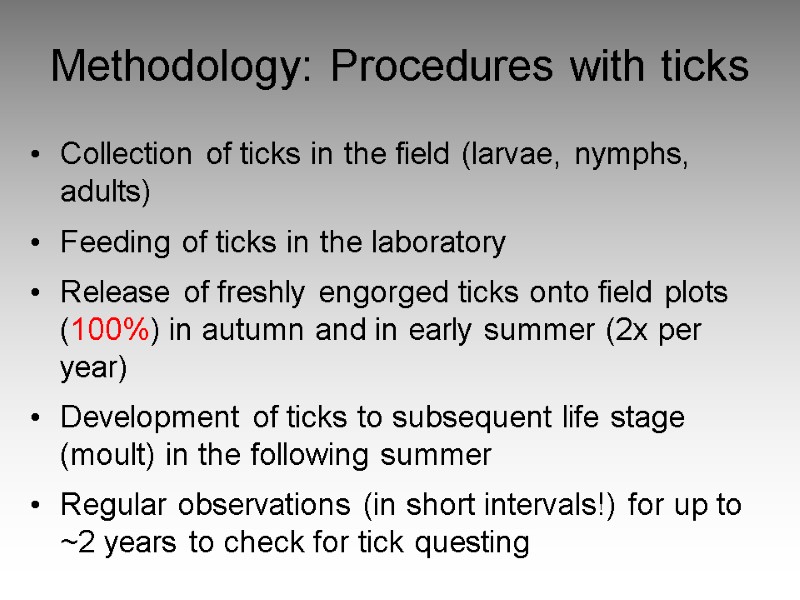
Methodology: Procedures with ticks Collection of ticks in the field (larvae, nymphs, adults) Feeding of ticks in the laboratory Release of freshly engorged ticks onto field plots (100%) in autumn and in early summer (2x per year) Development of ticks to subsequent life stage (moult) in the following summer Regular observations (in short intervals!) for up to ~2 years to check for tick questing
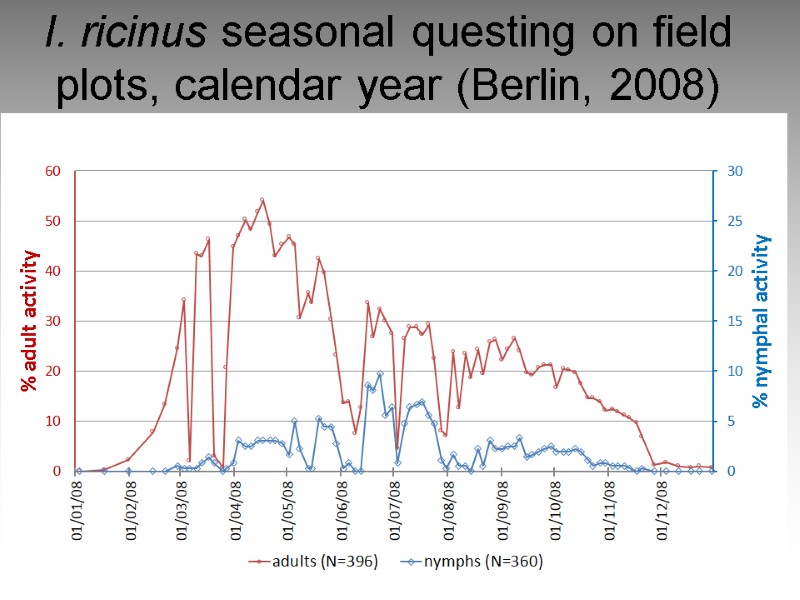
I. ricinus seasonal questing on field plots, calendar year (Berlin, 2008)
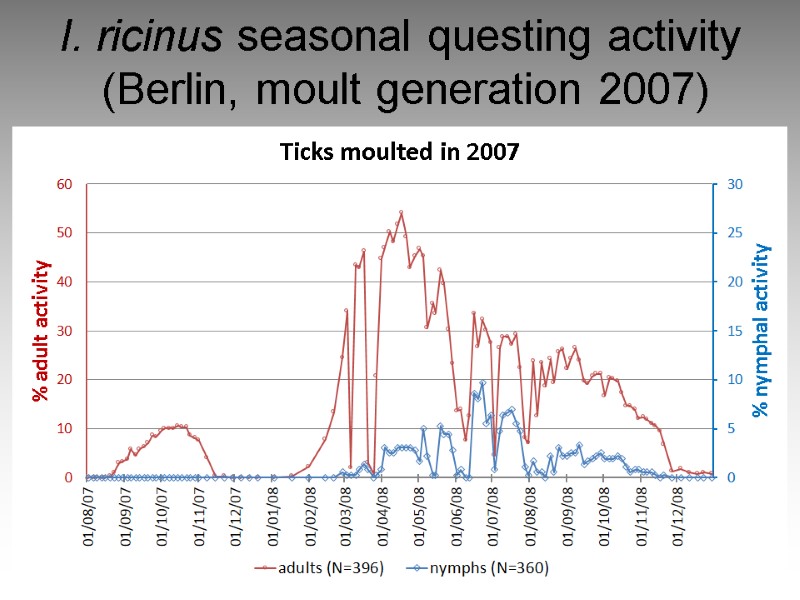
I. ricinus seasonal questing activity (Berlin, moult generation 2007)
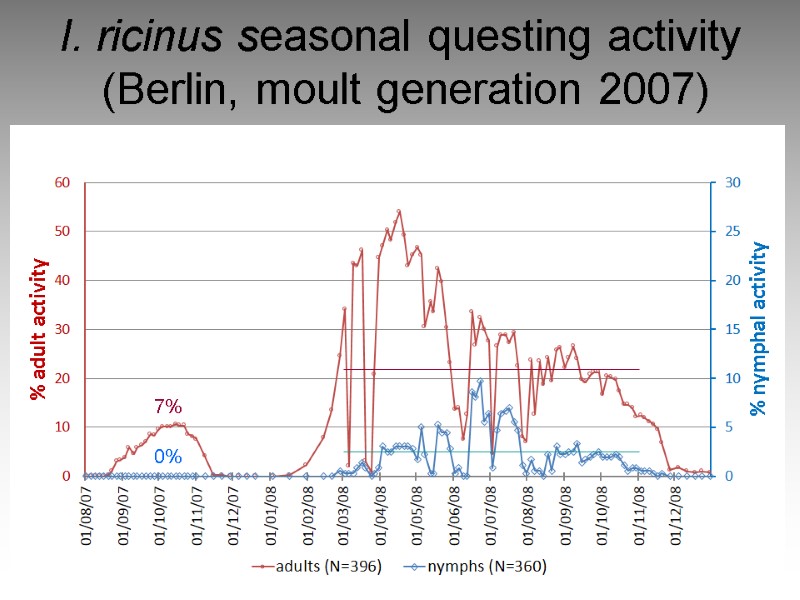
I. ricinus seasonal questing activity (Berlin, moult generation 2007) 7% 0%
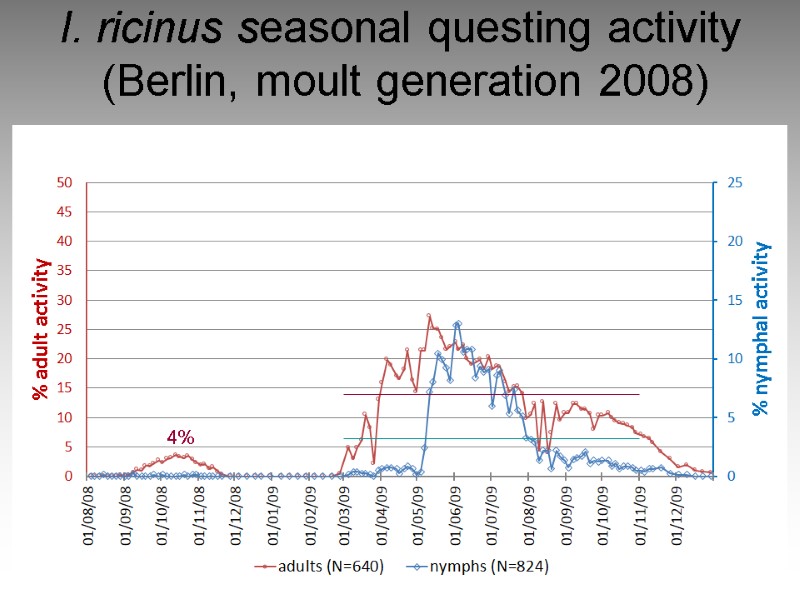
I. ricinus seasonal questing activity (Berlin, moult generation 2008) 4%
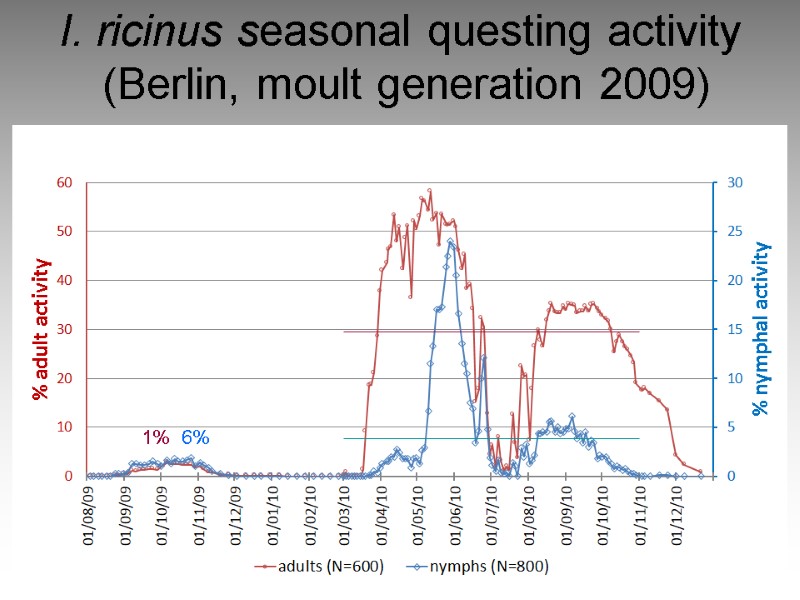
I. ricinus seasonal questing activity (Berlin, moult generation 2009) 1% 6%
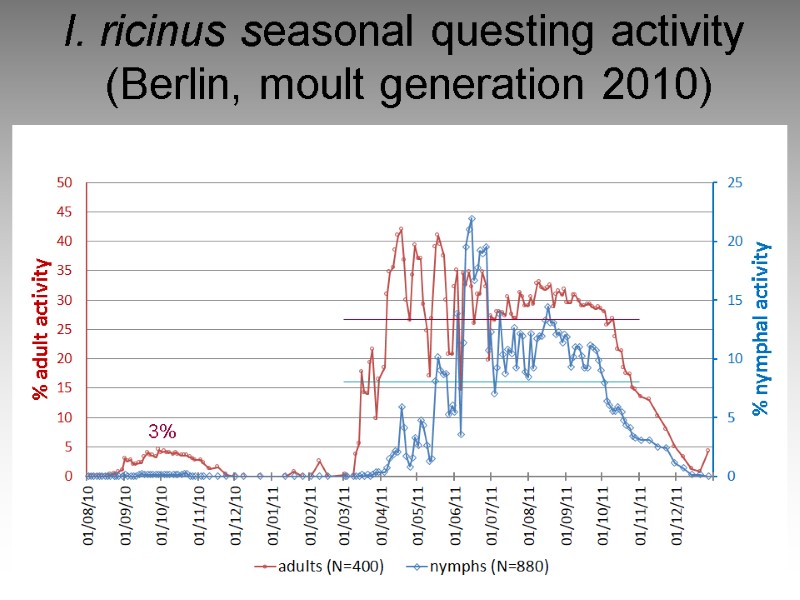
I. ricinus seasonal questing activity (Berlin, moult generation 2010) 3%
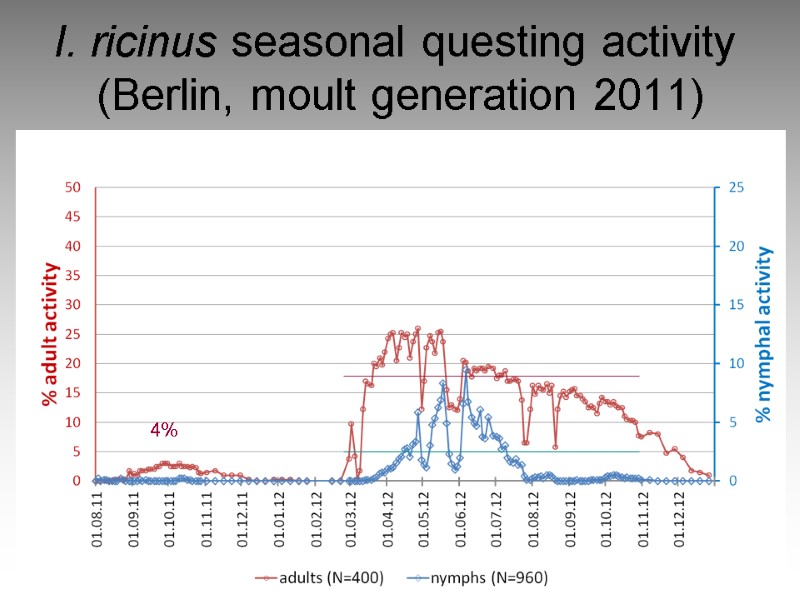
I. ricinus seasonal questing activity (Berlin, moult generation 2011) 4%
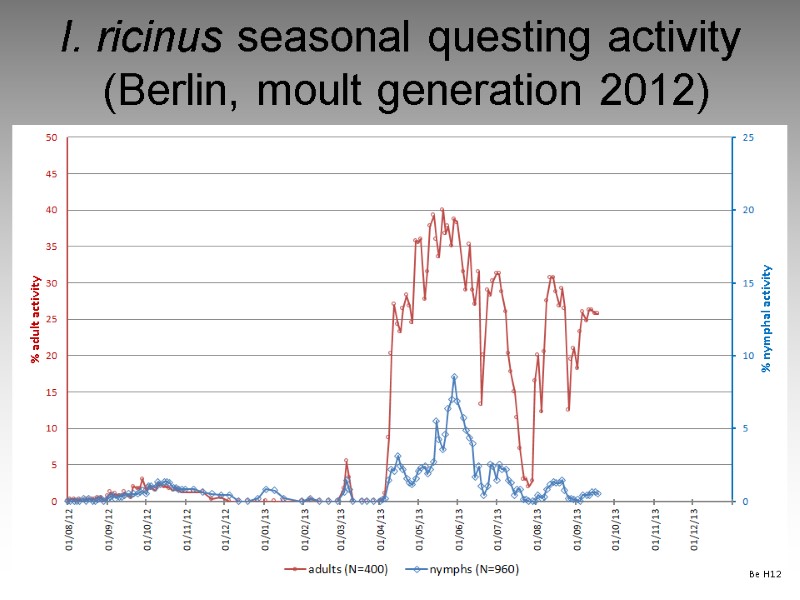
I. ricinus seasonal questing activity (Berlin, moult generation 2012)
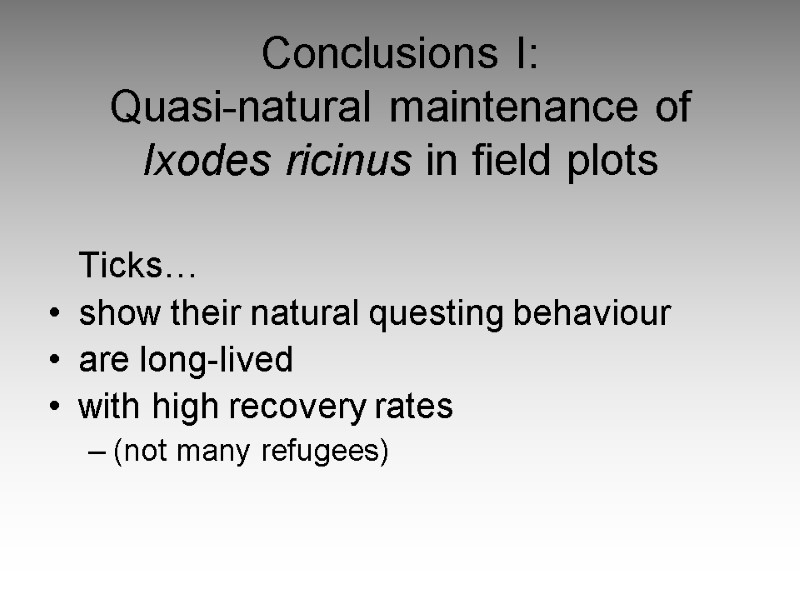
Conclusions I: Quasi-natural maintenance of Ixodes ricinus in field plots Ticks… show their natural questing behaviour are long-lived with high recovery rates (not many refugees)
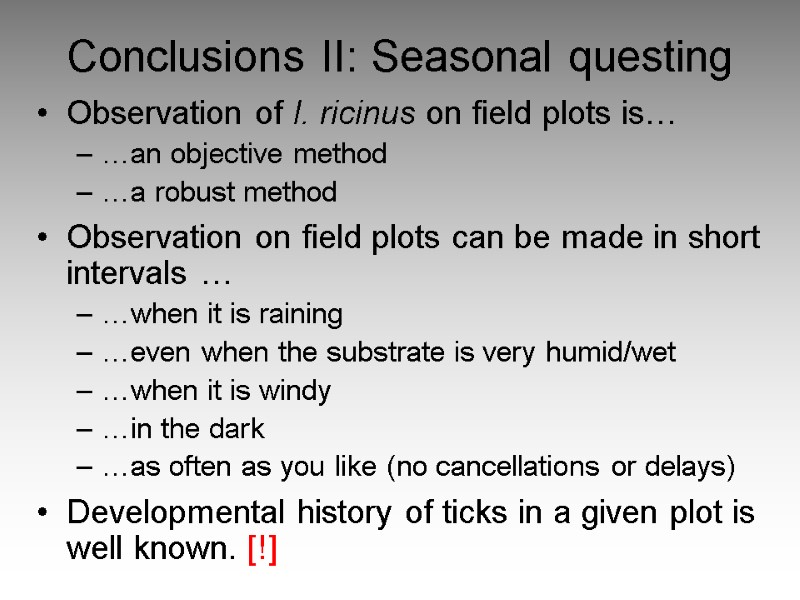
Conclusions II: Seasonal questing Observation of I. ricinus on field plots is… …an objective method …a robust method Observation on field plots can be made in short intervals … …when it is raining …even when the substrate is very humid/wet …when it is windy …in the dark …as often as you like (no cancellations or delays) Developmental history of ticks in a given plot is well known. [!]
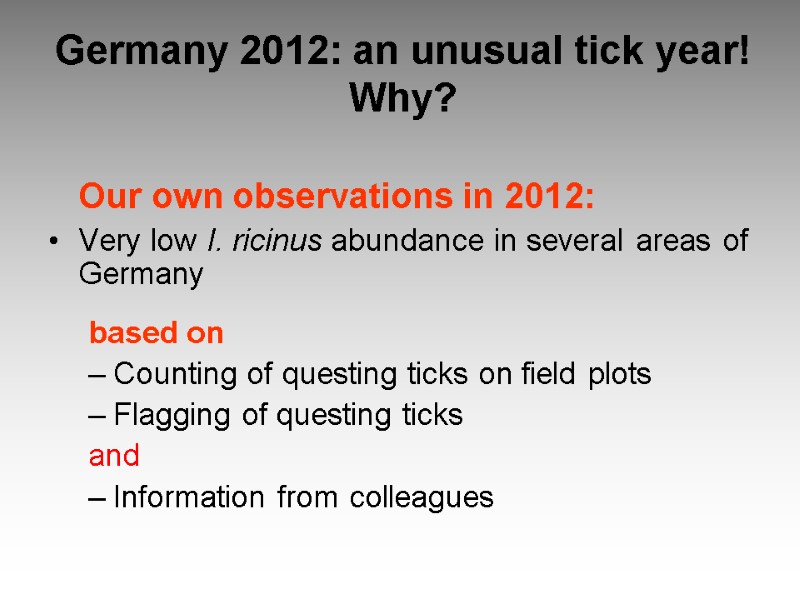
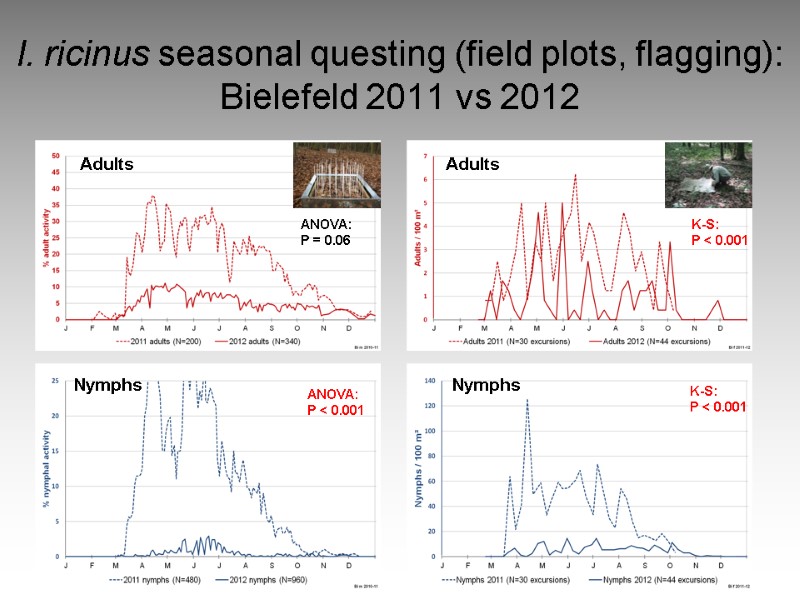
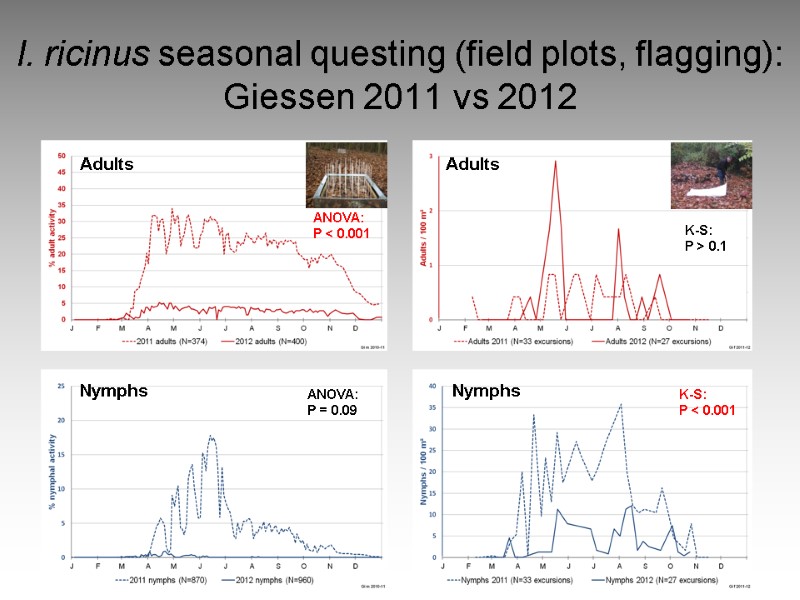
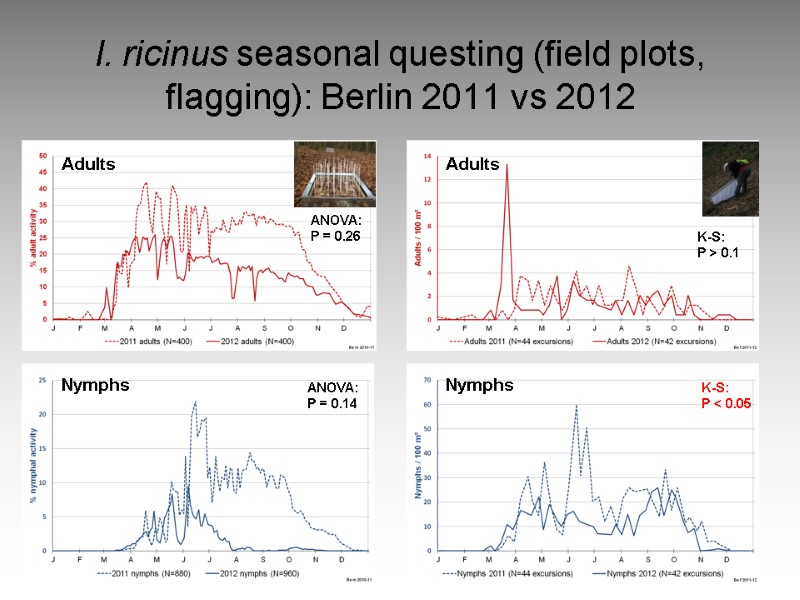
Germany 2012: an unusual tick year! Why? Our own observations in 2012: Very low I. ricinus abundance in several areas of Germany based on Counting of questing ticks on field plots Flagging of questing ticks and Information from colleagues
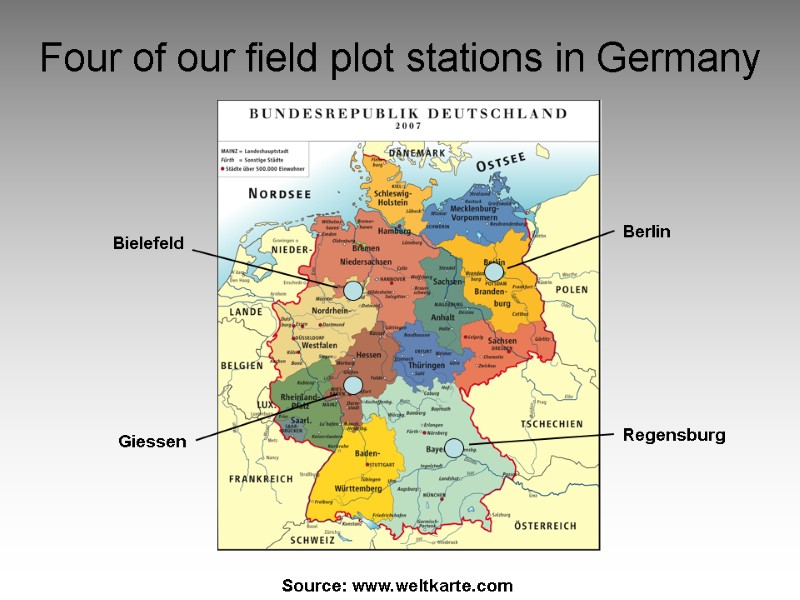
Four of our field plot stations in Germany Source: www.weltkarte.com Berlin Giessen Regensburg Bielefeld
I. ricinus seasonal questing (field plots, flagging): Bielefeld 2011 vs 2012 Adults Adults Nymphs Nymphs ANOVA: P = 0.06 ANOVA: P < 0.001 K-S: P < 0.001 K-S: P < 0.001
I. ricinus seasonal questing (field plots, flagging): Giessen 2011 vs 2012 Adults Adults Nymphs Nymphs ANOVA: P = 0.09 ANOVA: P < 0.001 K-S: P < 0.001 K-S: P > 0.1
I. ricinus seasonal questing (field plots, flagging): Berlin 2011 vs 2012 Adults Adults Nymphs Nymphs ANOVA: P = 0.26 ANOVA: P = 0.14 K-S: P > 0.1 K-S: P < 0.05
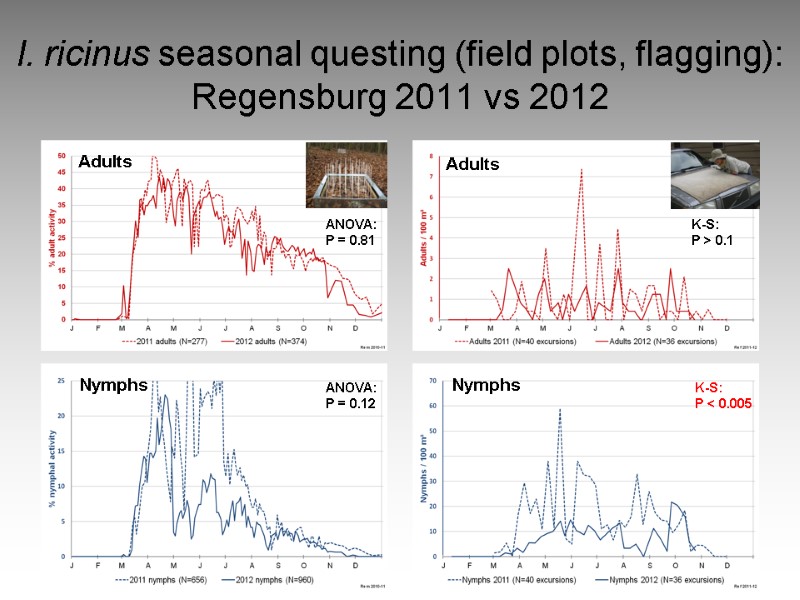
I. ricinus seasonal questing (field plots, flagging): Regensburg 2011 vs 2012 Adults Adults Nymphs Nymphs ANOVA: P = 0.12 ANOVA: P = 0.81 K-S: P > 0.1 K-S: P < 0.005
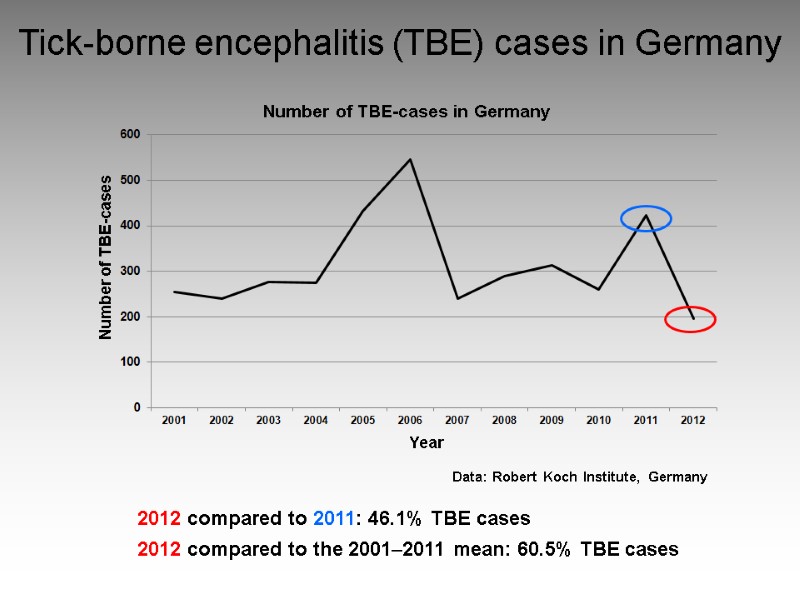
Tick-borne encephalitis (TBE) cases in Germany 2012 compared to 2011: 46.1% TBE cases 2012 compared to the 2001–2011 mean: 60.5% TBE cases Data: Robert Koch Institute, Germany
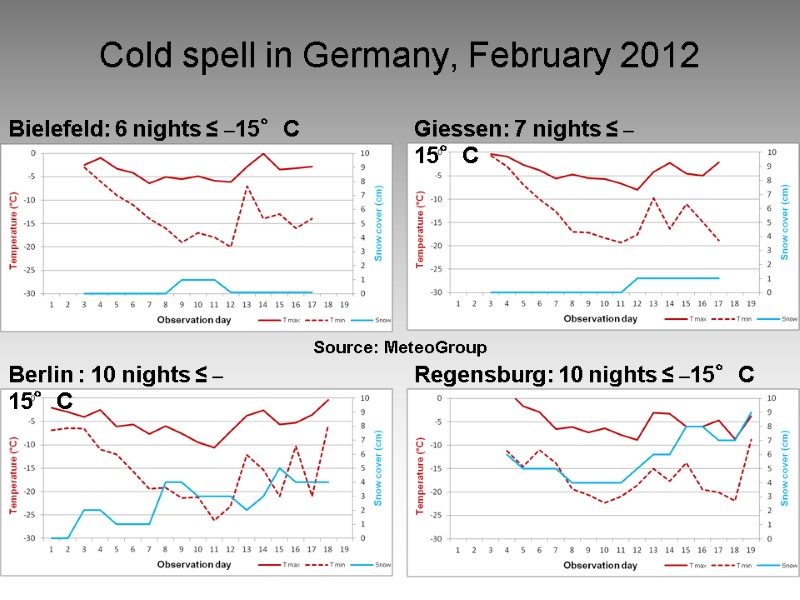
Cold spell in Germany, February 2012 Bielefeld: 6 nights ≤ –15°C Giessen: 7 nights ≤ –15°C Berlin : 10 nights ≤ –15°C Regensburg: 10 nights ≤ –15°C Source: MeteoGroup
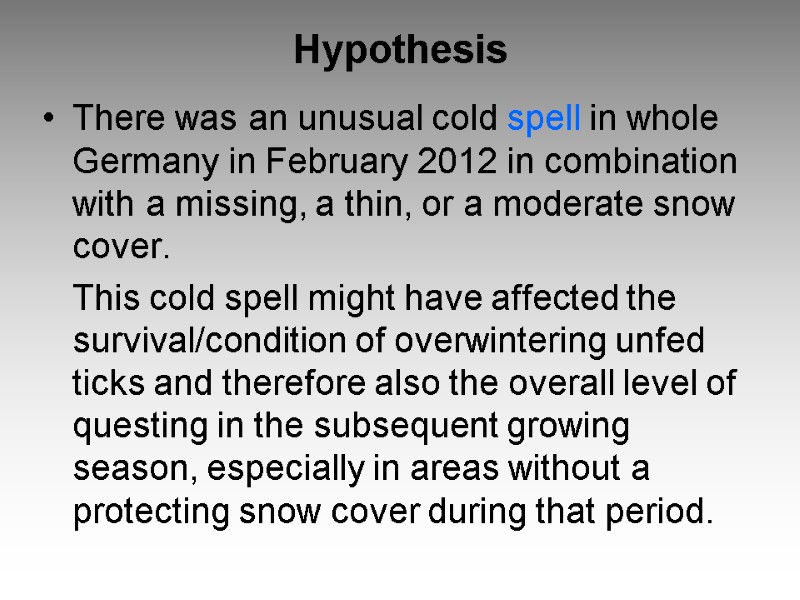
Hypothesis There was an unusual cold spell in whole Germany in February 2012 in combination with a missing, a thin, or a moderate snow cover. This cold spell might have affected the survival/condition of overwintering unfed ticks and therefore also the overall level of questing in the subsequent growing season, especially in areas without a protecting snow cover during that period.
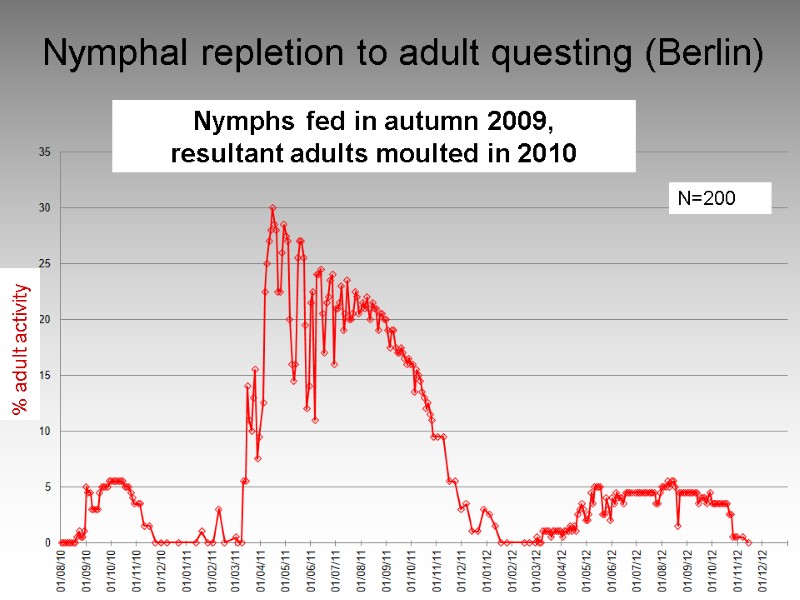
Nymphal repletion to adult questing (Berlin) Nymphs fed in autumn 2009, resultant adults moulted in 2010 N=200 % adult activity
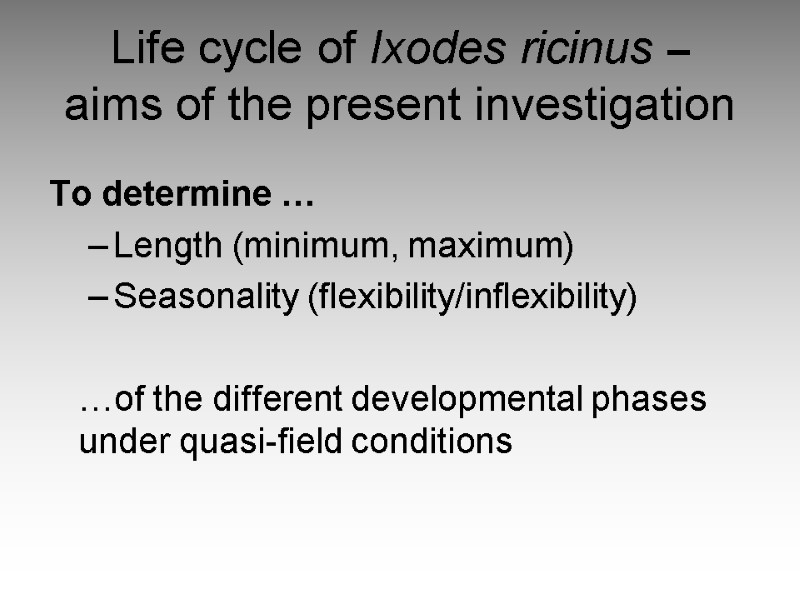
Life cycle of Ixodes ricinus – aims of the present investigation To determine … Length (minimum, maximum) Seasonality (flexibility/inflexibility) …of the different developmental phases under quasi-field conditions
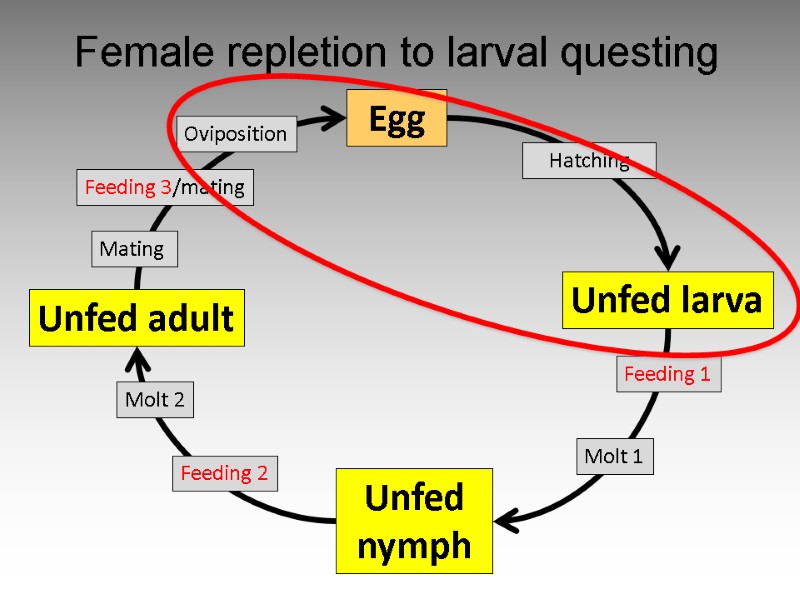
Egg Unfed larva Unfed nymph Unfed adult Feeding 1 Molt 1 Mating Oviposition Hatching Feeding 2 Feeding 3/mating Molt 2 Female repletion to larval questing
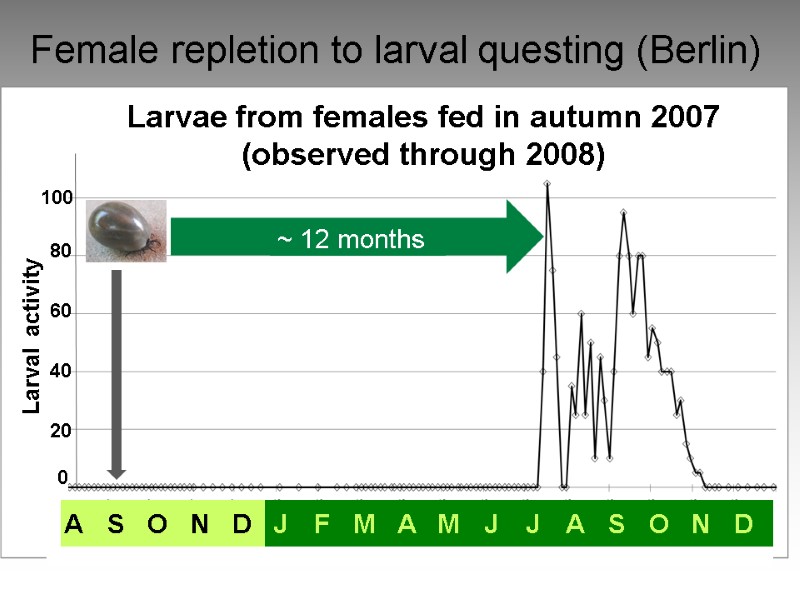
Female repletion to larval questing (Berlin) Larvae from females fed in autumn 2007 (observed through 2008)
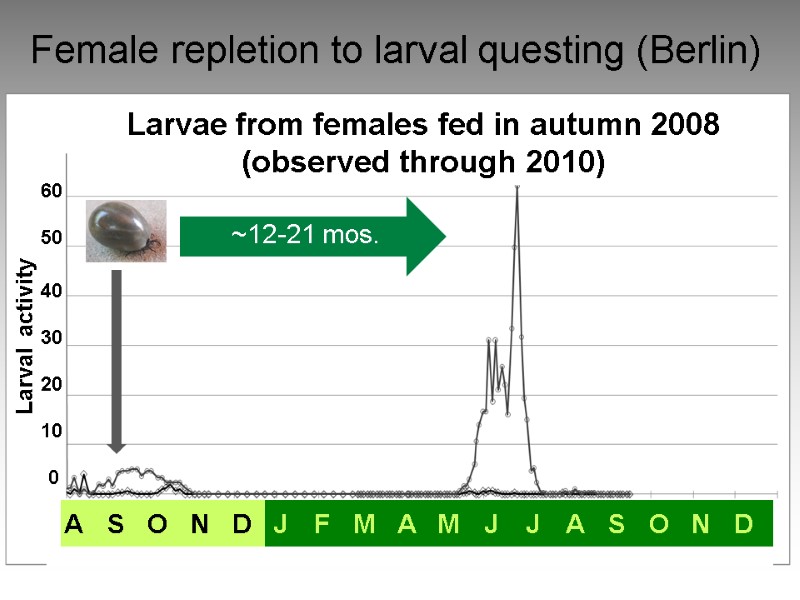
Female repletion to larval questing (Berlin) Larvae from females fed in autumn 2008 (observed through 2010) 40
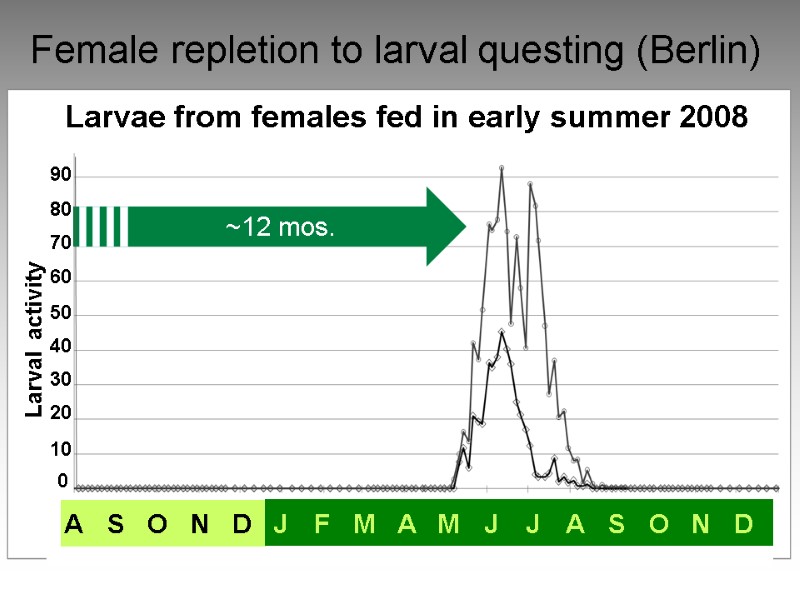
Female repletion to larval questing (Berlin) Larvae from females fed in early summer 2008
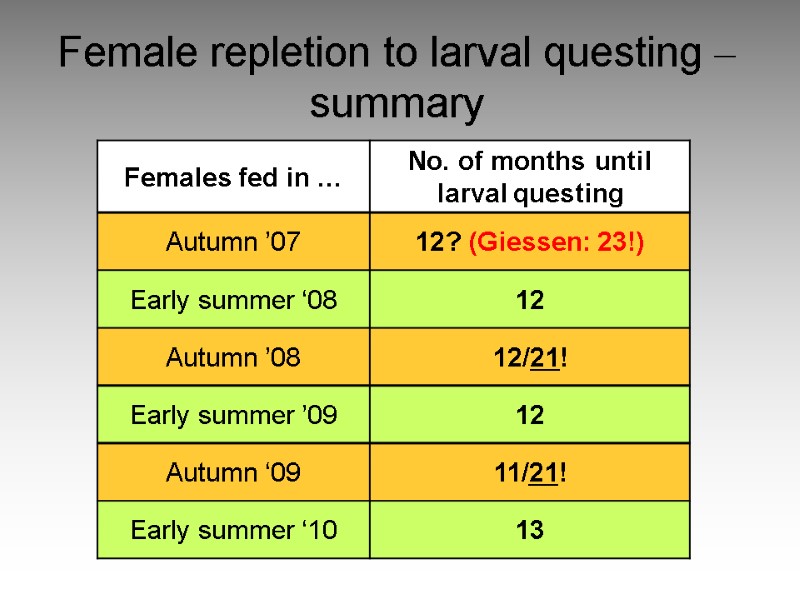
Female repletion to larval questing – summary
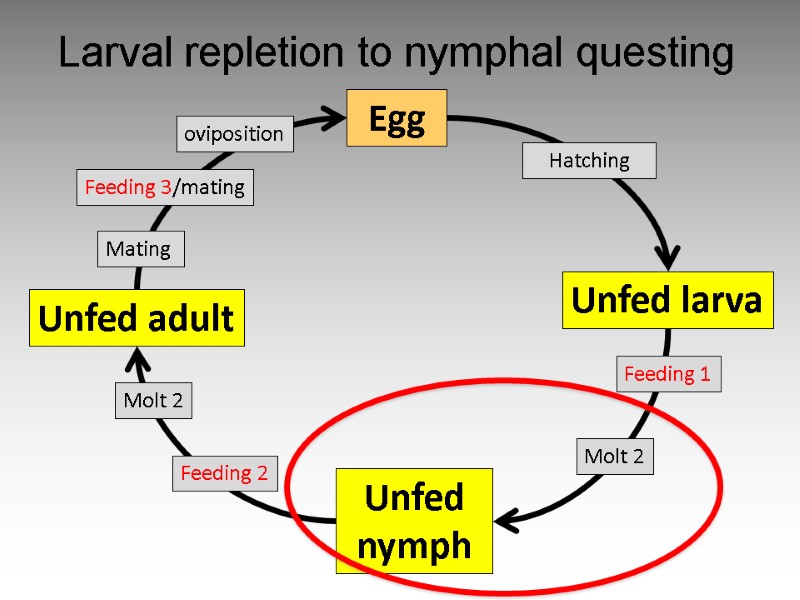
Egg Unfed larva Unfed nymph Unfed adult Feeding 1 Molt 2 Mating oviposition Hatching Feeding 2 Feeding 3/mating Molt 2 Larval repletion to nymphal questing
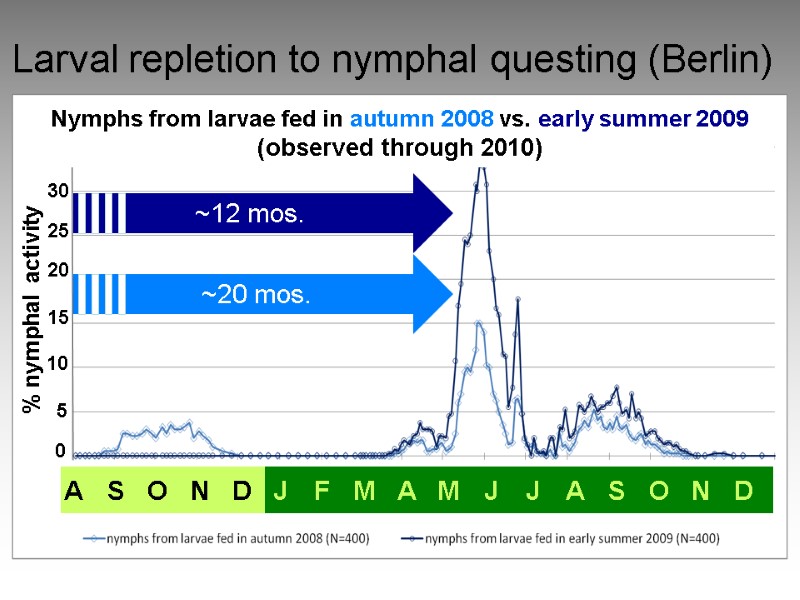
Larval repletion to nymphal questing (Berlin) Nymphs from larvae fed in autumn 2008 vs. early summer 2009 (observed through 2010)
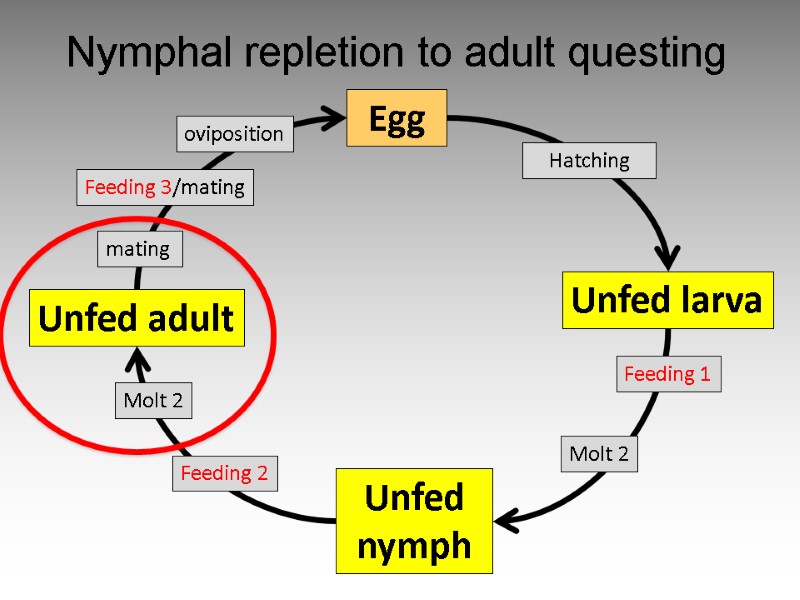
Egg Unfed larva Unfed nymph Unfed adult Feeding 1 Molt 2 mating oviposition Hatching Feeding 2 Feeding 3/mating Molt 2 Nymphal repletion to adult questing
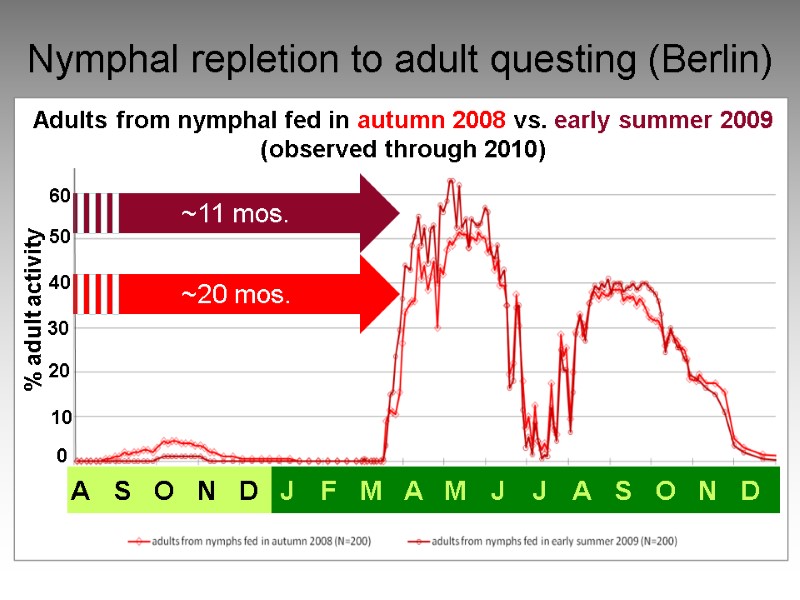
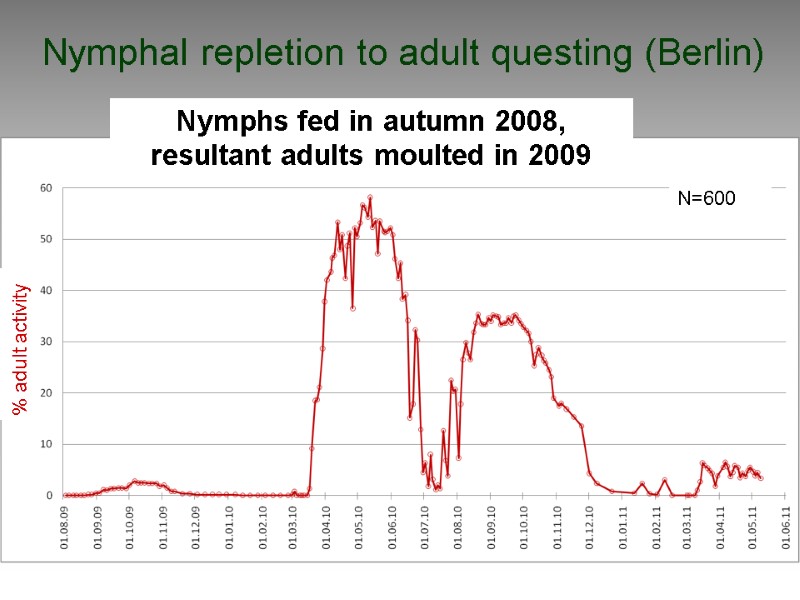
Nymphal repletion to adult questing (Berlin) 30 ~20 mos. ~11 mos. Adults from nymphal fed in autumn 2008 vs. early summer 2009 (observed through 2010)
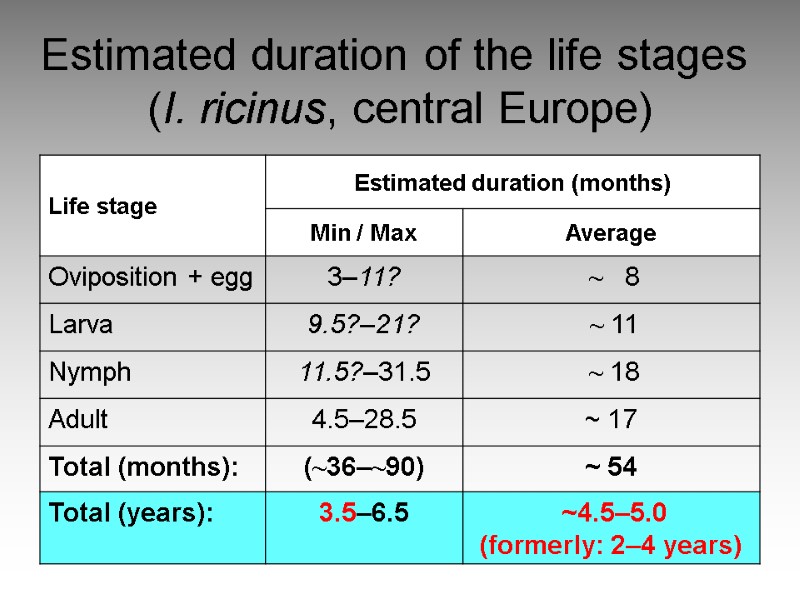
Estimated duration of the life stages (I. ricinus, central Europe)
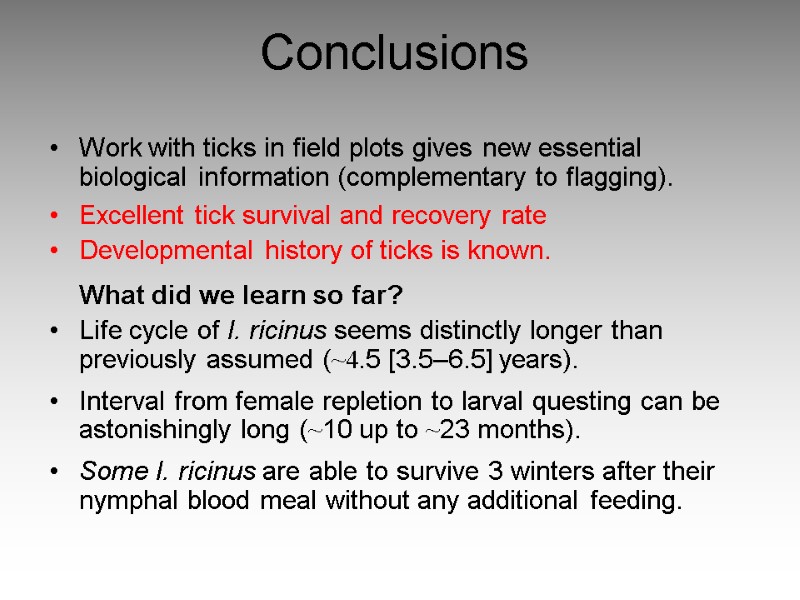
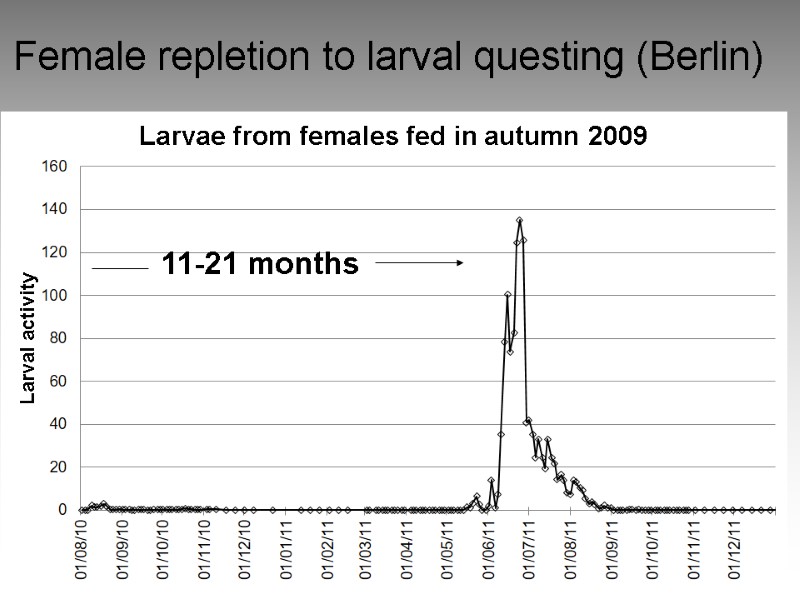
Conclusions Work with ticks in field plots gives new essential biological information (complementary to flagging). Excellent tick survival and recovery rate Developmental history of ticks is known. What did we learn so far? Life cycle of I. ricinus seems distinctly longer than previously assumed (~4.5 [3.5–6.5] years). Interval from female repletion to larval questing can be astonishingly long (~10 up to ~23 months). Some I. ricinus are able to survive 3 winters after their nymphal blood meal without any additional feeding.
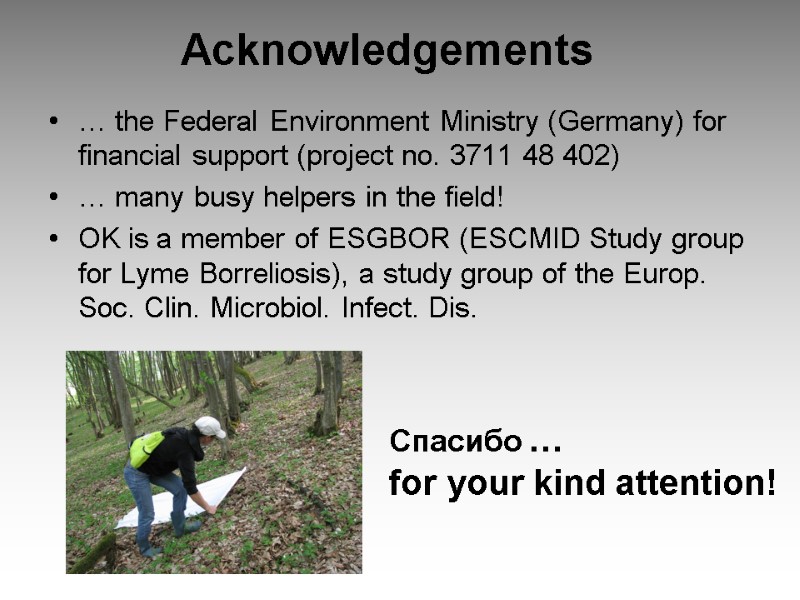
Acknowledgements … the Federal Environment Ministry (Germany) for financial support (project no. 3711 48 402) … many busy helpers in the field! OK is a member of ESGBOR (ESCMID Study group for Lyme Borreliosis), a study group of the Europ. Soc. Clin. Microbiol. Infect. Dis. Спасибо … for your kind attention!
Female repletion to larval questing (Berlin) 11-21 months
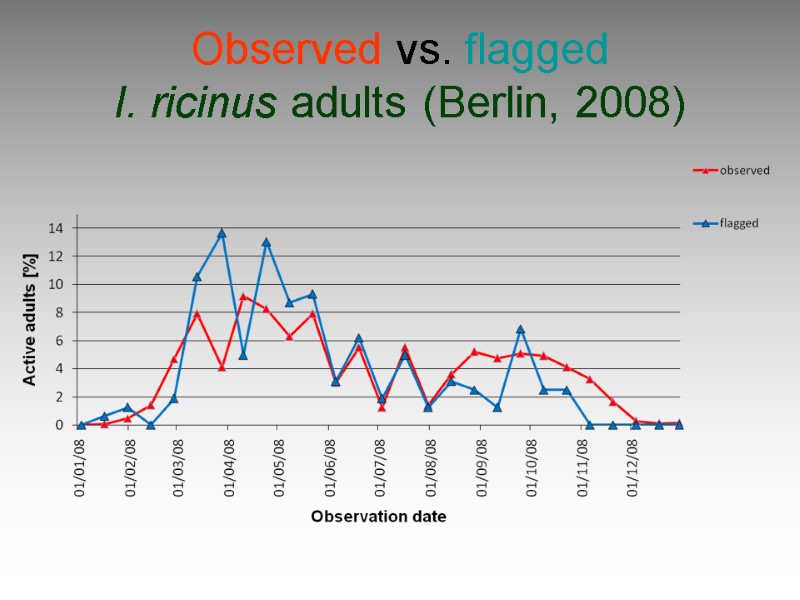
Observed vs. flagged I. ricinus adults (Berlin, 2008)
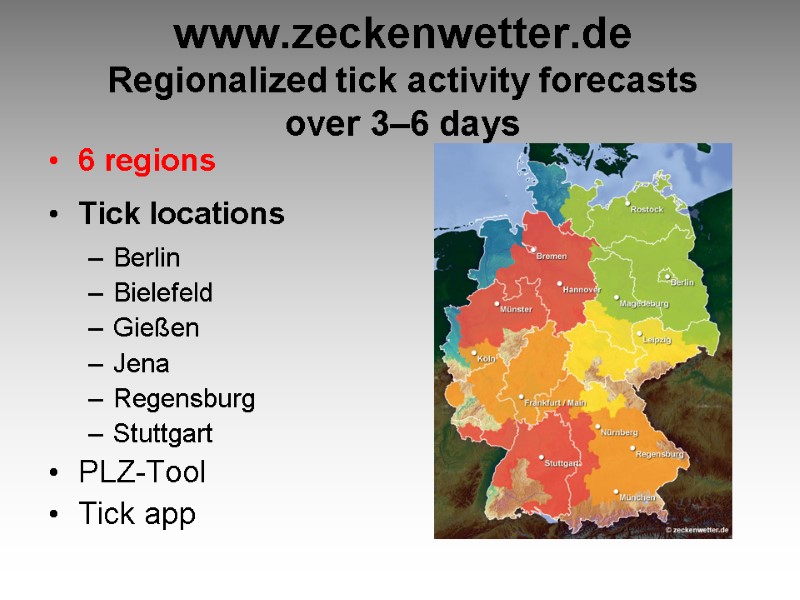
www.zeckenwetter.de Regionalized tick activity forecasts over 3–6 days 6 regions Tick locations Berlin Bielefeld Gießen Jena Regensburg Stuttgart PLZ-Tool Tick app
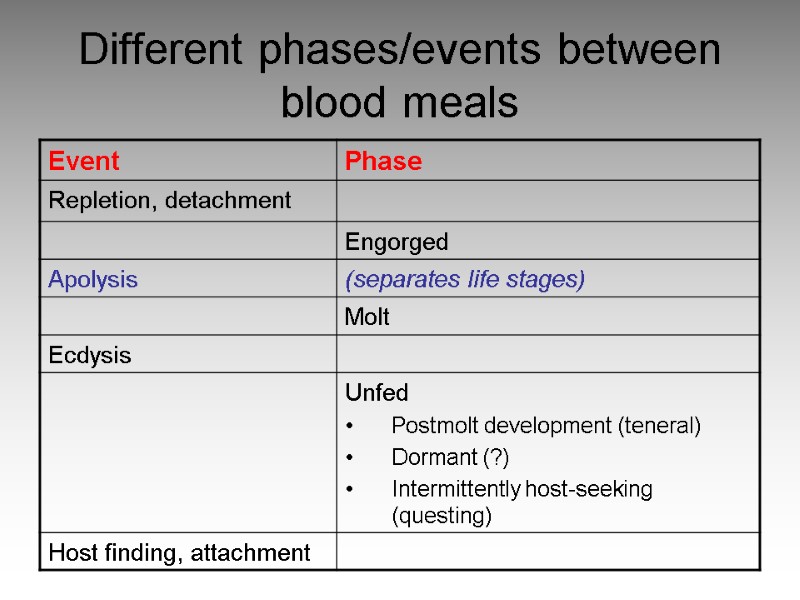
Different phases/events between blood meals
Nymphal repletion to adult questing (Berlin) Nymphs fed in autumn 2008, resultant adults moulted in 2009 N=600 % adult activity