 Скачать презентацию Logistics magement PRODUCTION PLANNING By Lazovskaya Ekaterina
Production planning.ready.pptx
- Количество слайдов: 22



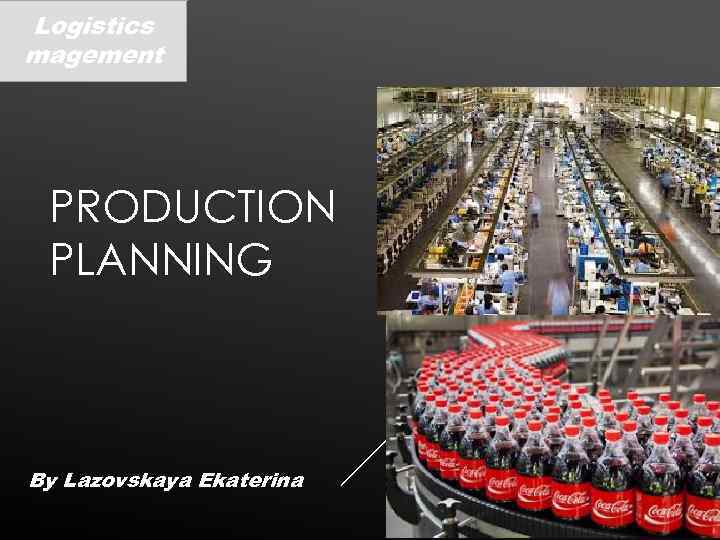
Logistics magement PRODUCTION PLANNING By Lazovskaya Ekaterina
Production planning is the planning of production and manufacturing modules in a company or industry. It utilizes the resource allocation of activities of employees, materials and production capacity, in order to serve different customers It is a plan for the future production, in which the facilities needed are determined and arranged
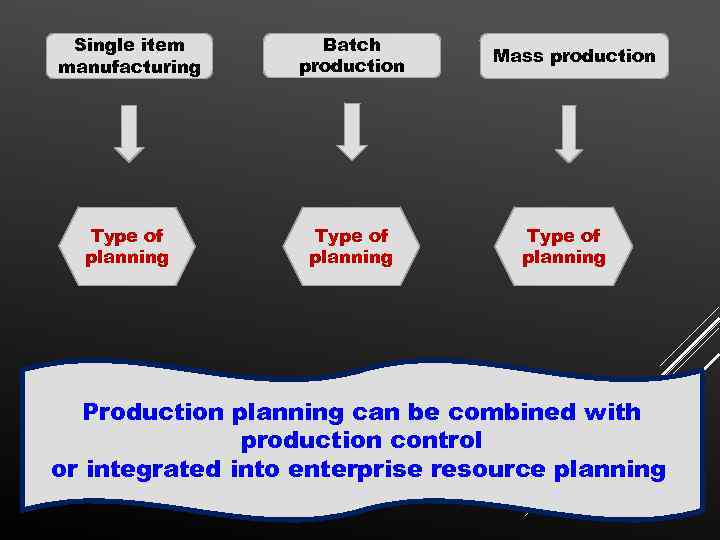
Single item manufacturing Batch production Type of planning Mass production Type of planning Production planning can be combined with production control or integrated into enterprise resource planning
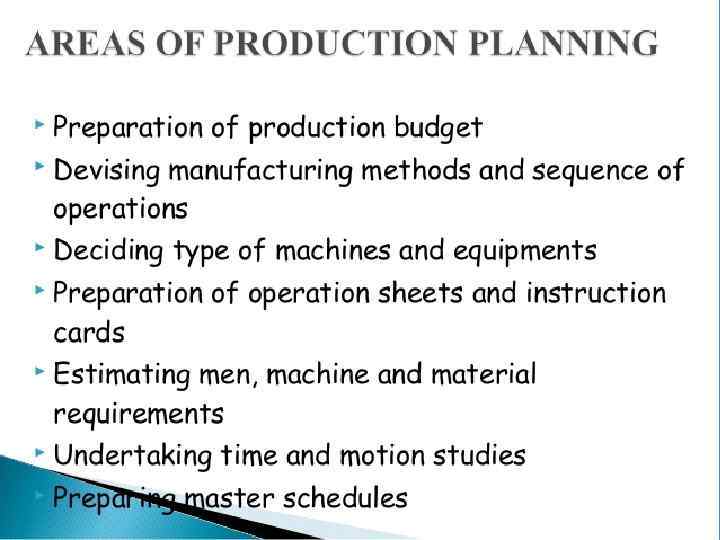
1. Determination of the required product mix and factory load to satisfy customers needs. 2. Matching the required level of production to the existing resources. 3. Scheduling and choosing the actual work to be started in the manufacturing facility 4. Setting up and delivering production orders to production facilities A production planning is made periodically for a specific time period, called the planning horizon. It can comprise the following activities:
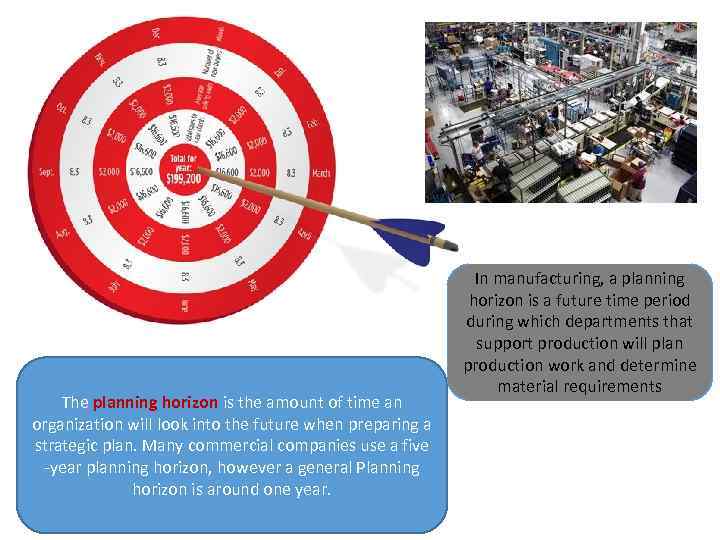
The planning horizon is the amount of time an organization will look into the future when preparing a strategic plan. Many commercial companies use a five -year planning horizon, however a general Planning horizon is around one year. In manufacturing, a planning horizon is a future time period during which departments that support production will plan production work and determine material requirements
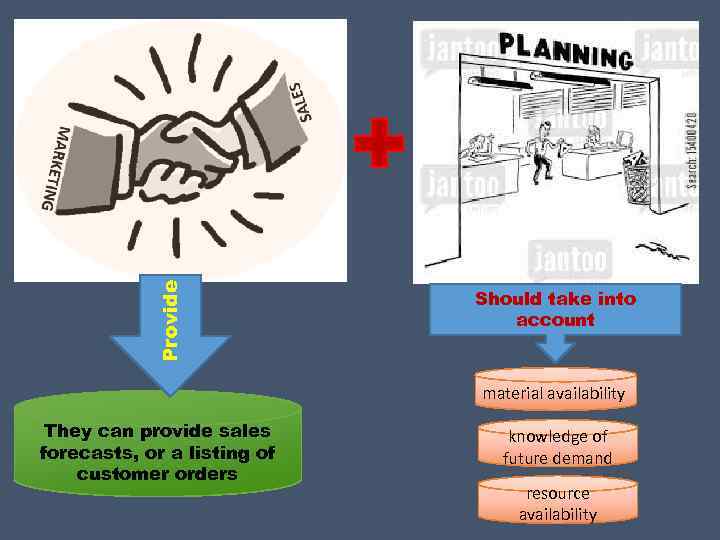
Provide Should take into account material availability They can provide sales forecasts, or a listing of customer orders knowledge of future demand resource availability
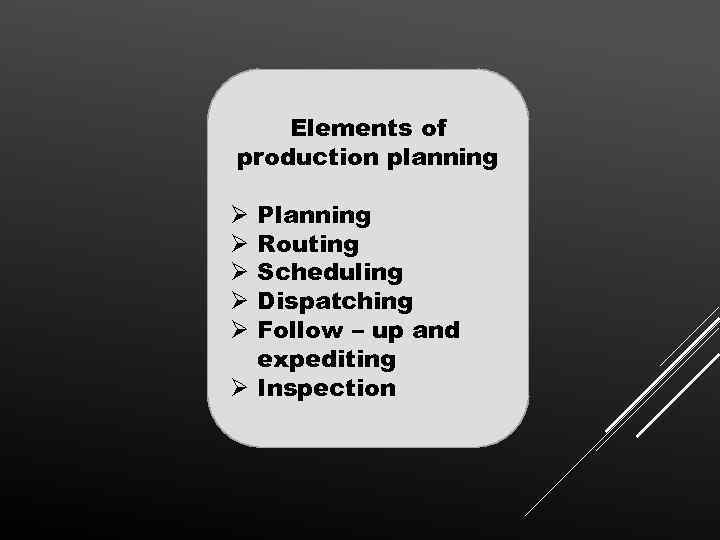
Elements of production planning Planning Routing Scheduling Dispatching Follow – up and expediting Ø Inspection Ø Ø Ø
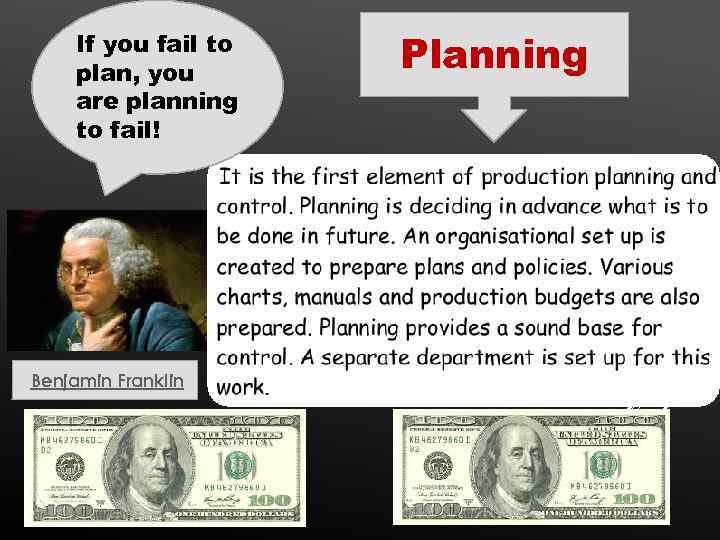
If you fail to plan, you are planning to fail! Benjamin Franklin Planning
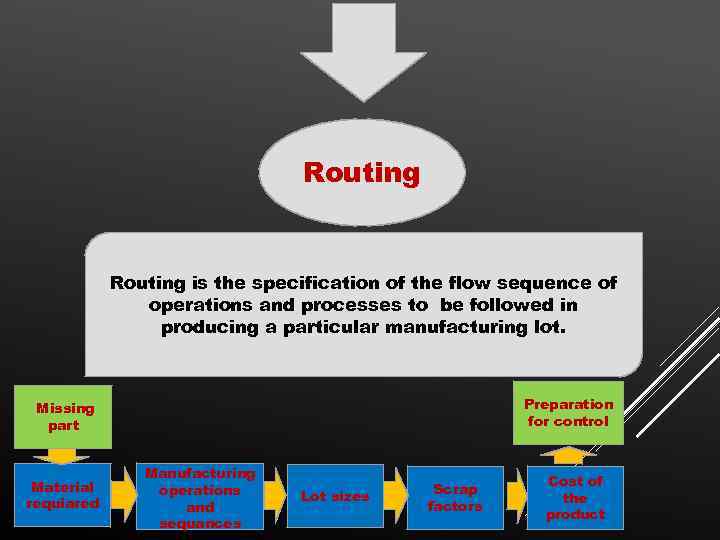
Routing is the specification of the flow sequence of operations and processes to be followed in producing a particular manufacturing lot. Preparation for control Missing part Material requiared Manufacturing operations and sequances Lot sizes Scrap factors Cost of the product
Scheduling
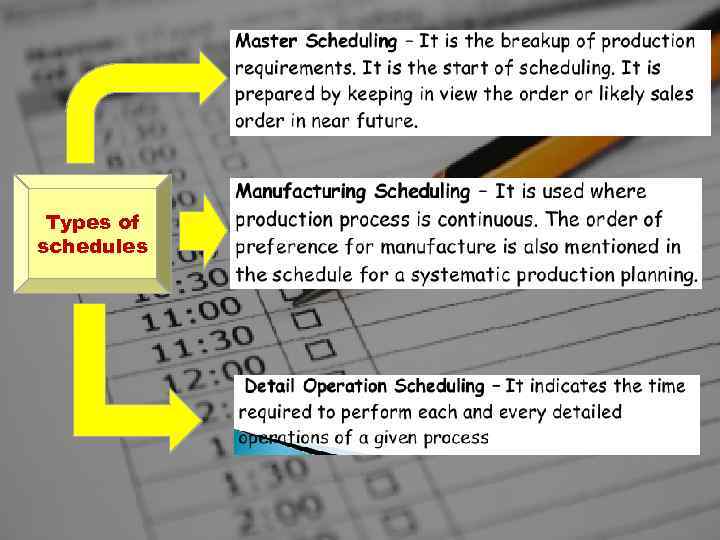
Types of schedules
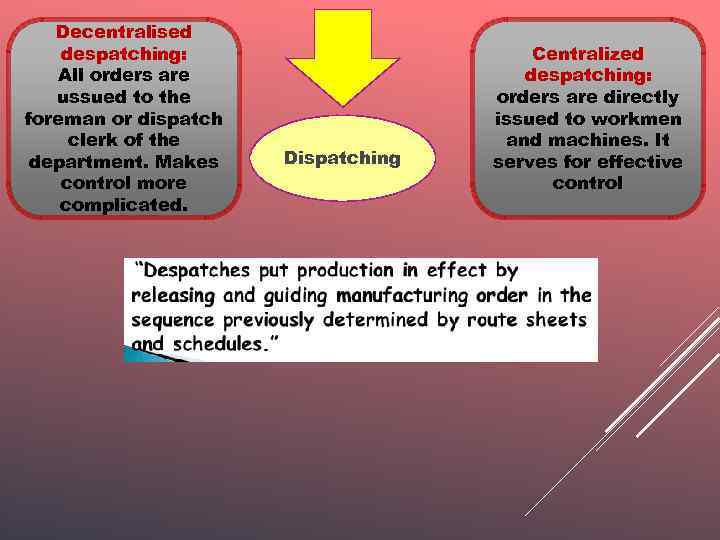
Decentralised despatching: All orders are ussued to the foreman or dispatch clerk of the department. Makes control more complicated. Dispatching Centralized despatching: orders are directly issued to workmen and machines. It serves for effective control
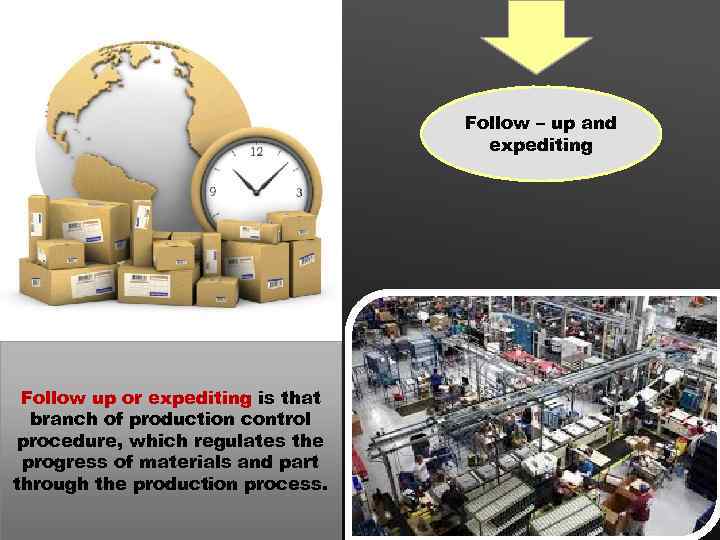
Follow – up and expediting Follow up or expediting is that branch of production control procedure, which regulates the progress of materials and part through the production process.
Inspection is the process of ensuring whether the products manufactured are requisite quality or not.
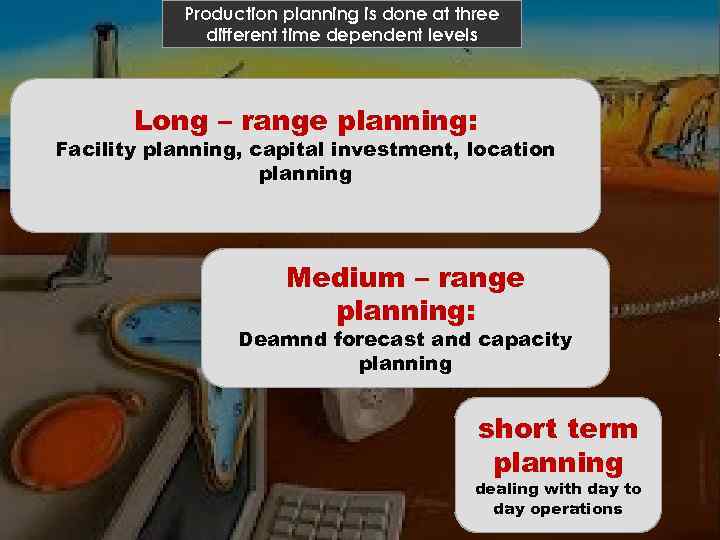
Production planning is done at three different time dependent levels Long – range planning: Facility planning, capital investment, location planning Medium – range planning: Deamnd forecast and capacity planning short term planning dealing with day to day operations
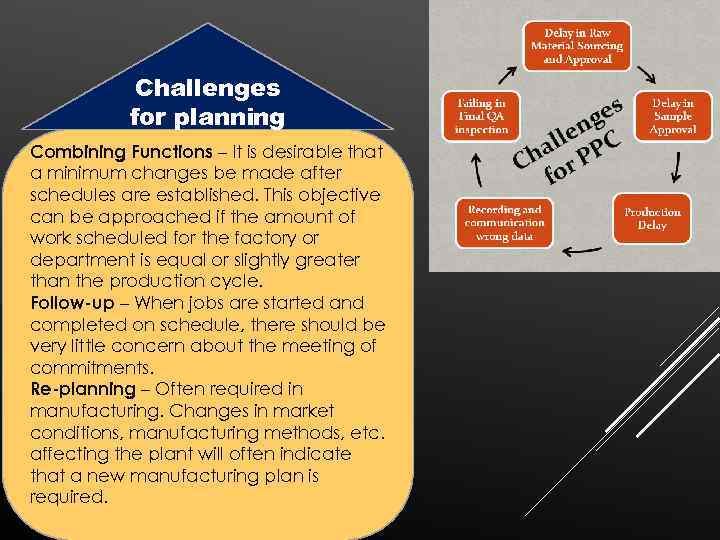
Challenges for planning Combining Functions – It is desirable that a minimum changes be made after schedules are established. This objective can be approached if the amount of work scheduled for the factory or department is equal or slightly greater than the production cycle. Follow-up – When jobs are started and completed on schedule, there should be very little concern about the meeting of commitments. Re-planning – Often required in manufacturing. Changes in market conditions, manufacturing methods, etc. affecting the plant will often indicate that a new manufacturing plan is required.
Factors Affecting Production Planning and Control Market Forecast – It will indicate future trends in demand for manufactured products. Sales Order – It is a rewrite of the customer order specifying what has been purchased (product, quantity and authorizing shipment of the goods to the customer). Standard Process Sheet – It is prepared by process engineering group or process owner and it is the source of basic data which may include type of machine to be used, time required for processing, etc. (keep an eye on preventive maintenance and breakdowns) Load Charts – These charts are prepared for each workstation or machine in the plant or may be for groups of machines or departments. Project Planning Method – The product to be produced are manufactured in quantities and their total processing time can be measured.
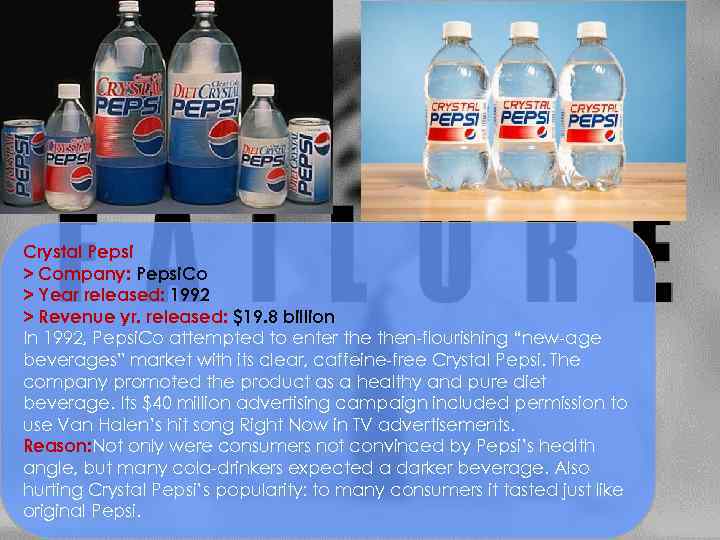
Crystal Pepsi > Company: Pepsi. Co > Year released: 1992 > Revenue yr. released: $19. 8 billion In 1992, Pepsi. Co attempted to enter then-flourishing “new-age beverages” market with its clear, caffeine-free Crystal Pepsi. The company promoted the product as a healthy and pure diet beverage. Its $40 million advertising campaign included permission to use Van Halen’s hit song Right Now in TV advertisements. Reason: Not only were consumers not convinced by Pepsi’s health angle, but many cola-drinkers expected a darker beverage. Also hurting Crystal Pepsi’s popularity: to many consumers it tasted just like original Pepsi.



Thank you for your attention
Скачать презентацию Logistics magement PRODUCTION PLANNING By Lazovskaya Ekaterina
Production planning.ready.pptx