 Скачать презентацию LOGISTICS IN POLAND Prof zw dr hab W
fbd0385e8cce2cdf0872fcd81e5a3a97.ppt
- Количество слайдов: 54



LOGISTICS IN POLAND Prof. zw. dr hab. W. Rydzkowski
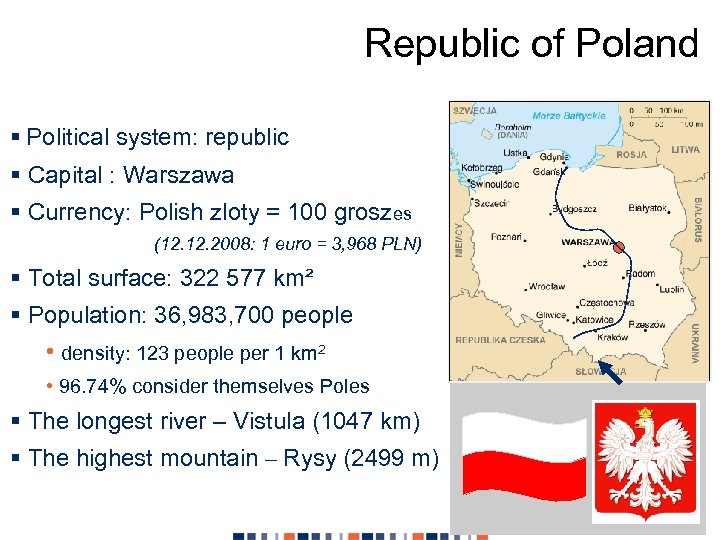
Republic of Poland § Political system: republic § Capital : Warszawa § Currency: Polish zloty = 100 groszes (12. 2008: 1 euro = 3, 968 PLN) § Total surface: 322 577 km² § Population: 36, 983, 700 people • density: 123 people per 1 km 2 • 96. 74% consider themselves Poles § The longest river – Vistula (1047 km) § The highest mountain – Rysy (2499 m)
Information on the source document Logistics in Poland – Report 2005. Edited by: Dr G. Szyszka Dr I. Fechner Logistics in Poland
AGENDA Logistics in Poland • • • Poland after accession Polish economy Road transport Rail transport Warehousing market Intermodal solutions Logistics services ICT for logistics Distribution Logistics education
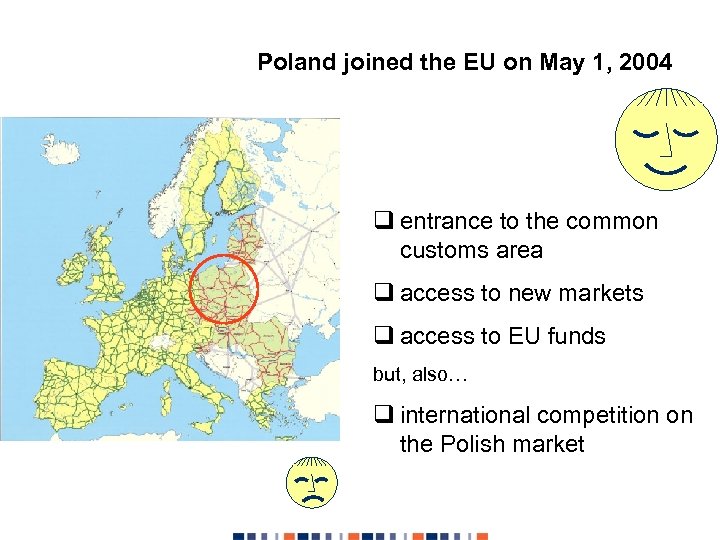
Poland joined the EU on May 1, 2004 q entrance to the common customs area q access to new markets q access to EU funds but, also… q international competition on the Polish market
Poland joined the EU on May 1, 2004, but. . It is worthwhile to note that in the period 2004– 2007 Poland’s economy functioned under a number of restrictions which are not exactly equivalent to the conditions that the EU offers the so-called „old EU Members”: • limited access to labour markets of different Member States, • transitional periods concerning various aspects of the market functioning, • the absence of Polish economy in the Euro zone.
. . on the other hand… …. it gradually turned out that there were no grounds to regard 1 May 2004 as a date radically changing the shape of the Polish business. Even before that momentous date, numerous companies had already cooperated with foreign suppliers and customers. The majority of companies made a good use of the period preceding Poland's European Union entry and their business situation did not deteriorate after the landmark EU accession date (1 May 2004) - a number of enterprises in fact felt that the change was a positive development So, May 1 st 2004 brought about no revolution. There were some moderate changes and – in numerous cases – the situation became stabilized, though not always on the desired level
There are lot of negative symptoms and pessimistic observations • Transport infrastructure • Development of intermodal transport
although… … there are some reasons for optimism, as well! Certain positive trends take root and become the main driving forces shaping the picture of the Polish logistics in the period 2004– 2007, at the same time foreshadowing advantageous prospects for the development of the logistic market in years to come.
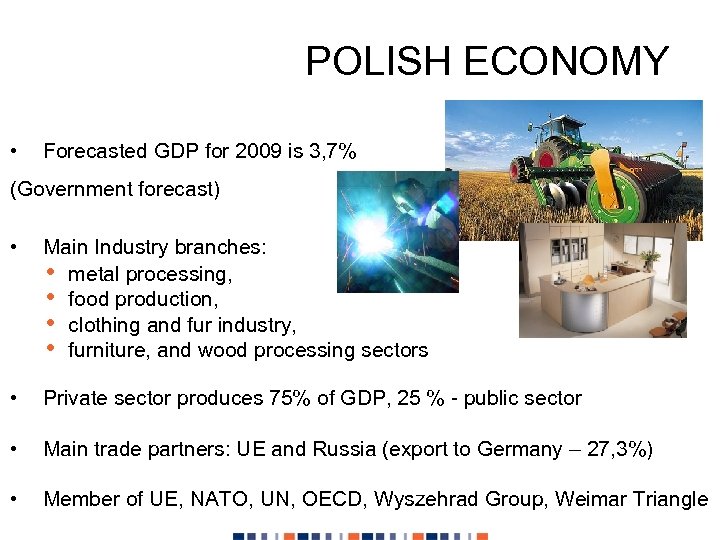
POLISH ECONOMY • Forecasted GDP for 2009 is 3, 7% (Government forecast) • Main Industry branches: • metal processing, • food production, • clothing and fur industry, • furniture, and wood processing sectors • Private sector produces 75% of GDP, 25 % - public sector • Main trade partners: UE and Russia (export to Germany – 27, 3%) • Member of UE, NATO, UN, OECD, Wyszehrad Group, Weimar Triangle
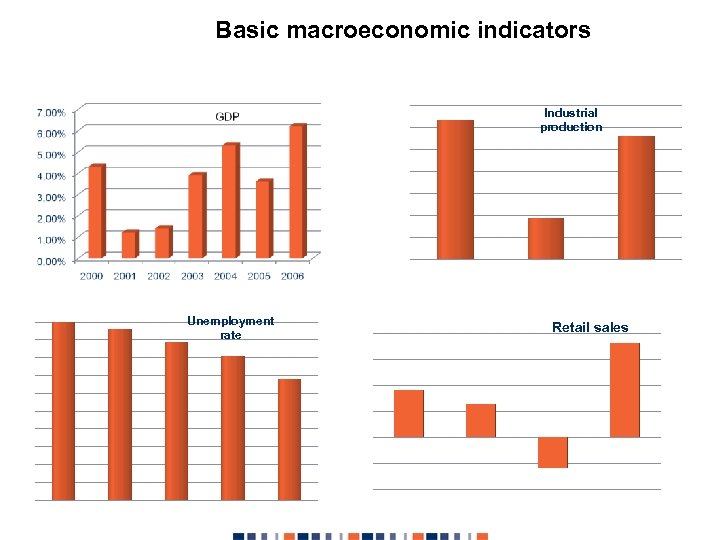
Basic macroeconomic indicators Industrial production Unemployment rate Retail sales
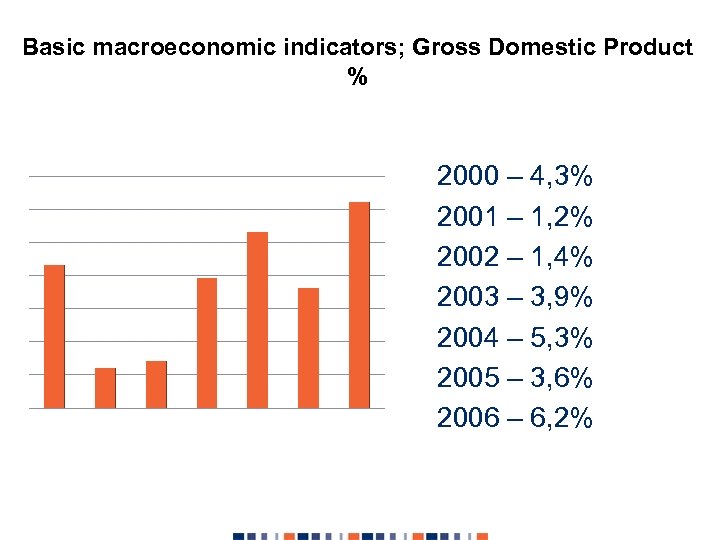
Basic macroeconomic indicators; Gross Domestic Product % 2000 – 4, 3% 2001 – 1, 2% 2002 – 1, 4% 2003 – 3, 9% 2004 – 5, 3% 2005 – 3, 6% 2006 – 6, 2%
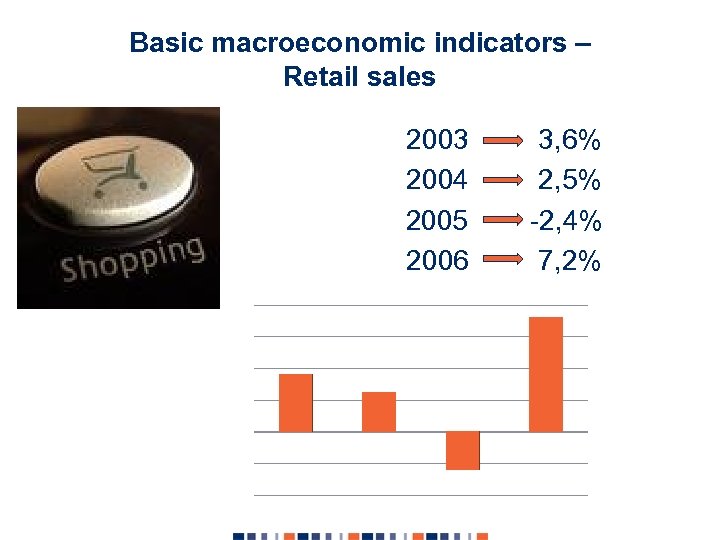
Basic macroeconomic indicators – Retail sales 2003 3, 6% 2004 2, 5% 2005 -2, 4% 2006 7, 2%
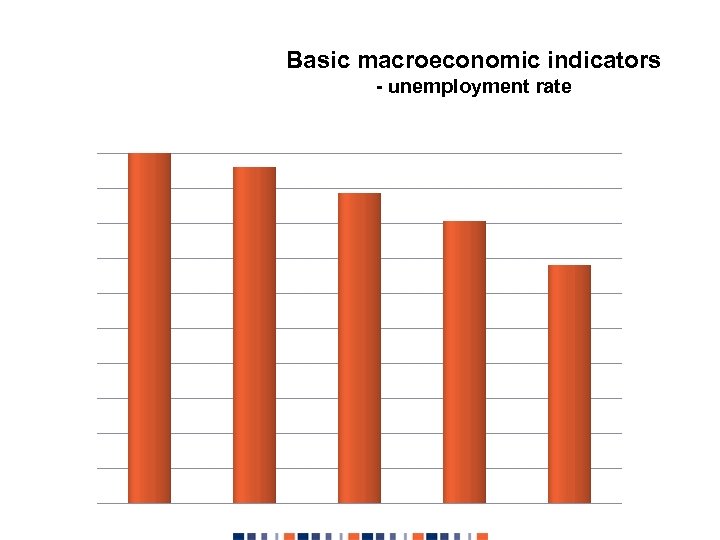
Basic macroeconomic indicators - unemployment rate
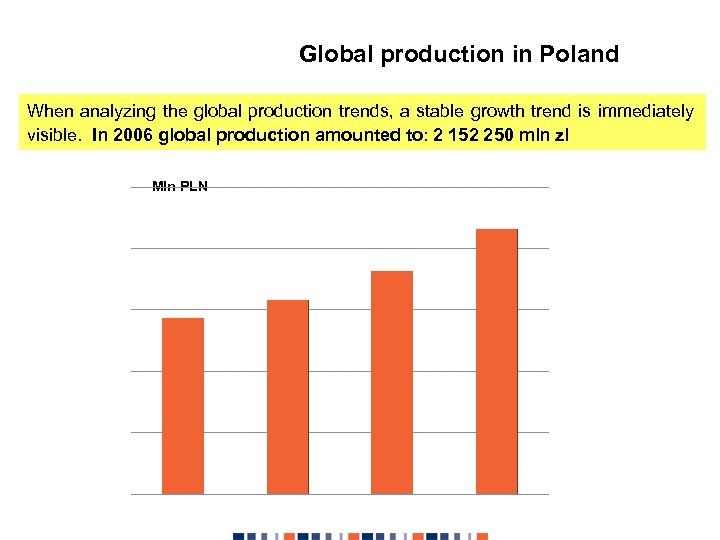
Global production in Poland When analyzing the global production trends, a stable growth trend is immediately visible. In 2006 global production amounted to: 2 152 250 mln zl Mln PLN
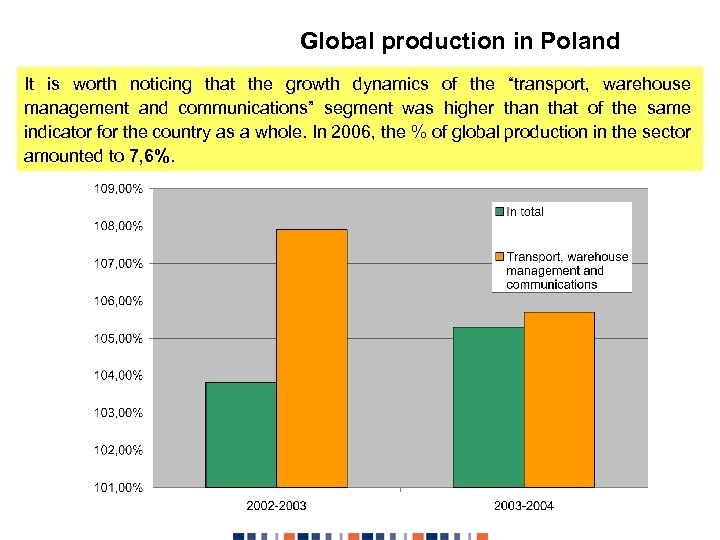
Global production in Poland It is worth noticing that the growth dynamics of the “transport, warehouse management and communications” segment was higher than that of the same indicator for the country as a whole. In 2006, the % of global production in the sector amounted to 7, 6%.
Logistics infrastructure There are some reasons for pessimism particularly with regard to the logistic infrastructure, the quality of which is strongly linked to the competitiveness of companies operating in Poland the Polish economy as a whole. The quality of logistic infrastructure is getting better.
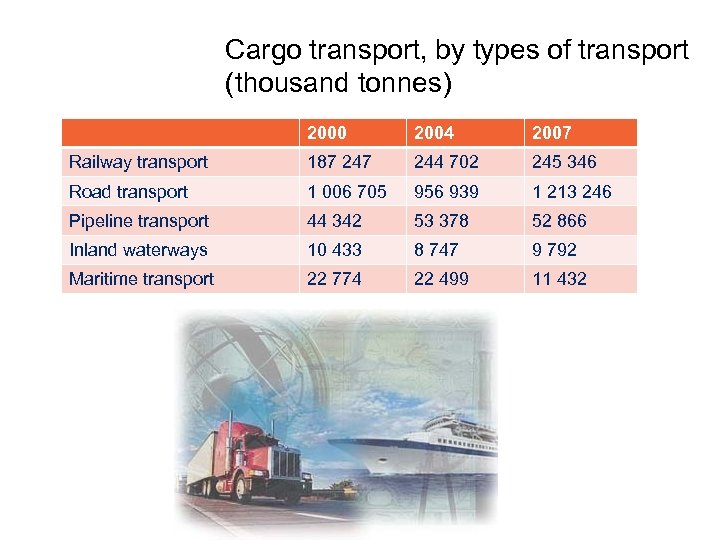
Cargo transport, by types of transport (thousand tonnes) 2000 2004 2007 Railway transport 187 244 702 245 346 Road transport 1 006 705 956 939 1 213 246 Pipeline transport 44 342 53 378 52 866 Inland waterways 10 433 8 747 9 792 Maritime transport 22 774 22 499 11 432
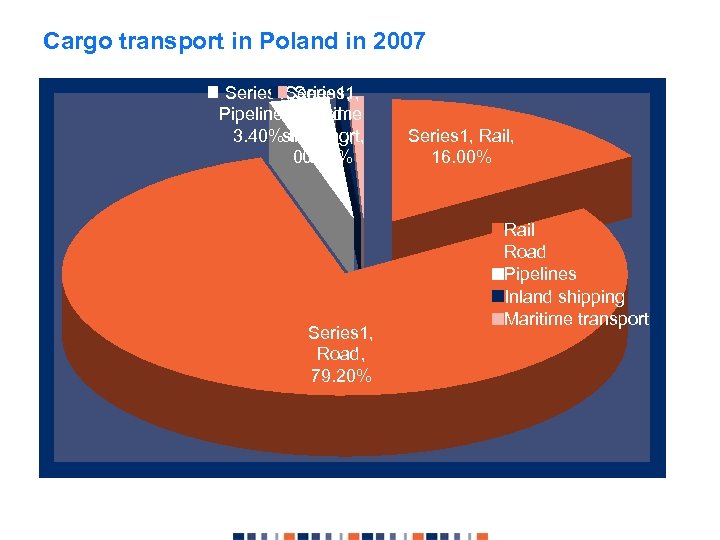
Cargo transport in Poland in 2007 Series 1, Pipelines, Maritime Inland 3. 40%shipping, transport, 0. 60% 0. 80% Series 1, Road, 79. 20% Series 1, Rail, 16. 00% Rail Road Pipelines Inland shipping Maritime transport
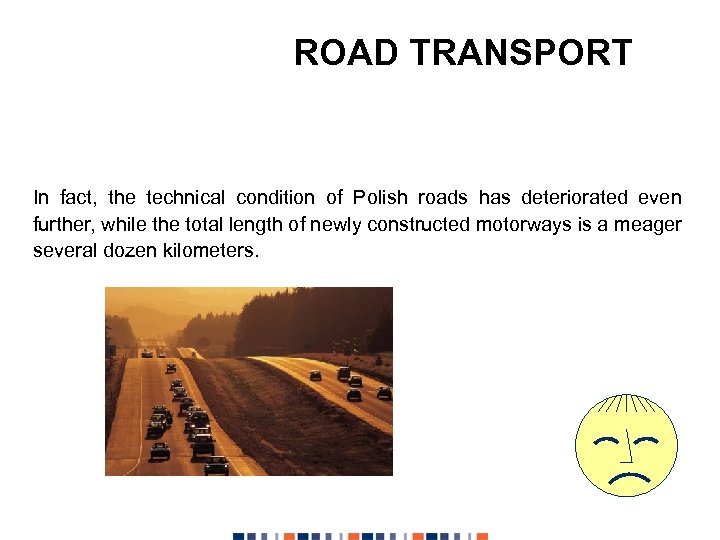
ROAD TRANSPORT In fact, the technical condition of Polish roads has deteriorated even further, while the total length of newly constructed motorways is a meager several dozen kilometers.
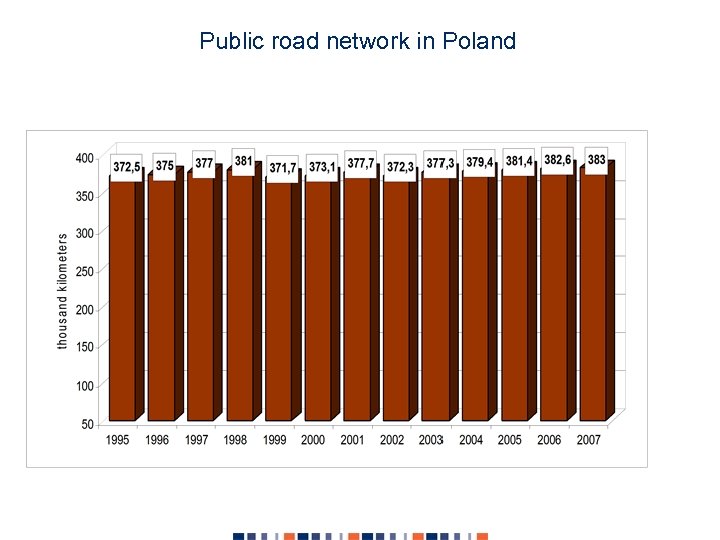
Public road network in Poland
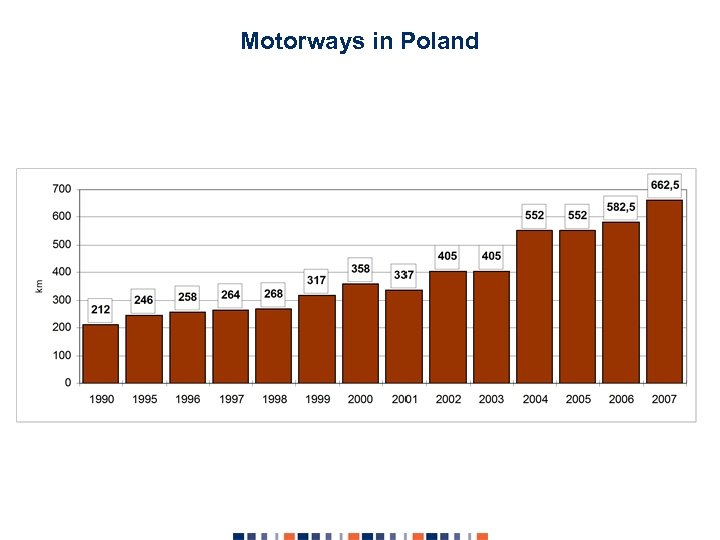
Motorways in Poland
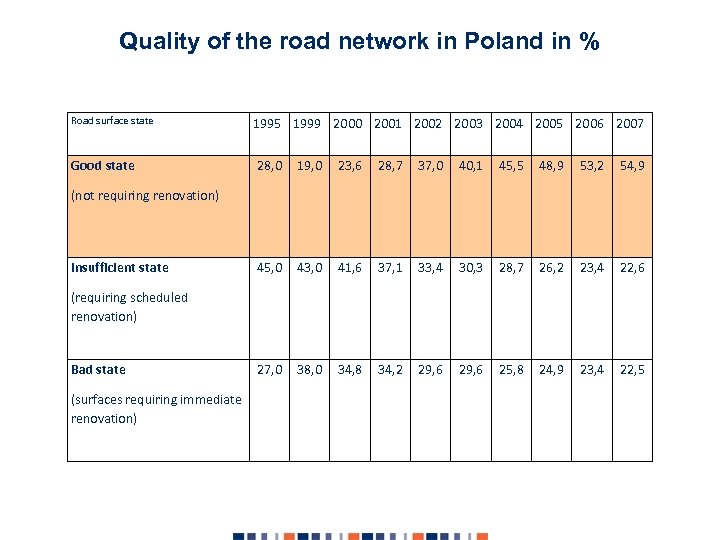
Quality of the road network in Poland in % Road surface state Good state 1995 1999 2000 2001 2002 2003 2004 2005 2006 2007 28, 0 19, 0 23, 6 28, 7 37, 0 40, 1 45, 5 48, 9 53, 2 54, 9 45, 0 43, 0 41, 6 37, 1 33, 4 30, 3 28, 7 26, 2 23, 4 22, 6 27, 0 38, 0 34, 8 34, 2 29, 6 25, 8 24, 9 23, 4 22, 5 (not requiring renovation) Insufficient state (requiring scheduled renovation) Bad state (surfaces requiring immediate renovation)
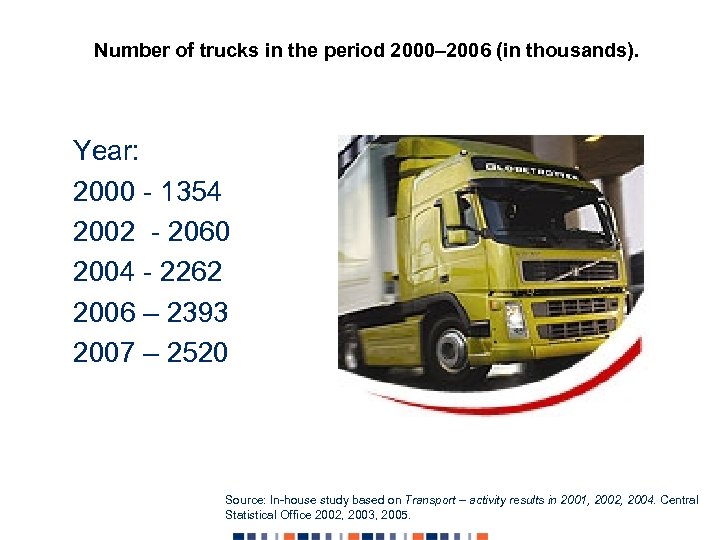
Number of trucks in the period 2000– 2006 (in thousands). , Year: 2000 - 1354 2002 - 2060 2004 - 2262 2006 – 2393 2007 – 2520 Source: In-house study based on Transport – activity results in 2001, 2002, 2004. Central Statistical Office 2002, 2003, 2005.
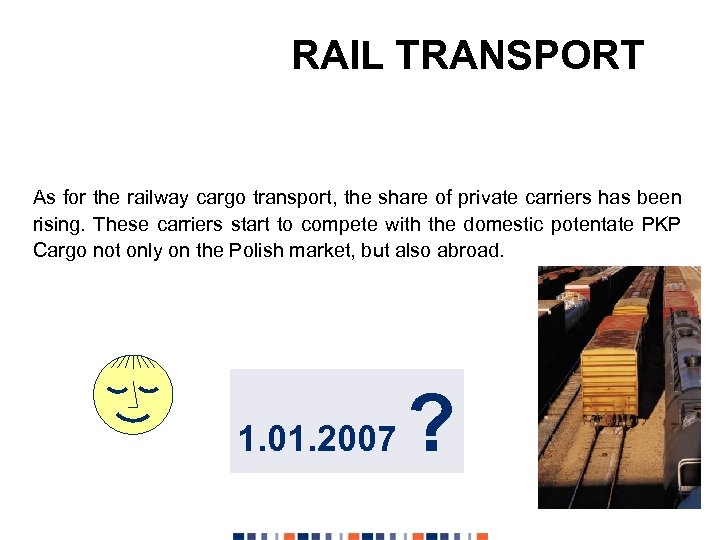
RAIL TRANSPORT As for the railway cargo transport, the share of private carriers has been rising. These carriers start to compete with the domestic potentate PKP Cargo not only on the Polish market, but also abroad. 1. 01. 2007 ?
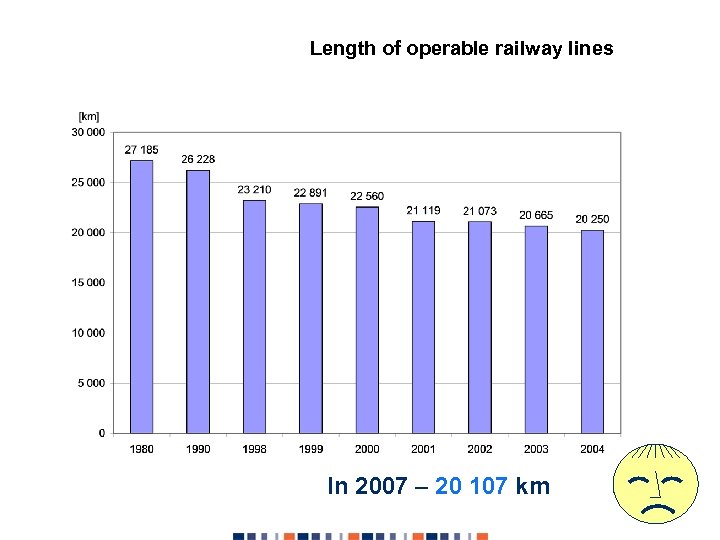
Length of operable railway lines In 2007 – 20 107 km
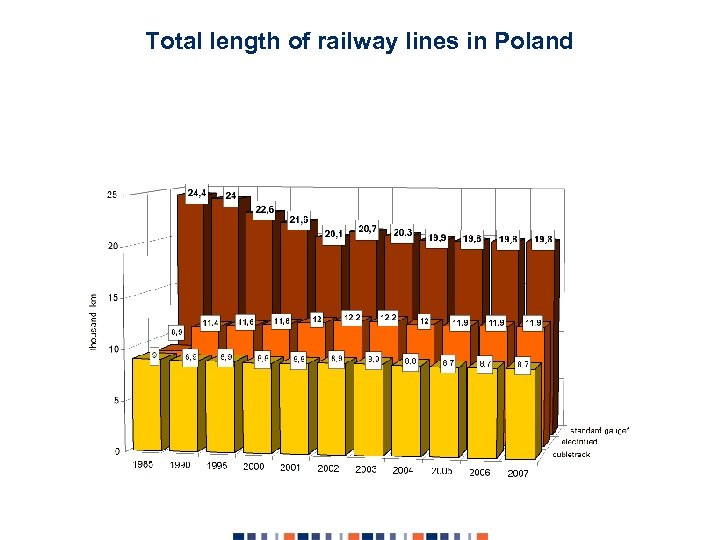
Total length of railway lines in Poland
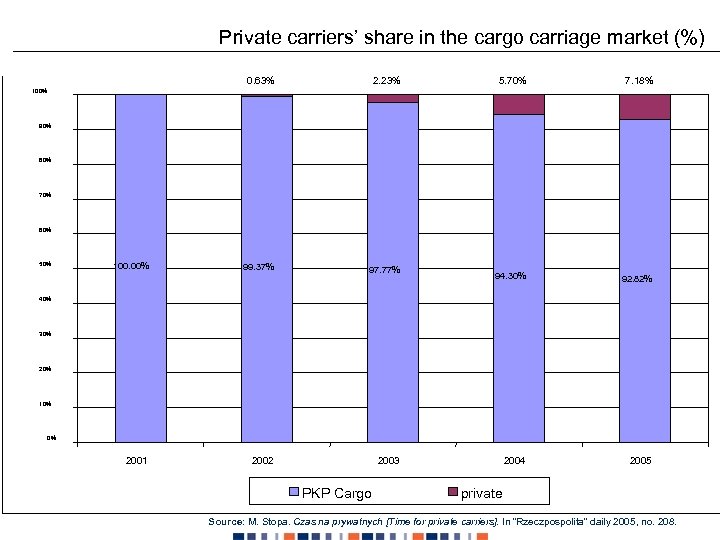
Private carriers’ share in the cargo carriage market (%) 0. 63% 2. 23% 99. 37% 97. 77% 5. 70% 7. 18% 94. 30% 92. 82% 2004 2005 100% 90% 80% 70% 60% 50% 100. 00% 40% 30% 20% 10% 0% 2001 2002 2003 PKP Cargo private Source: M. Stopa. Czas na prywatnych [Time for private carriers]. In “Rzeczpospolita” daily 2005, no. 208.
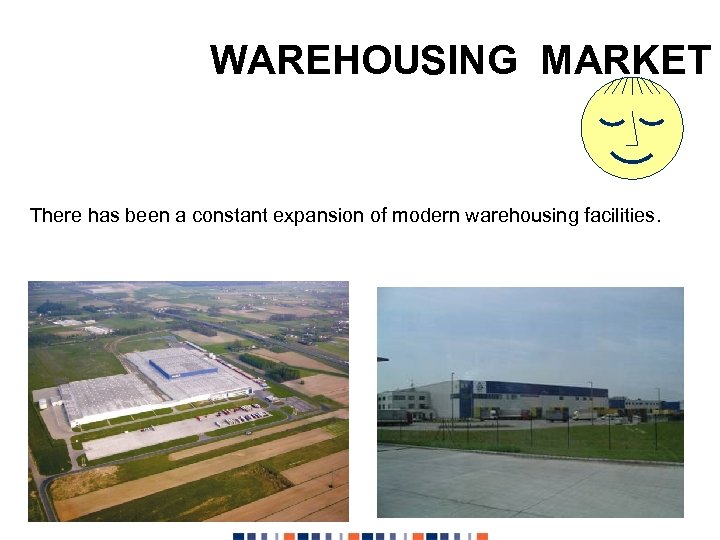
WAREHOUSING MARKET There has been a constant expansion of modern warehousing facilities.
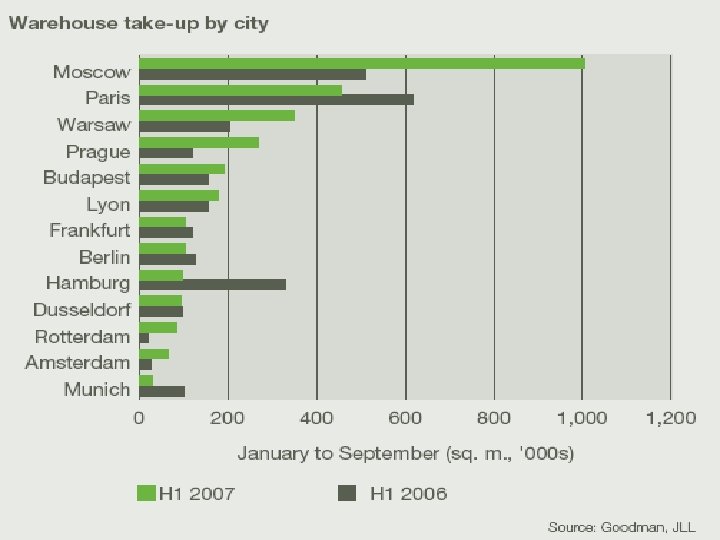
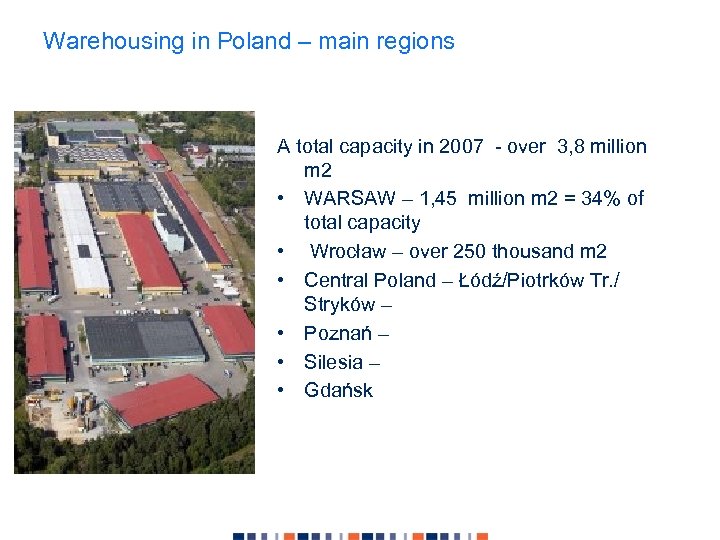
Warehousing in Poland – main regions A total capacity in 2007 - over 3, 8 million m 2 • WARSAW – 1, 45 million m 2 = 34% of total capacity • Wrocław – over 250 thousand m 2 • Central Poland – Łódź/Piotrków Tr. / Stryków – • Poznań – • Silesia – • Gdańsk
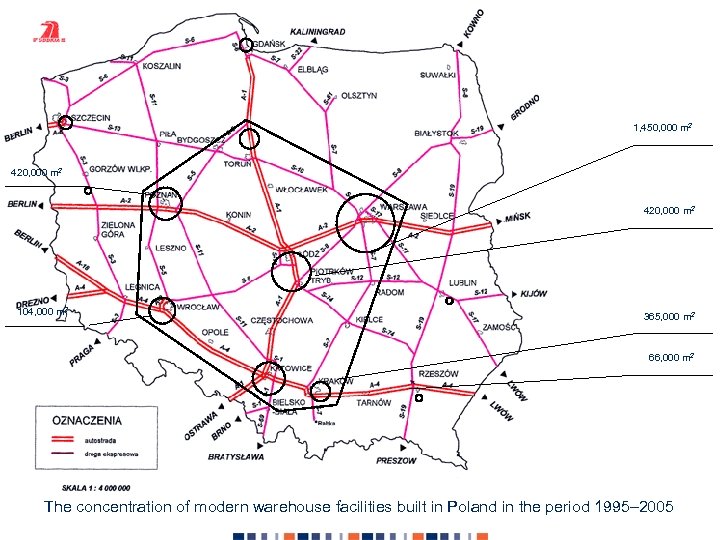
Concentration 1, 450, 000 m 2 420, 000 m 2 104, 000 m 2 365, 000 m 2 66, 000 m 2 The concentration of modern warehouse facilities built in Poland in the period 1995– 2005
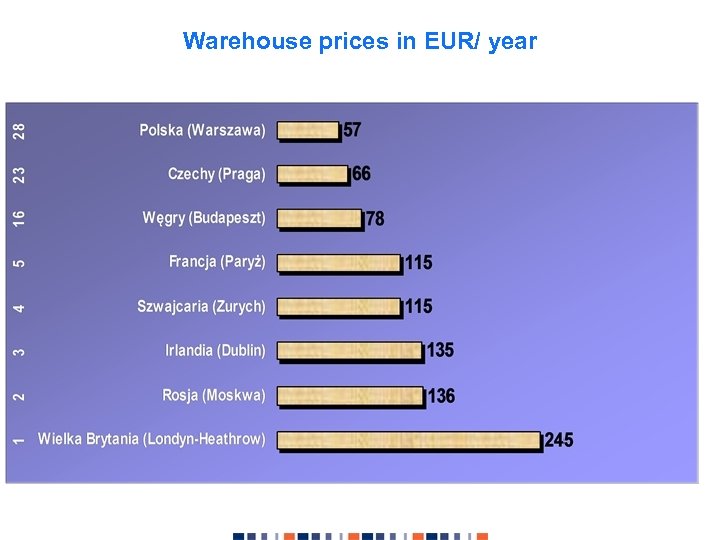
Warehouse prices in EUR/ year
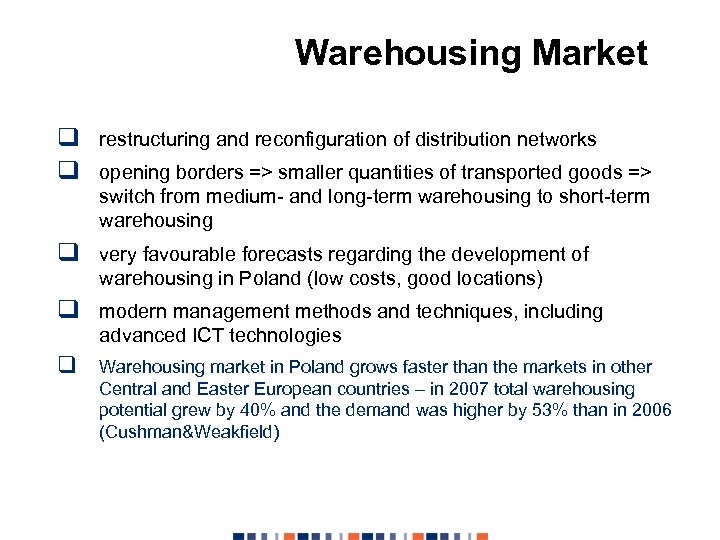
Warehousing Market q q restructuring and reconfiguration of distribution networks q very favourable forecasts regarding the development of warehousing in Poland (low costs, good locations) q modern management methods and techniques, including advanced ICT technologies q Warehousing market in Poland grows faster than the markets in other Central and Easter European countries – in 2007 total warehousing potential grew by 40% and the demand was higher by 53% than in 2006 (Cushman&Weakfield) opening borders => smaller quantities of transported goods => switch from medium- and long-term warehousing to short-term warehousing
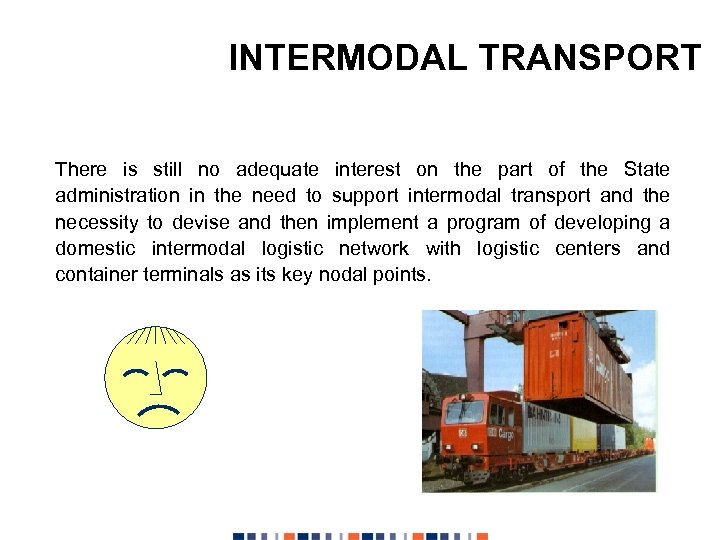
INTERMODAL TRANSPORT There is still no adequate interest on the part of the State administration in the need to support intermodal transport and the necessity to devise and then implement a program of developing a domestic intermodal logistic network with logistic centers and container terminals as its key nodal points.
Logistics Centres q lack of developed transport and logistic infrastructure which is necessary for logistics centres’ operations, q existing distribution centres do not form a coherent system within the territory of Poland q lack of financial resources and unsettled ownership status of some assets in PKP reduce the possibility of using the existing infrastructure, q lack of financial resources of local governments which should participate in such investment projects.
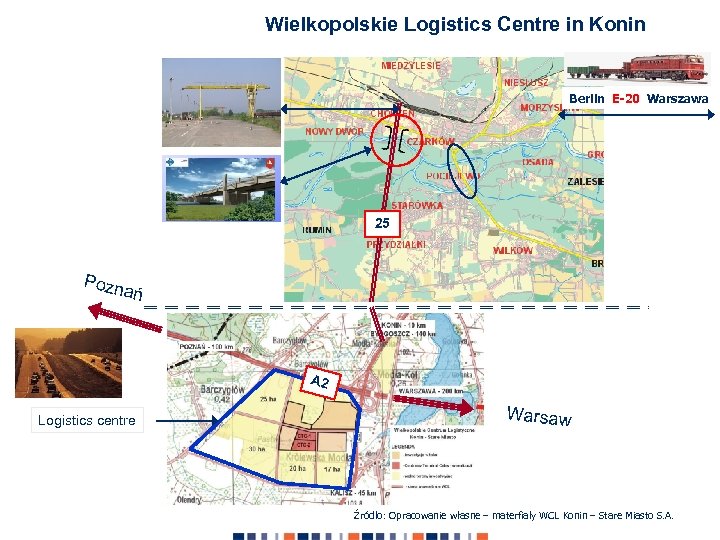
Wielkopolskie Logistics Centre in Konin Berlin E-20 Warszawa 25 Pozn ań A 2 Logistics centre Warsaw Źródło: Opracowanie własne – materfiały WCL Konin – Stare Miasto S. A.
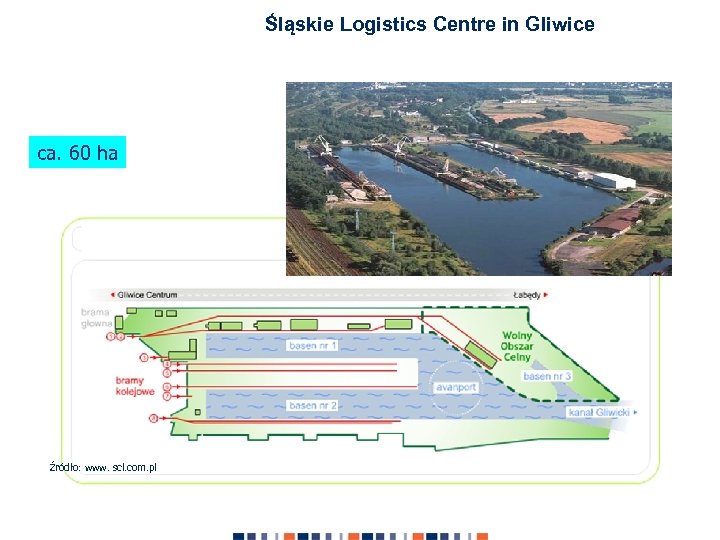
Śląskie Logistics Centre in Gliwice ca. 60 ha Źródło: www. scl. com. pl
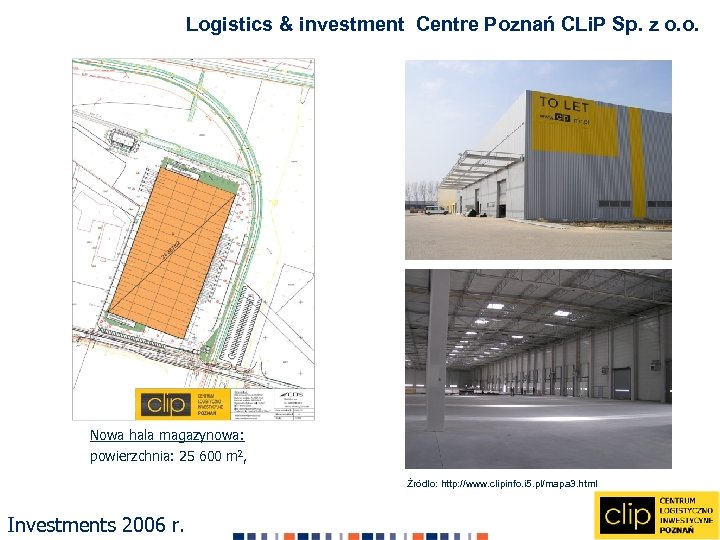
Logistics & investment Centre Poznań CLi. P Sp. z o. o. Nowa hala magazynowa: powierzchnia: 25 600 m 2, Źródło: http: //www. clipinfo. i 5. pl/mapa 3. html Investments 2006 r.
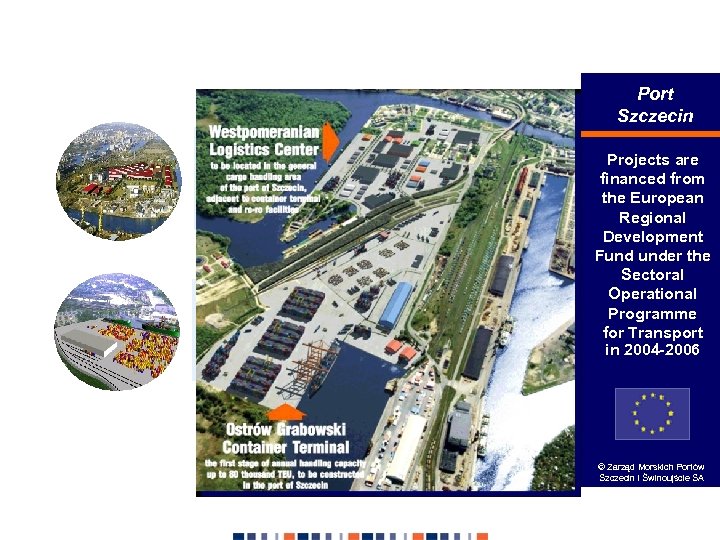
Investments in port infrastructure Port Szczecin Infrastructure for Westpomeranian Logistic Centre Port infrastructure for container terminal on the Ostrów Grabowskim Projects are financed from the European Regional Development Fund under the Sectoral Operational Programme for Transport in 2004 -2006 © Zarząd Morskich Portów Szczecin i Świnoujście SA
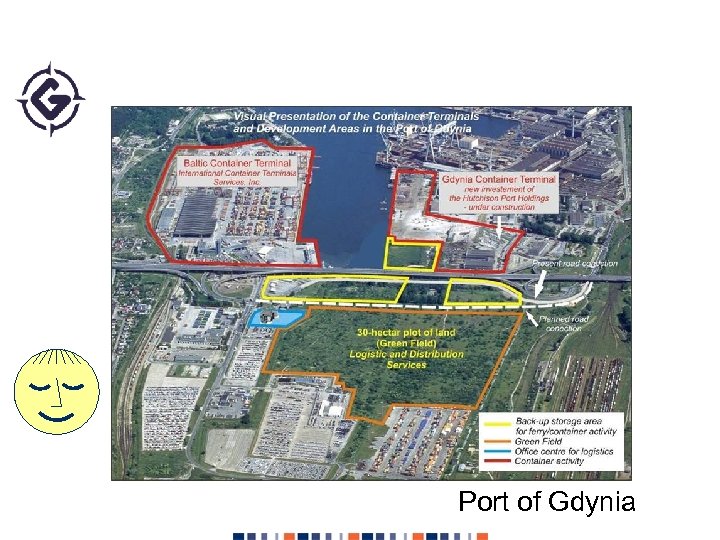
Investments in port infrastructure Port of Gdynia
ICT solutions for logistics There was a further major growth in the application of ICT standards and technologies in B 2 B and B 2 C communication, promoting integration within supply chains. • Growing use of GS 1 standards and products, • Progress in the development of electronic platforms and catalogues, • Growing interest in the RFID technology using electronic product codes, • Implementation of the programme of development of electronic economy in Poland called “The Creation of Mechanisms and Structures in the Development of Electronic Trade in Poland – Electronic Platform to Support Commerce”.
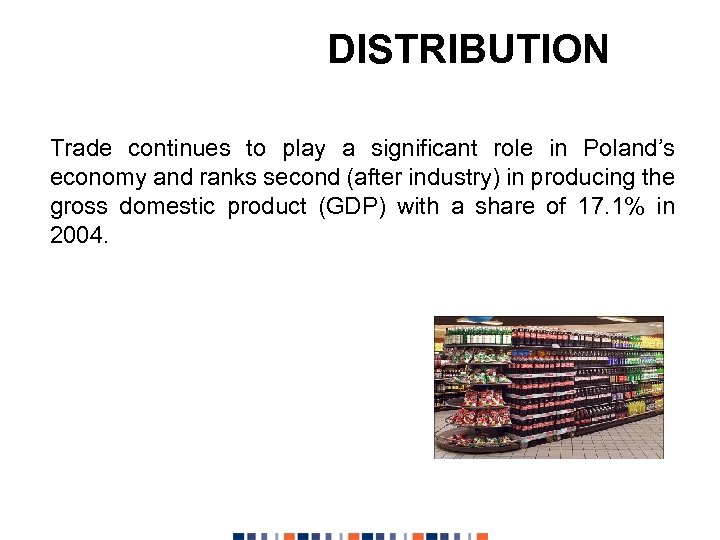
DISTRIBUTION Trade continues to play a significant role in Poland’s economy and ranks second (after industry) in producing the gross domestic product (GDP) with a share of 17. 1% in 2004.
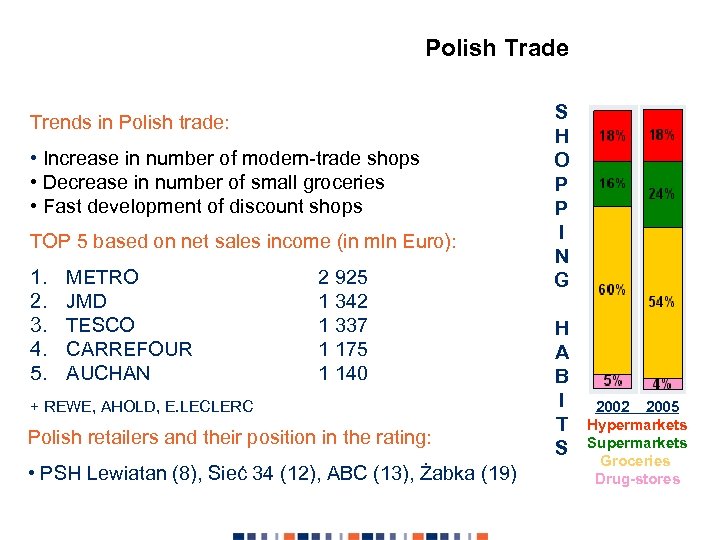
Polish Trade Trends in Polish trade: • Increase in number of modern-trade shops • Decrease in number of small groceries • Fast development of discount shops TOP 5 based on net sales income (in mln Euro): 1. 2. 3. 4. 5. METRO JMD TESCO CARREFOUR AUCHAN 2 925 1 342 1 337 1 175 1 140 + REWE, AHOLD, E. LECLERC Polish retailers and their position in the rating: • PSH Lewiatan (8), Sieć 34 (12), ABC (13), Żabka (19) S H O P P I N G H A B I T S 2002 2005 Hypermarkets Supermarkets Groceries Drug-stores
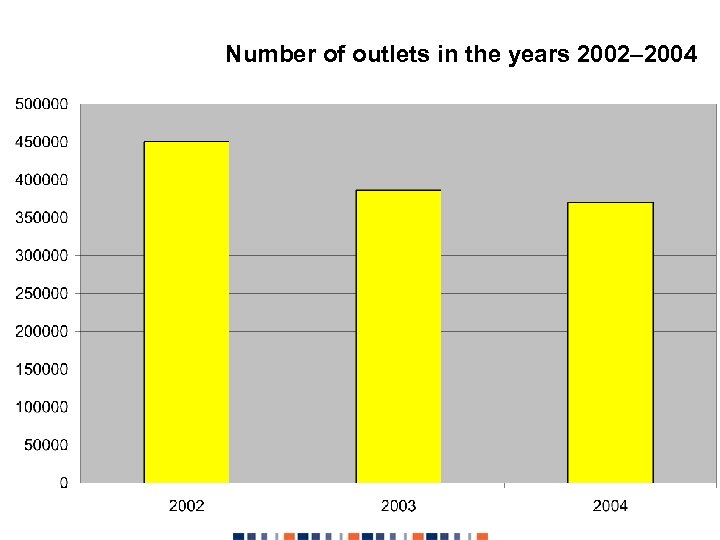
Number of outlets in the years 2002– 2004
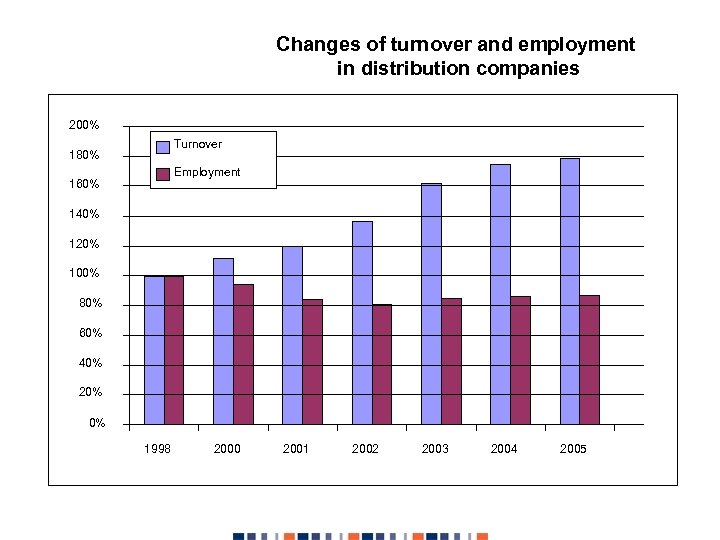
Changes of turnover and employment in distribution companies 200% Turnover 180% Employment 160% 140% 120% 100% 80% 60% 40% 20% 0% 1998 2000 2001 2002 2003 2004 2005
ECR Poland The tendencies of cooperation between enterprises within supply chains are also becoming stronger, with a major role played by ECR Poland, a neutral environment of cooperation between companies and a source of integration solutions increasing the value offered to the customer.
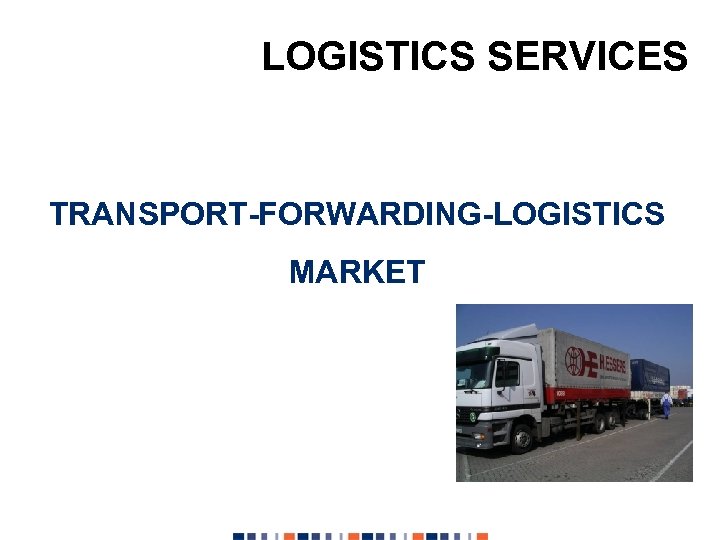
LOGISTICS SERVICES TRANSPORT-FORWARDING-LOGISTICS MARKET
Outsourcing As for logistic outsourcing, there were no major changes in the period discussed, which should be interpreted as a time of stagnation. Manufacturing and trading enterprises continue to outsource mainly transport services, while cooperation with logistic operators performing more complex logistic services is still a domain of large corporations. In turn, large logistic service providers used the analyzed period to carry on strengthening their potential and increasing access to new markets and winning new customers via takeovers and mergers.
![Value of the national logistic market [PLN million] przychód w mld PLN, 2007, 16.](https://present5.com/presentation/fbd0385e8cce2cdf0872fcd81e5a3a97/image-50.jpg "Value of the national logistic market [PLN million] przychód w mld PLN, 2007, 16.")
Value of the national logistic market [PLN million] przychód w mld PLN, 2007, 16. 1 35 000 29 430 przychód w mld zł 30 000 25 000 23 000 21 800 20 000 18 900 30 515 przychód w mld PLN, 2006, 12. 9 przychód w mld PLN, 2005, 25 185 11. 5 przychód w mld PLN, 2004, 9. 9 przychód w mld PLN, 2003, 8. 43 przychód w mld PLN, 2002, 6. 44 przychód w mld PLN, 2001, przychód w mld PLN, 2000, 15 000 5. 46 5. 12 przychód w mld PLN, 1999, 3. 96 przychód w mld PLN, 1998, przychód w mld PLN, 1997 3. 14 rok, 2. 92 10 000 5 000 0 1999 2000 2001 2002 2003 2004
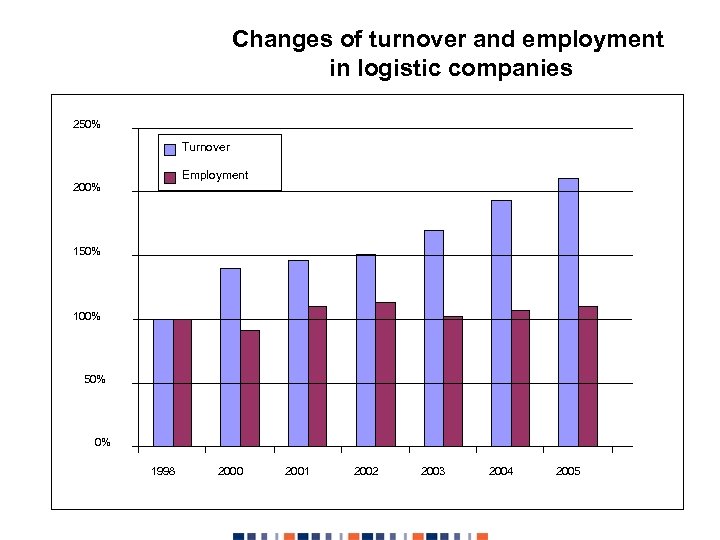
Changes of turnover and employment in logistic companies 250% Turnover Employment 200% 150% 100% 50% 0% 1998 2000 2001 2002 2003 2004 2005
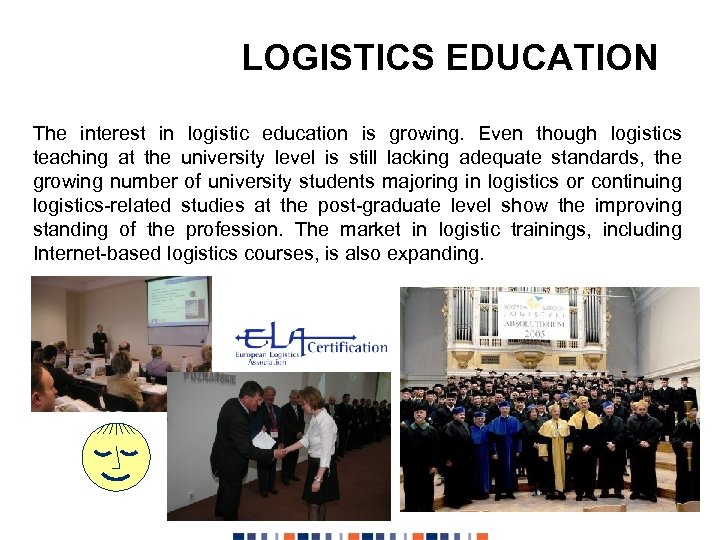
LOGISTICS EDUCATION The interest in logistic education is growing. Even though logistics teaching at the university level is still lacking adequate standards, the growing number of university students majoring in logistics or continuing logistics-related studies at the post-graduate level show the improving standing of the profession. The market in logistic trainings, including Internet-based logistics courses, is also expanding.
LOGISTICS IN POLAND
Logistics in Poland
Скачать презентацию LOGISTICS IN POLAND Prof zw dr hab W
fbd0385e8cce2cdf0872fcd81e5a3a97.ppt