 Скачать презентацию Locational Theories of Industry A Beginning of
08dc1bcfab7d8ec6c78208e2f3d2be1a.ppt
- Количество слайдов: 19



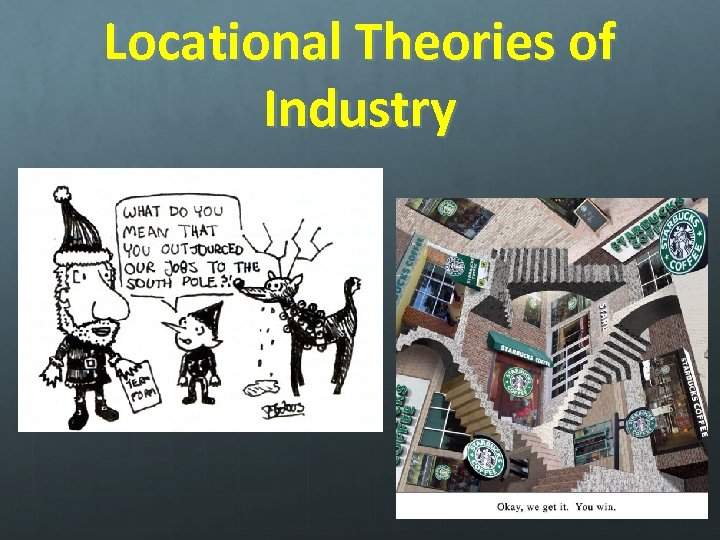
Locational Theories of Industry
A. Beginning of the Industrial Revolution When & where? Great Britain mid-1700 s Why Great Britain? Flow of capital 2 nd Agricultural Revolution Resources: coal, iron, & water
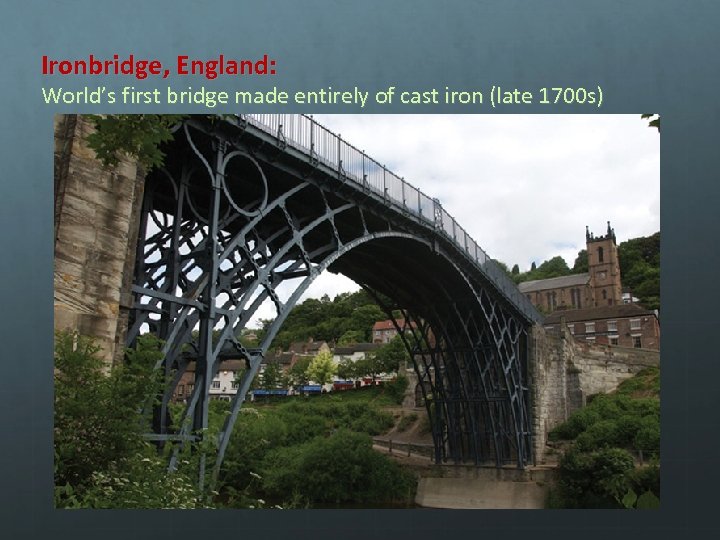
Ironbridge, England: World’s first bridge made entirely of cast iron (late 1700 s)
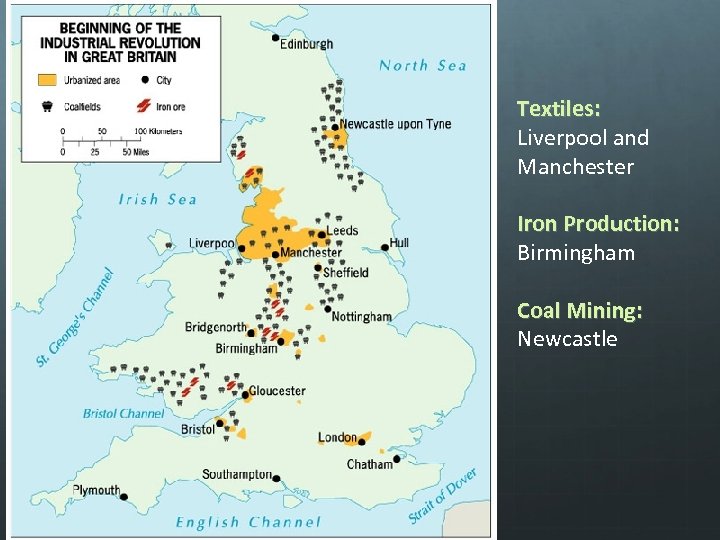
Textiles: Liverpool and Manchester Iron Production: Birmingham Coal Mining: Newcastle
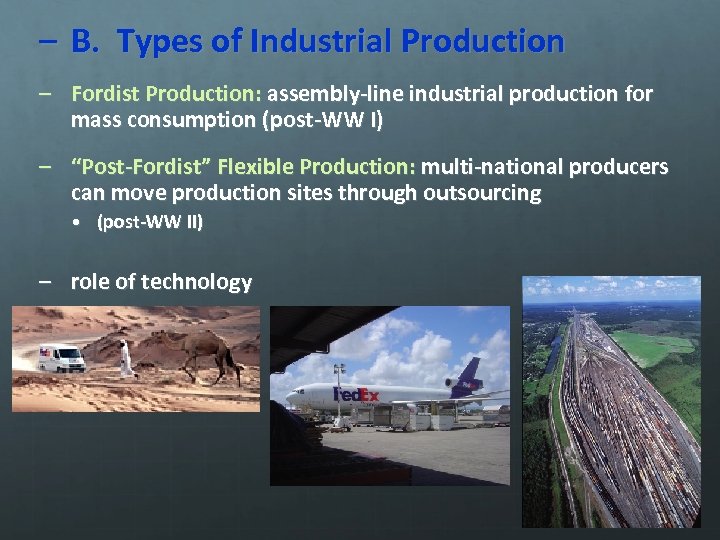
– B. Types of Industrial Production – Fordist Production: assembly-line industrial production for mass consumption (post-WW I) – “Post-Fordist” Flexible Production: multi-national producers can move production sites through outsourcing • (post-WW II) – role of technology
outsourcing: to relocate from higher -cost locations to lower cost market locations • international markets are brought “closer together” through outsourcing Check your clothing/backpack labels—what are the production sites?
C. Who outsources? multinational (or transnational) corporations: businesses that conduct research, operate factories, & sell products in more than one country Types of MNC’s: 1. telecommunication 2. financial 3. manufacturing
Wal-Mart Retail stores: 10, 400 stores in 27 countries. Total sales in 2012? $444 billion! That’s more than Austria. That makes it the 26 th largest economy in the world, if it were a country. What are the economic benefits of Wal-Marts in Florida? • • • spent $5. 7 bill. in Florida in 2007 over 200, 000 jobs about $1 bill. in taxes Costs?
D. Location Theories– predicting where business will or should be located 1. Weber’s Model 2. Hotelling’s Model 3. Losch’s Model Considerations: - variable costs - friction of distance
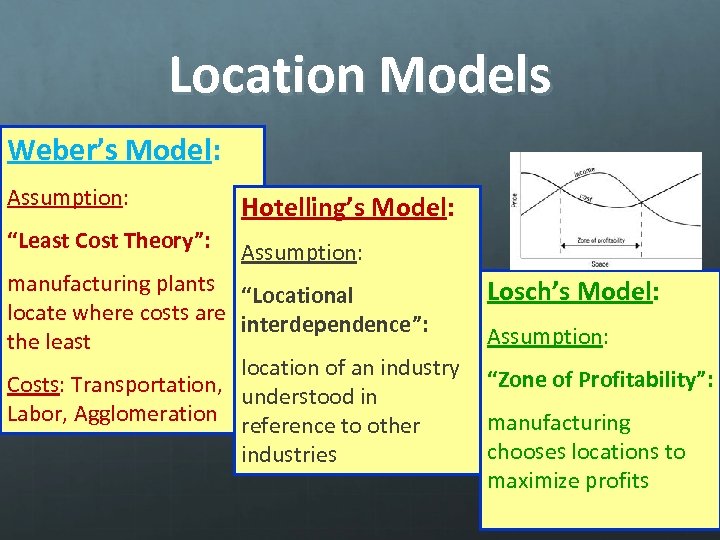
Location Models Weber’s Model: Assumption: “Least Cost Theory”: Hotelling’s Model: Assumption: manufacturing plants “Locational locate where costs are interdependence”: the least location of an industry Costs: Transportation, understood in Labor, Agglomeration reference to other industries Losch’s Model: Assumption: “Zone of Profitability”: manufacturing chooses locations to maximize profits
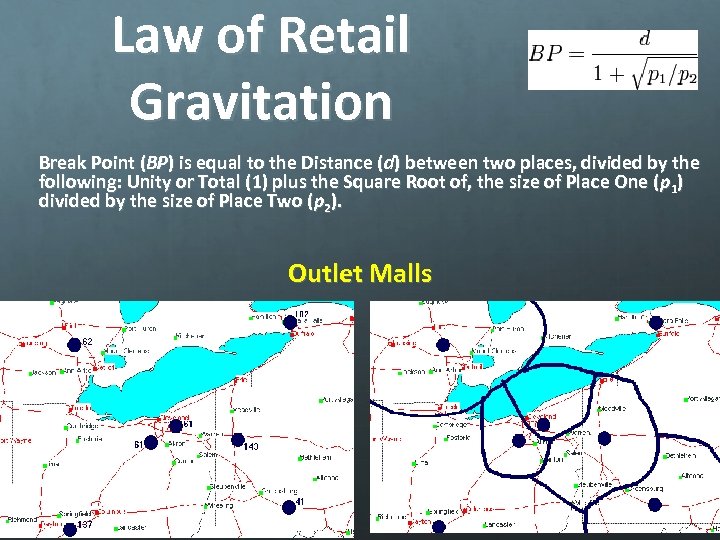
Law of Retail Gravitation Break Point (BP) is equal to the Distance (d) between two places, divided by the following: Unity or Total (1) plus the Square Root of, the size of Place One ( p 1) divided by the size of Place Two (p 2). Outlet Malls
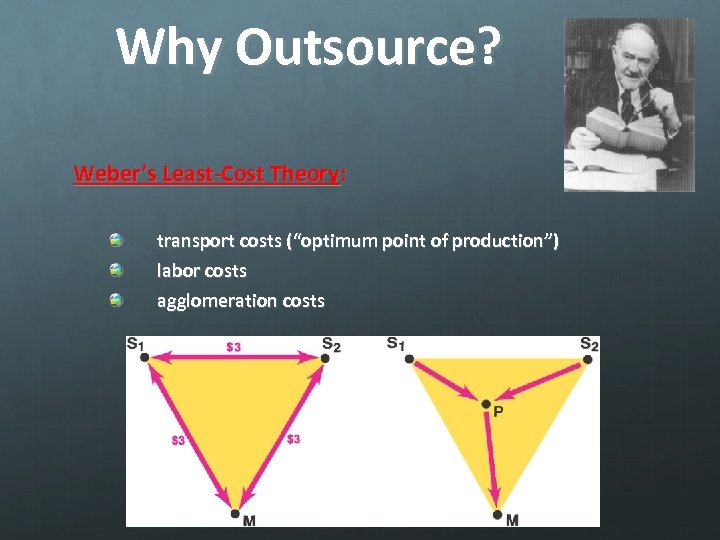
Why Outsource? Weber’s Least-Cost Theory: transport costs (“optimum point of production”) labor costs agglomeration costs
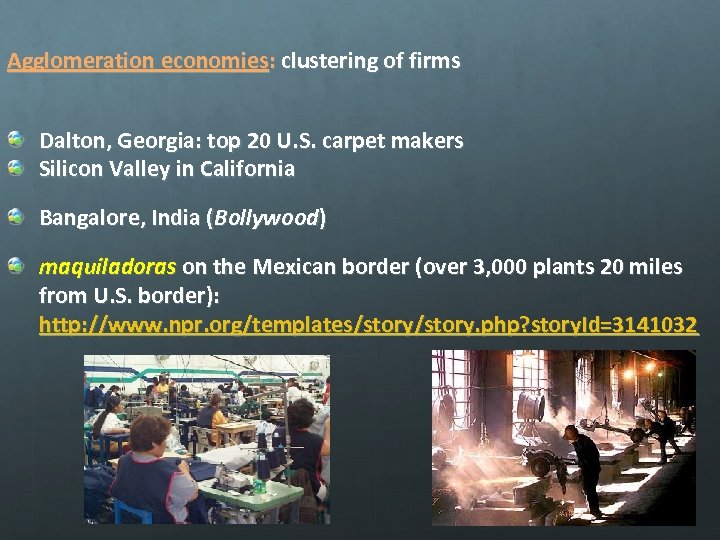
Agglomeration economies: clustering of firms Dalton, Georgia: top 20 U. S. carpet makers Silicon Valley in California Bangalore, India (Bollywood) maquiladoras on the Mexican border (over 3, 000 plants 20 miles from U. S. border): http: //www. npr. org/templates/story. php? story. Id=3141032
Some MNCs with Maquiladoras in Mexico: Honda Honeywell, Inc. Hughes Aircraft Hyundai Precision America IBM JVC Matsushita Mattel Maxell Corporation Mercedes Benz Mitsubishi Electronics Corp. Motorola Nissan Philips Pioneer Speakers Samsonite Corporation Samsung Sanyo North America Sony Electronics Tiffany Toshiba VW Xerox Zenith 3 Day Blinds 20 th Century Plastics Acer Peripherals Bali Company, Inc. Bayer Corp. BMW Canon Business Machines Casio Manufacturing Chrysler Daewoo Eastman Kodak Eberhard-Faber Eli Lilly Corporation Ericsson Fisher Price Ford Foster Grant Corporation General Electric Company GM Hasbro Hewlett Packard Hitachi Home Electronics
E. Weaknesses of Weber’s theory “Just-in-time” delivery: rather than keeping a large inventory, companies engage in short-term production & ship quickly Footloose firms: An industry that can be placed anywhere without repercussions due to transport. (Ex. Software) https: //youtu. be/D 3 Ofj. Yl. XUCU Offshoring: outsourced work or company headquarters that is located outside of the market country International division of labor: corporations draw from labor around the globe
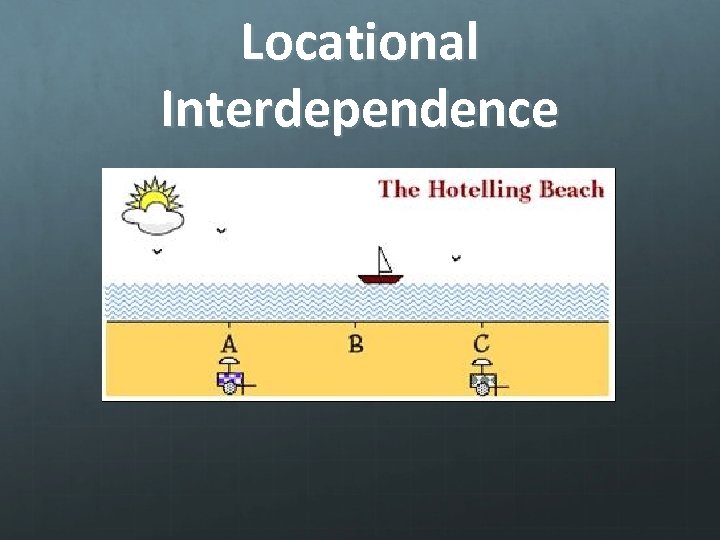
Locational Interdependence
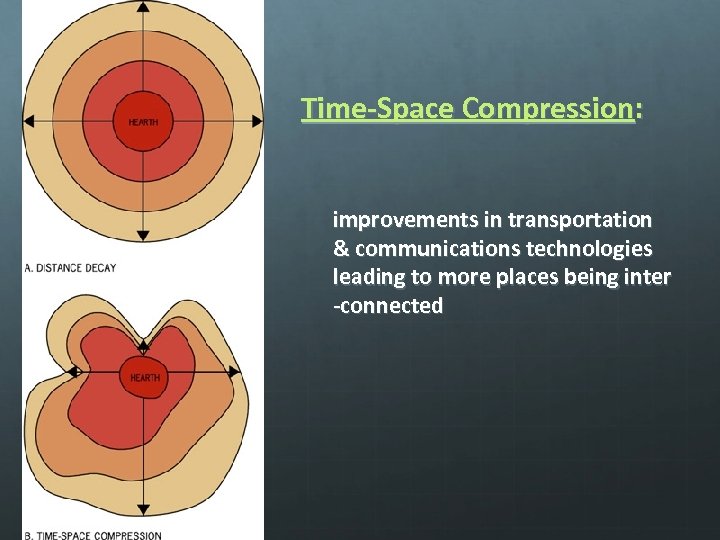
Time-Space Compression: improvements in transportation & communications technologies leading to more places being inter -connected
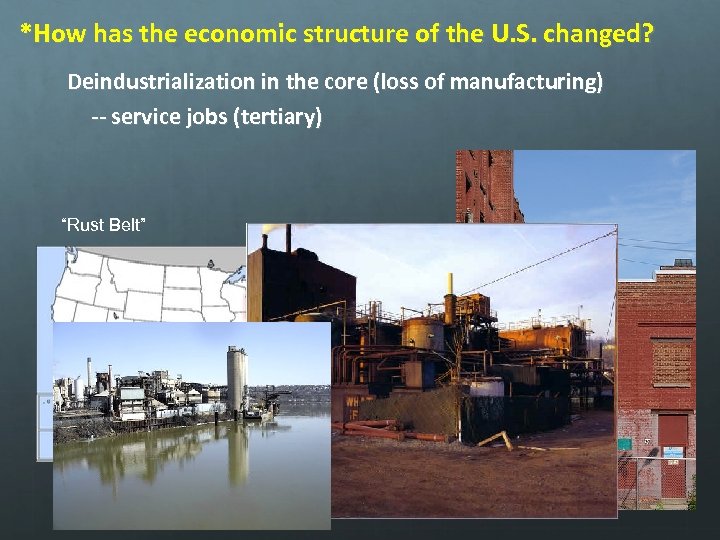
*How has the economic structure of the U. S. changed? Deindustrialization in the core (loss of manufacturing) -- service jobs (tertiary) “Rust Belt”
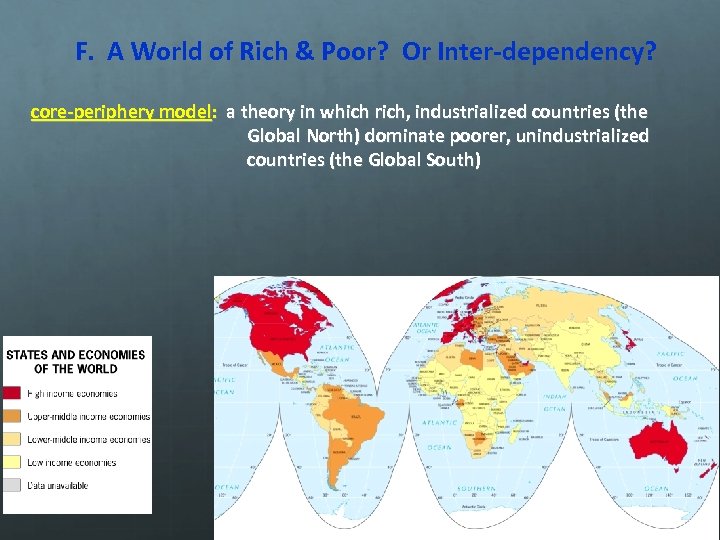
F. A World of Rich & Poor? Or Inter-dependency? core-periphery model: a theory in which rich, industrialized countries (the Global North) dominate poorer, unindustrialized countries (the Global South)
Скачать презентацию Locational Theories of Industry A Beginning of
08dc1bcfab7d8ec6c78208e2f3d2be1a.ppt