


 Скачать презентацию Local Plans Regulations or Policies Supporting Green Infrastructure
d305cc7a60cdd53e08115b73a13ff24d.ppt
- Количество слайдов: 32
 Local Plans, Regulations, or Policies Supporting Green Infrastructure City and County of Honolulu Department of Facility Maintenance – Storm Water Quality Randall Wakumoto, P. E. , Branch Head PLEASE HELP PROTECT OUR WATERS…FOR LIFE NOAA GREEN INFRASTRUCTURE WORKSHOP October 2015
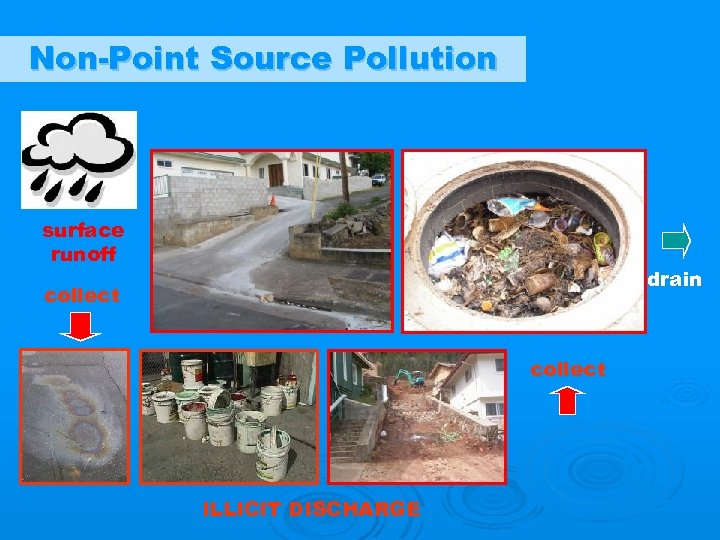 Non-Point Source Pollution surface runoff drain collect ILLICIT DISCHARGE
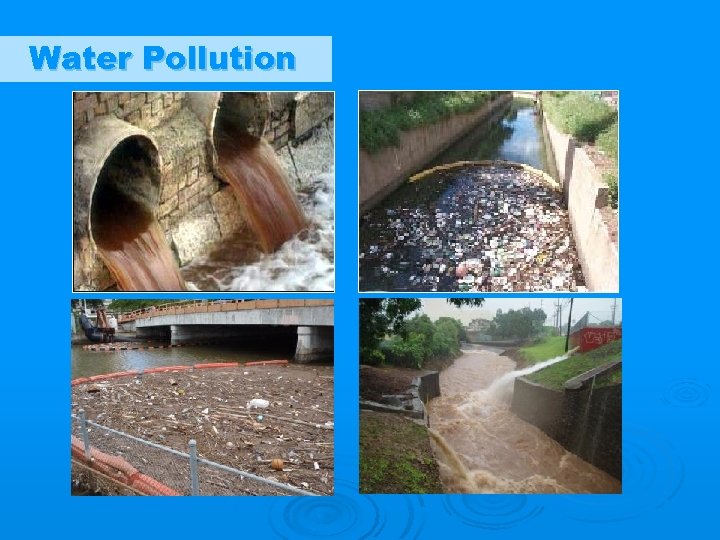 Water Pollution
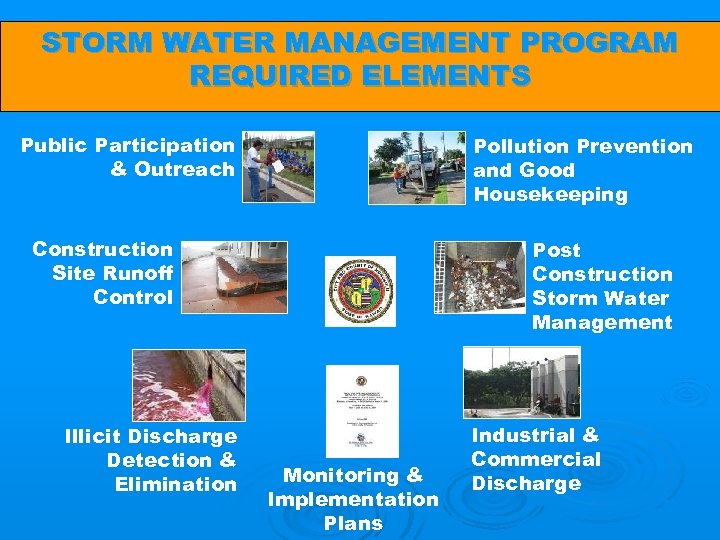 STORM WATER MANAGEMENT PROGRAM REQUIRED ELEMENTS Public Participation & Outreach Pollution Prevention and Good Housekeeping Construction Site Runoff Control Illicit Discharge Detection & Elimination Post Construction Storm Water Management Monitoring & Implementation Plans Industrial & Commercial Discharge
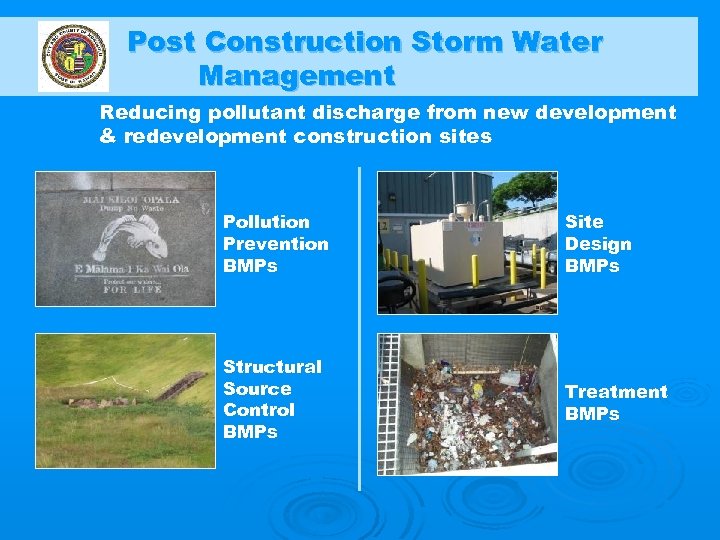 Post Construction Storm Water Management Reducing pollutant discharge from new development & redevelopment construction sites Pollution Prevention BMPs Site Design BMPs Structural Source Control BMPs Treatment BMPs
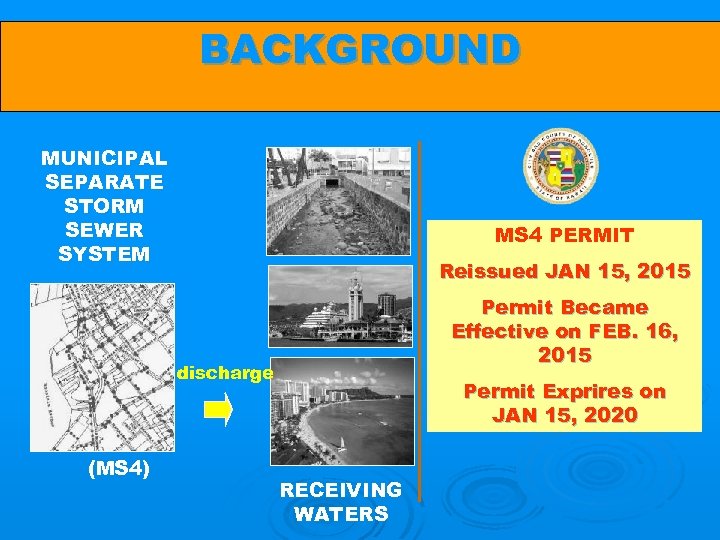 BACKGROUND MUNICIPAL SEPARATE STORM SEWER SYSTEM MS 4 PERMIT Reissued JAN 15, 2015 Permit Became Effective on FEB. 16, 2015 discharge (MS 4) Permit Exprires on JAN 15, 2020 RECEIVING WATERS
 BACKGROUND EPA MS 4 Audit conducted on April 23 -25, 2013 City received a Notice of Apparent Violation Letter on October 16, 2013 Post Construction BMP Program – Potential Violations • Inadequate Training for City Inspectors • Exemptions under Current City Revised Drainage Standards • Inconsistent application of LIDs for smaller sites • Lack of guidance for preferential BMPs
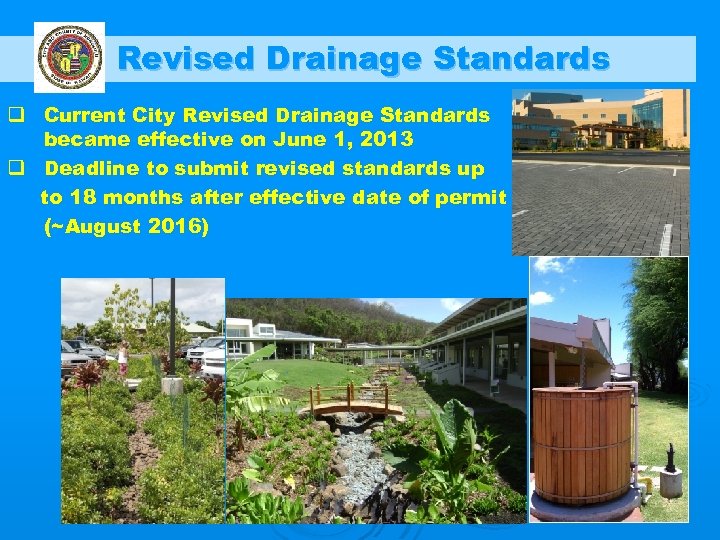 Revised Drainage Standards q Current City Revised Drainage Standards became effective on June 1, 2013 q Deadline to submit revised standards up to 18 months after effective date of permit (~August 2016)
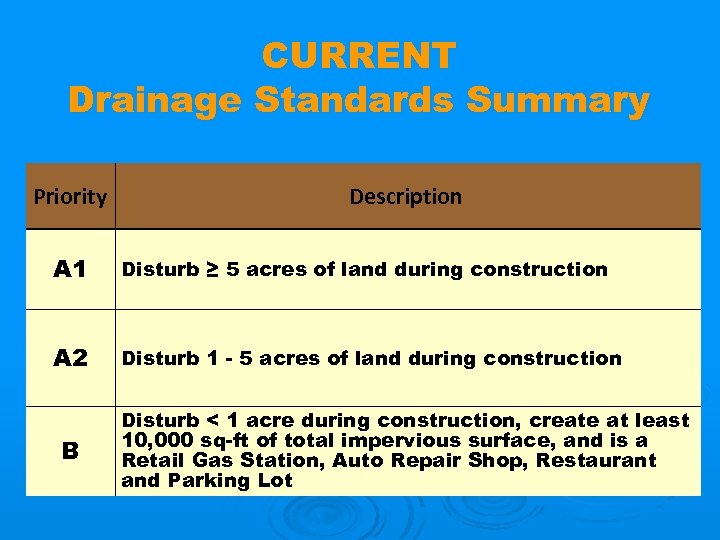 CURRENT Drainage Standards Summary Priority Description A 1 Disturb ≥ 5 acres of land during construction A 2 Disturb 1 - 5 acres of land during construction B Disturb < 1 acre during construction, create at least 10, 000 sq-ft of total impervious surface, and is a Retail Gas Station, Auto Repair Shop, Restaurant and Parking Lot
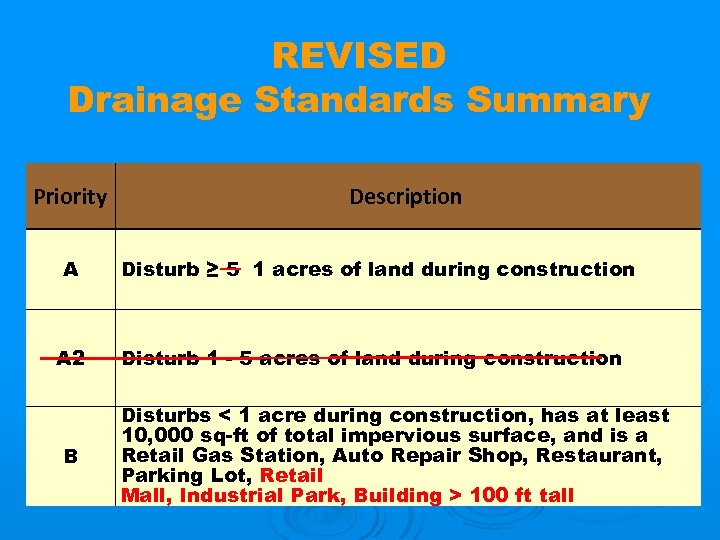 REVISED Drainage Standards Summary Priority A A 2 B Description Disturb ≥ 5 1 acres of land during construction Disturb 1 - 5 acres of land during construction Disturbs < 1 acre during construction, has at least 10, 000 sq-ft of total impervious surface, and is a Retail Gas Station, Auto Repair Shop, Restaurant, Parking Lot, Retail Mall, Industrial Park, Building > 100 ft tall
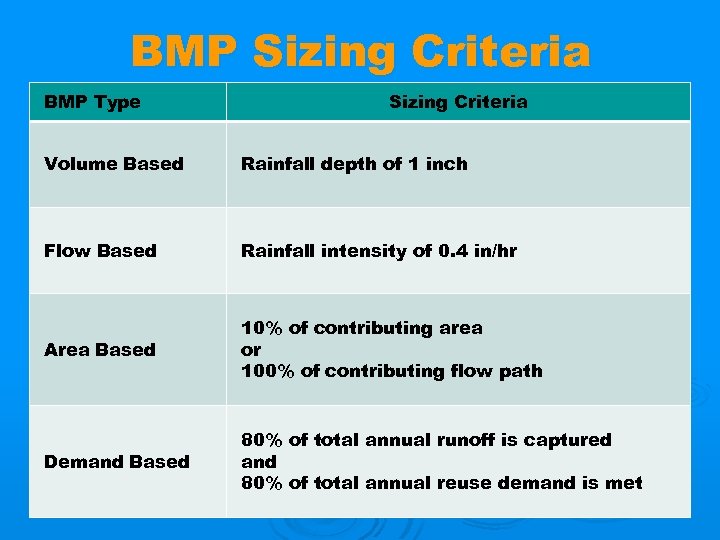 BMP Sizing Criteria BMP Type Sizing Criteria Volume Based Rainfall depth of 1 inch Flow Based Rainfall intensity of 0. 4 in/hr Area Based 10% of contributing area or 100% of contributing flow path Demand Based 80% of total annual runoff is captured and 80% of total annual reuse demand is met
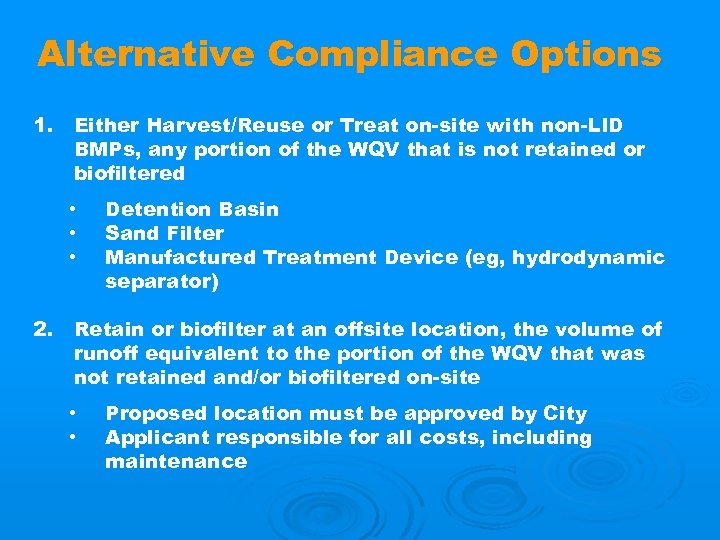 Alternative Compliance Options 1. Either Harvest/Reuse or Treat on-site with non-LID BMPs, any portion of the WQV that is not retained or biofiltered • • • Detention Basin Sand Filter Manufactured Treatment Device (eg, hydrodynamic separator) 2. Retain or biofilter at an offsite location, the volume of runoff equivalent to the portion of the WQV that was not retained and/or biofiltered on-site • • Proposed location must be approved by City Applicant responsible for all costs, including maintenance
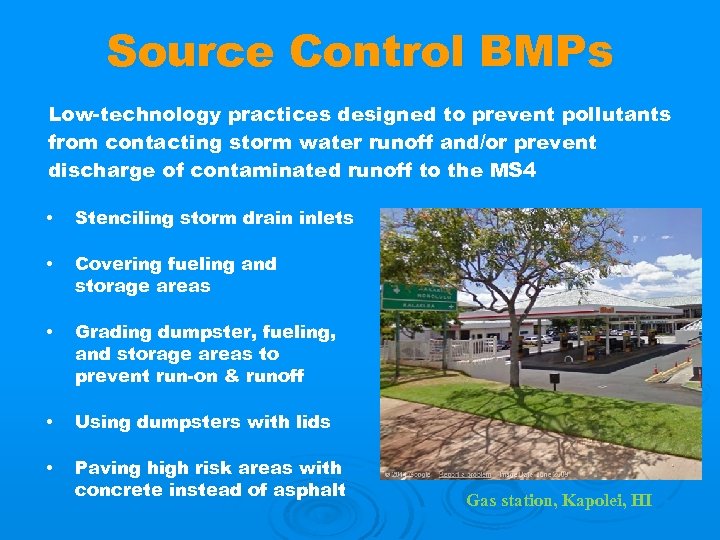 Source Control BMPs Low-technology practices designed to prevent pollutants from contacting storm water runoff and/or prevent discharge of contaminated runoff to the MS 4 • Stenciling storm drain inlets • Covering fueling and storage areas • Grading dumpster, fueling, and storage areas to prevent run-on & runoff • Using dumpsters with lids • Paving high risk areas with concrete instead of asphalt Gas station, Kapolei, HI
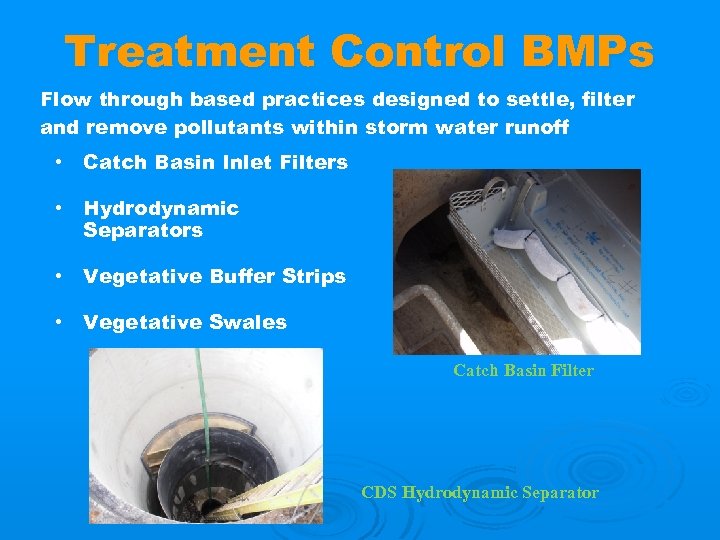 Treatment Control BMPs Flow through based practices designed to settle, filter and remove pollutants within storm water runoff • Catch Basin Inlet Filters • Hydrodynamic Separators • Vegetative Buffer Strips • Vegetative Swales Catch Basin Filter CDS Hydrodynamic Separator
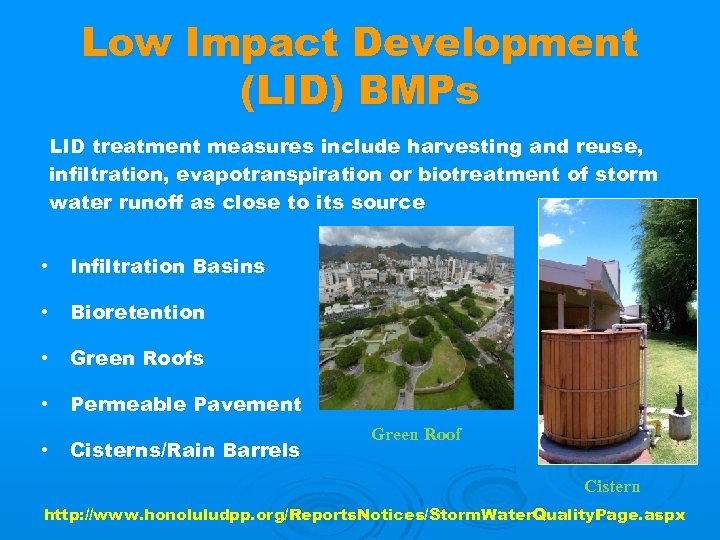 Low Impact Development (LID) BMPs LID treatment measures include harvesting and reuse, infiltration, evapotranspiration or biotreatment of storm water runoff as close to its source • Infiltration Basins • Bioretention • Green Roofs • Permeable Pavement • Cisterns/Rain Barrels Green Roof Cistern http: //www. honoluludpp. org/Reports. Notices/Storm. Water. Quality. Page. aspx
 LID Site Design Strategies 1. Conserve Natural Areas, Soils, and Vegetation 2. Minimize Disturbances to Natural Drainages 3. Minimize Soil Compaction 4. Minimize Impervious Surfaces 5. Direct Runoff to Landscaped Areas http: //www. honoluludpp. org/Reports. Notices/Storm. Water. Quality. Page. as px
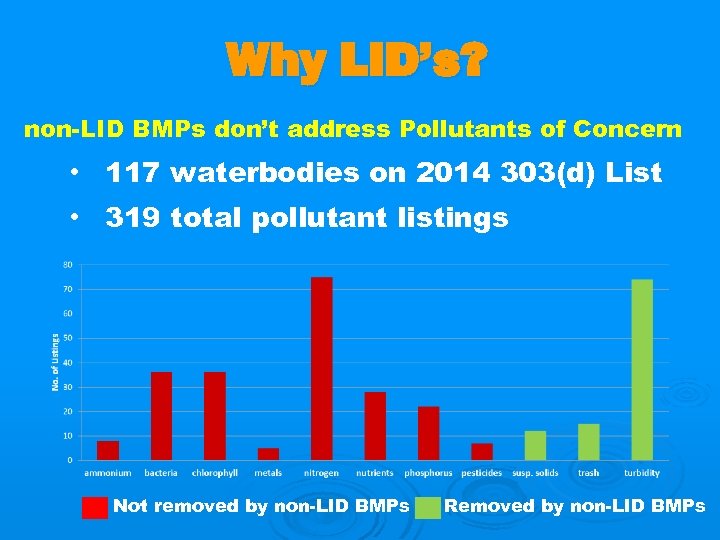 Why LID’s? non-LID BMPs don’t address Pollutants of Concern • 117 waterbodies on 2014 303(d) List • 319 total pollutant listings Not removed by non-LID BMPs Removed by non-LID BMPs
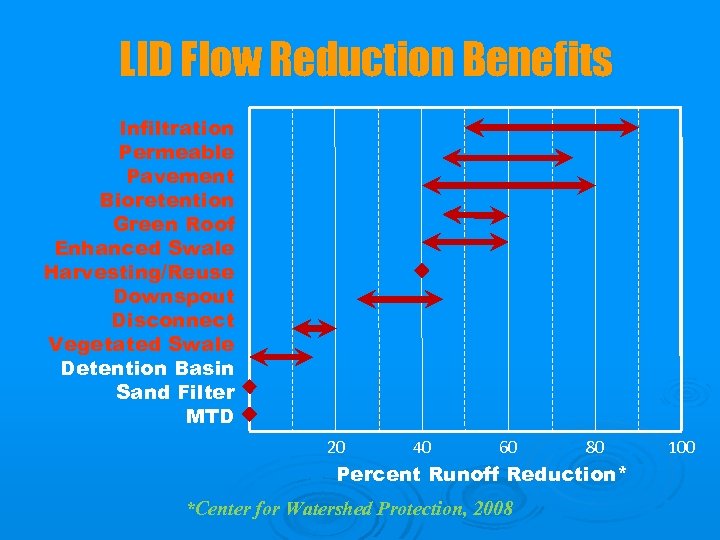 LID Flow Reduction Benefits Infiltration Permeable Pavement Bioretention Green Roof Enhanced Swale Harvesting/Reuse Downspout Disconnect Vegetated Swale Detention Basin Sand Filter MTD 20 40 60 80 Percent Runoff Reduction* *Center for Watershed Protection, 2008 100
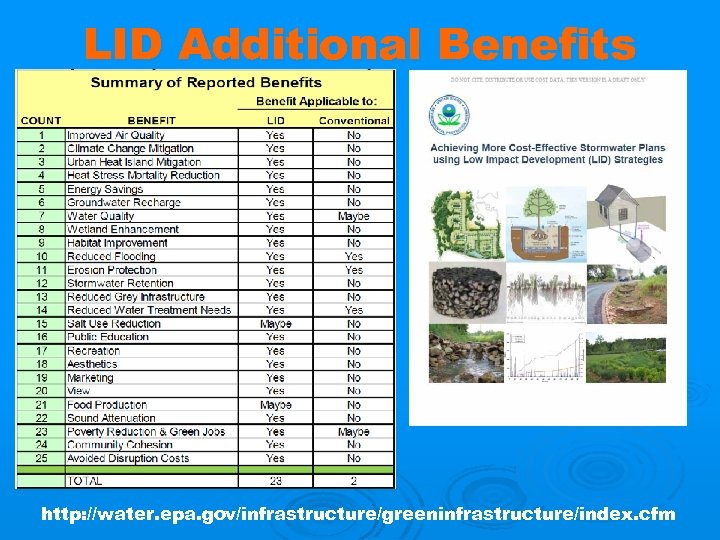 LID Additional Benefits http: //water. epa. gov/infrastructure/greeninfrastructure/index. cfm
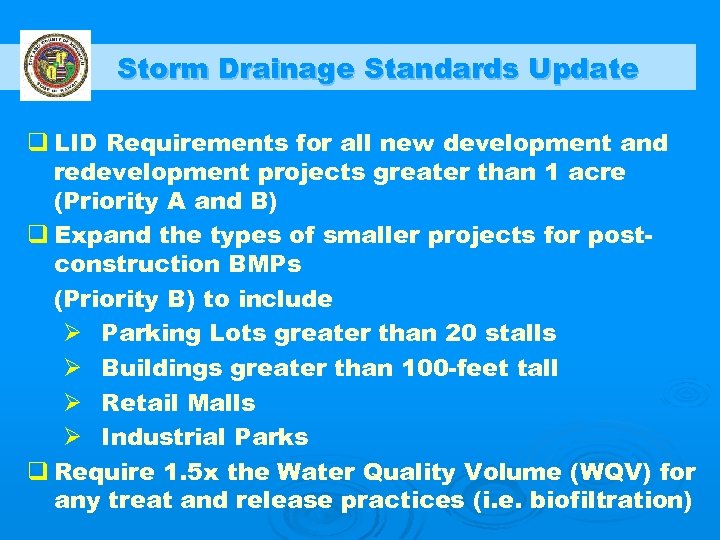 Storm Drainage Standards Update q LID Requirements for all new development and redevelopment projects greater than 1 acre (Priority A and B) q Expand the types of smaller projects for postconstruction BMPs (Priority B) to include Ø Parking Lots greater than 20 stalls Ø Buildings greater than 100 -feet tall Ø Retail Malls Ø Industrial Parks q Require 1. 5 x the Water Quality Volume (WQV) for any treat and release practices (i. e. biofiltration)
 Storm Drainage Standards Update (Cont’d) q Requirement to prepare a separate Post. Construction BMP Plan that identifies both LID, Treatment and Source Control BMPs on the drawing q Requirement for submitting a Storm Water Applicability Checklist that prioritizes and identifies the need, type and location for permanent post-construction BMPs. q Requirement for submitting Storm Water Checklist for all applicable projects that includes O&M Plan outlining inspection and maintenance responsibilities.
 Storm Drainage Standards Update (Cont’d) q Expand on City’s Storm Water BMP Guide to include a risk ranking process (low, medium and high) for prioritizing BMP selection that factors in maintenance performance and pollutant removal effectiveness for site specific pollutants of concern. q Requirement for submitting a Covenant Master Agreement or similar document that must be signed by the owner/developer or authorized representative. q Requirement for a Certificate of Completion to be signed prior to permit closure to confirm that the BMPs have been installed in conformance to the approved construction plans.
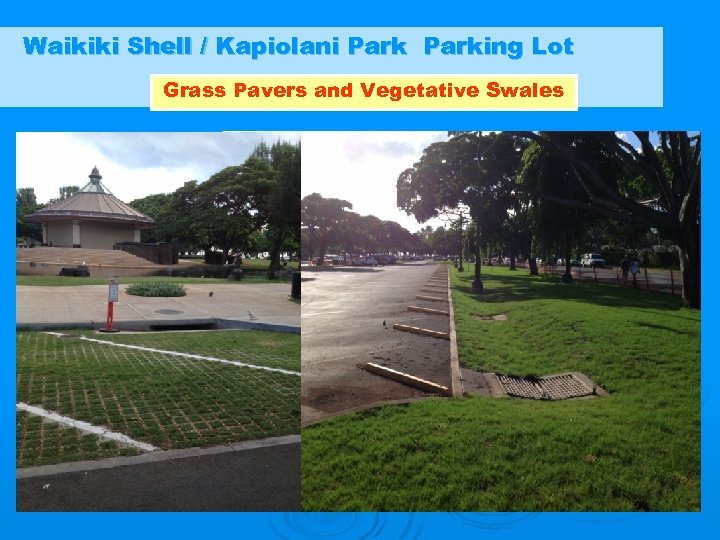 Waikiki Shell / Kapiolani Parking Lot Grass Pavers and Vegetative Swales
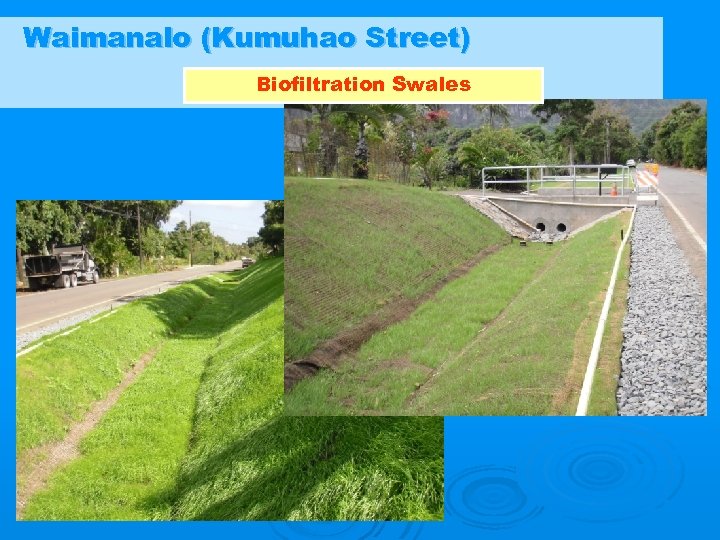 Waimanalo (Kumuhao Street) Biofiltration Swales
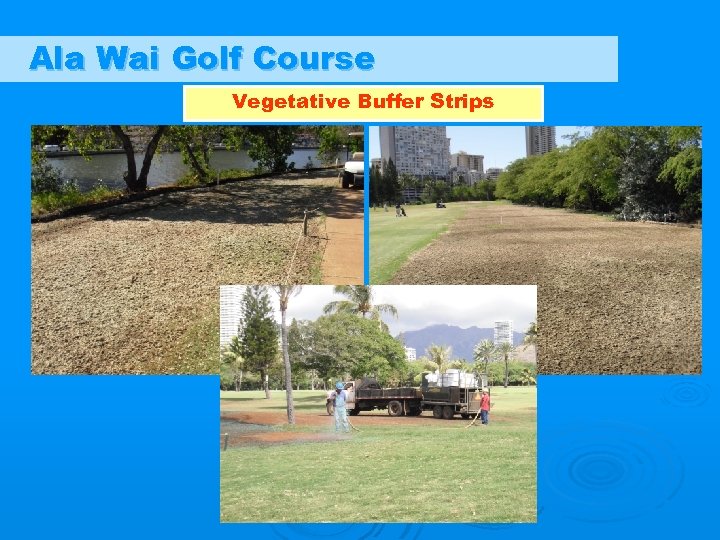 Ala Wai Golf Course Vegetative Buffer Strips
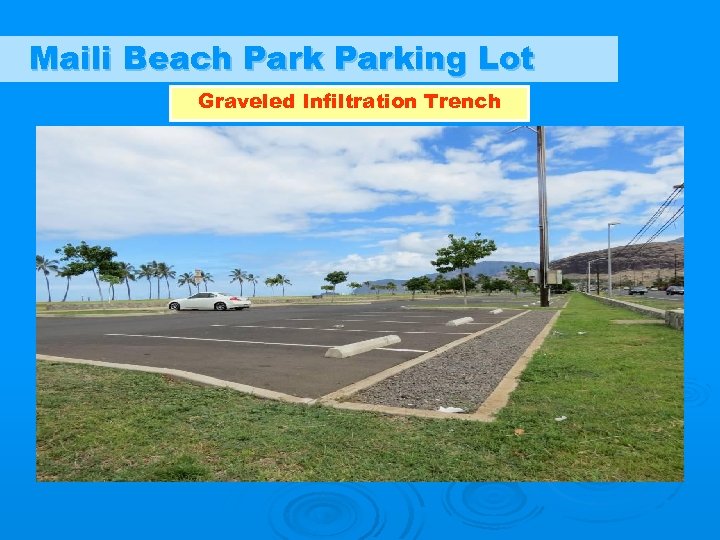 Maili Beach Parking Lot Graveled Infiltration Trench
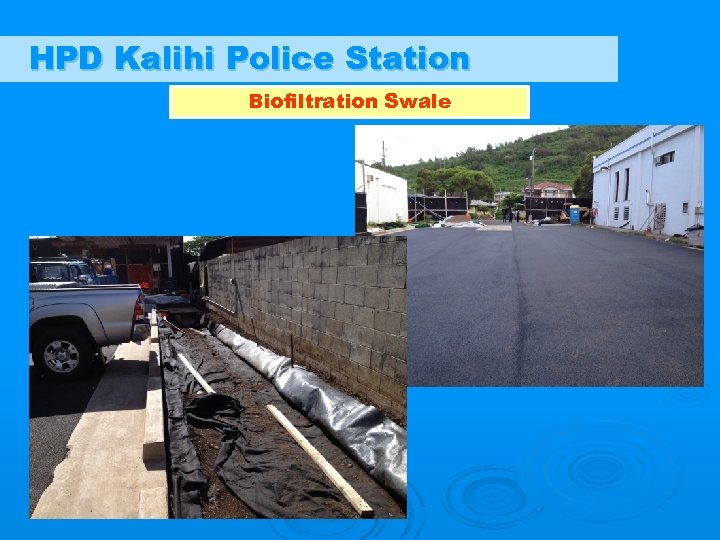 HPD Kalihi Police Station Biofiltration Swale
 LID Considerations q Plan ahead and coordinate with design team (i. e. soils engineer, landscape architect, structural engineer, etc. ) to bring them on board as early as possible q Evaluate site specific conditions to identify pollutant sources and pollutants of concern when selecting LID options, as well as consider site constraints that could make implementing LID infeasible q Develop detailed language in specifications that outlines contractor responsibilities when installing any LID designs q Heavily factor in operations and maintenance activities when selecting LID and establish programs and funding alternatives with client in advance to address this critical issue
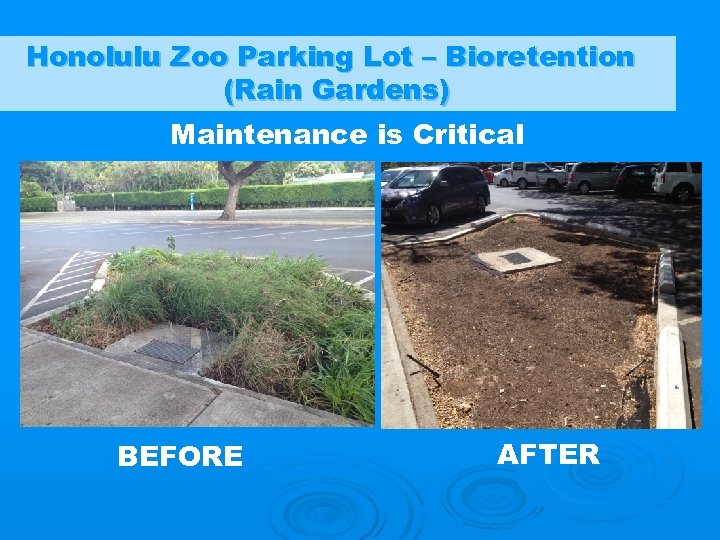 Honolulu Zoo Parking Lot – Bioretention (Rain Gardens) Maintenance is Critical BEFORE AFTER
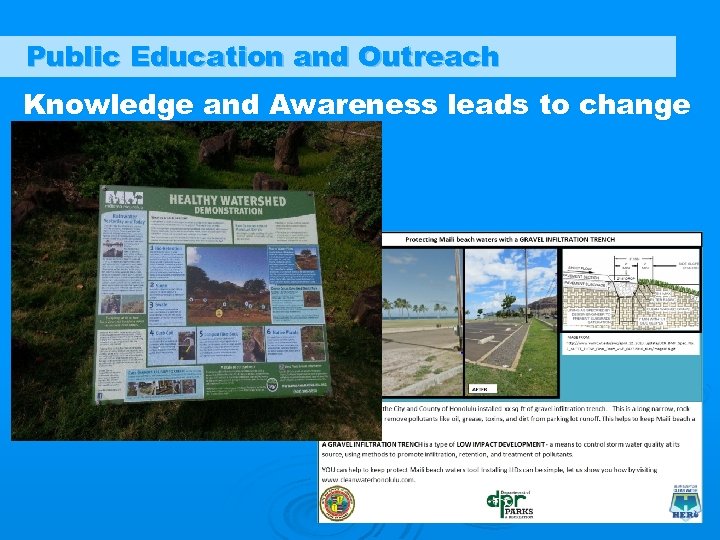 Public Education and Outreach Knowledge and Awareness leads to change
 QUESTIONS
 THANK YOU For More Information: RANDALL WAKUMOTO, BRANCH HEAD Storm Water Quality Branch Ph: 768 -3242 Email: rwakumoto@honolulu. gov City & County of Honolulu Department of Facility Maintenance www. cleanwaterhonolulu. com Environmental Concern Line 768 -3300