


 Скачать презентацию Living Wi ely Session One Three Rules Your
0eae4a8abca30deef18913c62cd5eb79.ppt
- Количество слайдов: 26
 Living Wi$ely Session One Three Rules
 Your Money Story The first money you received § § § Gift or reward Occasion What to do with it
 Some Questions How would you define the difference between “Wants” and “Needs”
 Meet Steve and Jessica Write down their financial mistakes you identify as the story is read
 Steve and Jessica’s Mistakes § § Too much college debt Financing the honeymoon Leasing new cars Buying used cars that were too and financing 100 % § Giving is not a priority § Buying a home too early expensive
 Steve and Jessica’s Mistakes § Looking at houses they couldn’t afford § Buying a house that was 30 % over their budget § Thirty-year mortgage § Borrowing from parents § Buying furniture on credit § Using a credit card to buy clothes
 Good Questions § Do you think these financial mistakes are typical ? § Which mistake do you think is most dangerous ? § What caused Steve and Jessica to make these mistakes ?
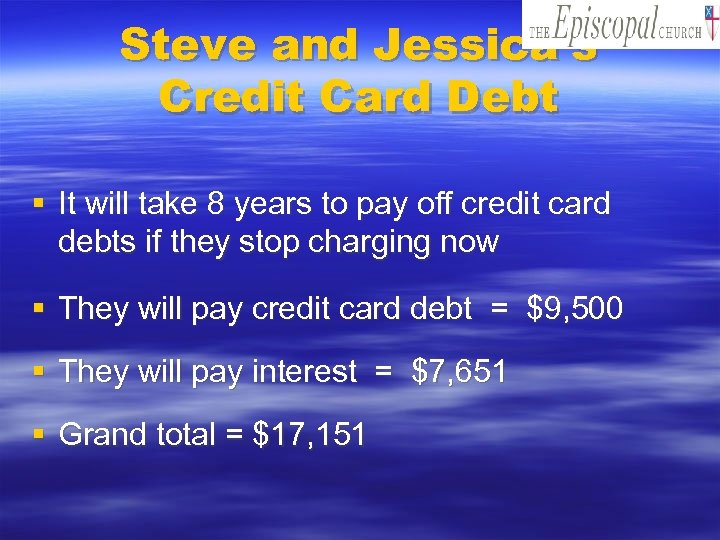 Steve and Jessica’s Credit Card Debt § It will take 8 years to pay off credit card debts if they stop charging now § They will pay credit card debt = $9, 500 § They will pay interest = $7, 651 § Grand total = $17, 151
 Good Questions § Do you think these financial mistakes are typical ? § Which mistake do you think is most dangerous ? § What caused Steve and Jessica to make these mistakes ?
 Babies R Us § Purchased furniture and clothes = $2, 500 § When paid off = $3, 470 They will still be paying for baby furniture when their child enters kindergarten
 Personal Financial Habits Assessment
 Personal Financial Habits § Most difficult good habit to maintain § Most difficult bad habit to break
 Three Simple Rules 1. Spend Less Than You Earn 2. Save Now Buy Later 1. Know Debt
 Rule One Spend Less Than You Earn
 Tips for Spending Less than You Earn § Understand your paycheck ($10/hr does not compute to 1 hr work = $10 item) § Can’t afford it… don’t buy it § § § Don’t buy on impulse Biggie size your fries, not your house or car Think used Pay cash Plan your spending
 Rule One Spend Less Than You Earn
 Rule Two Save Now Buy Later
 Types of Savings § Emergency Account Use for unplanned expenses – Add to this account every payday – Should equal 5 % of your annual income – Fund this account first
 Types of Savings § Short Term Account Allows you to pay cash for big ticket items that you plan to buy in the next five years. Amount depends on big ticket items in your five-year plan
 Types of Savings § Long Term Account Allows you to plan for items you will pay for in the future… children’s education, wedding, or retirement Recommendation: Save 10 % of every paycheck and divide among savings accounts as appropriate.
 Rule Three Know Debt
 Consequences of Debt § Reduces standard of living § Reduces ability to save § Reduces ability to give § Causes frustration and stress § Causes discord in families
 Getting Out of Debt § Have a plan § Apply the 4 “Ds”
 The Four “Ds” § Desire § Decision § Discipline § Delight
 Remember the Three Rules 1. Spend Less Than You Earn 2. Save Now Buy Later 1. Know Debt
 Homework § Read Three Simple Rules – Part 2 A Financial Physical – Addendum § Write down a few of your financial goals