Скачать презентацию Liver Cirrhosis K Dionne Posey MD MPH Internal
(8)Liver Cirrhosis2.ppt
- Количество слайдов: 60
 Liver Cirrhosis K. Dionne Posey, MD, MPH Internal Medicine & Pediatrics December 9, 2004
 Introduction Ë The two most common causes in the United States are alcoholic liver disease and hepatitis C, which together account for almost one-half of those undergoing transplantation
 Introduction Ë 12 th leading cause of death in the united states in 2002 Ë On average about 27, 000 deaths per year Ë Patients with cirrhosis are susceptible to a variety of complications and their life expectancy is markedly reduced
 Exactly How Much Do You Drink? Ë Estimated that the development of cirrhosis requires, on average, the ingestion of 80 grams of ethanol daily for 10 to 20 years Ë This corresponds to approximately one liter of wine, eight standard sized beers, or one half pint of hard liquor each day
 Pathophysiology Irreversible chronic injury of the hepatic parenchyma Ë Extensive fibrosis - distortion of the hepatic architecture Ë Formation of regenerative nodules Ë
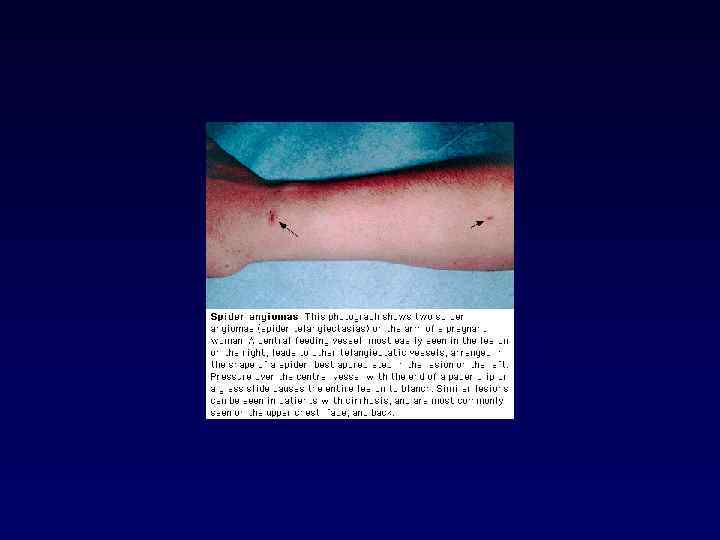
 Clinical Manifestations Spider angiomas Ë Palmar erythema Ë Nail changes Ë ø Muehrcke's nails ø Terry’s nails Gynecomastia Ë Testicular atrophy Ë
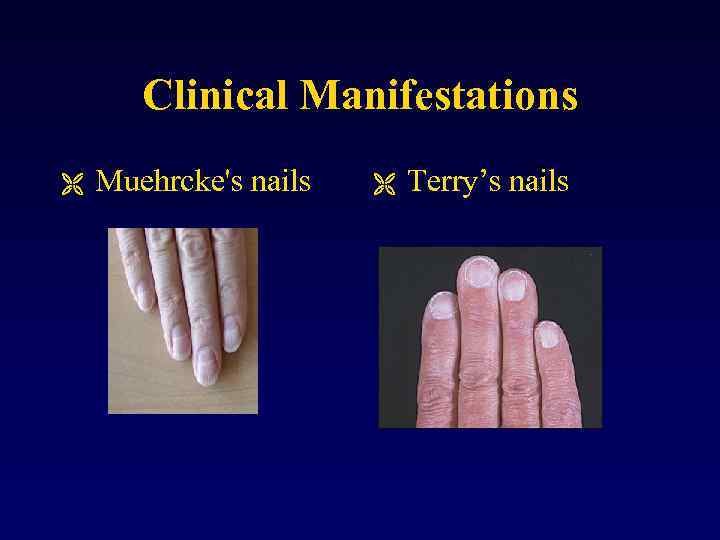 Clinical Manifestations Ë Muehrcke's nails Ë Terry’s nails
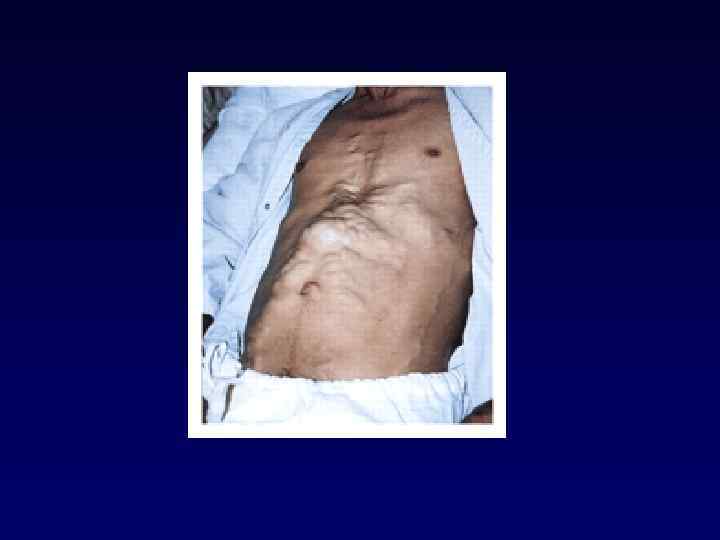
 Clinical Manifestations Ë Fetor hepaticus Ë Jaundice Ë Asterixis Ë Pigment gallstones Ë Parotid gland enlargement Ë Cruveilhier- Baumgarten murmur Ë Hepatomegaly Ë Splenomegaly Ë Caput medusa
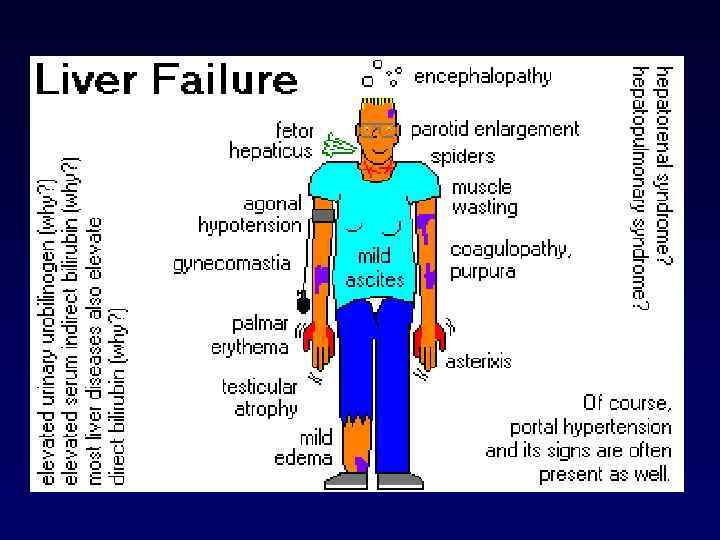
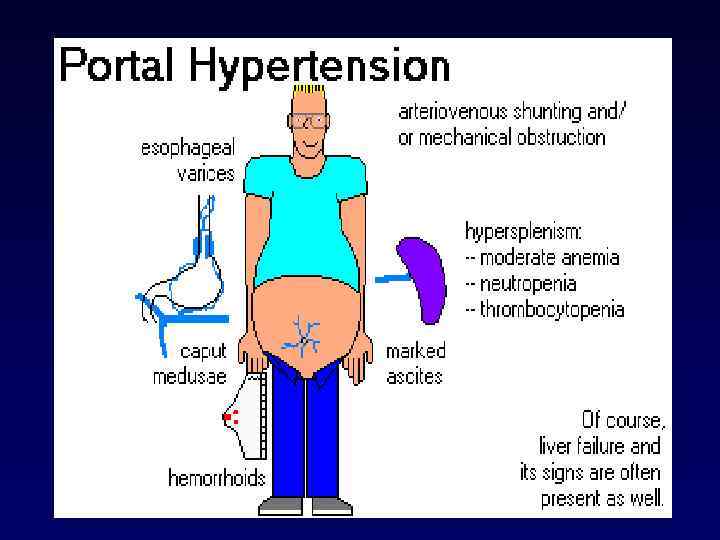
 Laboratory Studies Ë most common measured laboratory test classified as LFTs include ø the enzyme tests (principally the serum aminotransferases, alkaline phosphatase, and gamma glutamyl transpeptidase), the serum bilirubin ø tests of synthetic function (principally the serum albumin concentration and prothrombin time)
 Radiologic Modalities Ë Can occasionally suggest the presence of cirrhosis, they are not adequately sensitive or specific for use as a primary diagnostic modality Ë Major utility of radiography in the evaluation of the cirrhotic patient is in its ability to detect complications of cirrhosis
 Diagnosis Ë Liver biopsy ø Obtained by either a percutaneous, transjugular, laparoscopic, or radiographicallyguided fine-needle approach ø Sensitivity of a liver biopsy for cirrhosis is in the range of 80 to 100 percent depending upon the method used, and the size and number of specimens obtained
 Diagnosis ø not necessary if the clinical, laboratory, and radiologic data strongly suggest the presence of cirrhosis ø liver biopsy can reveal the underlying cause of cirrhosis
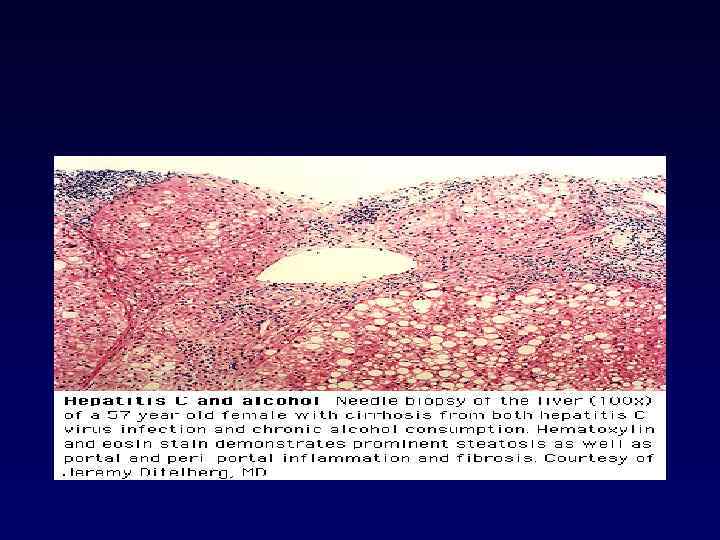
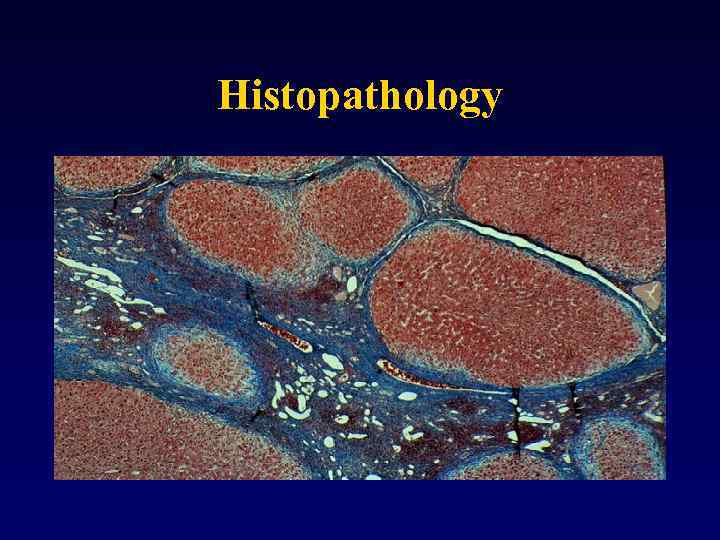 Histopathology
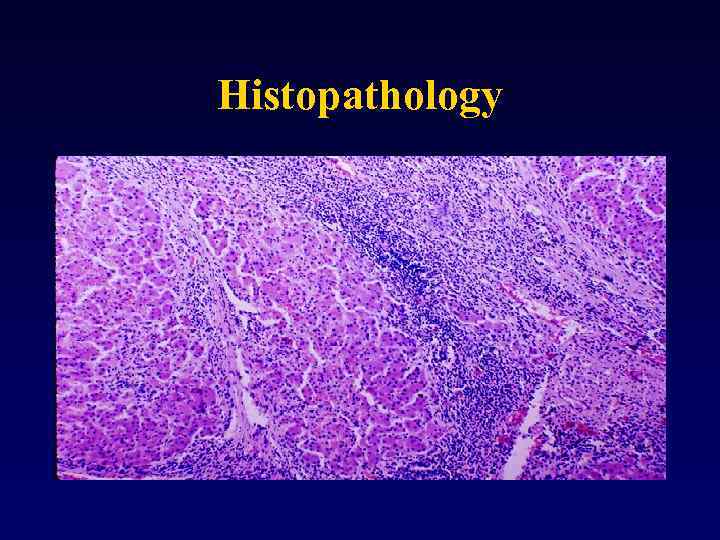 Histopathology
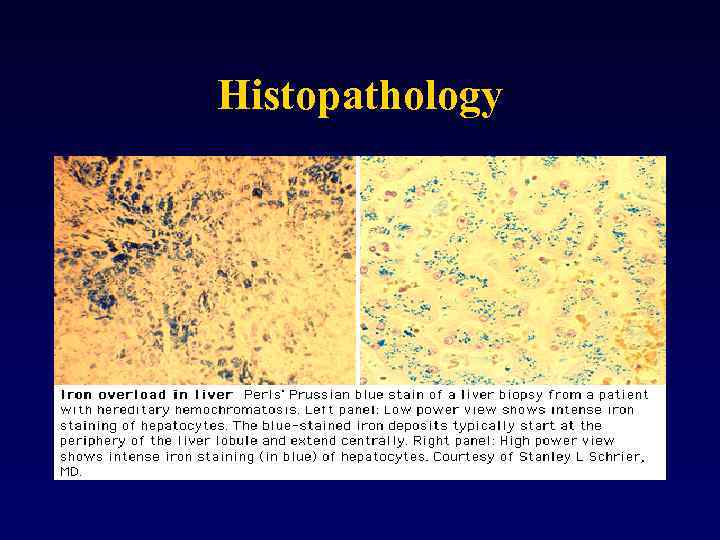 Histopathology
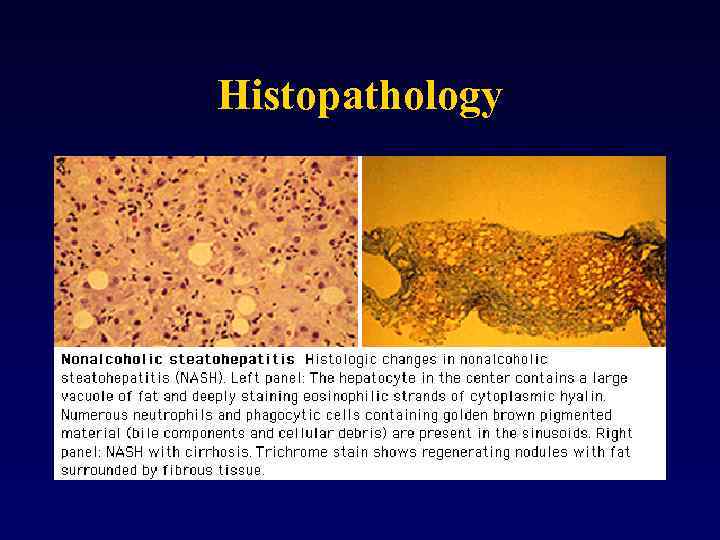 Histopathology
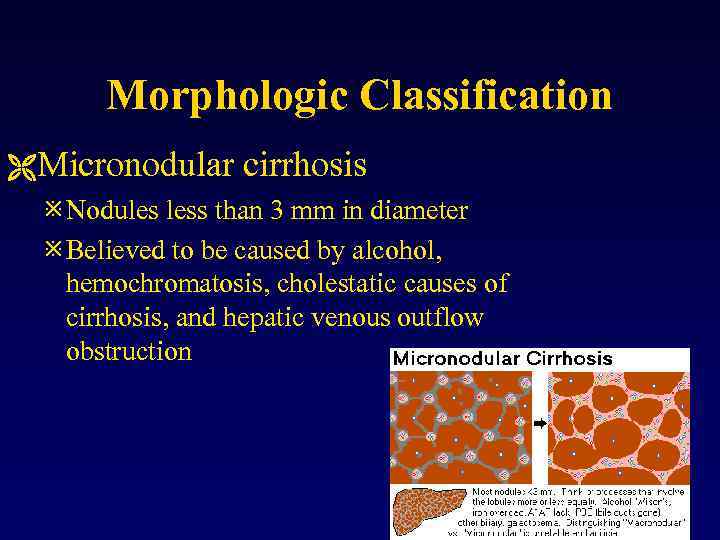 Morphologic Classification ËMicronodular cirrhosis ø Nodules less than 3 mm in diameter ø Believed to be caused by alcohol, hemochromatosis, cholestatic causes of cirrhosis, and hepatic venous outflow obstruction
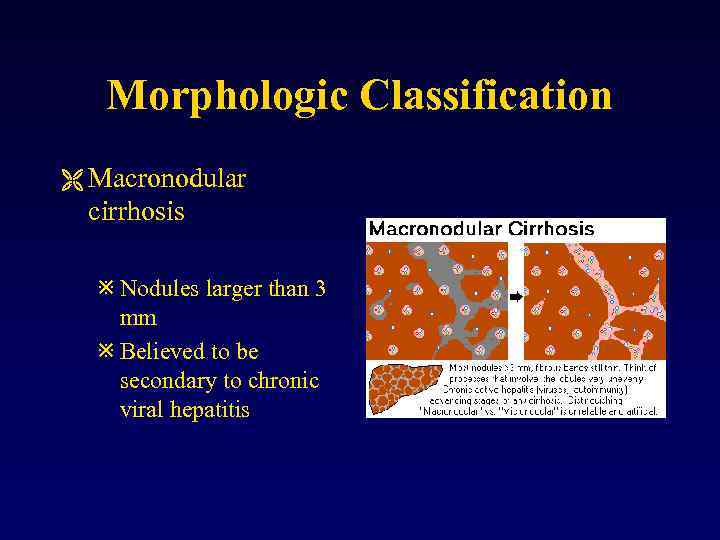 Morphologic Classification Ë Macronodular cirrhosis ø Nodules larger than 3 mm ø Believed to be secondary to chronic viral hepatitis
 Morphologic Classification Relatively nonspecific with regard to etiology Ë The morphologic appearance of the liver may change as the liver disease progresses Ë ø micronodular cirrhosis usually progresses to macronodular cirrhosis Serological markers available today are more specific than morphological appearance of the liver for determining the etiology of cirrhosis Ë Accurate assessment of liver morphology may only be achieved at surgery, laparoscopy, or autopsy Ë
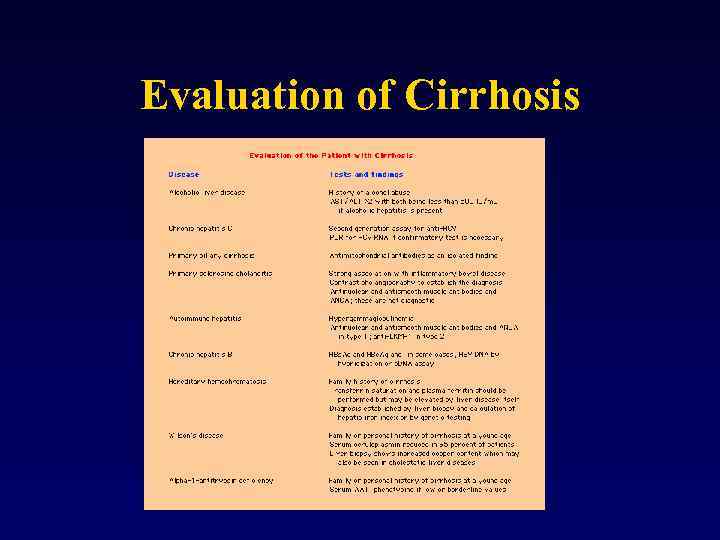 Evaluation of Cirrhosis
 Complications Ë Ascites Ë Spontaneous Bacterial Peritonitis Ë Hepatorenal syndrome Ë Variceal hemorrhage Ë Hepatopulmonary syndrome
 Complications Ë Other Pulmonary syndromes ø Hepatic hydrothorax ø Portopulmonary HTN Ë Hepatic Encephalopathy Ë Hepatocellular carcinoma
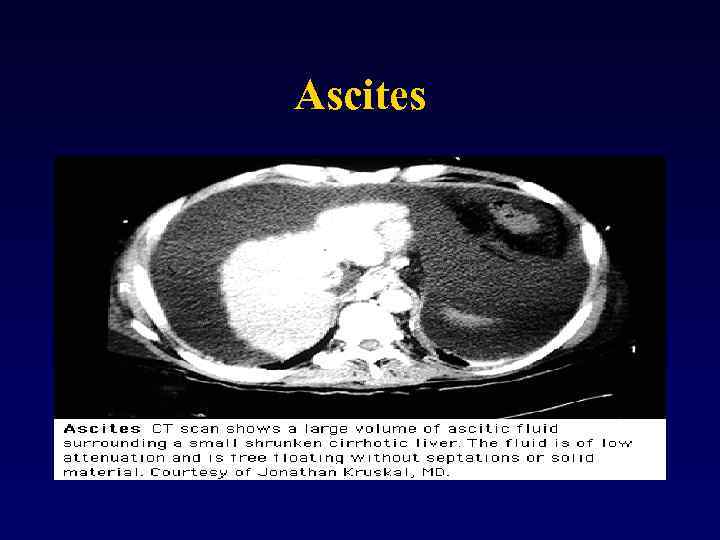
 Ascites Ë Accumulation of fluid within the peritoneal cavity Ë Most common complication of cirrhosis Ë Two-year survival of patients with ascites is approximately 50 percent
 Ascites Ë Assessment of ascites ø Grading ³Grade 1 — mild; Detectable only by US ³Grade 2 — moderate; Moderate symmetrical distension of the abdomen ³Grade 3 — large or gross asites with marked abdominal distension ø Older system -subjective ³ 1+ minimal, barely detectable ³ 2+ moderate ³ 3+ massive, not tense ³ 4+massive and tense
 Ascites Ë Imaging studies for confirmation of ascites ø Ultrasound is probably the most cost-effective modality
 Ascites
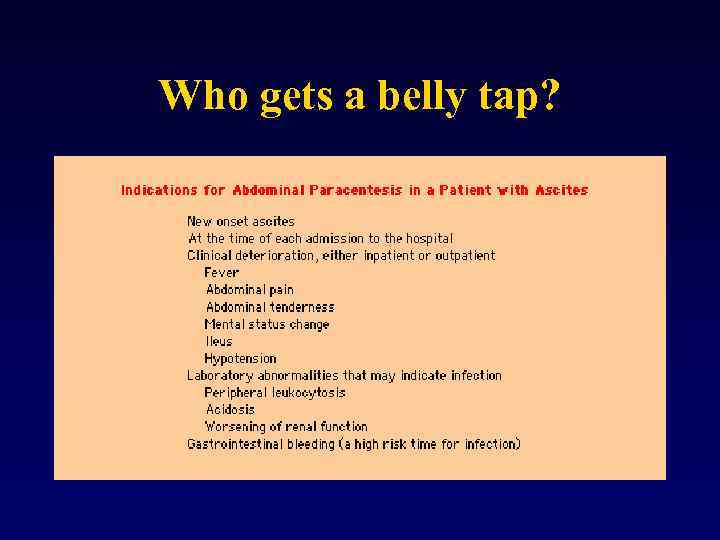 Who gets a belly tap?
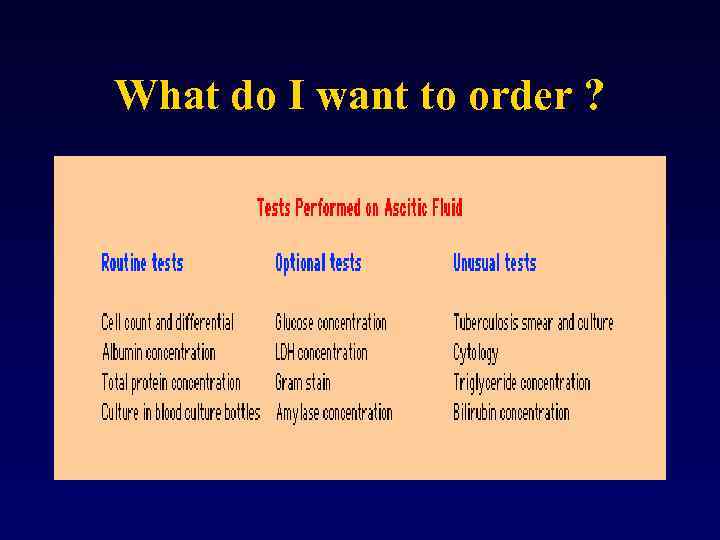 What do I want to order ?
 Ascites Ë Treatment aimed at the underlying cause of the hepatic disease and at the ascitic fluid itself Ë Dietary sodium restriction ø Limiting sodium intake to 88 meq (2000 mg) per day
 Ascites Ë The most successful therapeutic regimen is the combination of single morning oral doses of Spironolactone and Furosemide, beginning with 100 mg and 40 mg Ë Two major concerns with diuretic therapy for cirrhotic ascites: ø Overly rapid removal of fluid ø Progressive electrolyte imbalance
 Spontaneous Bacterial Peritonitis Ë Infection of ascitic fluid Ë Almost always seen in the setting of endstage liver disease Ë The diagnosis is established by ø A positive ascitic fluid bacterial culture ø Elevated ascitic fluid absolute polymorphonuclear leukocyte (PMN) count ( >250 cells/mm 3)
 Spontaneous Bacterial Peritonitis Ë Clinical manifestations: ø Fever ø Abdominal pain ø Abdominal tenderness ø Altered mental status
 Hepatorenal syndrome Ë acute renal failure coupled with advanced hepatic disease (due to cirrhosis or less often metastatic tumor or severe alcoholic hepatitis) Ë characterized by: ø Oliguria ø benign urine sediment ø very low rate of sodium excretion ø progressive rise in the plasma creatinine concentration
 Hepatorenal Syndrome Ë Reduction in GFR often clinically masked Ë Prognosis is poor unless hepatic function improves Ë Nephrotoxic agents and overdiuresis can precipitate HRS
 Variceal hemorrhage Ë Occurs in 25 to 40 percent of patients with cirrhosis Ë Prophylactic measures Ë Screening EGD recommended for all cirrhotic patients
 Hepatopulmonary syndrome Ë Hepatopulmonary syndrome ø Liver disease ø Increased alveolar-arterial gradient while breathing room air ø Evidence for intrapulmonary vascular abnormalities, referred to as intrapulmonary vascular dilatations (IPVDs)
 Hepatic Hydrothorax Ë Pleural effusion in a patient with cirrhosis and no evidence of underlying cardiopulmonary disease Ë Movement of ascitic fluid into the pleural space through defects in the diaphragm, and is usually right-sided Ë Diagnosis -pleural fluid analysis ø reveals a transudative fluid ø serum to fluid albumin gradient greater than 1. 1
 Hepatic hydrothorax Ë Confirmatory study: ø Scintigraphic studies demonstrate tracer in the chest cavity after injection into the peritoneal cavity Ë Treatment options: ø diuretic therapy ø periodic thoracentesis ø TIPS
 Portopulmonary HTN Ë Refers to the presence of pulmonary hypertension in the coexistent portal hypertension Ë Prevalence in cirrhotic patients is approximately 2 percent Ë Diagnosis: ø Suggested by echocardiography ø Confirmed by right heart catheterization
 Hepatic Encephalopathy Ë Spectrum of potentially reversible neuropsychiatric abnormalities seen in patients with liver dysfunction ø Diurnal sleep pattern pertubation ø Asterixis ø Hyperactive deep tendon reflexes ø Transient decerebrate posturing
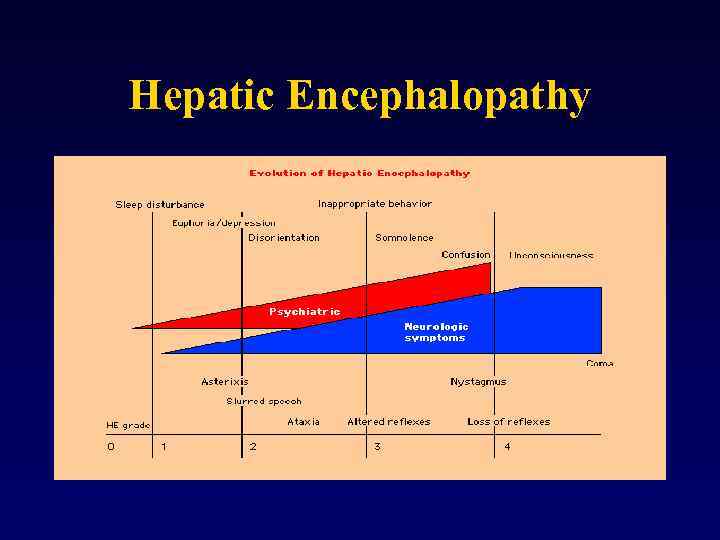 Hepatic Encephalopathy
 Hepatic Encephalopathy Ë Monitoring for events likely to precipitate HE [i. E. - variceal bleeding, infection (such as SBP), the administration of sedatives, hypokalemia, and hyponatremia] Ë Reduction of ammoniagenic substrates ø Lactulose / lactitol ø Dietary restriction of protein ø Zinc and melatonin
 Hepatocellular Carcinoma Ë Patients with cirrhosis have a markedly increased risk of developing hepatocellular carcinoma Ë Incidence in well compensated cirrhosis is approximately 3 percent per year
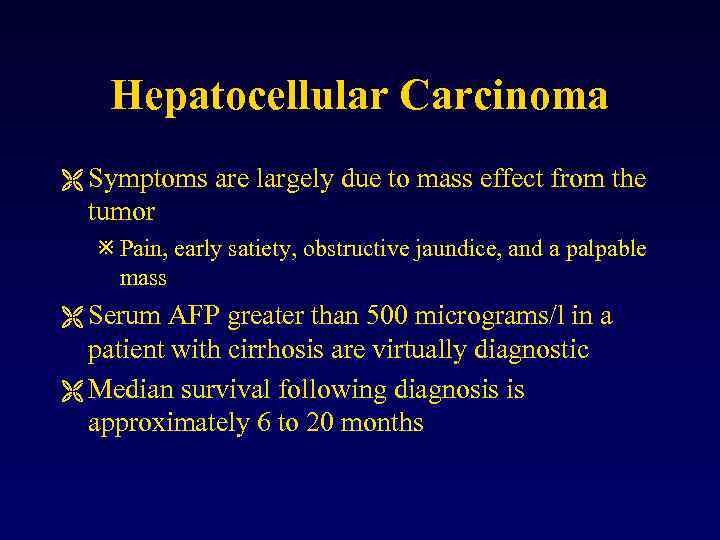 Hepatocellular Carcinoma Ë Symptoms are largely due to mass effect from the tumor ø Pain, early satiety, obstructive jaundice, and a palpable mass Ë Serum AFP greater than 500 micrograms/l in a patient with cirrhosis are virtually diagnostic Ë Median survival following diagnosis is approximately 6 to 20 months
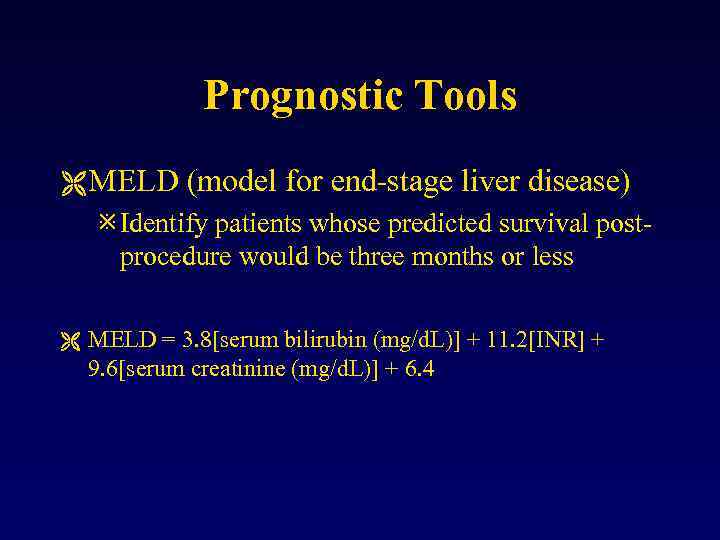 Prognostic Tools Ë MELD (model for end-stage liver disease) ø Identify patients whose predicted survival postprocedure would be three months or less Ë MELD = 3. 8[serum bilirubin (mg/d. L)] + 11. 2[INR] + 9. 6[serum creatinine (mg/d. L)] + 6. 4
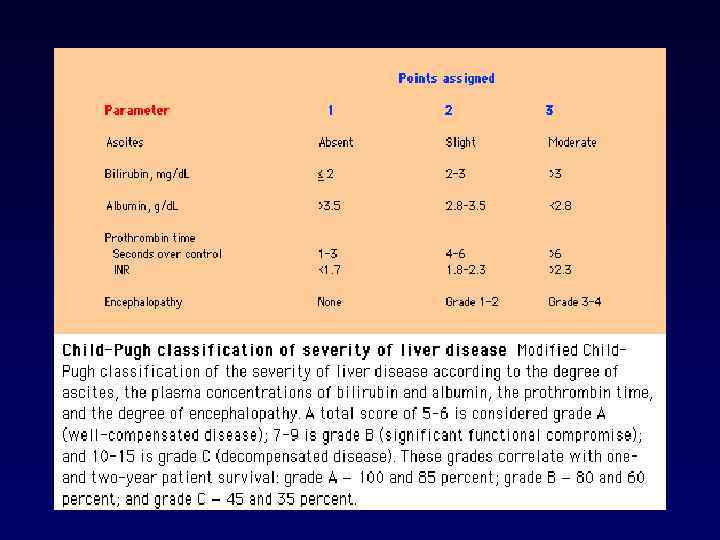
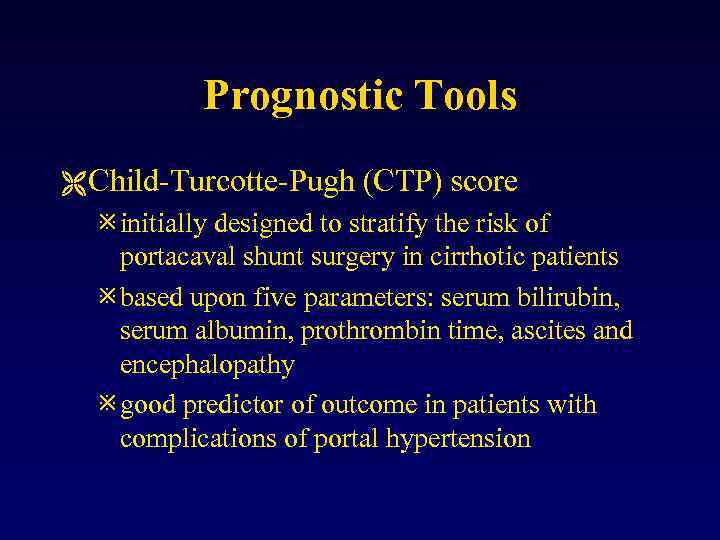 Prognostic Tools Ë Child-Turcotte-Pugh (CTP) score ø initially designed to stratify the risk of portacaval shunt surgery in cirrhotic patients ø based upon five parameters: serum bilirubin, serum albumin, prothrombin time, ascites and encephalopathy ø good predictor of outcome in patients with complications of portal hypertension
 Prognostic Tools Ë APACHE III (acute physiology and chronic health evaluation system) ø Designed to predict an individual's risk of dying in the hospital
 Treatment Options Ë The major goals of treating the cirrhotic patient include: ø Slowing or reversing the progression of liver disease ø Preventing superimposed insults to the liver ø Preventing and treating the complications ø Determining the appropriateness and optimal timing for liver transplantation
 Liver Transplantation Ë Liver transplantation is the definitive treatment for patients with decompensated cirrhosis Ë Depends upon the severity of disease, quality of life and the absence of contraindications
 Liver Transplantation Ë Minimal criteria for listing cirrhotic patients on the liver transplantation list include ø A child-Pugh score 7 ø Less than 90 percent chance of surviving one year without a transplant ø An episode of gastrointestinal hemorrhage related to portal hypertension ø An episode of spontaneous bacterial peritonitis
 Vaccinations Ë Hepatitis A and B Ë Pneumococcal vaccine Ë Influenza vaccination
 Surveillance Ë Screening recommendations: ø serum AFP determinations and ultrasonography every six months
 Avoidance of Superimposed Insults Ë Avoidance of: øAlcohol øAcetaminophen øHerbal medications
 References Up to Date Ë Harrison’s Ë New England Journal Ë http: //www. openclinical. org/aisp_apache. html Ë Nail abnormalities: clues to systemic disease, American Family Physician, March 15, 2004 Robert Fawcett Ë