


 Скачать презентацию Literacy for the 21 st Century what
c312cd49686385773c41324d21410786.ppt
- Количество слайдов: 47
 Literacy for the 21 st Century – what will PIAAC mean for Ireland? 23 September 2013
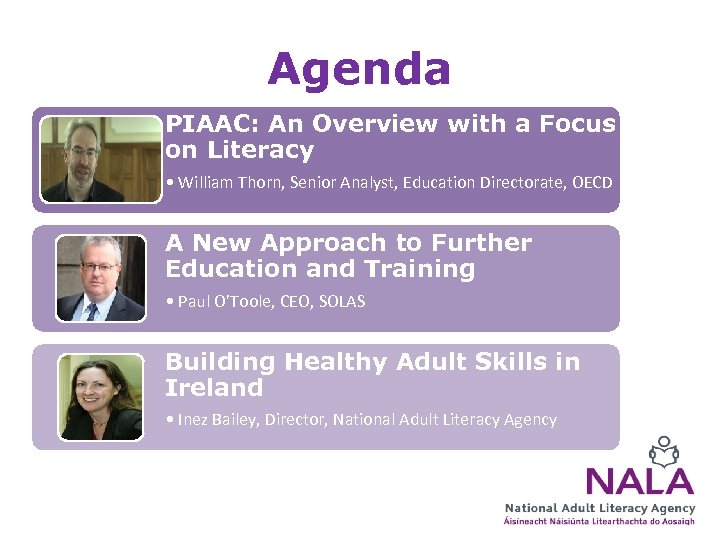 Agenda PIAAC: An Overview with a Focus on Literacy • William Thorn, Senior Analyst, Education Directorate, OECD A New Approach to Further Education and Training • Paul O’Toole, CEO, SOLAS Building Healthy Adult Skills in Ireland • Inez Bailey, Director, National Adult Literacy Agency
 PIAAC: AN OVERVIEW WITH A FOCUS ON LITERACY William Thorn, OECD william. thorn@oecd. org
 Objectives • Provide some background to PIAAC regarding: – Its origins – Its objectives, – Features of the assessment of literacy – The presentation of results, and – Its output.
 Origins • 1980 s - early 1990 s – interest in literacy levels of workforce – ‘competence’ movement – Developments in large-scale testing • Development of international adult literacy/skills surveys: – IALS (1994, 1996, 1998): 21 countries (including Ireland in 1994) – ALL (2003, 2006): 13 countries
 Origins • Work on PIAAC began in early 2000 s – Updating measures to increase relevance to the digital world – Expansion of the range of skills about which information collected (e. g. ‘generic’ skills) – Interest in the ‘demand’ for skills in addition to supply – Measurement of ‘human capital’ rather than ‘literacy’
 Objectives • Design of PIAAC finalised in 2007 • Broad objectives : – Provide high quality comparable information on the level and distribution of key information processing skills in the adult population – Show the relationship of these skills to individual and social ‘outcomes’ – Better understand the processes through which skills are gained, maintained and lost over the lifecycle
 Design features: content • Direct assessment of key information processing skills – Literacy (including reading components), numeracy, problem solving in technology-rich environments (PS-TRE) – Linked to IALS and ALL in domains of literacy and numeracy • Information on the use of literacy, numeracy and problem solving at work and elsewhere • Information on use of a range of other generic skills at work – Interaction, organisation (self and others), learning and physical skills • Information on antecedents and outcomes
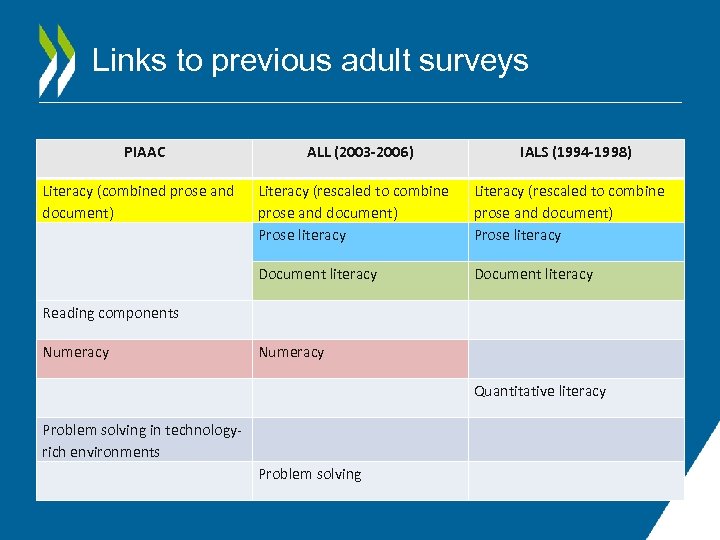 Links to previous adult surveys PIAAC Literacy (combined prose and document) ALL (2003 -2006) IALS (1994 -1998) Literacy (rescaled to combine prose and document) Prose literacy Document literacy Reading components Numeracy Quantitative literacy Problem solving in technologyrich environments Problem solving
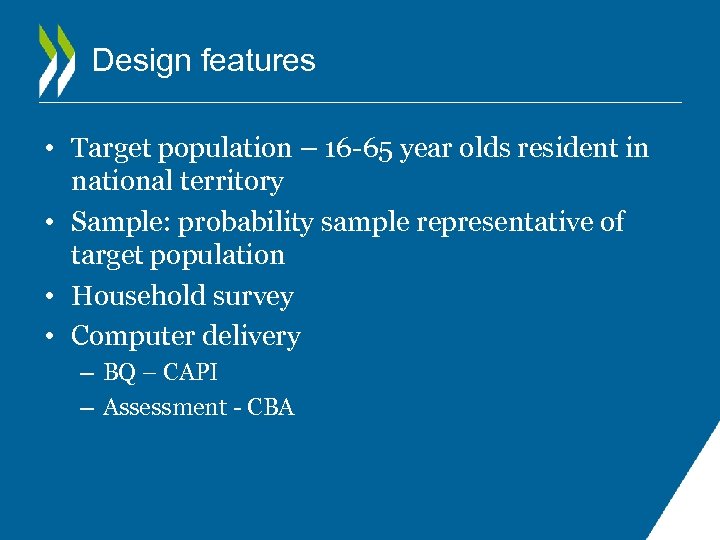 Design features • Target population – 16 -65 year olds resident in national territory • Sample: probability sample representative of target population • Household survey • Computer delivery – BQ – CAPI – Assessment - CBA
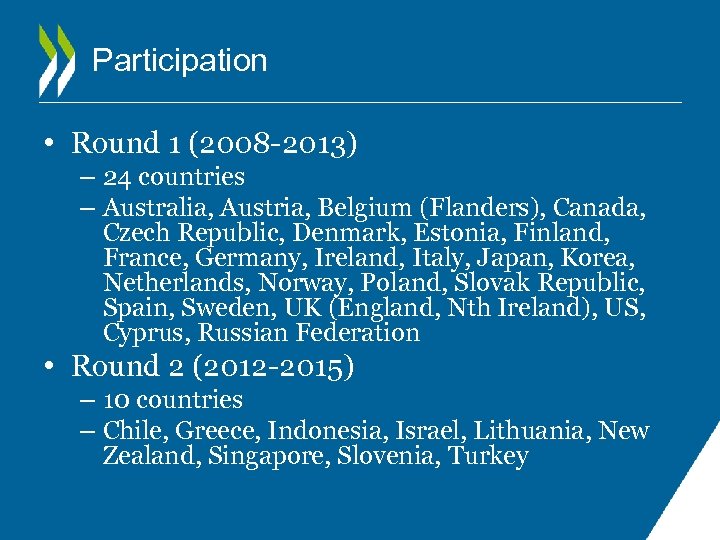 Participation • Round 1 (2008 -2013) – 24 countries – Australia, Austria, Belgium (Flanders), Canada, Czech Republic, Denmark, Estonia, Finland, France, Germany, Ireland, Italy, Japan, Korea, Netherlands, Norway, Poland, Slovak Republic, Spain, Sweden, UK (England, Nth Ireland), US, Cyprus, Russian Federation • Round 2 (2012 -2015) – 10 countries – Chile, Greece, Indonesia, Israel, Lithuania, New Zealand, Singapore, Slovenia, Turkey
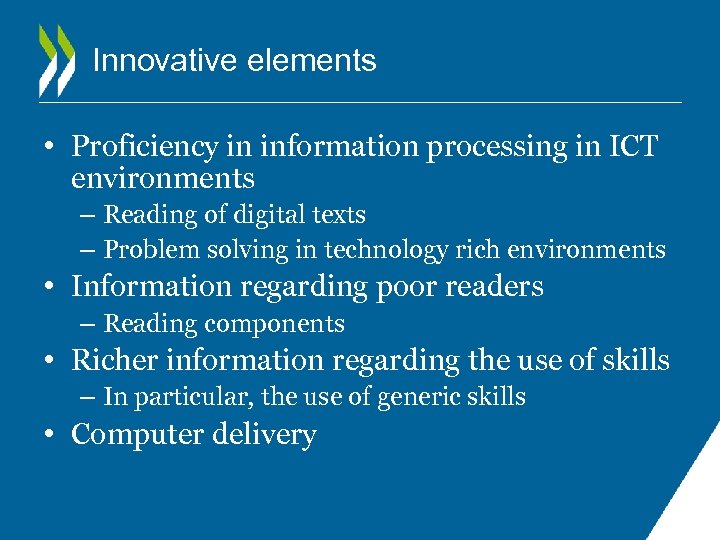 Innovative elements • Proficiency in information processing in ICT environments – Reading of digital texts – Problem solving in technology rich environments • Information regarding poor readers – Reading components • Richer information regarding the use of skills – In particular, the use of generic skills • Computer delivery
 What is assessed? • Literacy – Reading components • Numeracy • Problem solving in technology-rich environments
 Literacy • Defined as: – the ability to understand, evaluate, use and engage with written texts to participate in society, to achieve one’s goals, and to develop one’s knowledge and potential • Three dimensions – Content (text types) – Cognitive strategies (what one does to gain meaning) – Context (situation in which reading takes place)
 Content • Medium – Print-based – Digital • Format – Continuous – Non-continuous – Mixed – Multiple
 Strategies and Context • Cognitive strategies – access and identify – integrate and interpret – evaluate and reflect • Contexts – work-related – personal – community and society – education and training
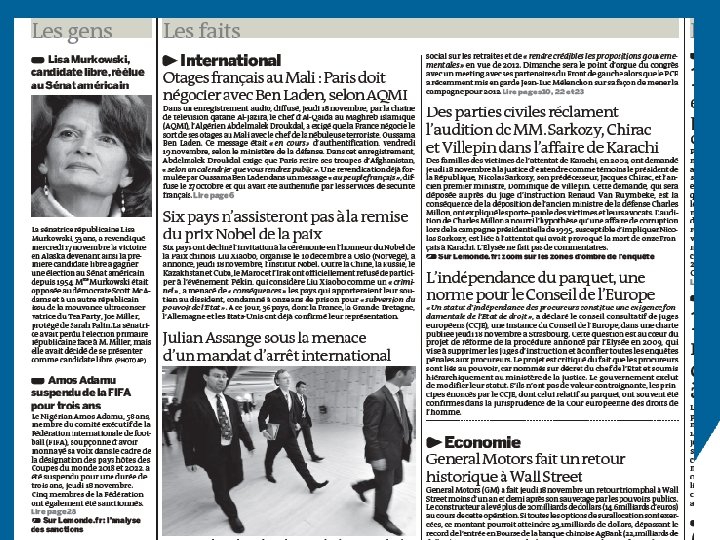
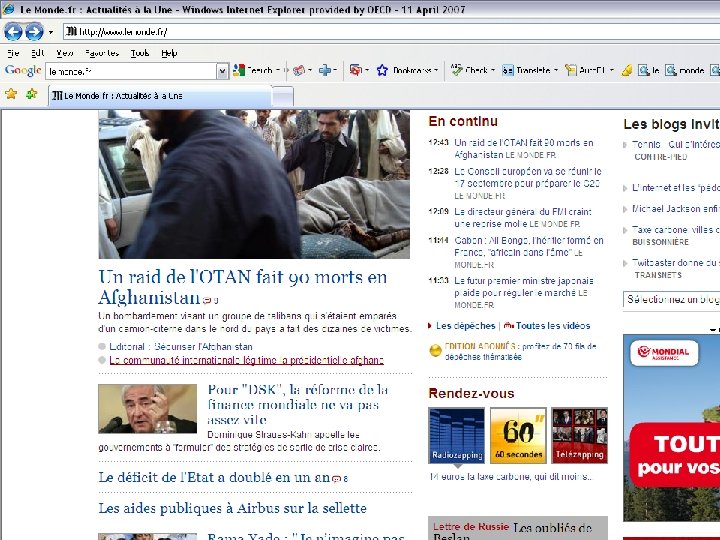
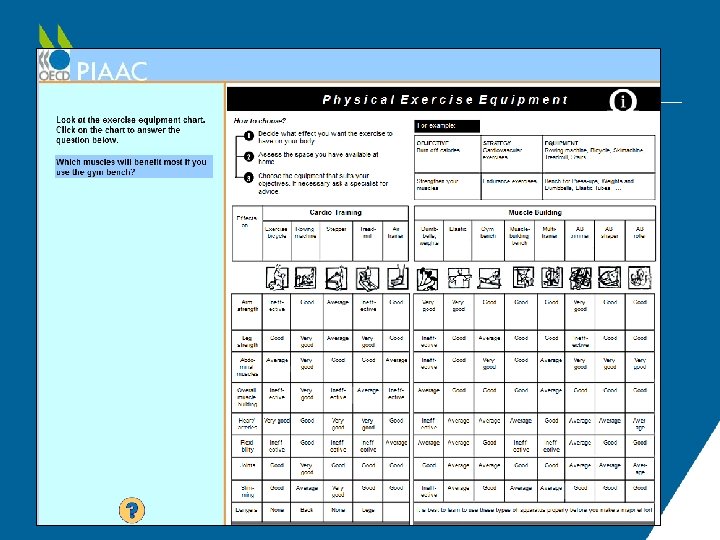
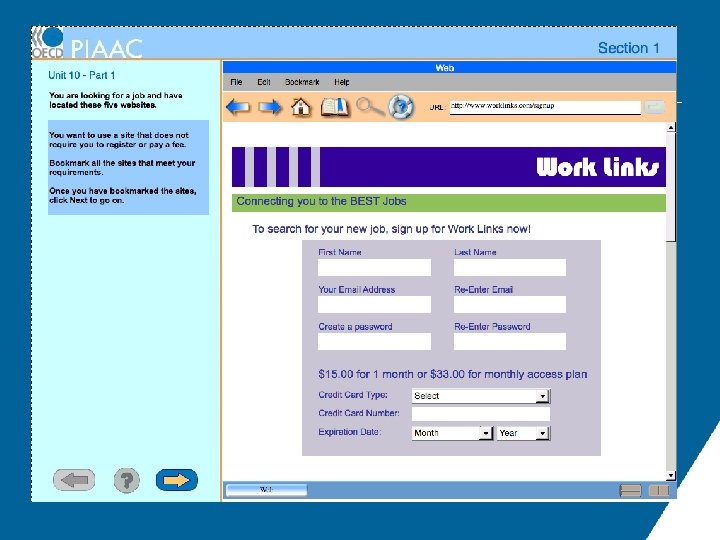
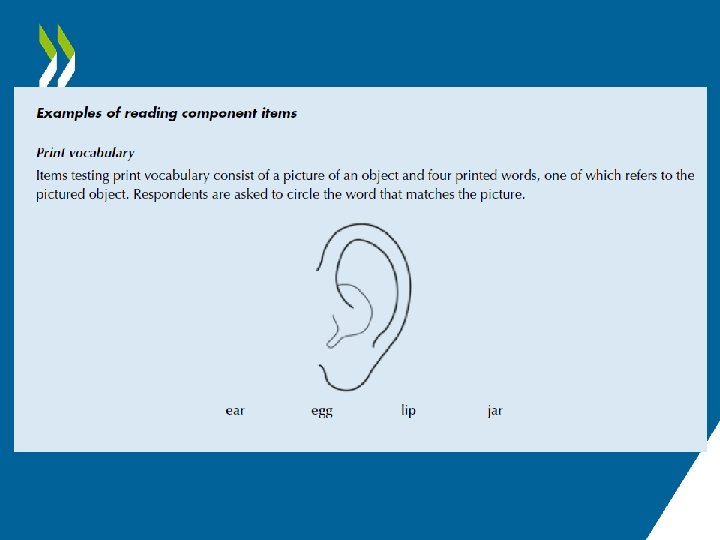
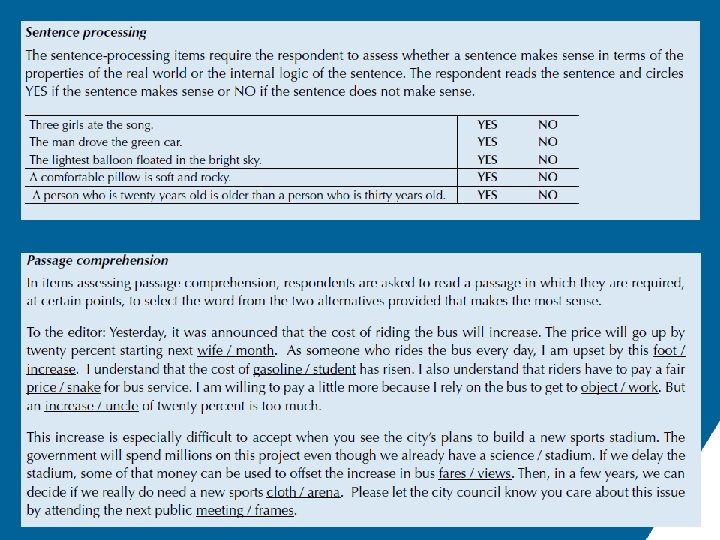
 Information on poor readers • Reading components – Print vocabulary – Sentence comprehension – Passage fluency • Automaticity in these elements is precondition for comprehension
 Information on literacy practices • Variety, frequency and complexity • Reading – – – directions or instructions letters, memos or e-mails articles in newspapers, magazines or newsletters articles in professional journals or scholarly publications Books Manuals or reference materials – bills, invoices, bank statements or other financial statements – diagrams, maps or schematics
 Information on literacy practices • Writing – letters, memos or e-mails – articles for newspapers, magazines or newsletters – Reports – fill in forms
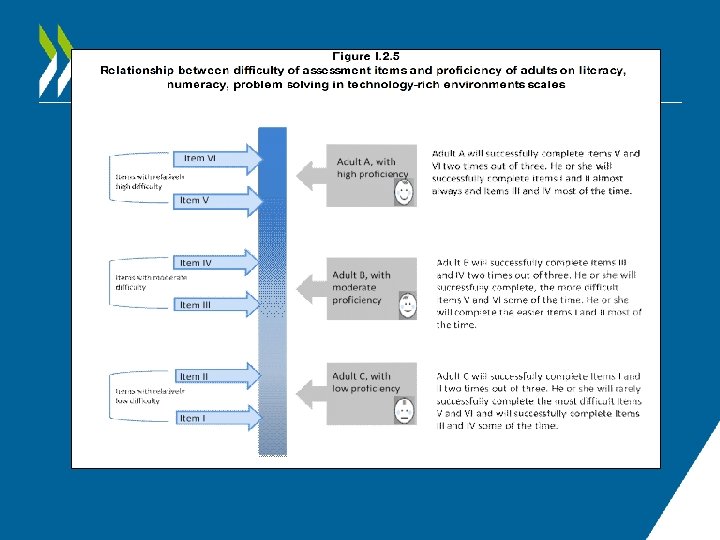
 Reporting • Results presented on a 500 point scale – test items and test-takers located on the same scale – Difficulty of items – Proficiency of persons
 Proficiency levels • To help interpret results the scale divided into proficiency levels • Descriptors developed to summarise the underlying characteristics of items in each level in terms of the literacy framework • Descriptive not normative • 6 proficiency levels in literacy
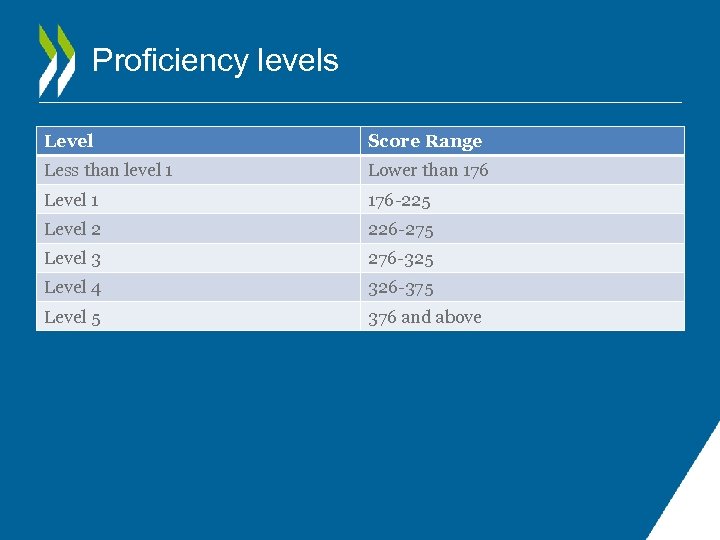 Proficiency levels Level Score Range Less than level 1 Lower than 176 Level 1 176 -225 Level 2 226 -275 Level 3 276 -325 Level 4 326 -375 Level 5 376 and above
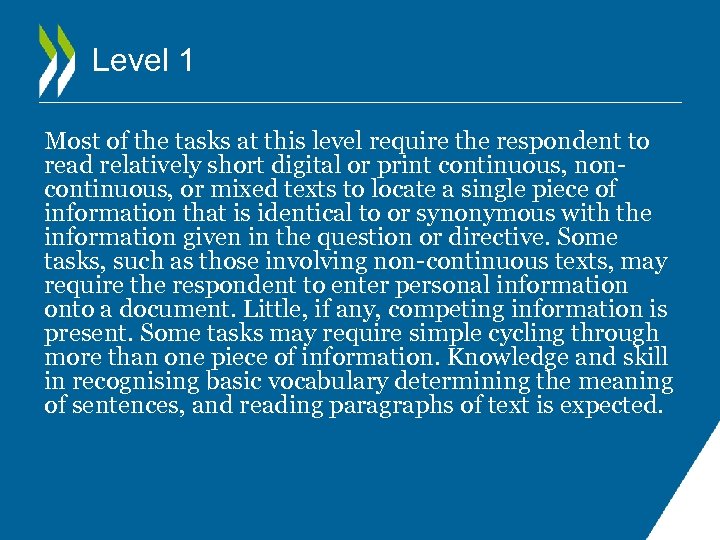 Level 1 Most of the tasks at this level require the respondent to read relatively short digital or print continuous, noncontinuous, or mixed texts to locate a single piece of information that is identical to or synonymous with the information given in the question or directive. Some tasks, such as those involving non-continuous texts, may require the respondent to enter personal information onto a document. Little, if any, competing information is present. Some tasks may require simple cycling through more than one piece of information. Knowledge and skill in recognising basic vocabulary determining the meaning of sentences, and reading paragraphs of text is expected.
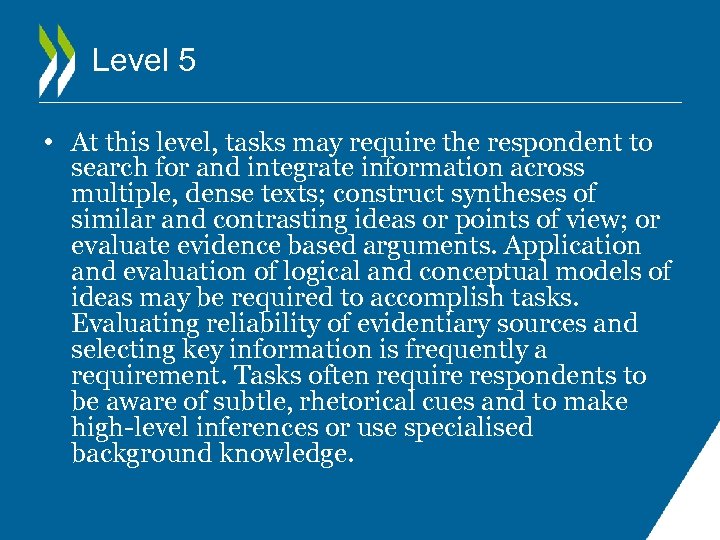 Level 5 • At this level, tasks may require the respondent to search for and integrate information across multiple, dense texts; construct syntheses of similar and contrasting ideas or points of view; or evaluate evidence based arguments. Application and evaluation of logical and conceptual models of ideas may be required to accomplish tasks. Evaluating reliability of evidentiary sources and selecting key information is frequently a requirement. Tasks often require respondents to be aware of subtle, rhetorical cues and to make high-level inferences or use specialised background knowledge.
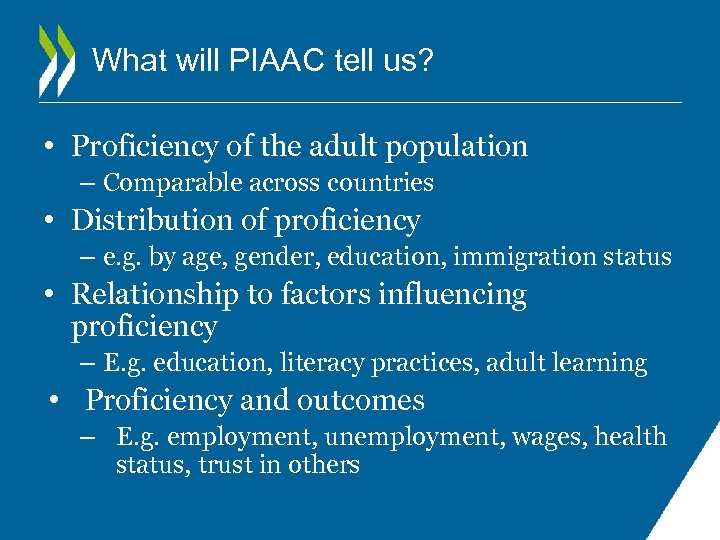 What will PIAAC tell us? • Proficiency of the adult population – Comparable across countries • Distribution of proficiency – e. g. by age, gender, education, immigration status • Relationship to factors influencing proficiency – E. g. education, literacy practices, adult learning • Proficiency and outcomes – E. g. employment, unemployment, wages, health status, trust in others
 Output • October 2013 – International Report – Public use data set – Data explorer – Data analyser • 2014 -2015 – Series of thematic reports
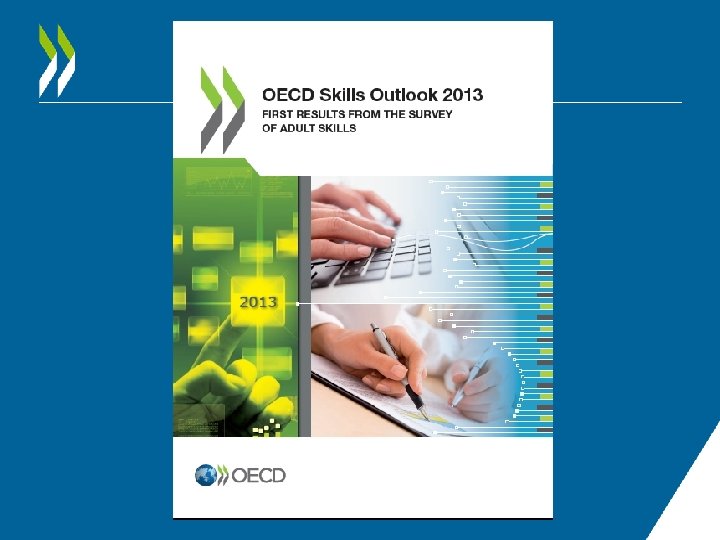
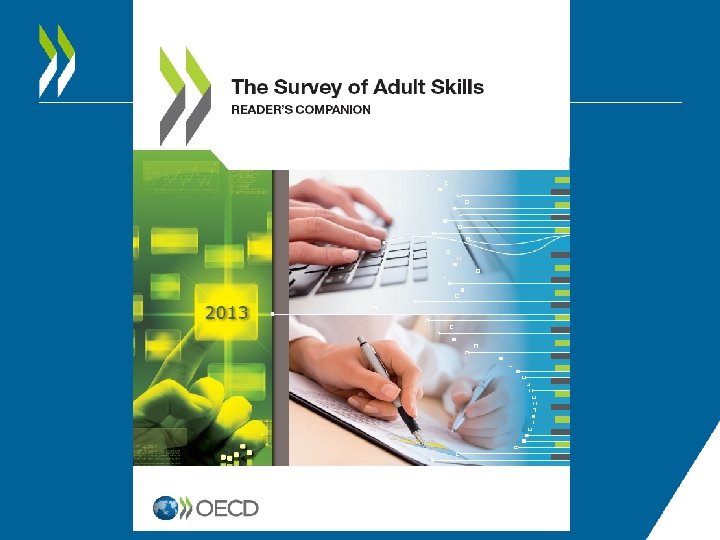
 The first international report • Skills Outlook will contain six chapters – Context: skills and trends in technology, the labour market an society – Cross-country comparisons of the level and distribution of adult skills – The distribution of proficiency among various sociodemographic groups in different countries – The skill proficiency of workers and the use of their skills in the workplace – Developing and sustaining information processing skills – The link between information processing skills and outcomes • Readers companion – Overview of what is measured and how the survey was implemented
 Information accessible at: http: //www. oecd. org/site/piaac/
 Thank you william. thorn@oecd. org
 A New Approach to Further Education and Training Paul O’Toole, Director General, FÁS
 Building Healthy Adult Skills in Ireland Inez Bailey, Director, National Adult Literacy Agency
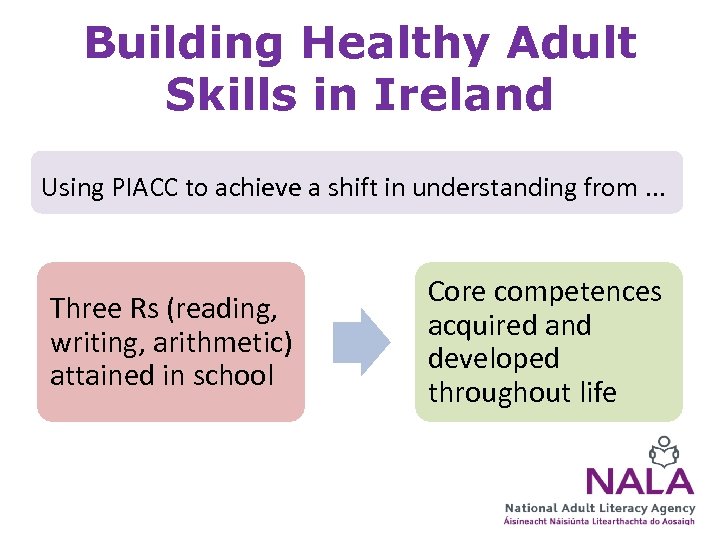 Building Healthy Adult Skills in Ireland Using PIACC to achieve a shift in understanding from. . . Three Rs (reading, writing, arithmetic) attained in school Core competences acquired and developed throughout life
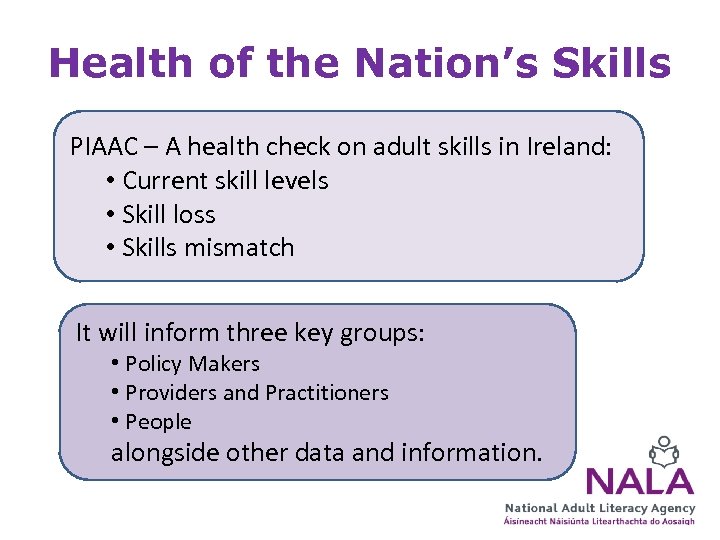 Health of the Nation’s Skills PIAAC – A health check on adult skills in Ireland: • Current skill levels • Skill loss • Skills mismatch It will inform three key groups: • Policy Makers • Providers and Practitioners • People alongside other data and information.
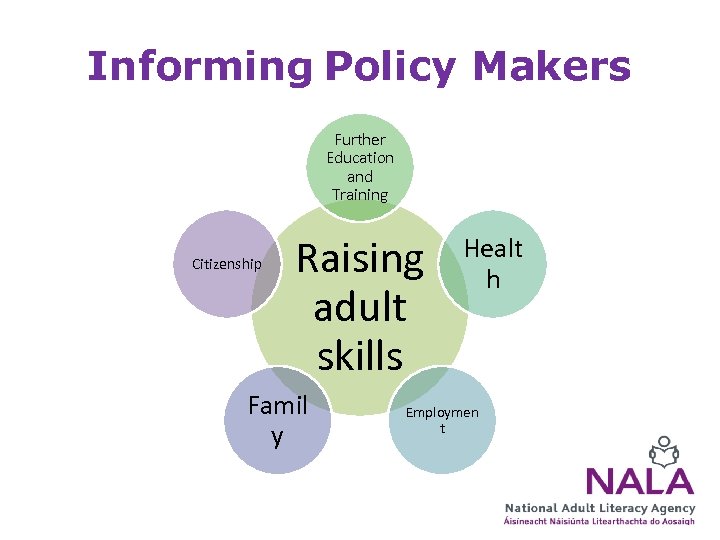 Informing Policy Makers Further Education and Training Citizenship Raising adult skills Famil y Healt h Employmen t
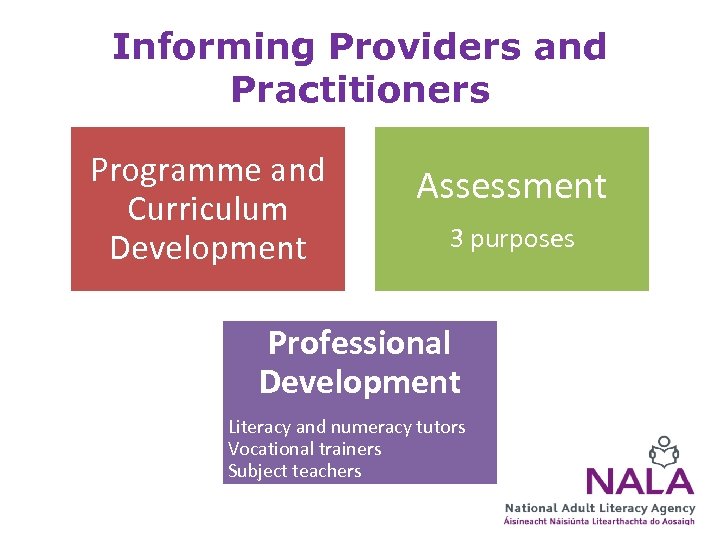 Informing Providers and Practitioners Programme and Curriculum Development Assessment 3 purposes Professional Development Literacy and numeracy tutors Vocational trainers Subject teachers
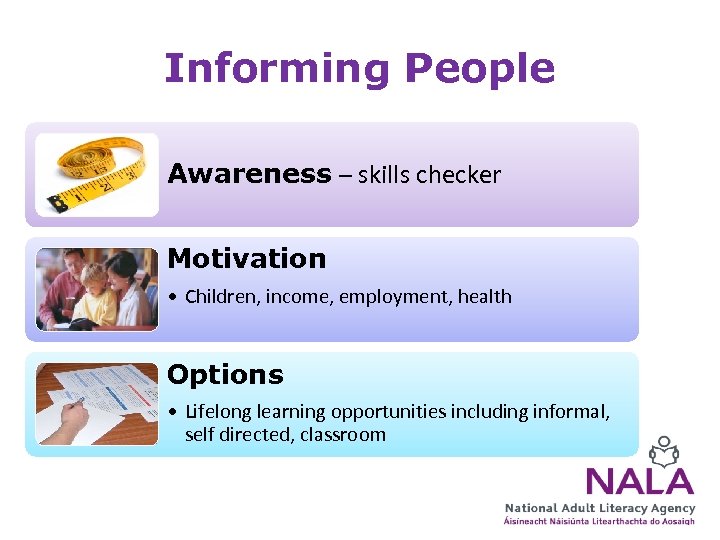 Informing People Awareness – skills checker Motivation • Children, income, employment, health Options • Lifelong learning opportunities including informal, self directed, classroom
 Questions and Answers Chaired by Richard Curran
 Further information NALA Sandford Lodge Sandford Close Ranelagh Dublin 6 Tel: (01) 412 7900 http: //facebook. com/nalaireland http: //twitter. com/nalaireland http: //www. youtube. com/user/ nationaladultliterac Website: www. nala. ie Distance learning website: www. writeon. ie