 Скачать презентацию Listening to Students Innovative Responses Betsy Wilson University
5aebe47ced25fb82e86669d7a66ad897.ppt
- Количество слайдов: 44



Listening to Students: Innovative Responses Betsy Wilson University of Washington July 10, 2008 7 th International JISC/CNI Conference
The Role of Library Assessment The library community needs to invest more in data collection and analysis and to take its examples from commercial leaders that have a much more detailed and insightful understanding of their customer base and preferences. In particular, there is a need for ongoing longitudinal data and intelligence functions to provide a vital early radar warning of oncoming change. No library we are aware of has a department devoted to the evaluation of the user, how can that be? (Information Behaviour of the Researcher of the Future, CIBER, January 2008)
North American University Libraries with Notable Assessment Programs • Alberta “Ongoing student surveys” • Cornell “In-house research capability” • Pennsylvania “Data Farm” • Rochester “Ethnographic approaches” • Virginia “Balanced Scorecard” • Washington “User needs”
Building a Community of Practice: Library Assessment Conference Co-sponsored by ARL, Virginia and Washington – 2006 Charlottesville, Virginia (220 registrants) – 2008 Seattle, Washington (August 4 -7, 380 registrants) – 2010 Washington D. C. area • Focused on practitioners – Papers, panels, posters, informal contact, workshops
ARL Sponsored Assessment • • • Tools – ARL Statistics – Lib. QUAL+® – MINES for Libraries Building a Community of Practice – Library Assessment Conferences – Service Quality Evaluation Academy – Library Assessment blog – Workshops Individual Library Consultation – Dynamic Duo: Jim Self (Virginia) and Steve Hiller (Washington – Making Library Assessment Work (24 libraries) – Effective, Sustainable, Practical Library Assessment (6 libraries)
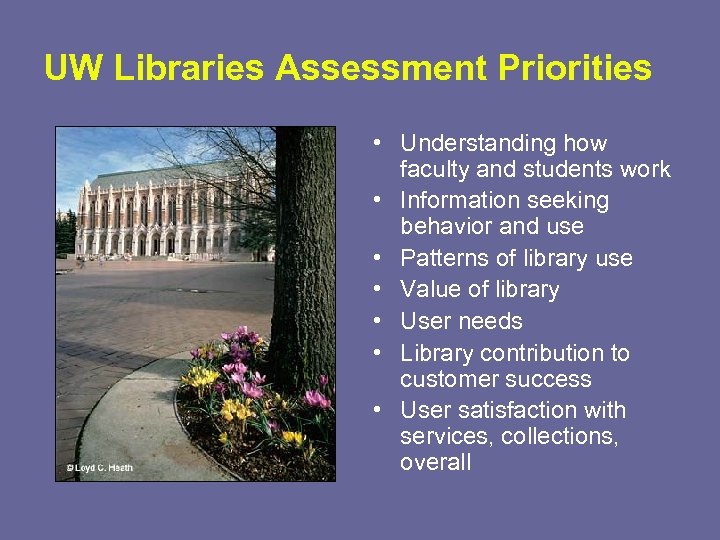
UW Libraries Assessment Priorities • Understanding how faculty and students work • Information seeking behavior and use • Patterns of library use • Value of library • User needs • Library contribution to customer success • User satisfaction with services, collections, overall
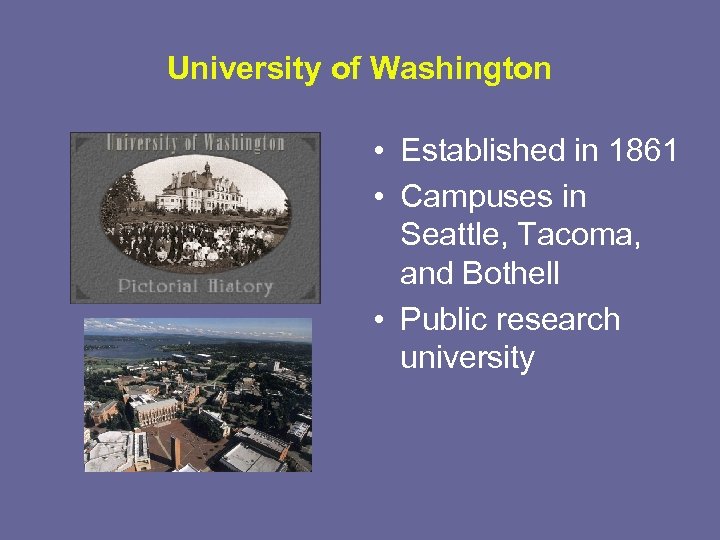
University of Washington • Established in 1861 • Campuses in Seattle, Tacoma, and Bothell • Public research university
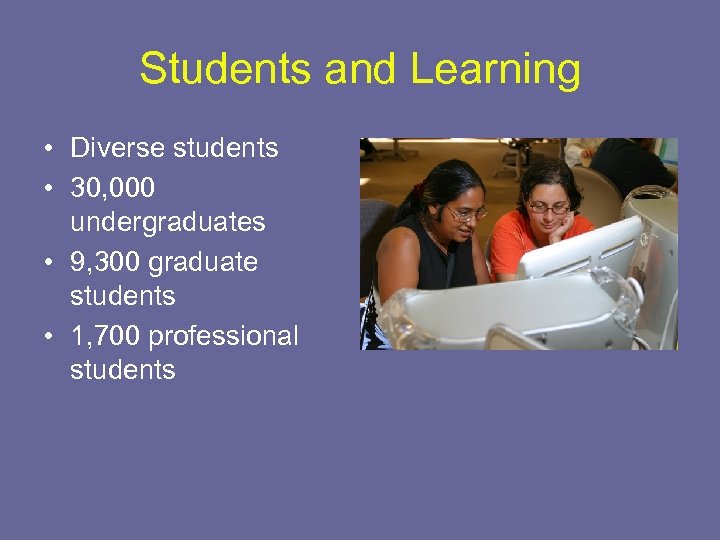
Students and Learning • Diverse students • 30, 000 undergraduates • 9, 300 graduate students • 1, 700 professional students
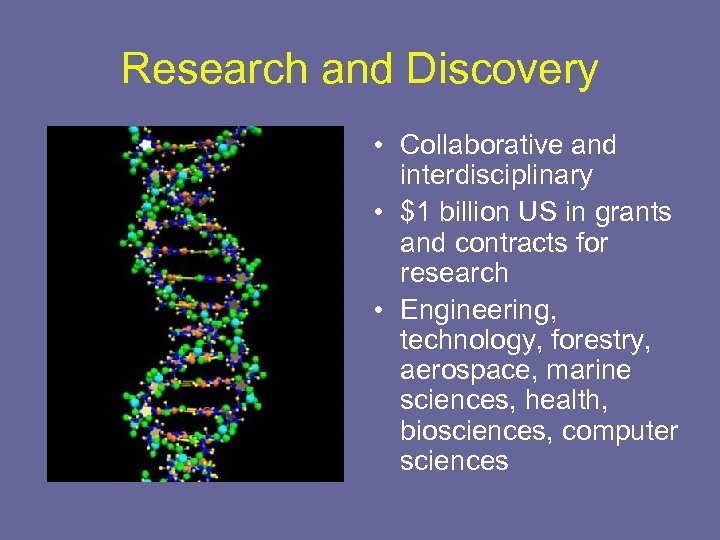
Research and Discovery • Collaborative and interdisciplinary • $1 billion US in grants and contracts for research • Engineering, technology, forestry, aerospace, marine sciences, health, biosciences, computer sciences
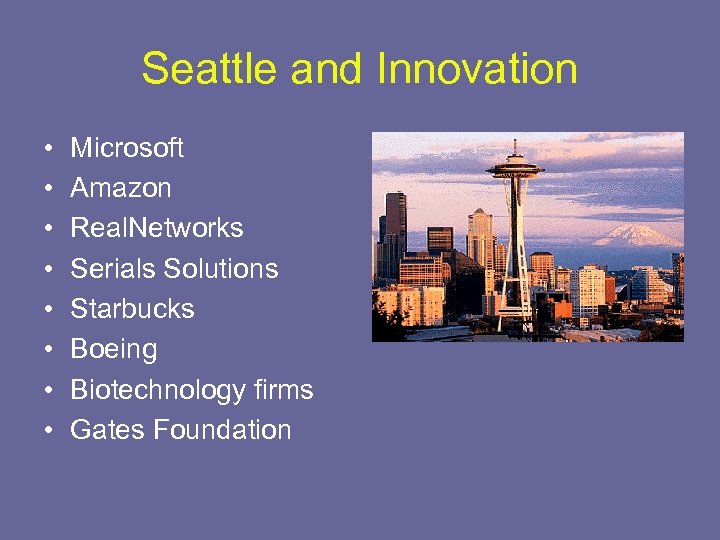
Seattle and Innovation • • Microsoft Amazon Real. Networks Serials Solutions Starbucks Boeing Biotechnology firms Gates Foundation
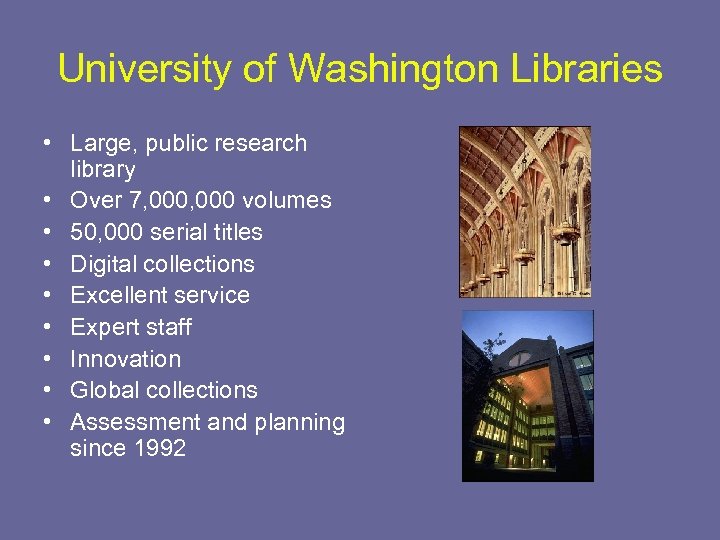
University of Washington Libraries • Large, public research library • Over 7, 000 volumes • 50, 000 serial titles • Digital collections • Excellent service • Expert staff • Innovation • Global collections • Assessment and planning since 1992
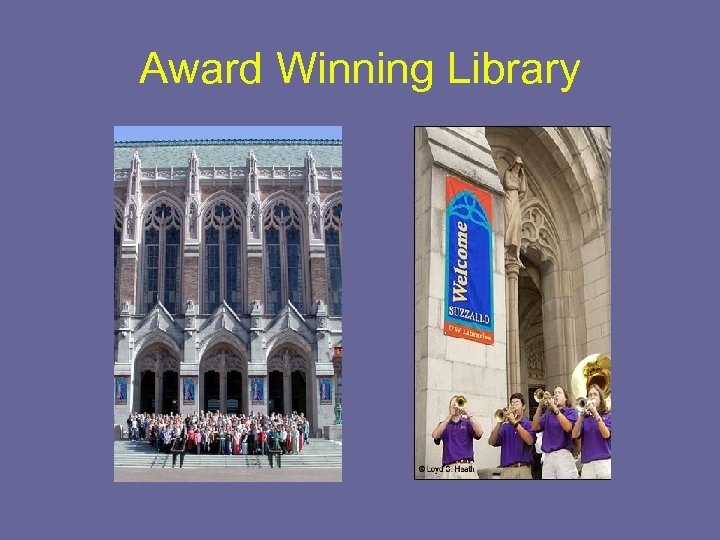
Award Winning Library
Culture of Assessment • …is an environment in which decisions are based on facts, research and analysis, and where services are planned and delivered in ways which maximize positive outcomes and impacts for library clients. A culture of assessment is an integral part of the process of change and the creation of the 21 st century research.
All assessment is local Creating a culture of assessment
Methodological Diversity • Qualitative and quantitative methods • Surveys (since 1992) • Focus groups • Observation and interviews • Usability • Lib. Qual • Data mining • And more…
We learned that… • Remote use preferred • Self-reliance and unmediated • Online equals productivity • Desktop delivery is top priority • Undergraduates value place
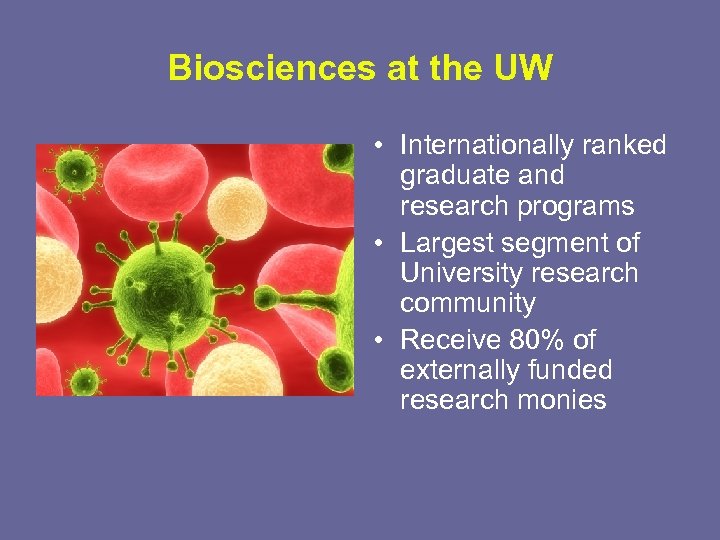
Biosciences at the UW • Internationally ranked graduate and research programs • Largest segment of University research community • Receive 80% of externally funded research monies
Key Questions • Who are the bioscience students and researchers? • What do they do? • Where are they physically, administratively, and intellectually? • How do they find and use information? • What are the barriers? • How can the Libraries help? • How will we know if we have made any difference?
Bioscience Findings • Print is dead, really dead • e-journal provider • Faculty don’t come to the physical library • Students come to the physical library • Databases underused • Personal information management • Buy from Amazon
More Findings • Transaction cost from discovery to delivery • Fragmented systems and processes • Multi-disciplinary collaborators • Everywhere, in scattered locations • Independent and selfsufficient researchers
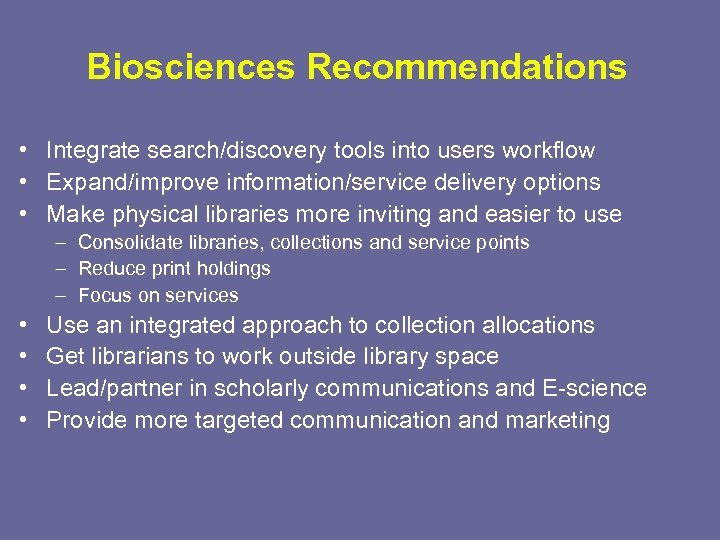
Biosciences Recommendations • Integrate search/discovery tools into users workflow • Expand/improve information/service delivery options • Make physical libraries more inviting and easier to use – Consolidate libraries, collections and service points – Reduce print holdings – Focus on services • • Use an integrated approach to collection allocations Get librarians to work outside library space Lead/partner in scholarly communications and E-science Provide more targeted communication and marketing
Biosciences Actions 2007 -08 • • Appointed a Director, Cyberinfrastructure Initiatives, Biosciences, and e. Science Strategic priorities: – Improve discovery to delivery – – (World. Cat Local, etc. ) Reshape physical facilities as discovery and learning centers More rapid delivery services Enhance the Libraries support for UW’s scientific research infrastructure (Data. Net, etc. ) Do market research
Can We Generalize? Did themes raised in the interviews/focus groups reflect the bioscience population? The campus community? The 2007 Triennial Survey as a corroborating source: • Mode of access • Resource type importance • Sources consulted for research • Primary reasons for using Libraries web sites • Libraries contribution to work and academic success • Useful library services (new and/or expanded)
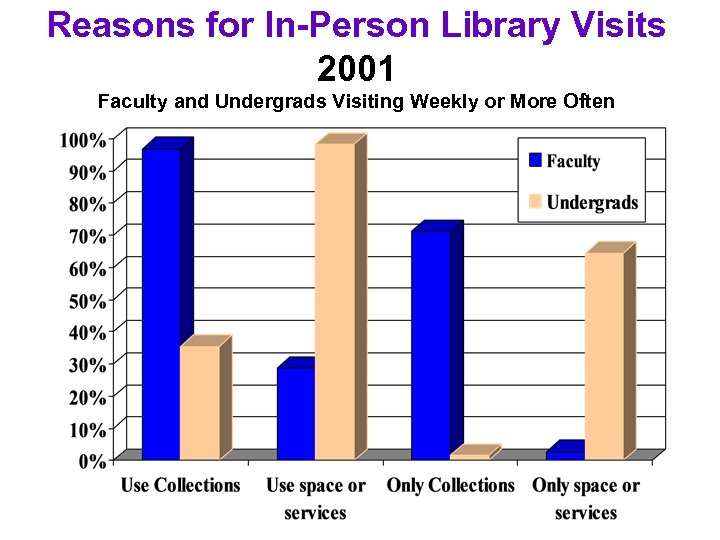
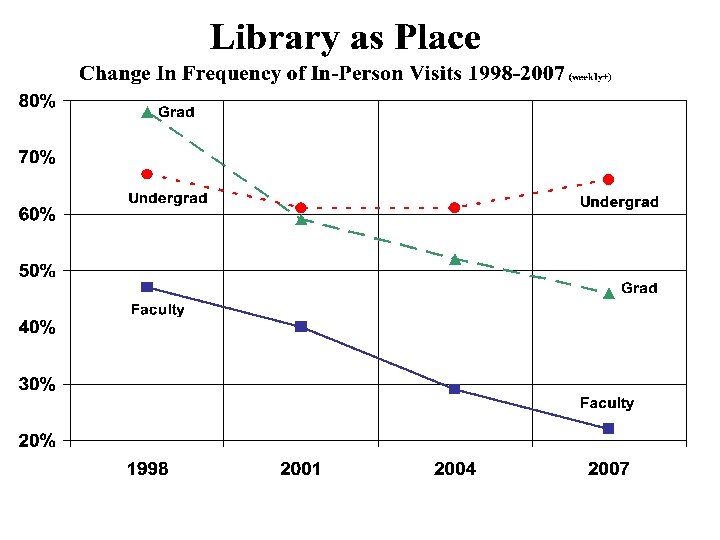
Reasons for In-Person Library Visits 2001 Faculty and Undergrads Visiting Weekly or More Often
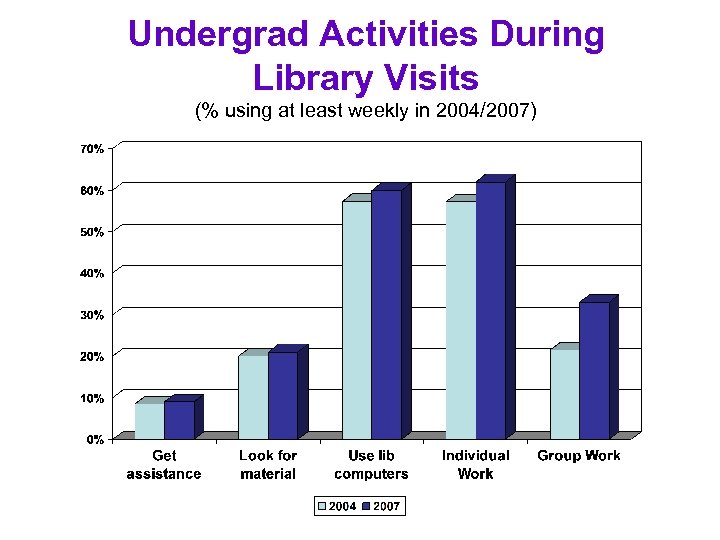
Undergrad Activities During Library Visits (% using at least weekly in 2004/2007)
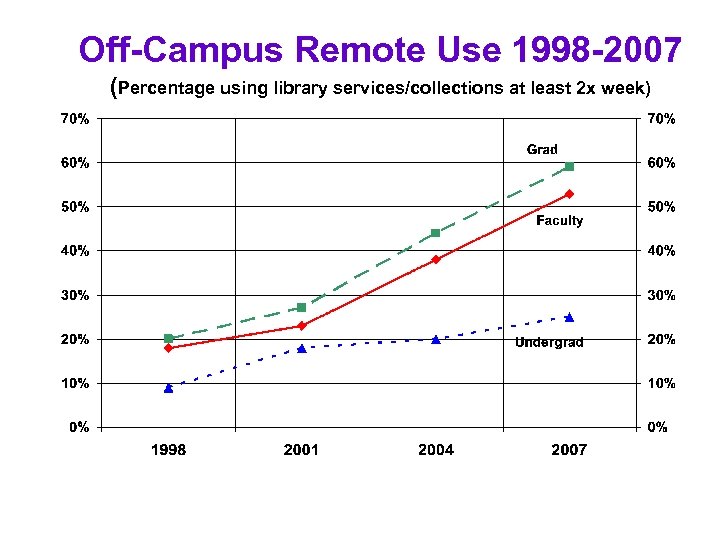
Off-Campus Remote Use 1998 -2007 (Percentage using library services/collections at least 2 x week)
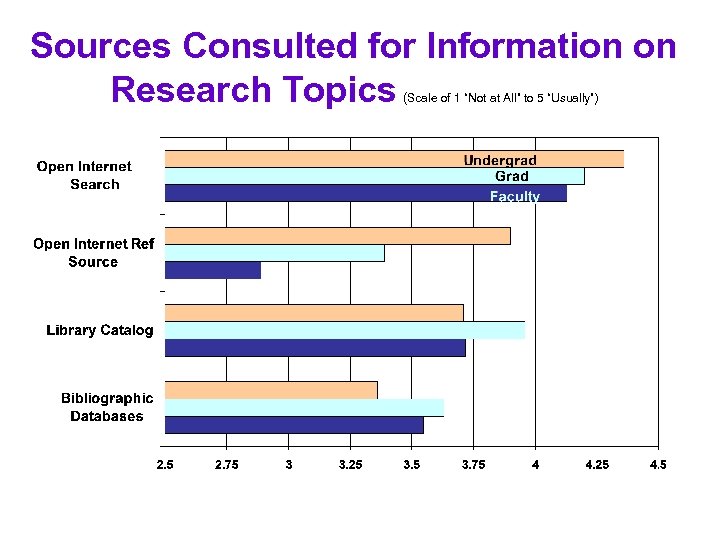
Sources Consulted for Information on Research Topics (Scale of 1 “Not at All” to 5 “Usually”)
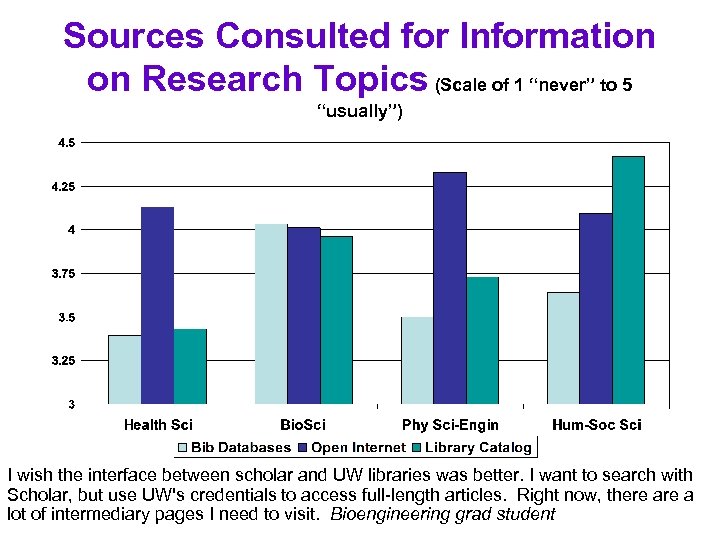
Sources Consulted for Information on Research Topics (Scale of 1 “never” to 5 “usually”) I wish the interface between scholar and UW libraries was better. I want to search with Scholar, but use UW's credentials to access full-length articles. Right now, there a lot of intermediary pages I need to visit. Bioengineering grad student
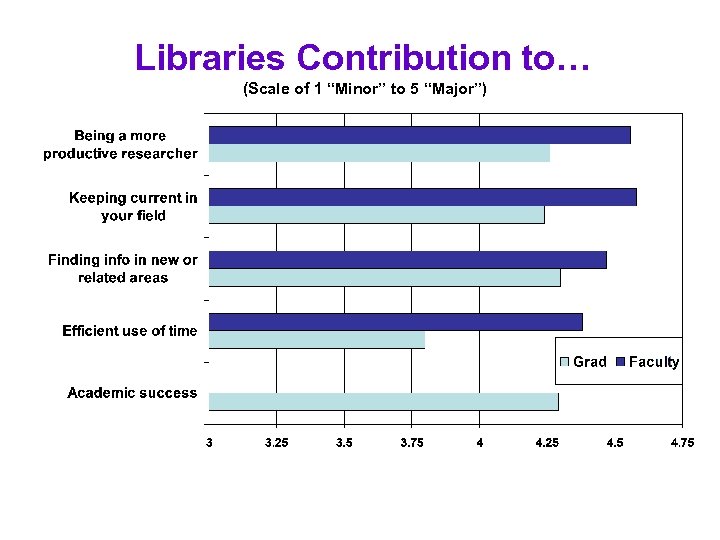
Libraries Contribution to… (Scale of 1 “Minor” to 5 “Major”)
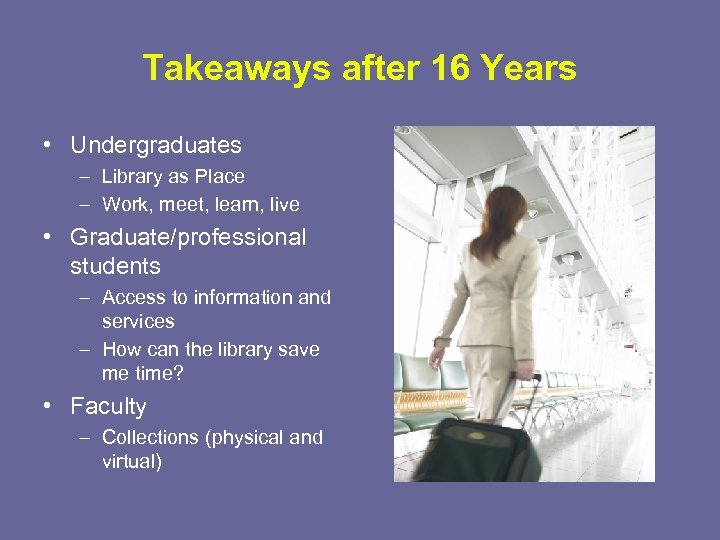
Takeaways after 16 Years • Undergraduates – Library as Place – Work, meet, learn, live • Graduate/professional students – Access to information and services – How can the library save me time? • Faculty – Collections (physical and virtual)
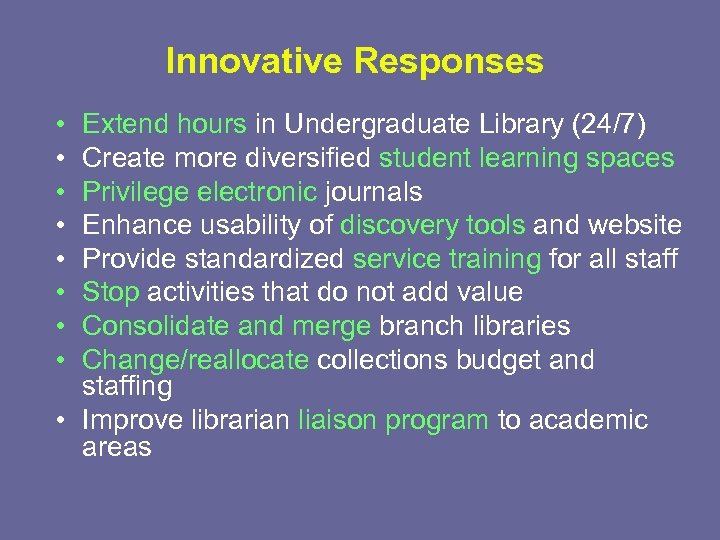
Innovative Responses • • Extend hours in Undergraduate Library (24/7) Create more diversified student learning spaces Privilege electronic journals Enhance usability of discovery tools and website Provide standardized service training for all staff Stop activities that do not add value Consolidate and merge branch libraries Change/reallocate collections budget and staffing • Improve librarian liaison program to academic areas
World. Cat Local • Discovery to delivery challenge • One box, one stop shopping – Formats integrated – UW holdings, regional consortium, World. Cat, 50 million articles – User doesn’t need to know how we do things internally • Components – Content – Shared platform – Interoperability with local services • Circulation, ILL, Open. URL – Common marketing
Results to Date • 20% increase in use of local collections • 60% increase in borrowing from regional consortia • 114% increase in worldwide interlibrary loan • 200 -275, 000 searches per month • WCL is our #2 ranked Open. URL origin and growing
Innovation
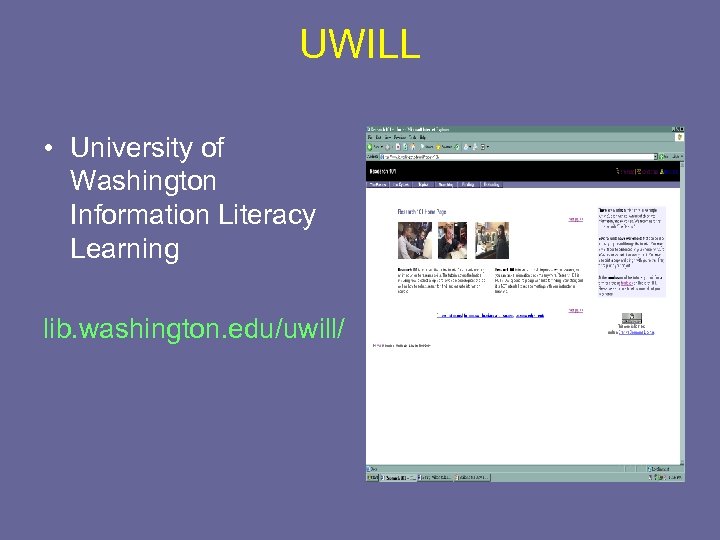
UWILL • University of Washington Information Literacy Learning lib. washington. edu/uwill/

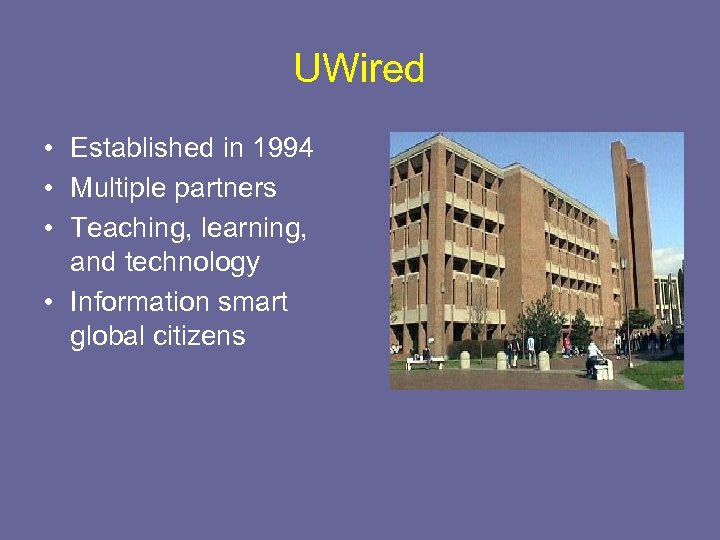
UWired • Established in 1994 • Multiple partners • Teaching, learning, and technology • Information smart global citizens
Successes • • Collaboratories Center for Teaching Learning Commons Technology-enhanced spaces Course tools Workshops My. UW ONTECHNews
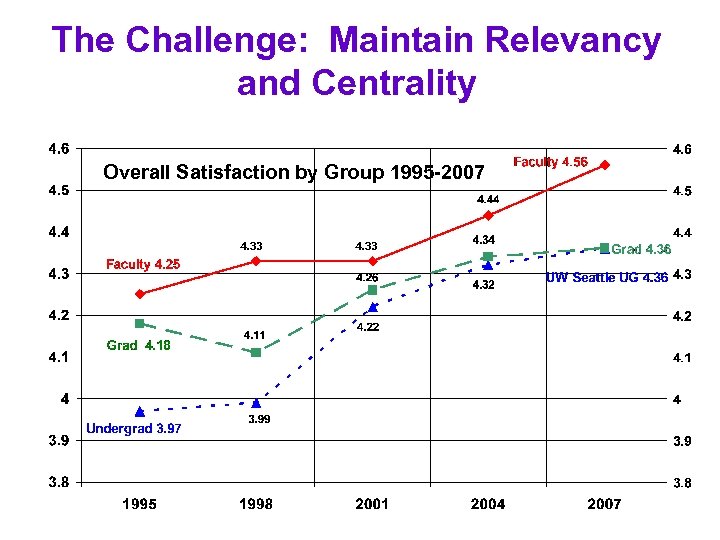
The Challenge: Maintain Relevancy and Centrality Overall Satisfaction by Group 1995 -2007
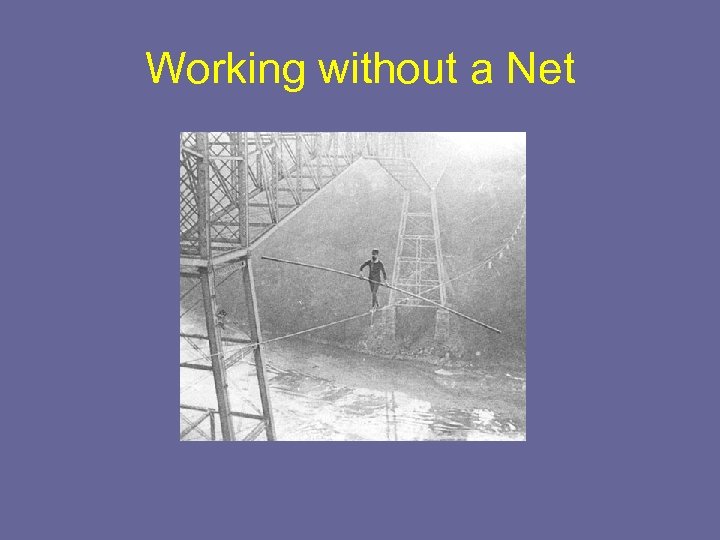
Working without a Net
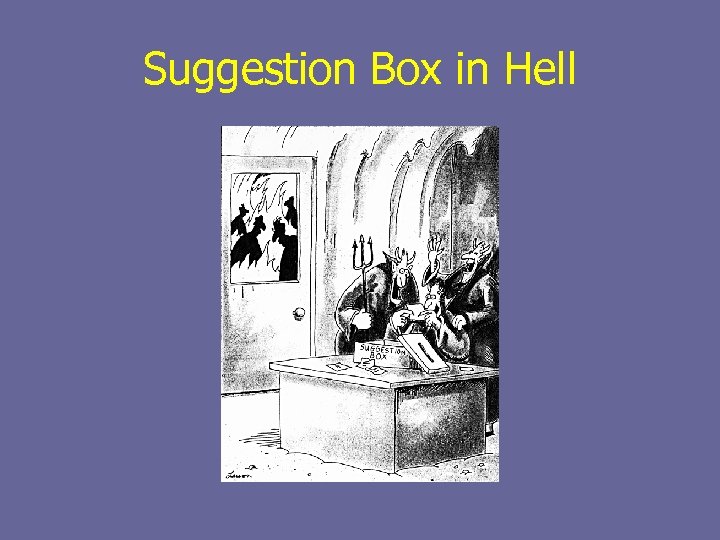
Suggestion Box in Hell
Listening and Responding For more information: http: //www. lib. washington. edu/assessment/
Thank You
Скачать презентацию Listening to Students Innovative Responses Betsy Wilson University
5aebe47ced25fb82e86669d7a66ad897.ppt