


 Скачать презентацию Lipoprotein a an independent CVD Risk Factor Ejazzullah Jahed
Lipoprotein a .pptx
- Количество слайдов: 13
 Lipoprotein(a): an independent CVD Risk Factor Ejazzullah Jahed Naqibullah Nejat Research adviser : Professor Ablaev N. R
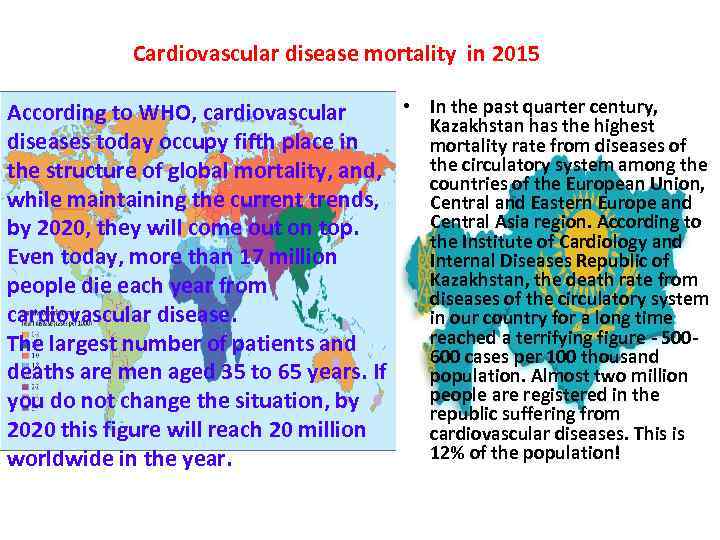 Cardiovascular disease mortality in 2015 • In the past quarter century, According to WHO, cardiovascular Kazakhstan has the highest diseases today occupy fifth place in mortality rate from diseases of the circulatory system among the structure of global mortality, and, countries of the European Union, while maintaining the current trends, Central and Eastern Europe and Central Asia region. According to by 2020, they will come out on top. the Institute of Cardiology and Even today, more than 17 million Internal Diseases Republic of Kazakhstan, the death rate from people die each year from diseases of the circulatory system cardiovascular disease. in our country for a long time reached a terrifying figure - 500 The largest number of patients and 600 cases per 100 thousand deaths are men aged 35 to 65 years. If population. Almost two million people are registered in the you do not change the situation, by republic suffering from 2020 this figure will reach 20 million cardiovascular diseases. This is 12% of the population! worldwide in the year.
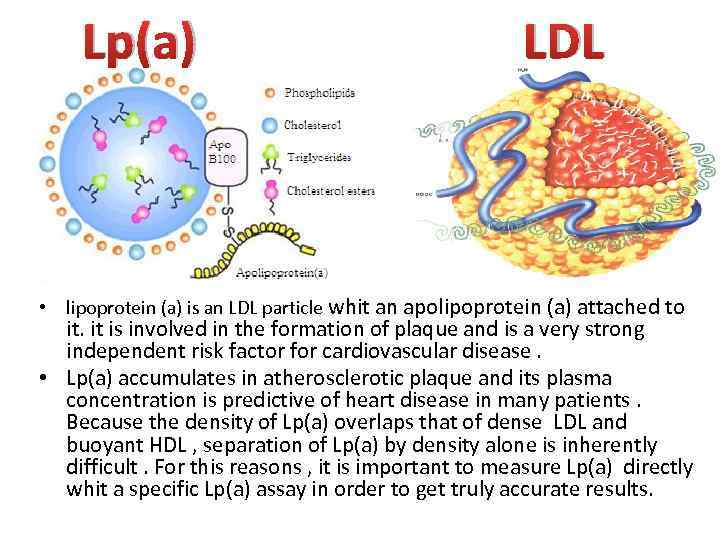 Lp(a) LDL • lipoprotein (a) is an LDL particle whit an apolipoprotein (a) attached to it. it is involved in the formation of plaque and is a very strong independent risk factor for cardiovascular disease. • Lp(a) accumulates in atherosclerotic plaque and its plasma concentration is predictive of heart disease in many patients. Because the density of Lp(a) overlaps that of dense LDL and buoyant HDL , separation of Lp(a) by density alone is inherently difficult. For this reasons , it is important to measure Lp(a) directly whit a specific Lp(a) assay in order to get truly accurate results.
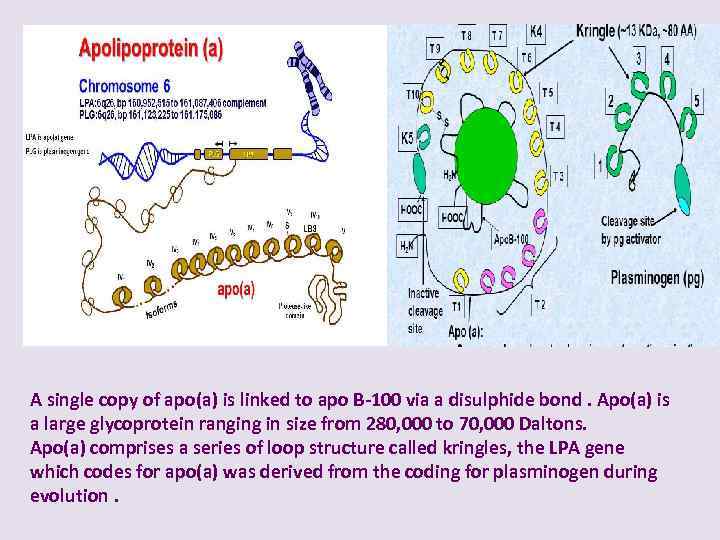 A single copy of apo(a) is linked to apo B-100 via a disulphide bond. Apo(a) is a large glycoprotein ranging in size from 280, 000 to 70, 000 Daltons. Apo(a) comprises a series of loop structure called kringles, the LPA gene which codes for apo(a) was derived from the coding for plasminogen during evolution.
 One in five people has high levels of Lip(a) from birth based on genetic factors they inherited from their parents, and most don’t know they have it. As high levels of Lip(a) travel through the bloodstream, it collects in the arteries, leading to gradual narrowing of the artery that can limit blood supply to the heart, brain, and kidneys as well as the legs. It can increase the risk of blood clots, heart attack or stroke. Important facts about Lip(a) High Lip(a) is not rare. One in five people globally and 63 million people in the U. S. have high Lip(a) levels, and most do not know they are at risk. High Lip(a) is the strongest, single, inherited risk factor for early coronary artery disease (CAD) and aortic stenosis, or narrowing of the aorta. People living with high Lip(a) have a 2 -4 times higher risk of early heart and blood vessel disease compared to people with normal Lip(a) levels. High Lip(a) occurs in all ethnic groups, but is more common among African Americans and South Asians.
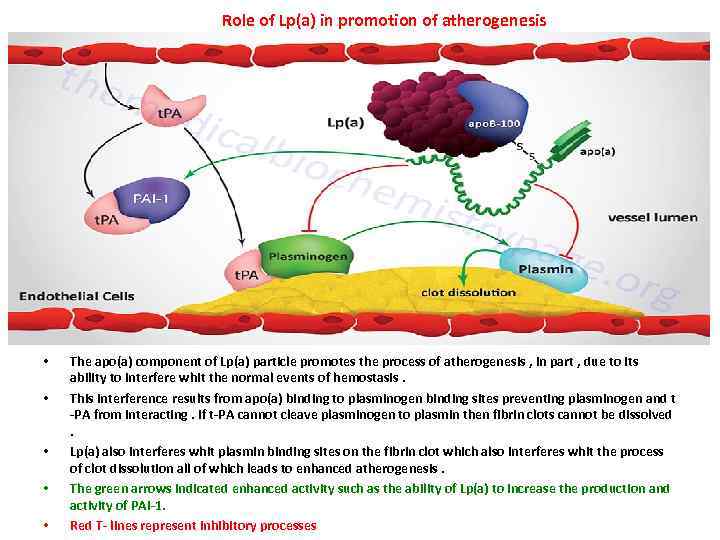 Role of Lp(a) in promotion of atherogenesis • • • The apo(a) component of Lp(a) particle promotes the process of atherogenesis , in part , due to its ability to interfere whit the normal events of hemostasis. This interference results from apo(a) binding to plasminogen binding sites preventing plasminogen and t -PA from interacting. If t-PA cannot cleave plasminogen to plasmin then fibrin clots cannot be dissolved. Lp(a) also interferes whit plasmin binding sites on the fibrin clot which also interferes whit the process of clot dissolution all of which leads to enhanced atherogenesis. The green arrows indicated enhanced activity such as the ability of Lp(a) to increase the production and activity of PAI-1. Red T- lines represent inhibitory processes
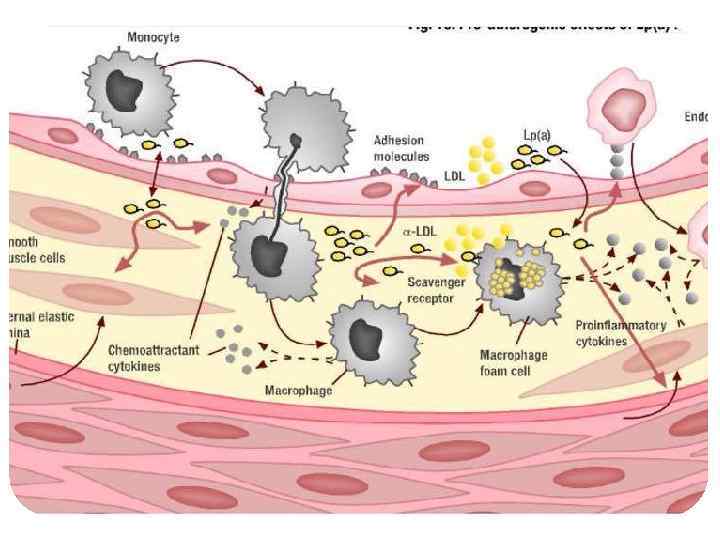
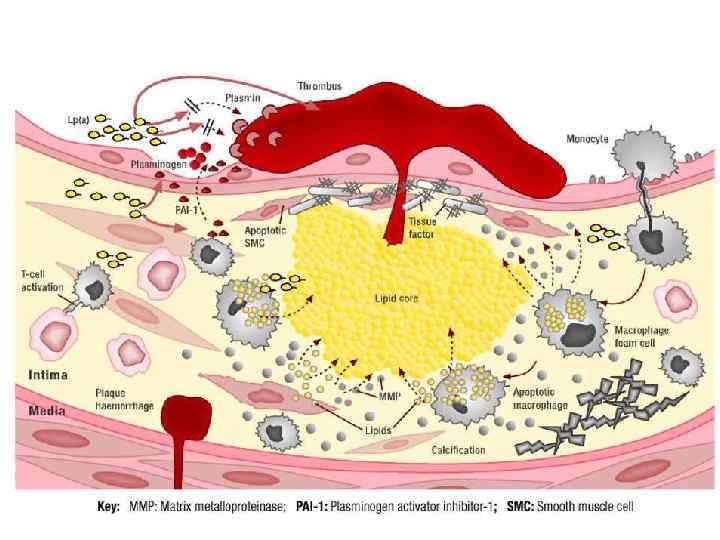
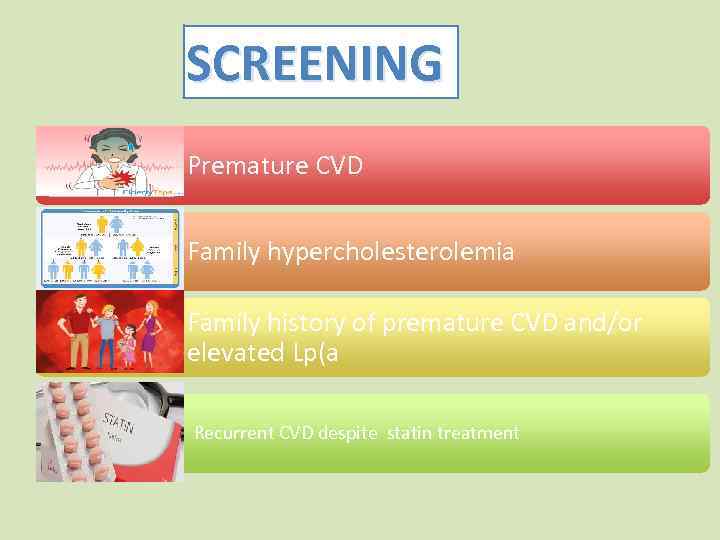 SCREENING Premature CVD Family hypercholesterolemia Family history of premature CVD and/or elevated Lp(a Recurrent CVD despite statin treatment
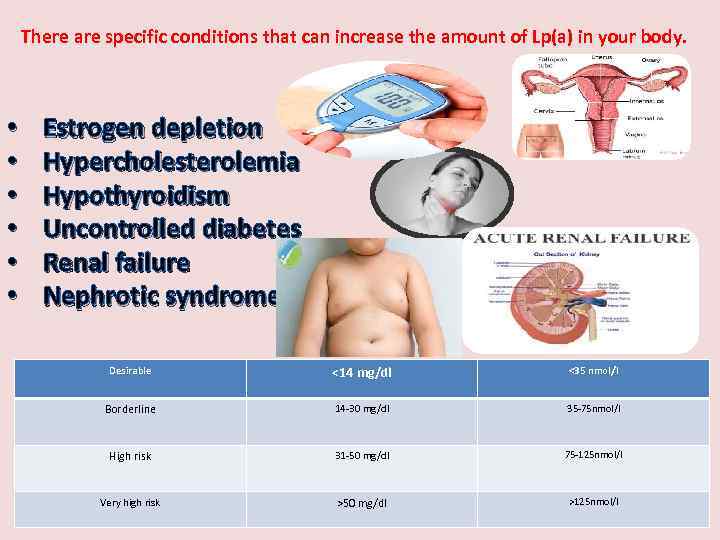 There are specific conditions that can increase the amount of Lp(a) in your body. • • • Estrogen depletion Hypercholesterolemia Hypothyroidism Uncontrolled diabetes Renal failure Nephrotic syndrome Desirable <14 mg/dl <35 nmol/l Borderline 14 -30 mg/dl 35 -75 nmol/l High risk 31 -50 mg/dl 75 -125 nmol/l Very high risk >50 mg/dl >125 nmol/l
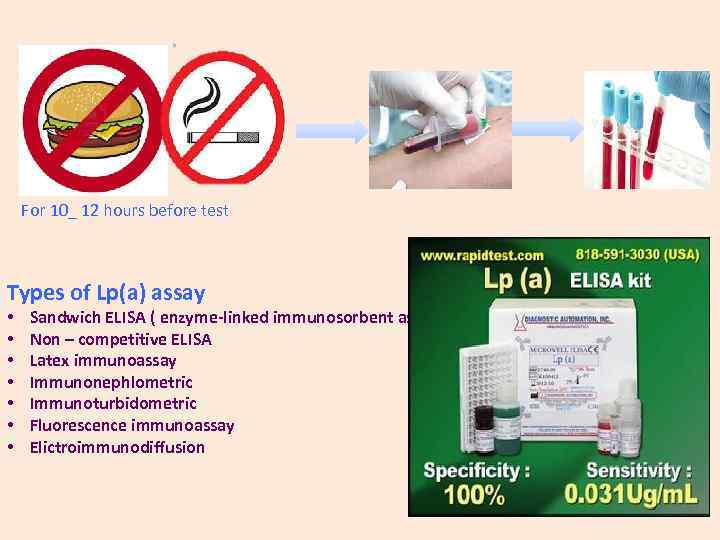 For 10_ 12 hours before test Types of Lp(a) assay • • Sandwich ELISA ( enzyme-linked immunosorbent assay Non – competitive ELISA Latex immunoassay Immunonephlometric Immunoturbidometric Fluorescence immunoassay Elictroimmunodiffusion
 Thanks for your attention!