


 Скачать презентацию Linguistic means of incongruity realization in the texts
Шанайда Оксана.ppt
- Количество слайдов: 12
 Linguistic means of incongruity realization in the texts of English jokes
 Humour is a subjective social value that concerned with specific range of human emotions.
 Discourse characteristics dialogical character dynamism spontaneity transparency cooperativity
 Text categories of joke: completion connectivity informational content modality intertextuality
 Jokes based on: sociological psycholinguistic communicational functional-pragmatic criteria
 Joke stylistic features: modernity anticipation genre manner intertextual remake irradiation of expressiveness unjustified expectation carnival consciousness
 Pragmatic functions: entertaining attractive switching controlling masking therapeutical
 Linguistic incongruity realized on: phonetic morphological lexical and phraseological syntactic levels
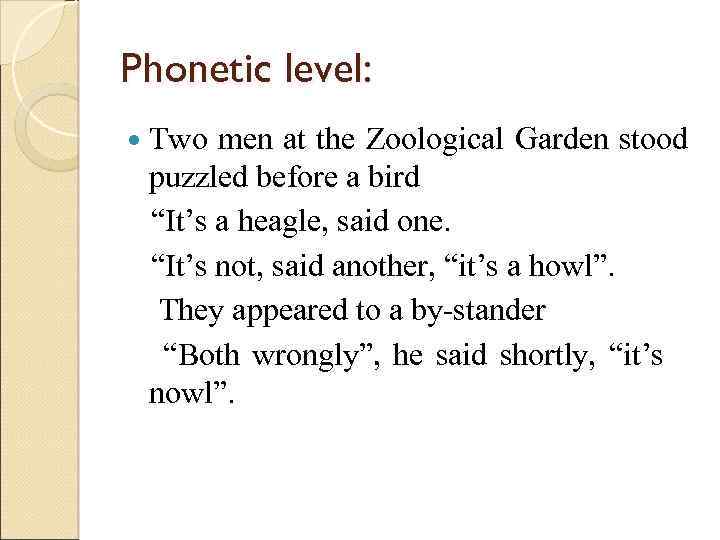 Phonetic level: Two men at the Zoological Garden stood puzzled before a bird “It’s a heagle, said one. “It’s not, said another, “it’s a howl”. They appeared to a by-stander “Both wrongly”, he said shortly, “it’s nowl”.
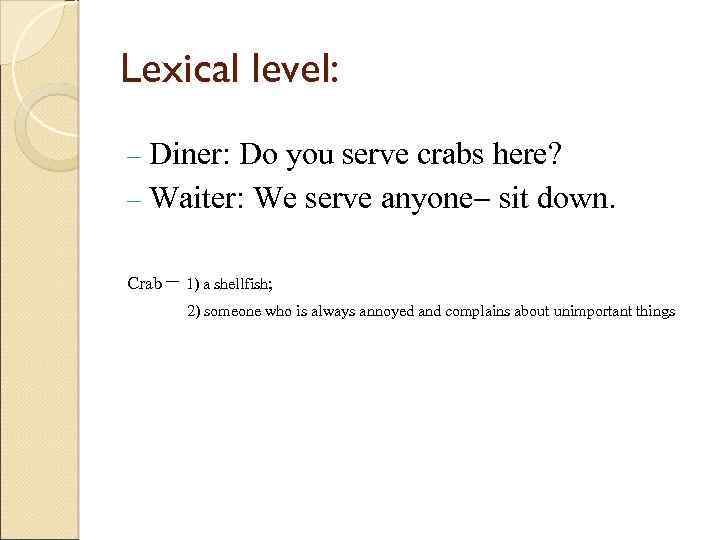 Lexical level: Diner: Do you serve crabs here? Waiter: We serve anyone sit down. Crab − 1) a shellfish; 2) someone who is always annoyed and complains about unimportant things
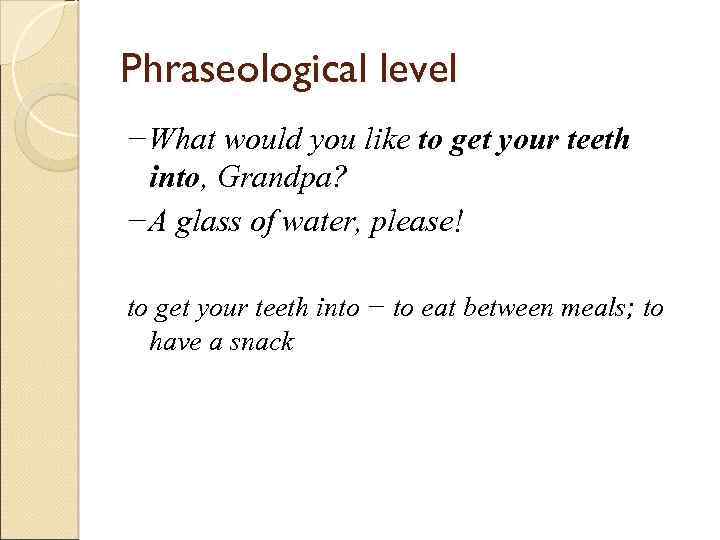 Phraseological level −What would you like to get your teeth into, Grandpa? −A glass of water, please! to get your teeth into − to eat between meals; to have a snack
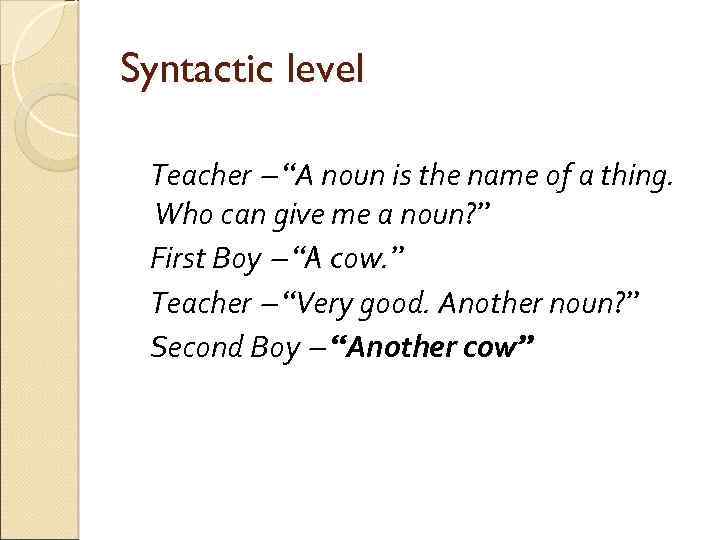 Syntactic level Teacher “A noun is the name of a thing. Who can give me a noun? ” First Boy “A cow. ” Teacher “Very good. Another noun? ” Second Boy “Another cow”