 Скачать презентацию LIMNOLOGICAL CHARACTERISTICS AND CAGE CULTURE PRACTICE IN INDRASAROBAR
33f4f6f9ff257d4c6463999a76d7bf9c.ppt
- Количество слайдов: 26



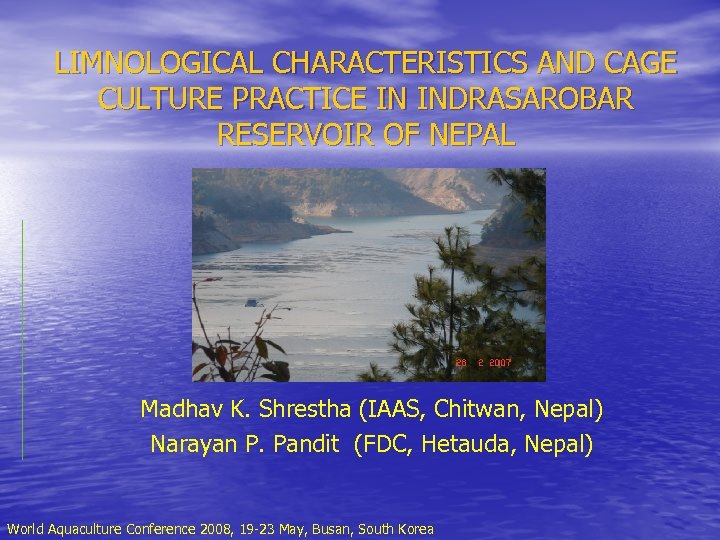
LIMNOLOGICAL CHARACTERISTICS AND CAGE CULTURE PRACTICE IN INDRASAROBAR RESERVOIR OF NEPAL Madhav K. Shrestha (IAAS, Chitwan, Nepal) Narayan P. Pandit (FDC, Hetauda, Nepal) World Aquaculture Conference 2008, 19 -23 May, Busan, South Korea
ACKNOWLEDGEMENTS This research was funded by National Agricultural Research and Development Fund (NARDF), Nepal. All the funding for attending WAS ’ 08 was made by Aqua. Fish CRSP USAID The Aquaculture CRSP is funded in part by United States Agency for International Development (USAID) Grant No. EPP-A-00 -06 -00012 -00. The opinions expressed herein are those of the authors and do not necessarily reflect the views of the US Agency for International Development.
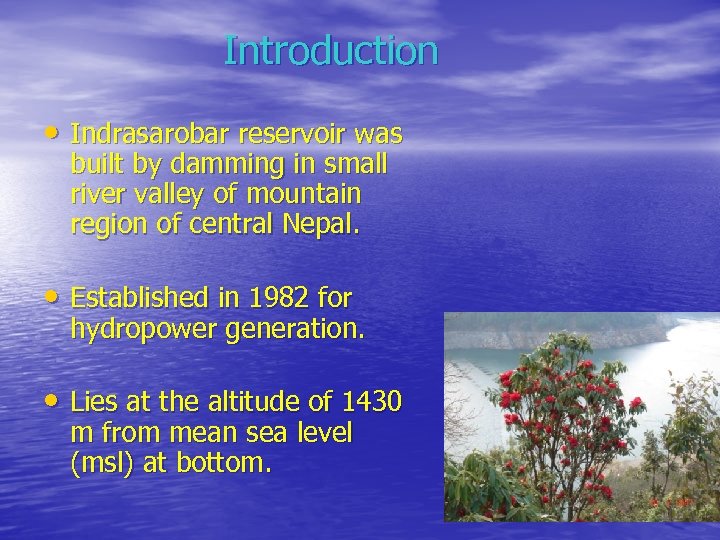
Introduction • Indrasarobar reservoir was built by damming in small river valley of mountain region of central Nepal. • Established in 1982 for hydropower generation. • Lies at the altitude of 1430 m from mean sea level (msl) at bottom.
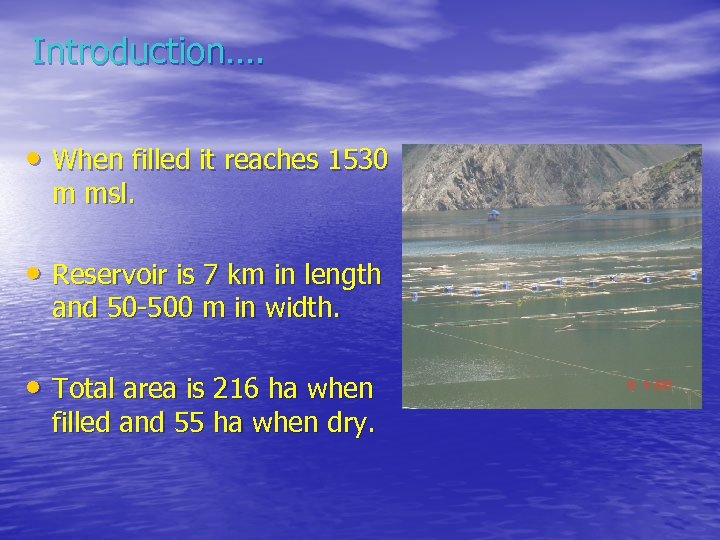
Introduction…. • When filled it reaches 1530 m msl. • Reservoir is 7 km in length and 50 -500 m in width. • Total area is 216 ha when filled and 55 ha when dry.
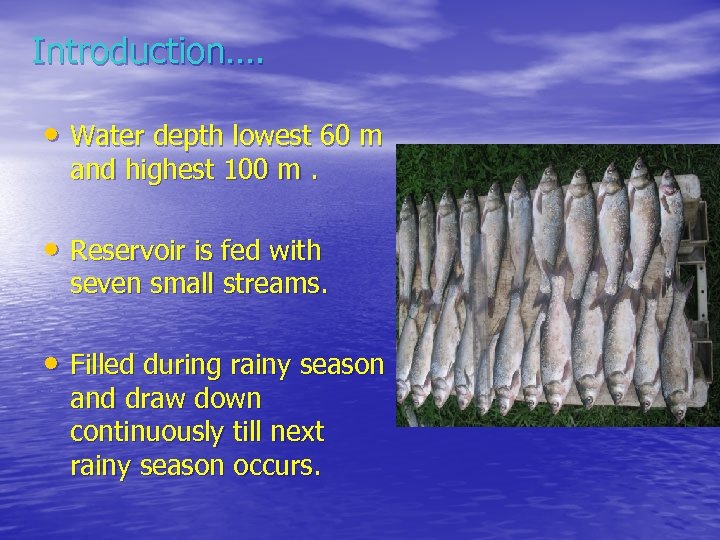
Introduction…. • Water depth lowest 60 m and highest 100 m. • Reservoir is fed with seven small streams. • Filled during rainy season and draw down continuously till next rainy season occurs.
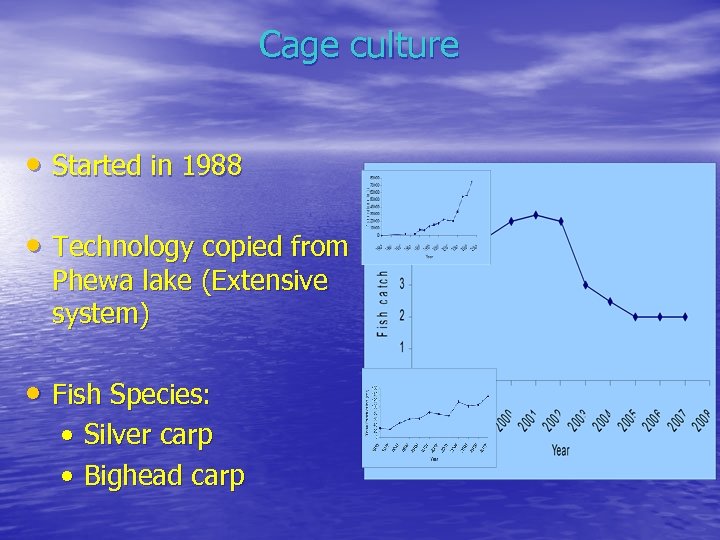
Cage culture • Started in 1988 • Technology copied from Phewa lake (Extensive system) • Fish Species: • Silver carp • Bighead carp
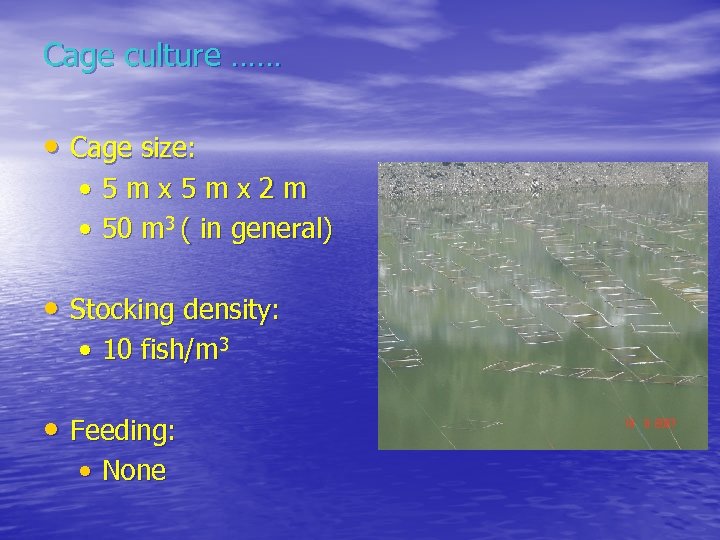
Cage culture …… • Cage size: • 5 mx 2 m • 50 m 3 ( in general) • Stocking density: • 10 fish/m 3 • Feeding: • None
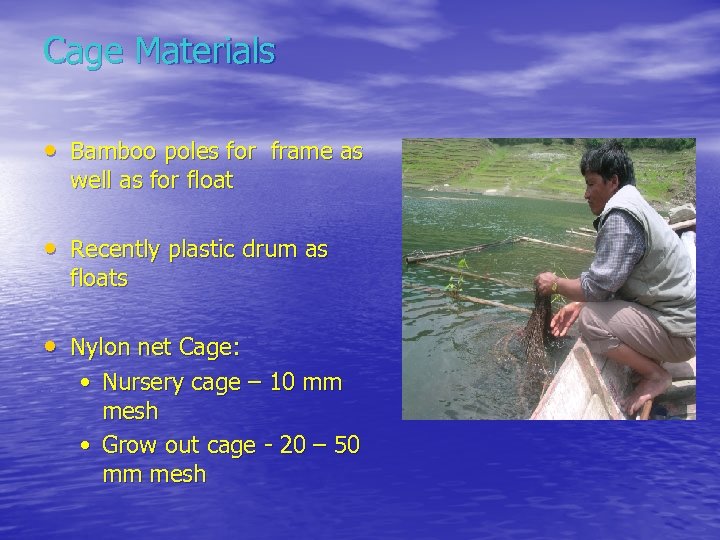
Cage Materials • Bamboo poles for frame as well as for float • Recently plastic drum as floats • Nylon net Cage: • Nursery cage – 10 mm mesh • Grow out cage - 20 – 50 mm mesh
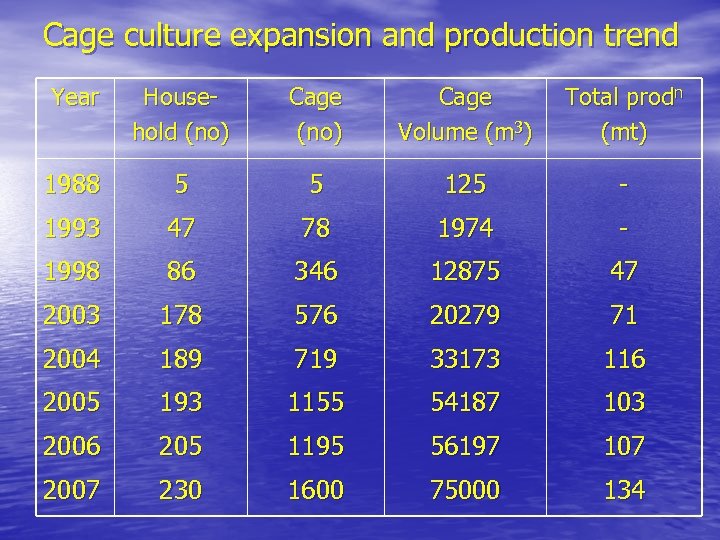
Cage culture expansion and production trend Year Household (no) Cage Volume (m 3) Total prodn (mt) 1988 5 5 125 - 1993 47 78 1974 - 1998 86 346 12875 47 2003 178 576 20279 71 2004 189 719 33173 116 2005 193 1155 54187 103 2006 205 1195 56197 107 2007 230 1600 75000 134
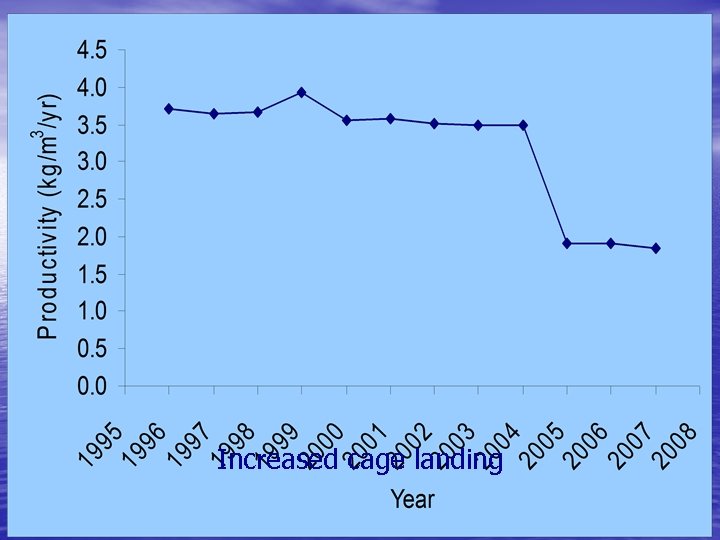
Increased cage landing
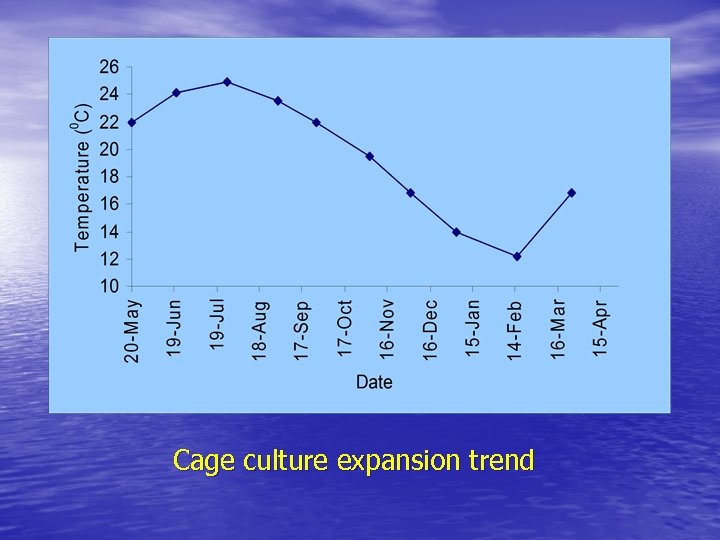
Cage culture expansion trend
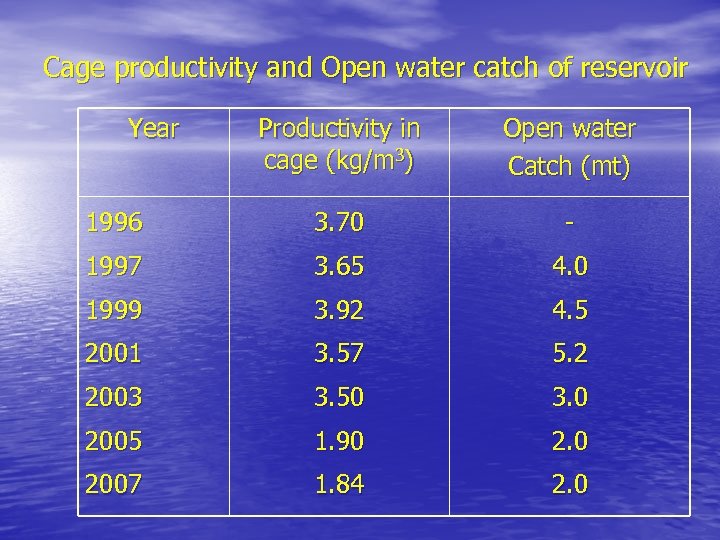
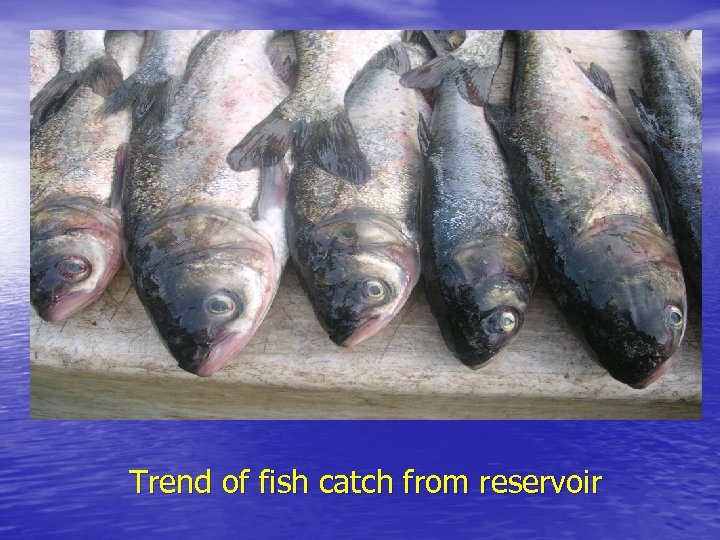
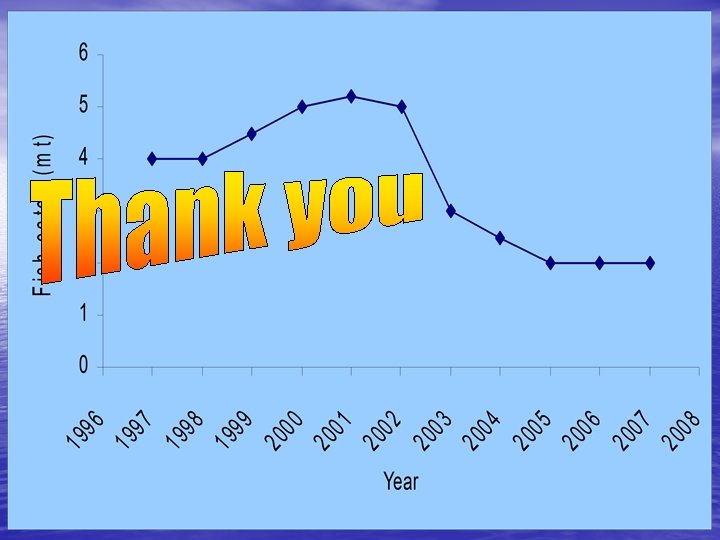
Cage productivity and Open water catch of reservoir Year Productivity in cage (kg/m 3) Open water Catch (mt) 1996 3. 70 - 1997 3. 65 4. 0 1999 3. 92 4. 5 2001 3. 57 5. 2 2003 3. 50 3. 0 2005 1. 90 2. 0 2007 1. 84 2. 0

Total cage fish production trend
Productivity trend of cage fish culture in reservoir
Trend of fish catch from reservoir
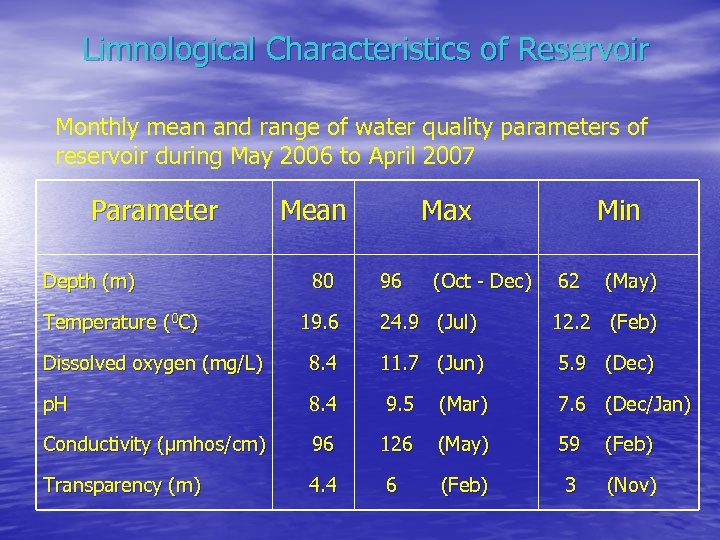
Limnological Characteristics of Reservoir Monthly mean and range of water quality parameters of reservoir during May 2006 to April 2007 Parameter Depth (m) Temperature (0 C) Mean 80 Max 96 (Oct - Dec) Min 62 (May) 19. 6 24. 9 (Jul) 12. 2 (Feb) Dissolved oxygen (mg/L) 8. 4 11. 7 (Jun) 5. 9 (Dec) p. H 8. 4 9. 5 (Mar) 7. 6 (Dec/Jan) Conductivity (μmhos/cm) 96 126 (May) 59 (Feb) Transparency (m) 4. 4 6 (Feb) 3 (Nov)
Monthly mean water depth of the reservoir
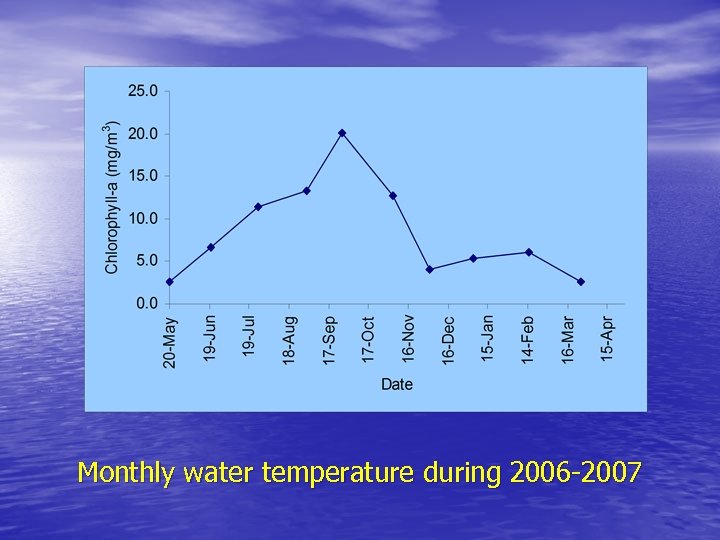
Monthly water temperature during 2006 -2007
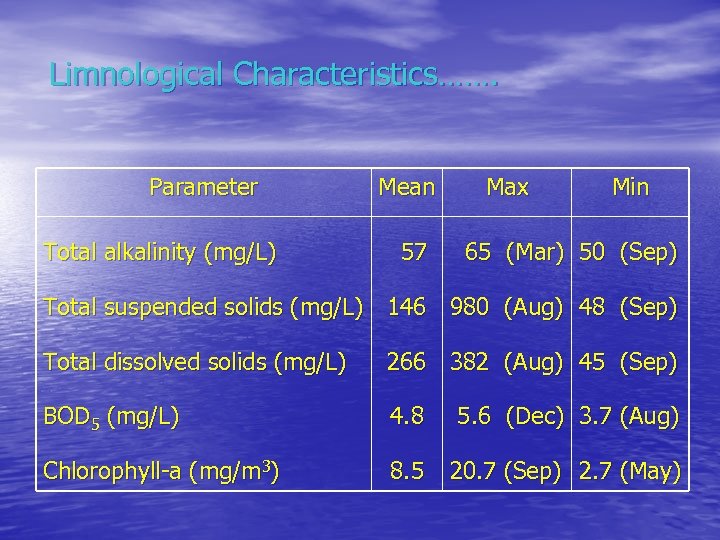
Limnological Characteristics……. Parameter Total alkalinity (mg/L) Mean 57 Max Min 65 (Mar) 50 (Sep) Total suspended solids (mg/L) 146 980 (Aug) 48 (Sep) Total dissolved solids (mg/L) 266 382 (Aug) 45 (Sep) BOD 5 (mg/L) 4. 8 5. 6 (Dec) 3. 7 (Aug) Chlorophyll-a (mg/m 3) 8. 5 20. 7 (Sep) 2. 7 (May)
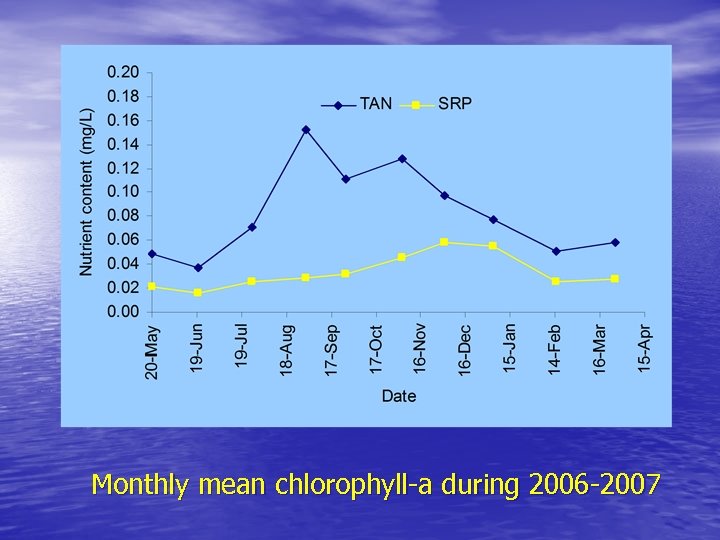
Monthly mean chlorophyll-a during 2006 -2007
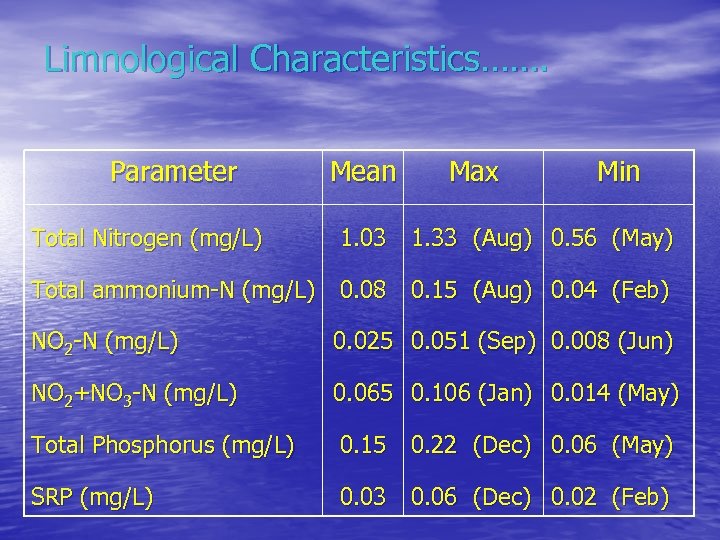
Limnological Characteristics……. Parameter Total Nitrogen (mg/L) Mean Max Min 1. 03 1. 33 (Aug) 0. 56 (May) Total ammonium-N (mg/L) 0. 08 0. 15 (Aug) 0. 04 (Feb) NO 2 -N (mg/L) 0. 025 0. 051 (Sep) 0. 008 (Jun) NO 2+NO 3 -N (mg/L) 0. 065 0. 106 (Jan) 0. 014 (May) Total Phosphorus (mg/L) 0. 15 0. 22 (Dec) 0. 06 (May) SRP (mg/L) 0. 03 0. 06 (Dec) 0. 02 (Feb)
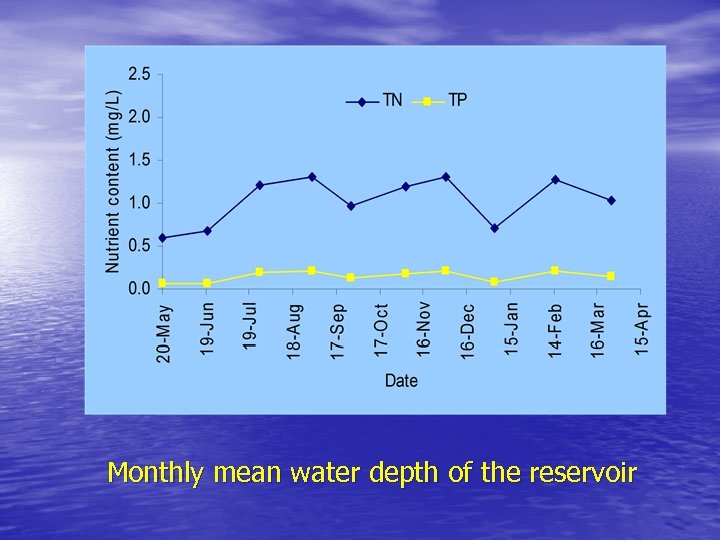
Monthly mean total nitrogen (TN) and total phosphorus (TP) trend in reservoir during 2006 -2007
Monthly mean total ammonium nitrogen (TAN) and soluble reactive phosphorus (SRP) content trend in reservoir during 2006 -2007.
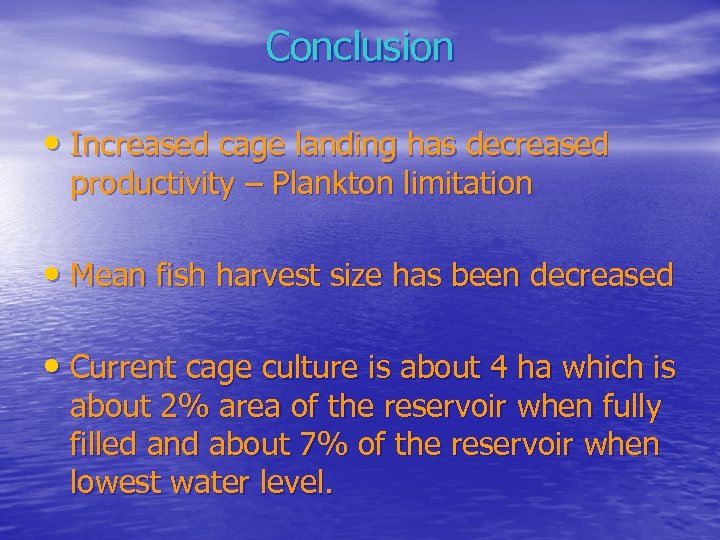
Conclusion • Increased cage landing has decreased productivity – Plankton limitation • Mean fish harvest size has been decreased • Current cage culture is about 4 ha which is about 2% area of the reservoir when fully filled and about 7% of the reservoir when lowest water level.
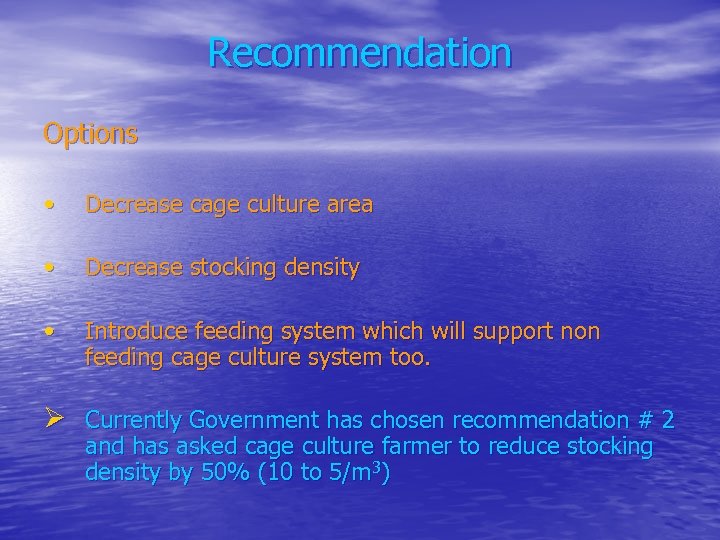
Recommendation Options • Decrease cage culture area • Decrease stocking density • Introduce feeding system which will support non feeding cage culture system too. Ø Currently Government has chosen recommendation # 2 and has asked cage culture farmer to reduce stocking density by 50% (10 to 5/m 3)
 Скачать презентацию LIMNOLOGICAL CHARACTERISTICS AND CAGE CULTURE PRACTICE IN INDRASAROBAR
33f4f6f9ff257d4c6463999a76d7bf9c.ppt