 Скачать презентацию LIGHTING Power Point Slides by TH FOO NADZIRAH
TOPIC 5 - LIGHTING.pptx
- Количество слайдов: 52



LIGHTING Power. Point® Slides by TH FOO NADZIRAH ZAINORDIN
INTRODUCTION • Light is energy in the form of electromagnetic radiation. • The transmission of light energy can be described as a wave motion or as ‘packets’ of energy called photons. • The waves required no medium and can therefore travel through a vacuum. • Different types of electromagnetic radiation have different wavelengths or frequencies.
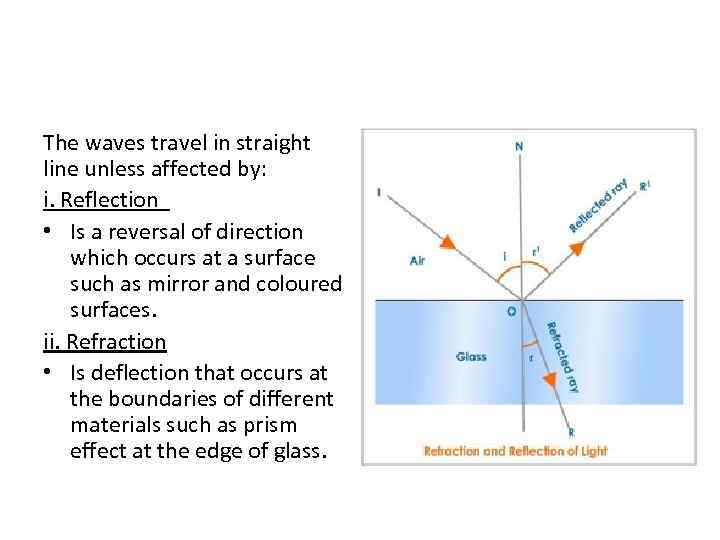
The waves travel in straight line unless affected by: i. Reflection • Is a reversal of direction which occurs at a surface such as mirror and coloured surfaces. ii. Refraction • Is deflection that occurs at the boundaries of different materials such as prism effect at the edge of glass.
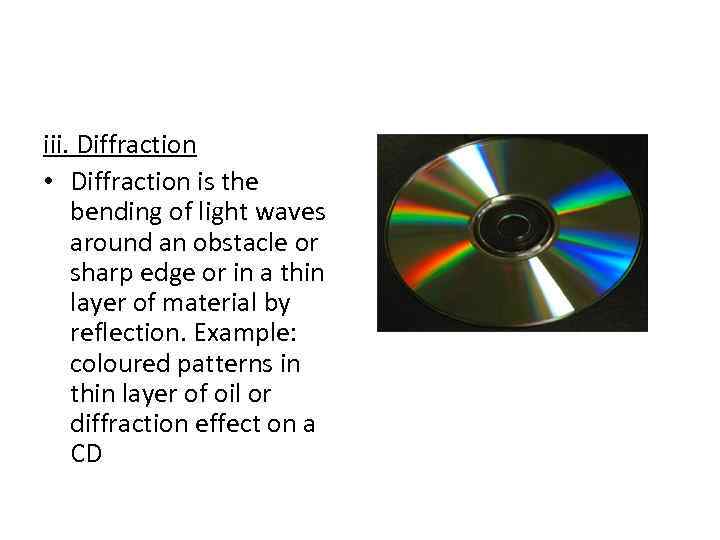
iii. Diffraction • Diffraction is the bending of light waves around an obstacle or sharp edge or in a thin layer of material by reflection. Example: coloured patterns in thin layer of oil or diffraction effect on a CD
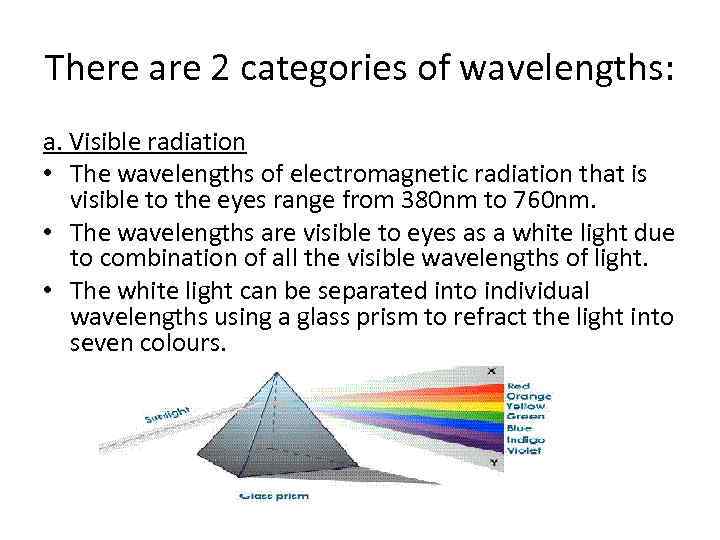
There are 2 categories of wavelengths: a. Visible radiation • The wavelengths of electromagnetic radiation that is visible to the eyes range from 380 nm to 760 nm. • The wavelengths are visible to eyes as a white light due to combination of all the visible wavelengths of light. • The white light can be separated into individual wavelengths using a glass prism to refract the light into seven colours.
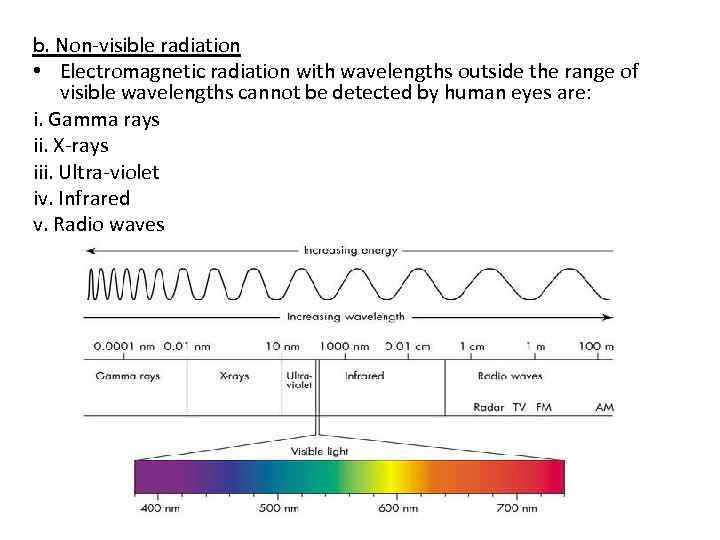
b. Non-visible radiation • Electromagnetic radiation with wavelengths outside the range of visible wavelengths cannot be detected by human eyes are: i. Gamma rays ii. X-rays iii. Ultra-violet iv. Infrared v. Radio waves
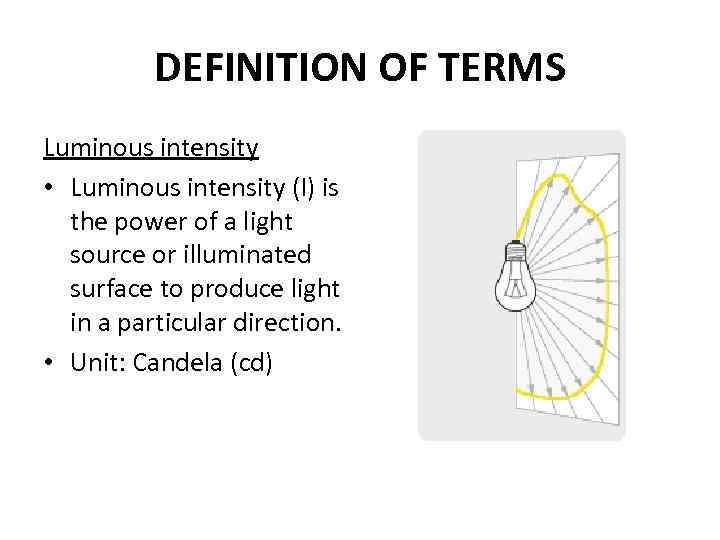
DEFINITION OF TERMS Luminous intensity • Luminous intensity (I) is the power of a light source or illuminated surface to produce light in a particular direction. • Unit: Candela (cd)
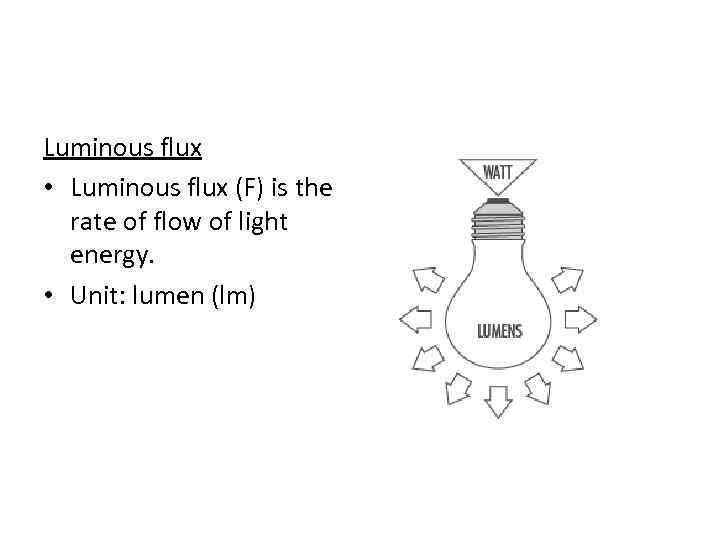
Luminous flux • Luminous flux (F) is the rate of flow of light energy. • Unit: lumen (lm)
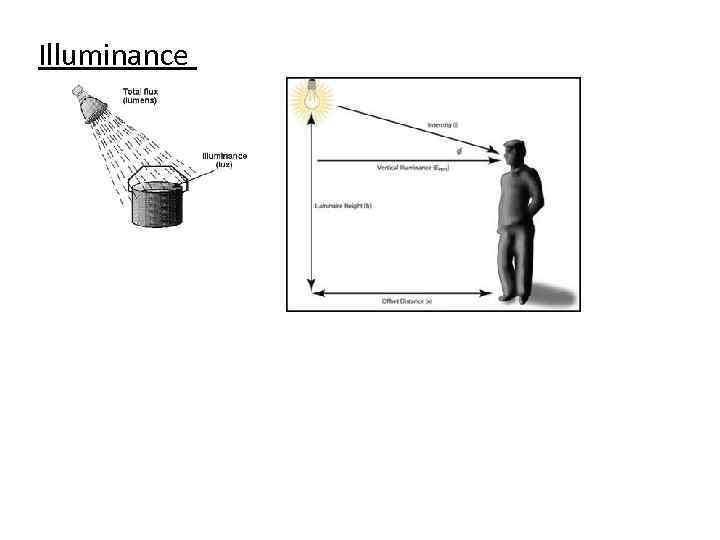
Illuminance
• Illuminance (E) is the density of luminous flux reaching a surface. • Unit: lux (lx) where 1 lux = 1 lumen/(meter)2 • Common luminance levels range from 50 lux for low domestic lighting to 50000 lux for bright daylight. • If light is falling on a surface at right angles then the illuminance is given by the following formula, E=F/A Where E = illuminance on surface (lx) F = total flux reaching surface (1 m) A = area of the surface (m 2) • As a point source of light travels away from the source, the area over which the flux can spread increases but the luminous flux per unit area (illuminance density) will decrease.
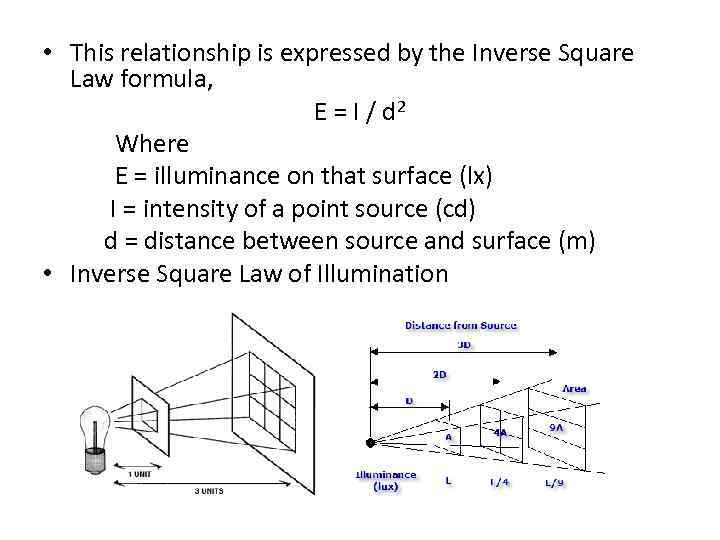
• This relationship is expressed by the Inverse Square Law formula, E = I / d 2 Where E = illuminance on that surface (lx) I = intensity of a point source (cd) d = distance between source and surface (m) • Inverse Square Law of Illumination
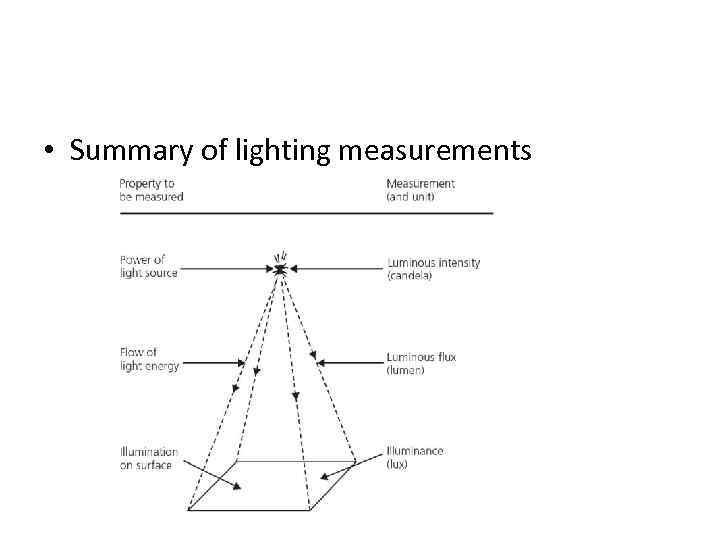
• Summary of lighting measurements
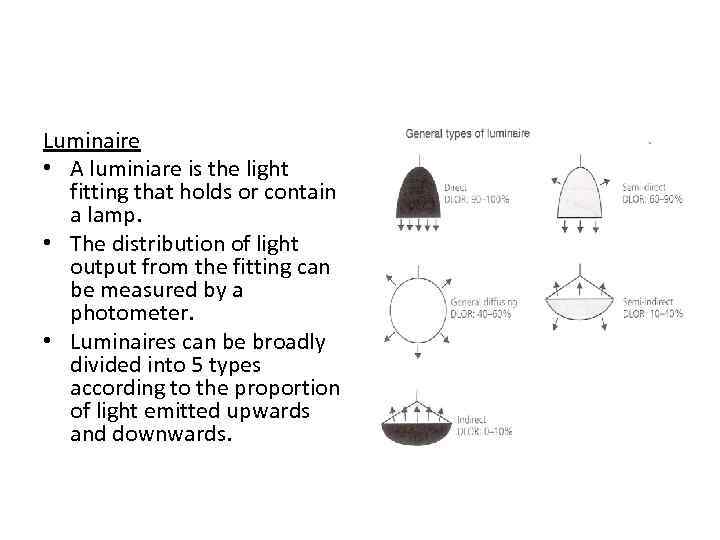
Luminaire • A luminiare is the light fitting that holds or contain a lamp. • The distribution of light output from the fitting can be measured by a photometer. • Luminaires can be broadly divided into 5 types according to the proportion of light emitted upwards and downwards.
GLARE Definition: Glare is the discomfort or impairment of vision cause by and excessive range of brightness. • Glare can be caused by lamps, window and painted surfaces appearing too bright in comparison with the general background. • The usual causes of glare in buildings are bright skies seen through windows and direct views of bright lamps.
Glare can be further described as disability and discomfort glare. Disability glare Discomfort glare • Disability glare is the glare that lessens the ability to see detail. • It does not necessarily cause visual discomfort. • For example: excessive reflections from shiny white paper cause difficulty while reading. • Discomfort glare is the glare that causes visual discomfort. • An unshielded light bulb is a common example of discomfort glare. • The amount of discomfort depends on the angle of view and the type of location.
• Glare Index is a measured of glare discomfort. • The glare index is calculated based on: i. the positions of the source ii. the luminances of the source and surroundings iii. the size of the source.
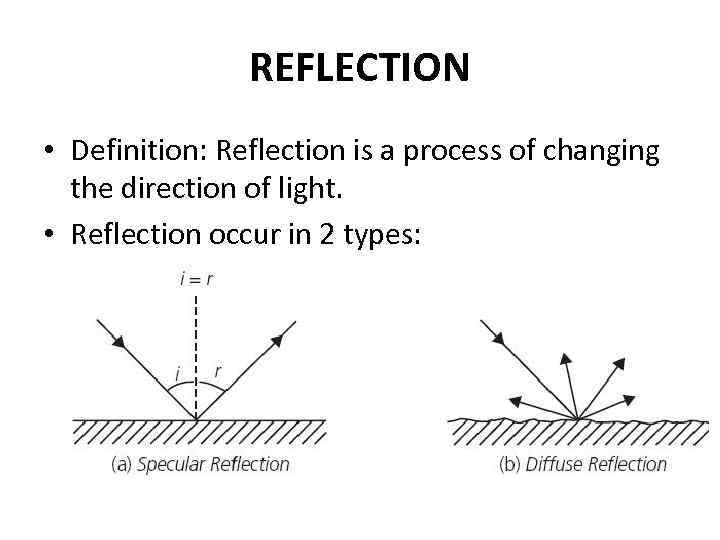
REFLECTION • Definition: Reflection is a process of changing the direction of light. • Reflection occur in 2 types:
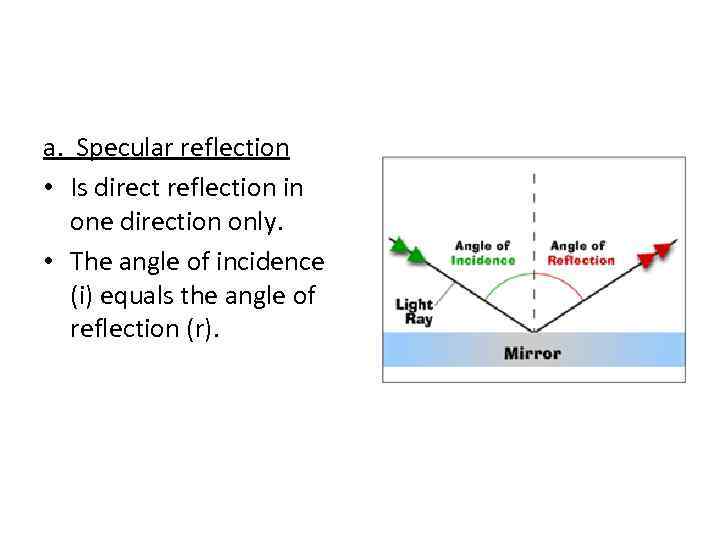
a. Specular reflection • Is direct reflection in one direction only. • The angle of incidence (i) equals the angle of reflection (r).

b. Diffuse reflection • Is reflection in which the light is scattered in various directions. • The amount of reflection a surface is measured by the reflection factor or reflectance. • Maximum reflectance has a value near 1 for light and shinny surfaces. • Maximum reflectance has a value near 0 for dark and dull surfaces.
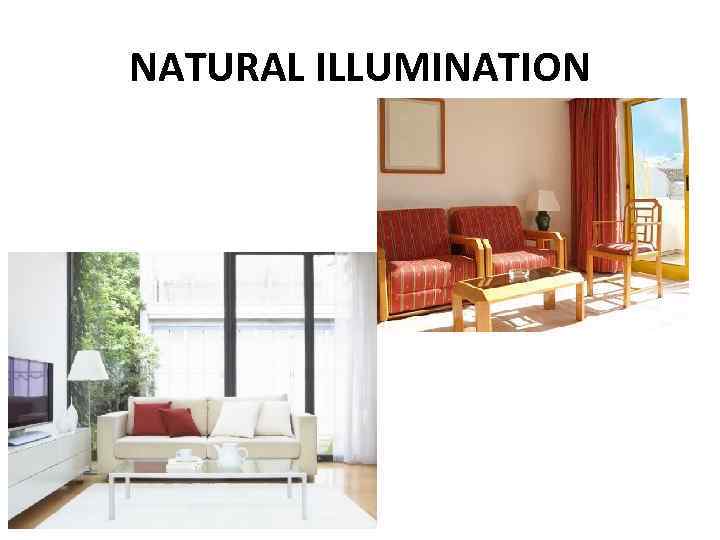
NATURAL ILLUMINATION
• The quantity of natural light inside a room is governed by the following factors: 1. The nature and brightness of the sky. 2. The size, shape, number and position of the windows. 3. Reflections from surfaces inside the room. 4. Reflections and obstructions from objects outside the room. • Large glazed areas may provide sufficient day lighting into the building but can cause glare, overheating in the building and increase cooling energy costs.
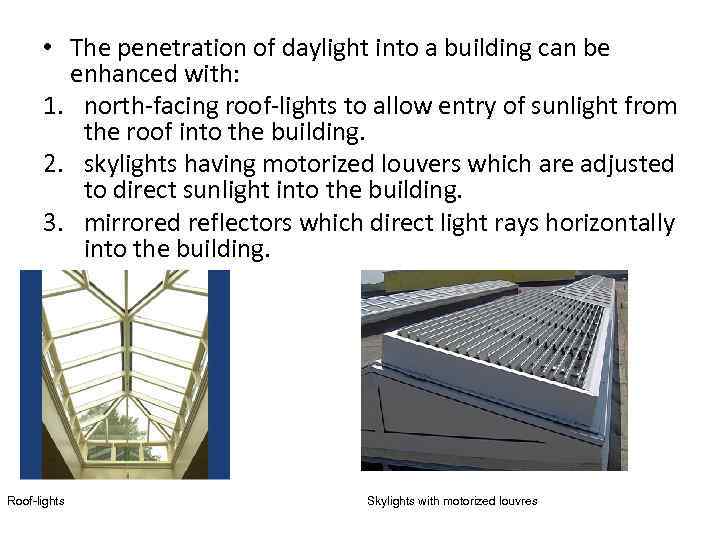
• The penetration of daylight into a building can be enhanced with: 1. north-facing roof-lights to allow entry of sunlight from the roof into the building. 2. skylights having motorized louvers which are adjusted to direct sunlight into the building. 3. mirrored reflectors which direct light rays horizontally into the building. Roof-lights Skylights with motorized louvres
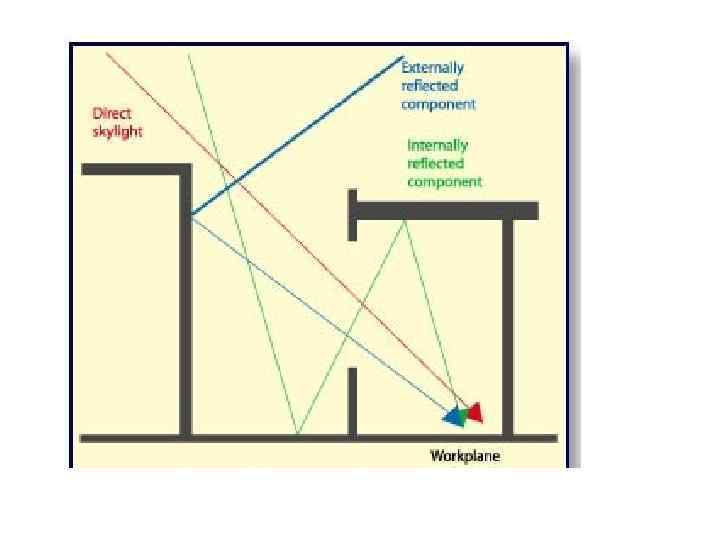
Daylight Factor • The daylight reaching a particular point inside a room is made up 3 main components: 1. Sky Component (SC)- The light received directly from the sky. 2. Externally Reflected Component (ERC)- The light received directly by reflection from buildings and landscape outside the room. 3. Internally Reflected Component (IRC)- The light received from surfaces inside the room. • The final daylight factor (DF) is the sum of the 3 separate components, DF = SC + ERC + IRC Unit: Percentage • The 3 components arrive at the same point by different types of path as shown in the Figure below.
ARTIFICIAL ILLUMINATION
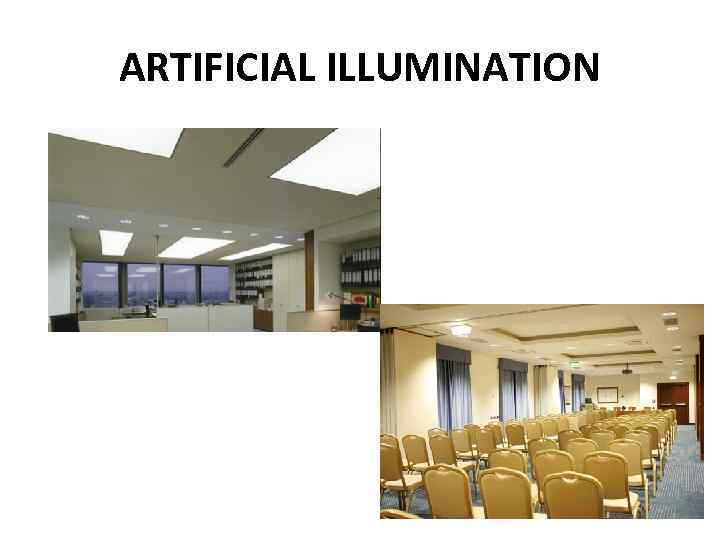
• Artificial lighting is provided to supplement daylight on a temporary or permanent basis. • Illumination intensity (lux) falls on the working plane (desk, drawing board, display area) is determined by: 1. The accuracy and speed of the task performed. 2. The contrast with the background. 3. The age of the worker. 4. The space within the task is to be performed. 5. The length of time spent on the task. Example: a. Illumination up to 3000 lux for inspection small electronic components. b. Illumination of 50000 lux for a hospital operating table.
Reasons for artificial lighting • Inclement weather, particularly in winter when a reduction of natural daylight is such that the carrying out of work becomes impracticable • Without adequate light, all activities on construction sites carry an increased risk of accident and injury • By enabling work to proceed, losses in productivity can be reduced • Reduce the wastage of labour and materials which often results from working in poor light • Avoid short-time working due to the inability to see clearly enough for accurate and safe working • Improve the general security of the building/site
Benefits for artificial lighting • An effective to the would-be trespasser/pilferer • Overtime and extra shift can be worked to overcome delays that might occur from any cause • Deliveries and collection of materials or plant can be made outside normal working hours thus helping to avoid delays or congested • Site activities will be independent of the availability of natural daylight and therefore the activities can be arranged to suit the needs of the contract, the availability of materials and the personnel involved.
Artificial light source • The oldest source of artificial light is the flame from fires, candles and from oil lamps where light is a product of chemical combustion. • Modern sources of artificial light convert electrical energy to light energy. • There are 2 main types of artificial light:
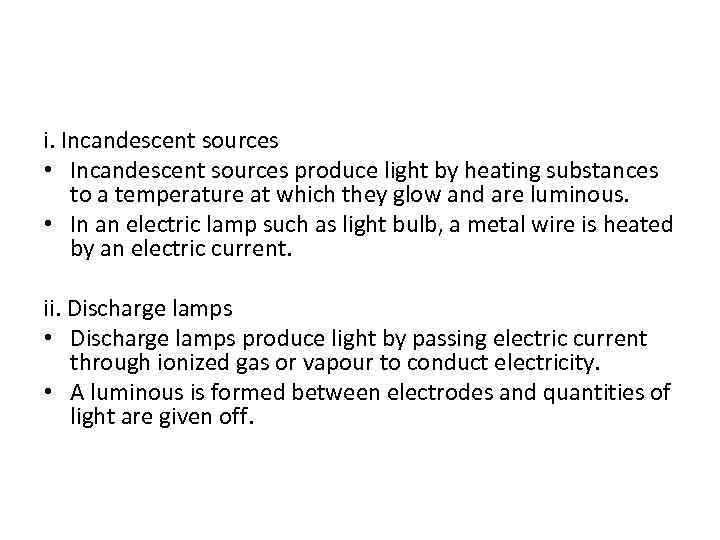
i. Incandescent sources • Incandescent sources produce light by heating substances to a temperature at which they glow and are luminous. • In an electric lamp such as light bulb, a metal wire is heated by an electric current. ii. Discharge lamps • Discharge lamps produce light by passing electric current through ionized gas or vapour to conduct electricity. • A luminous is formed between electrodes and quantities of light are given off.
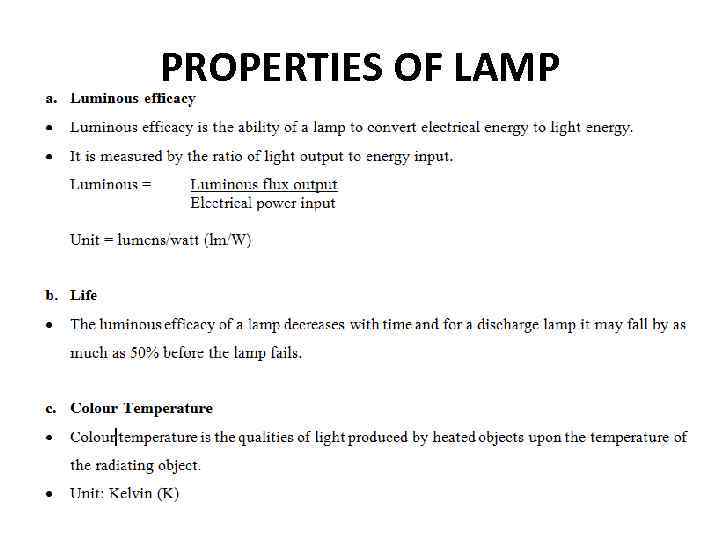
PROPERTIES OF LAMP
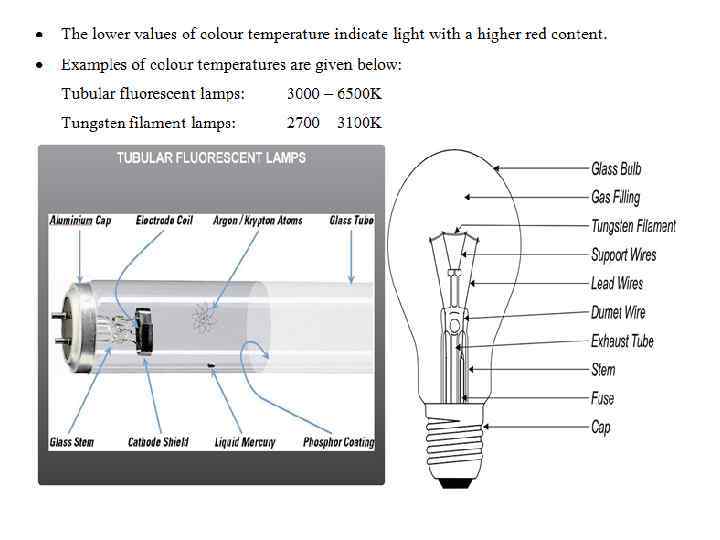
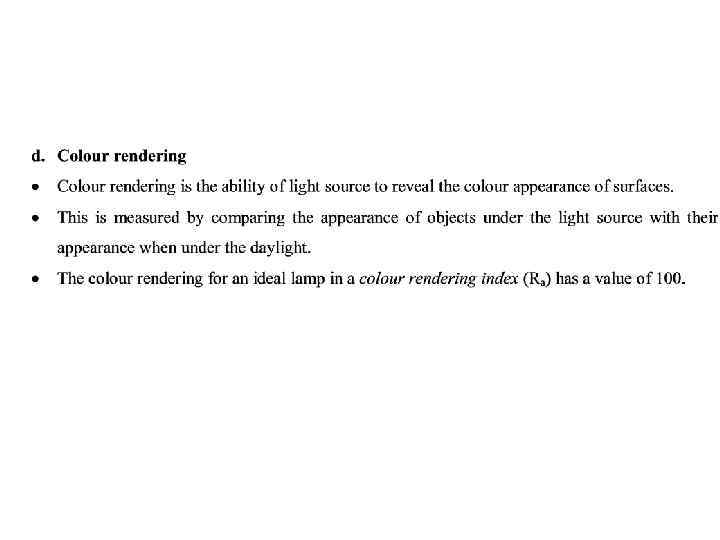
LIGHTING DESIGN The lighting design takes into consideration of the following factors: a. Illuminance levels • The quantity of light on a surface is usually the primary consideration in the design of a lighting. • The quantity is specified by the density of illuminance measured in lux. • The illuminance changes with time and varies across the working plane. • Service illuminance is the averaged density of illuminance over the area. • The table below shown some of the standard service illuminance levels that are recommended for good practices.
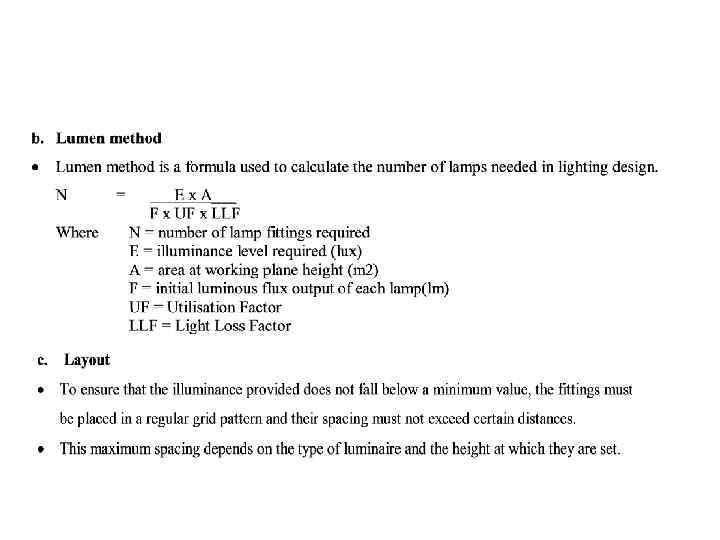
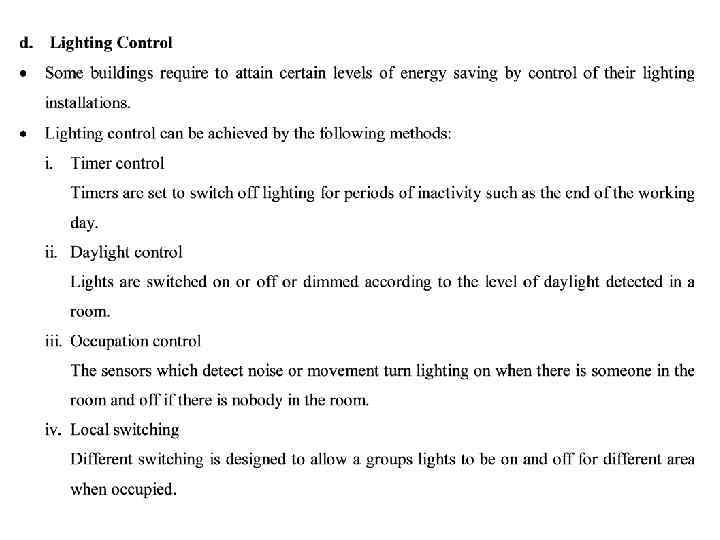
TYPES OF LAMP The choice of light fitting depends on the properties such as: 1. 2. 3. 4. 5. 6. electrical insulation moisture resistance energy saving safety appearance durability
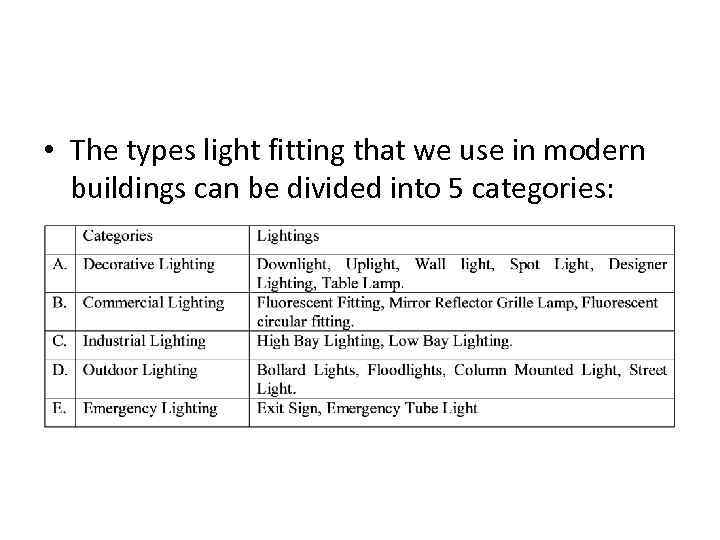
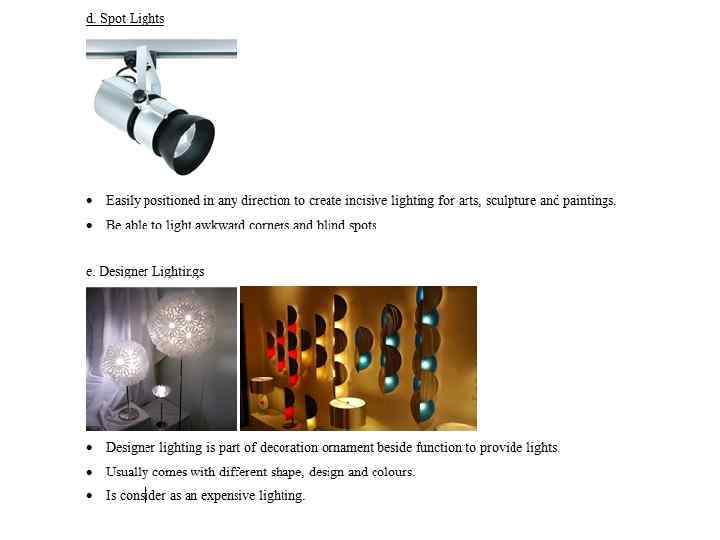
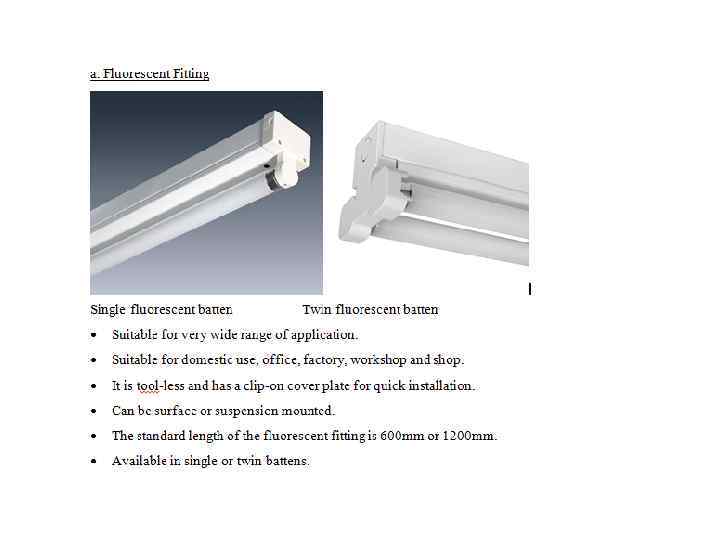
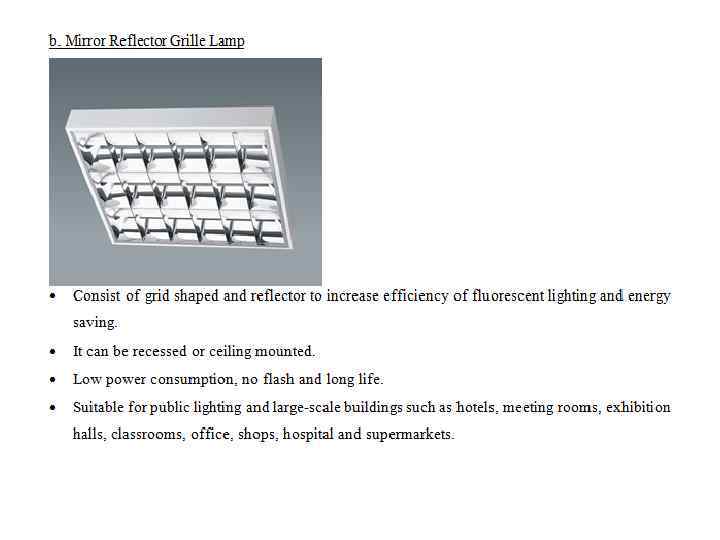
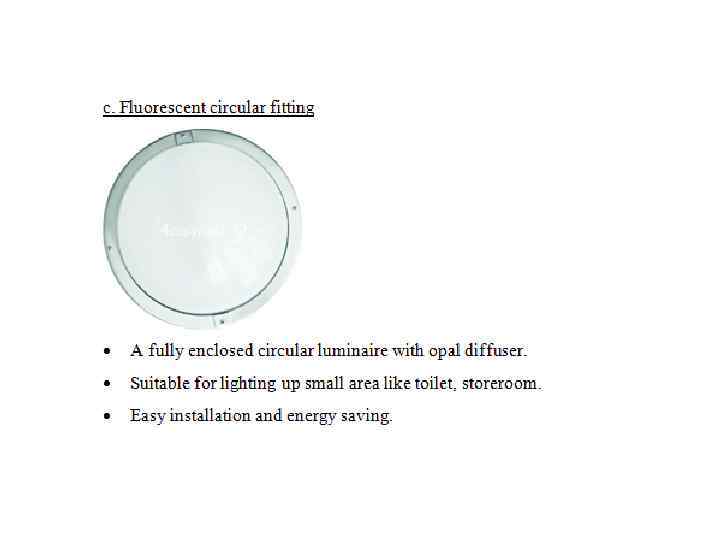
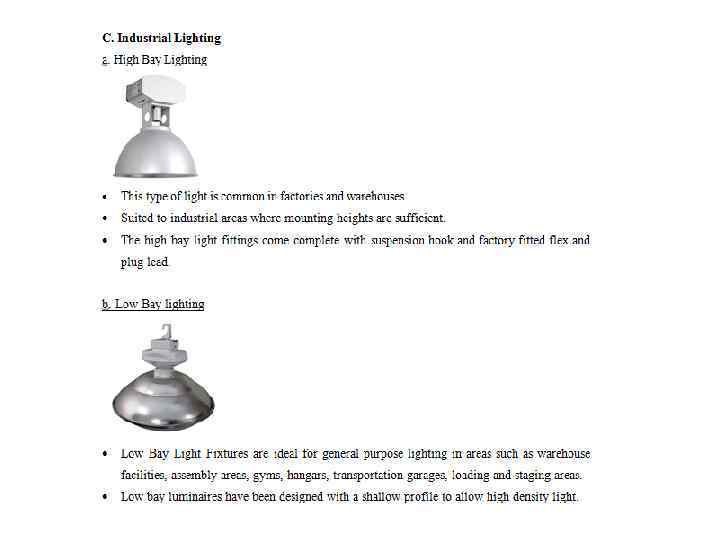
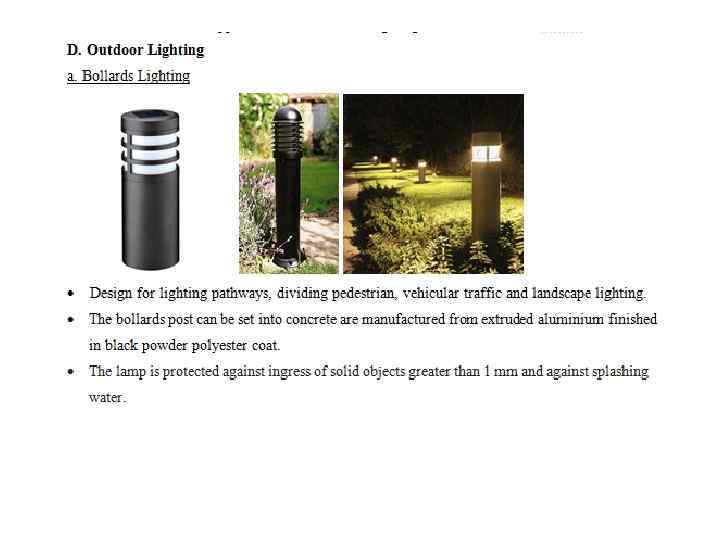
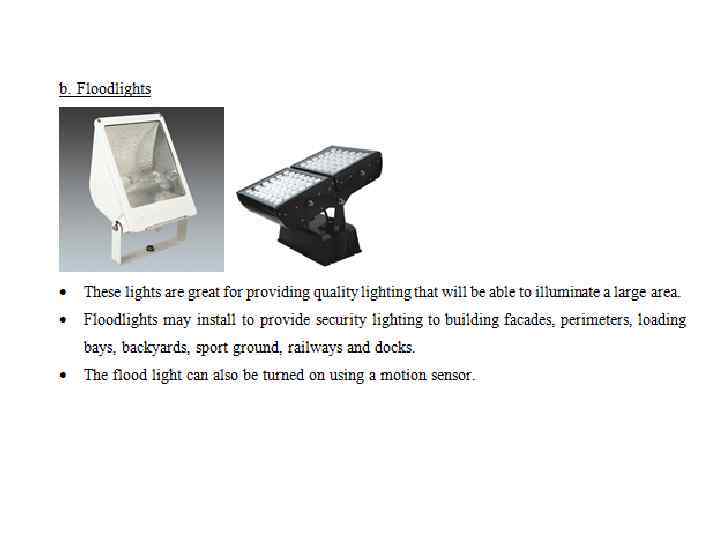
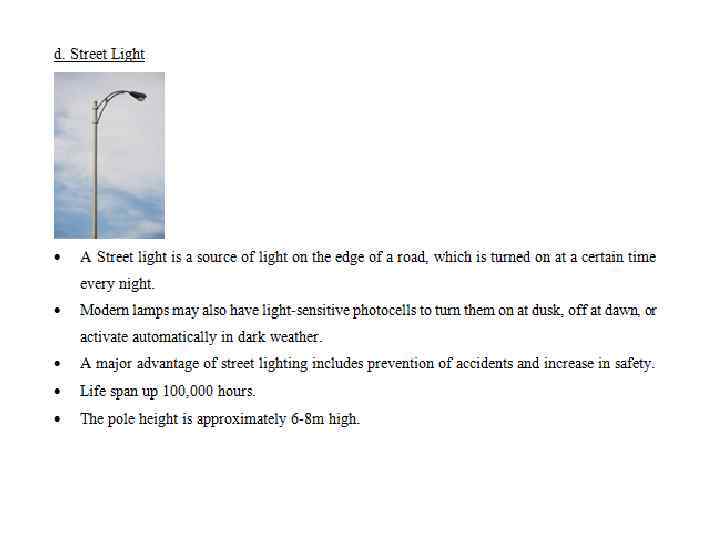
• The types light fitting that we use in modern buildings can be divided into 5 categories:


THE END
Скачать презентацию LIGHTING Power Point Slides by TH FOO NADZIRAH
TOPIC 5 - LIGHTING.pptx