


 Скачать презентацию Life Net of New York Landing Zone Presentation
d3544fe7b77ae0683e0a25ea89a168e4.ppt
- Количество слайдов: 61
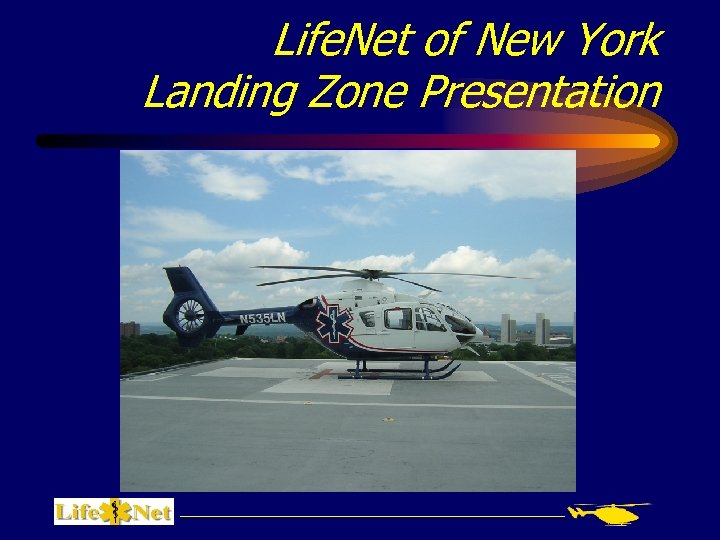 Life. Net of New York Landing Zone Presentation
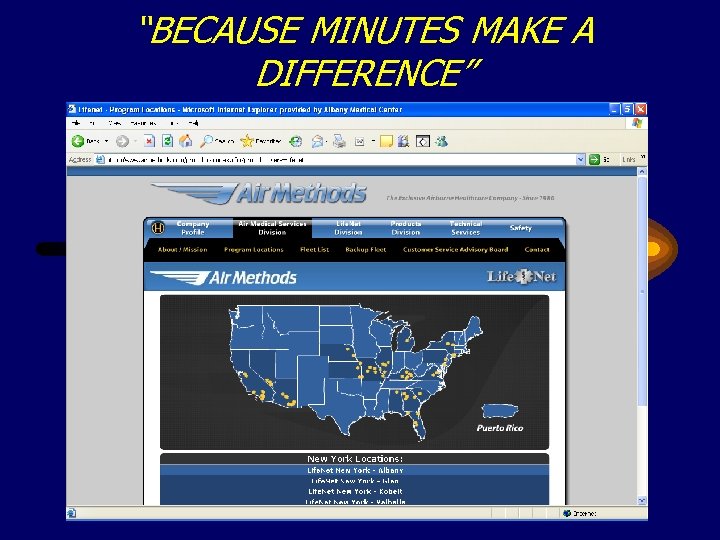 “BECAUSE MINUTES MAKE A DIFFERENCE”
 Administration • Program Director – Dean Dow • Medical Manager – John Fisher • Medical Base Supervisors – – Jon Gryniuk Shannon Martin Mike Paulson Craig Castioni • Medical Directors – Deb Funk MD, David Stuhlmiller MD • Administrative Assistant – Desiree James
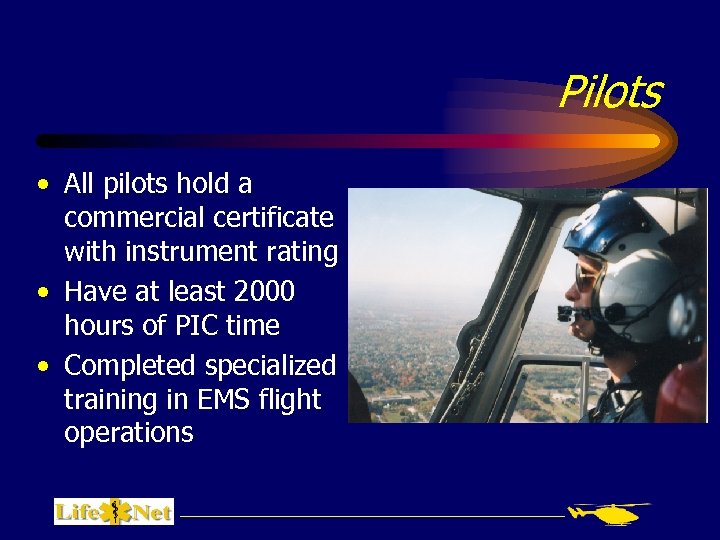 Pilots • All pilots hold a commercial certificate with instrument rating • Have at least 2000 hours of PIC time • Completed specialized training in EMS flight operations
 Medical Staff • Available 24 hours a day, 7 days/week, 365 days/year • Medically dedicated • Staffed by a Paramedic/RN team with equal training and responsibility • Provide advance medical procedures – advanced airway management – hemodynamic support – advanced pharmacology – ability to act autonomously guided by “standards of practice”
 Life Net 7 -1 , Albany EC-135 • • • American Eurocopter Twin Pratt and Whitney 650 shp engines Rear load for ONE patient 187 gallons Jet A Range of 300 on full load of fuel Cruise speed of 168 mph
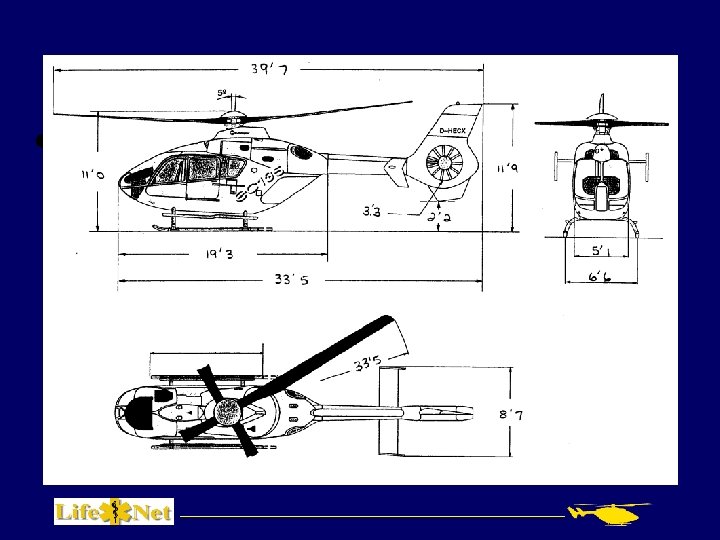
 Dimensions and Weight • Total running length – 40 ft • Main rotor diameter – 34 ft • Main rotor height – 11 ft on level ground • Tail rotor height – 2. 2 ft • Maximum gross weight – 6250 lbs. • Can carry up to 350 lb. patient
 Life Net 7 -2, Glen BO 105 • • American Eurocopter Twin 250 hp Allison Engines Rear load for ONE patient 150 gallons of jet A fuel on underside of AC (similar properties to Kerosene) • Range of 300 miles on a full load of fuel • Cruising speed of 130 -140 mph
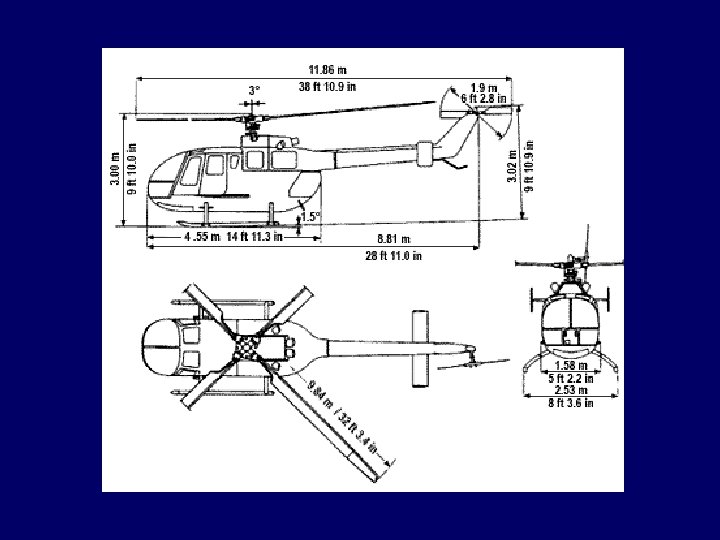
 Dimensions and Weight • Total running length – 39 feet • Main rotor diameter – 32 feet • Main rotor height – 10 feet (level ground) • Tail rotor height – 7 feet (level ground) • Maximum gross weight – 5500 lbs. • Can carry up to 350 lbs. patient.
 Air 1 / Air 2 , Kobelt & Valhalla BK 117 • • American Eurocopter Twin Lycoming 650 hp gas turbines Rear load for ONE or TWO patients 187 gallons of jet A fuel on underside of AC (similar properties to Kerosene) • Range of 300 miles on a full load of fuel • Cruising speed of 144 -150 mph
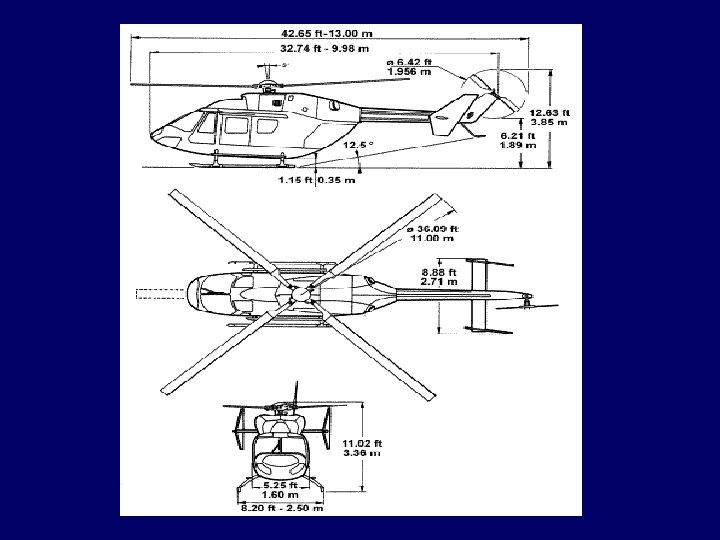
 Dimensions and Weight • • • Total running length - 43 feet Main rotor diameter - 36 feet Main rotor height -10 feet (on level ground) Tail rotor height - 6 feet (on level ground) Maximum gross weight - 7055 lb This aircraft has carried patients with combined weight of > 500 lbs.
 Scene Responses • Life. Net NY can and has responded within a 100 mile radius of the respective bases
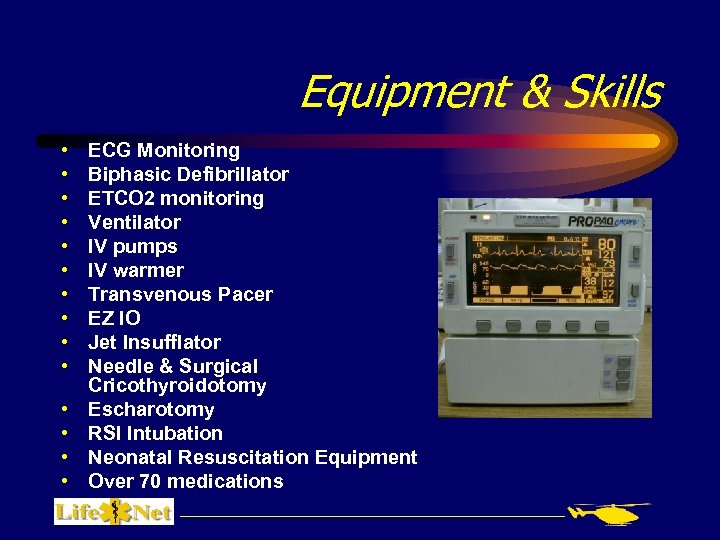 Equipment & Skills • • • • ECG Monitoring Biphasic Defibrillator ETCO 2 monitoring Ventilator IV pumps IV warmer Transvenous Pacer EZ IO Jet Insufflator Needle & Surgical Cricothyroidotomy Escharotomy RSI Intubation Neonatal Resuscitation Equipment Over 70 medications
 Why Utilize Air Transport ? • To “bring the Emergency Room to the patient” • To provide the patient with early, needed and advanced medical care • To transport the patient to the “closest appropriate facility” therefore decreasing time to Definitive Care
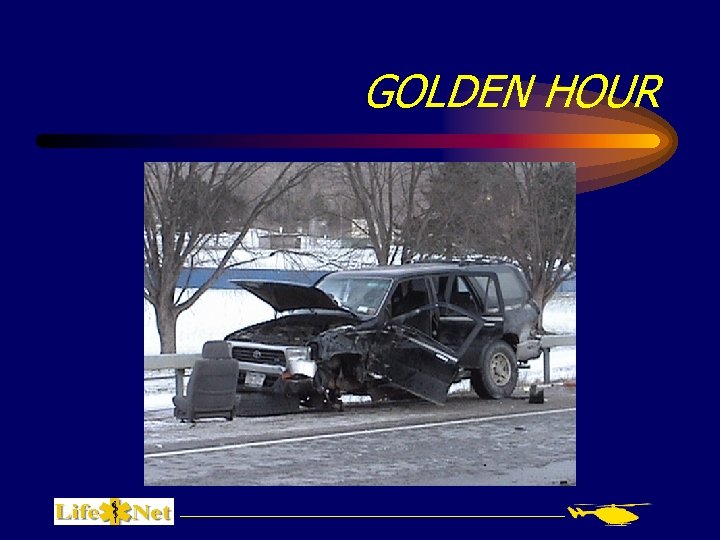 GOLDEN HOUR
 Transport Criteria: Physiologic • GCS < 13 • Head injured with altered mental status • Confused/combative • Unconscious/unresponsive • Heart rate > 120 • Blood pressure < 90/p • Pelvic fractures • Limb paralysis • Burn patients—greater than >10% BSA 2 nd and 3 rd and >5% 3 rd in any population – These patients will be transported directly to a burn facility @ Westchester, Worcester, Syracuse University Hospital and/or Boston Children's…
 Transport Criteria: Physiologic • Chest trauma with respiratory distress • Respiratory rate > 29 • Severe shortness of breath • Difficulty speaking • CO poisoning • Amputations proximal to the hand or foot, not to include single digits • Penetrating trauma – Gunshots – Stabbings – Impailments
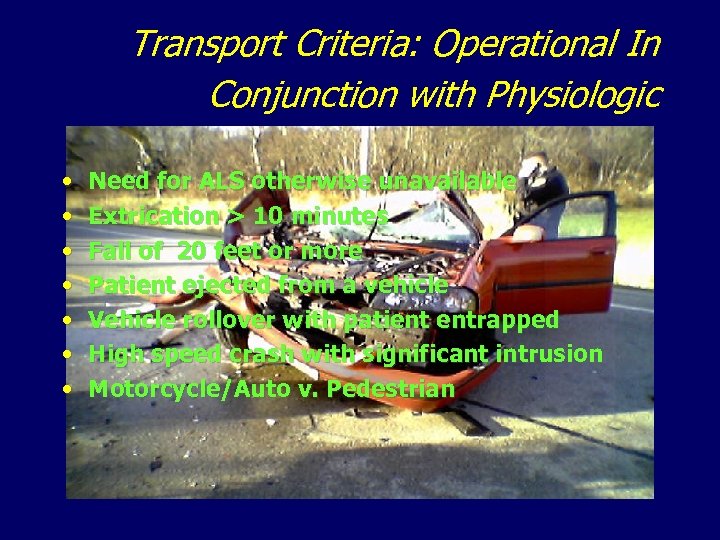 Transport Criteria: Operational In Conjunction with Physiologic • • Need for ALS otherwise unavailable Extrication > 10 minutes Fall of 20 feet or more Patient ejected from a vehicle Vehicle rollover with patient entrapped High speed crash with significant intrusion Motorcycle/Auto v. Pedestrian
 Transport Criteria: Operational • • • Surviving patient of a MVC with a death Age of < 5 or > 55 years old Significant associated medical conditions Pregnancy ***These patients should be transported to a regional Trauma Center (Albany Medical Center, Bassett Health Care (Cooperstown), Robert Packer, St. Elizabeth’s, University Hospital, Wilson Memorial)***
 Special Circumstances • Patients without vital • A surviving patient signs: will be transported before one in arrest – there is usually no survival from • Life. Net of New York traumatic death can provide – Hypothermic patients assistance to local being the exception providers and • No patient is too transport by ground critical to transport
 Who can request? • Law enforcement • Firefighters • Industrial safety officers • First responders • Paramedics • EMTs • First Responders • RNs/MDs/Pas • Many of the regional counties are on automatic stand-by for “delta” calls: • Rensselaer, Saratoga, Columbia, Washington, and Schenectady
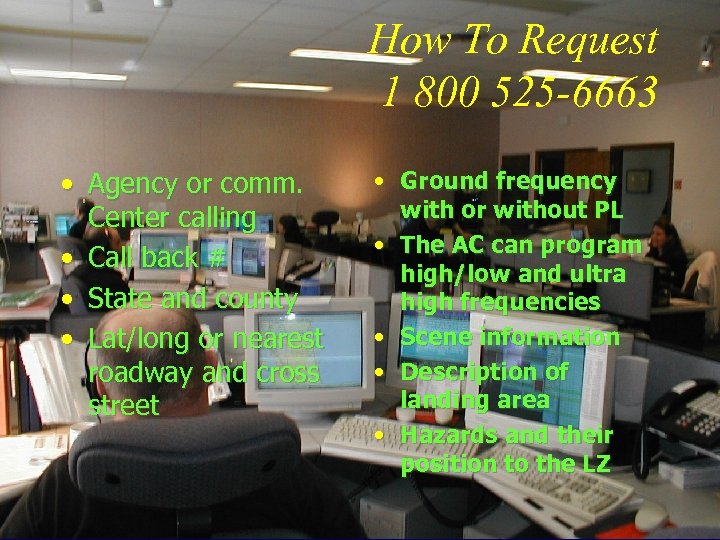 How To Request 1 800 525 -6663 • Agency or comm. Center calling • Call back # • State and county • Lat/long or nearest roadway and cross street • Ground frequency with or without PL • The AC can program high/low and ultra high frequencies • Scene information • Description of landing area • Hazards and their position to the LZ
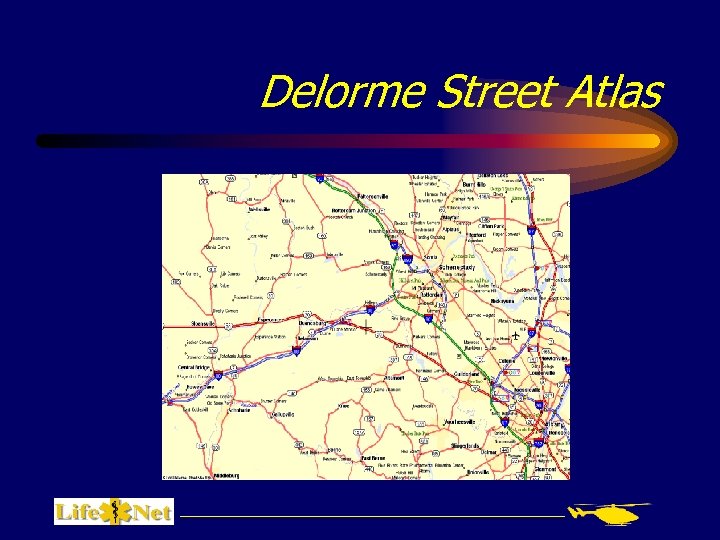 Delorme Street Atlas
 STAND BY • Automatic stand by/ launch currently instituted in Rensselaer, Columbia, Saratoga, Schenectady, and Washington counties for all “delta-level trauma” • Readies AC and FC for mission • Second call is needed to launch or cancel • No charge if cancelled enroute • Automatic launch for areas > 30 nautical miles
 Early Call • Lets YOU know if: – the AC is out on another call – unable to fly due to weather – is on a maintenance delay or out of service – may be a short delay only and still able to be utilized – an available AC will be found or we may be able to intercept
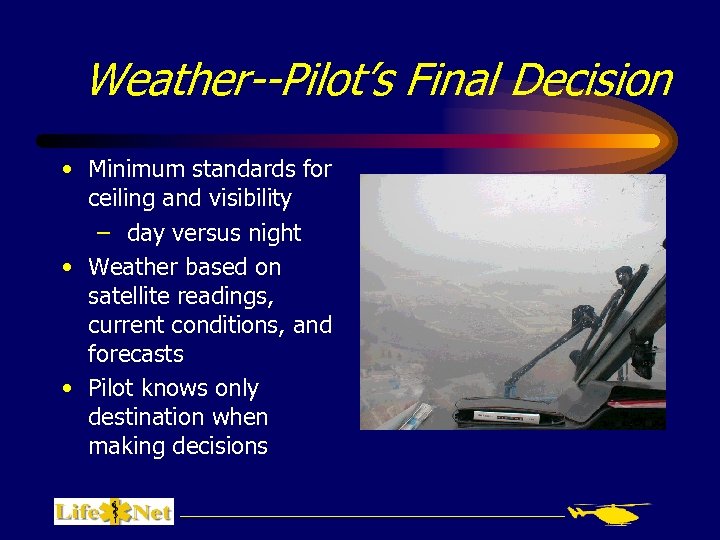 Weather--Pilot’s Final Decision • Minimum standards for ceiling and visibility – day versus night • Weather based on satellite readings, current conditions, and forecasts • Pilot knows only destination when making decisions
 Enroute Information Scene (LZ) information only FC will obtain patient report when safely landed.
 Landing Zone Officer • One person assigned, landing the AC safely the only responsibility • AC will try to contact LZ officer ~ 5 -10 minutes out • LZO may need to be on apparatus radio; portable may not transmit • Focus all attention on managing communications, approach/departure, and landing site area
 Landing Zone Officer • Directs the AC into the scene. May be required to use directions, “out your right door and/or clock method--nose of AC is 1200, tail of AC 0600. • Locating the scene in daylight is more difficult, even with overhead lighting. • AC/pilot may circle LZ numerous times before landing.
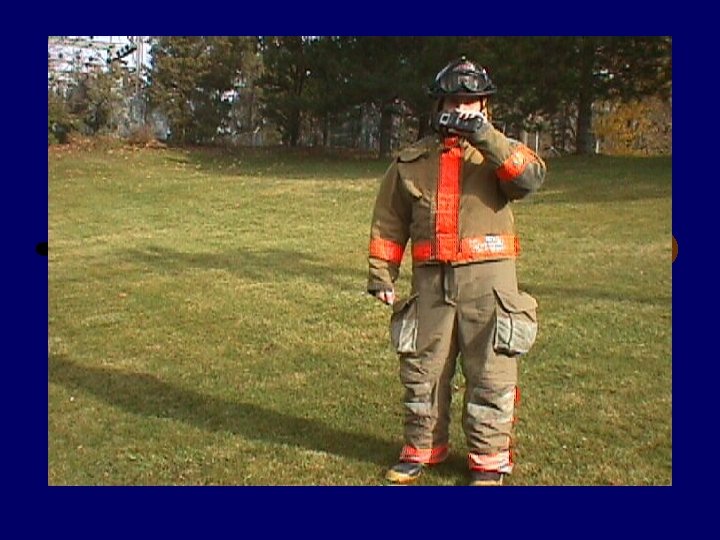 Slide of LZ officer, in turnout
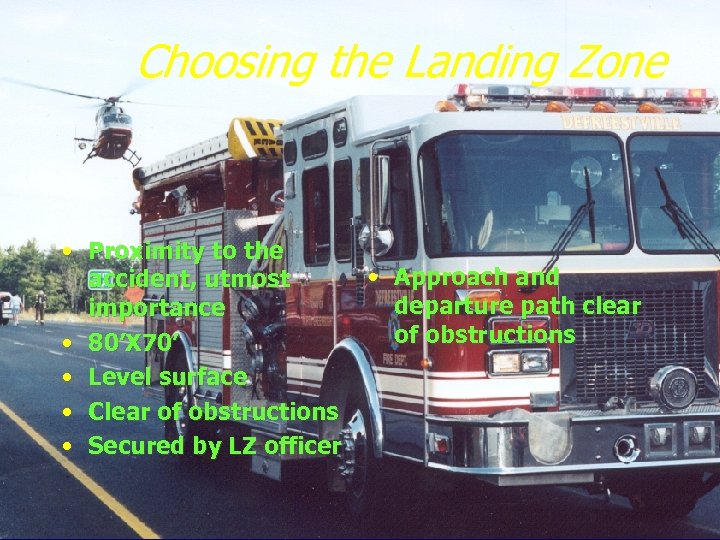 Choosing the Landing Zone • Proximity to the accident, utmost importance • 80’X 70’ • Level surface • Clear of obstructions • Secured by LZ officer • Approach and departure path clear of obstructions
 Marking the Landing Zone • DAY – – Flares (caution) Cones Rescue vehicles Overhead lighting on rescue vehicles both for day or night • NIGHT – Flares (caution) – Chemical light sticks – Battery powered flash lights (secured to ground) – Headlights from two vehicles pointed at LZ to form an X
 Preparing Touchdown Area • Secure loose debris (car doors, trunk lids, stretchers, linens, baseball hats etc. ) • Protect yourselves! Wear turnout gear, goggles, protective eye shields • LZ walk through • Secure nearby activity – Moving traffic – Rescue activity – Apparatus and ambulance doors closed – Keep all spectators > 200 feet from LZ. Only those assigned to protect the AC allowed < 100 feet
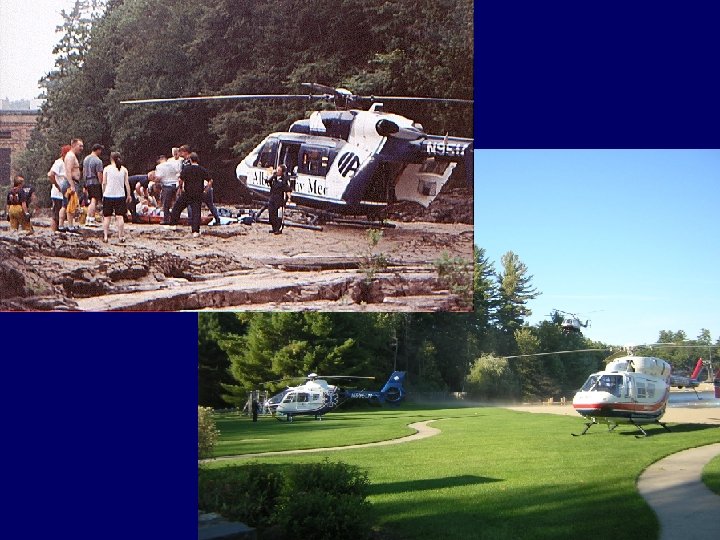
 SAFETY FIRST AND FOR ALL: • • • Fire Department Pre-hospital providers Police Department Life Net of New York All involved in the safe transfer of a critically ill or injured patient
 Take Off and Landing “Most Critical Time of Flight” AC will not land w/o first attempting to make contact with LZ command
 Arrival / Landing Information • Obstructions: wires, power lines, light poles, smoke stacks, antennas, etc. • Report all obstructions to the pilot as the AC is over the landing zone, never assume pilot has seen all obstructions. • Winds: wind direction and intensity helps the pilot better plan the landing. Helicopter lands and takes off with nose into the wind.
 Arrival / Landing Information – Condition of the touchdown surface: be specific, ie: slope, surface (mud, packed snow, dust). – Security: assure crowd is secure and all traffic is stopped for landing and take-off. – LZ officer will be notified of “final approach”. If any unsafe or potentially unsafe situation arises, contact pilot to make aware. Use short simple commands: “STOP! WIRES!”, etc.
 Hazards WIRES, POLES, CHURCH STEEPLES, LIGHT POLES, UNLIT TOWERS (Cell), STREET SIGNS, PLOW STAKES, etc. . .
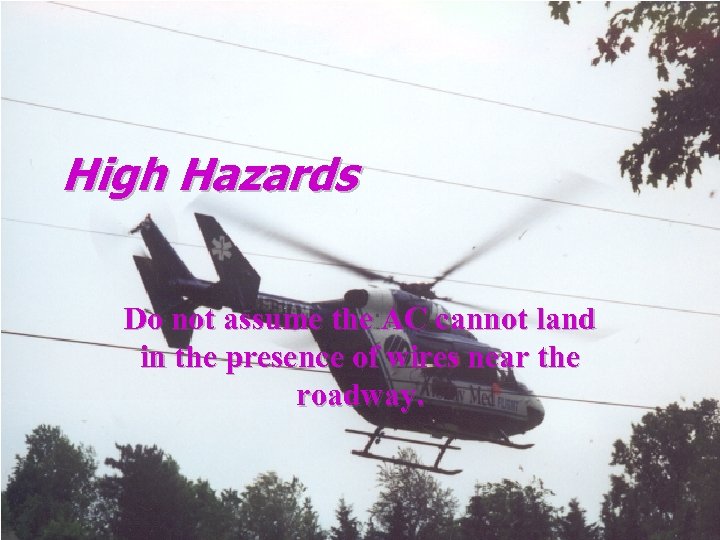 High Hazards Do not assume the AC cannot land in the presence of wires near the roadway.
 Landing / Lift-off Safety During night operations, NEVER allow white lights to shine into the cockpit. Night vision will be compromised
 Final Approach • As the AC is on “final approach” the pilot or FC may ask the LZ officer to have all white lights, shining toward the LZ, extinguished before touchdown. • The AC can produce > 70 mile per hour winds with short final. Protect yourselves.
 Ground Operations – Always approach the AC from the nose. – Never approach the AC unless directed by the FC or pilot. – If asked to get equipment by FC in AC, never approach w/o the getting pilot’s attention. – Keep all personnel and others at least 50 feet away from the AC when running. – May post a safety officer 50 feet behind the tail rotor – NEVER APPROACH OR GO NEAR THE TAIL ROTOR OF THE AC.
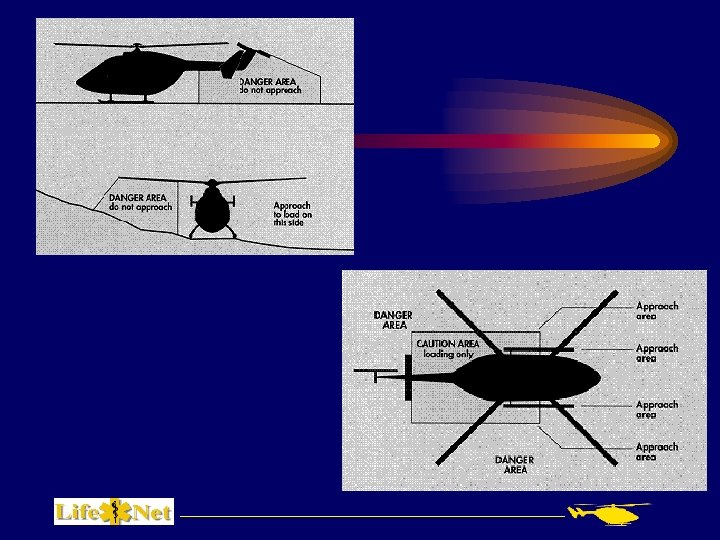
 Ground Operations – Let the FC come to you – FC does NOT require assistance offloading equipment – Keep apparatus and EMS vehicle doors and windows closed. – Leave patient in ambulance – Nothing carried above the waist level. – No smoking within 50 feet of the AC – No sheets, blankets, baseball hats near AC – Firefighters should have turnout gear and helmets with shields down.
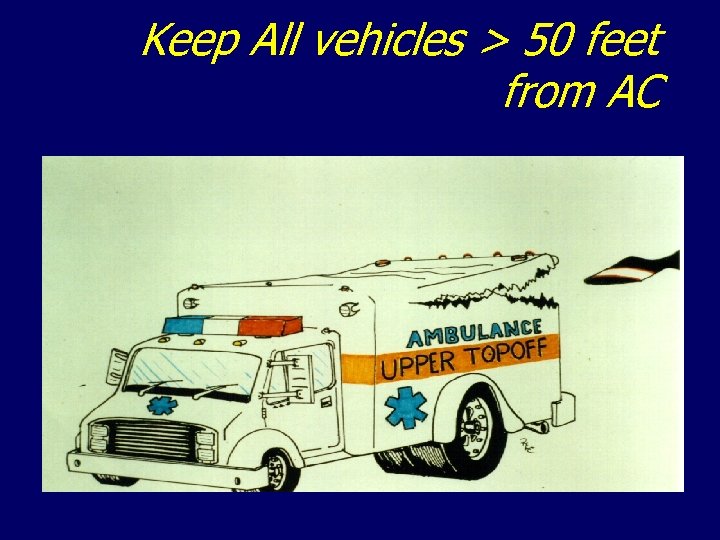 Keep All vehicles > 50 feet from AC • Cartoon of pic of EMS vehicle damage by rotor blades.
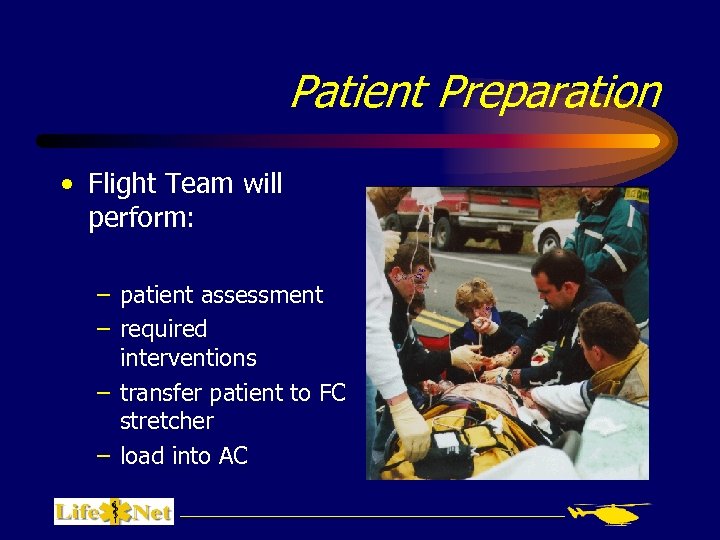 Patient Preparation • Flight Team will perform: – patient assessment – required interventions – transfer patient to FC stretcher – load into AC
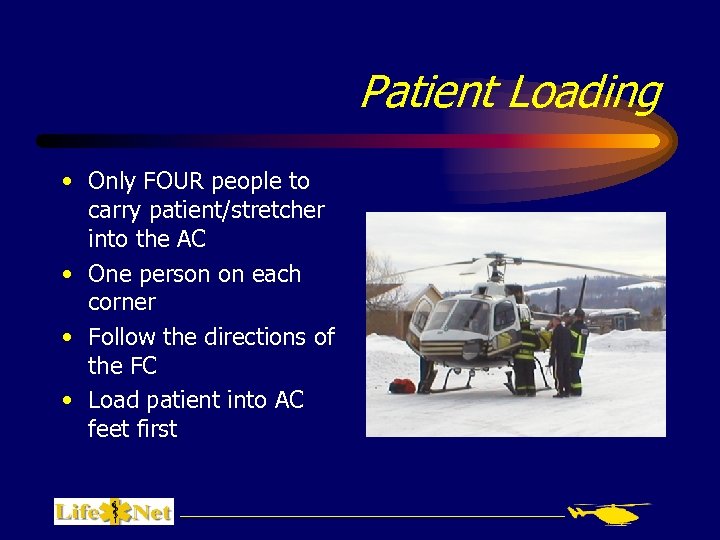 Patient Loading • Only FOUR people to carry patient/stretcher into the AC • One person on each corner • Follow the directions of the FC • Load patient into AC feet first
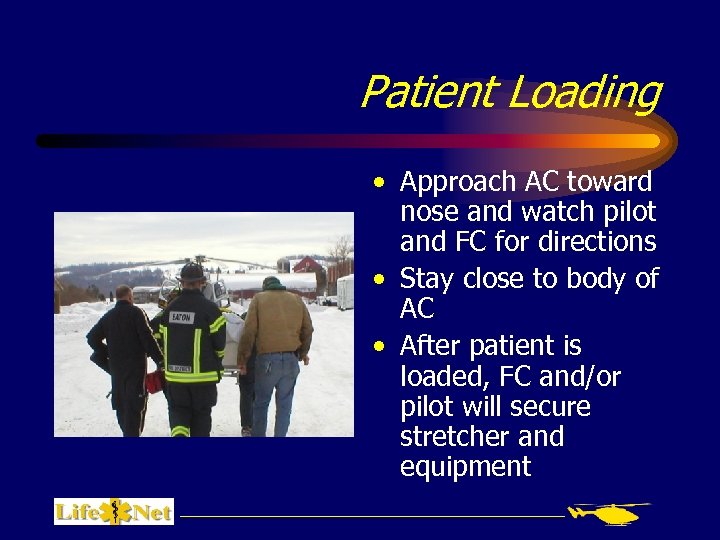 Patient Loading • Approach AC toward nose and watch pilot and FC for directions • Stay close to body of AC • After patient is loaded, FC and/or pilot will secure stretcher and equipment
 After Loading Patient Depart AC off the nose when directed by FC or Pilot
 Departure Information Limit Communications to Hazards Only – Assure AC and tail rotor is clear of any obstructions – Maintain visual contact with the AC until clear of LZ – Maintain radio communications with the pilot until the AC is safely in forward flight – Immediately report any safety concerns to the pilot, again using short, simple commands
 Hazmat Situation – Preparation and consideration for everyone’s safety – Give AC and FC advance warning, if possible – Land AC at least 1/2 mile from hazardous scene – FC do not carry protective suits or breathing apparatus for protection. Early warning is recommended – Patients will be completely decontaminated prior to being placed in the AC
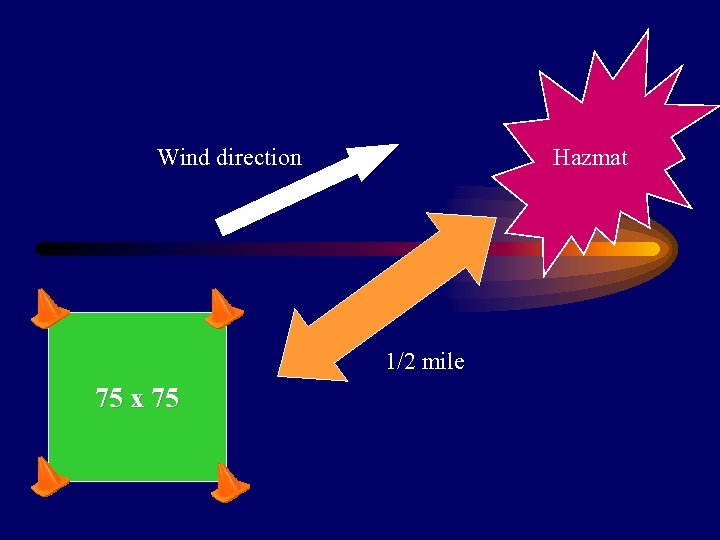 Wind direction Hazmat 1/2 mile 75 x 75
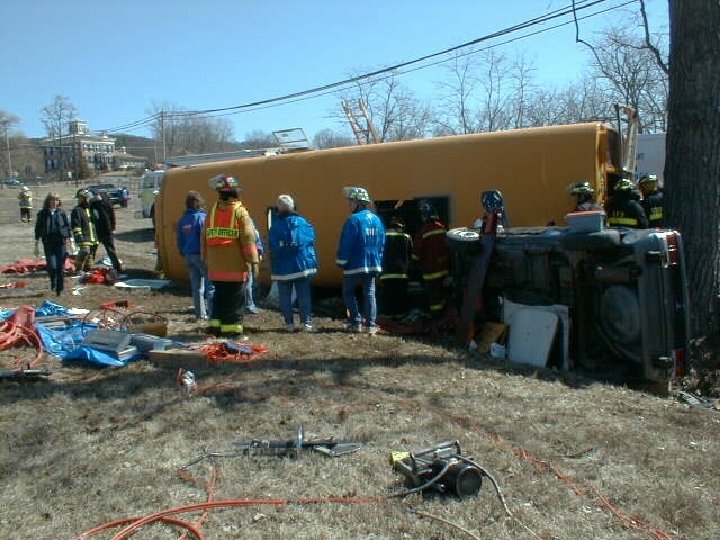
 MCI Situation • Consider utilizing Life. Net of New York as part of your MCI plan • FC will be available to the transport officer • Patients are able to be dispersed with available AC not overwhelming one facility • If multiple patients are involved in a situation, multiple AC can be activated using the Life. Comm dispatch center. • Have separate LZ areas for each AC called to incident. Each LZ does not require separate FD
 Equipment Return Be sure all equipment is well marked. Life. Net will make every effort to return all equipment by ground or mail.
 Post flight contact • Any concerns should be addressed as soon as possible • Please complete and return our customer survey to allow us to continue to improve our service • (518) 262 -8800
 QUESTIONS ?