 Скачать презентацию Life Course Ambassador Training August 16 2016
da7ca9fb387ecd3e3a20fd50f51ddd67.ppt
- Количество слайдов: 80



Life. Course Ambassador Training August 16, 2016
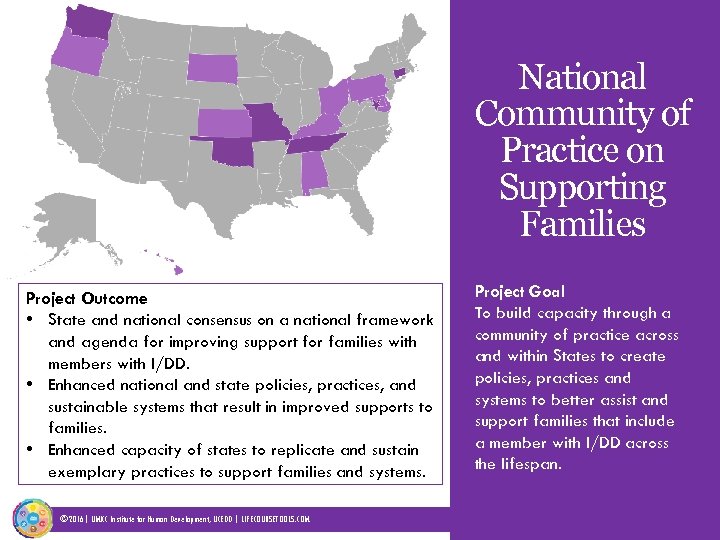
National Community of Practice on Supporting Families Project Outcome • State and national consensus on a national framework and agenda for improving support for families with members with I/DD. • Enhanced national and state policies, practices, and sustainable systems that result in improved supports to families. • Enhanced capacity of states to replicate and sustain exemplary practices to support families and systems. © 2016| UMKC Institute for Human Development, UCEDD | LIFECOURSETOOLS. COM Project Goal To build capacity through a community of practice across and within States to create policies, practices and systems to better assist and support families that include a member with I/DD across the lifespan.
Funded in 2012 by National Partners © 2016| UMKC Institute for Human Development, UCEDD | LIFECOURSETOOLS. COM
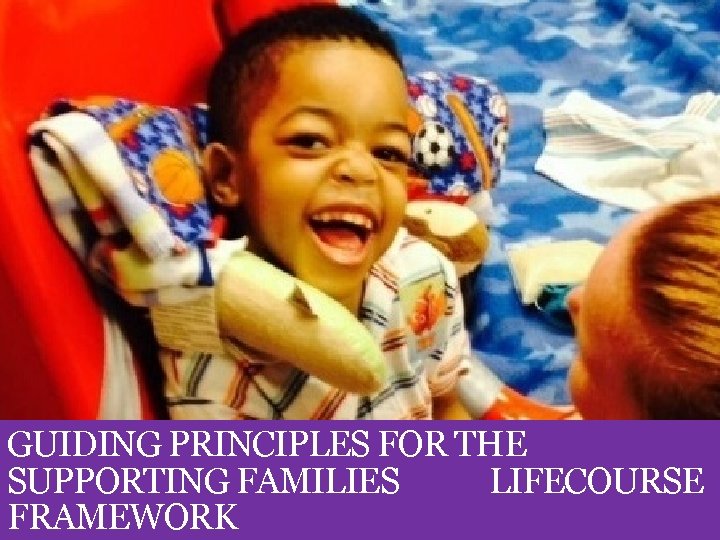
GUIDING PRINCIPLES FOR THE SUPPORTING FAMILIES LIFECOURSE FRAMEWORK
Setting the Stage
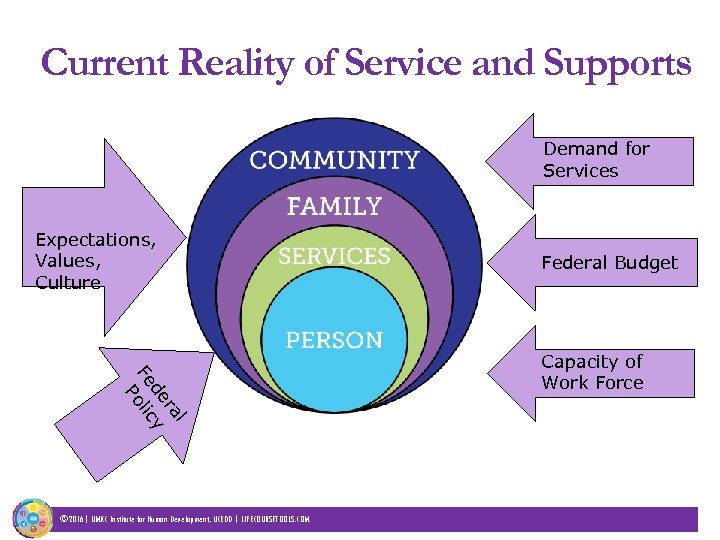
Current Reality of Service and Supports Demand for Services Expectations, Values, Culture l ra de y Fe olic P © 2016| UMKC Institute for Human Development, UCEDD | LIFECOURSETOOLS. COM Federal Budget Capacity of Work Force
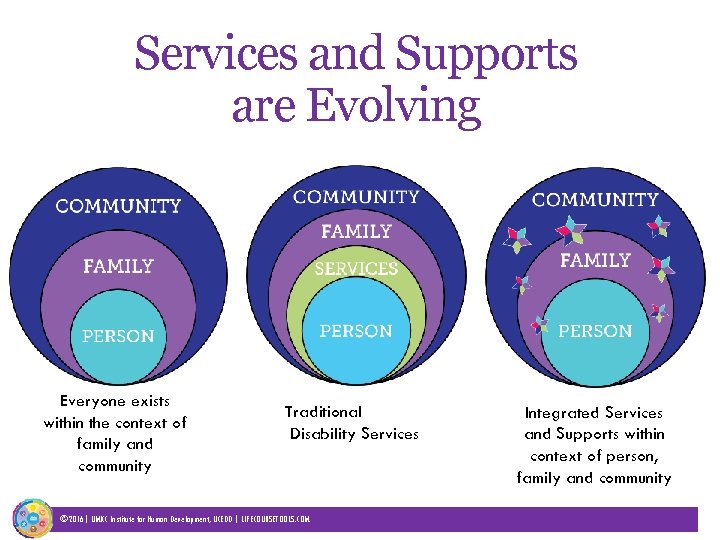
Services and Supports are Evolving Everyone exists within the context of family and community Traditional Disability Services © 2016| UMKC Institute for Human Development, UCEDD | LIFECOURSETOOLS. COM Integrated Services and Supports within context of person, family and community
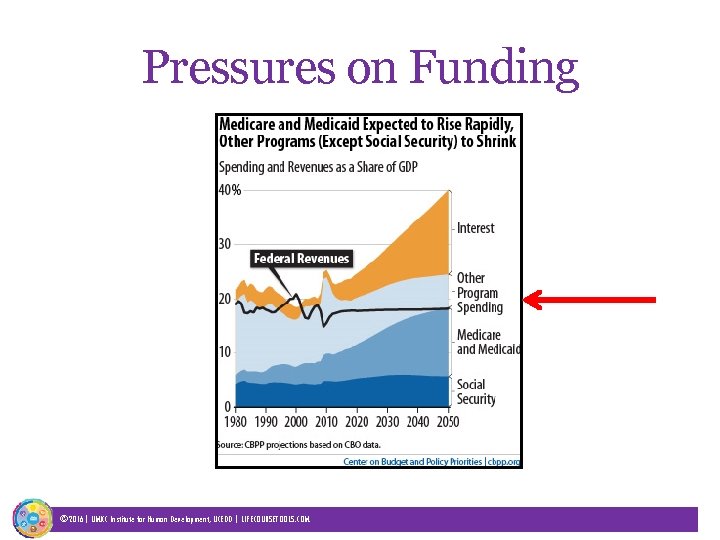
Pressures on Funding © 2016| UMKC Institute for Human Development, UCEDD | LIFECOURSETOOLS. COM
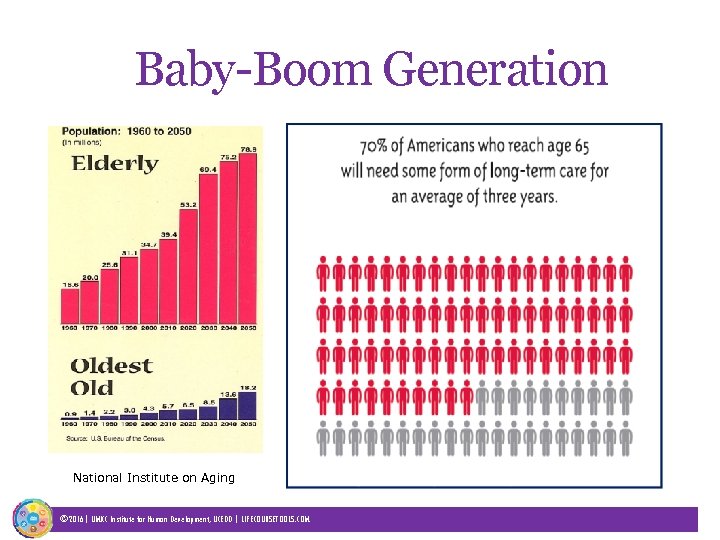
Baby-Boom Generation National Institute on Aging © 2016| UMKC Institute for Human Development, UCEDD | LIFECOURSETOOLS. COM
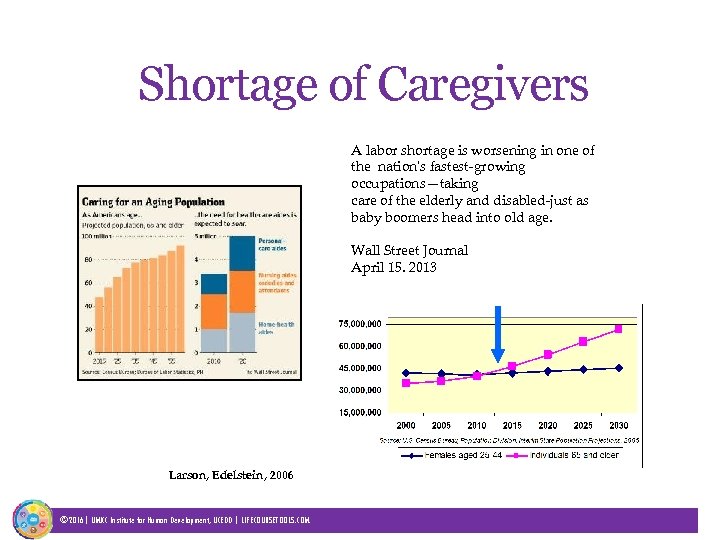
Shortage of Caregivers A labor shortage is worsening in one of the nation's fastest-growing occupations—taking care of the elderly and disabled-just as baby boomers head into old age. Wall Street Journal April 15. 2013 Larson, Edelstein, 2006 © 2016| UMKC Institute for Human Development, UCEDD | LIFECOURSETOOLS. COM
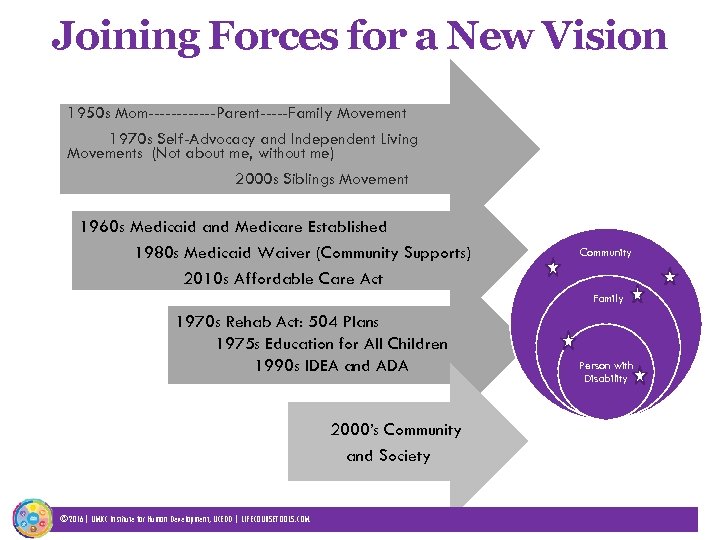
Joining Forces for a New Vision 1950 s Mom------Parent-----Family Movement 1970 s Self-Advocacy and Independent Living Movements (Not about me, without me) 2000 s Siblings Movement 1960 s Medicaid and Medicare Established 1980 s Medicaid Waiver (Community Supports) 2010 s Affordable Care Act Community Family 1970 s Rehab Act: 504 Plans 1975 s Education for All Children 1990 s IDEA and ADA 2000’s Community and Society © 2016| UMKC Institute for Human Development, UCEDD | LIFECOURSETOOLS. COM Person with Disability
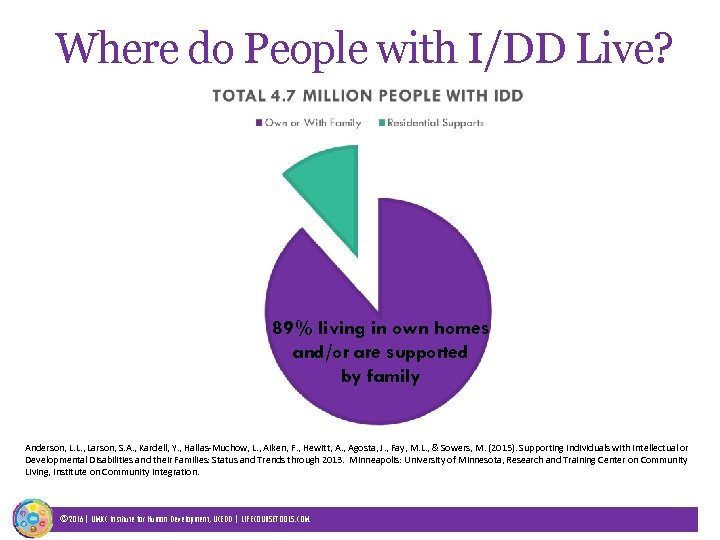
Where do People with I/DD Live? 89% living in own homes and/or are supported by family Anderson, L. L. , Larson, S. A. , Kardell, Y. , Hallas-Muchow, L. , Aiken, F. , Hewitt, A. , Agosta, J. , Fay, M. L. , & Sowers, M. (2015). Supporting Individuals with Intellectual or Developmental Disabilities and their Families: Status and Trends through 2013. Minneapolis: University of Minnesota, Research and Training Center on Community Living, Institute on Community Integration. © 2016| UMKC Institute for Human Development, UCEDD | LIFECOURSETOOLS. COM
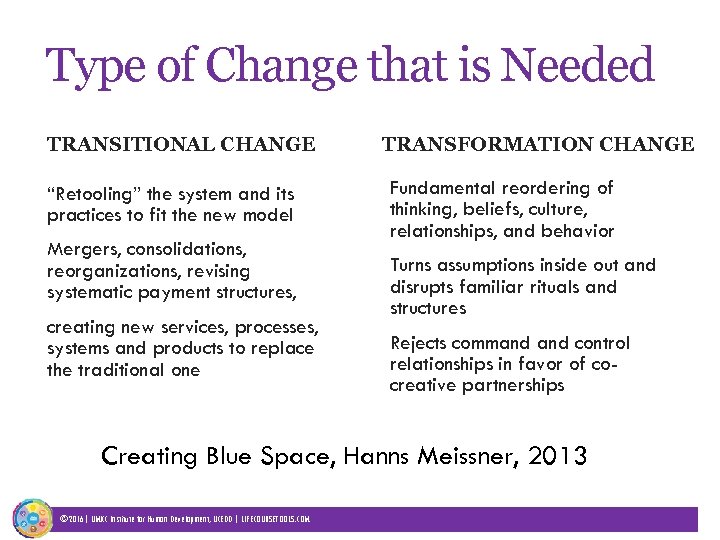
Type of Change that is Needed TRANSITIONAL CHANGE “Retooling” the system and its practices to fit the new model Mergers, consolidations, reorganizations, revising systematic payment structures, creating new services, processes, systems and products to replace the traditional one TRANSFORMATION CHANGE Fundamental reordering of thinking, beliefs, culture, relationships, and behavior Turns assumptions inside out and disrupts familiar rituals and structures Rejects command control relationships in favor of cocreative partnerships Creating Blue Space, Hanns Meissner, 2013 © 2016| UMKC Institute for Human Development, UCEDD | LIFECOURSETOOLS. COM
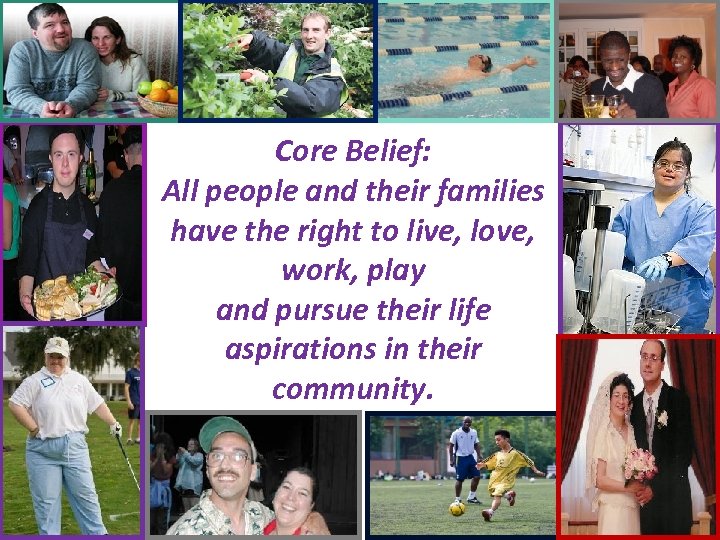
Core Belief: All people and their families have the right to live, love, work, play and pursue their life aspirations in their community.
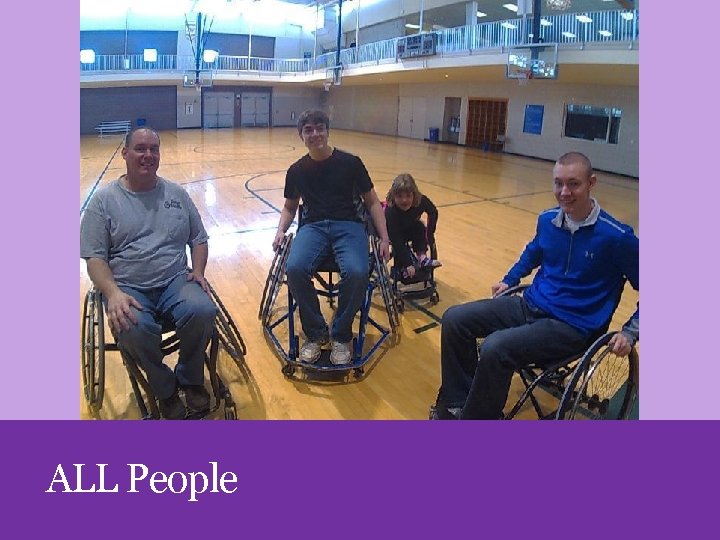
ALL People
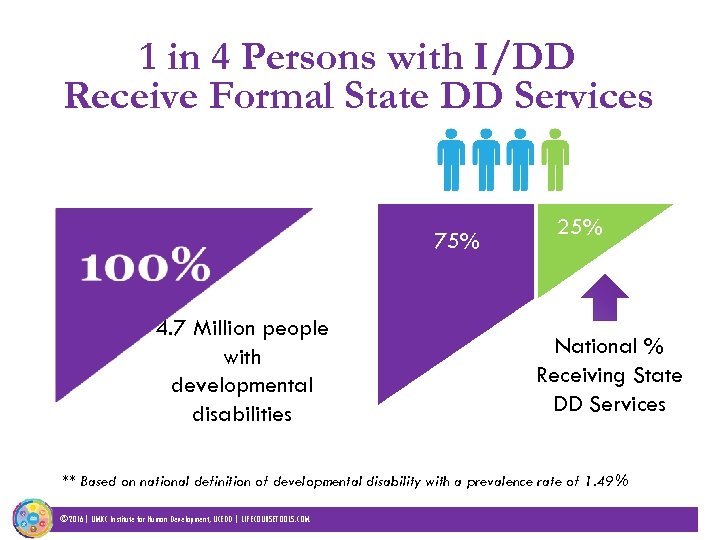
1 in 4 Persons with I/DD Receive Formal State DD Services 75% 4. 7 Million people with developmental disabilities 25% National % Receiving State DD Services ** Based on national definition of developmental disability with a prevalence rate of 1. 49% © 2016| UMKC Institute for Human Development, UCEDD | LIFECOURSETOOLS. COM
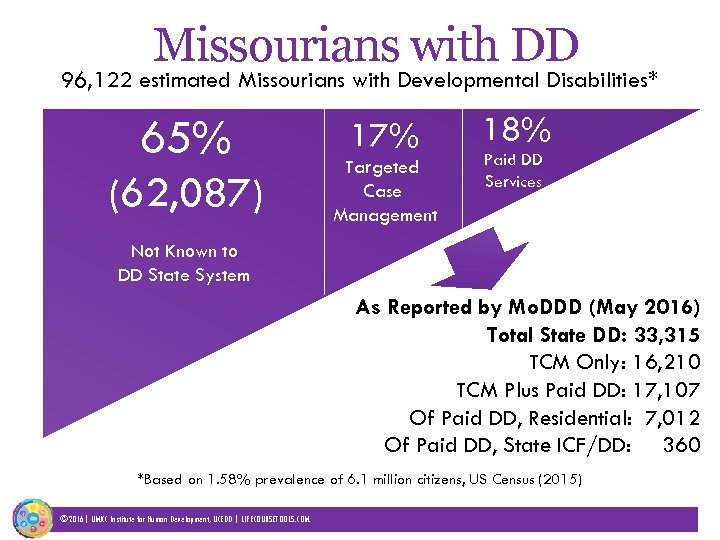
Missourians with DD 96, 122 estimated Missourians with Developmental Disabilities* 65% (62, 087) 17% Targeted Case Management 18% Paid DD Services Not Known to DD State System As Reported by Mo. DDD (May 2016) Total State DD: 33, 315 TCM Only: 16, 210 TCM Plus Paid DD: 17, 107 Of Paid DD, Residential: 7, 012 Of Paid DD, State ICF/DD: 360 *Based on 1. 58% prevalence of 6. 1 million citizens, US Census (2015) © 2016| UMKC Institute for Human Development, UCEDD | LIFECOURSETOOLS. COM
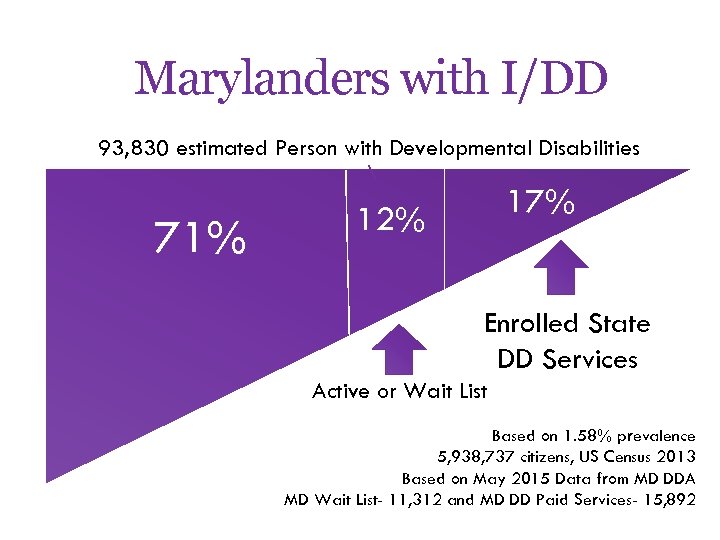
Marylanders with I/DD 93, 830 estimated Person with Developmental Disabilities 71% 17% 12% Enrolled State DD Services Active or Wait List Based on 1. 58% prevalence 5, 938, 737 citizens, US Census 2013 Based on May 2015 Data from MD DDA MD Wait List- 11, 312 and MD DD Paid Services- 15, 892
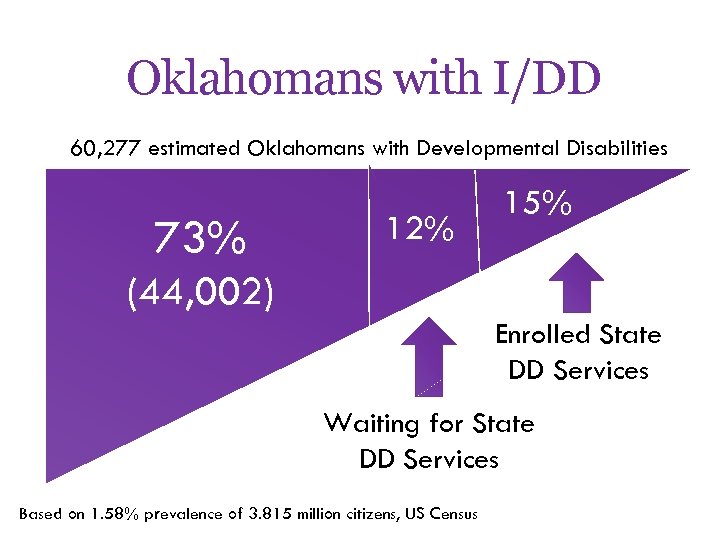
Oklahomans with I/DD 60, 277 estimated Oklahomans with Developmental Disabilities 73% 12% 15% (44, 002) Enrolled State DD Services Waiting for State DD Services Based on 1. 58% prevalence of 3. 815 million citizens, US Census
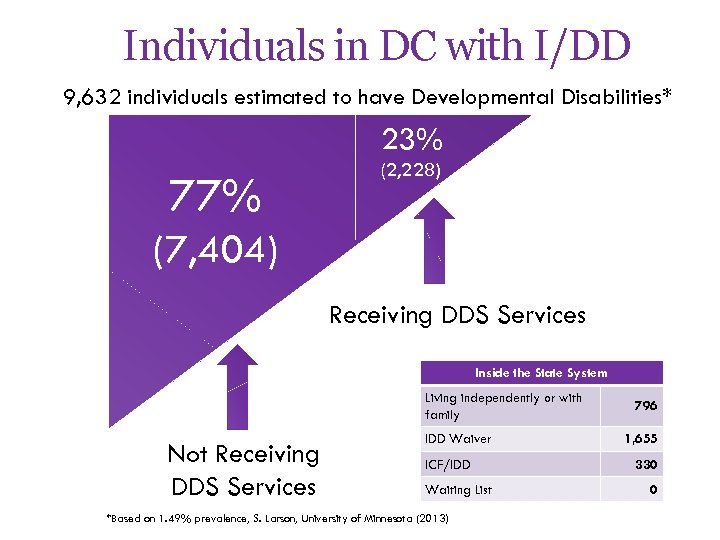
Individuals in DC with I/DD 9, 632 individuals estimated to have Developmental Disabilities* 23% 77% (2, 228) (7, 404) Receiving DDS Services Inside the State System Living independently or with family Not Receiving DDS Services IDD Waiver ICF/IDD Waiting List *Based on 1. 49% prevalence, S. Larson, University of Minnesota (2013) 796 1, 655 330 0
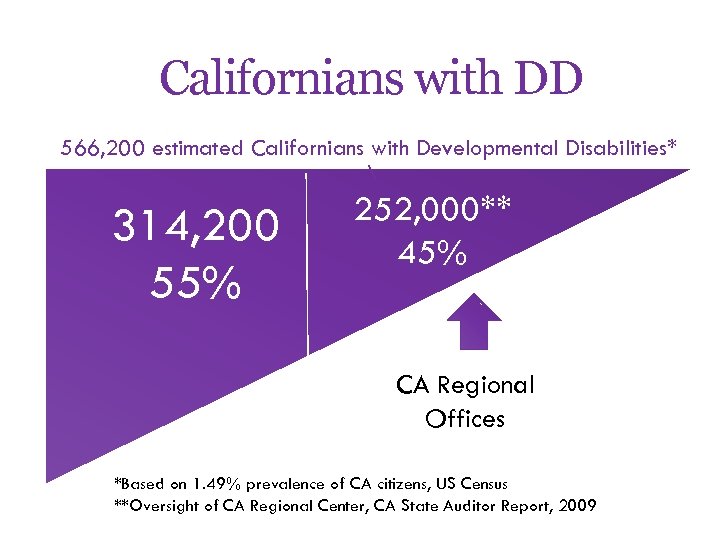
Californians with DD 566, 200 estimated Californians with Developmental Disabilities* 314, 200 55% 252, 000** 45% CA Regional Offices *Based on 1. 49% prevalence of CA citizens, US Census **Oversight of CA Regional Center, CA State Auditor Report, 2009
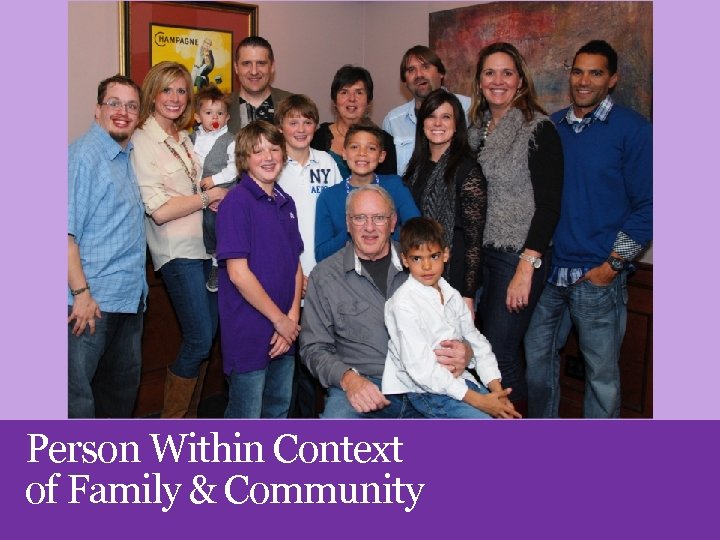
Person Within Context of Family & Community
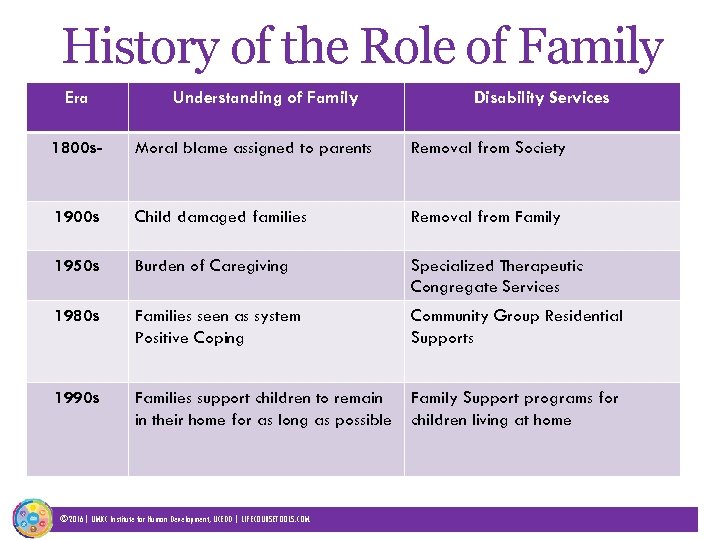
History of the Role of Family Era Understanding of Family Disability Services 1800 s- Moral blame assigned to parents Removal from Society 1900 s Child damaged families Removal from Family 1950 s Burden of Caregiving Specialized Therapeutic Congregate Services 1980 s Families seen as system Positive Coping Community Group Residential Supports 1990 s Families support children to remain in their home for as long as possible Family Support programs for children living at home © 2016| UMKC Institute for Human Development, UCEDD | LIFECOURSETOOLS. COM
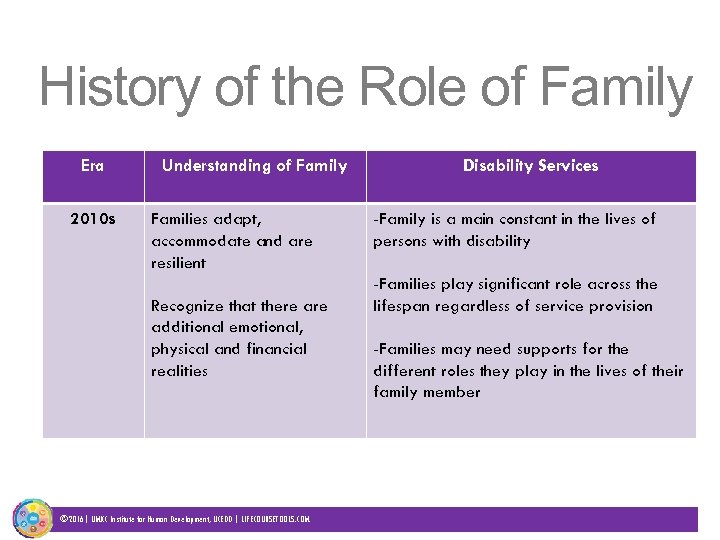
History of the Role of Family Era 2010 s Understanding of Family Families adapt, accommodate and are resilient Recognize that there additional emotional, physical and financial realities © 2016| UMKC Institute for Human Development, UCEDD | LIFECOURSETOOLS. COM Disability Services -Family is a main constant in the lives of persons with disability -Families play significant role across the lifespan regardless of service provision -Families may need supports for the different roles they play in the lives of their family member
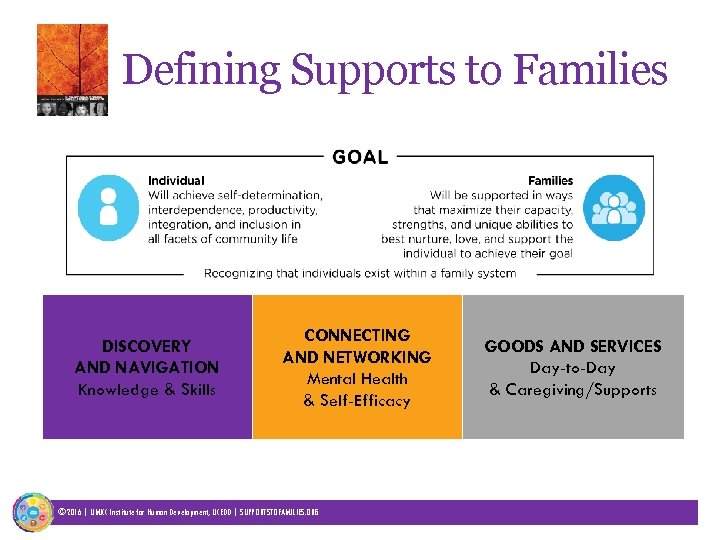
Defining Supports to Families DISCOVERY AND NAVIGATION Knowledge & Skills CONNECTING AND NETWORKING Mental Health & Self-Efficacy © 2016 | UMKC Institute for Human Development, UCEDD | SUPPORTSTOFAMILIES. ORG GOODS AND SERVICES Day-to-Day & Caregiving/Supports
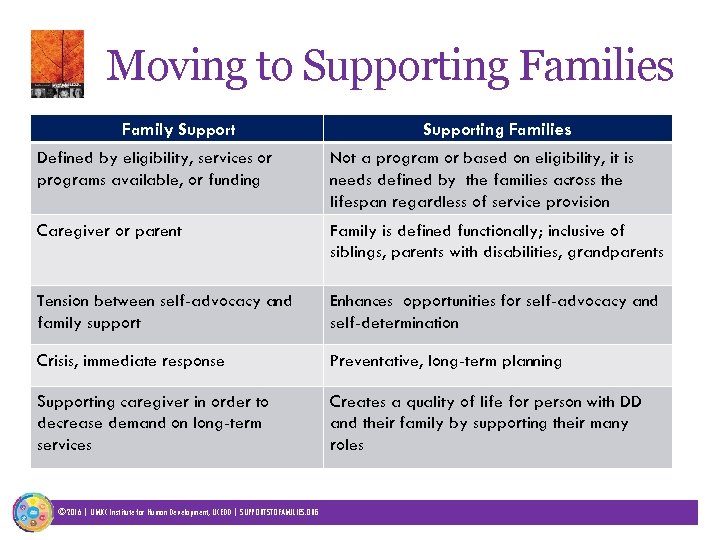
Moving to Supporting Families Family Supporting Families Defined by eligibility, services or programs available, or funding Not a program or based on eligibility, it is needs defined by the families across the lifespan regardless of service provision Caregiver or parent Family is defined functionally; inclusive of siblings, parents with disabilities, grandparents Tension between self-advocacy and family support Enhances opportunities for self-advocacy and self-determination Crisis, immediate response Preventative, long-term planning Supporting caregiver in order to decrease demand on long-term services Creates a quality of life for person with DD and their family by supporting their many roles © 2016 | UMKC Institute for Human Development, UCEDD | SUPPORTSTOFAMILIES. ORG
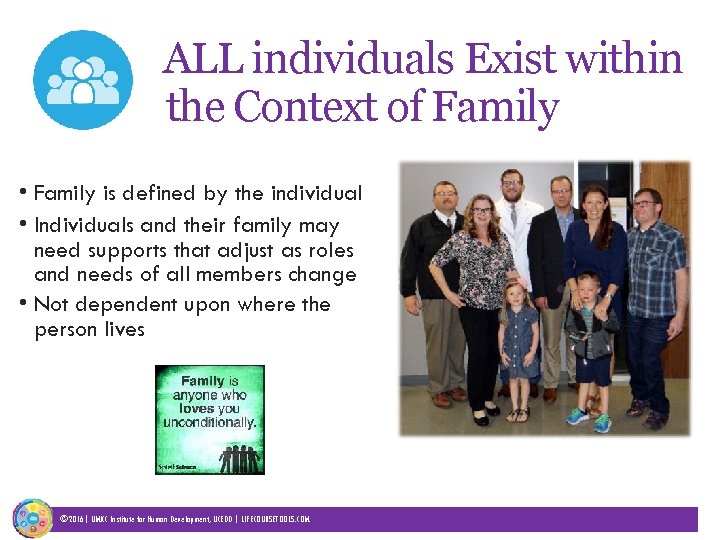
ALL individuals Exist within the Context of Family • Family is defined by the individual • Individuals and their family may need supports that adjust as roles and needs of all members change • Not dependent upon where the person lives © 2016| UMKC Institute for Human Development, UCEDD | LIFECOURSETOOLS. COM
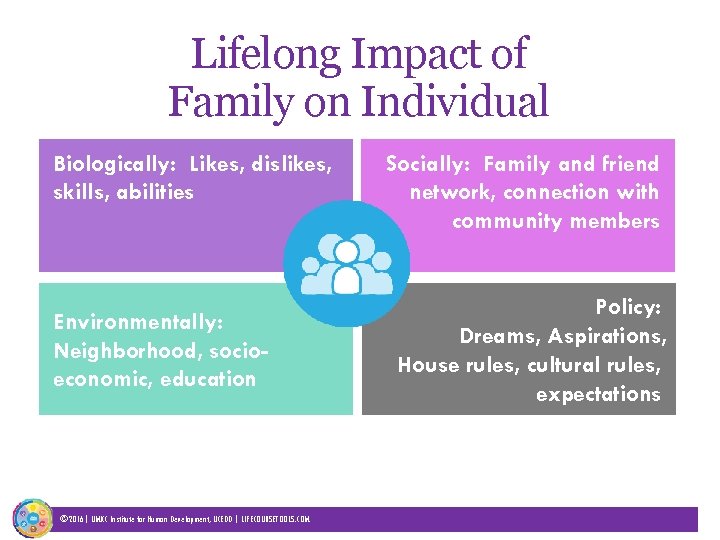
Lifelong Impact of Family on Individual Biologically: Likes, dislikes, skills, abilities Environmentally: Neighborhood, socioeconomic, education © 2016| UMKC Institute for Human Development, UCEDD | LIFECOURSETOOLS. COM Socially: Family and friend network, connection with community members Policy: Dreams, Aspirations, House rules, cultural rules, expectations
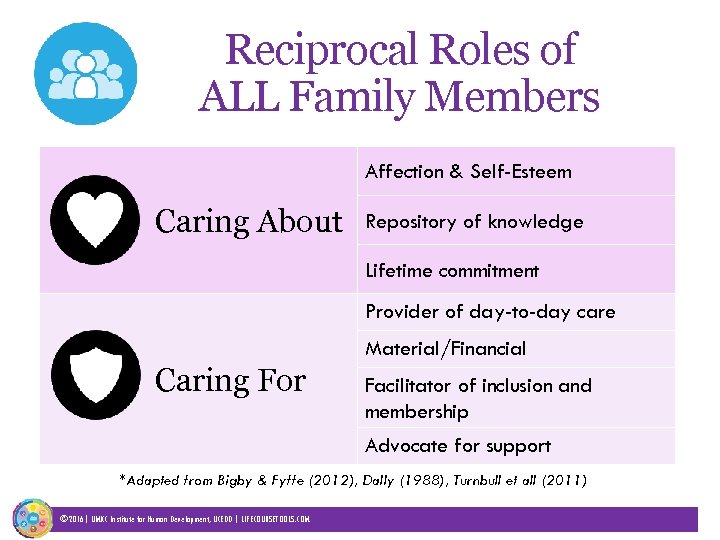
Reciprocal Roles of ALL Family Members Affection & Self-Esteem Caring About Repository of knowledge Lifetime commitment Provider of day-to-day care Material/Financial Caring For Facilitator of inclusion and membership Advocate for support *Adapted from Bigby & Fyffe (2012), Dally (1988), Turnbull et all (2011) © 2016| UMKC Institute for Human Development, UCEDD | LIFECOURSETOOLS. COM
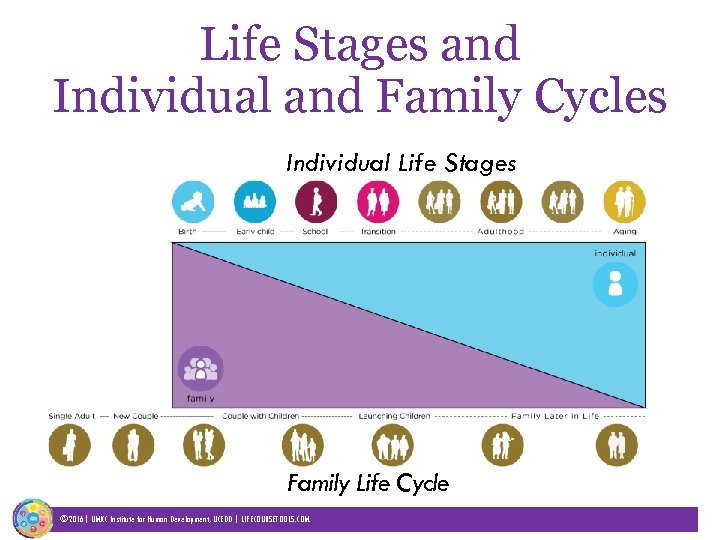
Life Stages and Individual and Family Cycles Individual Life Stages Family Life Cycle © 2016| UMKC Institute for Human Development, UCEDD | LIFECOURSETOOLS. COM
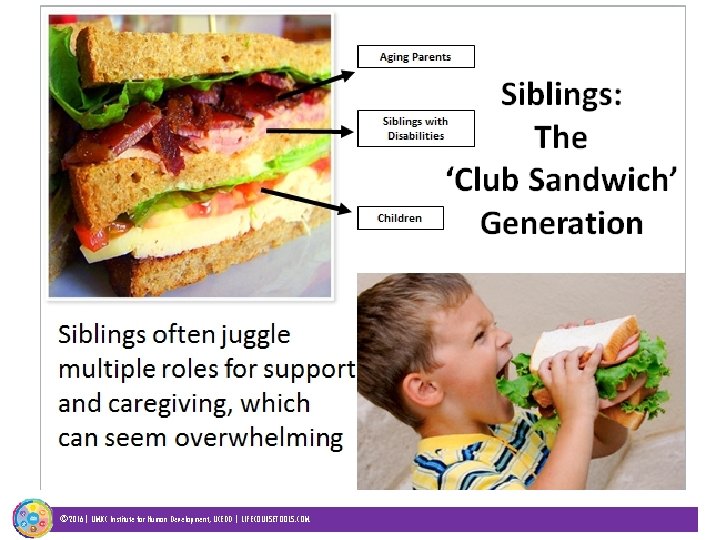
© 2016| UMKC Institute for Human Development, UCEDD | LIFECOURSETOOLS. COM
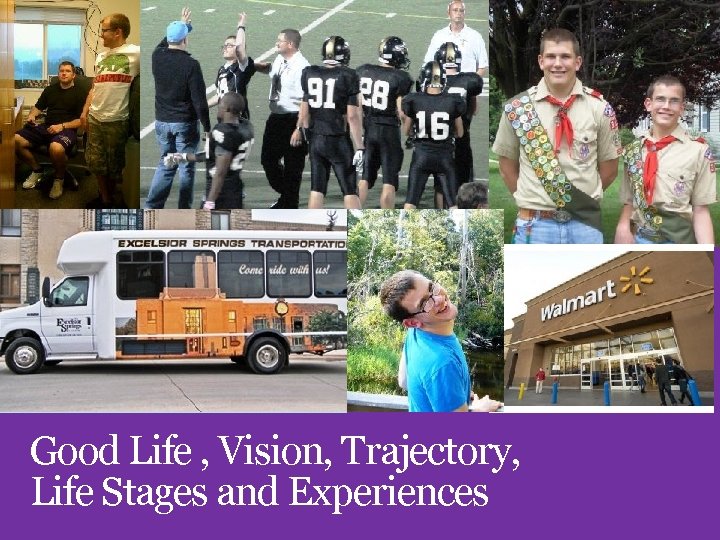
Good Life , Vision, Trajectory, Life Stages and Experiences
What is YOUR Vision for a Good LIFE? Vision of What I Want for a Quality of Life Write down your responses on your worksheet & discuss with your table © 2016| UMKC Institute for Human Development, UCEDD | LIFECOURSETOOLS. COM
What DON’T you want? ? Vision of What I Don’t Want Write down your responses on your worksheet & discuss with your table © 2016| UMKC Institute for Human Development, UCEDD | LIFECOURSETOOLS. COM
“Good Life for All ” The Individual will achieve self-determination, interdependence, productivity, integration, and inclusion in all facets of community life Families will be supported in ways that maximize their capacity, strengths, and unique abilities to best nurture, love, and support all individual members to achieve their goals © 2016| UMKC Institute for Human Development, UCEDD | LIFECOURSETOOLS. COM
Vision for a Good Life The future is not something we enter. The future is something that we create. And creating that future requires us to make choices and decisions that begin with a dream. -Leonard L. Sweet © 2016| UMKC Institute for Human Development, UCEDD | LIFECOURSETOOLS. COM
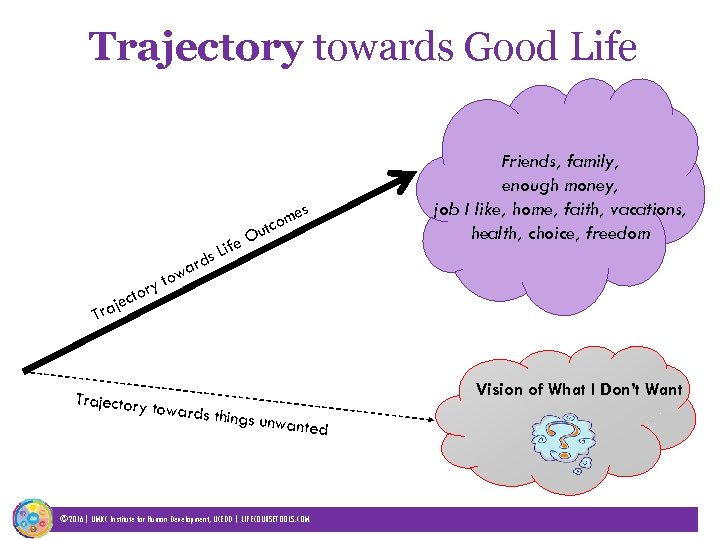
Trajectory towards Good Life s ard t Ou e Friends, family, enough money, job I like, home, faith, vacations, health, choice, freedom s e com Lif tow y r to jec Tra Vision of What I Don’t Want Trajectory t owards thin gs unwante d © 2016| UMKC Institute for Human Development, UCEDD | LIFECOURSETOOLS. COM
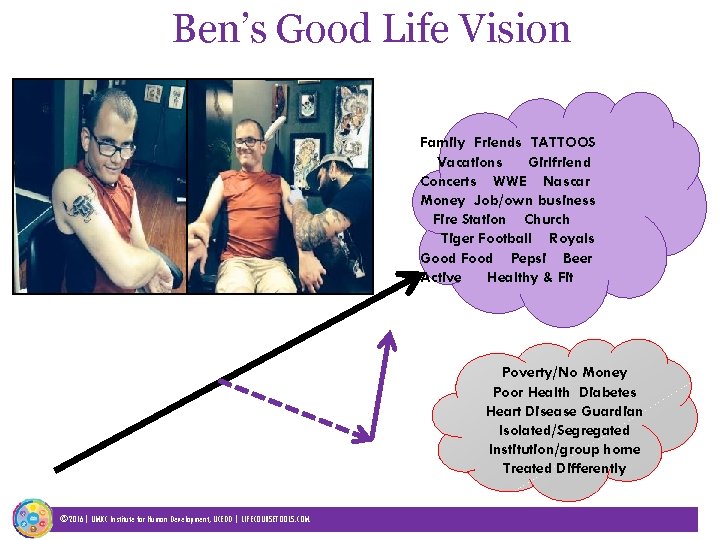
Ben’s Good Life Vision Family Friends TATTOOS Vacations Girlfriend Concerts WWE Nascar Money Job/own business Fire Station Church Tiger Football Royals Good Food Pepsi Beer Active Healthy & Fit Poverty/No Money Poor Health Diabetes Heart Disease Guardian Isolated/Segregated Institution/group home Treated Differently © 2016| UMKC Institute for Human Development, UCEDD | LIFECOURSETOOLS. COM
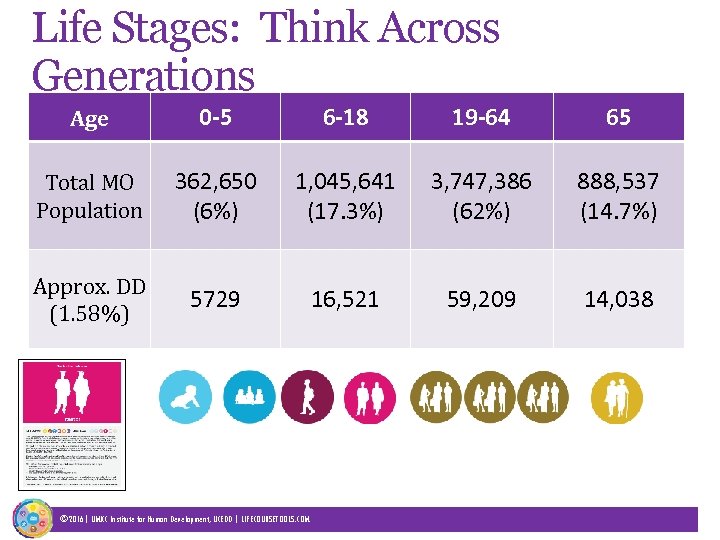
Life Stages: Think Across Generations Age 0 -5 6 -18 19 -64 65 Total MO Population 362, 650 (6%) 1, 045, 641 (17. 3%) 3, 747, 386 (62%) 888, 537 (14. 7%) Approx. DD (1. 58%) 5729 16, 521 59, 209 14, 038 © 2016| UMKC Institute for Human Development, UCEDD | LIFECOURSETOOLS. COM
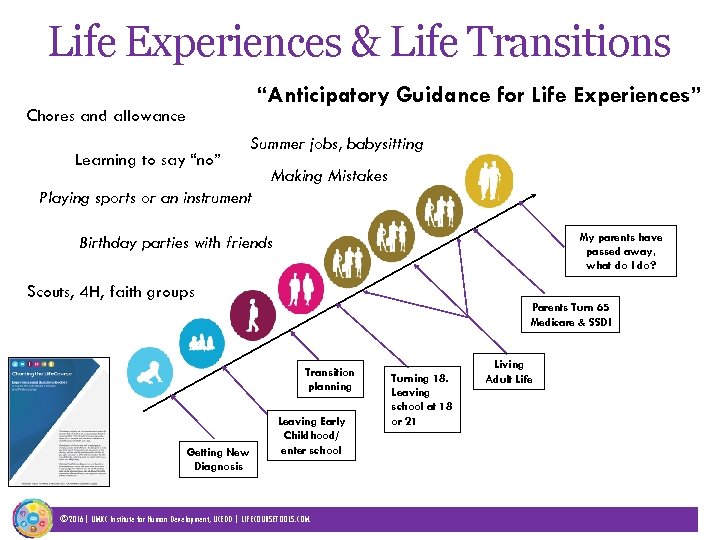
Life Experiences & Life Transitions “Anticipatory Guidance for Life Experiences” Chores and allowance Learning to say “no” Summer jobs, babysitting Making Mistakes Playing sports or an instrument My parents have passed away, what do I do? Birthday parties with friends Scouts, 4 H, faith groups Parents Turn 65 Medicare & SSDI Transition planning Getting New Diagnosis Leaving Early Childhood/ enter school © 2016| UMKC Institute for Human Development, UCEDD | LIFECOURSETOOLS. COM Turning 18. Leaving school at 18 or 21 Living Adult Life
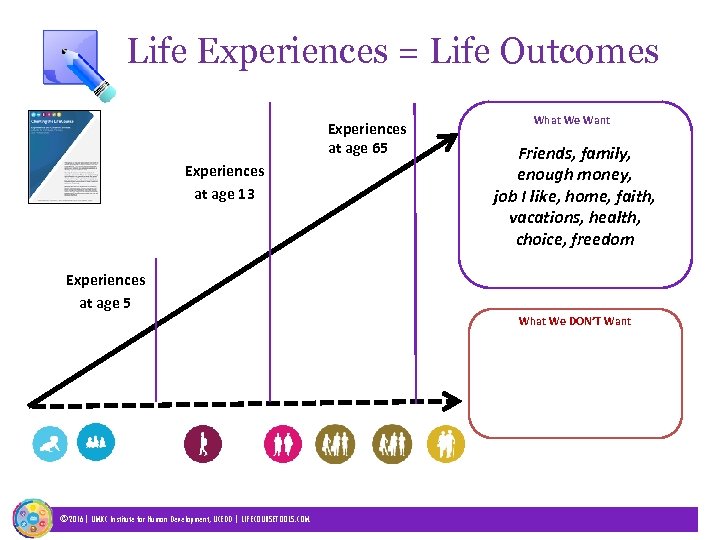
Life Experiences = Life Outcomes Experiences at age 65 Experiences at age 13 What We Want Friends, family, enough money, job I like, home, faith, vacations, health, choice, freedom Experiences at age 5 What We DON’T Want © 2016| UMKC Institute for Human Development, UCEDD | LIFECOURSETOOLS. COM
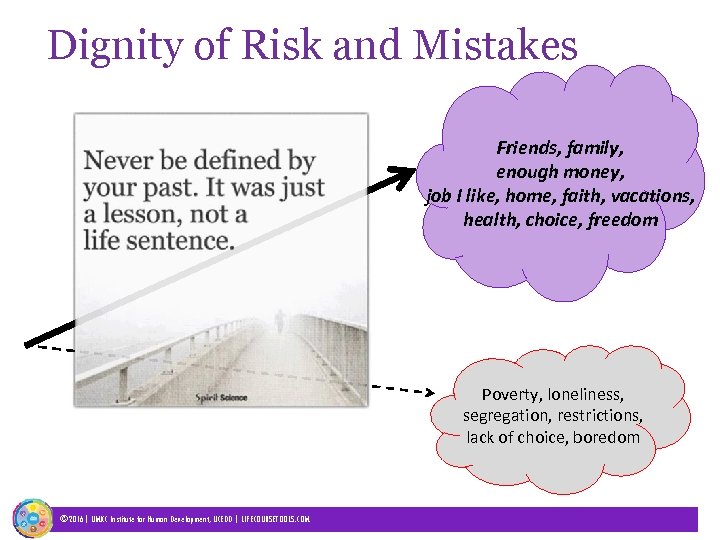
Dignity of Risk and Mistakes Friends, family, enough money, job I like, home, faith, vacations, health, choice, freedom Poverty, loneliness, segregation, restrictions, lack of choice, boredom © 2016| UMKC Institute for Human Development, UCEDD | LIFECOURSETOOLS. COM
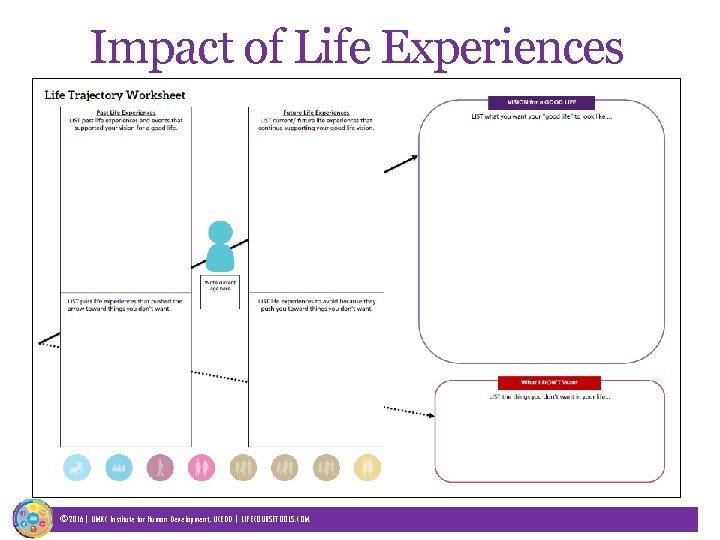
Impact of Life Experiences © 2016| UMKC Institute for Human Development, UCEDD | LIFECOURSETOOLS. COM
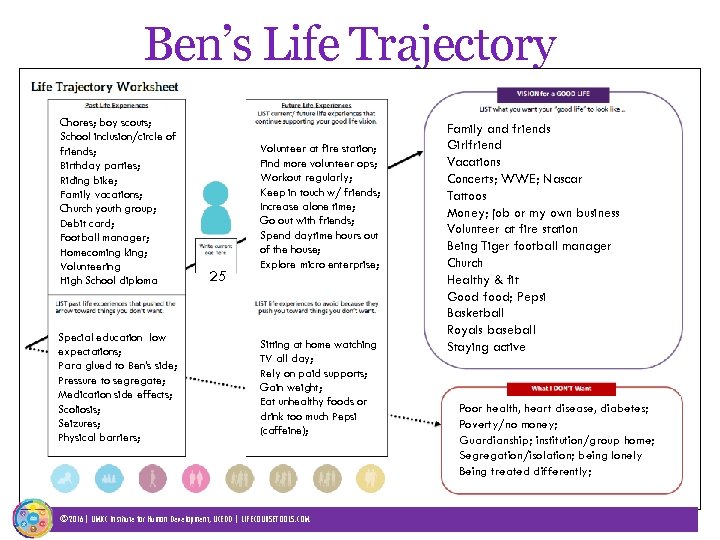
Ben’s Life Trajectory Chores; boy scouts; School inclusion/circle of friends; Birthday parties; Riding bike; Family vacations; Church youth group; Debit card; Football manager; Homecoming king; Volunteering High School diploma Special education low expectations; Para glued to Ben’s side; Pressure to segregate; Medication side effects; Scoliosis; Seizures; Physical barriers; 25 Volunteer at fire station; Find more volunteer ops; Workout regularly; Keep in touch w/ friends; Increase alone time; Go out with friends; Spend daytime hours out of the house; Explore micro enterprise; Sitting at home watching TV all day; Rely on paid supports; Gain weight; Eat unhealthy foods or drink too much Pepsi (caffeine); © 2016| UMKC Institute for Human Development, UCEDD | LIFECOURSETOOLS. COM Family and friends Girlfriend Vacations Concerts; WWE; Nascar Tattoos Money; job or my own business Volunteer at fire station Being Tiger football manager Church Healthy & fit Good food; Pepsi Basketball Royals baseball Staying active Poor health, heart disease, diabetes; Poverty/no money; Guardianship; institution/group home; Segregation/isolation; being lonely Being treated differently;
Life Domains, Life Outcomes and Life Possibilities
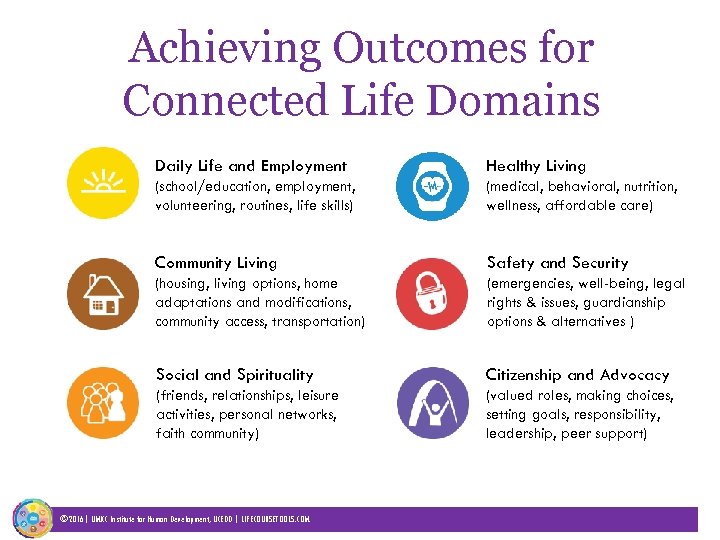
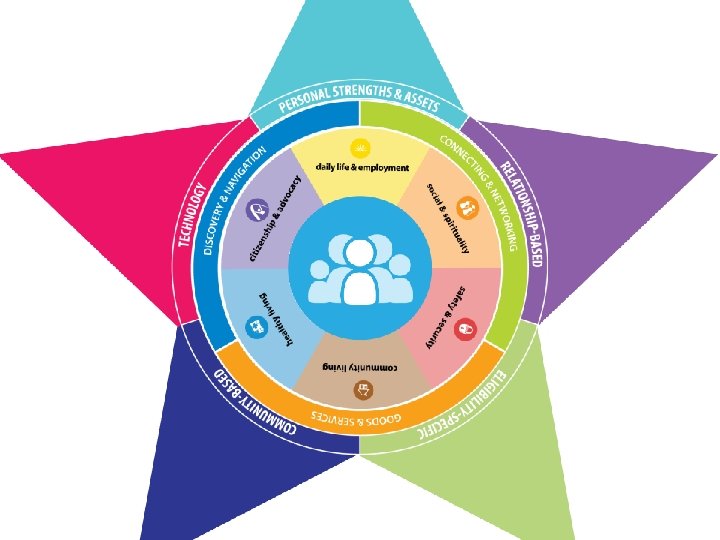
Achieving Outcomes for Connected Life Domains Daily Life and Employment Healthy Living (school/education, employment, volunteering, routines, life skills) (medical, behavioral, nutrition, wellness, affordable care) Community Living Safety and Security (housing, living options, home adaptations and modifications, community access, transportation) (emergencies, well-being, legal rights & issues, guardianship options & alternatives ) Social and Spirituality Citizenship and Advocacy (friends, relationships, leisure activities, personal networks, faith community) (valued roles, making choices, setting goals, responsibility, leadership, peer support) © 2016| UMKC Institute for Human Development, UCEDD | LIFECOURSETOOLS. COM
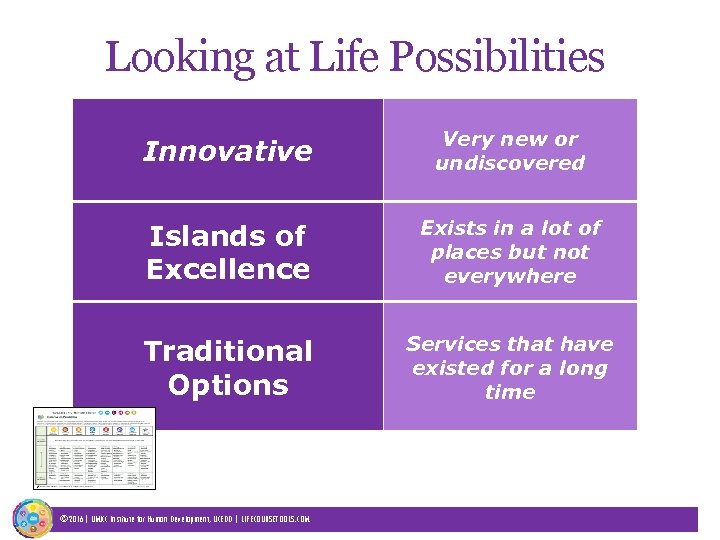
Looking at Life Possibilities Innovative Very new or undiscovered Islands of Excellence Exists in a lot of places but not everywhere Traditional Options Services that have existed for a long time © 2016| UMKC Institute for Human Development, UCEDD | LIFECOURSETOOLS. COM
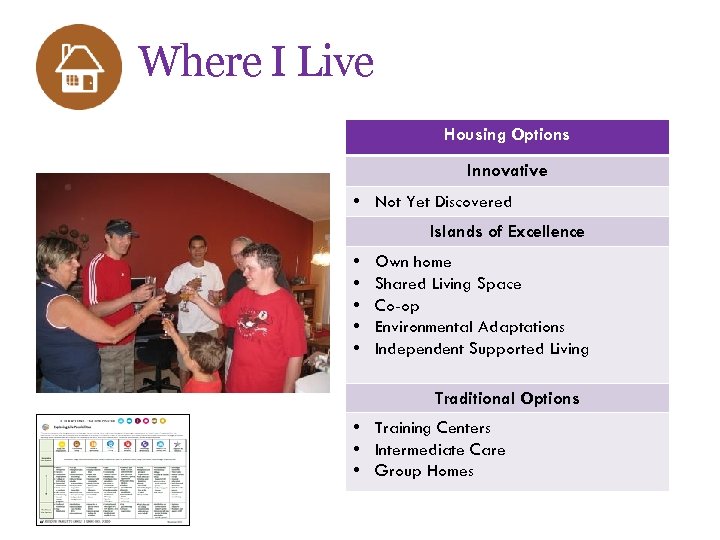
Where I Live Housing Options Innovative • Not Yet Discovered Islands of Excellence • • • Own home Shared Living Space Co-op Environmental Adaptations Independent Supported Living Traditional Options • Training Centers • Intermediate Care • Group Homes
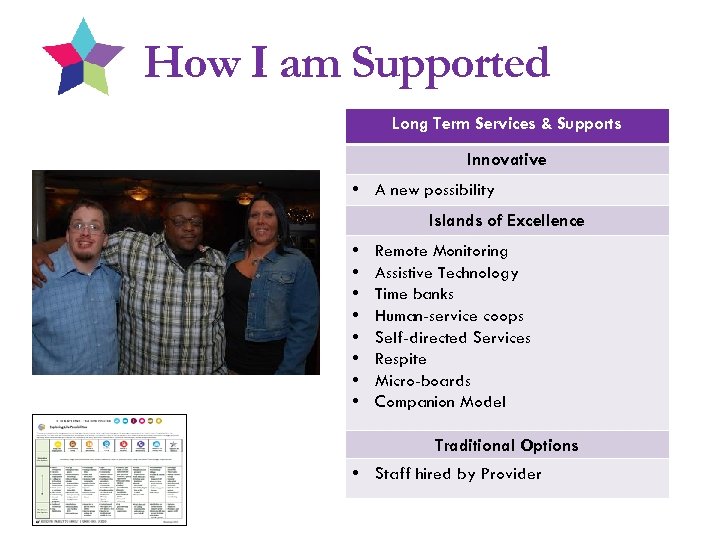
How I am Supported Long Term Services & Supports Innovative • A new possibility Islands of Excellence • • Remote Monitoring Assistive Technology Time banks Human-service coops Self-directed Services Respite Micro-boards Companion Model Traditional Options • Staff hired by Provider
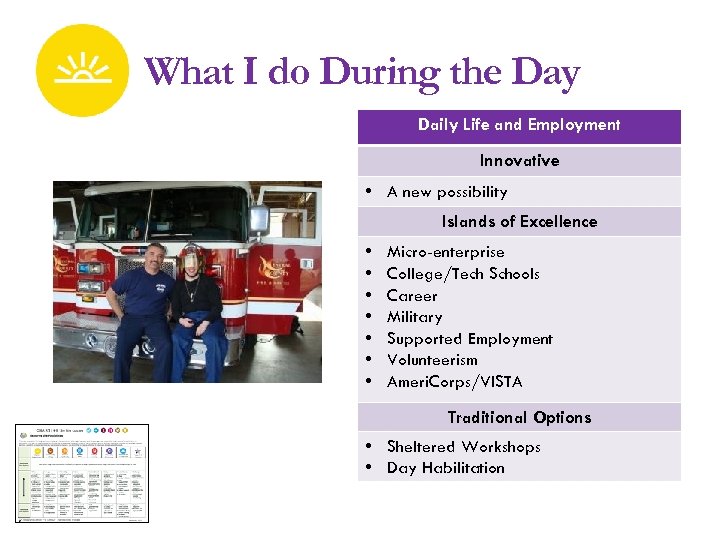
What I do During the Day Daily Life and Employment Innovative • A new possibility Islands of Excellence • • Micro-enterprise College/Tech Schools Career Military Supported Employment Volunteerism Ameri. Corps/VISTA Traditional Options • Sheltered Workshops • Day Habilitation
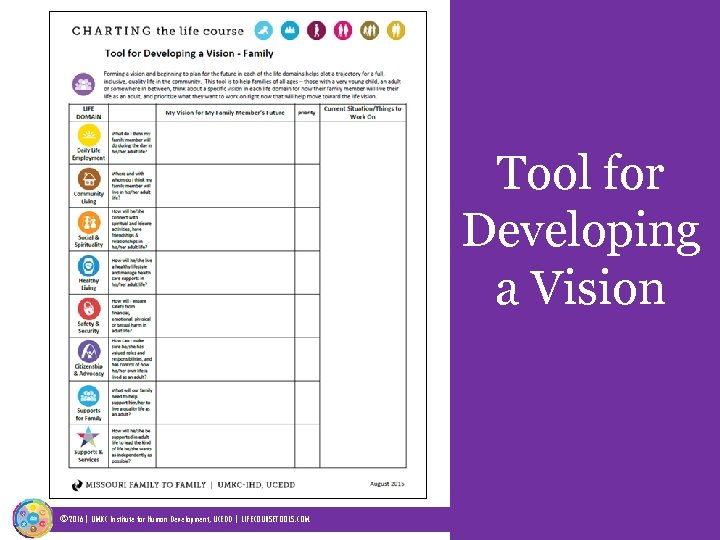
Tool for Developing a Vision © 2016| UMKC Institute for Human Development, UCEDD | LIFECOURSETOOLS. COM
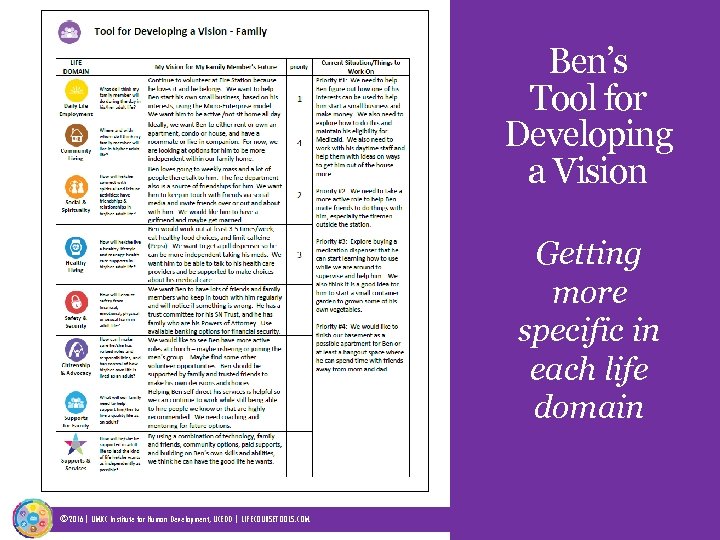
Ben’s Tool for Developing a Vision Getting more specific in each life domain © 2016| UMKC Institute for Human Development, UCEDD | LIFECOURSETOOLS. COM
Individualized Supports to Achieve a Good Life
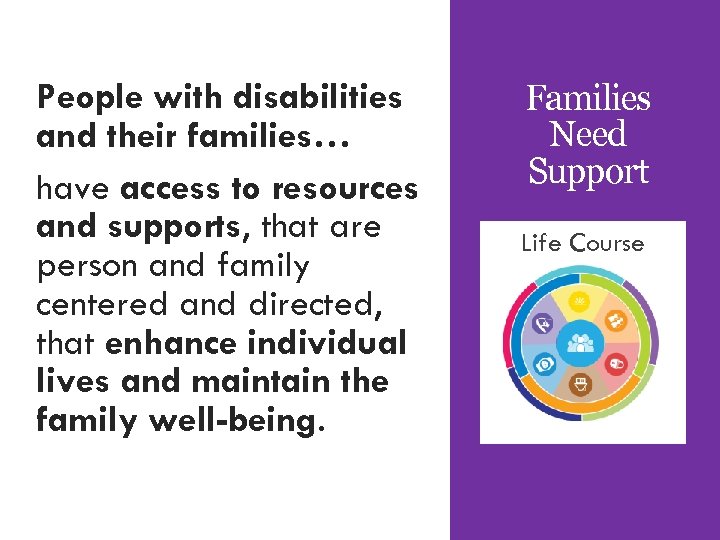
People with disabilities and their families… have access to resources and supports, that are person and family centered and directed, that enhance individual lives and maintain the family well-being. Families Need Support Life Course
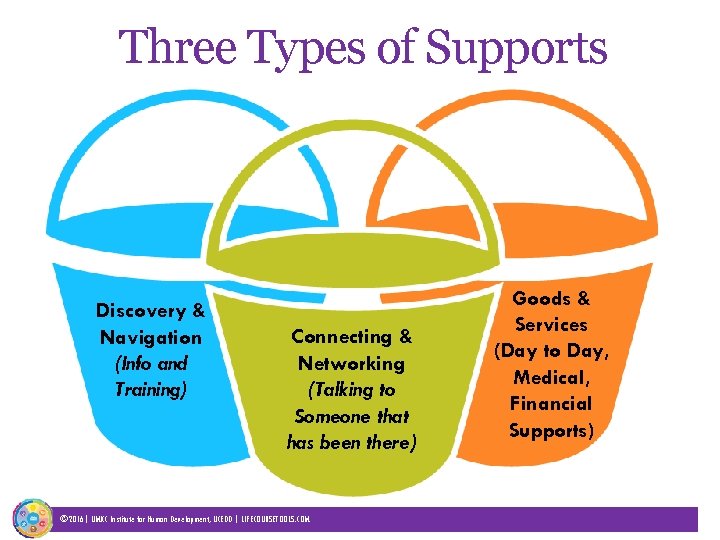
Three Types of Supports Discovery & Navigation (Info and Training) Connecting & Networking (Talking to Someone that has been there) © 2016| UMKC Institute for Human Development, UCEDD | LIFECOURSETOOLS. COM Goods & Services (Day to Day, Medical, Financial Supports)
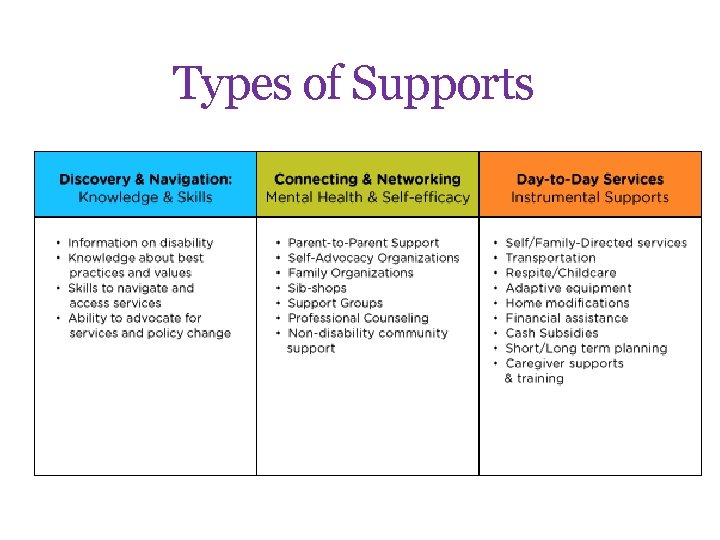
Types of Supports
Integrated Star for Problem Solving & Exploring Options
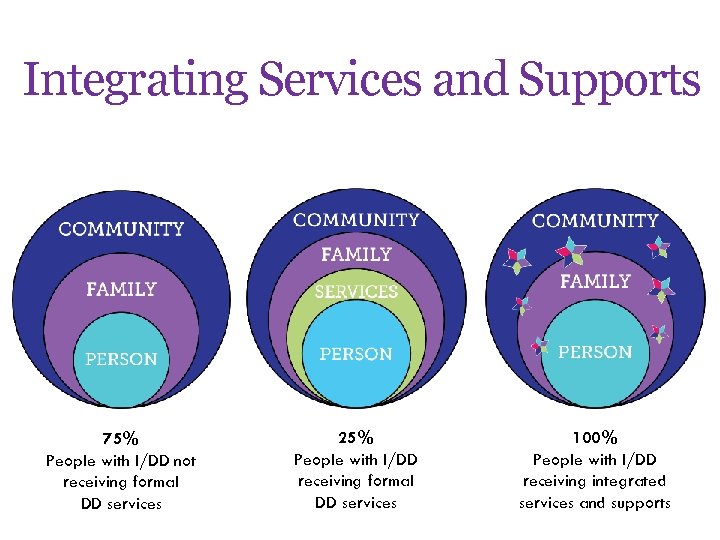
Integrating Services and Supports 75% People with I/DD not receiving formal DD services 25% People with I/DD receiving formal DD services 100% People with I/DD receiving integrated services and supports
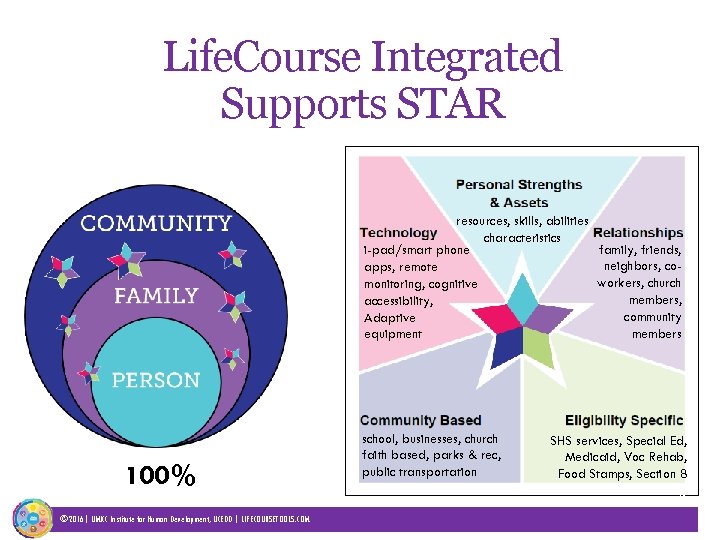
Life. Course Integrated Supports STAR resources, skills, abilities characteristics family, friends, i-pad/smart phone neighbors, coapps, remote workers, church monitoring, cognitive members, accessibility, community Adaptive members equipment 100% © 2016| UMKC Institute for Human Development, UCEDD | LIFECOURSETOOLS. COM school, businesses, church faith based, parks & rec, public transportation SHS services, Special Ed, Medicaid, Voc Rehab, Food Stamps, Section 8 R
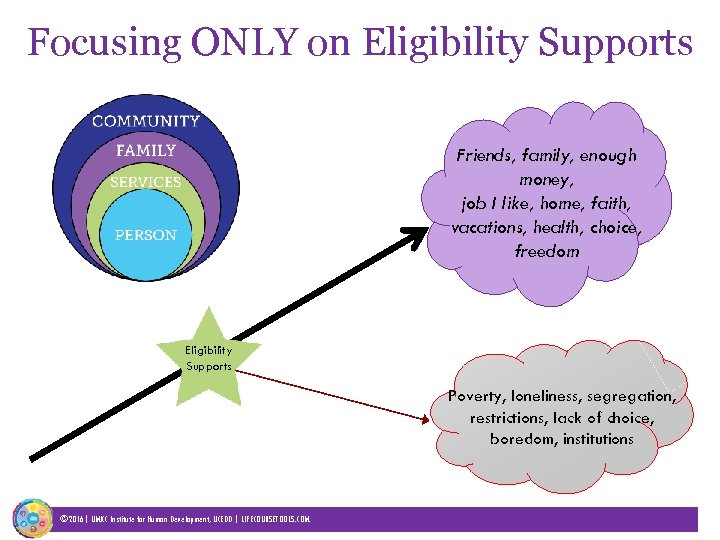
Focusing ONLY on Eligibility Supports Friends, family, enough money, job I like, home, faith, vacations, health, choice, freedom Eligibility Supports Poverty, loneliness, segregation, restrictions, lack of choice, boredom, institutions © 2016| UMKC Institute for Human Development, UCEDD | LIFECOURSETOOLS. COM
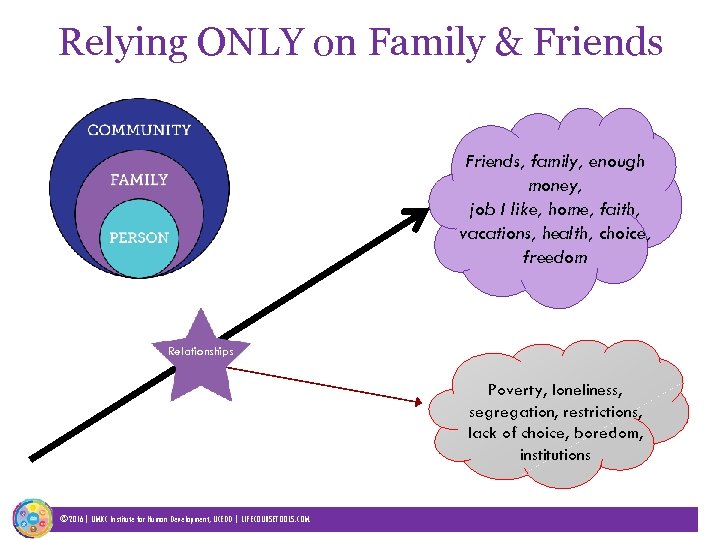
Relying ONLY on Family & Friends, family, enough money, job I like, home, faith, vacations, health, choice, freedom Relationships Poverty, loneliness, segregation, restrictions, lack of choice, boredom, institutions © 2016| UMKC Institute for Human Development, UCEDD | LIFECOURSETOOLS. COM
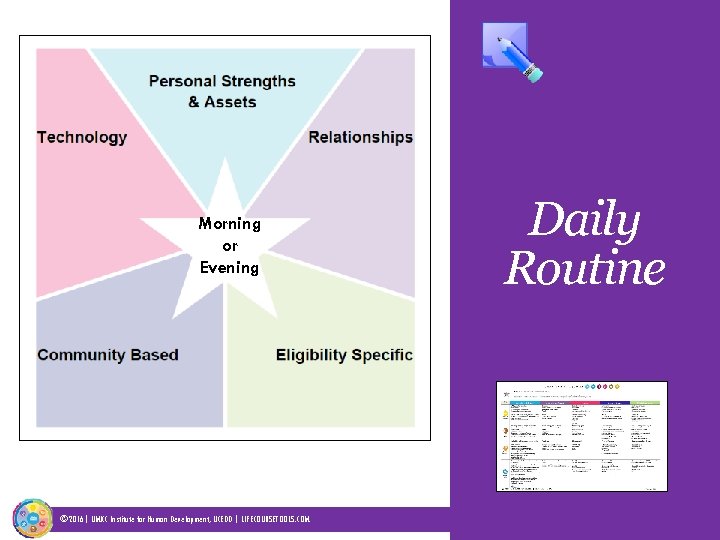
Morning or Evening © 2016| UMKC Institute for Human Development, UCEDD | LIFECOURSETOOLS. COM Daily Routine
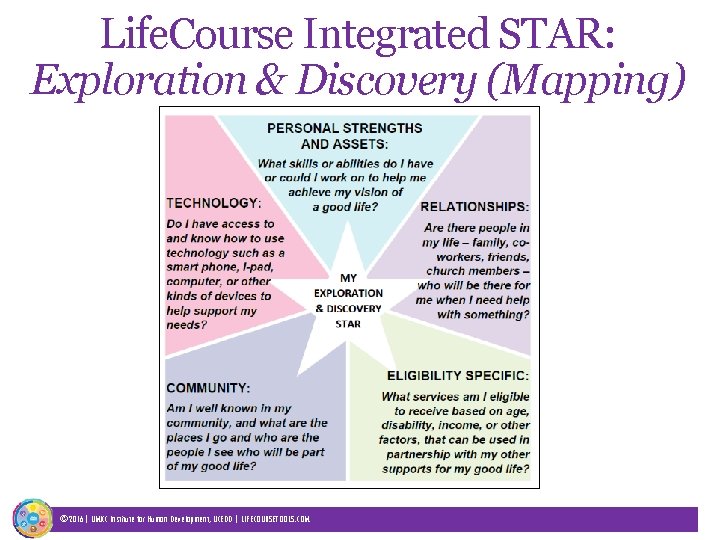
Life. Course Integrated STAR: Exploration & Discovery (Mapping) © 2016| UMKC Institute for Human Development, UCEDD | LIFECOURSETOOLS. COM
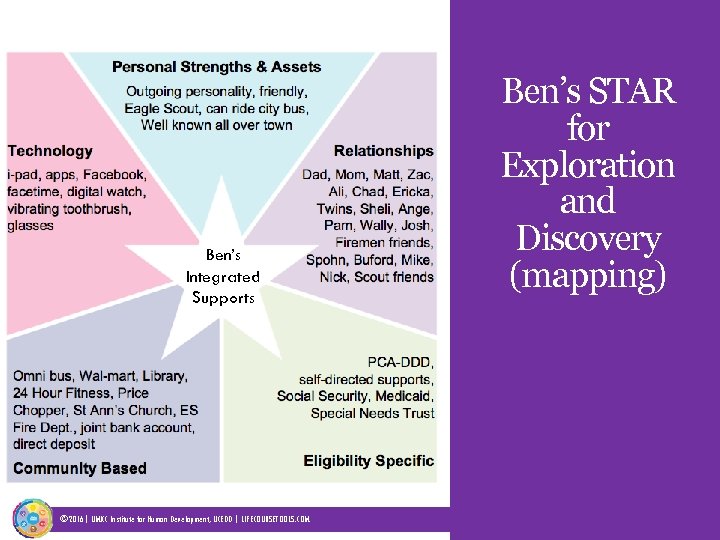
Ben’s Integrated Supports © 2016| UMKC Institute for Human Development, UCEDD | LIFECOURSETOOLS. COM Ben’s STAR for Exploration and Discovery (mapping)
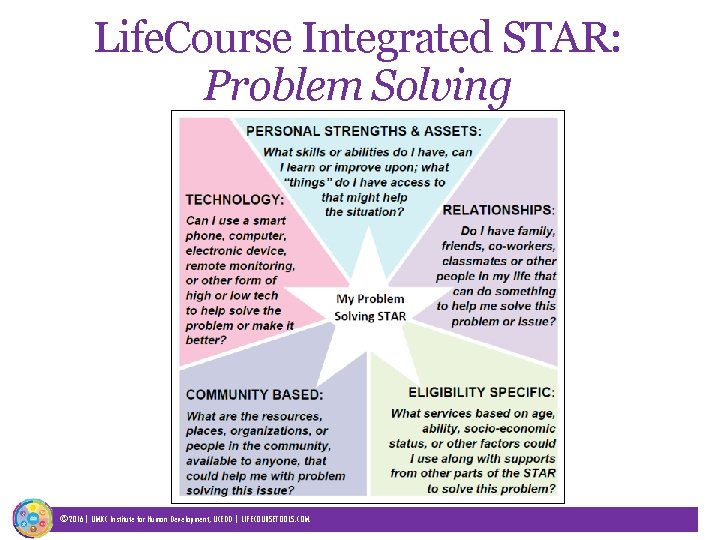
Life. Course Integrated STAR: Problem Solving © 2016| UMKC Institute for Human Development, UCEDD | LIFECOURSETOOLS. COM
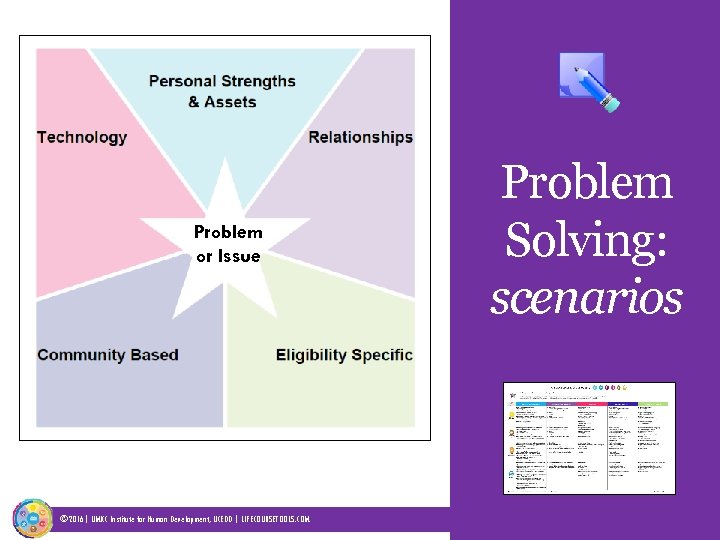
Problem or Issue © 2016| UMKC Institute for Human Development, UCEDD | LIFECOURSETOOLS. COM Problem Solving: scenarios
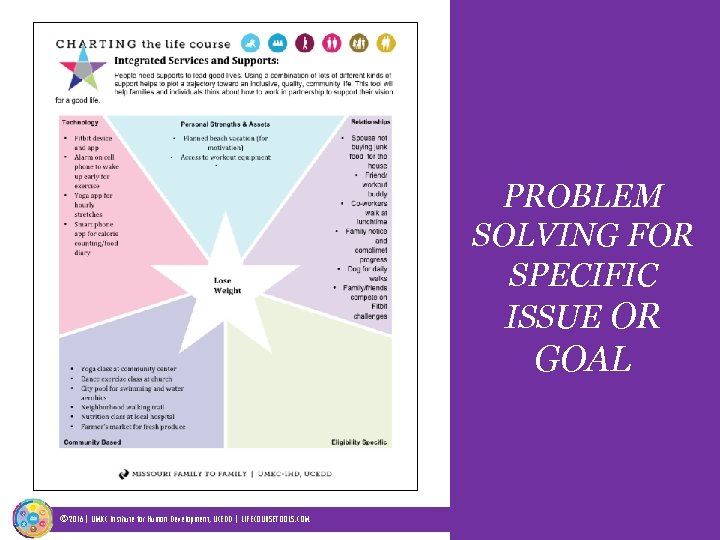
HEALTHY LIVING PROBLEM SOLVING FOR SPECIFIC ISSUE OR GOAL © 2016| UMKC Institute for Human Development, UCEDD | LIFECOURSETOOLS. COM
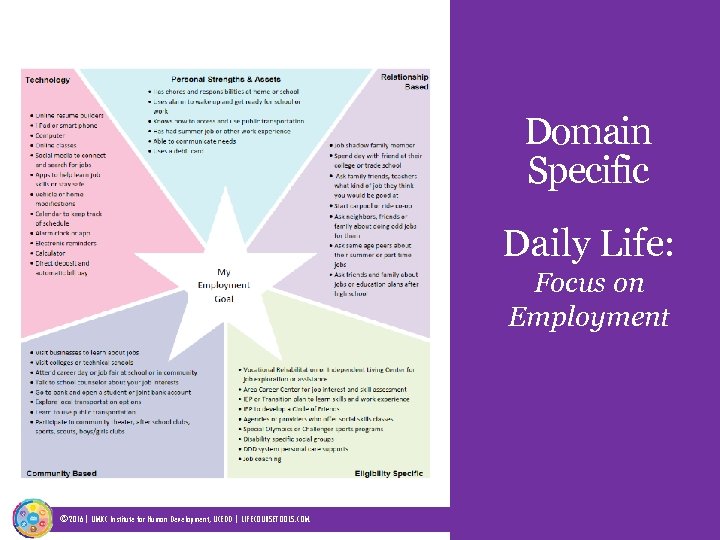
Domain Specific Daily Life: Focus on Employment © 2016| UMKC Institute for Human Development, UCEDD | LIFECOURSETOOLS. COM
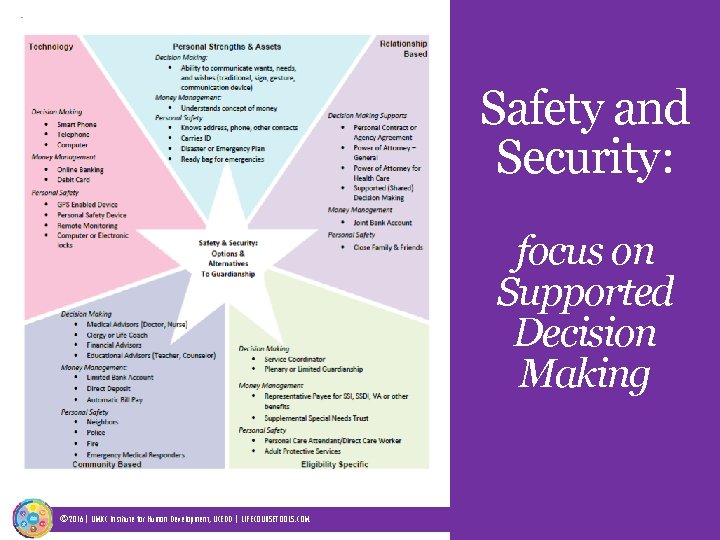
Safety and Security: focus on Supported Decision Making © 2016| UMKC Institute for Human Development, UCEDD | LIFECOURSETOOLS. COM
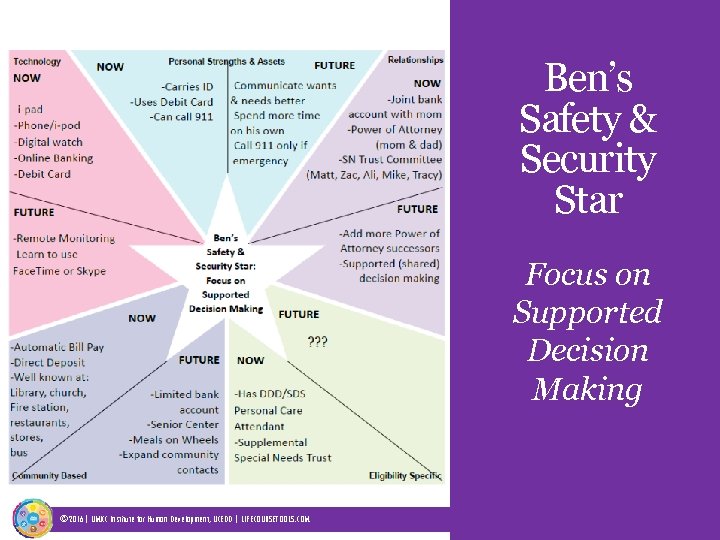
Ben’s Safety & Security Star Focus on Supported Decision Making © 2016| UMKC Institute for Human Development, UCEDD | LIFECOURSETOOLS. COM

Life. Course Star to Calendar
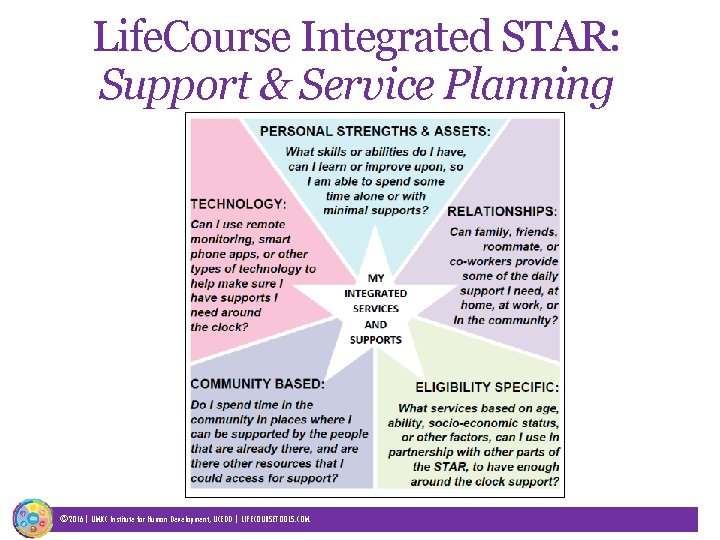
Life. Course Integrated STAR: Support & Service Planning © 2016| UMKC Institute for Human Development, UCEDD | LIFECOURSETOOLS. COM
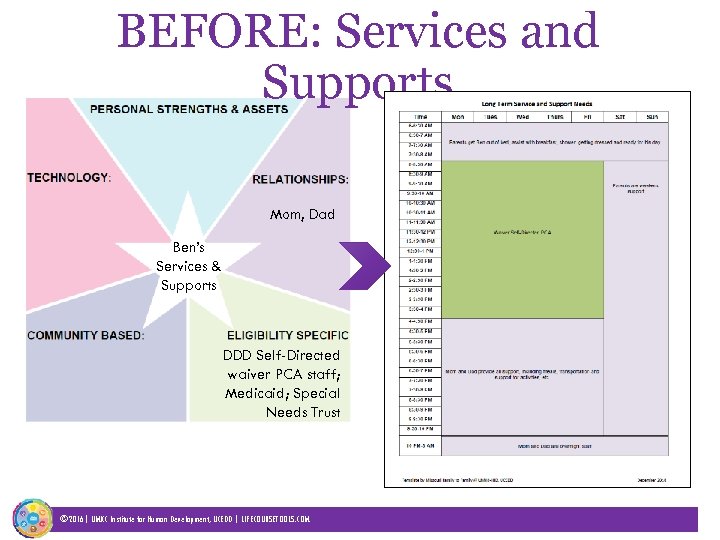
BEFORE: Services and Supports Mom, Dad Ben’s Services & Supports DDD Self-Directed waiver PCA staff; Medicaid; Special Needs Trust © 2016| UMKC Institute for Human Development, UCEDD | LIFECOURSETOOLS. COM
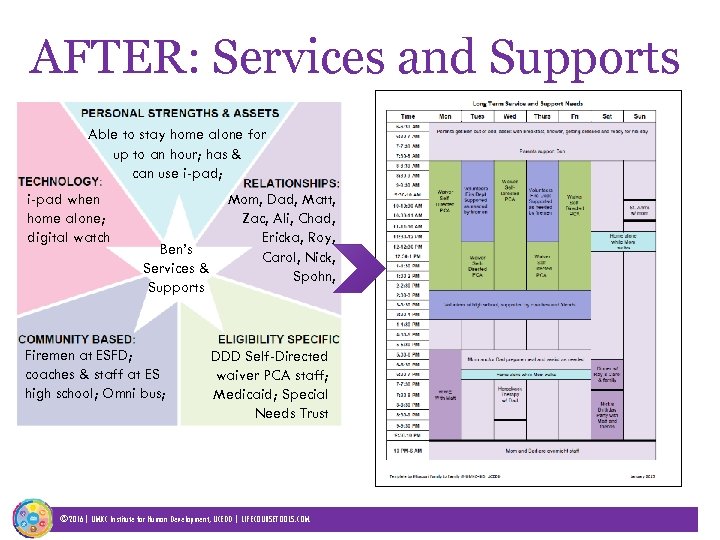
AFTER: Services and Supports Able to stay home alone for up to an hour; has & can use i-pad; i-pad when home alone; digital watch Ben’s Services & Supports Firemen at ESFD; coaches & staff at ES high school; Omni bus; Mom, Dad, Matt, Zac, Ali, Chad, Ericka, Roy, Carol, Nick, Spohn, DDD Self-Directed waiver PCA staff; Medicaid; Special Needs Trust © 2016| UMKC Institute for Human Development, UCEDD | LIFECOURSETOOLS. COM
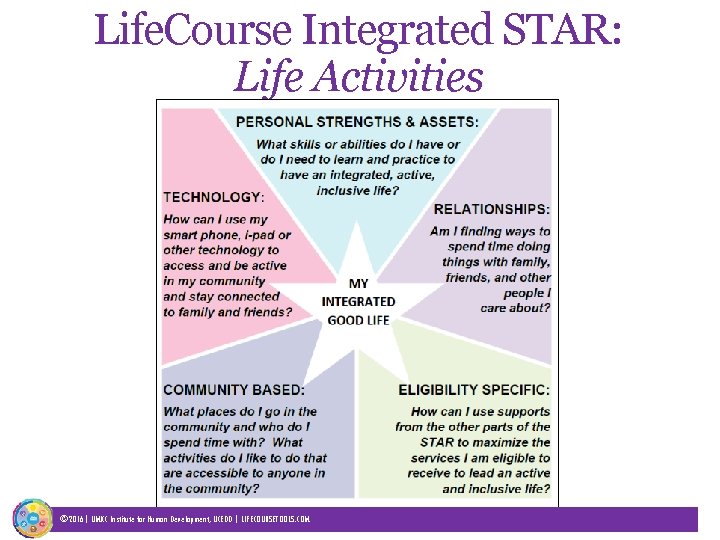
Life. Course Integrated STAR: Life Activities © 2016| UMKC Institute for Human Development, UCEDD | LIFECOURSETOOLS. COM
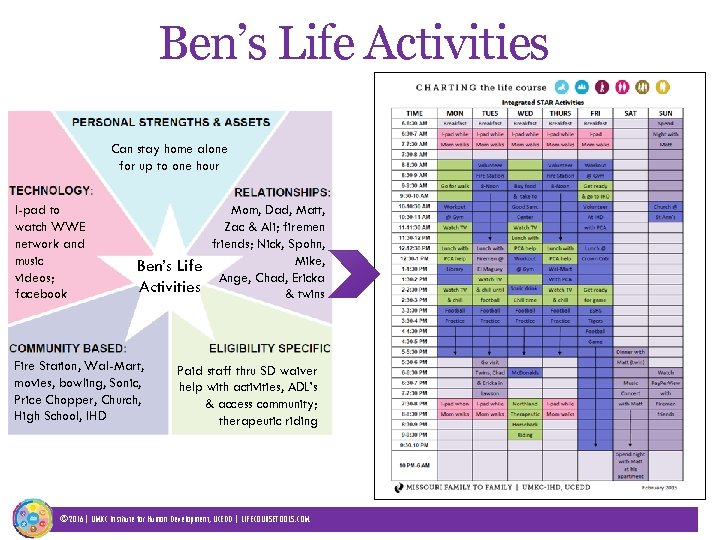
Ben’s Life Activities Can stay home alone for up to one hour I-pad to watch WWE network and music videos; facebook Ben’s Life Activities Fire Station, Wal-Mart, movies, bowling, Sonic, Price Chopper, Church, High School, IHD Mom, Dad, Matt, Zac & Ali; firemen friends; Nick, Spohn, Mike, Ange, Chad, Ericka & twins Paid staff thru SD waiver help with activities, ADL’s & access community; therapeutic riding © 2016| UMKC Institute for Human Development, UCEDD | LIFECOURSETOOLS. COM
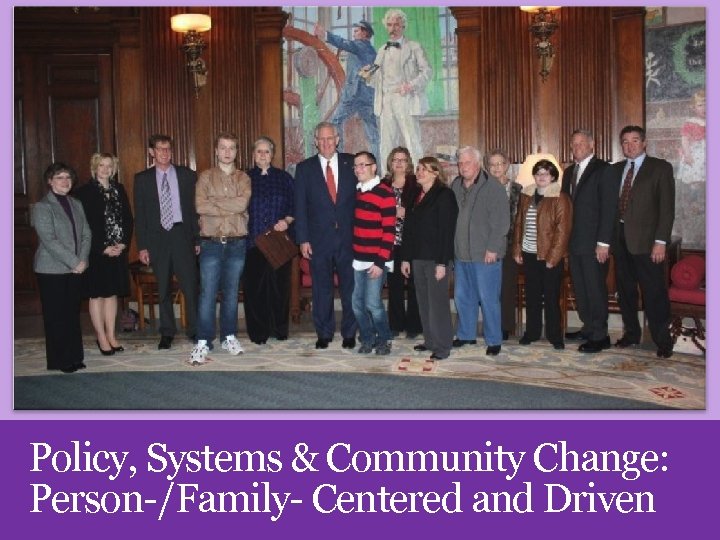
Policy, Systems & Community Change: Person-/Family- Centered and Driven
Partnering with People with Disabilities and their Families so they can Engage, Lead, and Drive Policy and Systems Change © 2016| UMKC Institute for Human Development, UCEDD | LIFECOURSETOOLS. COM
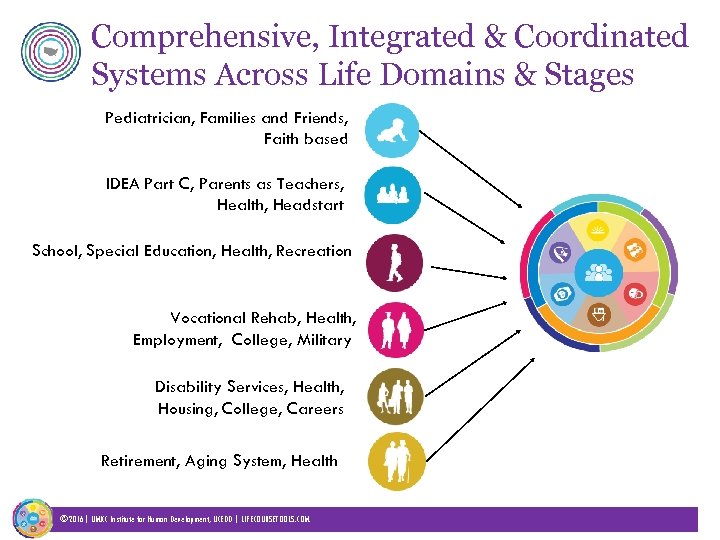
Comprehensive, Integrated & Coordinated Systems Across Life Domains & Stages Pediatrician, Families and Friends, Faith based IDEA Part C, Parents as Teachers, Health, Headstart School, Special Education, Health, Recreation Vocational Rehab, Health, Employment, College, Military Disability Services, Health, Housing, College, Careers Retirement, Aging System, Health © 2016| UMKC Institute for Human Development, UCEDD | LIFECOURSETOOLS. COM
 Скачать презентацию Life Course Ambassador Training August 16 2016
da7ca9fb387ecd3e3a20fd50f51ddd67.ppt