


 Скачать презентацию LFA little fire ant Photo Alex
718723d924f61181e48af85dd8f89999.ppt
- Количество слайдов: 22
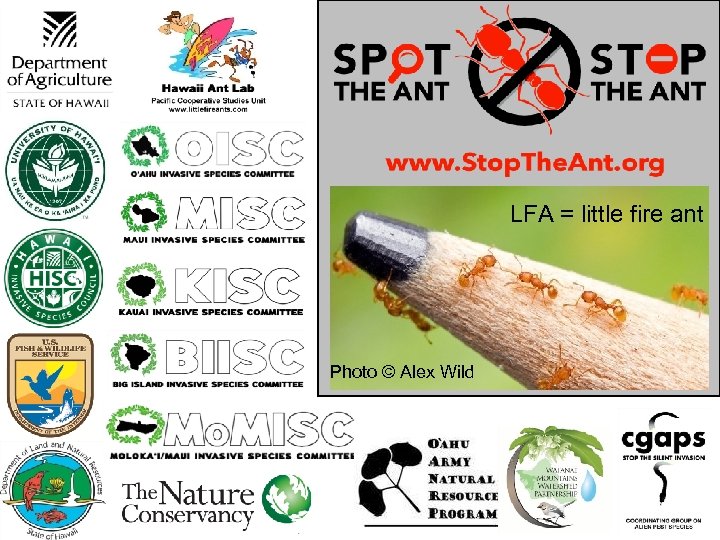 LFA = little fire ant Photo © Alex Wild
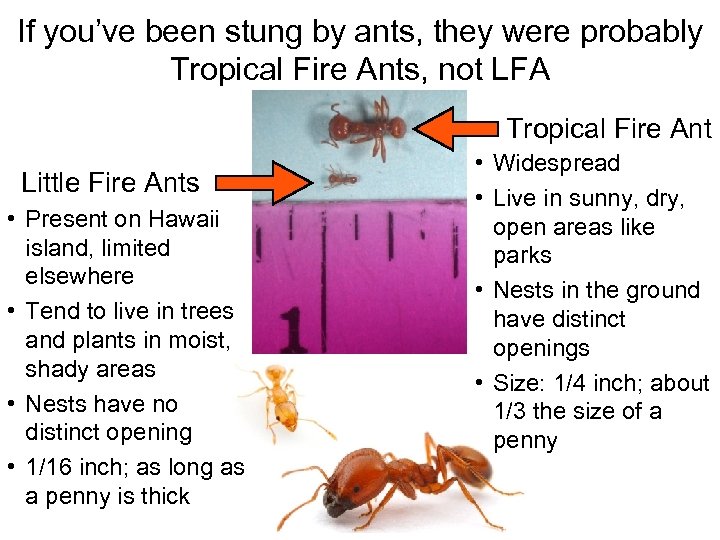 If you’ve been stung by ants, they were probably Tropical Fire Ants, not LFA Tropical Fire Ant Little Fire Ants • Present on Hawaii island, limited elsewhere • Tend to live in trees and plants in moist, shady areas • Nests have no distinct opening • 1/16 inch; as long as a penny is thick • Widespread • Live in sunny, dry, open areas like parks • Nests in the ground have distinct openings • Size: 1/4 inch; about 1/3 the size of a penny
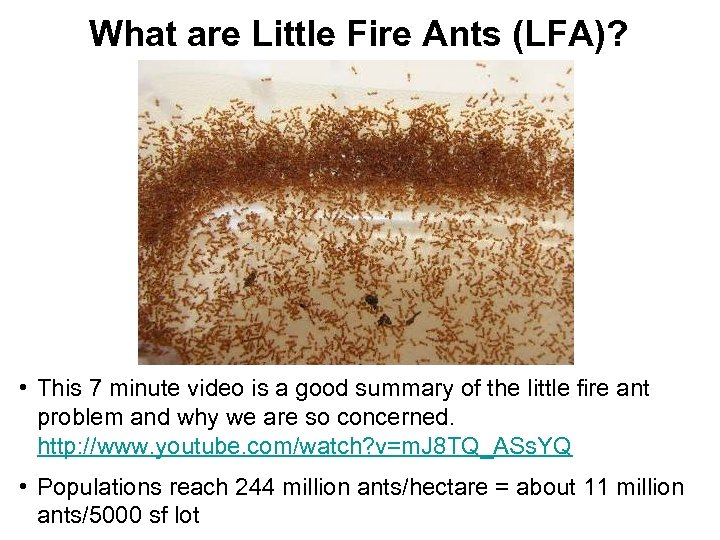 What are Little Fire Ants (LFA)? • This 7 minute video is a good summary of the little fire ant problem and why we are so concerned. http: //www. youtube. com/watch? v=m. J 8 TQ_ASs. YQ • Populations reach 244 million ants/hectare = about 11 million Little fire ants attracted to peanut ants/5000 sf lot butter on half of a chopstick
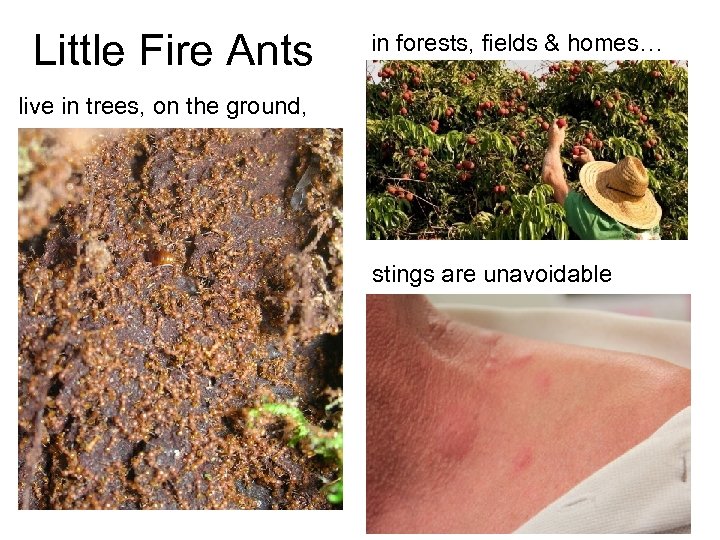 Little Fire Ants in forests, fields & homes… live in trees, on the ground, stings are unavoidable
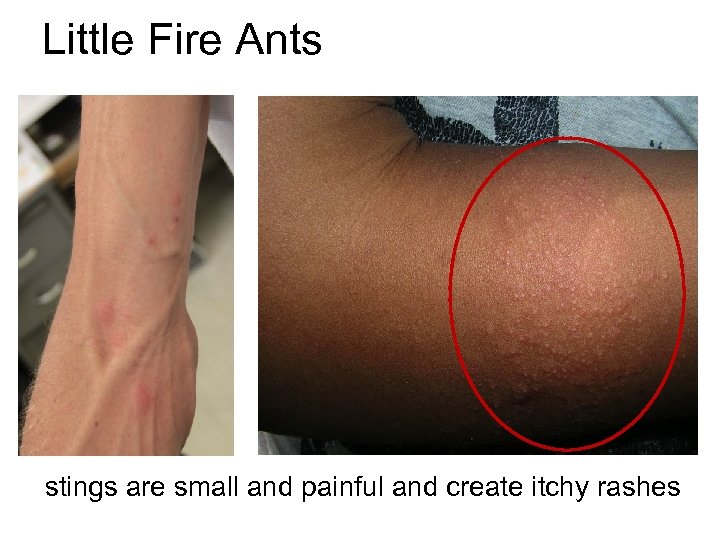 Little Fire Ants stings are small and painful and create itchy rashes
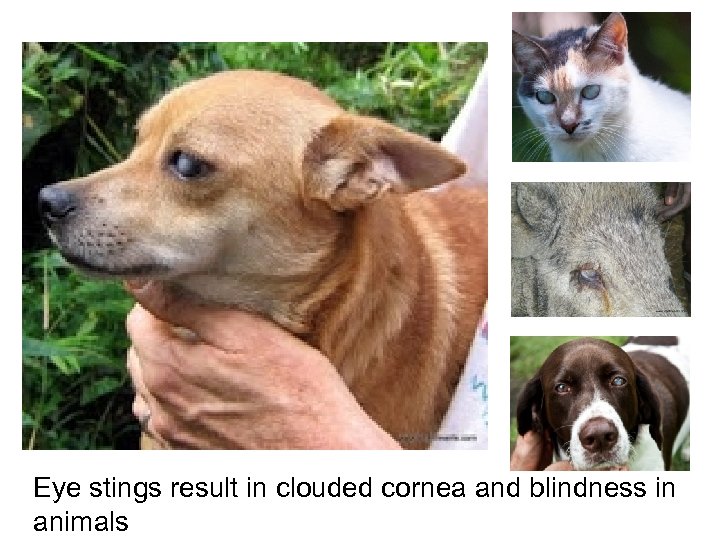 Eye stings result in clouded cornea and blindness in animals
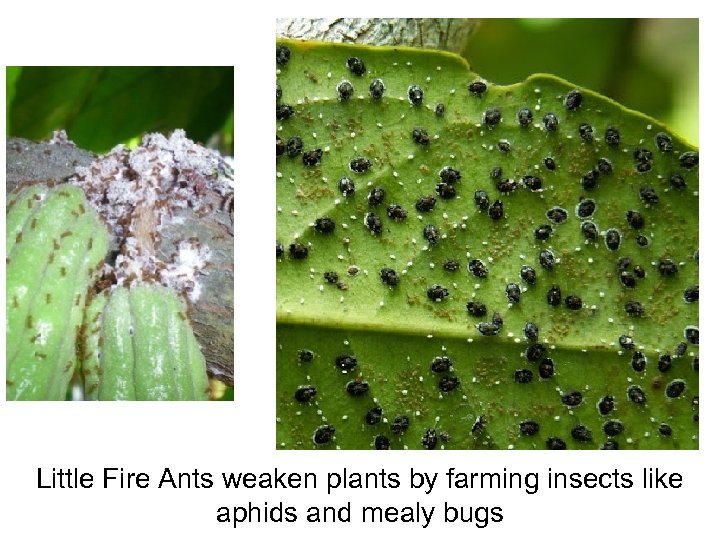 Little Fire Ants weaken plants by farming insects like aphids and mealy bugs
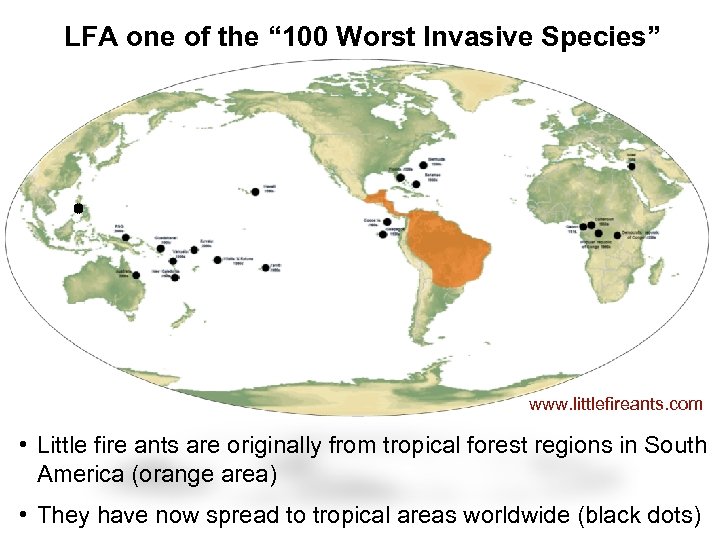 LFA one of the “ 100 Worst Invasive Species” www. littlefireants. com • Little fire ants are originally from tropical forest regions in South America (orange area) • They have now spread to tropical areas worldwide (black dots)
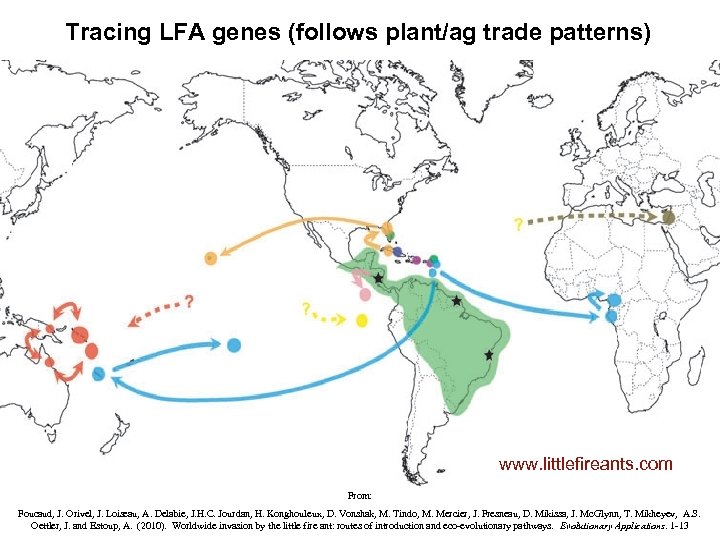 Tracing LFA genes (follows plant/ag trade patterns) www. littlefireants. com From: Foucaud, J. Orivel, J. Loiseau, A. Delabie, J. H. C. Jourdan, H. Konghouleux, D. Vonshak, M. Tindo, M. Mercier, J. Fresneau, D. Mikissa, J. Mc. Glynn, T. Mikheyev, A. S. Oettler, J. and Estoup, A. (2010). Worldwide invasion by the little fire ant: routes of introduction and eco-evolutionary pathways. Evolutionary Applications. 1 -13
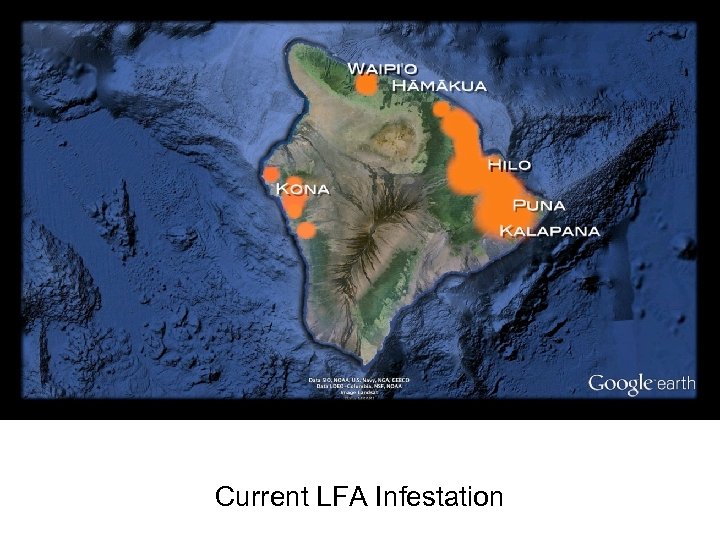 Current LFA Infestation
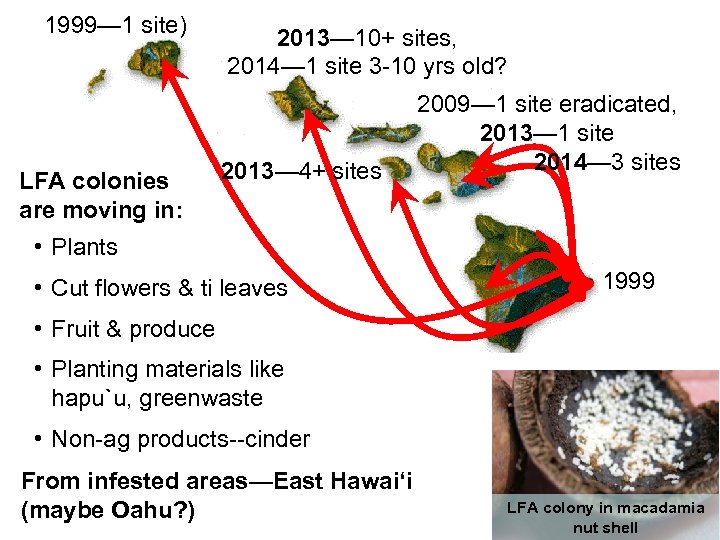 1999— 1 site) LFA colonies are moving in: 2013— 10+ sites, 2014— 1 site 3 -10 yrs old? 2013— 4+ sites • Plants 2009— 1 site eradicated, 2013— 1 site 2014— 3 sites 2013 • Cut flowers & ti leaves 1999 • Fruit & produce • Planting materials like hapu`u, greenwaste • Non-ag products--cinder From infested areas—East Hawaiʻi (maybe Oahu? ) LFA colony in macadamia nut shell
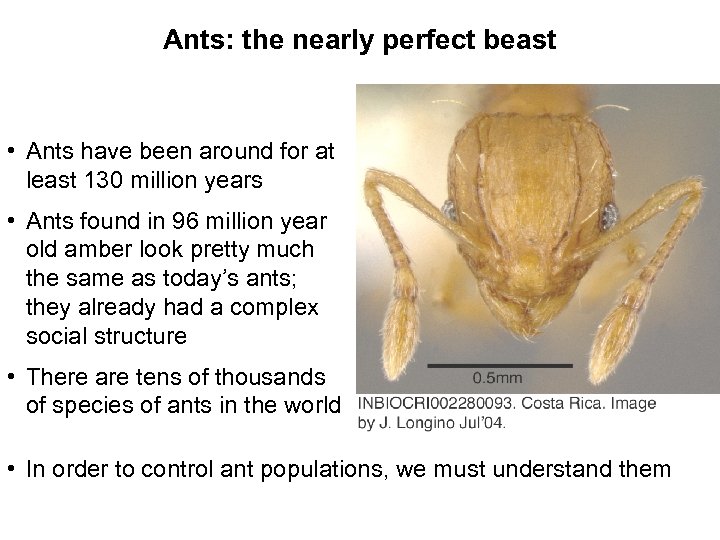 Ants: the nearly perfect beast • Ants have been around for at least 130 million years • Ants found in 96 million year old amber look pretty much the same as today’s ants; they already had a complex social structure • There are tens of thousands of species of ants in the world • In order to control ant populations, we must understand them
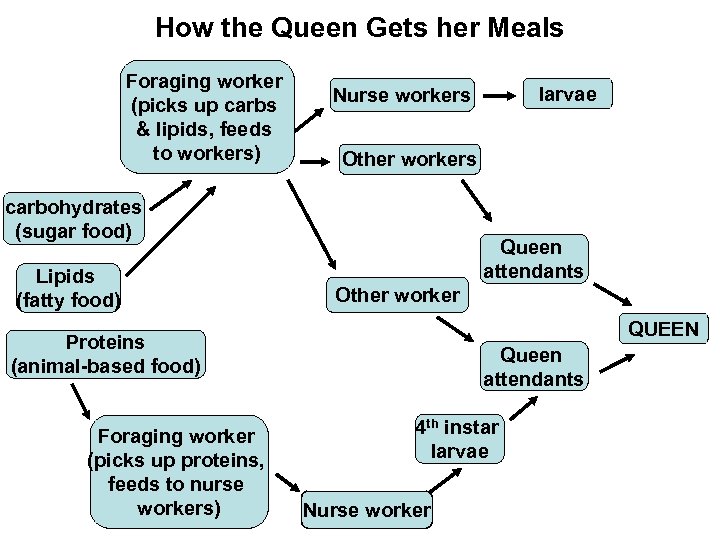 How the Queen Gets her Meals Foraging worker (picks up carbs & lipids, feeds to workers) Other workers carbohydrates (sugar food) Lipids (fatty food) Queen attendants Other worker QUEEN Proteins (animal-based food) Foraging worker (picks up proteins, feeds to nurse workers) larvae Nurse workers Queen attendants 4 th instar larvae Nurse worker
 A little about ant colony structure: • The colony is a super-organism – a group of animals that work together with one goal: to support the queen • A queen – the only member of the colony that produces offspring* (LFA colonies can have more than 1 queen, but no colony can exist without at least 1 queen) • Within the worker caste, some workers act as guards, some are hunter-gatherers or farmers, some are nurses to look after the larvae, others are attendants to look after the queen • Foraging workers – all sterile daughters of the queen (these are the ants we usually see—workers are easily replaced) • Males – produced and utilized as needed for reproduction • Larvae – infant workers, new queens and males which are cared for by the nurse workers
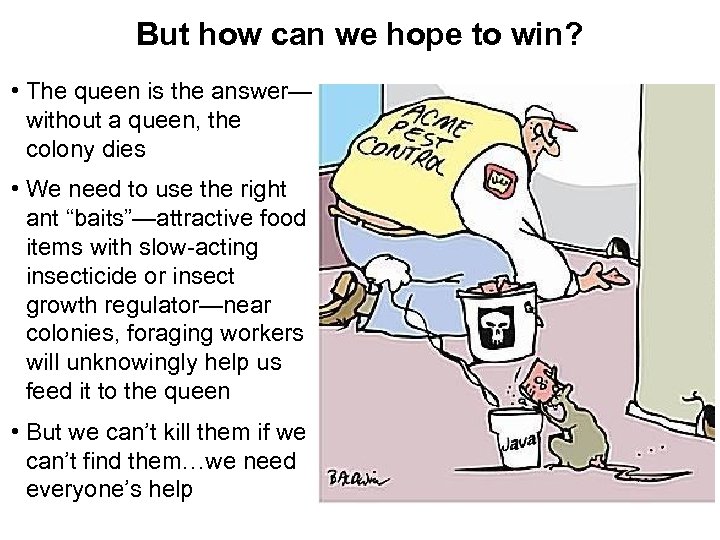 But how can we hope to win? • The queen is the answer— without a queen, the colony dies • We need to use the right ant “baits”—attractive food items with slow-acting insecticide or insect growth regulator—near colonies, foraging workers will unknowingly help us feed it to the queen • But we can’t kill them if we can’t find them…we need everyone’s help
 Oahu Situation Report • 10+ nurseries/garden shops that sold infested hapu`u being treated every 6 weeks for 1 year; with monitoring for 1 additional year after • Ongoing: HDOA & OISC have a list of nearly 175 nurseries/plant businesses prioritized for baseline survey— very small populations of LFA are still being found, treated • April 2014: Found on Waimanalo unmanaged lands; site treated 8 x over 1 year, will be surveyed quarterly for 3 years • June 2014: Mililani Mauka resident saw LFA media and tested yard for ants, turned in sample to HDOA. 20 properties & greenspace treated 8 x, will be surveyed quarterly for 3 years • The good news: These ants are easy to kill and even eradicate (there a variety of products available)—if we find them before they form large populations!
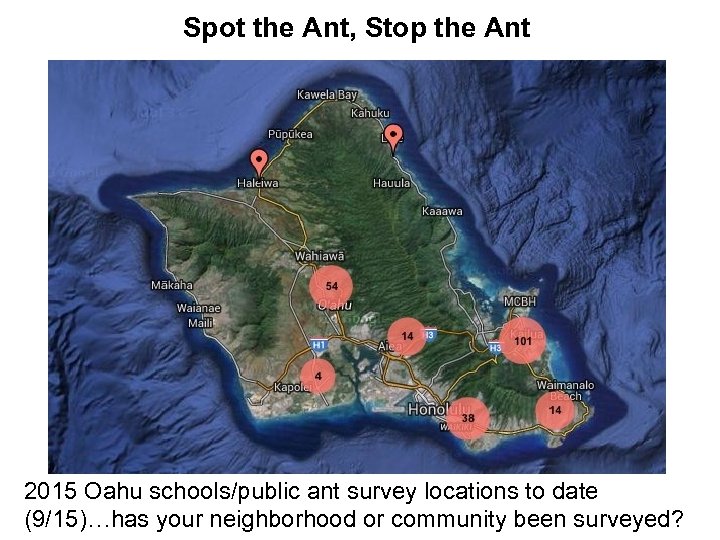 Spot the Ant, Stop the Ant 2015 Oahu schools/public ant survey locations to date (9/15)…has your neighborhood or community been surveyed?
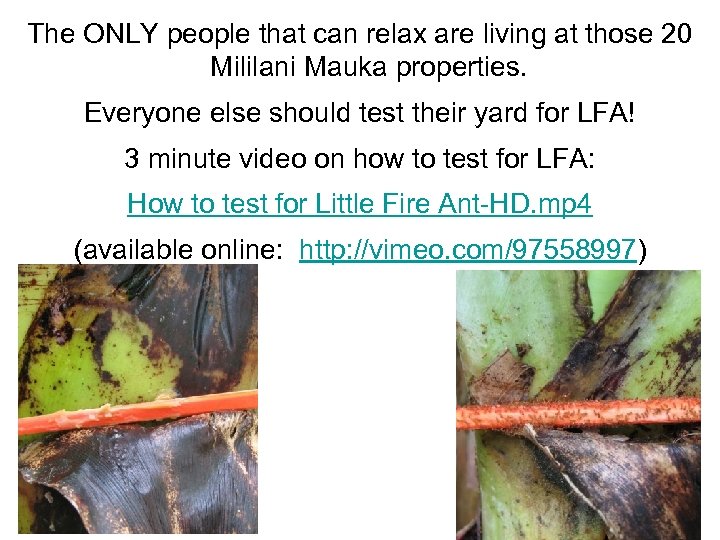 The ONLY people that can relax are living at those 20 Mililani Mauka properties. Everyone else should test their yard for LFA! 3 minute video on how to test for LFA: How to test for Little Fire Ant-HD. mp 4 (available online: http: //vimeo. com/97558997)
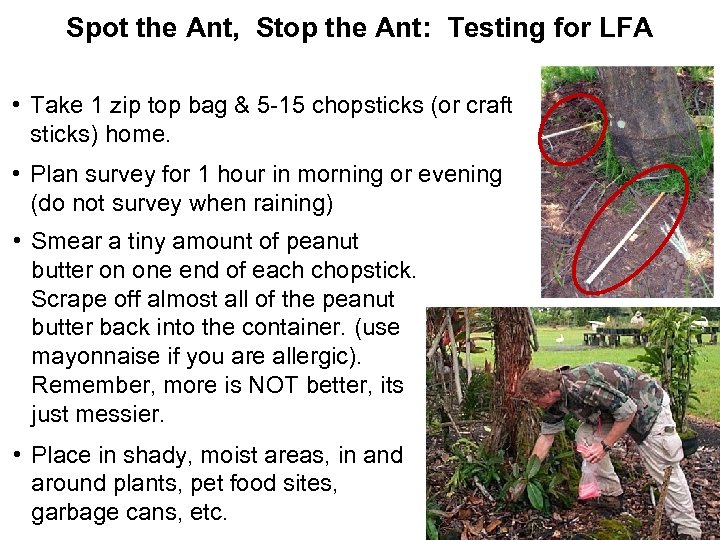 Spot the Ant, Stop the Ant: Testing for LFA • Take 1 zip top bag & 5 -15 chopsticks (or craft sticks) home. • Plan survey for 1 hour in morning or evening (do not survey when raining) • Smear a tiny amount of peanut butter on one end of each chopstick. Scrape off almost all of the peanut butter back into the container. (use mayonnaise if you are allergic). Remember, more is NOT better, its just messier. • Place in shady, moist areas, in and around plants, pet food sites, garbage cans, etc.
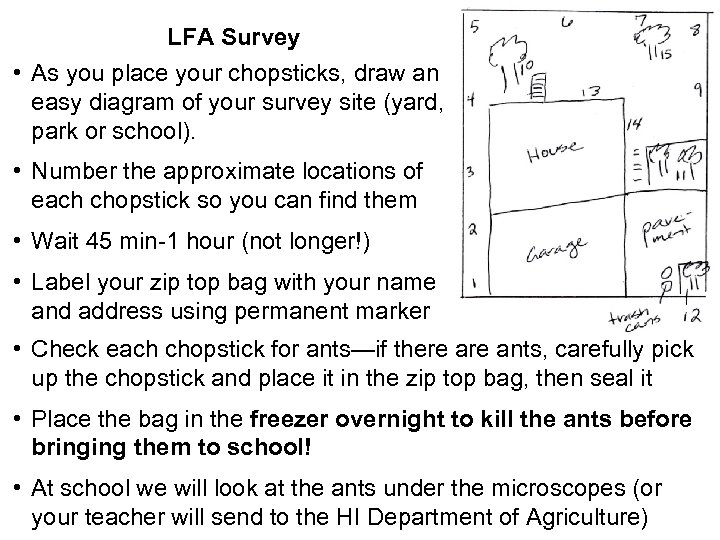 LFA Survey • As you place your chopsticks, draw an easy diagram of your survey site (yard, park or school). • Number the approximate locations of each chopstick so you can find them • Wait 45 min-1 hour (not longer!) • Label your zip top bag with your name and address using permanent marker • Check each chopstick for ants—if there ants, carefully pick up the chopstick and place it in the zip top bag, then seal it • Place the bag in the freezer overnight to kill the ants before bringing them to school! • At school we will look at the ants under the microscopes (or your teacher will send to the HI Department of Agriculture)
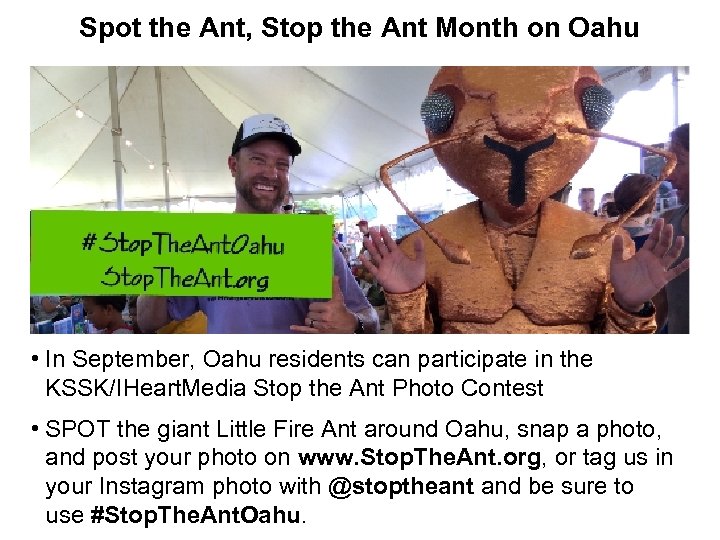 Spot the Ant, Stop the Ant Month on Oahu • In September, Oahu residents can participate in the KSSK/IHeart. Media Stop the Ant Photo Contest • SPOT the giant Little Fire Ant around Oahu, snap a photo, and post your photo on www. Stop. The. Ant. org, or tag us in your Instagram photo with @stoptheant and be sure to use #Stop. The. Ant. Oahu.
 Like us on Facebook, post to our Instagram page. Mahalo! Questions?