 Скачать презентацию Lexical valency of a word lexical context distribution
lecture_8_COLLOCATIONS.ppt
- Количество слайдов: 29



Lexical valency of a word lexical context distribution collocability
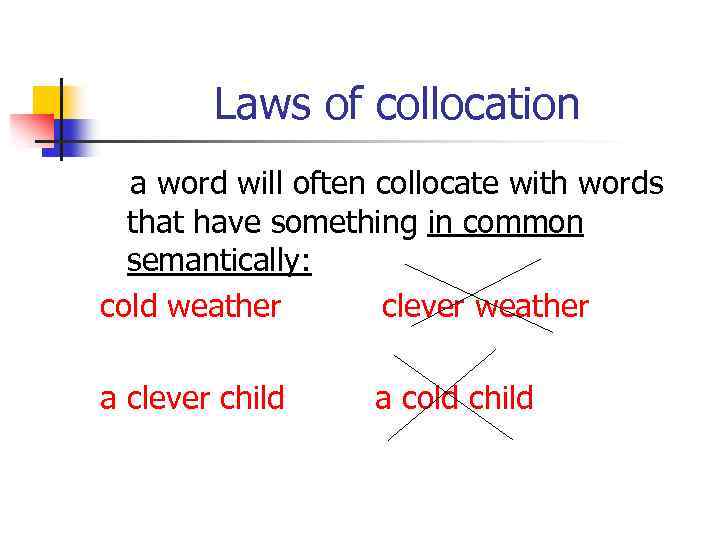
Laws of collocation a word will often collocate with words that have something in common semantically: cold weather clever weather a clever child a cold child
Collocational restrictions n n n logical based on range purely collocational
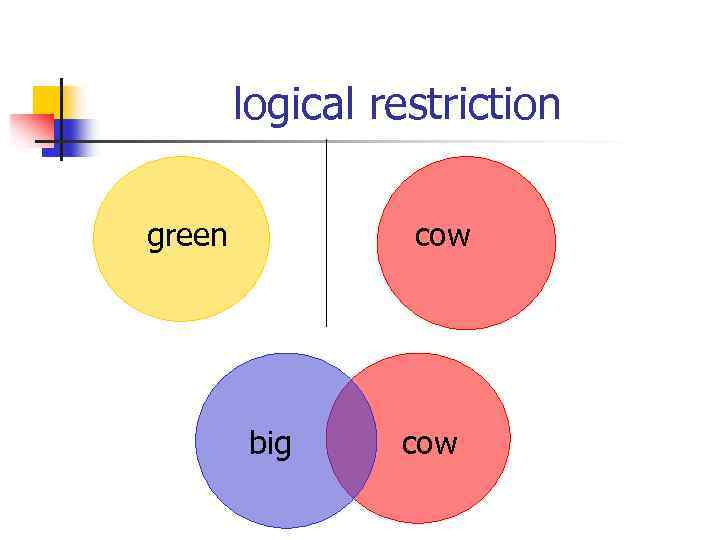
logical restriction green cow big cow
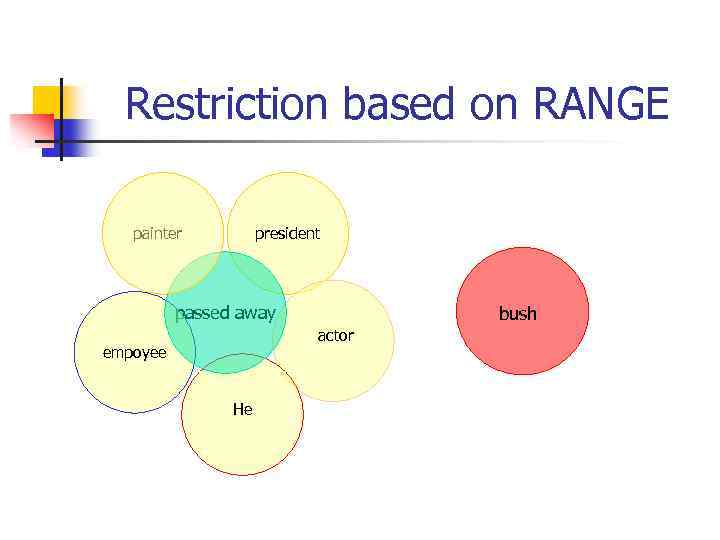
Restriction based on RANGE painter president passed away bush actor empoyee He
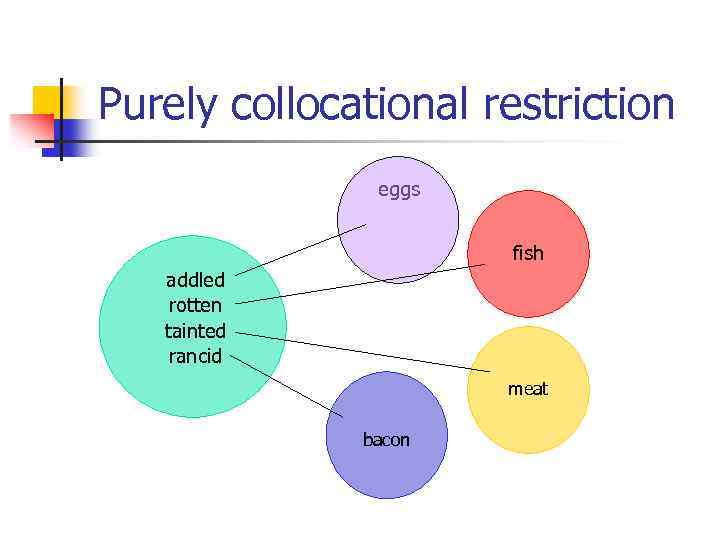
Purely collocational restriction eggs fish addled rotten tainted rancid meat bacon
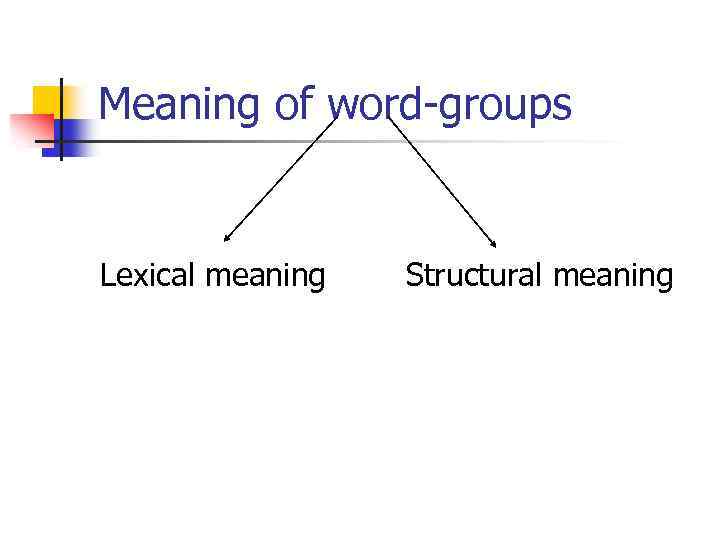
Meaning of word-groups Lexical meaning Structural meaning
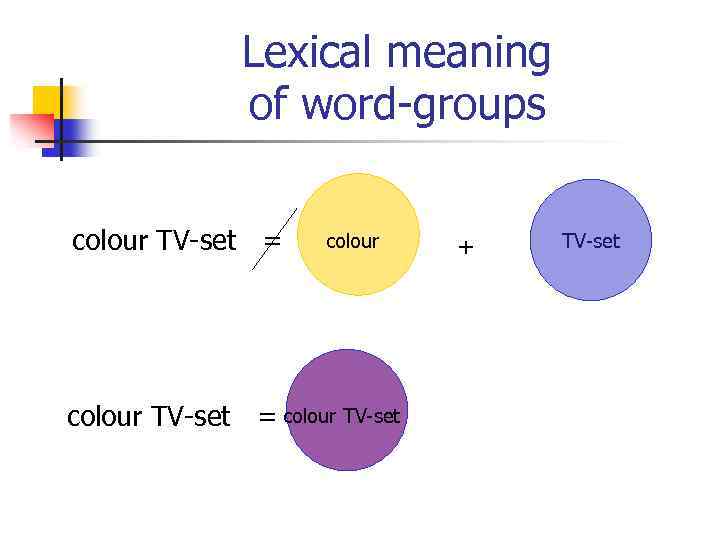
Lexical meaning of word-groups colour TV-set = colour TV-set + TV-set
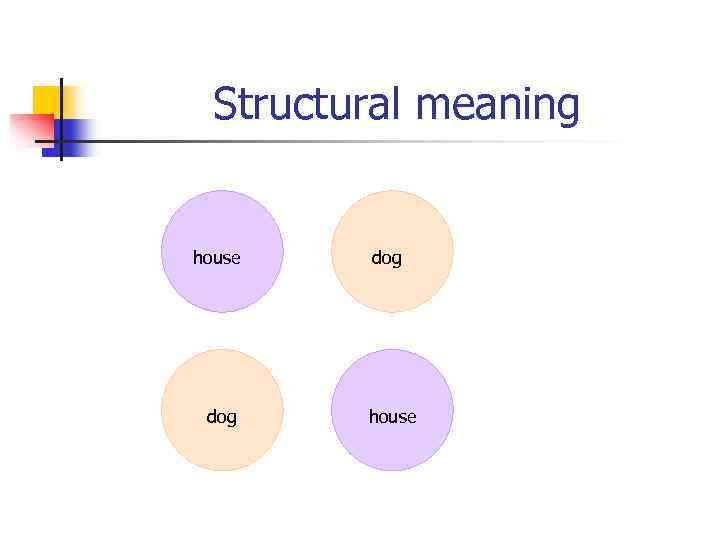
Structural meaning house dog house
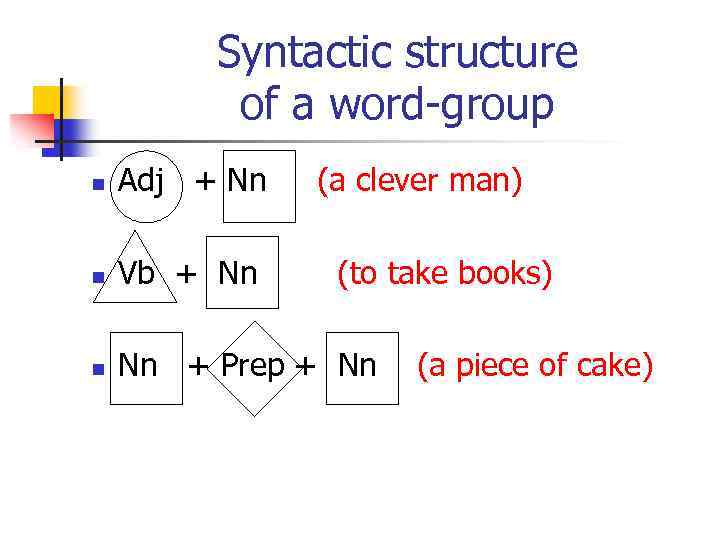
Syntactic structure of a word-group n Adj + Nn (a clever man) n Vb + Nn n Nn + Prep + Nn (to take books) (a piece of cake)
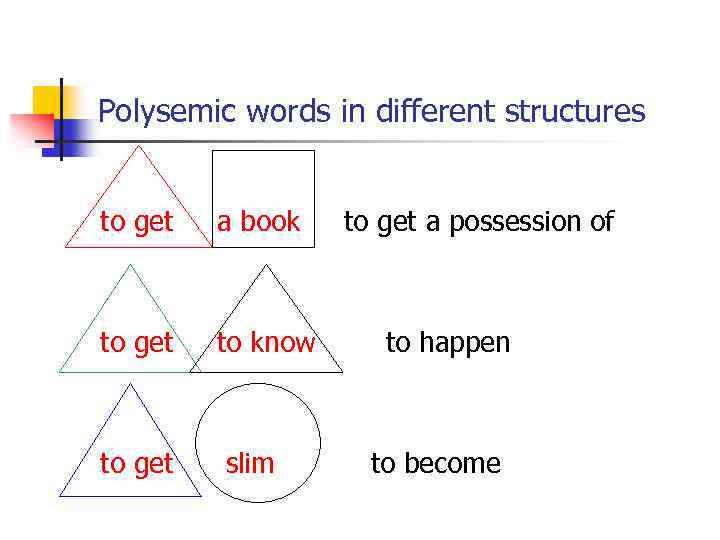
Polysemic words in different structures to get a book to get to know to get slim to get a possession of to happen to become
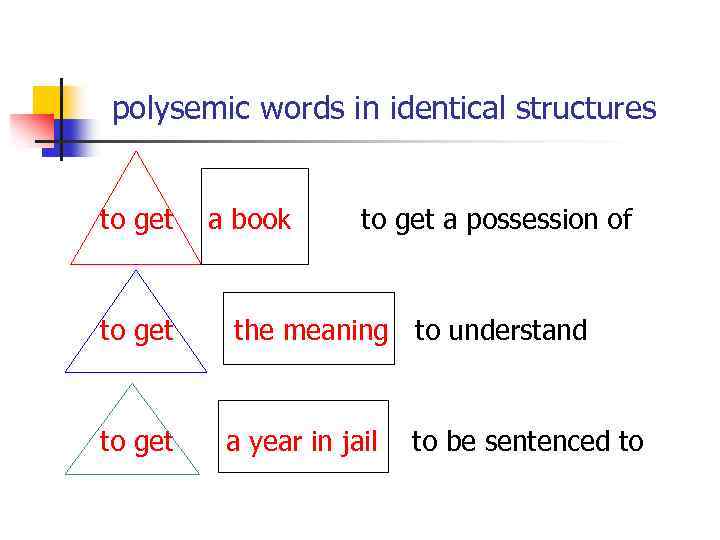
polysemic words in identical structures to get a book to get a possession of the meaning to understand a year in jail to be sentenced to
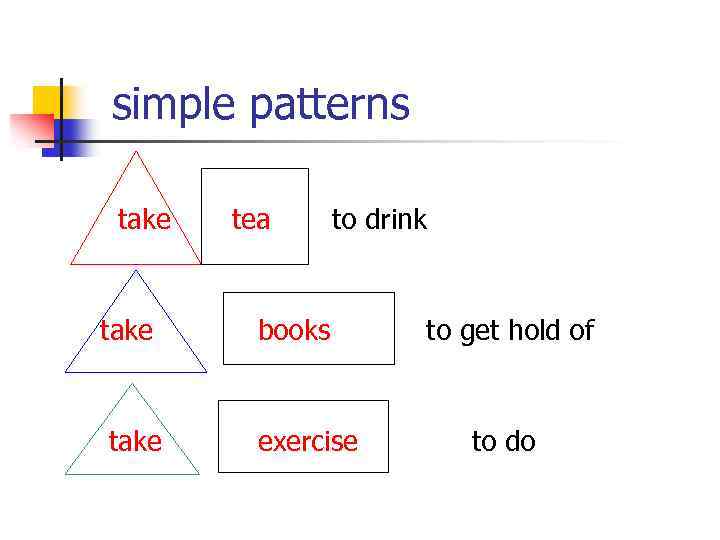
simple patterns take tea to drink books exercise to get hold of to do
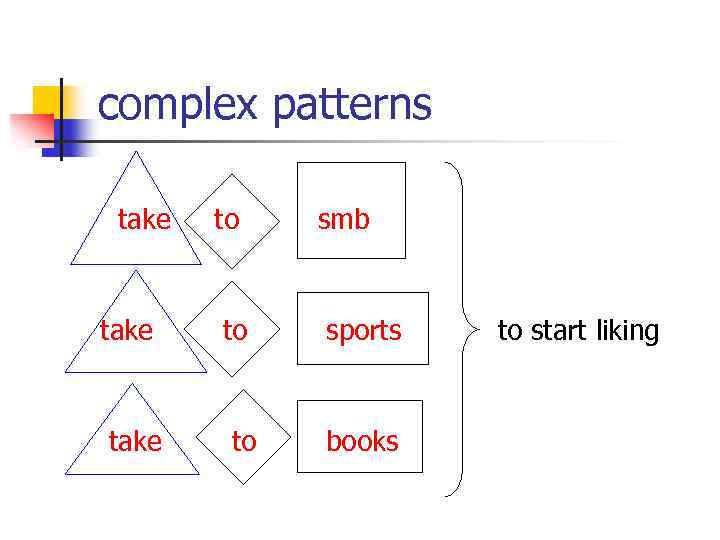
complex patterns take to to to smb sports books to start liking
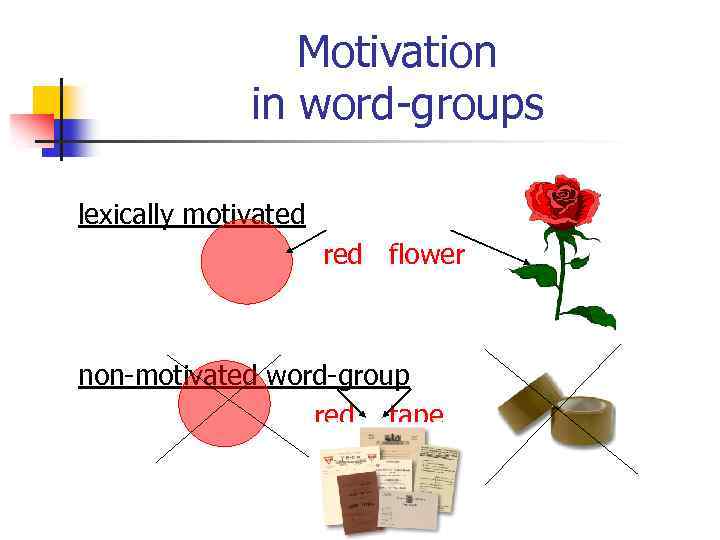
Motivation in word-groups lexically motivated red flower non-motivated word-group red tape
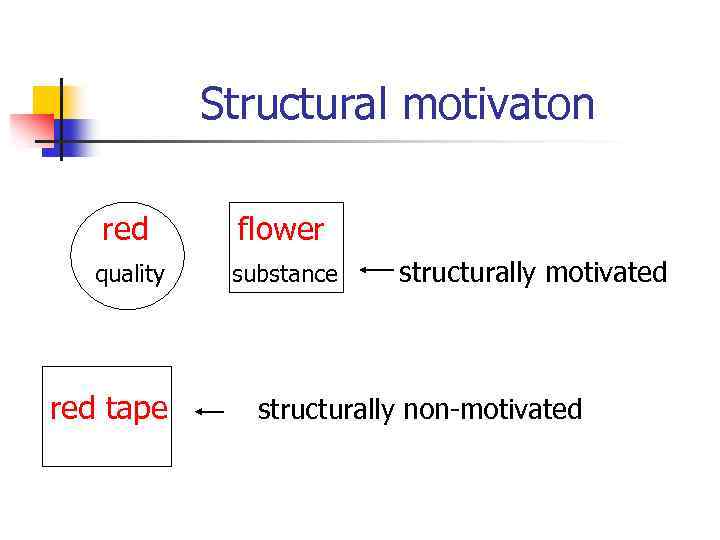
Structural motivaton red flower quality substance red tape structurally motivated structurally non-motivated
IDIOMS kick the bucket fly off the handle spill the beans red herring
Characteristics of idioms n n n Integrity of meaning Lexical stability Grammatical and syntactic restrictions Expressivity Non-equivalence in other languages
Integrity of meaning to kick the bucket= to die to sit on the fence= to wait
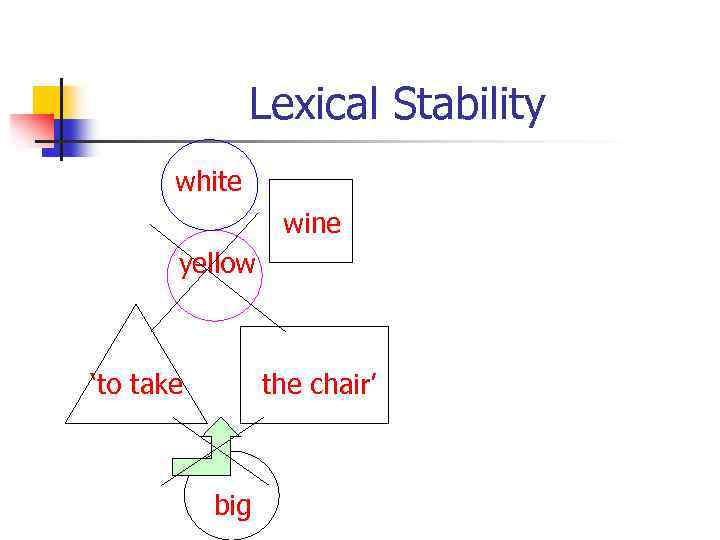
Lexical Stability white wine yellow ‘to take the chair’ big
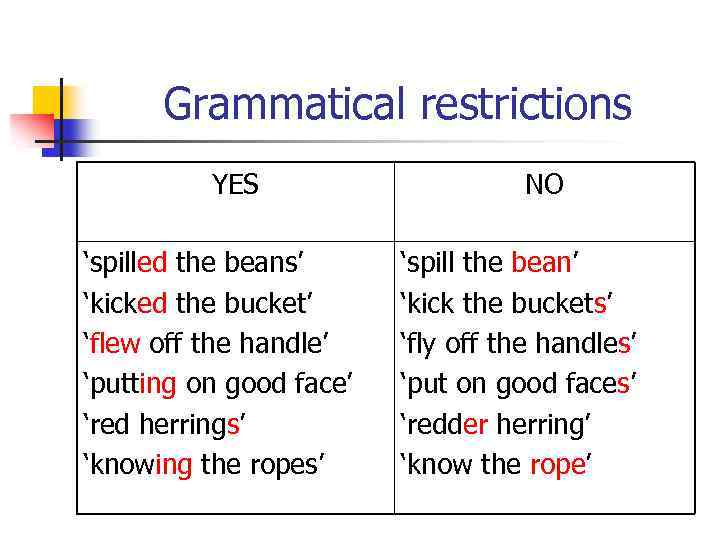
Grammatical restrictions YES ‘spilled the beans’ ‘kicked the bucket’ ‘flew off the handle’ ‘putting on good face’ ‘red herrings’ ‘knowing the ropes’ NO ‘spill the bean’ ‘kick the buckets’ ‘fly off the handles’ ‘put on good faces’ ‘redder herring’ ‘know the rope’
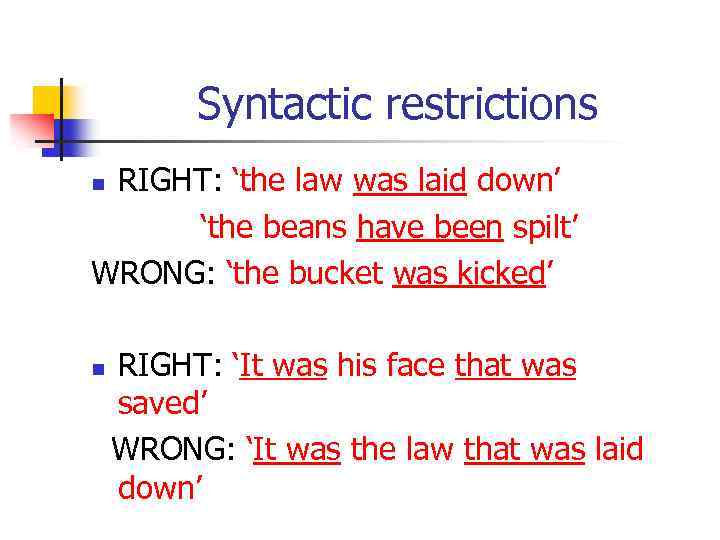
Syntactic restrictions RIGHT: ‘the law was laid down’ ‘the beans have been spilt’ WRONG: ‘the bucket was kicked’ n n RIGHT: ‘It was his face that was saved’ WRONG: ‘It was the law that was laid down’
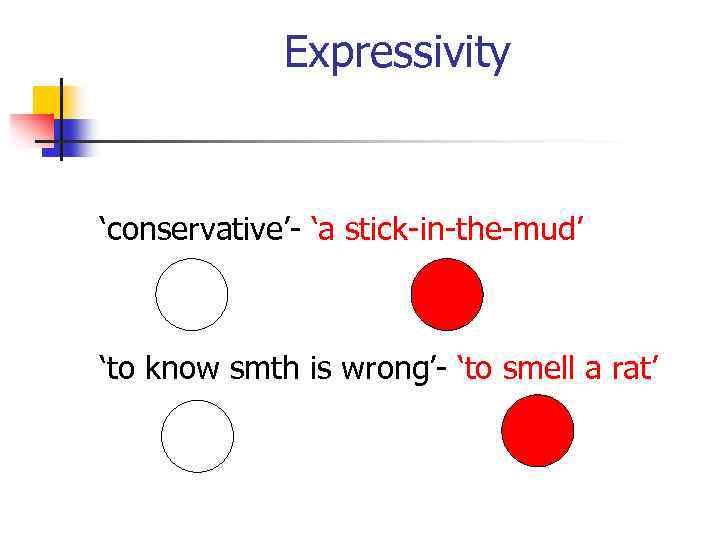
Expressivity ‘conservative’- ‘a stick-in-the-mud’ ‘to know smth is wrong’- ‘to smell a rat’
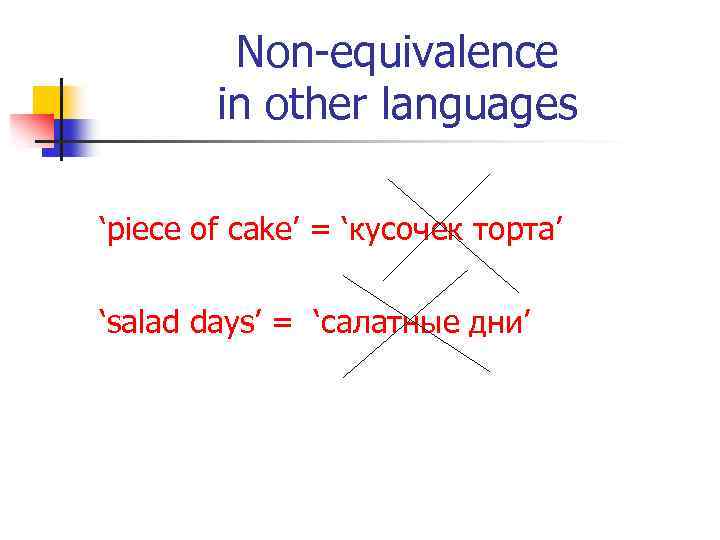
Non-equivalence in other languages ‘piece of cake’ = ‘кусочек торта’ ‘salad days’ = ‘салатные дни’
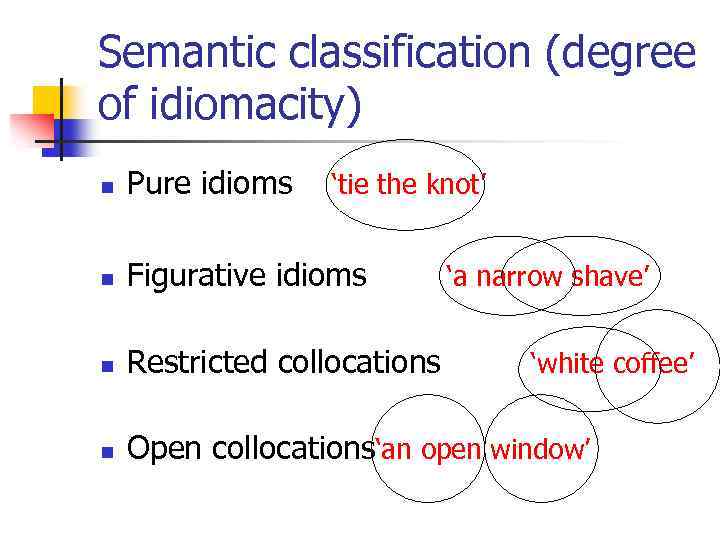
Semantic classification (degree of idiomacity) n Pure idioms n Figurative idioms n Restricted collocations n Open collocations‘an open window’ ‘tie the knot’ ‘a narrow shave’ ‘white coffee’
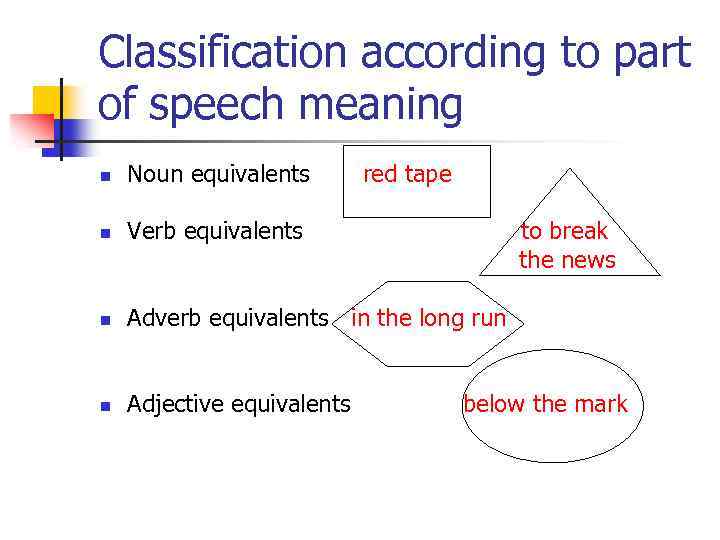
Classification according to part of speech meaning n Noun equivalents red tape n Verb equivalents n Adverb equivalents in the long run n Adjective equivalents to break the news below the mark
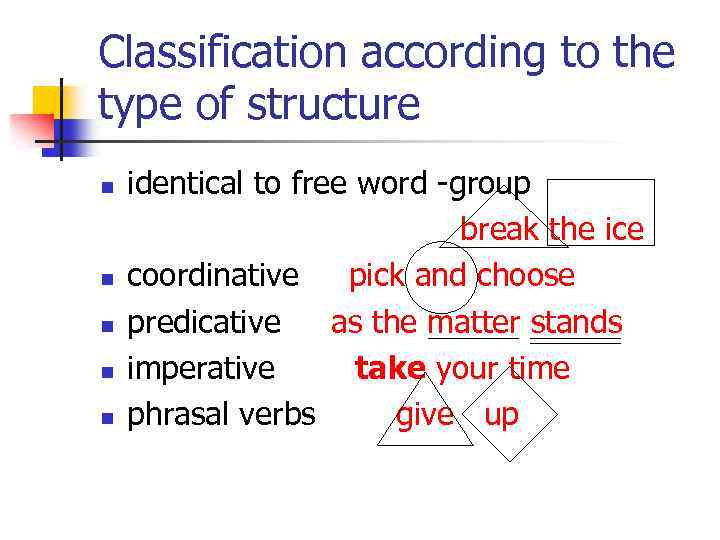
Classification according to the type of structure n n n identical to free word -group break the ice coordinative pick and choose predicative as the matter stands imperative take your time phrasal verbs give up
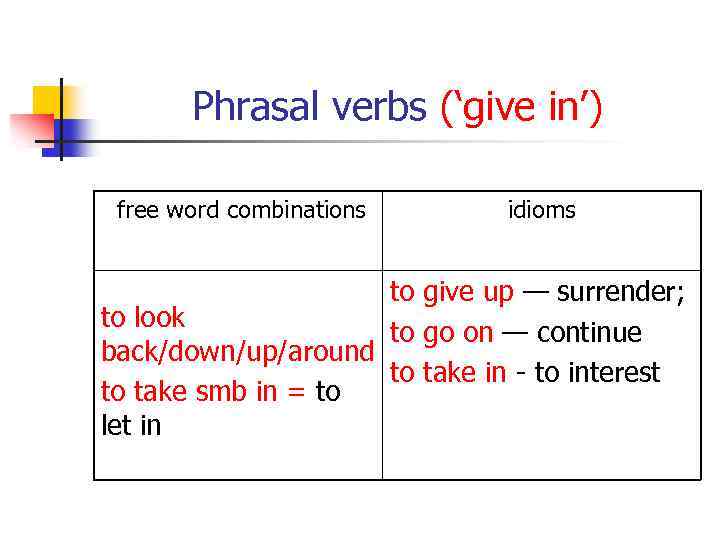
Phrasal verbs (‘give in’) free word combinations idioms to give up — surrender; to look to go on — continue back/down/up/around to take in - to interest to take smb in = to let in
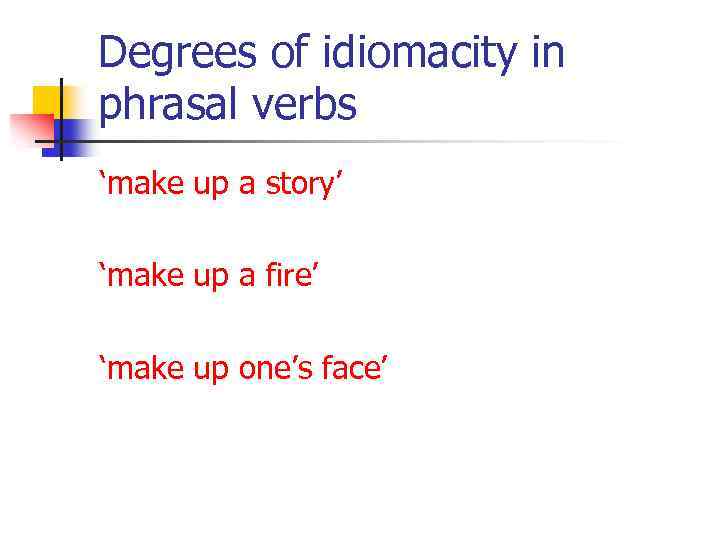
Degrees of idiomacity in phrasal verbs ‘make up a story’ ‘make up a fire’ ‘make up one’s face’
Скачать презентацию Lexical valency of a word lexical context distribution
lecture_8_COLLOCATIONS.ppt