


 Скачать презентацию Lesson One What can we learn from worms
511e4e6365720ac0864f406e96a560e9.ppt
- Количество слайдов: 43
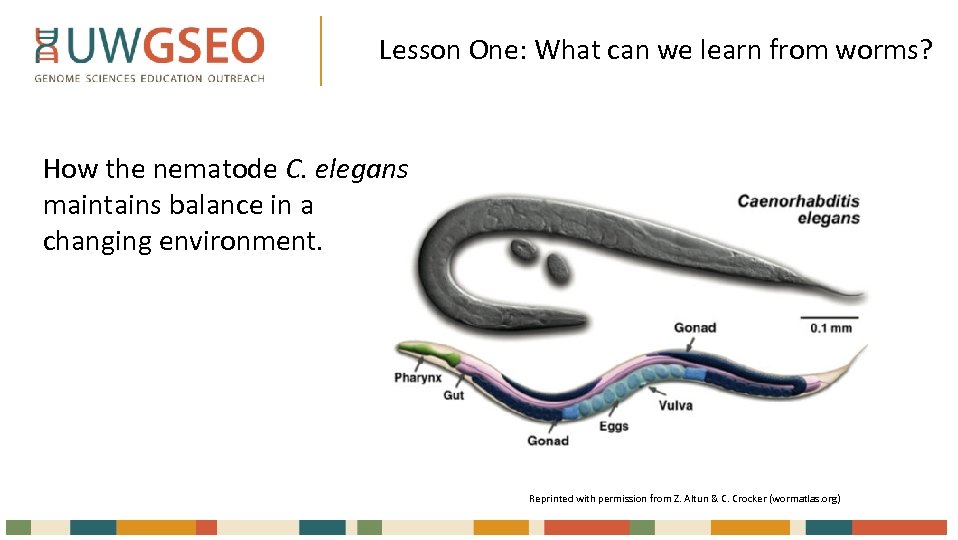 Lesson One: What can we learn from worms? How the nematode C. elegans maintains balance in a changing environment. Reprinted with permission from Z. Altun & C. Crocker (wormatlas. org)
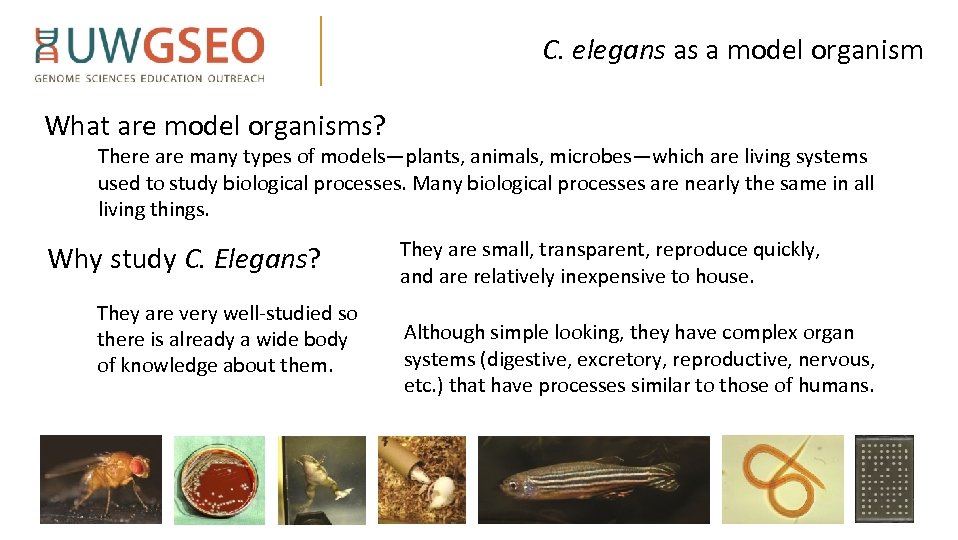 C. elegans as a model organism What are model organisms? There are many types of models—plants, animals, microbes—which are living systems used to study biological processes. Many biological processes are nearly the same in all living things. Why study C. Elegans? They are very well-studied so there is already a wide body of knowledge about them. They are small, transparent, reproduce quickly, and are relatively inexpensive to house. Although simple looking, they have complex organ systems (digestive, excretory, reproductive, nervous, etc. ) that have processes similar to those of humans.
 Lesson One: What can we learn from worms? Today we will learn about… § § § Worm Basics Worm Plate Orientation Worm Rules Tips on observing wild type and mutant worms Drawing to scale Then we will… § Compare Notes § Discuss Wows! and Wonders?
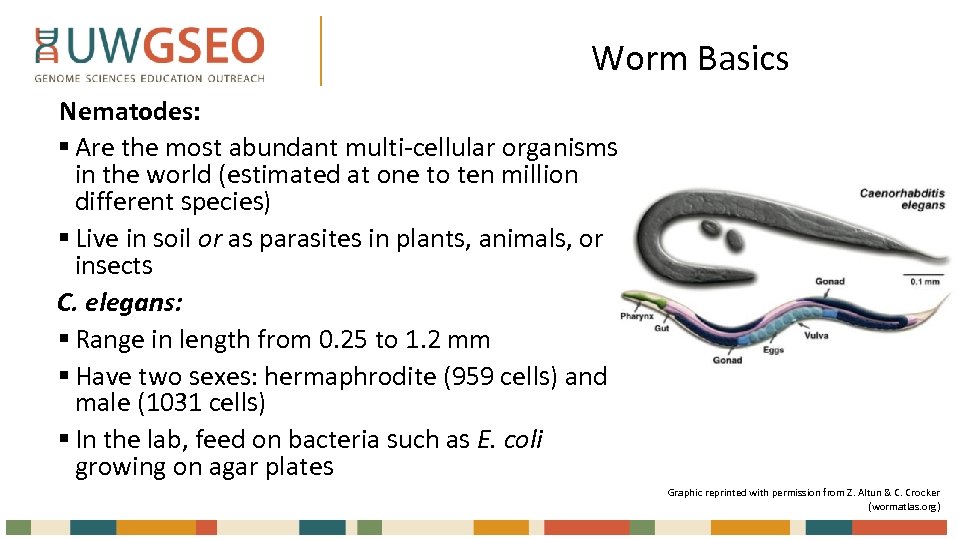 Worm Basics Nematodes: § Are the most abundant multi-cellular organisms in the world (estimated at one to ten million different species) § Live in soil or as parasites in plants, animals, or insects C. elegans: § Range in length from 0. 25 to 1. 2 mm § Have two sexes: hermaphrodite (959 cells) and male (1031 cells) § In the lab, feed on bacteria such as E. coli growing on agar plates Graphic reprinted with permission from Z. Altun & C. Crocker (wormatlas. org)
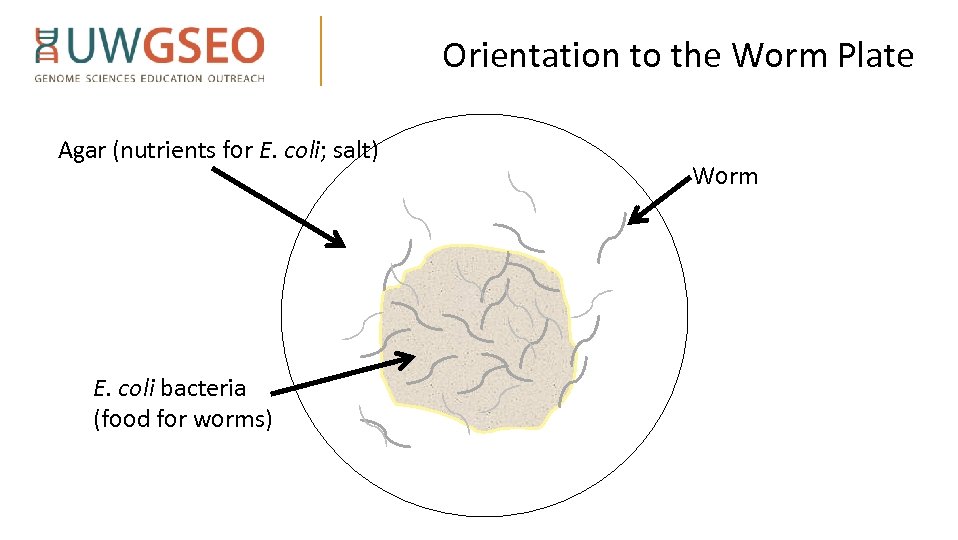 Orientation to the Worm Plate Agar (nutrients for E. coli; salt) E. coli bacteria (food for worms) Worm
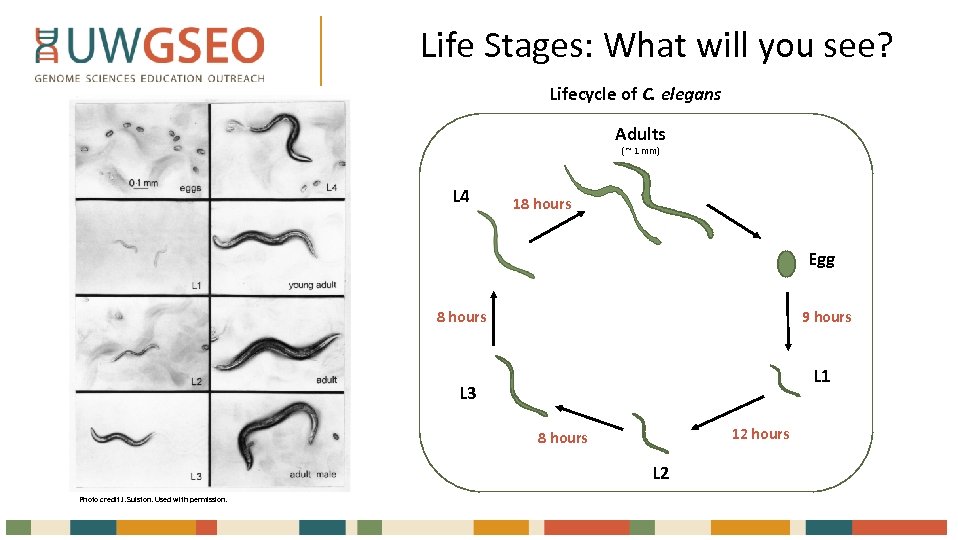 Life Stages: What will you see? Lifecycle of C. elegans Adults ( ~ 1 mm) L 4 18 hours Egg 8 hours 9 hours L 1 L 3 12 hours 8 hours L 2 Photo credit J. Sulston. Used with permission.
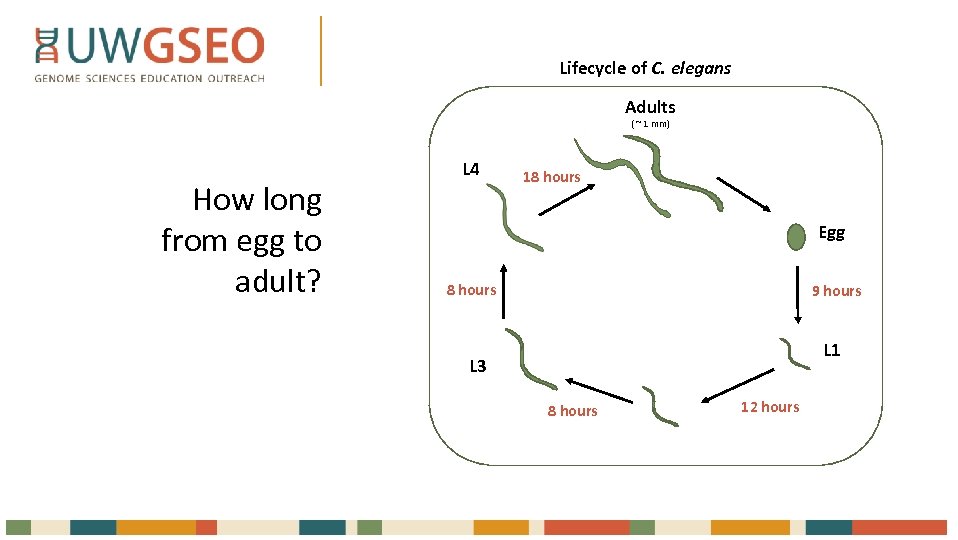 Lifecycle of C. elegans Adults ( ~ 1 mm) How long from egg to adult? L 4 18 hours Egg 8 hours 9 hours L 1 L 3 8 hours 12 hours
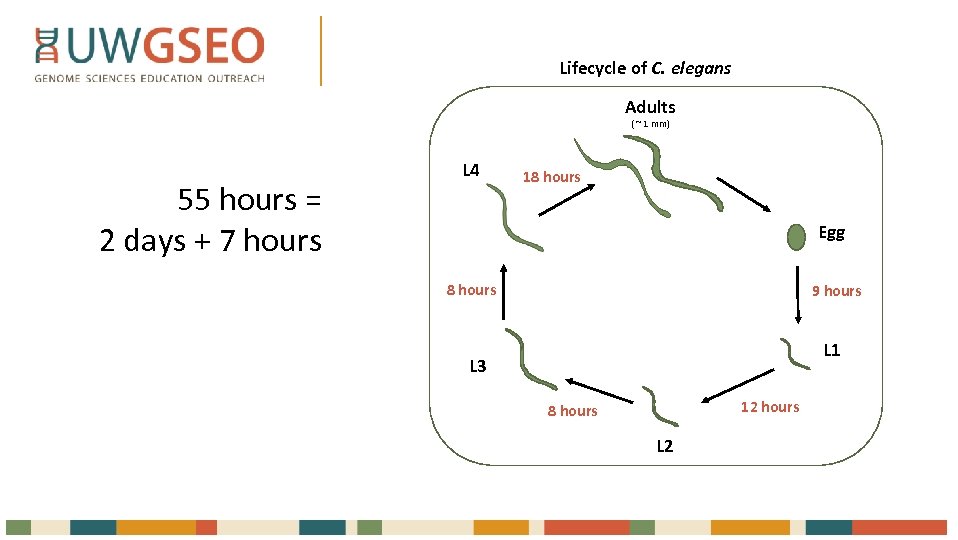 Lifecycle of C. elegans Adults ( ~ 1 mm) 55 hours = 2 days + 7 hours L 4 18 hours Egg 8 hours 9 hours L 1 L 3 12 hours 8 hours L 2
 Worm Rules 1. Wear gloves when handling the worm plates, and wash your hands after removing gloves. 2. Store the plates with the agar side facing down so that condensation doesn’t drop onto the plate. 3. Flip the plate over to look at it under the microscope. You may need to remove the clear cover to see them well, but only leave the cover off for a few minutes. 4. Do not leave the worms on the microscope in the light for more than a few minutes, as they can get too hot.
 Tips for observing worms Some things to look for: 1. What life stages are present (adult, larvae, or egg)? 2. Where are worms on the plate (on agar, on food, near edge of plate)? 3. What are the worms doing (moving, not moving, feeding)? Watch these videos showing… eggs, larvae and adults: http: //www. youtube. com/watch? v=To. LYg. B_bxq. M&feature=player_detailpage worms responding to touch: https: //www. youtube. com/watch? v=olrk. Wp. Cq. VCE
 Drawing what you see and drawing to scale • Place a worm plate on the stage of the scope, agar side down. Take off the lid. • At a low magnification, find where the worms are located on the plate. • At high magnification, find a place on the plate that has worms of different sizes. • Place the 4 mm x 4 mm grid under the worm plate, beneath the worms you are looking at so you can see both the worms and the grid. • Draw what you see in the grid on the microscope on the 8 cm x 8 cm grid in Student Lab Sheet 1. Each mm in size on the microscope is 2 cm in the drawing.
 Discussion Wows! and Wonders? Lesson One Did you see all the life stages on your plate? How are the wild and mutant worms similar or different? What evidence indicates that the worms react to their environment?
 Lesson Two: Worms in a changing environment Today we will learn about… § § § More Worm Basics Environmental factors affecting worms Chunking/transfer of worms Preview of Data Tables Make 15 -minute observations of worms Then we will… § Compare Notes § Discuss Wows! and Wonders?
 More Worm Basics Nematodes: § Reach sexual maturity at 3 days § Live up to 3 weeks § Have two sexes – hermaphrodites (XX) and males (XO) § XX can self-fertilize or mate with males; but not each other § Produce over 300 offspring in a lifetime § Have 3 distinct life stages: • Egg → Larvae (L 1, L 2, L 3, L 4) → Adults
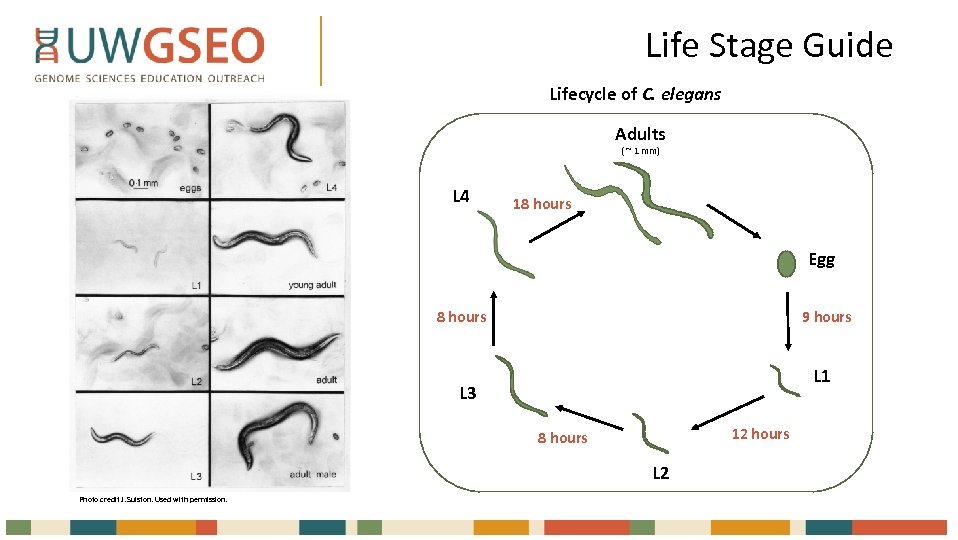 Life Stage Guide Lifecycle of C. elegans Adults ( ~ 1 mm) L 4 18 hours Egg 8 hours 9 hours L 1 L 3 12 hours 8 hours L 2 Photo credit J. Sulston. Used with permission.
 Lesson Two: Worms in a changing environment What environmental changes do you think nematodes experience throughout the day and throughout the year? Is it likely that worms in the wild would experience areas of changing salt or sugar concentration? What do you think would happen to the worms?
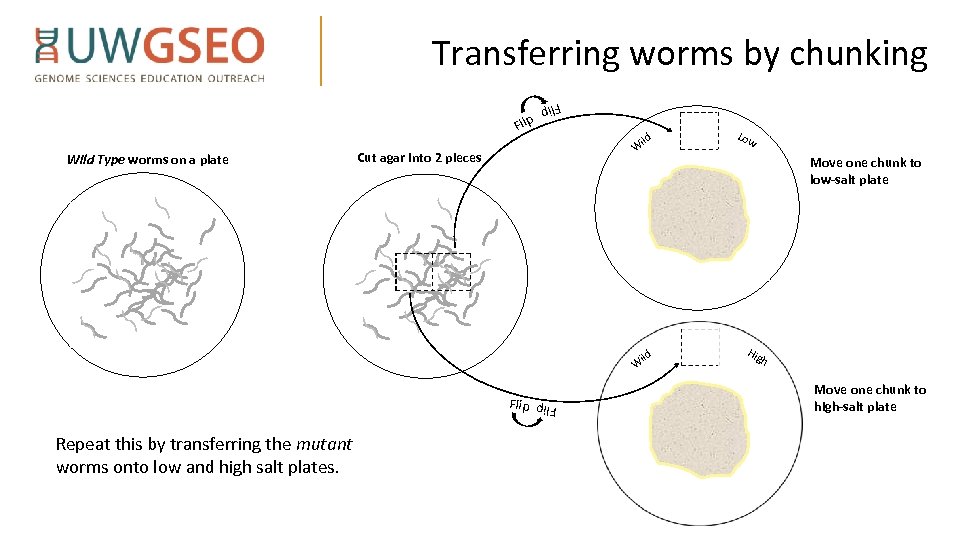 Transferring worms by chunking Wild Type worms on a plate Flip W Cut agar into 2 pieces W Repeat this by transferring the mutant worms onto low and high salt plates. Flip ild Low Move one chunk to low-salt plate ild Hig h Move one chunk to high-salt plate
 15 -Minute Observations Things to look for after 15 minutes… Life stages on the plate (eggs, larvae, and adults) Evidence that worms have moved: Worms are no longer at the drop site; worms are clearly moving; there are worm tracks in the food Evidence that worms are eating: They are in the food; the amount of food is less since the previous day; food is all gone
 24 and 48 Hour Observations Things to look for after 24 and 48 hours… Evidence that worms are growing: There are more large larvae or adults than on previous day; eggs at the drop site are no longer there because they have hatched Evidence that worms are reproducing: There are eggs in places other than the drop spot
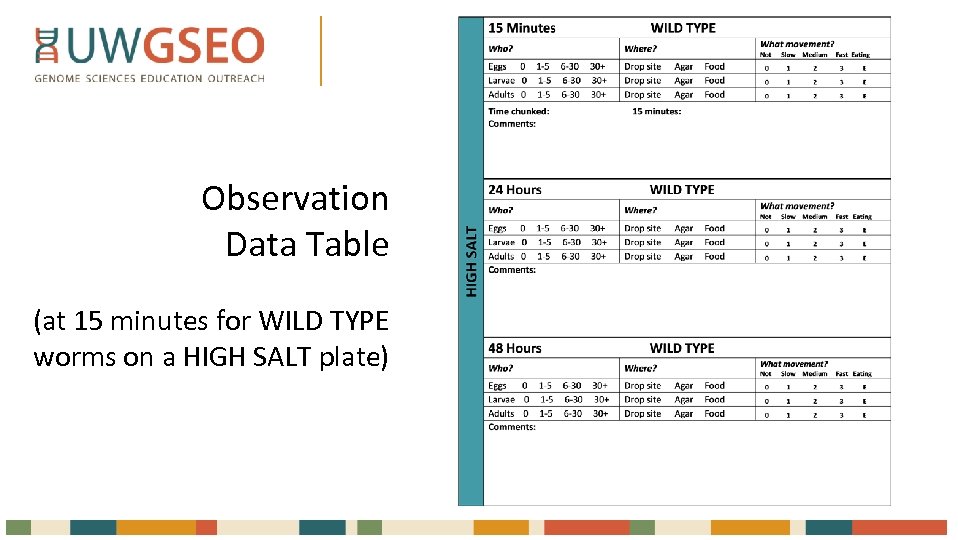 Observation Data Table (at 15 minutes for WILD TYPE worms on a HIGH SALT plate)
 Discussion Wows! and Wonders? Lesson Two How do wild type and mutant nematodes respond when transferred to low and high salt plates? How does the change in environment affect their behavior and function?
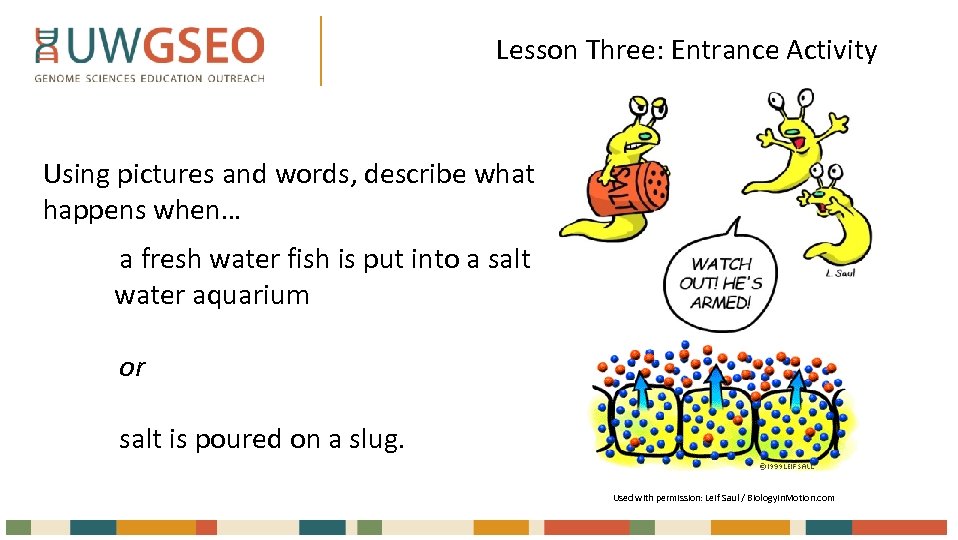 Lesson Three: Entrance Activity Using pictures and words, describe what happens when… a fresh water fish is put into a salt water aquarium or salt is poured on a slug. Used with permission: Leif Saul / Biology. In. Motion. com
 Lesson Three: Worms and Salt Today we will… § § Learn about the role of glycerol in water balance Set up the dialysis experiment Make 24 -hour observation of worms Analyze the results of the dialysis experiment Then we will… § Compare Notes § Discuss Wows! and Wonders?
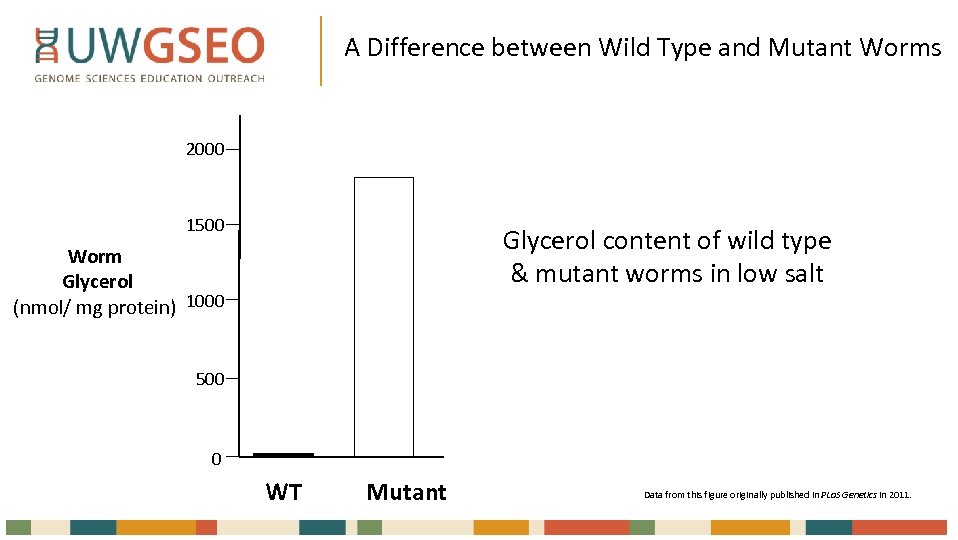 A Difference between Wild Type and Mutant Worms 2000 1500 Glycerol content of wild type & mutant worms in low salt Worm Glycerol (nmol/ mg protein) 1000 500 0 WT Mutant Data from this figure originally published in PLo. S Genetics in 2011.
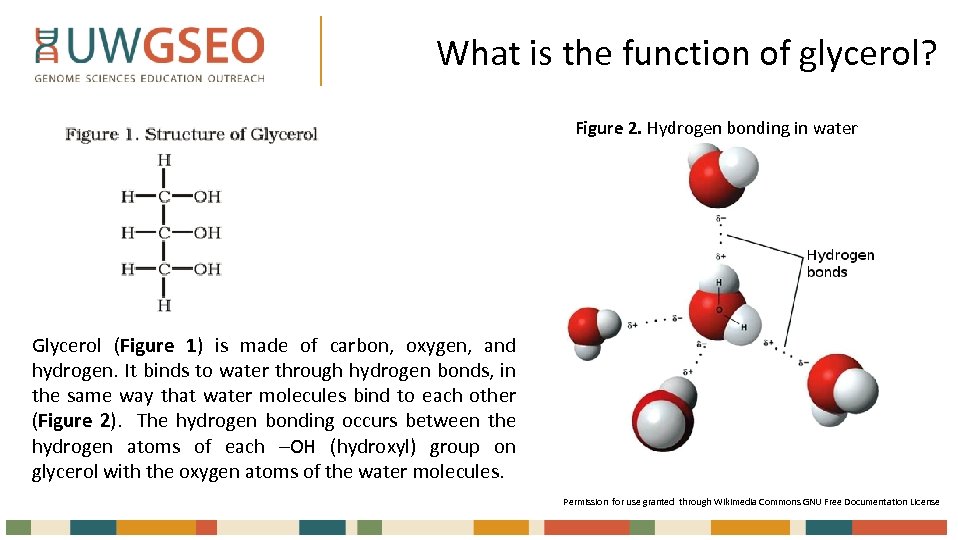 What is the function of glycerol? Figure 2. Hydrogen bonding in water Glycerol (Figure 1) is made of carbon, oxygen, and hydrogen. It binds to water through hydrogen bonds, in the same way that water molecules bind to each other (Figure 2). The hydrogen bonding occurs between the hydrogen atoms of each –OH (hydroxyl) group on glycerol with the oxygen atoms of the water molecules. Permission for use granted through Wikimedia Commons GNU Free Documentation License
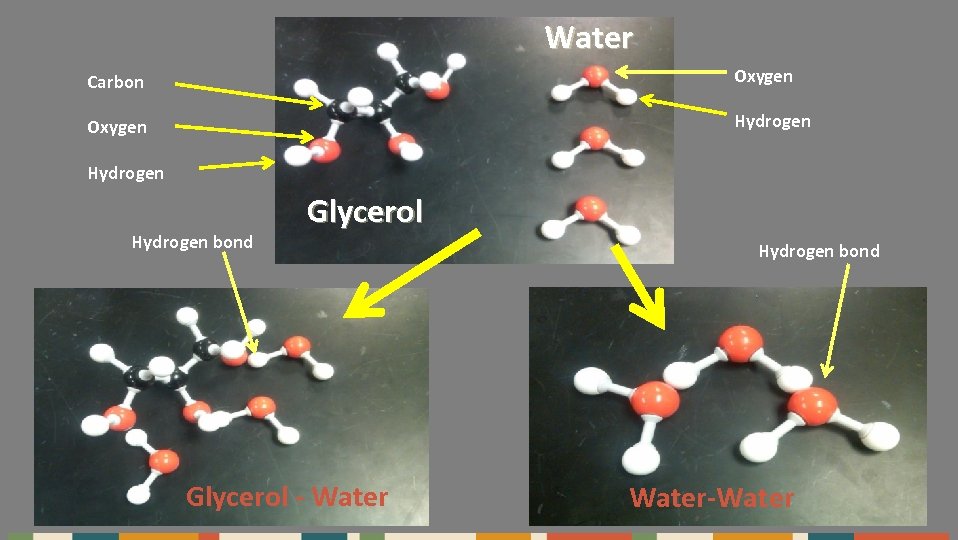 Water Carbon Oxygen Hydrogen bond Glycerol - Water Hydrogen bond Water-Water
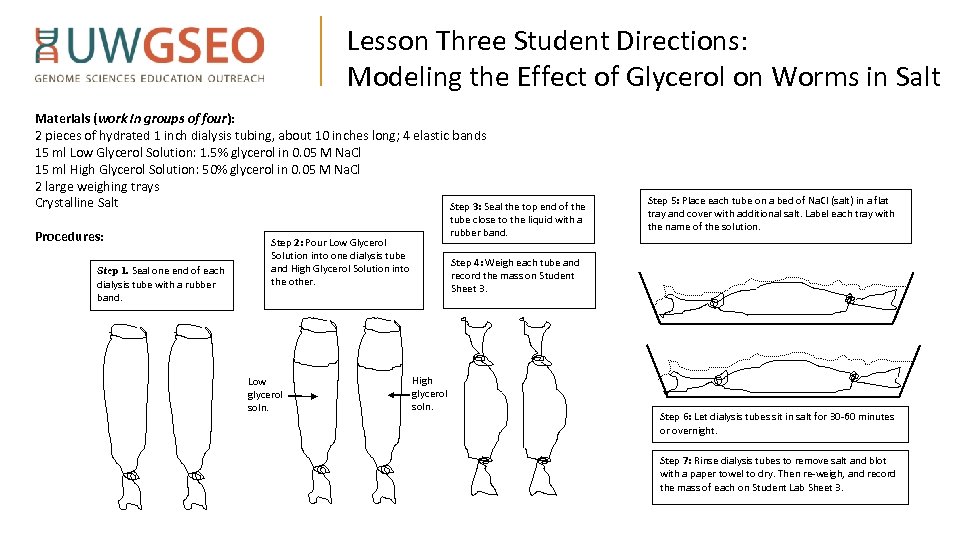 Lesson Three Student Directions: Modeling the Effect of Glycerol on Worms in Salt Materials (work in groups of four): 2 pieces of hydrated 1 inch dialysis tubing, about 10 inches long; 4 elastic bands 15 ml Low Glycerol Solution: 1. 5% glycerol in 0. 05 M Na. Cl 15 ml High Glycerol Solution: 50% glycerol in 0. 05 M Na. Cl 2 large weighing trays Crystalline Salt Step 3: Seal the top end of the Procedures: Step 1. Seal one end of each dialysis tube with a rubber band. tube close to the liquid with a rubber band. Step 2: Pour Low Glycerol Solution into one dialysis tube and High Glycerol Solution into the other. Step 5: Place each tube on a bed of Na. Cl (salt) in a flat tray and cover with additional salt. Label each tray with the name of the solution. Step 4: Weigh each tube and record the mass on Student Sheet 3. Low glycerol soln. High glycerol soln. Step 6: Let dialysis tubes sit in salt for 30 -60 minutes or overnight. Step 7: Rinse dialysis tubes to remove salt and blot with a paper towel to dry. Then re-weigh, and record the mass of each on Student Lab Sheet 3.
 Discussion Wows! and Wonders? Lesson Three How does glycerol prevent water from moving through the dialysis tubing into the salt? How does this model help explain what is happening in different strains of C. elegans in different environments?
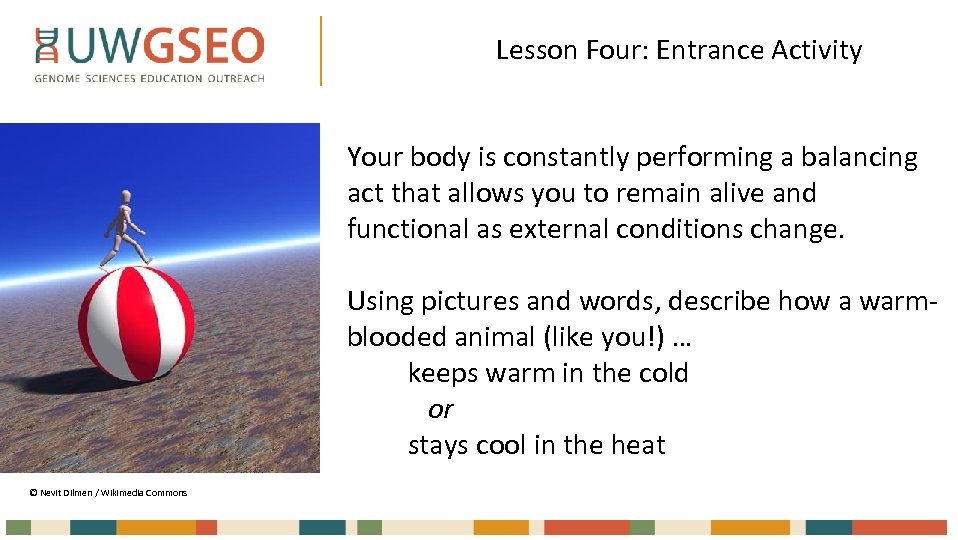 Lesson Four: Entrance Activity Your body is constantly performing a balancing act that allows you to remain alive and functional as external conditions change. Using pictures and words, describe how a warmblooded animal (like you!) … keeps warm in the cold or stays cool in the heat © Nevit Dilmen / Wikimedia Commons
 Lesson Four: Using evidence to develop an explanation Today we will… § Make 48 -hour observations of worms § Interpret data from scientific literature § Develop explanations for worm behavior in differing salt conditions Then we will… § Compare Notes § Discuss Wows! and Wonders?
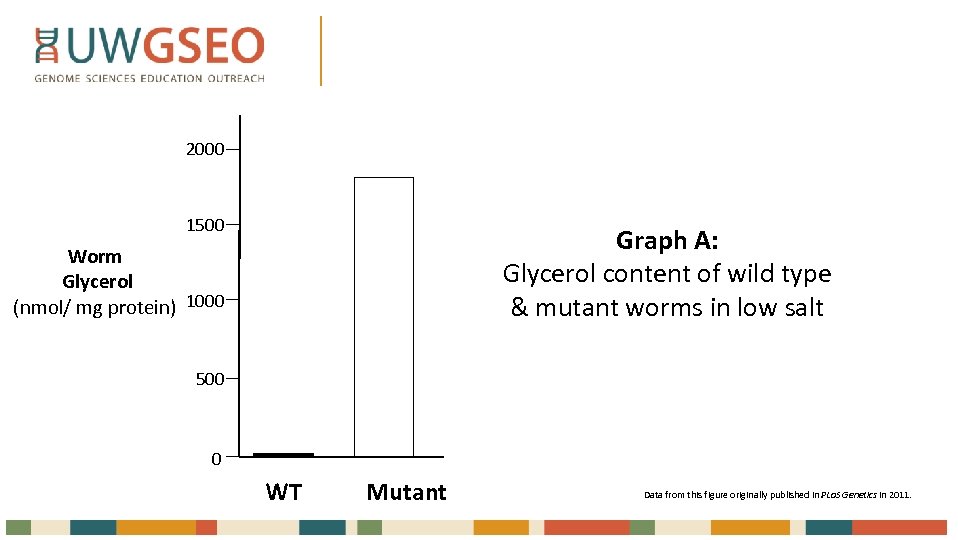 2000 1500 Graph A: Glycerol content of wild type & mutant worms in low salt Worm Glycerol (nmol/ mg protein) 1000 500 0 WT Mutant Data from this figure originally published in PLo. S Genetics in 2011.
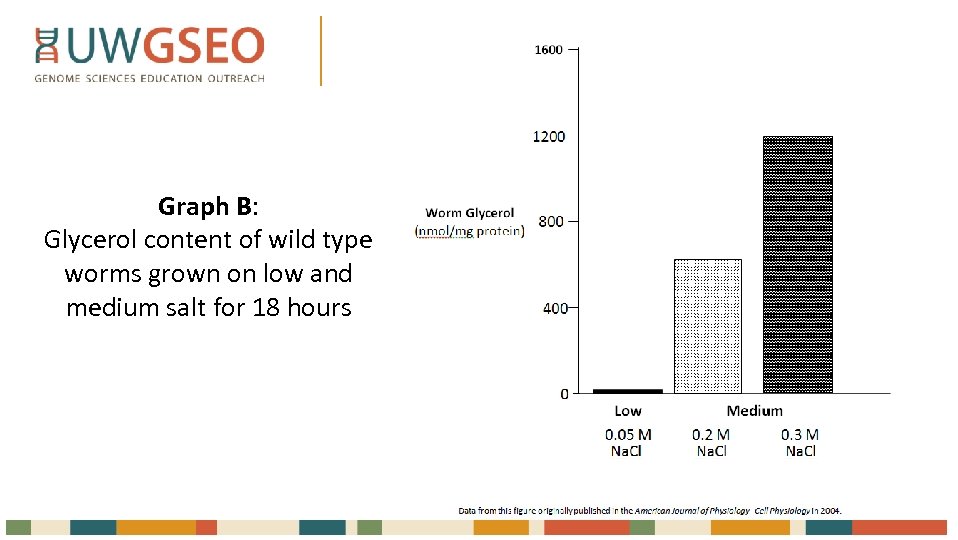 Graph B: Glycerol content of wild type worms grown on low and medium salt for 18 hours
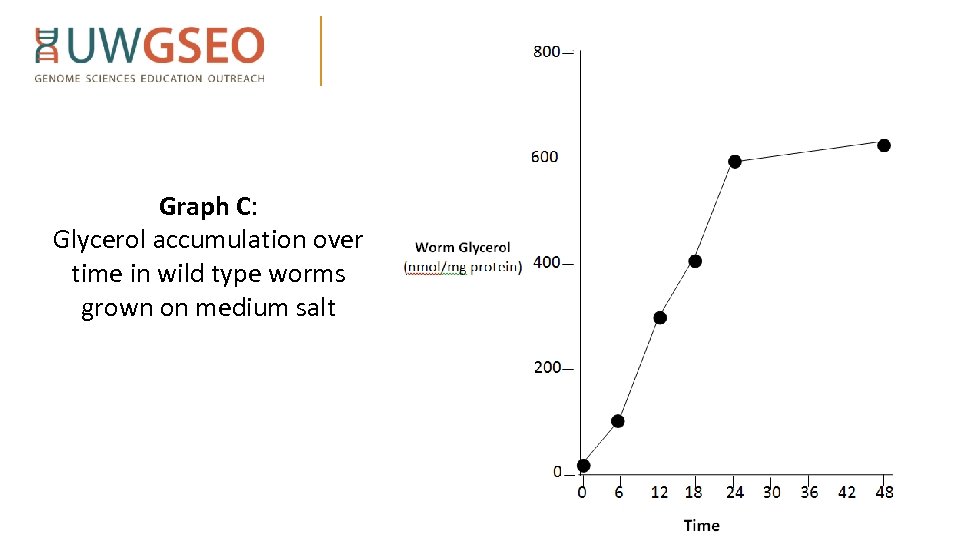 Graph C: Glycerol accumulation over time in wild type worms grown on medium salt
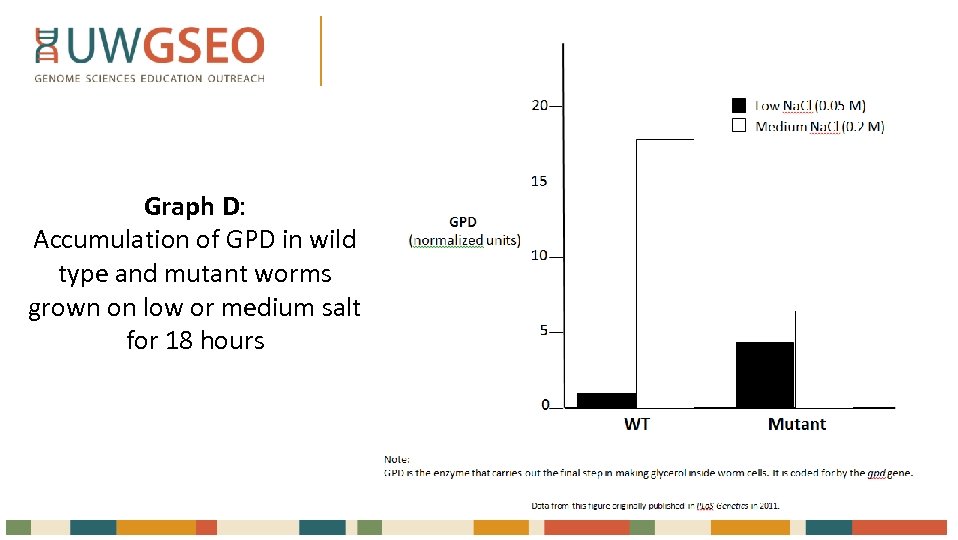 Graph D: Accumulation of GPD in wild type and mutant worms grown on low or medium salt for 18 hours
 Discussion Wows! and Wonders? Lesson Four How does C. elegans maintain homeostasis in a high salt environment? Is it an advantage to always produce high levels of glycerol? Or is it better to be able to control glycerol production?
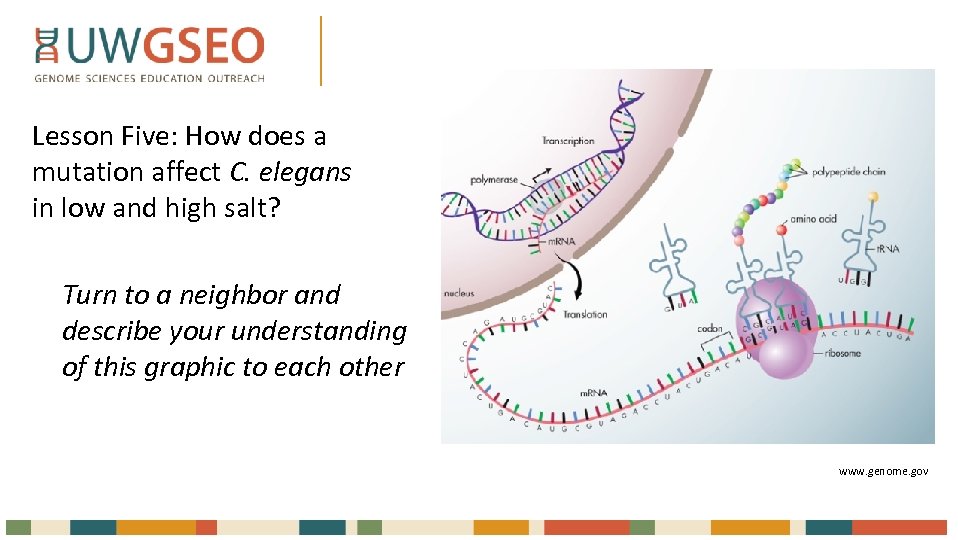 Lesson Five: How does a mutation affect C. elegans in low and high salt? Turn to a neighbor and describe your understanding of this graphic to each other www. genome. gov
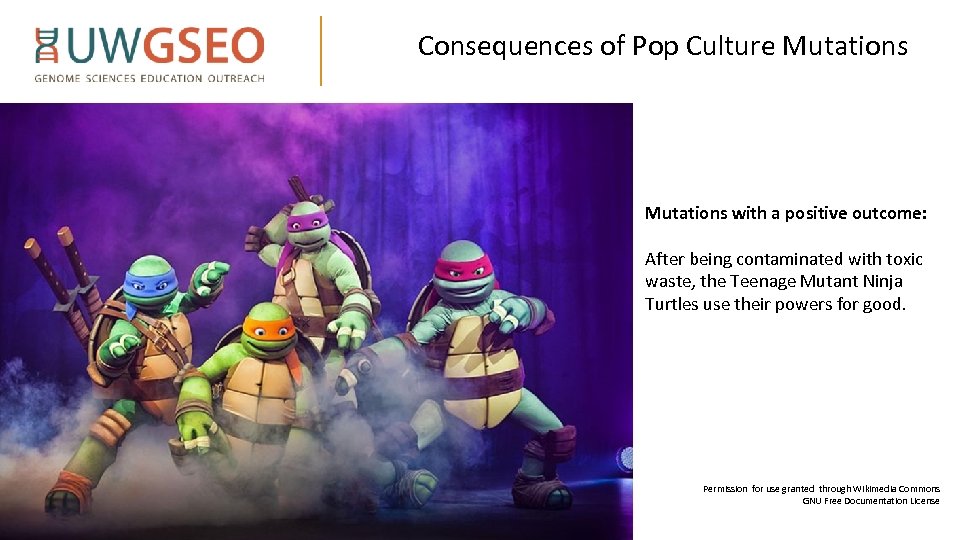 Consequences of Pop Culture Mutations with mixed outcomes: Hated and persecuted by humans, X-Men still use their super-human traits (mostly) for good. Mutations with a positive outcome: After being contaminated with toxic waste, the Teenage Mutant Ninja Turtles use their powers for good. Mutations with a bad outcome: The Fly, 1958, shows the horrible consequences of a fly’s DNA being integrated with that of a human Permission for use granted through Wikimedia Commons GNU Free Documentation License
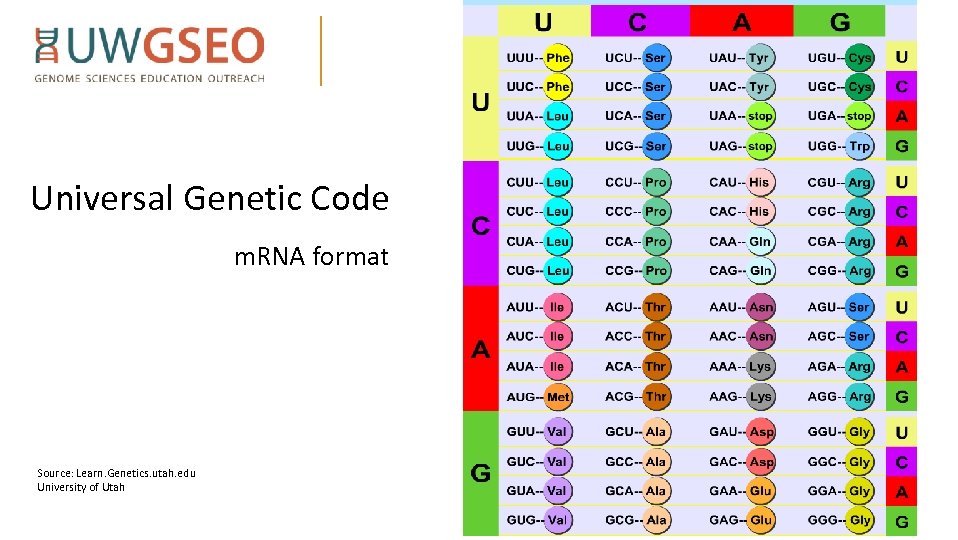 Universal Genetic Code m. RNA format Source: Learn. Genetics. utah. edu University of Utah
 Discussion Wows! and Wonders? Lesson Five Describe one way in which a single nucleotide change in the DNA can have a dramatic effect on the protein coded for Describe one way in which a single nucleotide change can have NO effect on the resulting protein
 Assessment Today we will… § Summarize what we learned during the worm experiment § Build models to demonstrate how the wild type and mutant worms responded to changes in their environments § Support claims with evidence and reasoning
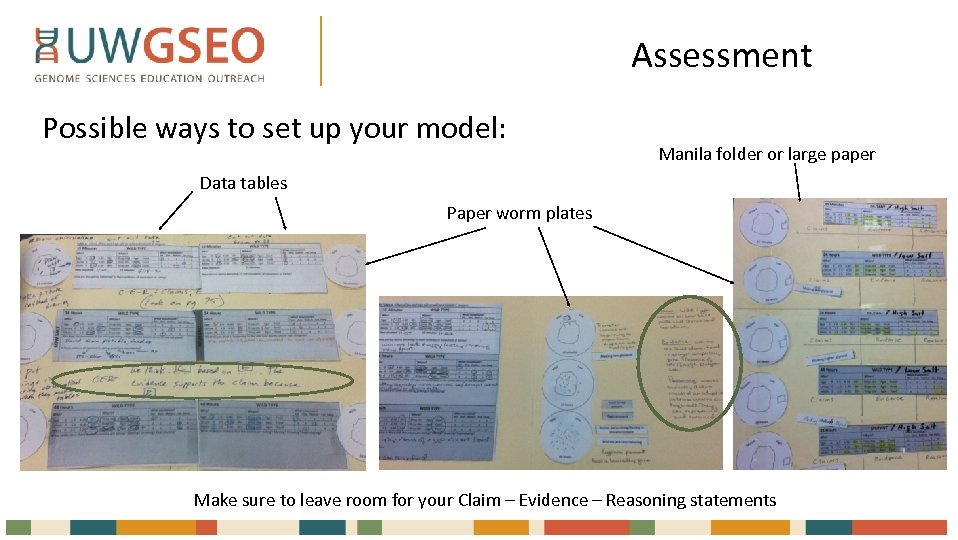 Assessment Possible ways to set up your model: Manila folder or large paper Data tables Paper worm plates Make sure to leave room for your Claim – Evidence – Reasoning statements
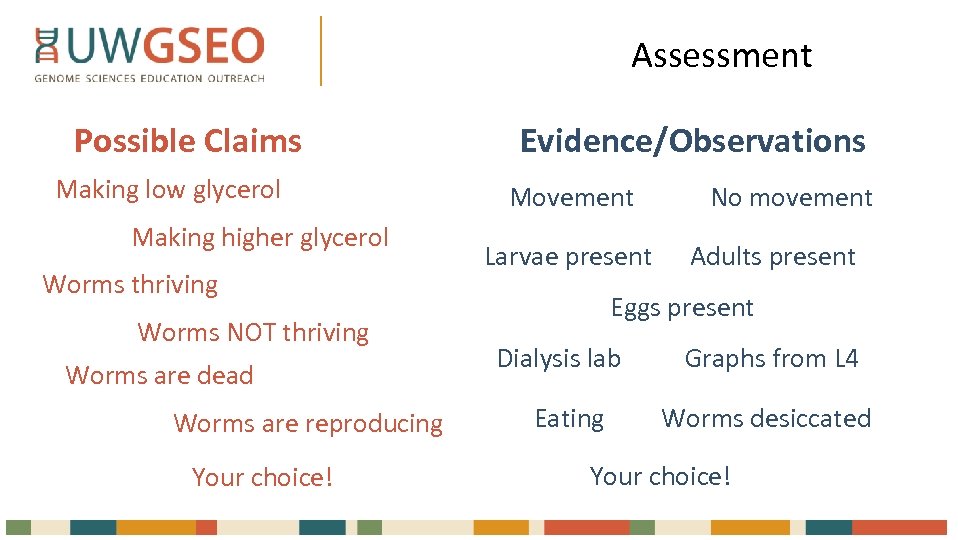 Assessment Possible Claims Evidence/Observations Making low glycerol Making higher glycerol Worms thriving Worms NOT thriving Worms are dead Worms are reproducing Your choice! Movement No movement Larvae present Adults present Eggs present Dialysis lab Graphs from L 4 Eating Worms desiccated Your choice!
![Assessment Claim – Evidence – Reasoning Statements We think [insert your claim] based on](https://present5.com/presentation/511e4e6365720ac0864f406e96a560e9/image-43.jpg "Assessment Claim – Evidence – Reasoning Statements We think [insert your claim] based on") Assessment Claim – Evidence – Reasoning Statements We think [insert your claim] based on [state your evidence]. The evidence supports the claim because [state your reasoning]. Example: We think the mutant worms are reproducing on the high salt plates after 48 hours. We saw eggs, small and large larvae and adults that weren’t there at the 15 -minute observation. The literature shows that worms go from eggs to adults in under 3 days. evidence supports the claim because the only The place the new life stages could come from is through reproduction of the original worms.
Assessment Claim – Evidence – Reasoning Statements We think [insert your claim] based on [state your evidence]. The evidence supports the claim because [state your reasoning]. Example: We think the mutant worms are reproducing on the high salt plates after 48 hours. We saw eggs, small and large larvae and adults that weren’t there at the 15 -minute observation. The literature shows that worms go from eggs to adults in under 3 days. evidence supports the claim because the only The place the new life stages could come from is through reproduction of the original worms.