


 Скачать презентацию Lesson 5 Dialogue 1 Grammar University of Michigan
3ac1f0836d01b6effef7f887559bdbf8.ppt
- Количество слайдов: 28
 Lesson 5 Dialogue 1 Grammar University of Michigan Flint Zhong, Yan
 一下 (yí xià) & (一)点儿 ({yì} diǎnr) Moderating the Tone of Voice
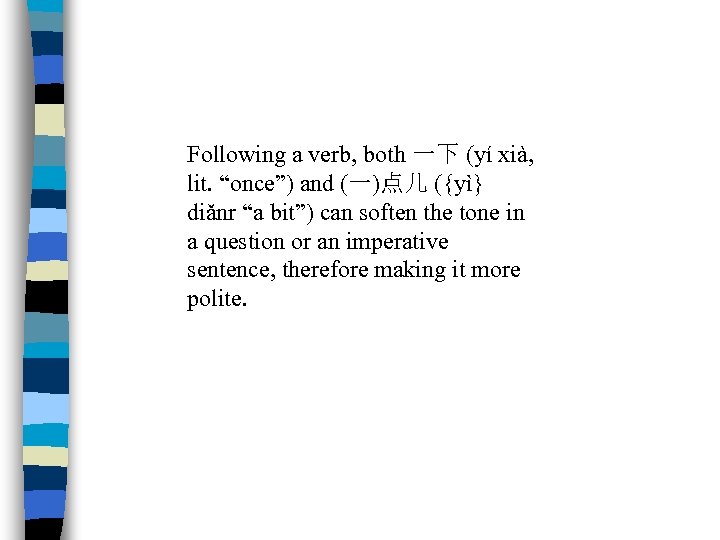 Following a verb, both 一下 (yí xià, lit. “once”) and (一)点儿 ({yì} diǎnr “a bit”) can soften the tone in a question or an imperative sentence, therefore making it more polite.
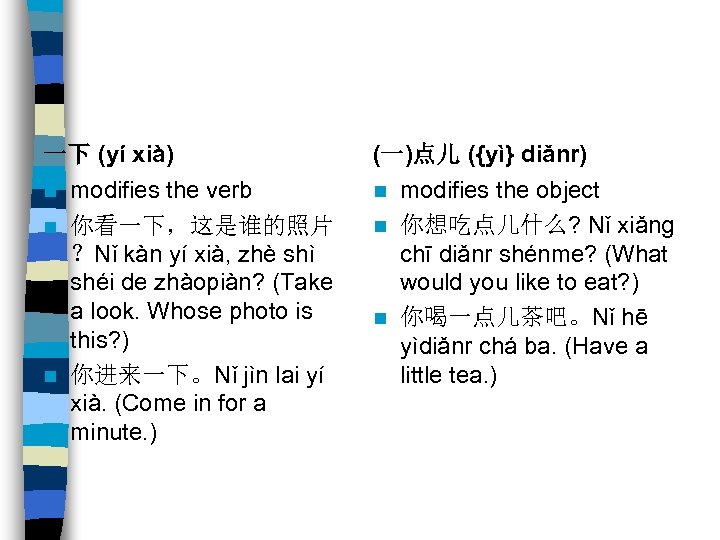 一下 (yí xià) (一)点儿 ({yì} diǎnr) modifies the verb n 你看一下,这是谁的照片 ?Nǐ kàn yí xià, zhè shì shéi de zhàopiàn? (Take a look. Whose photo is this? ) n 你进来一下。Nǐ jìn lai yí xià. (Come in for a minute. ) n n modifies the object n 你想吃点儿什么? Nǐ xiǎng chī diǎnr shénme? (What would you like to eat? ) n 你喝一点儿茶吧。Nǐ hē yìdiǎnr chá ba. (Have a little tea. )
 Adjectives as Predicates
 In Chinese, when an adjective functions as a predicate, it is not preceded by the verb 是 (shì, to be). It is usually modified by 很 (hěn, very)
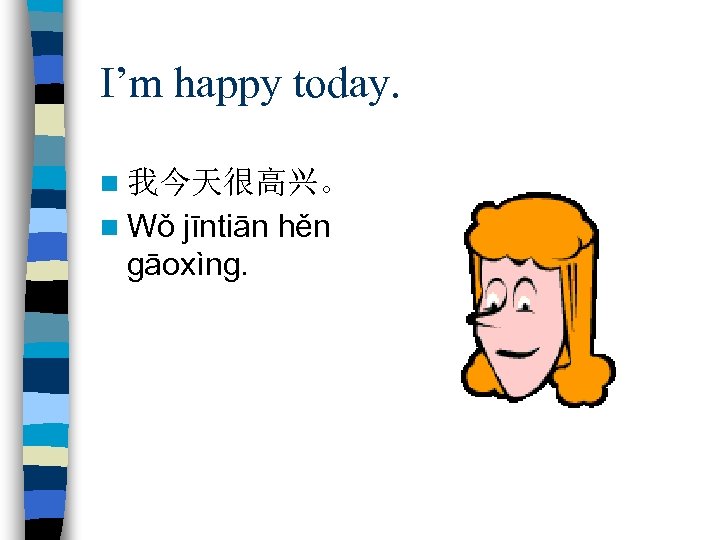 I’m happy today. n 我今天很高兴。 n Wǒ jīntiān hěn gāoxìng.
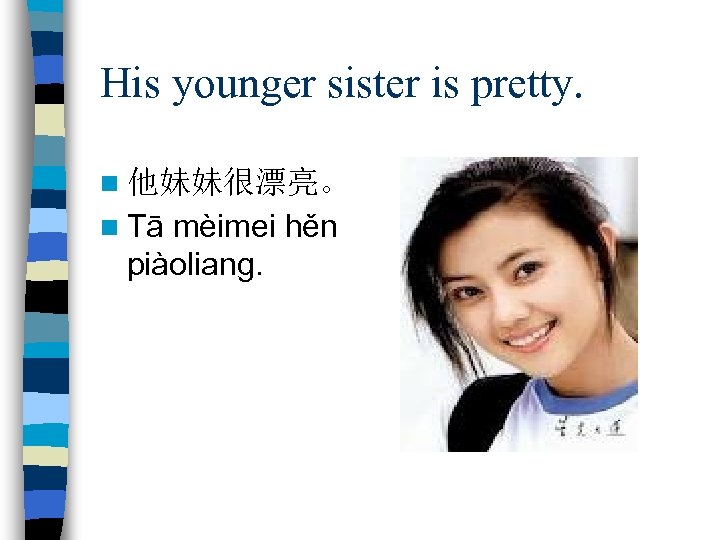 His younger sister is pretty. n 他妹妹很漂亮。 n Tā mèimei hěn piàoliang.
 That movie is good. n 那个电影很好。 n Nà ge diànyǐng hěn hǎo.
 However, 很 (hěn) is not as strong as “very” in English. When forming a question with an adjective as the predicate, 很 is not used.
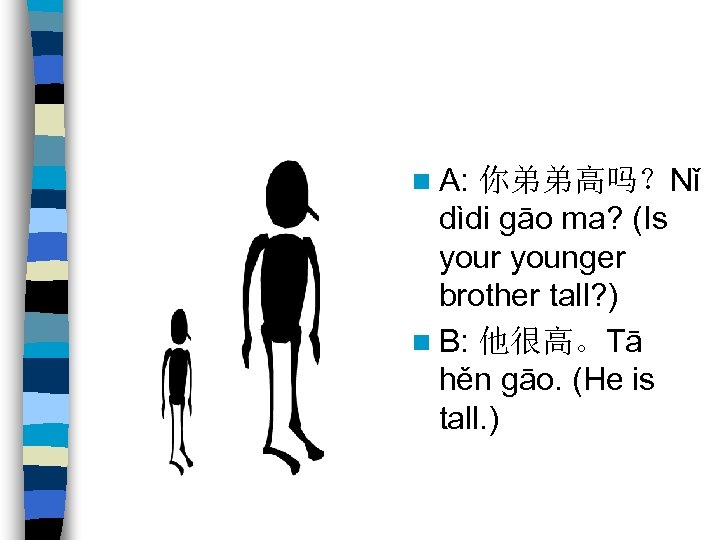 n A: 你弟弟高吗?Nǐ dìdi gāo ma? (Is your younger brother tall? ) n B: 他很高。Tā hěn gāo. (He is tall. )
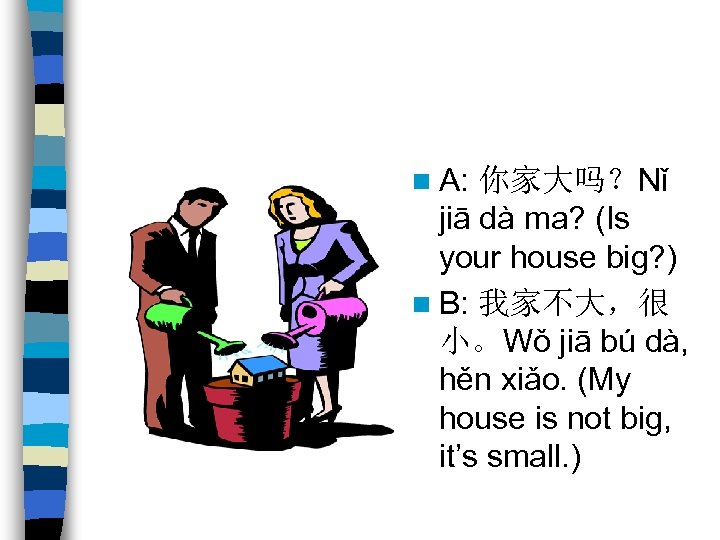 n A: 你家大吗?Nǐ jiā dà ma? (Is your house big? ) n B: 我家不大,很 小。Wǒ jiā bú dà, hěn xiǎo. (My house is not big, it’s small. )
 Chinese adjectives without 很 (hěn) or any sort of modifier before them can often imply comparison or contrast.
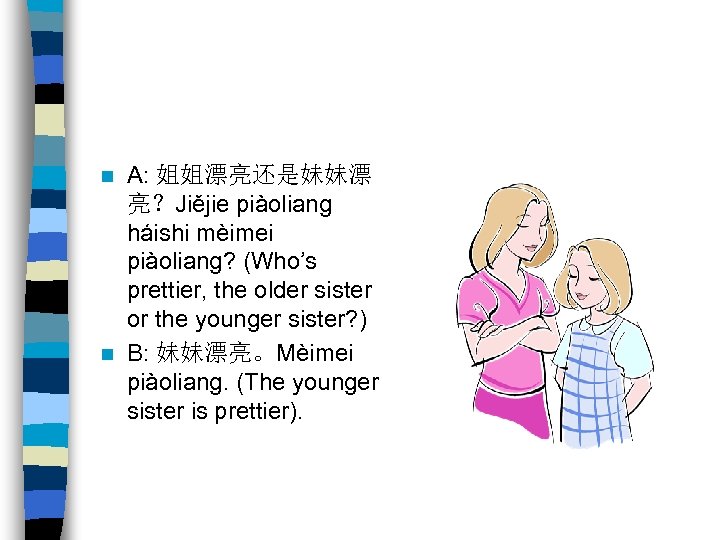 A: 姐姐漂亮还是妹妹漂 亮?Jiějie piàoliang háishi mèimei piàoliang? (Who’s prettier, the older sister or the younger sister? ) n B: 妹妹漂亮。Mèimei piàoliang. (The younger sister is prettier). n
 My younger sister’s Chinese is good. My Chinese is not good. 妹妹的中文好,我的 中文不好。 n Mèimei de Zhōngwén hǎo, wǒ de Zhōngwén bù hǎo. n
 The Preposition 在 (zài, at; in; on) Combined with a noun, the preposition 在 (zài) indicates location. When the phrase is placed before a verb, it indicates the location of the action.
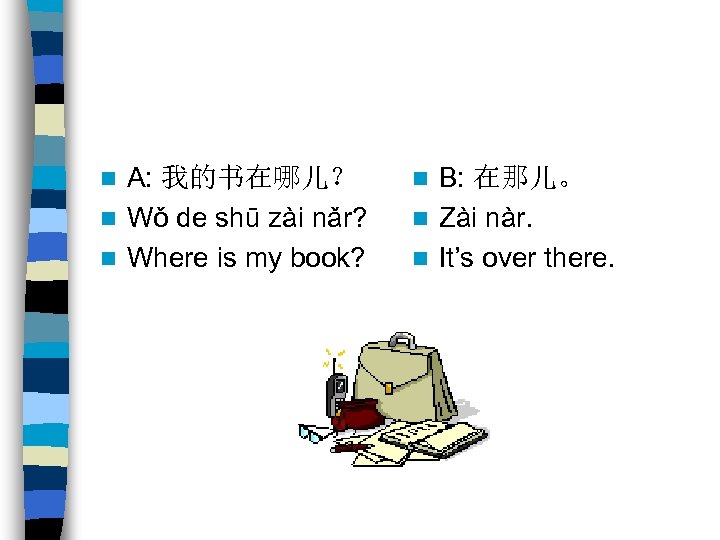 A: 我的书在哪儿? n Wǒ de shū zài nǎr? n Where is my book? n B: 在那儿。 n Zài nàr. n It’s over there. n
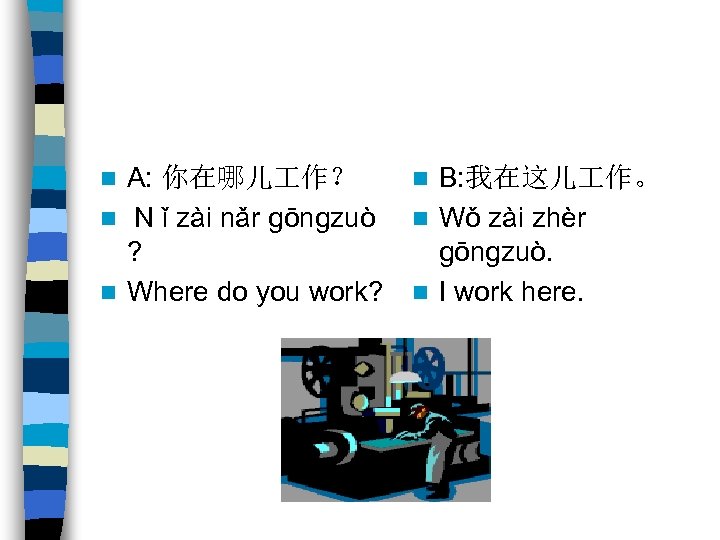 A: 你在哪儿 作? n N ǐ zài nǎr gōngzuò ? n Where do you work? n B: 我在这儿 作。 n Wǒ zài zhèr gōngzuò. n I work here. n
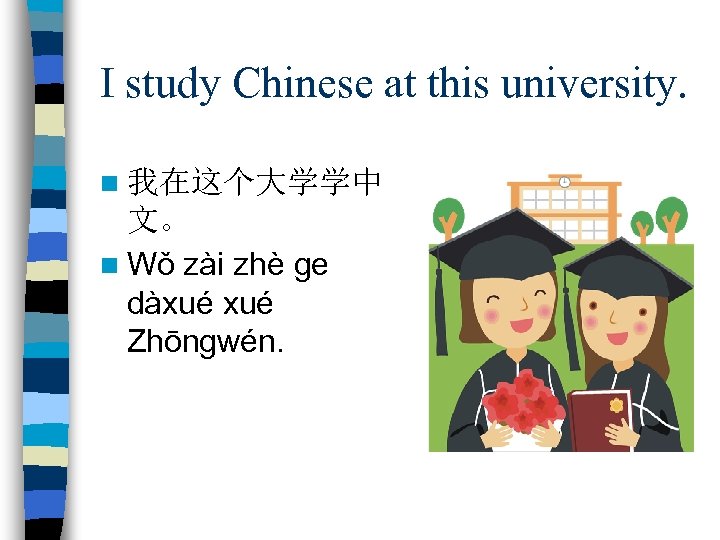 I study Chinese at this university. n 我在这个大学学中 文。 n Wǒ zài zhè ge dàxué Zhōngwén.
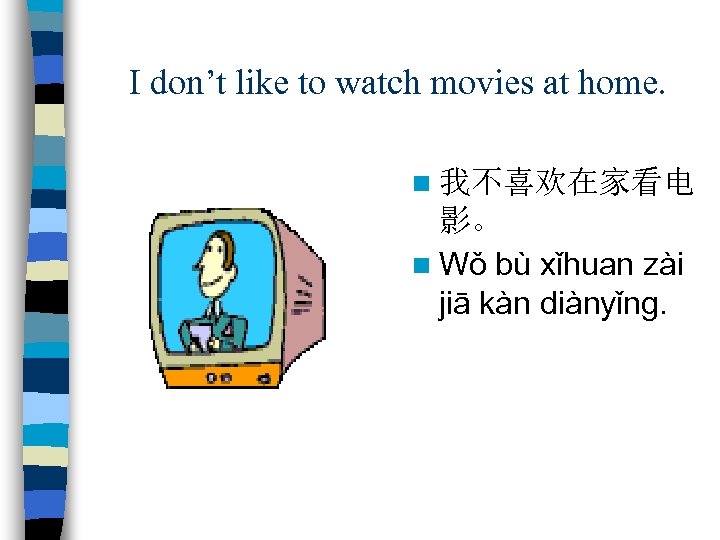 I don’t like to watch movies at home. n 我不喜欢在家看电 影。 n Wǒ bù xǐhuan zài jiā kàn diànyǐng.
 The Particle 吧 (ba) is a sentence-fi nal “suggestion” particle, often used at the end of an imperative sentence to soften the tone.
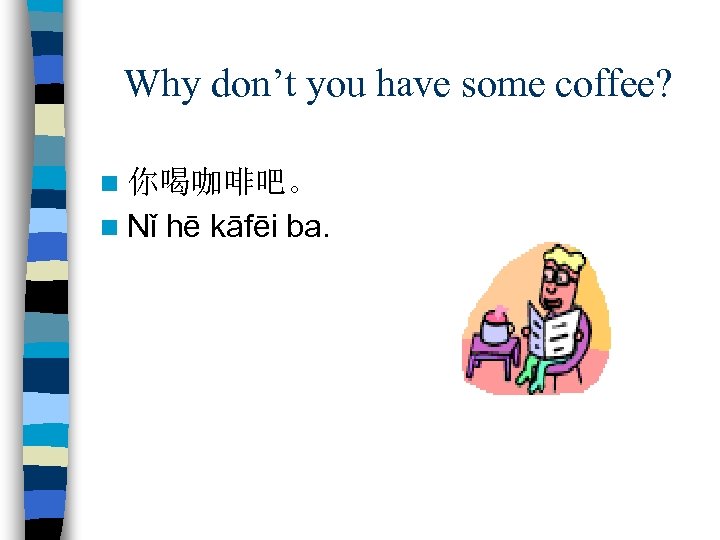 Why don’t you have some coffee? n 你喝咖啡吧。 n Nǐ hē kāfēi ba.
 Come in, please. n 请进来吧。 n Qǐng jìn lai ba.
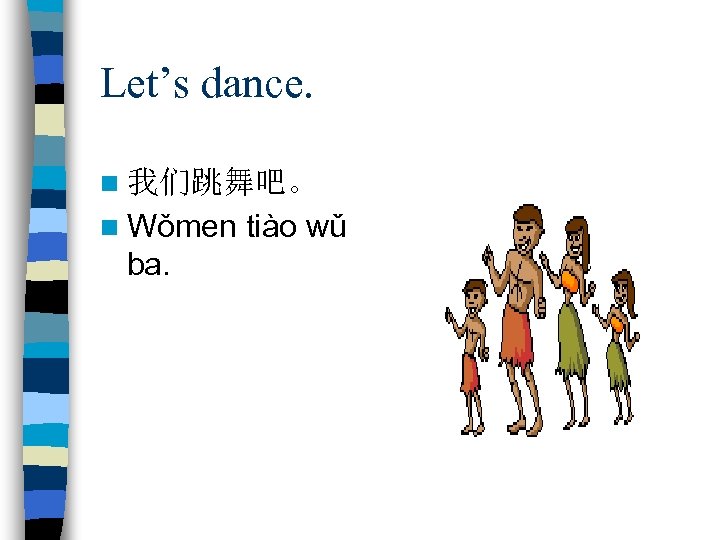 Let’s dance. n 我们跳舞吧。 n Wǒmen ba. tiào wǔ
 是吗 (Shì ma? ) is not a question Although it takes a question mark, 是吗 (Shì ma? ) is not a question here but a mild expression of surprise on hearing something unexpected. Here it indicates one’s modesty on receiving a compliment. It could be translated as “Is that so? ” “You don't say!” or “Really? ”
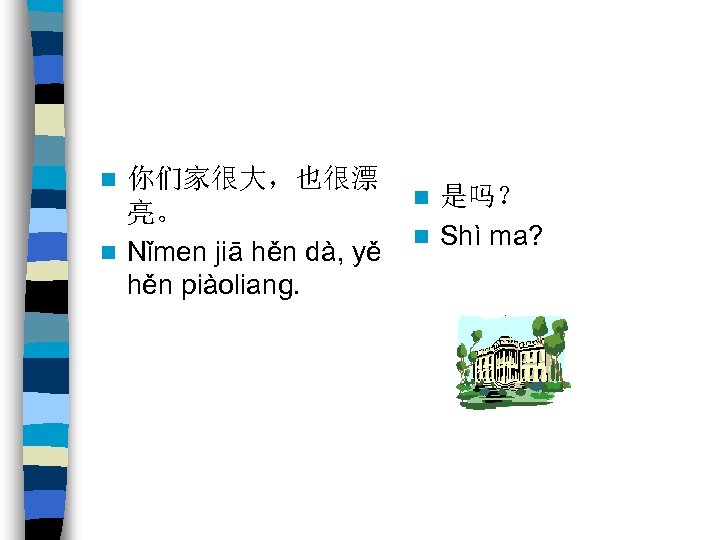 你们家很大,也很漂 亮。 n Nǐmen jiā hěn dà, yě hěn piàoliang. n 是吗? n Shì ma? n
 哪儿 nǎr where a question word Do not confuse it with 那儿 n Nàr n there n 这儿 n Zhèr n here n
 谢谢 再见 University of Michigan Flint Zhong, Yan