


 Скачать презентацию Lesson 3 We All Live in a Watershed
2a5cc41f6b6582055dfb21add0fd076d.ppt
- Количество слайдов: 20
 Lesson 3: We All Live in a Watershed
 Our Water • All the water we have on earth is here to stay, and we cannot buy, steal or make any more water. • If we cannot make any more water, what does that mean?
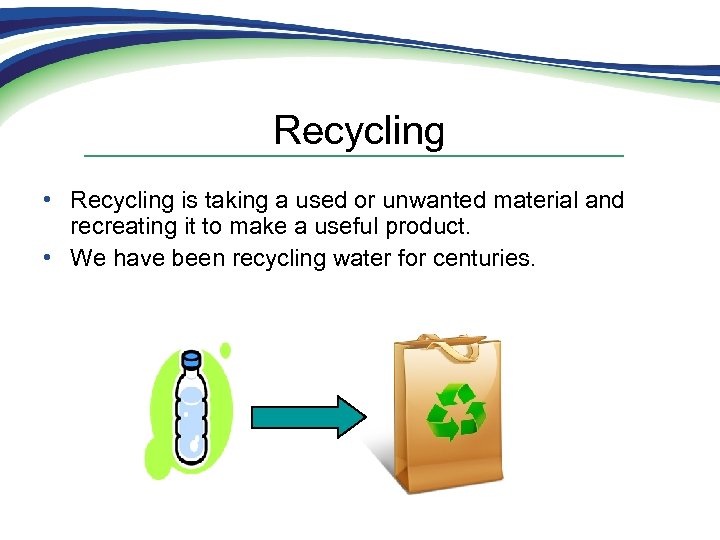 Recycling • Recycling is taking a used or unwanted material and recreating it to make a useful product. • We have been recycling water for centuries.
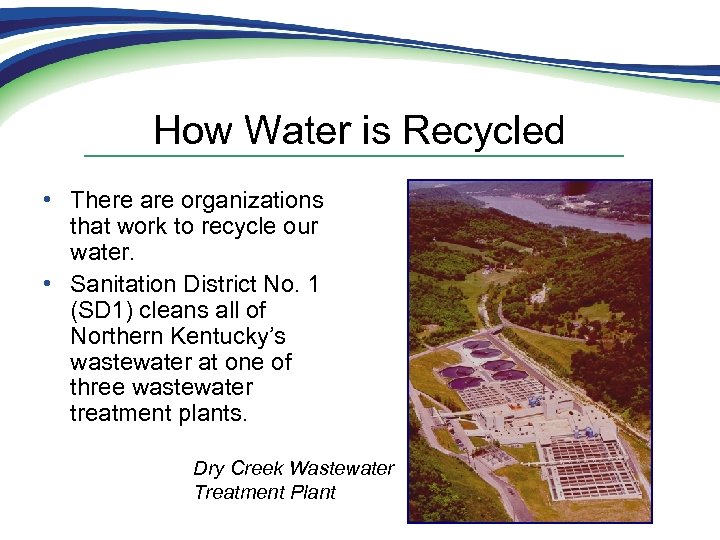 How Water is Recycled • There are organizations that work to recycle our water. • Sanitation District No. 1 (SD 1) cleans all of Northern Kentucky’s wastewater at one of three wastewater treatment plants. Dry Creek Wastewater Treatment Plant
 Page 14
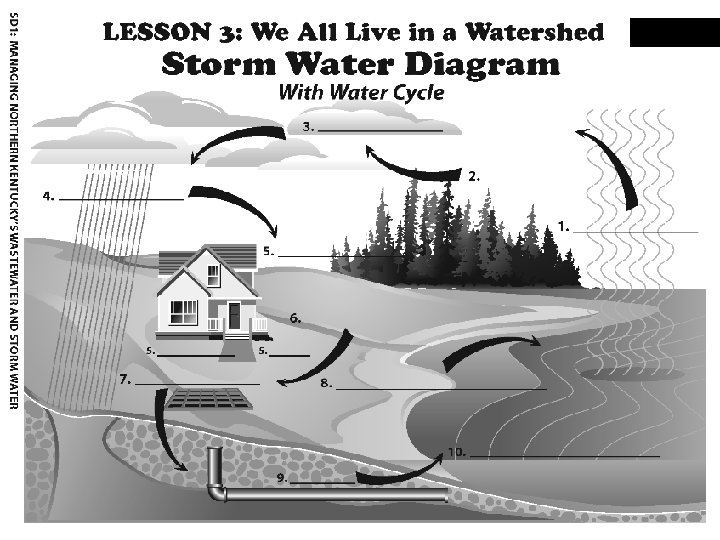
 Storm Water The Water Cycle: • Water evaporates from a water body. • Transpiration from trees occurs. • Clouds form (condensation). • A cloud gets heavy from condensation, and precipitation occurs. • Rain falls from the sky onto roofs, pavement, roads, etc. (run-off surfaces).
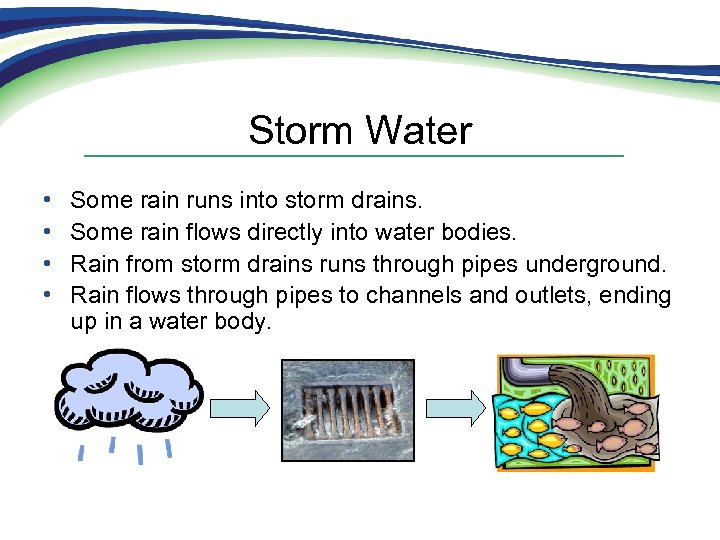 Storm Water • • Some rain runs into storm drains. Some rain flows directly into water bodies. Rain from storm drains runs through pipes underground. Rain flows through pipes to channels and outlets, ending up in a water body.
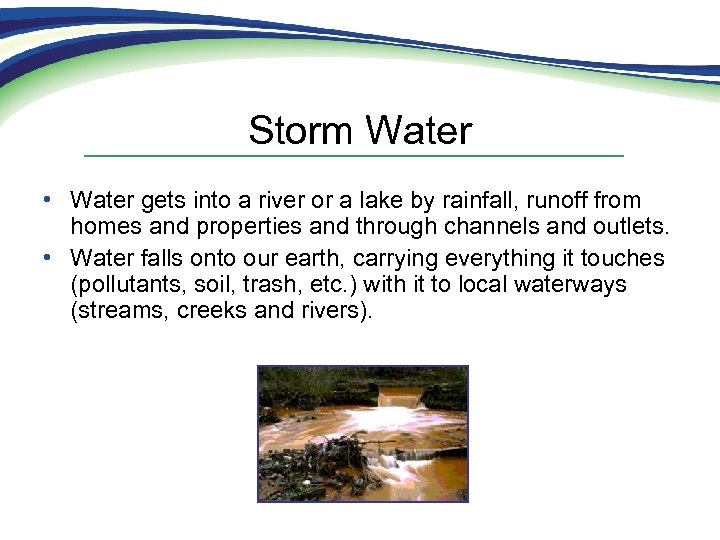 Storm Water • Water gets into a river or a lake by rainfall, runoff from homes and properties and through channels and outlets. • Water falls onto our earth, carrying everything it touches (pollutants, soil, trash, etc. ) with it to local waterways (streams, creeks and rivers).
 Watersheds • Watersheds are land areas that “shed” water to a local body of water. • Water runs downhill from these higher places to lower areas and into rivers, streams, lakes and other bodies of water. • Land areas that drain into bodies of water are called "watersheds" or "river basins. "
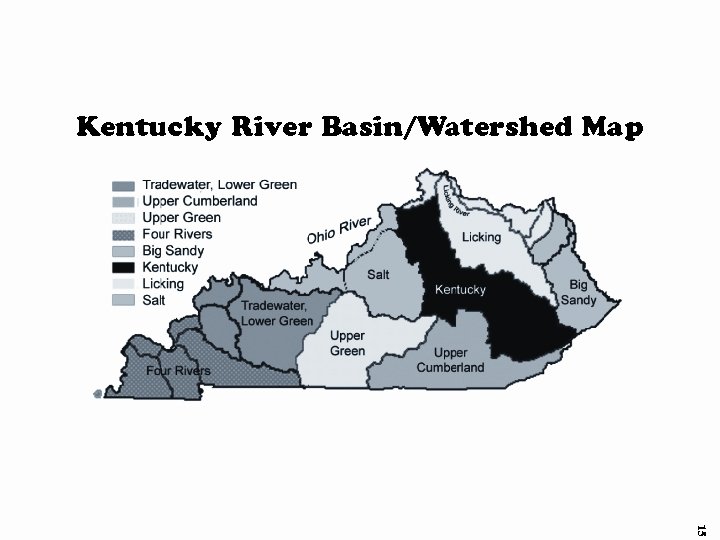
 Watersheds • Watersheds are named after the biggest river or creek that collects the water that runs off the land in the watershed. • The Licking River flows through the counties in Northern Kentucky. • We all live in the Licking River Watershed or Licking River Basin.
 Page 16
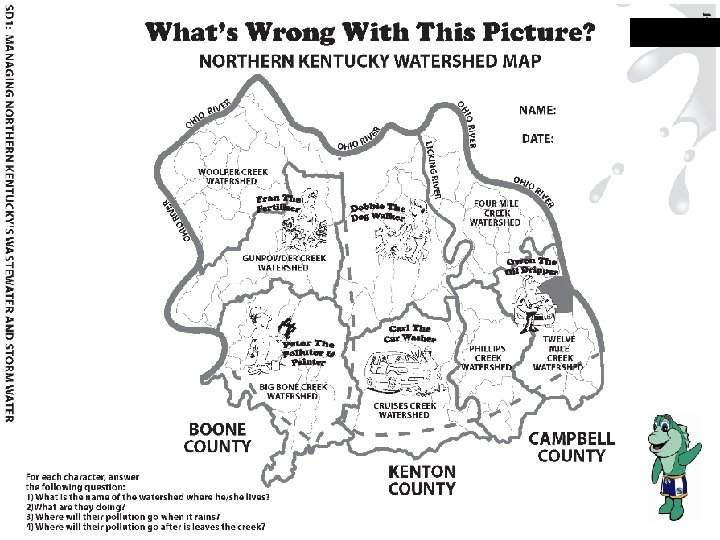
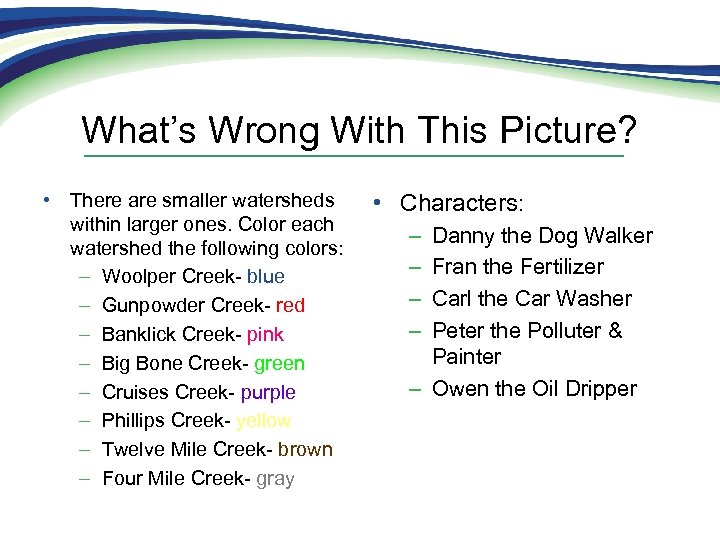 What’s Wrong With This Picture? • There are smaller watersheds within larger ones. Color each watershed the following colors: – Woolper Creek- blue – Gunpowder Creek- red – Banklick Creek- pink – Big Bone Creek- green – Cruises Creek- purple – Phillips Creek- yellow – Twelve Mile Creek- brown – Four Mile Creek- gray • Characters: – – Danny the Dog Walker Fran the Fertilizer Carl the Car Washer Peter the Polluter & Painter – Owen the Oil Dripper
 What’s Wrong With This Picture? • • What is the name of the watershed in which you live? What is the character doing? Where will the pollution go when it rains? Where will the pollution go after it leaves the creek?
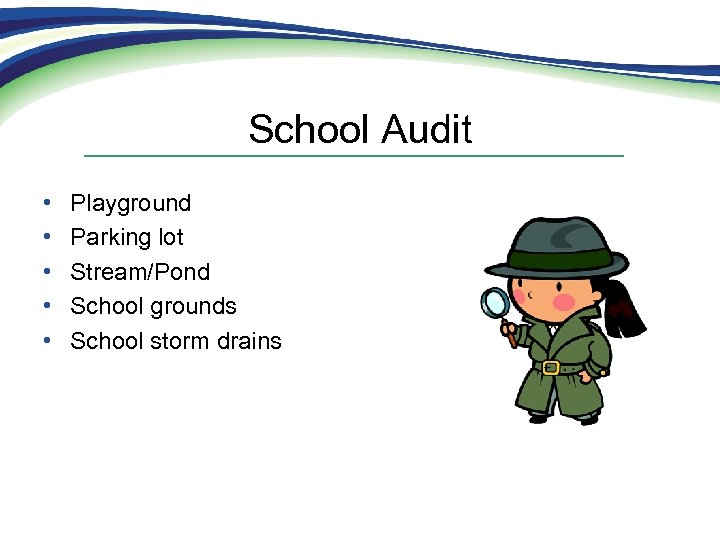 School Audit • • • Playground Parking lot Stream/Pond School grounds School storm drains
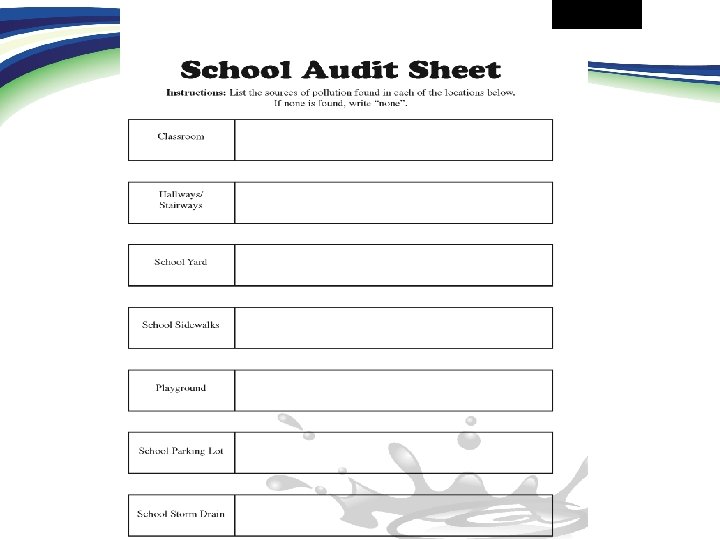 Page 17
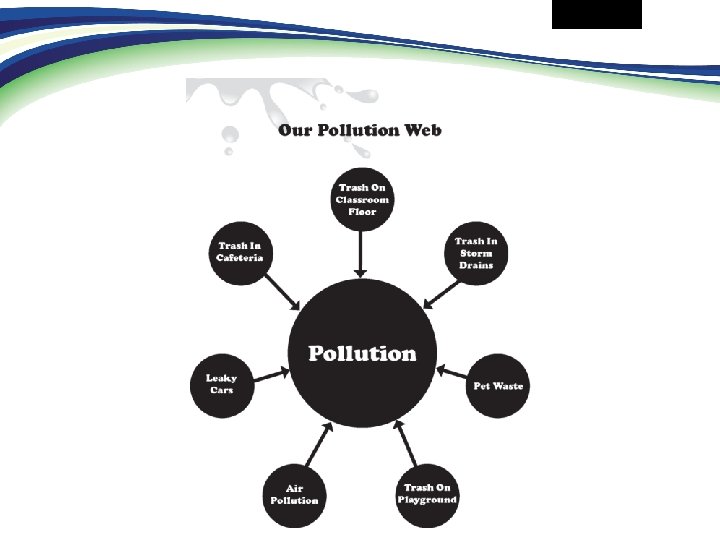 Page 48
 Pollution Removal Ideas • Write a letter to other classes encouraging other students to pick up trash in their classrooms and from the school grounds. • Organize and conduct a school-wide clean-up day. • Make posters publicizing a "No Pollution" message. Hang them around the school. • Make an environmental infomercial to act out before a PTO/PTA meeting. • Write a letter to your principal about the class taking a school audit, and suggest ways to make the school grounds cleaner.
 Open Response Questions • Identify and discuss three possible sources of stream pollution. • Describe how each of the pollutants you identified and described in Part A could be prevented.
 Web Review • Click the link below to visit the Environmental Protection Agency's (EPA) Education web page and complete an activity reviewing types of non point source pollution. • Just click on the interactive scene to find out “what's wrong with the picture. ” • http: //water. epa. gov/polwaste/nps/kids/whatswrong/i ndex. cfm