


 Скачать презентацию Lesson 13 II Practical Chinese Reader Pinyin
ce637b626bd36638daac19e9591fb0c7.ppt
- Количество слайдов: 23
 Lesson 13 (II) Practical Chinese Reader
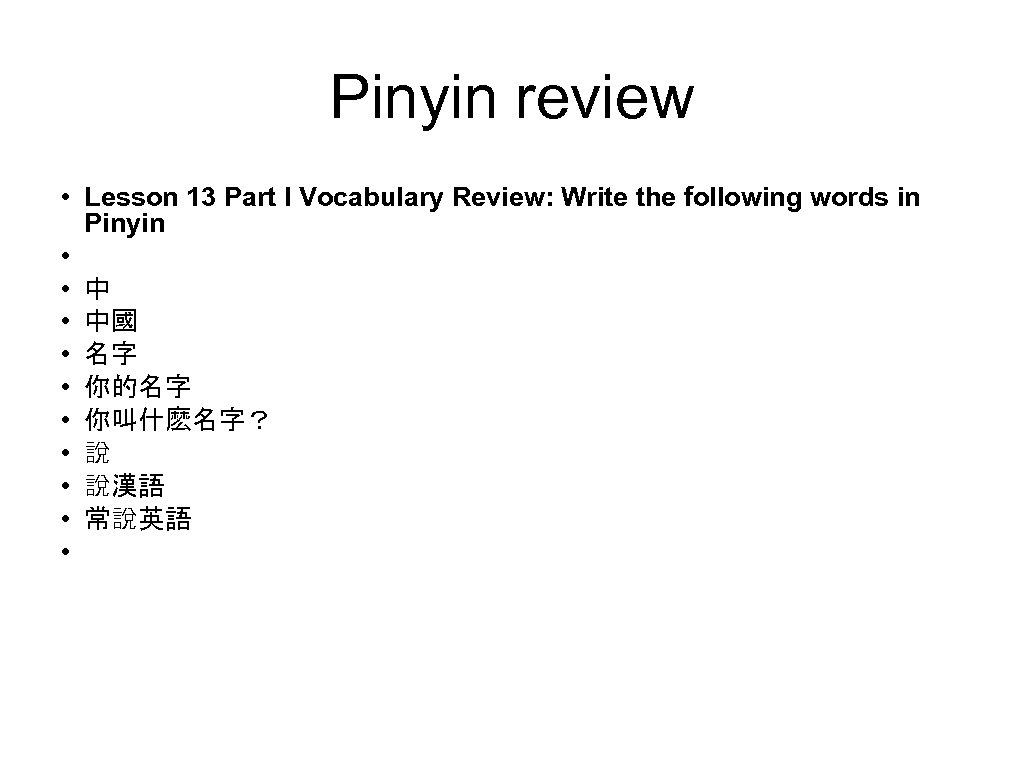 Pinyin review • Lesson 13 Part I Vocabulary Review: Write the following words in Pinyin • • 中國 • 名字 • 你的名字 • 你叫什麽名字? • 說漢語 • 常說英語 •
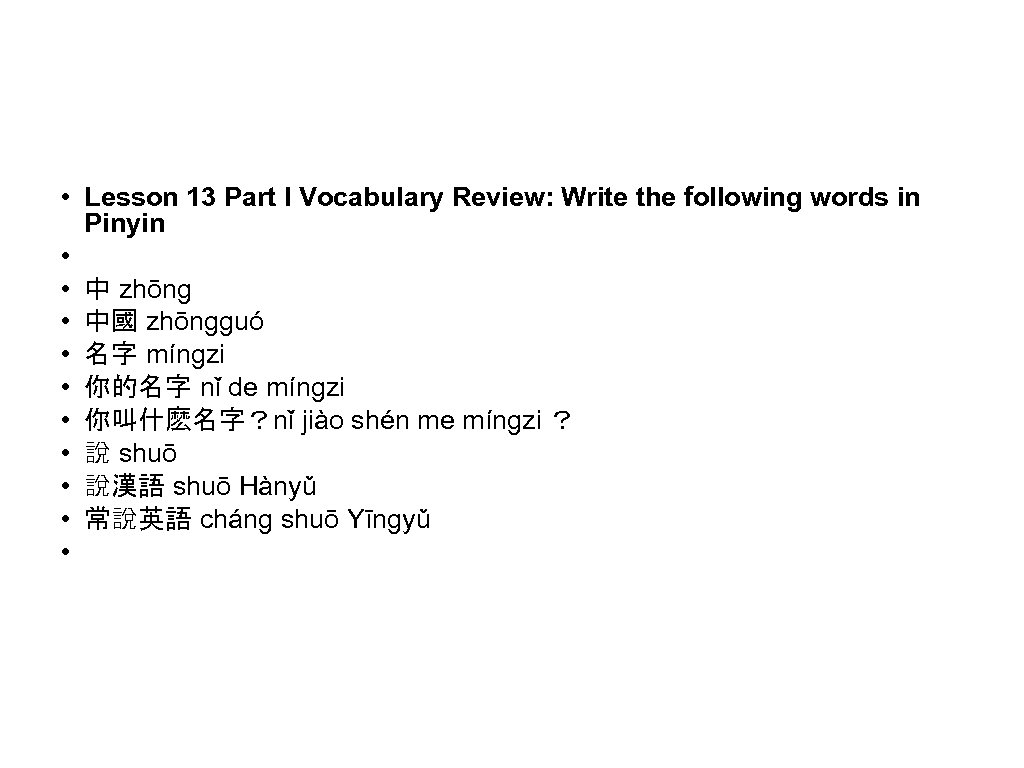 • Lesson 13 Part I Vocabulary Review: Write the following words in Pinyin • • 中 zhōng • 中國 zhōngguó • 名字 míngzi • 你的名字 nǐ de míngzi • 你叫什麽名字?nǐ jiào shén me míngzi ? • 說 shuō • 說漢語 shuō Hànyǔ • 常說英語 cháng shuō Yīngyǔ •
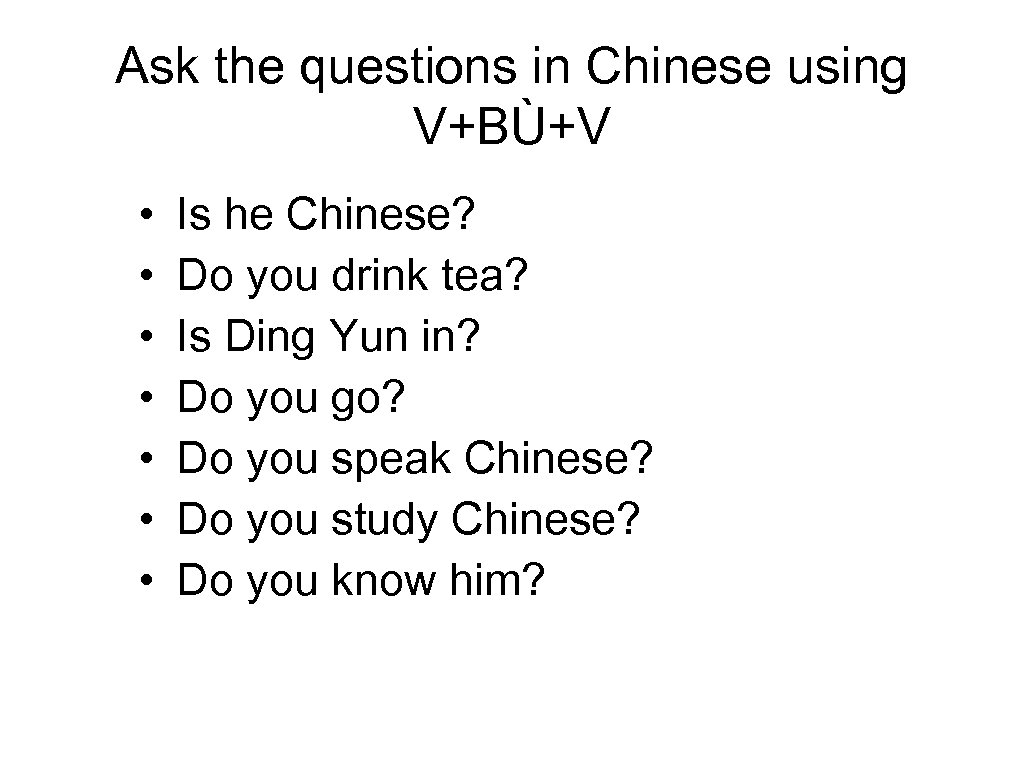 Ask the questions in Chinese using V+BÙ+V • • Is he Chinese? Do you drink tea? Is Ding Yun in? Do you go? Do you speak Chinese? Do you study Chinese? Do you know him?
 • • Are you American? Are you CSULB student? Do you study Chinese? Is your father a doctor? Is younger brother also a student? Is he busy? Do you know Ding Yun? Do you drink coffee? Tea? Beer?
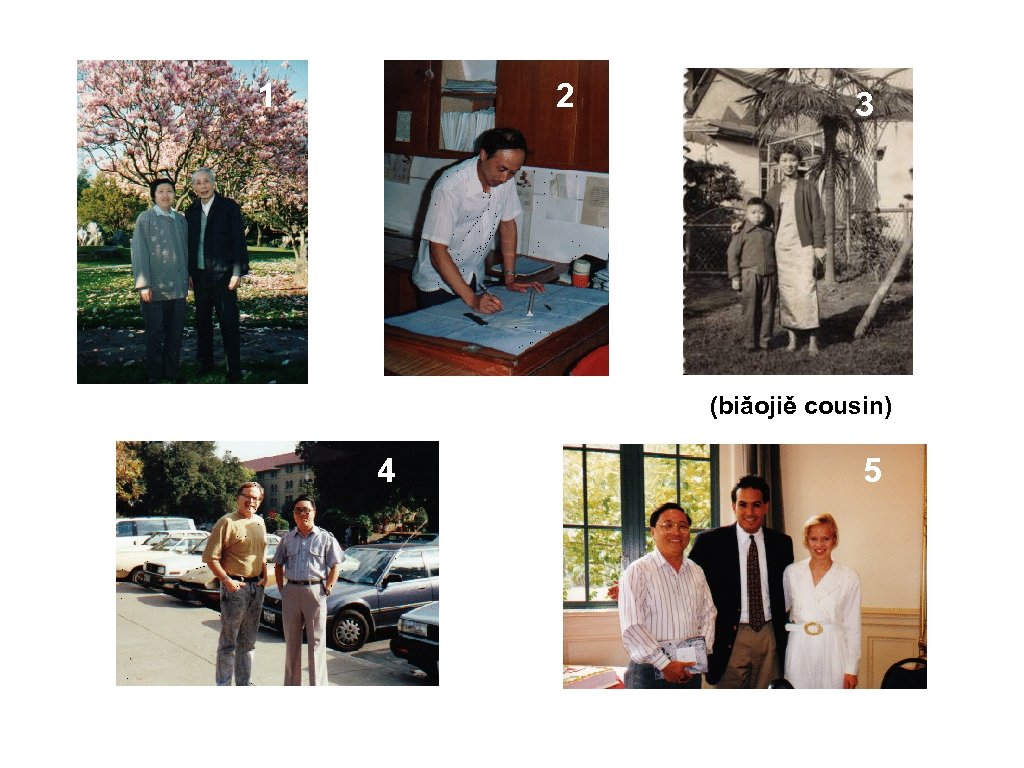 1 2 3 (biǎojiě cousin) 4 5
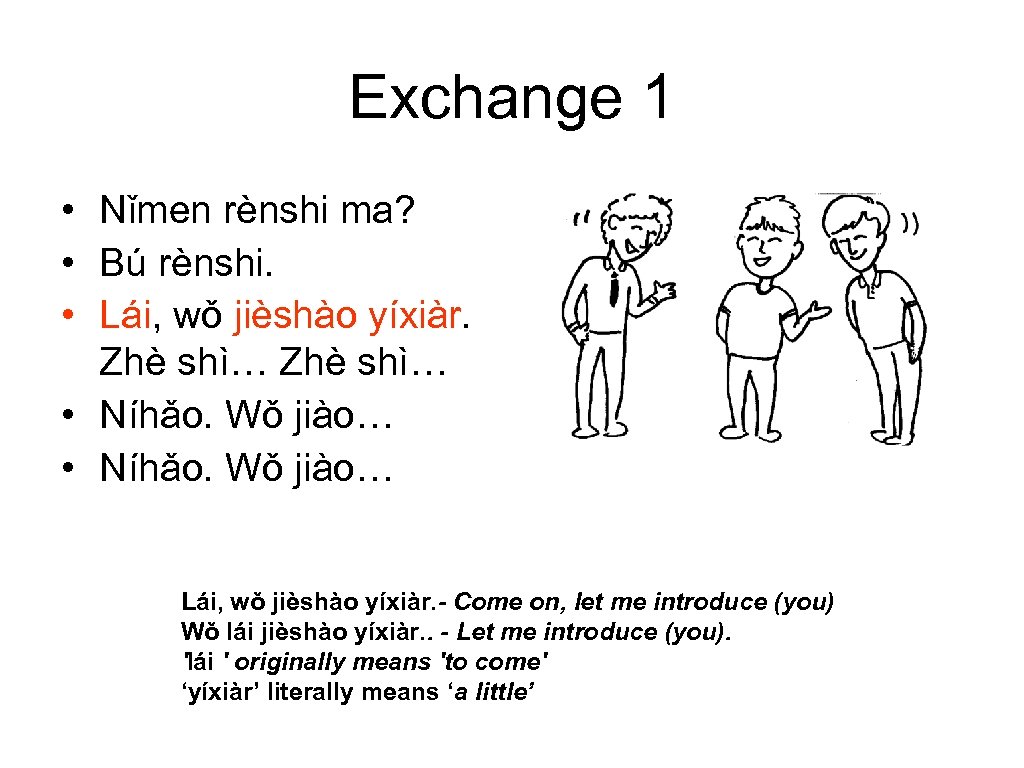 Exchange 1 • Nǐmen rènshi ma? • Bú rènshi. • Lái, wǒ jièshào yíxiàr. Zhè shì… • Níhǎo. Wǒ jiào… Lái, wǒ jièshào yíxiàr. - Come on, let me introduce (you) Wǒ lái jièshào yíxiàr. . - Let me introduce (you). 'lái ' originally means 'to come' ‘yíxiàr’ literally means ‘a little’
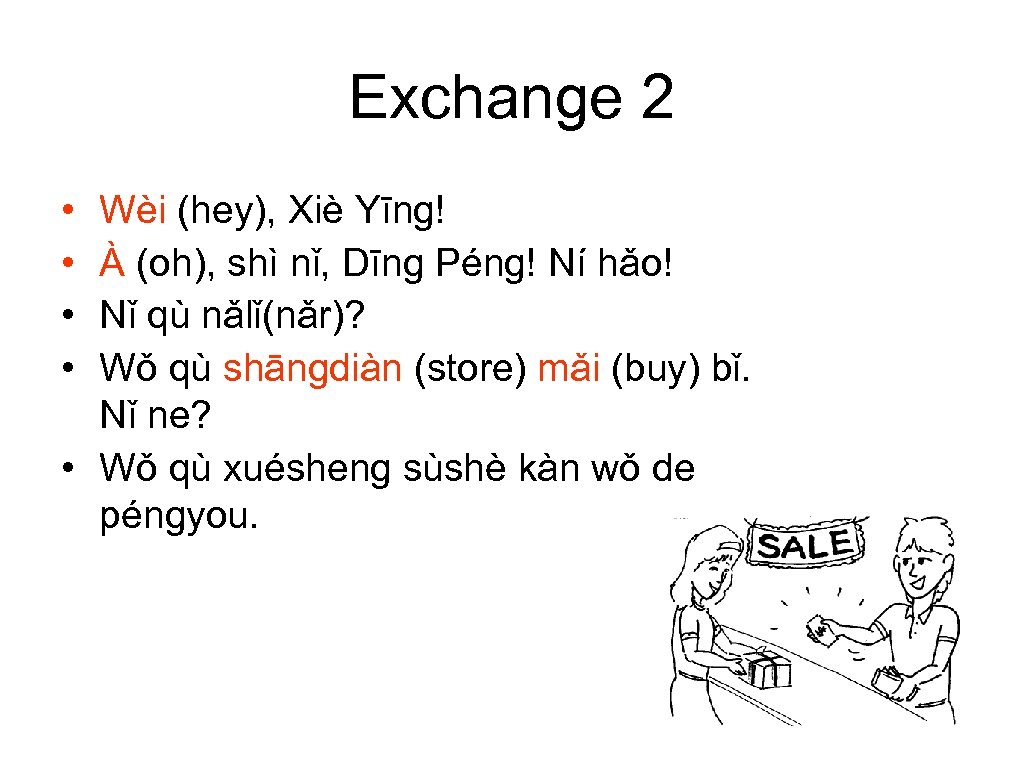 Exchange 2 • • Wèi (hey), Xiè Yīng! À (oh), shì nǐ, Dīng Péng! Ní hǎo! Nǐ qù nǎlǐ(nǎr)? Wǒ qù shāngdiàn (store) mǎi (buy) bǐ. Nǐ ne? • Wǒ qù xuésheng sùshè kàn wǒ de péngyou.
 Grammar notes • In the above conversation, there is a new pattern: VP 1+VP 2 where VP means a verbal phrase such as ‘qù shāngdiàn', ‘mǎi bǐ', ‘qù xuésheng sùshè' ‘kàn péngyou'. • The first VP is followed by another VP. Usually, this pattern is used in the situation of 'going to somewhere to do something. ' Also refer to the grammar note 2 on page 101.
 Try to say the following sentences in Chinese • • I am going to the store to buy pens. I am going to the dorm to drink tea. I am going to the college to read the books. I am going to the post office (yóujú) to buy stamps (yóupiào). • I am going to the store (shāngdiàn) to buy (some) paper.
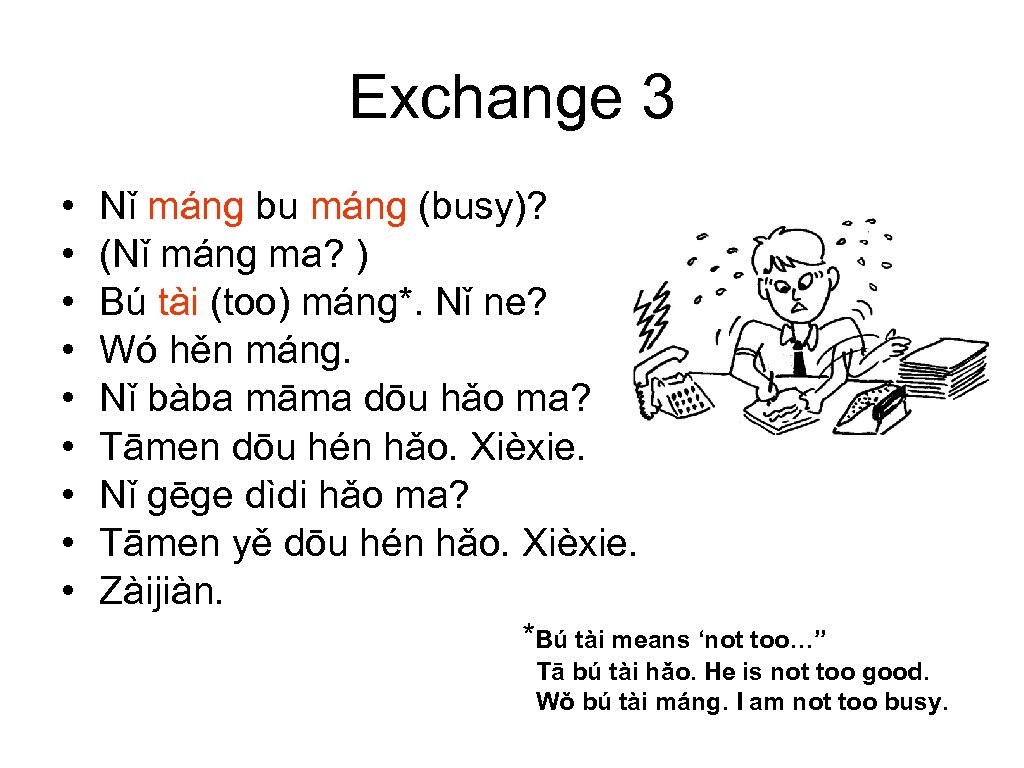 Exchange 3 • • • Nǐ máng bu máng (busy)? (Nǐ máng ma? ) Bú tài (too) máng*. Nǐ ne? Wó hěn máng. Nǐ bàba māma dōu hǎo ma? Tāmen dōu hén hǎo. Xièxie. Nǐ gēge dìdi hǎo ma? Tāmen yě dōu hén hǎo. Xièxie. Zàijiàn. *Bú tài means ‘not too…” Tā bú tài hǎo. He is not too good. Wǒ bú tài máng. I am not too busy.
 Practice the following dialogues • Nǐmen rènshi ma? • Bú rènshi. • Lái, wǒ jièshào yíxiàr. Zhè shì… • Níhǎo. Wǒ jiào…
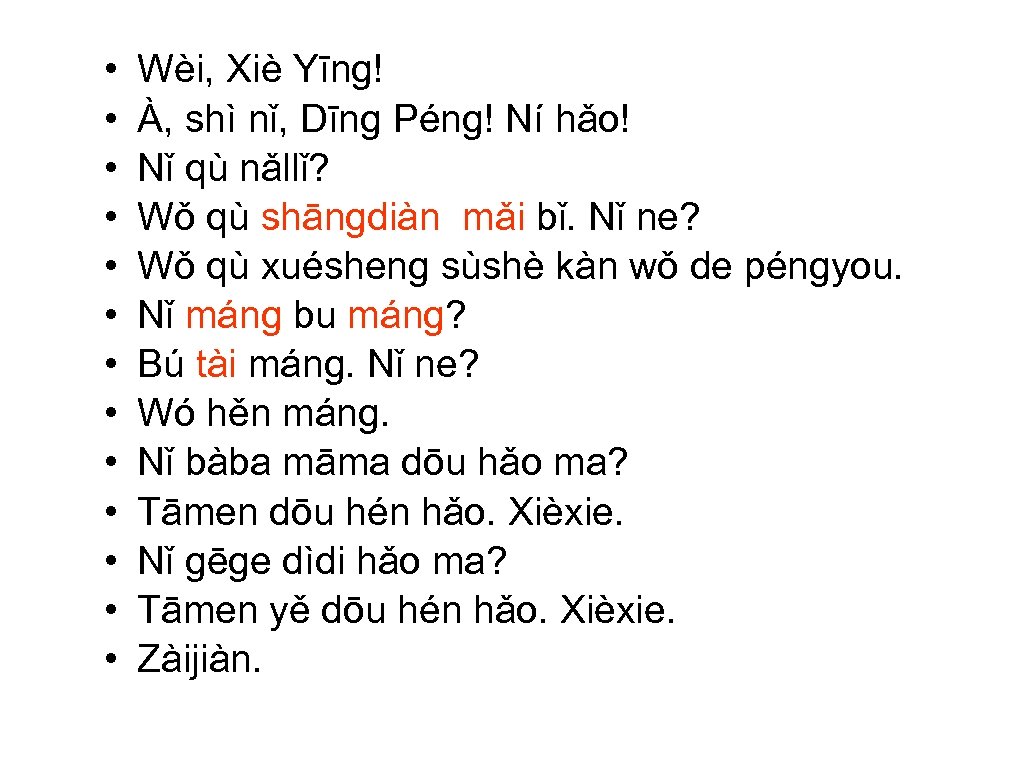 • • • • Wèi, Xiè Yīng! À, shì nǐ, Dīng Péng! Ní hǎo! Nǐ qù nǎllǐ? Wǒ qù shāngdiàn mǎi bǐ. Nǐ ne? Wǒ qù xuésheng sùshè kàn wǒ de péngyou. Nǐ máng bu máng? Bú tài máng. Nǐ ne? Wó hěn máng. Nǐ bàba māma dōu hǎo ma? Tāmen dōu hén hǎo. Xièxie. Nǐ gēge dìdi hǎo ma? Tāmen yě dōu hén hǎo. Xièxie. Zàijiàn.
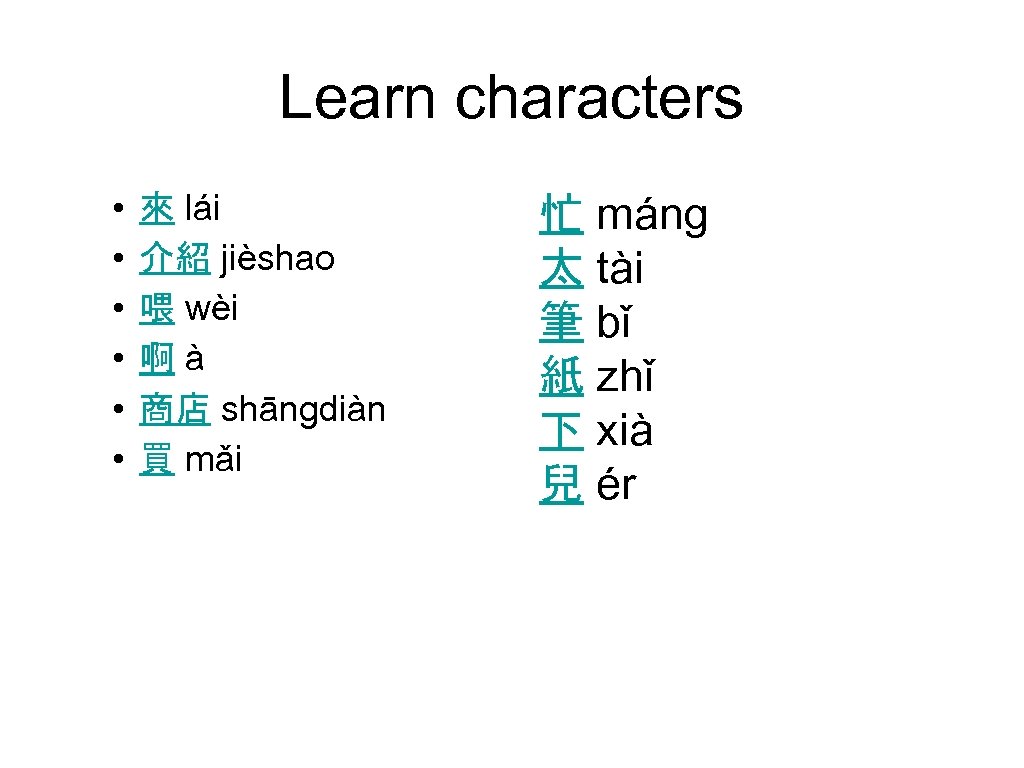 Learn characters • • • 來 lái 介紹 jièshao 喂 wèi 啊 à 商店 shāngdiàn 買 mǎi 忙 máng 太 tài 筆 bǐ 紙 zhǐ 下 xià 兒 ér
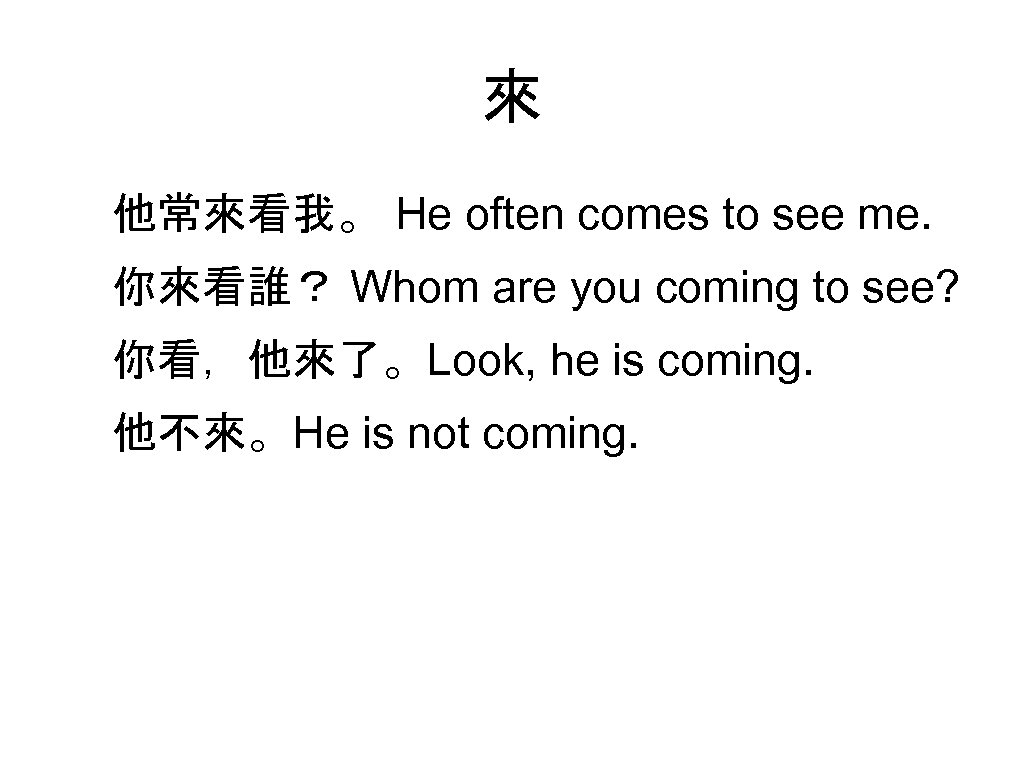 來 他常來看我。 He often comes to see me. 你來看誰? Whom are you coming to see? 你看,他來了。Look, he is coming. 他不來。He is not coming.
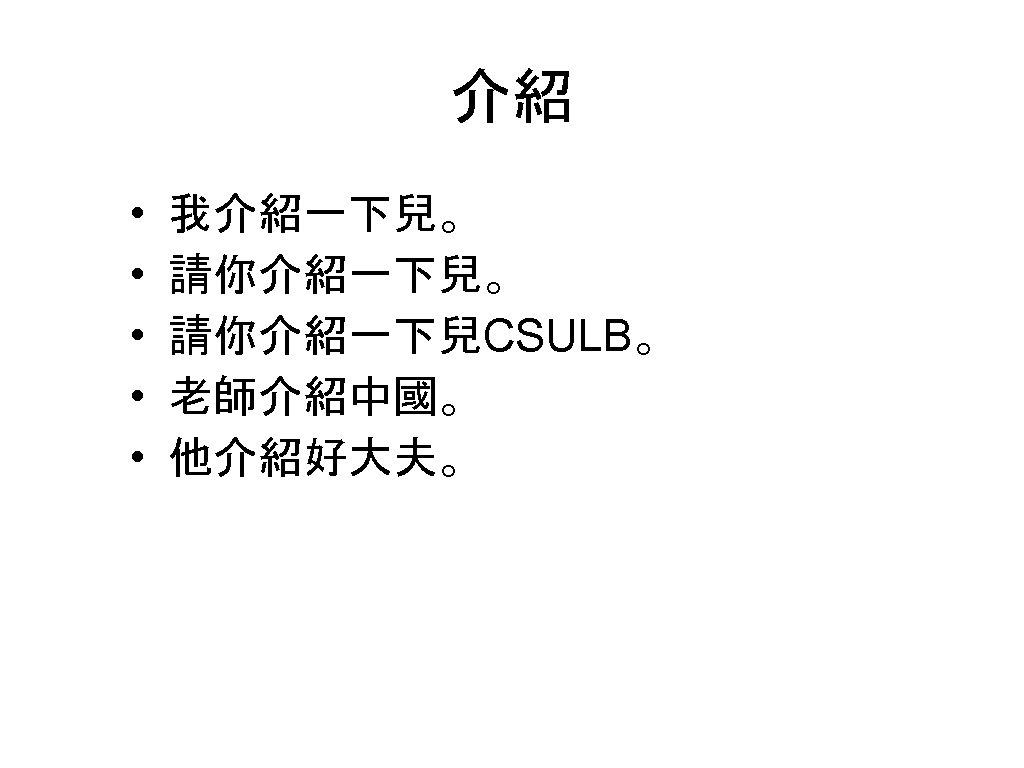 介紹 • • • 我介紹一下兒。 請你介紹一下兒CSULB。 老師介紹中國。 他介紹好大夫。
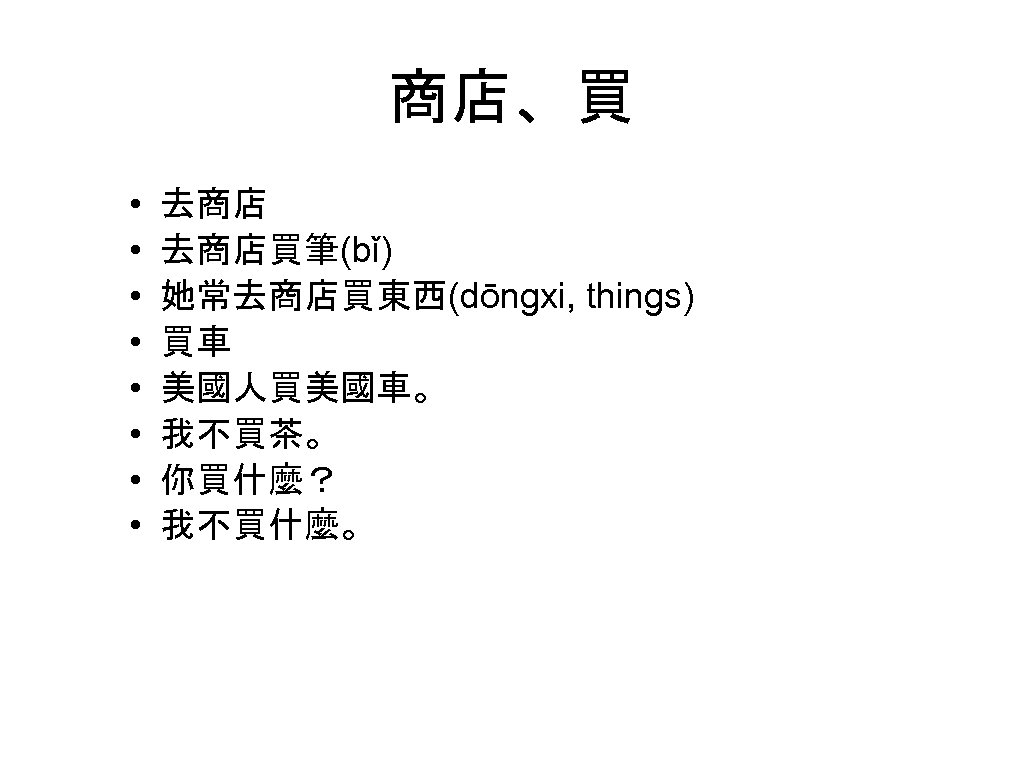 商店、買 • • 去商店買筆(bǐ) 她常去商店買東西(dōngxi, things) 買車 美國人買美國車。 我不買茶。 你買什麼? 我不買什麼。
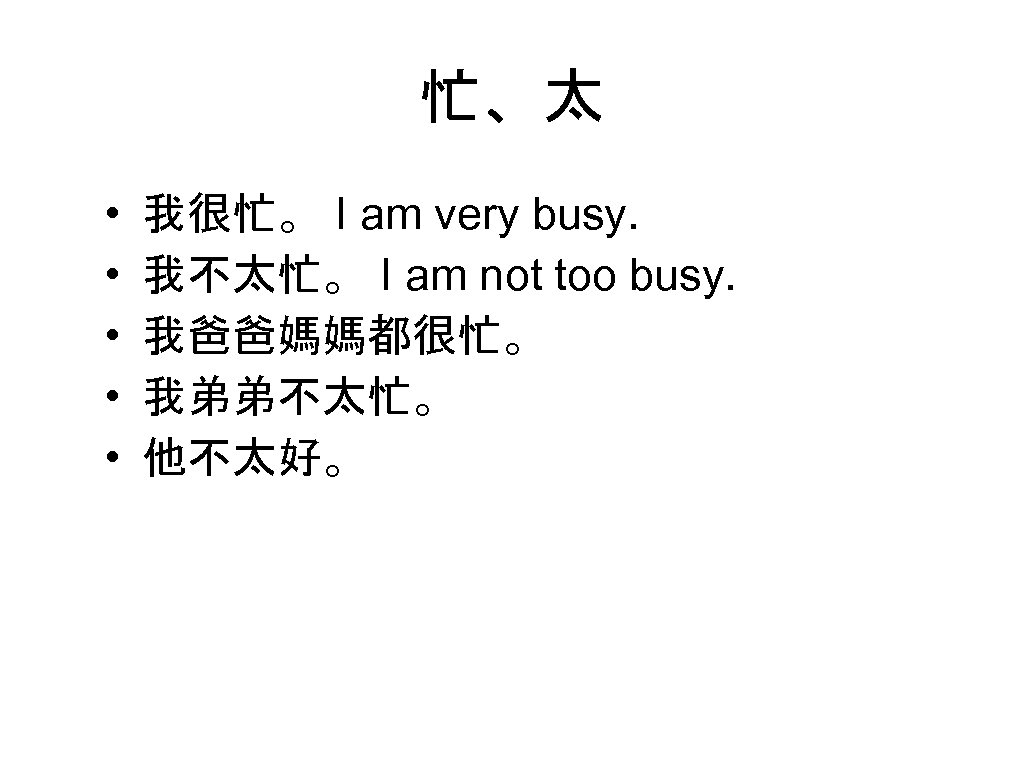 忙、太 • • • 我很忙。 I am very busy. 我不太忙。 I am not too busy. 我爸爸媽媽都很忙。 我弟弟不太忙。 他不太好。
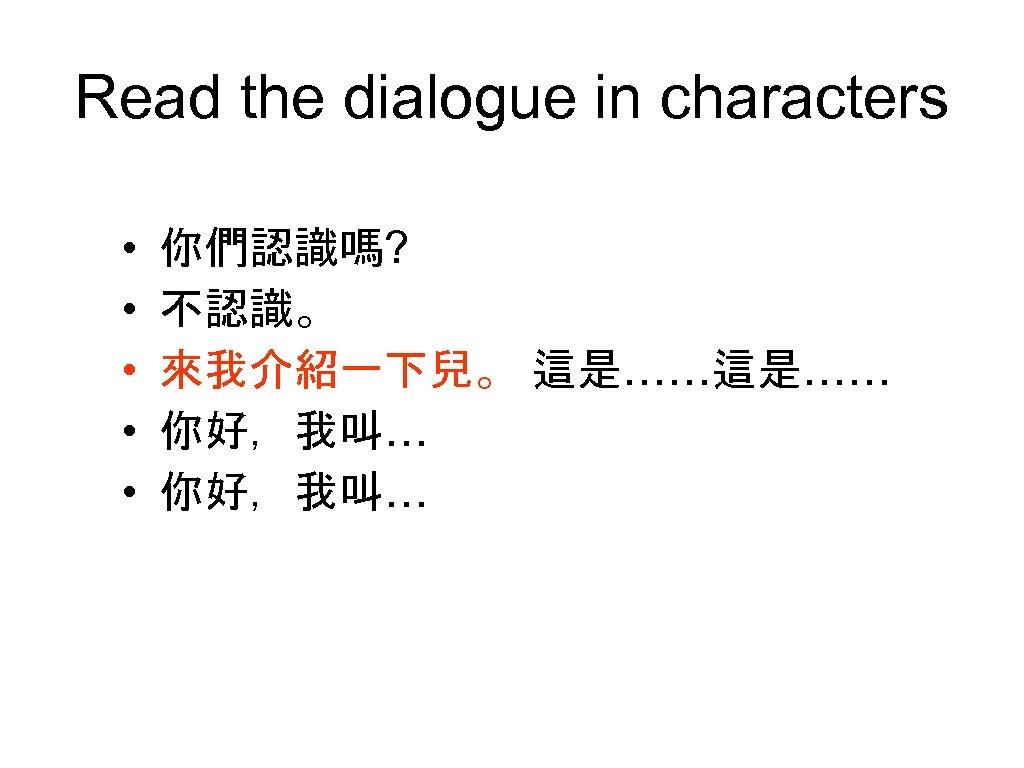 Read the dialogue in characters • • • 你們認識嗎? 不認識。 來我介紹一下兒。 這是…… 你好,我叫…
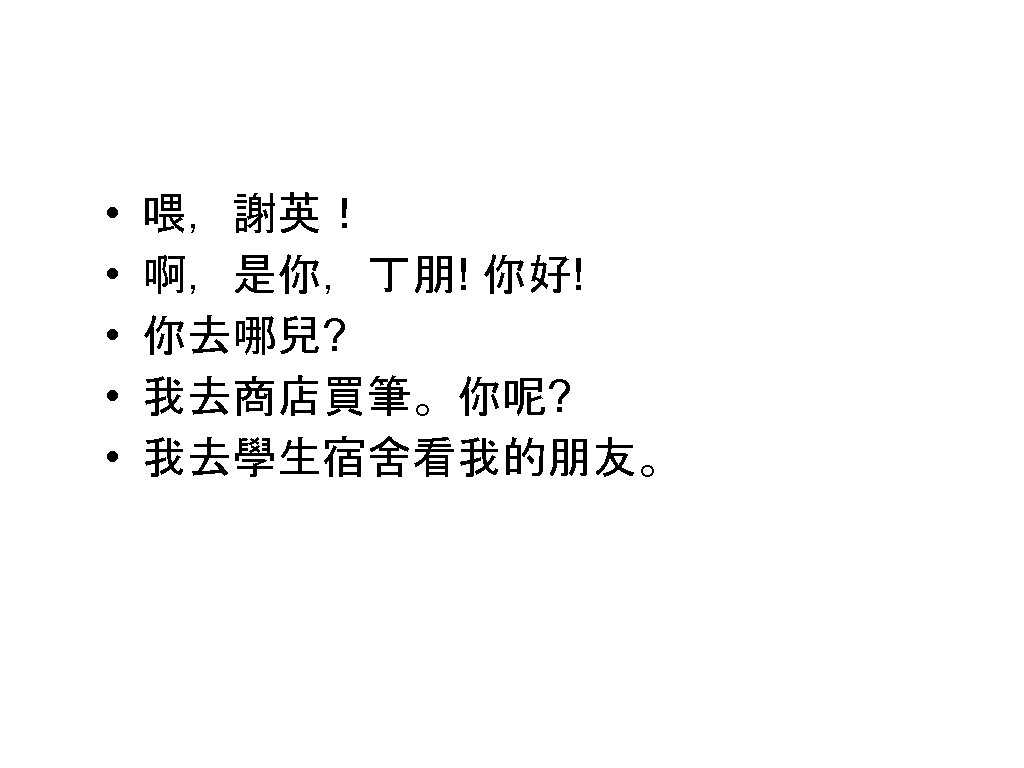 • • • 喂,謝英! 啊,是你,丁朋! 你好! 你去哪兒? 我去商店買筆。你呢? 我去學生宿舍看我的朋友。
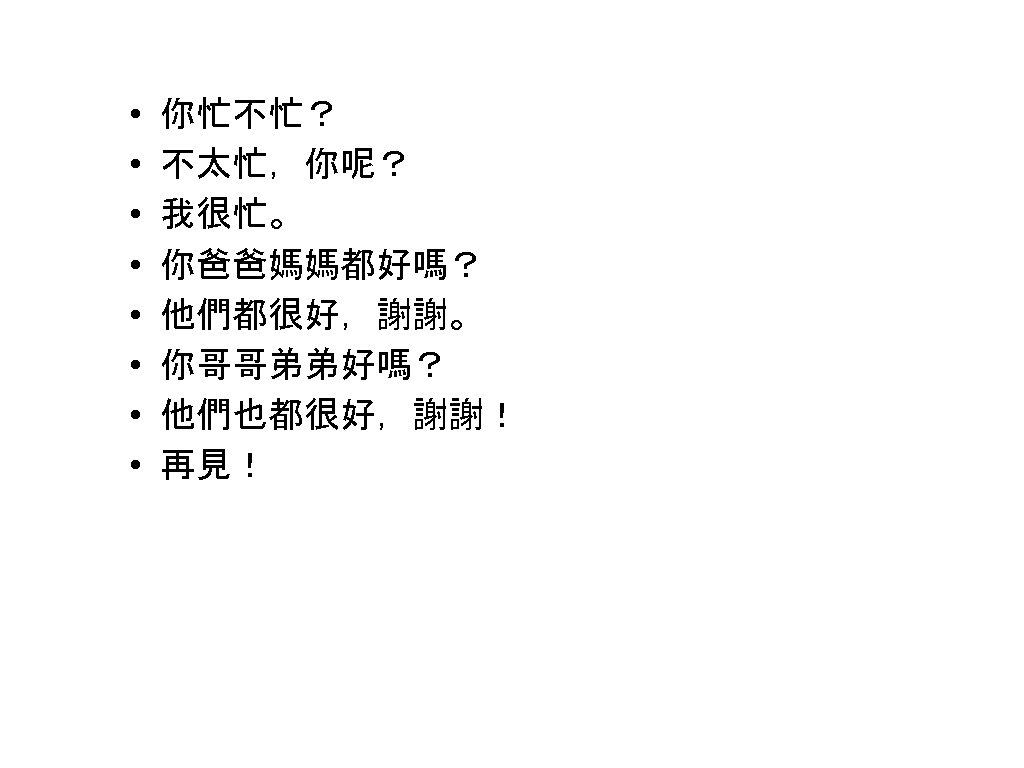 • • 你忙不忙? 不太忙,你呢? 我很忙。 你爸爸媽媽都好嗎? 他們都很好,謝謝。 你哥哥弟弟好嗎? 他們也都很好,謝謝! 再見!
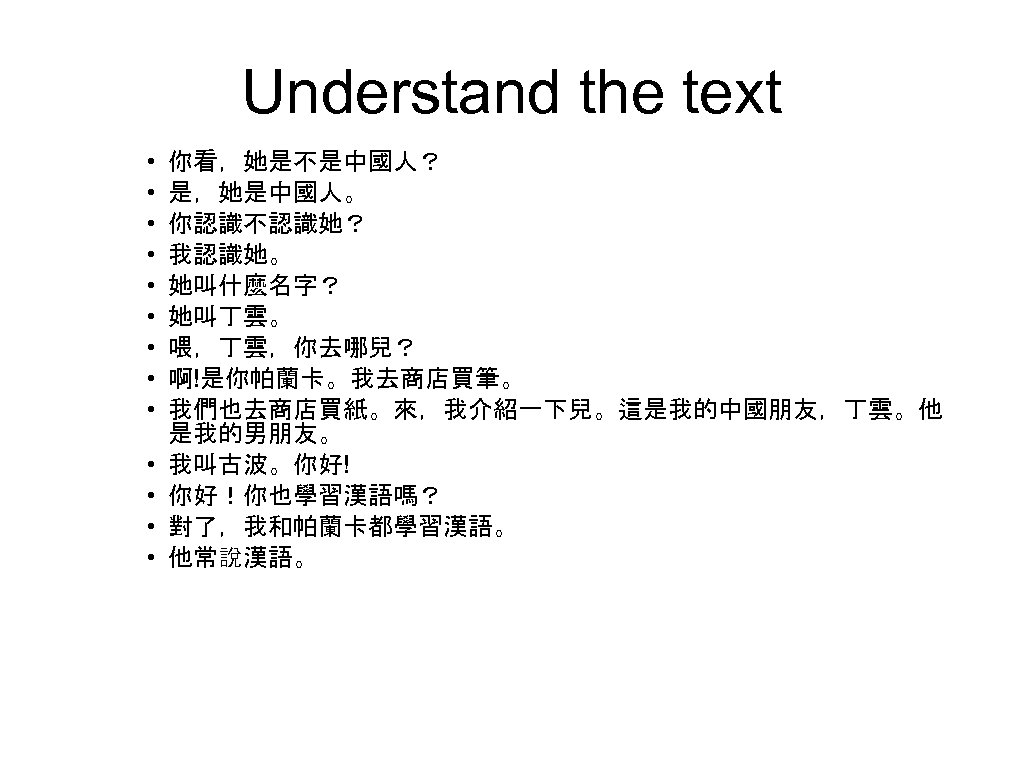 Understand the text • • • • 你看,她是不是中國人? 是,她是中國人。 你認識不認識她? 我認識她。 她叫什麼名字? 她叫丁雲。 喂,丁雲,你去哪兒? 啊!是你帕蘭卡。我去商店買筆。 我們也去商店買紙。來,我介紹一下兒。這是我的中國朋友,丁雲。他 是我的男朋友。 我叫古波。你好! 你好!你也學習漢語嗎? 對了,我和帕蘭卡都學習漢語。 他常說漢語。
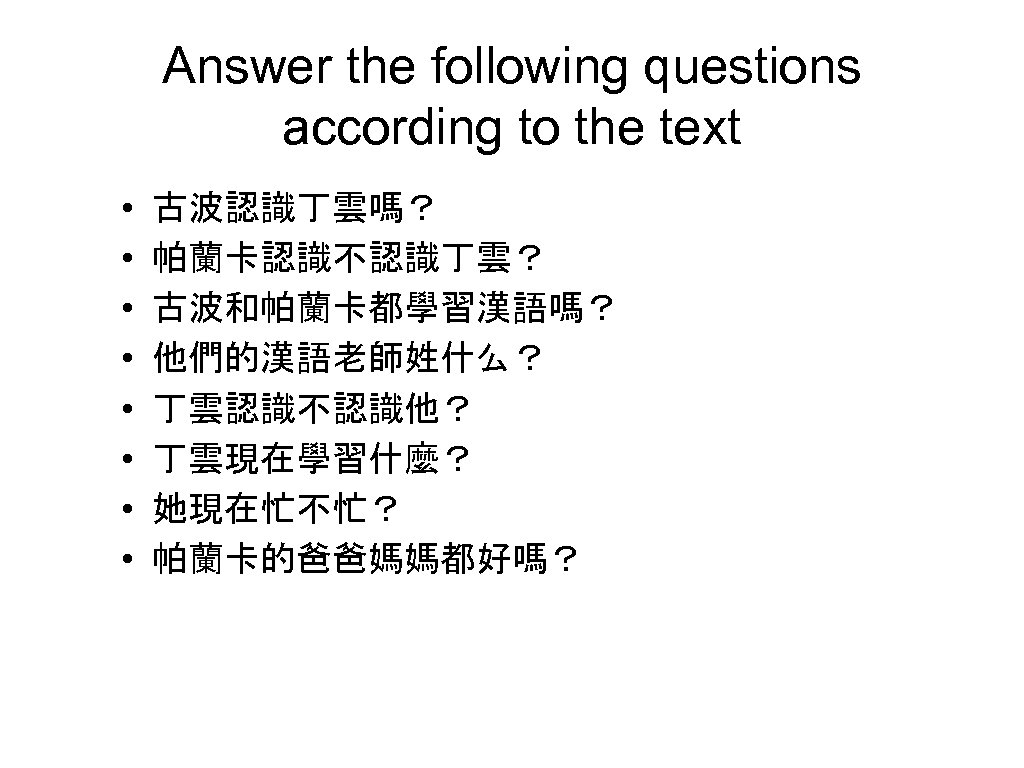 Answer the following questions according to the text • • 古波認識丁雲嗎? 帕蘭卡認識不認識丁雲? 古波和帕蘭卡都學習漢語嗎? 他們的漢語老師姓什么? 丁雲認識不認識他? 丁雲現在學習什麼? 她現在忙不忙? 帕蘭卡的爸爸媽媽都好嗎?