 Скачать презентацию Les grandes bases de données et l histoire sociale
b788aca8d9187585ae23ff05daeb9558.ppt
- Количество слайдов: 40



Les grandes bases de données et l’histoire sociale des populations Centre d’Etude des Mondes Modernes et Contemporains Université Michel de Montaigne, Bordeaux 3 7 -9 Février 2008 Families, household groups and demographic behaviour in London, 1550 -1720 Matthew Davies, Centre for Metropolitan History, University of London
Current projects People in Place: Families, Households and Housing in Early Modern London (Arts and Humanities Research Council) 2003 -6 Housing Environments and Health in Early Modern London (Wellcome Trust) 2006 -8 Directors: Dr Vanessa Harding, Birkbeck, University of London Dr Matthew Davies, Centre for Metropolitan History, University of London Prof. Richard Smith, Cambridge Group for the History of Population and Social Structure Researchers: Philip Baker (CMH & Birkbeck) Dr Mark Merry (CMH & Birkbeck) Gill Newton (Cambridge)
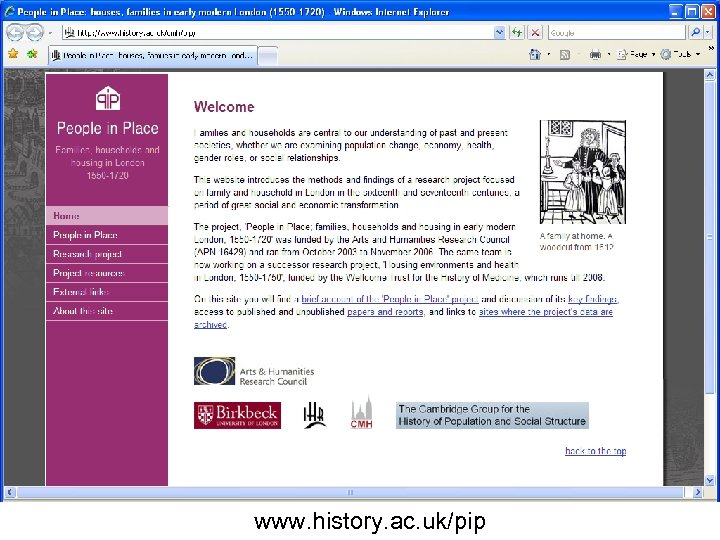
www. history. ac. uk/pip
Historical context…. • Urbanisation and commercialisation – role of London as entrepôt for domestic/international trade and commerce • London as capital city for centralising/powerful government • Migration and population growth 1500 60 000 people 1600 200 000 1700 500 000 • Rapidly changing environment – Expansion of built up area outside the city walls – Rebuilding/intensification of occupation in the centre – Poorer suburbs in north and east; wealthier suburbs to the west
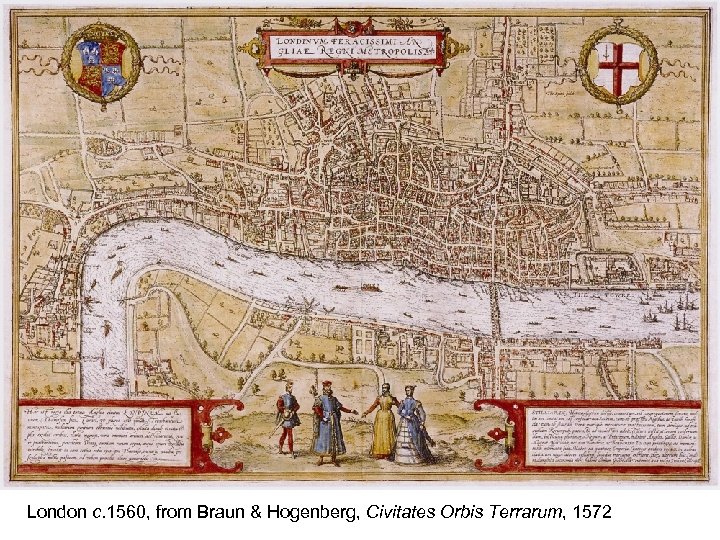
London c. 1560, from Braun & Hogenberg, Civitates Orbis Terrarum, 1572
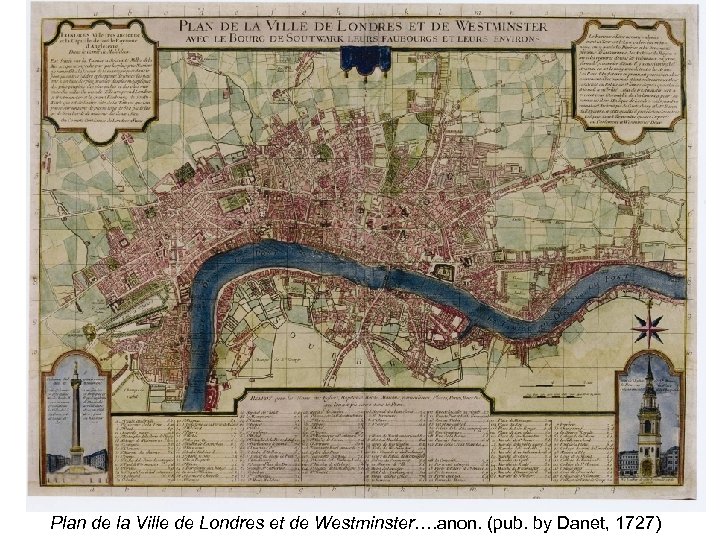
Plan de la Ville de Londres et de Westminster…. anon. (pub. by Danet, 1727)
Aim of the projects…. • to examine effects of large-scale immigration, urbanisation and commercialisation on the population of London Key themes 1. Families and households – changes in structural characteristics. Did ‘modernisation’ cause a crisis in the metropolitan family? 2. Property and environment – interaction of physical environment with family life eg. type/quality of housing 3. Links between topographical and demographic change in the city centre and the suburbs
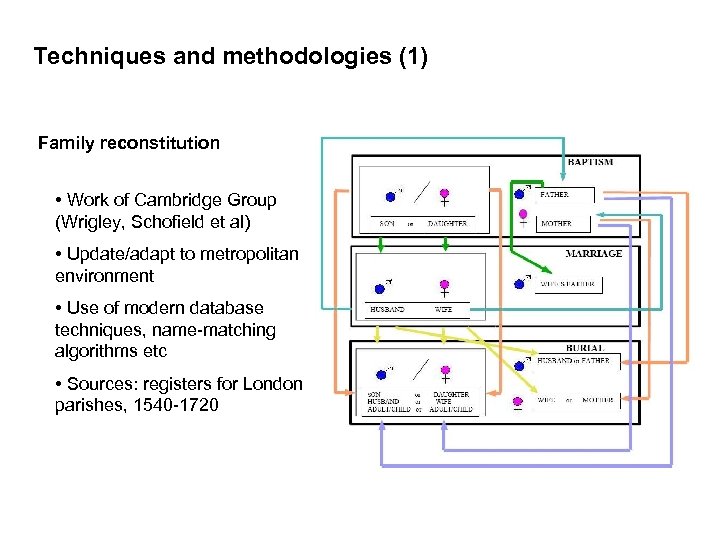
Techniques and methodologies (1) Family reconstitution • Work of Cambridge Group (Wrigley, Schofield et al) • Update/adapt to metropolitan environment • Use of modern database techniques, name-matching algorithms etc • Sources: registers for London parishes, 1540 -1720
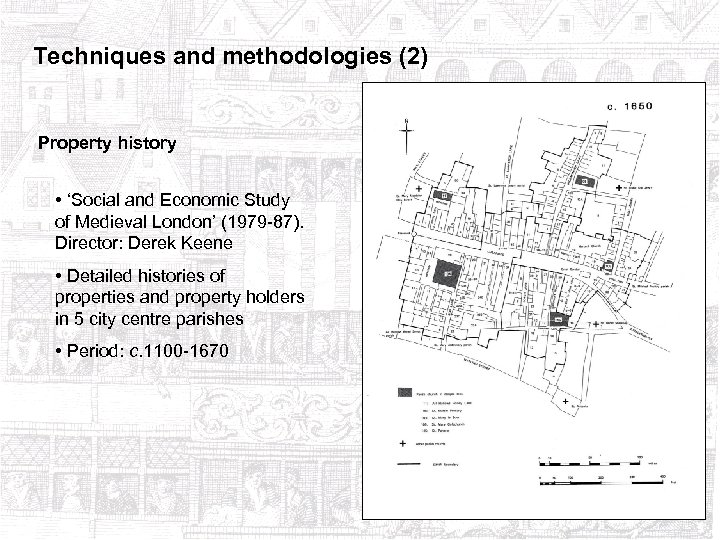
Techniques and methodologies (2) Property history • ‘Social and Economic Study of Medieval London’ (1979 -87). Director: Derek Keene • Detailed histories of properties and property holders in 5 city centre parishes • Period: c. 1100 -1670
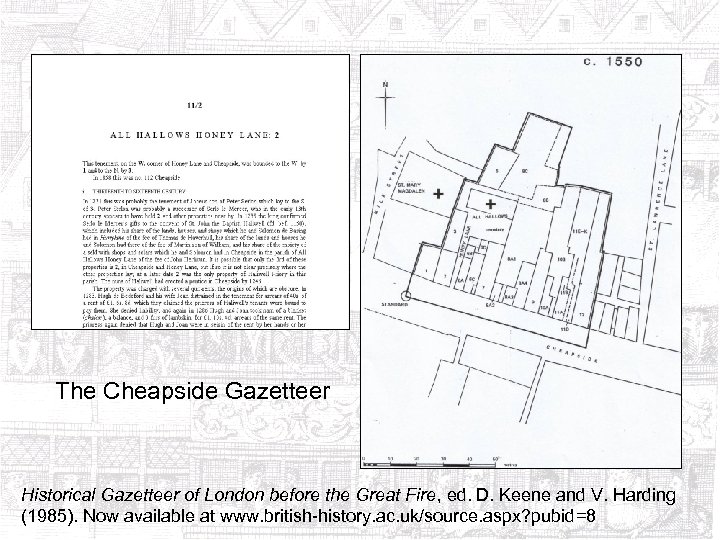
The Cheapside Gazetteer Historical Gazetteer of London before the Great Fire, ed. D. Keene and V. Harding (1985). Now available at www. british-history. ac. uk/source. aspx? pubid=8
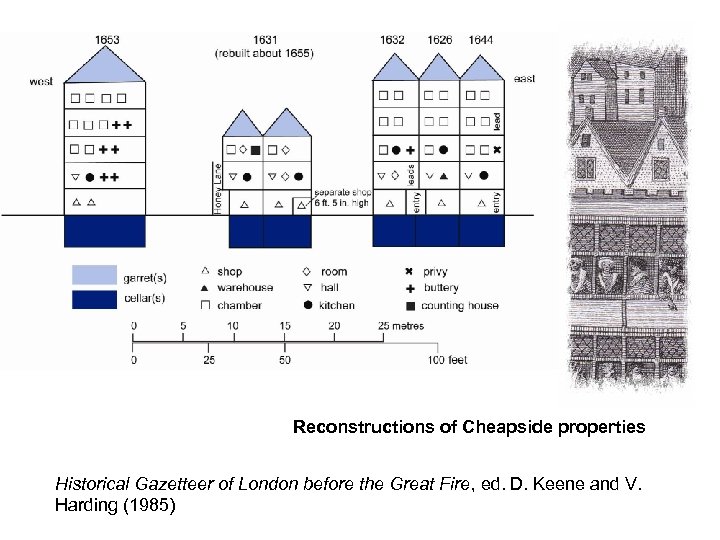
Reconstructions of Cheapside properties Historical Gazetteer of London before the Great Fire, ed. D. Keene and V. Harding (1985)
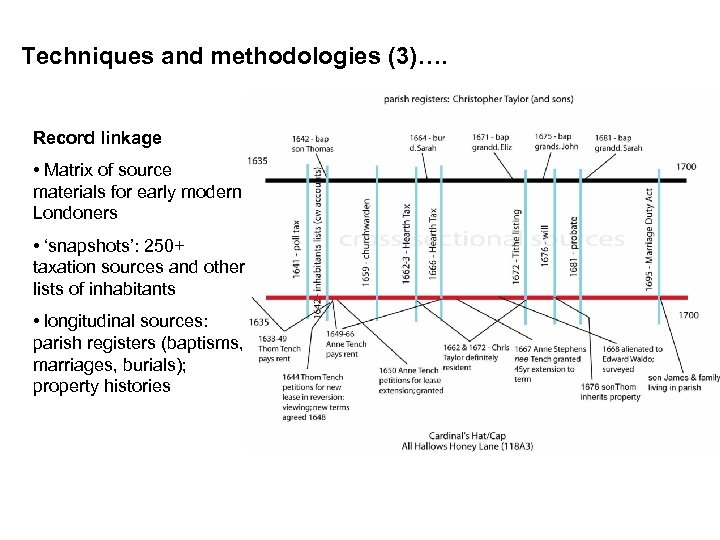
Techniques and methodologies (3)…. Record linkage • Matrix of source materials for early modern Londoners • ‘snapshots’: 250+ taxation sources and other lists of inhabitants • longitudinal sources: parish registers (baptisms, marriages, burials); property histories
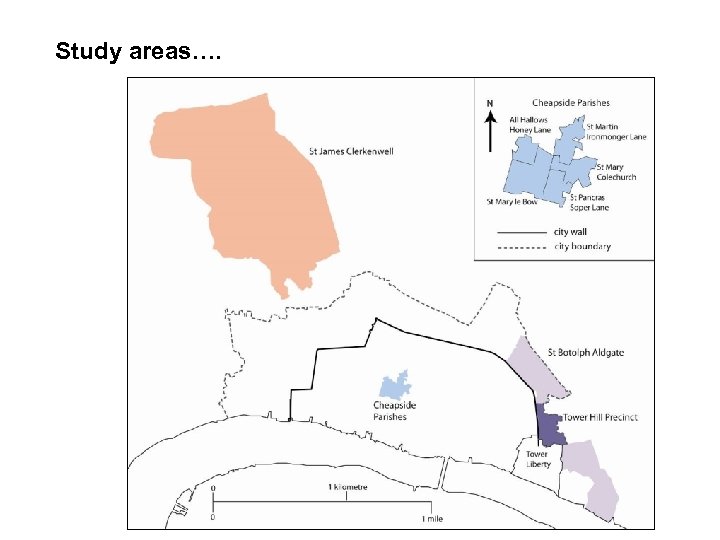
Study areas….
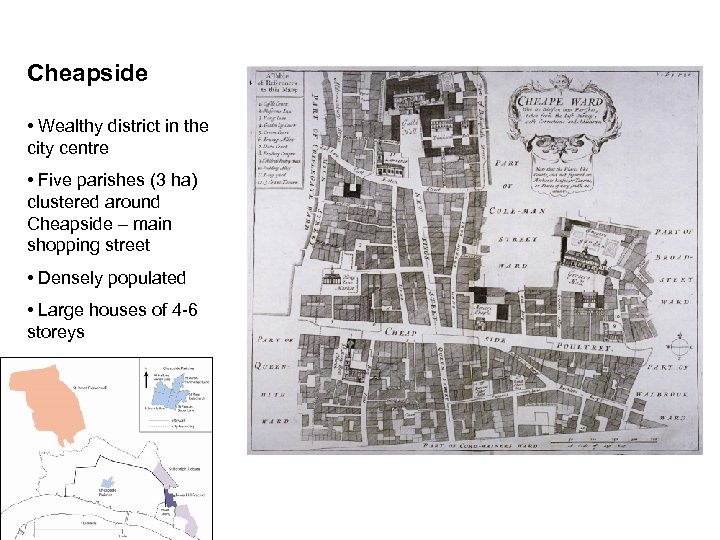
Cheapside • Wealthy district in the city centre • Five parishes (3 ha) clustered around Cheapside – main shopping street • Densely populated • Large houses of 4 -6 storeys
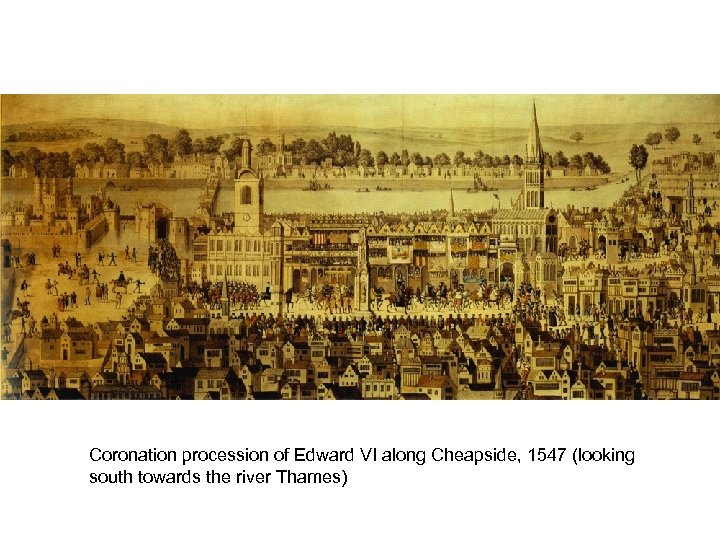
Coronation procession of Edward VI along Cheapside, 1547 (looking south towards the river Thames)
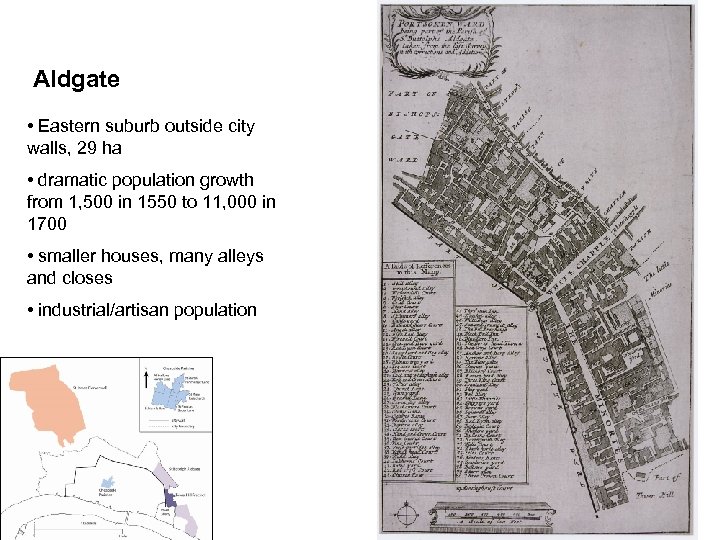
Aldgate • Eastern suburb outside city walls, 29 ha • dramatic population growth from 1, 500 in 1550 to 11, 000 in 1700 • smaller houses, many alleys and closes • industrial/artisan population
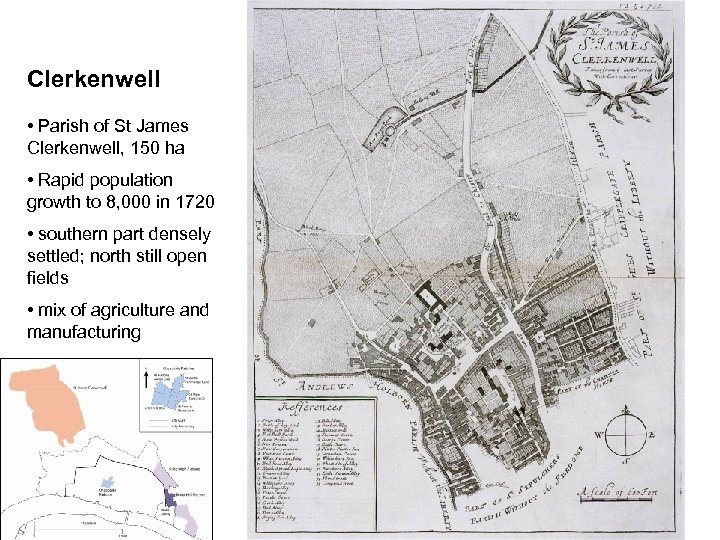
Clerkenwell • Parish of St James Clerkenwell, 150 ha • Rapid population growth to 8, 000 in 1720 • southern part densely settled; north still open fields • mix of agriculture and manufacturing
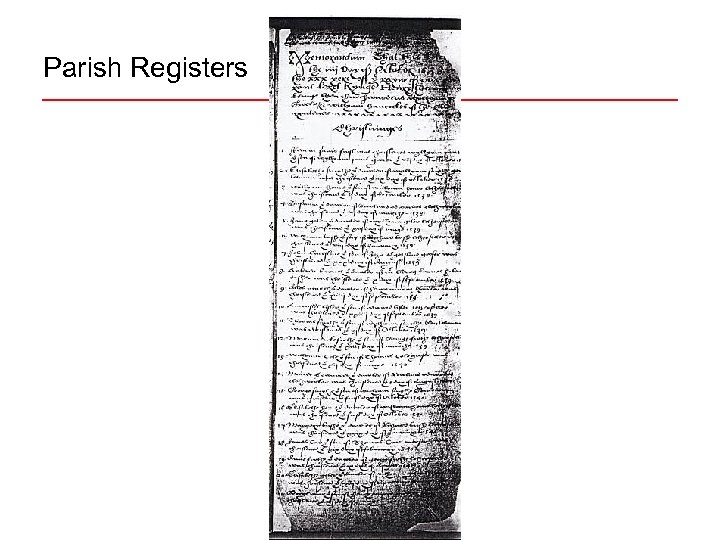
Parish Registers
Parish Registers
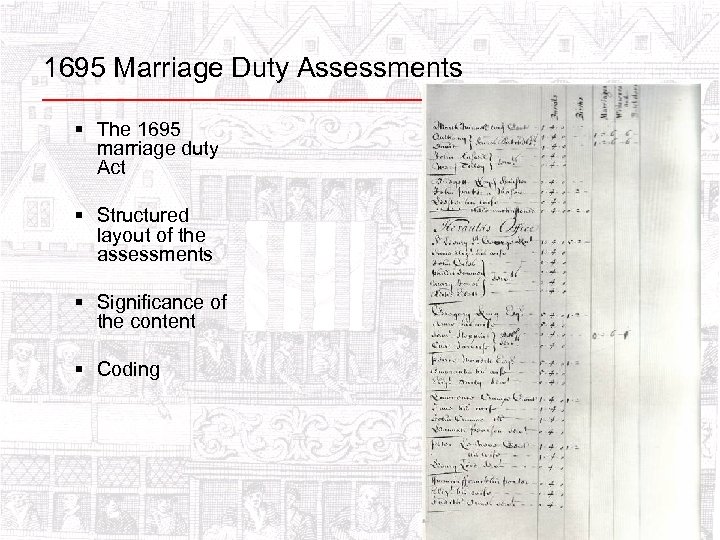
1695 Marriage Duty Assessments § The 1695 marriage duty Act § Structured layout of the assessments § Significance of the content § Coding
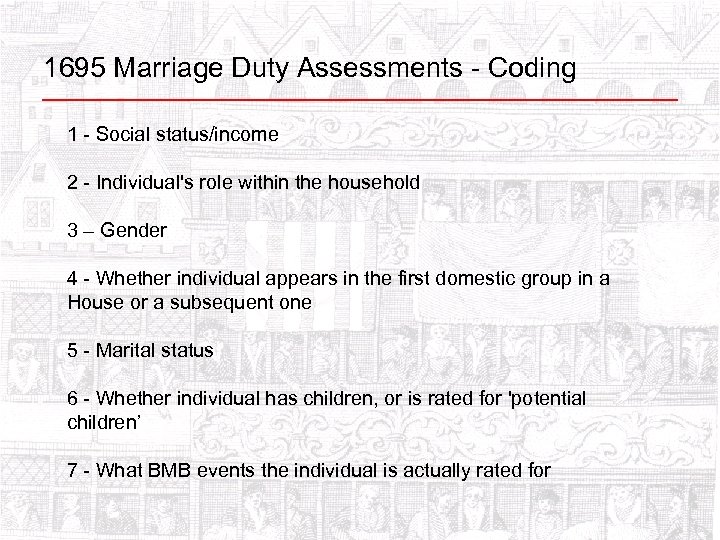
1695 Marriage Duty Assessments - Coding 1 - Social status/income 2 - Individual's role within the household 3 – Gender 4 - Whether individual appears in the first domestic group in a House or a subsequent one 5 - Marital status 6 - Whether individual has children, or is rated for 'potential children’ 7 - What BMB events the individual is actually rated for
Testamentary evidence § Wide range of information relating to families, households and property § c. 2000 testaments/wills identified and collected
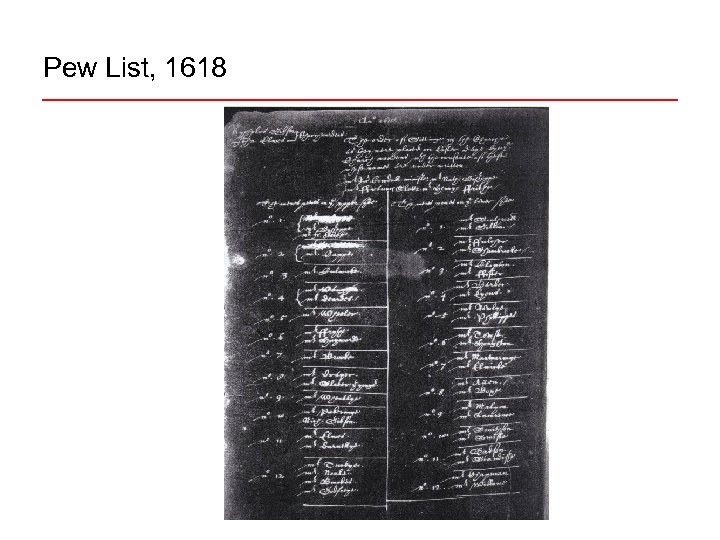
Pew List, 1618
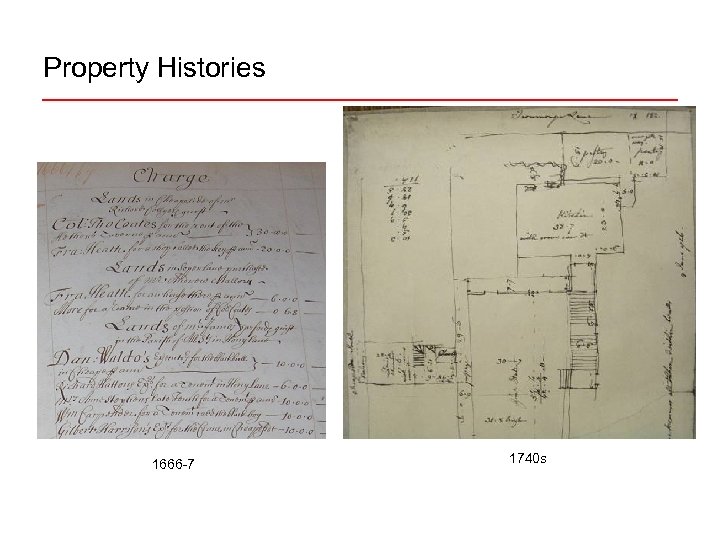
Property Histories 1666 -7 1740 s
The Database - Sources The projects bring together three types of source material: § Demographic data § Records of property ownership and management § Information about householders and household structure
The Database - Sources § Inconsistent layout and structure § Varying content § The importance of capturing all content
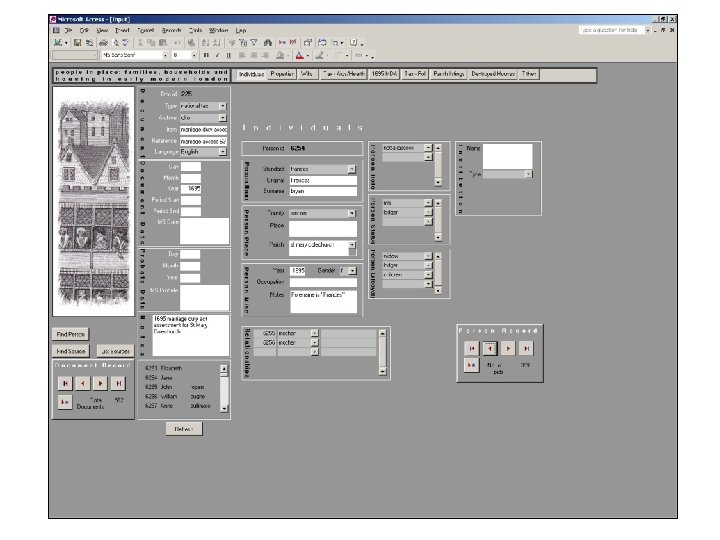
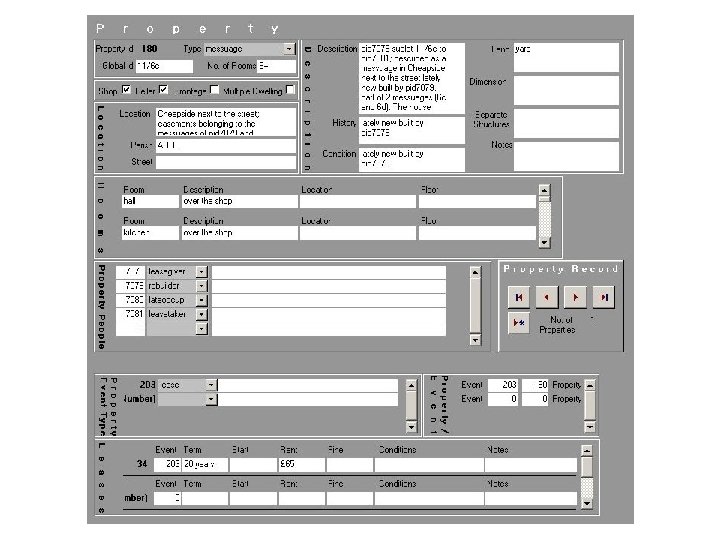
The Database - Structure § The key methodological issue is that of record linkage § How to link comparable relevant information from series sources with the ‘snapshot’ sources § Original plus standardised version of information § Classification/‘Type’ fields
The Database - Structure § Database comprises core and modular elements • Individuals • Properties • Events § The three core elements are connected § Required for linking series and snapshot sources
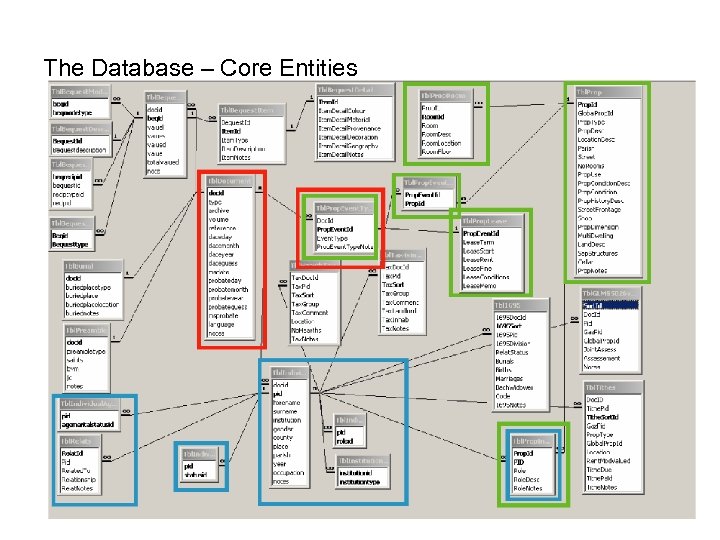
The Database – Core Entities
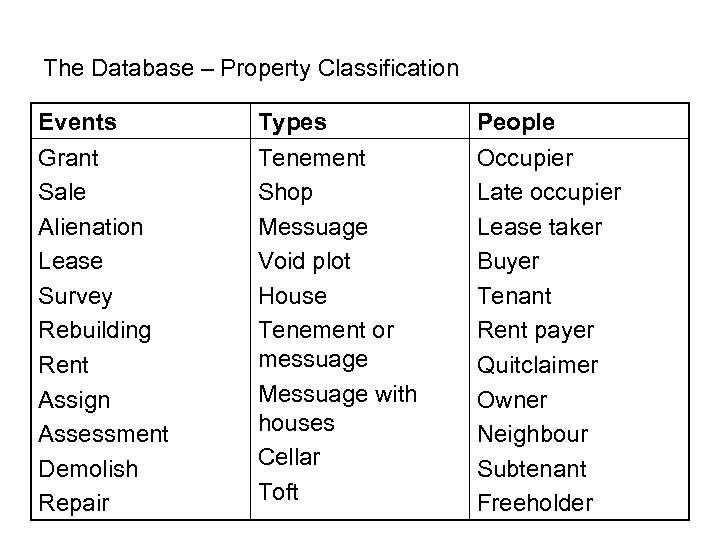
The Database – Property Classification Events Grant Sale Alienation Lease Survey Rebuilding Rent Assign Assessment Demolish Repair Types Tenement Shop Messuage Void plot House Tenement or messuage Messuage with houses Cellar Toft People Occupier Late occupier Lease taker Buyer Tenant Rent payer Quitclaimer Owner Neighbour Subtenant Freeholder
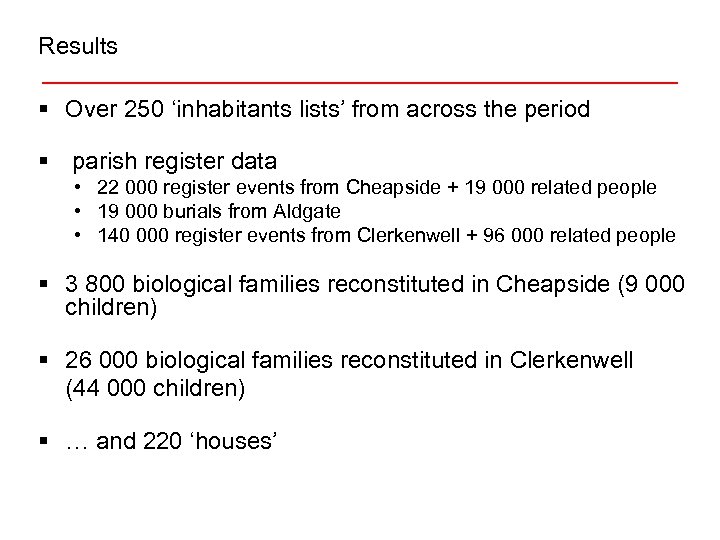
Results § Over 250 ‘inhabitants lists’ from across the period § parish register data • 22 000 register events from Cheapside + 19 000 related people • 19 000 burials from Aldgate • 140 000 register events from Clerkenwell + 96 000 related people § 3 800 biological families reconstituted in Cheapside (9 000 children) § 26 000 biological families reconstituted in Clerkenwell (44 000 children) § … and 220 ‘houses’
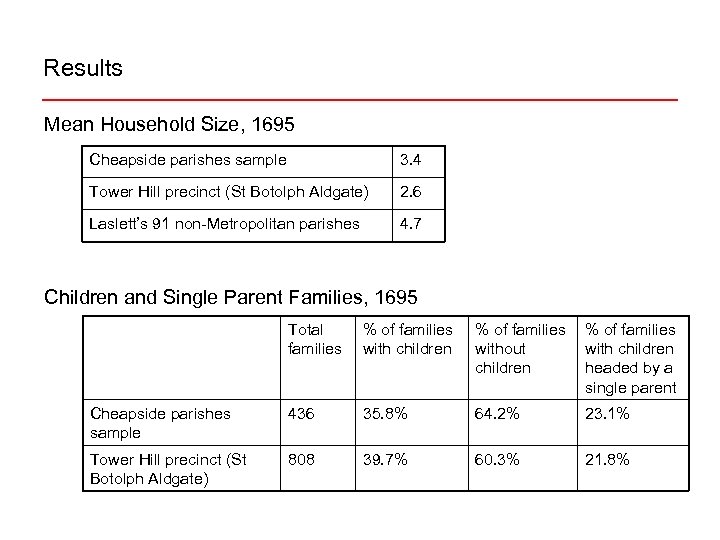
Results Mean Household Size, 1695 Cheapside parishes sample 3. 4 Tower Hill precinct (St Botolph Aldgate) 2. 6 Laslett’s 91 non-Metropolitan parishes 4. 7 Children and Single Parent Families, 1695 Total families % of families with children % of families without with children headed by a single parent Cheapside parishes sample 436 35. 8% 64. 2% 23. 1% Tower Hill precinct (St Botolph Aldgate) 808 39. 7% 60. 3% 21. 8%
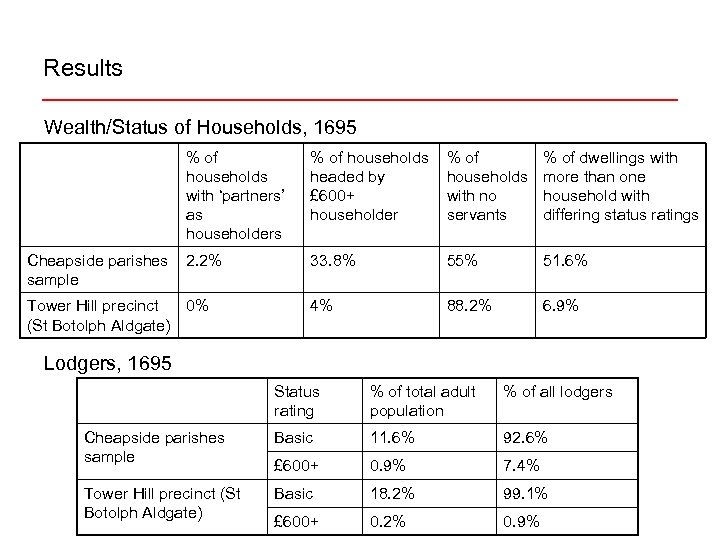
Results Wealth/Status of Households, 1695 % of households with ‘partners’ as householders % of households headed by £ 600+ householder % of households with no servants % of dwellings with more than one household with differing status ratings Cheapside parishes 2. 2% sample 33. 8% 55% 51. 6% Tower Hill precinct 0% (St Botolph Aldgate) 4% 88. 2% 6. 9% Lodgers, 1695 Status rating % of total adult population % of all lodgers Cheapside parishes sample Basic 11. 6% 92. 6% £ 600+ 0. 9% 7. 4% Tower Hill precinct (St Botolph Aldgate) Basic 18. 2% 99. 1% £ 600+ 0. 2% 0. 9%
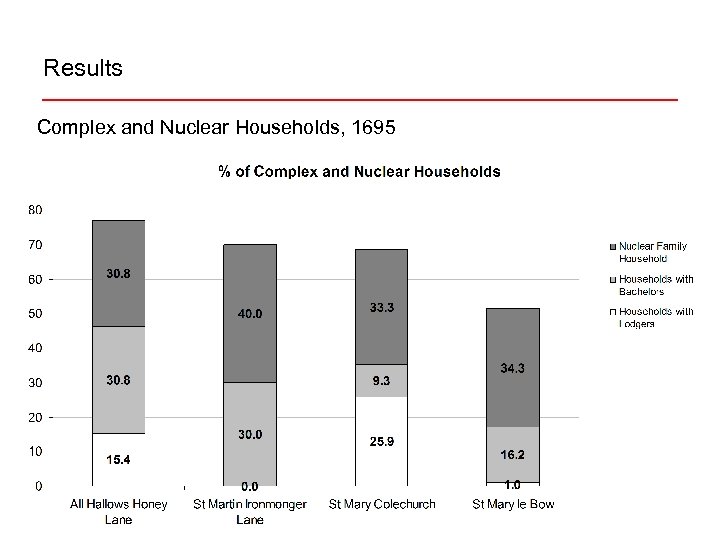
Results Complex and Nuclear Households, 1695
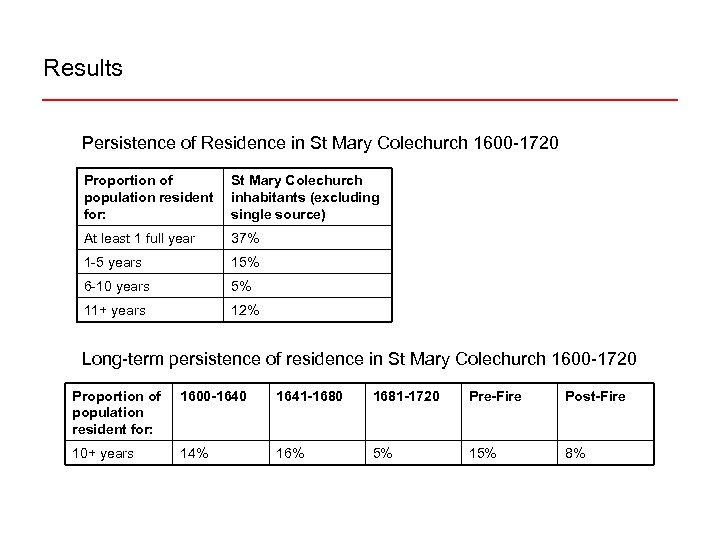
Results Persistence of Residence in St Mary Colechurch 1600 -1720 Proportion of population resident for: St Mary Colechurch inhabitants (excluding single source) At least 1 full year 37% 1 -5 years 15% 6 -10 years 5% 11+ years 12% Long-term persistence of residence in St Mary Colechurch 1600 -1720 Proportion of population resident for: 1600 -1640 1641 -1680 1681 -1720 Pre-Fire Post-Fire 10+ years 14% 16% 5% 15% 8%
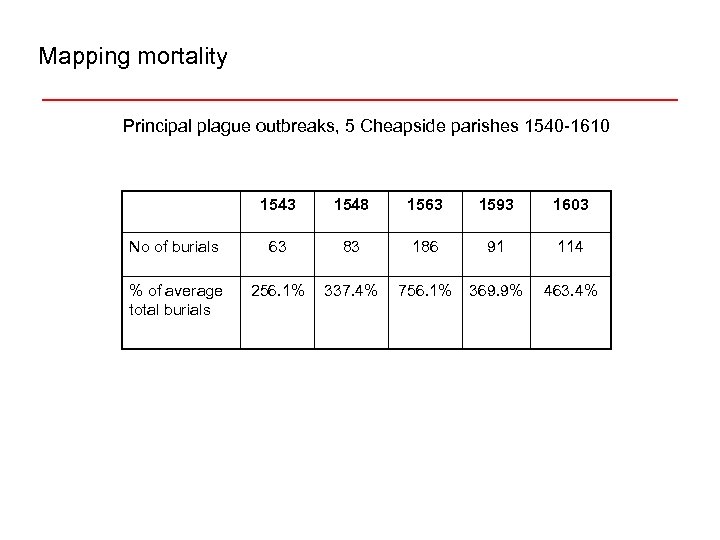
Mapping mortality Principal plague outbreaks, 5 Cheapside parishes 1540 -1610 1543 1548 1563 1593 1603 No of burials 63 83 186 91 114 % of average total burials 256. 1% 337. 4% 756. 1% 369. 9% 463. 4%
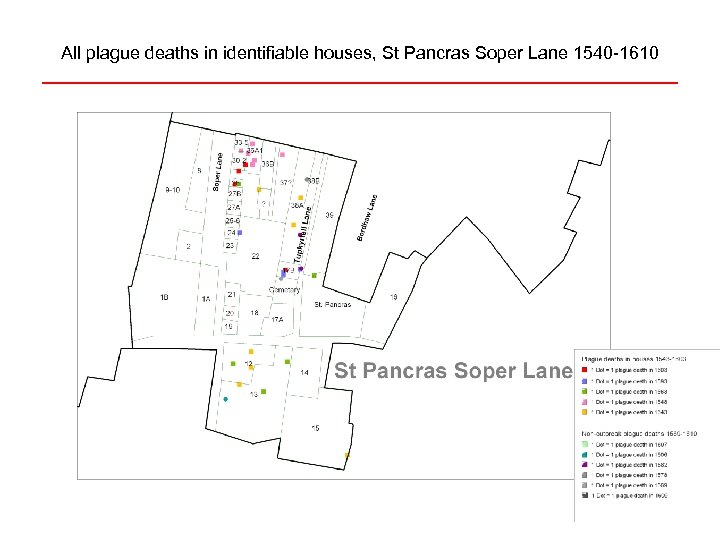
All plague deaths in identifiable houses, St Pancras Soper Lane 1540 -1610
Contact Matthew Davies, Director, Centre for Metropolitan History, Institute of Historical Research, University of London matthew. davies@sas. ac. uk Website: www. history. ac. uk/pip
Скачать презентацию Les grandes bases de données et l histoire sociale
b788aca8d9187585ae23ff05daeb9558.ppt