 Скачать презентацию Legislative Branch Canada s Government 3 19 2018 Canadian Government
03ffa4126d6fa39cf6594e74832fddf6.ppt
- Количество слайдов: 24



Legislative Branch Canada’s Government 3/19/2018
Canadian Government • Canada’s system of government is based mainly on Britain’s. • Canada is a constitutional monarchy. Which means Canada has a Constitution with rules and a ceremonial Head of State who is the Queen or King of Great Britain. • Canada is a federal system which means Canada has two levels of government: Provincial Governments and a National Government
Parliament of Canada • Parliament is made up of people that win their seats (regions) during an election. • The party with the most elected seats forms the government. The party’s leader becomes the Prime Minister. • The Prime Minister chooses members of the party to form the Cabinet.
Legislative Branch • Canada’s Parliament is our Legislative (law making) Branch and it consists of two parts: – The House of Commons – The Senate • The Prime Minister is elected as a single Member of Parliament to the House of Commons, and he/she is the most important person in the legislative branch.
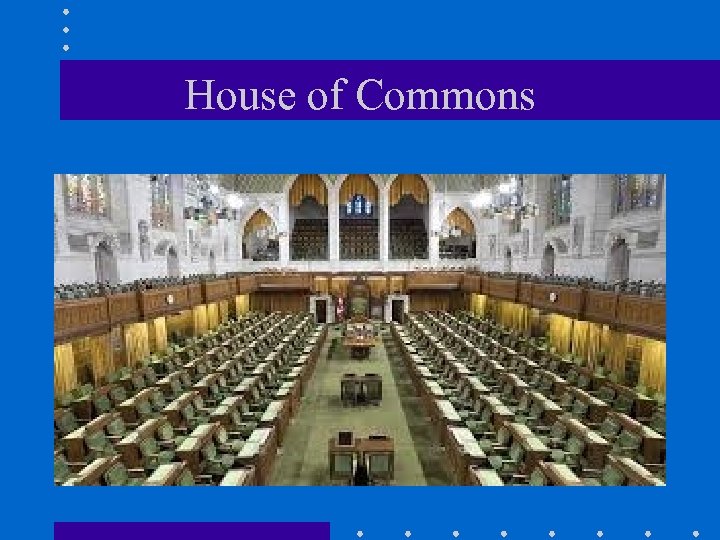
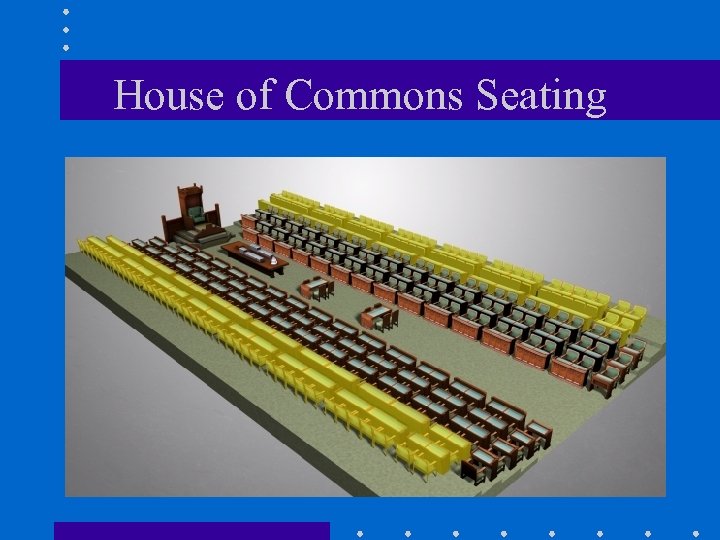
House of Commons • It is the most important part of the Legislature because it’s members are elected by citizens. • It has 338 members, one for each riding or constituency based upon population. • The House of Commons is where most of Canada’s laws are introduced. • Seating is arranged with the Speaker at the front and the government MPs on his right and the opposition MPs on his left.
House of Commons
House of Commons Seating
From A Bill to Law • The main job of Parliament is to create laws. • Proposed laws are called “bills”. • The bills are discussed and voted on in a nine-stage process which turns a bill into a law. • A Minister in Canada’s Government introduces a bill in the House of Commons.
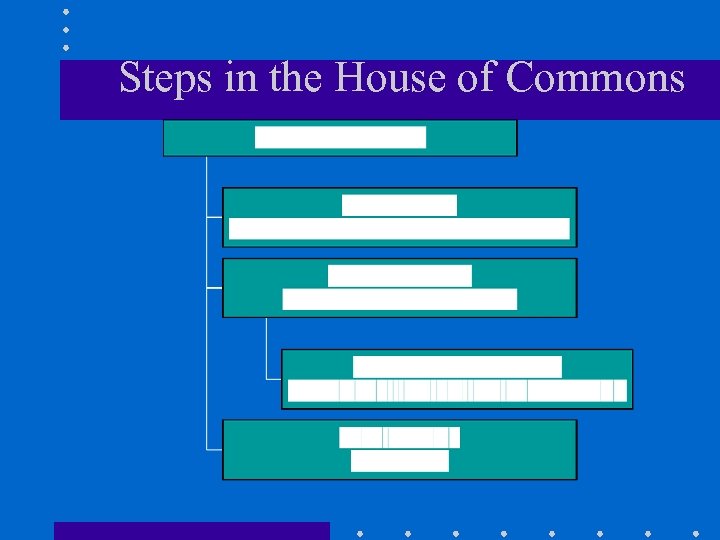
Steps in the House of Commons
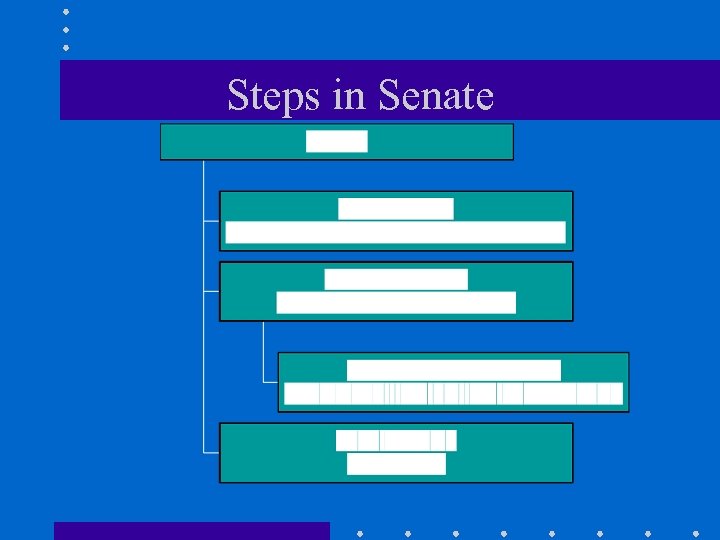
Steps in Senate
Either the House of Commons or the Senate can do two things with a bill: • pass it; • or defeat it. (The Senate rarely defeats a bill because the Senate is not elected and this would be seen as undemocratic)
Final Step
Bill to a Law video Bill to a Law in the Province of Nova Scotia (No Senate): https: //www. youtube. com/wat ch? v=x_Vm 7 oao. Ou. U
Role of Political Parties in Parliament • Political parties are not created by law or written in the constitution, but they play a big role in making government work. • Caucus meetings are meetings of all MPs or Senators who belong to the same party. • Party solidarity means all MPs (or Senators) of one Party vote the same way to try and win the vote.
Parties in Parliament • As of 2015, The Liberal Party has a majority of seats in the House of Commons • It must keep the confidence (the most votes) of the House in order to remain in government. To do this it must not lose a vote in the House on a major bill. If it does lose a vote, it must resign from government and call an election or let the opposition form government.
Opposition Parties in Parliament • The Conservative Party are the official opposition and are the only party, other than the Liberals, to have formed a government in Canada. • The Green Party is founded on environmental issues, but now believes in much more.
Opposition Parties in Parliament • The New Democratic Party– has the third most seats in the House of Commons • The Bloc Quebecois - is a party devoted to Quebec separation. All of its MPs are from Quebec.
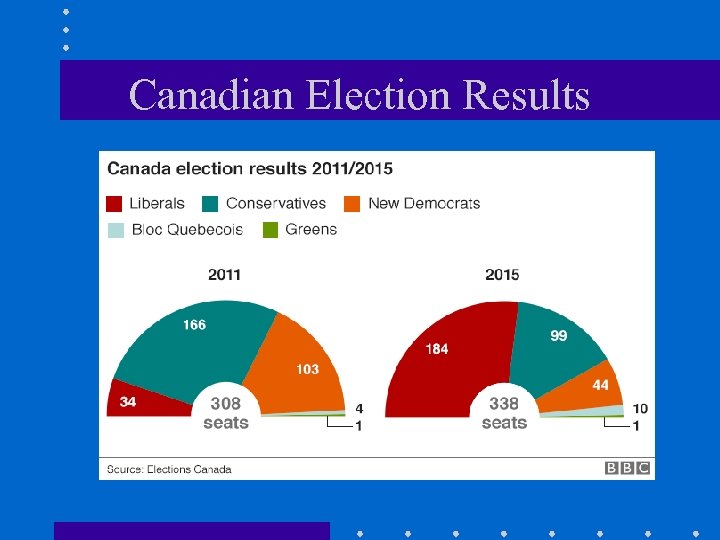
Canadian Election Results
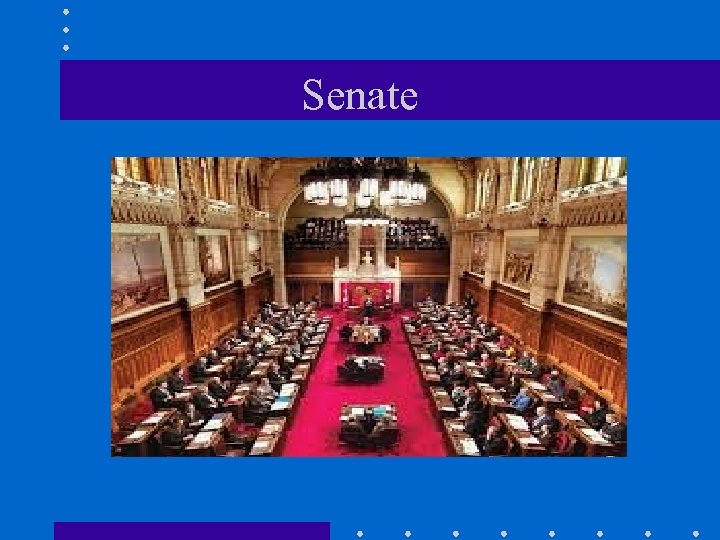
Senate • Senators are appointed by the Prime Minister. • The purpose of the Senate is to provide a chamber of “sober second thought” (a second opinion) and to represent the concerns of Canada’s regions. • While in theory the Senate has the power to block any bill passed by the House of Commons, it rarely does so.
Senate
Senate • The Senate has 105 members: – 24 from each of the following regions -Western Canada, Quebec, Ontario and the Maritimes (PEI, NB, NS) – 6 from Newfoundland 3 from the Territories
Senate • Almost all of the Senators belong to the Conservative and Liberal Parties because Prime Ministers tend to appoint Senators from their own Parties.
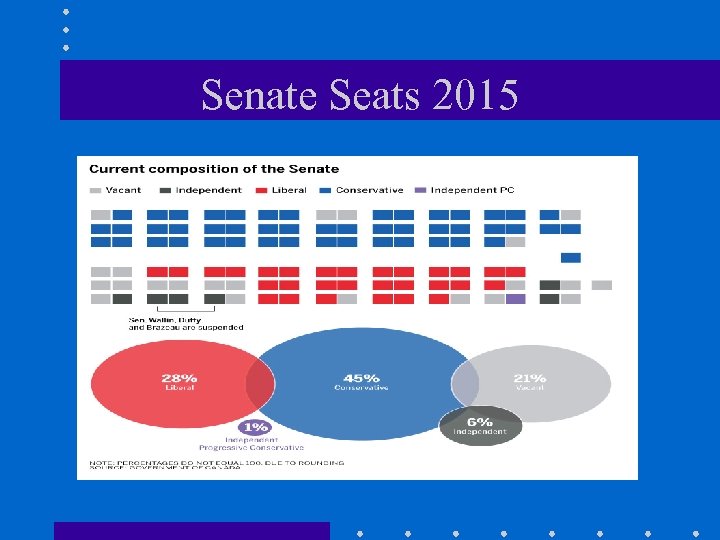
Senate Seats 2015

Rick Mercer : Everything you wanted to know about Canada • https: //www. youtube. com/watch? v=yi 1 yhp_x 7 A
Скачать презентацию Legislative Branch Canada s Government 3 19 2018 Canadian Government
03ffa4126d6fa39cf6594e74832fddf6.ppt