 Скачать презентацию LEGAL AND ETHICAL RESPONSIBILITIES IN HEALTH CARE Mrs
c3f9b266064a3a2107b60ae952d46ff0.ppt
- Количество слайдов: 28




LEGAL AND ETHICAL RESPONSIBILITIES IN HEALTH CARE Mrs. Godbee - Introduction to Healthcare Class
Legal Responsibilities • Civil Law Ø Legal relationships between people and the protection of a persons rights • Torts- wrongful acts that do not involve contracts § Health care mainly affected by civil law: Ø both contract(ual) and torts • Criminal Law Ø Wrongs against a person, property or society • Examples of criminal law in health care: Ø practicing without license, Ø use of narcotics, Ø theft, Ø murder
Torts • Malpractice- “bad practice” • Negligence- failure to give care that is normally expected • Assault-threat or attempt to injure • Battery-unlawful touching of another person without their consent • Invasion of Privacy- includes unneccessary exposure of an individual or revealing personal information
Torts (cont. ) • False imprisonment-Restraining an individual or restricting their freedom. • Abuse-Any care that results in physical pain or mental anguish or harm.
Forms of Abuse • Physical- hitting, restraining, depriving of food water or physical needs • Verbal- can be spoken or written – swearing, shouting, ethnic slurs • Psychological/Mental-threatening harm, denying rights, intimidating, belittling • Sexual - touching, gestures, or suggestions that are unwanted
Forms of Abuse Outside the Facility • Domestic Abuse- intimate partner uses threatening, manipulative, aggressive, or violent behavior • Child Abuse- abuse of a child • Elder Abuse- abuse directed toward an older person (may be related to finances) • All abuse must be reported any time of abuse to supervisor and or authorities.

Torts (cont. ) • Defamation- false statements which cause a person to be ridiculed or ruin their reputation • 1) Slander-spoken • 2) Libel-written
Informed Consent • Permission granted voluntarily by a person who is of sound mind after the procedure and all risks involved have been explained in terms the person can understand. • Ex. Surgery, • Ex. Treatment of minors • Ex. Diagnostic tests
Verbal Consent • Permission is granted after procedure has been explained to patient(s). • Ex. Given Injections • Ex. Taking blood pressure • Never perform a procedure(s) without a patient’s consent

Contracts • A contract is an agreement between two or more parties. • Consist of three parts: 1. Offer 2. Acceptance 3. Consideration
Contracts 1. Offer – competent individual enters into a relationship with health care provider(s) and offers to be a patient. 2. Acceptance – health care providers gives them an appointment or examine and treats the patient. 3. Consideration - payment made by the patient for the physician’s services.
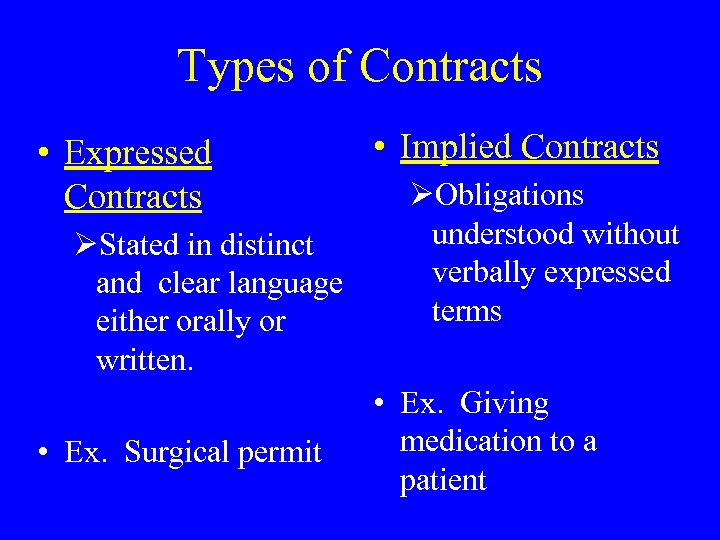
Types of Contracts • Expressed Contracts ØStated in distinct and clear language either orally or written. • Ex. Surgical permit • Implied Contracts ØObligations understood without verbally expressed terms • Ex. Giving medication to a patient
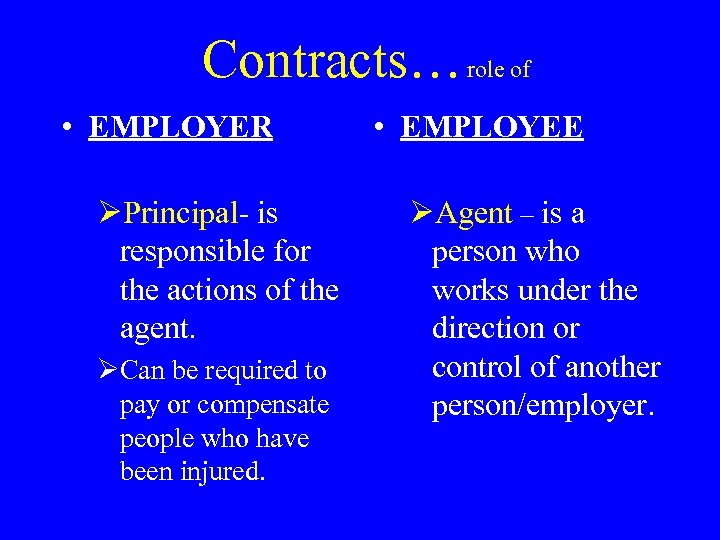
Contracts… role of • EMPLOYER ØPrincipal- is responsible for the actions of the agent. ØCan be required to pay or compensate people who have been injured. • EMPLOYEE ØAgent – is a person who works under the direction or control of another person/employer.
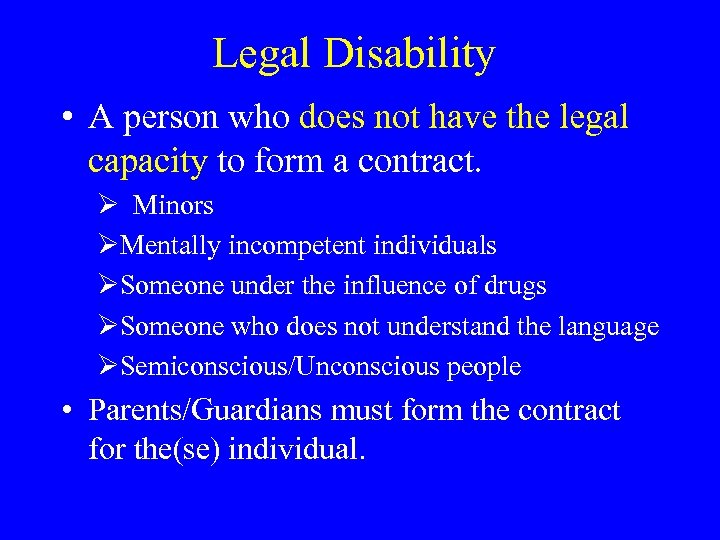
Legal Disability • A person who does not have the legal capacity to form a contract. Ø Minors ØMentally incompetent individuals ØSomeone under the influence of drugs ØSomeone who does not understand the language ØSemiconscious/Unconscious people • Parents/Guardians must form the contract for the(se) individual.

Breach of Contract • A contract that requires certain standards of care by competent, qualified individuals. • If a contract is not performed according to agreement, contract is breached. • Ex. Not paying for services rendered.
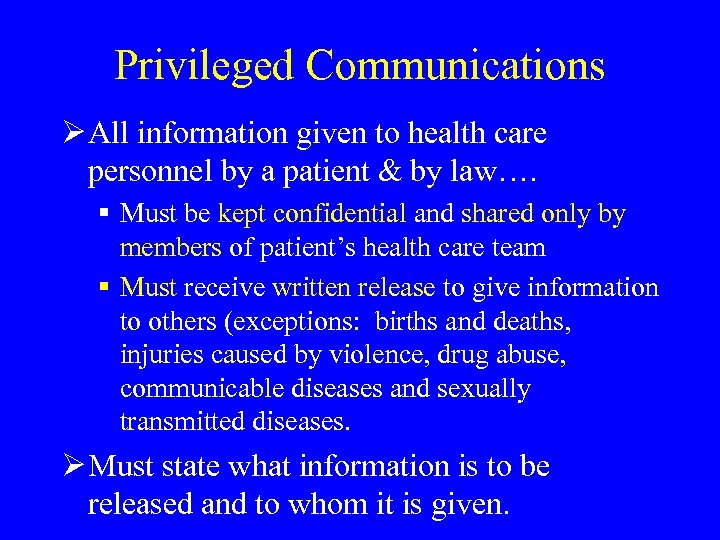
Privileged Communications Ø All information given to health care personnel by a patient & by law…. § Must be kept confidential and shared only by members of patient’s health care team § Must receive written release to give information to others (exceptions: births and deaths, injuries caused by violence, drug abuse, communicable diseases and sexually transmitted diseases. Ø Must state what information is to be released and to whom it is given.
Health Care Records • Records that contain information about the care provided to the patient. ØAn example of privileged communications ØPatient may obtain a copy ØCan be used as legal records ØErrors crossed out with a single line and initialed, and dated ØMust be kept for amount of time required by law then burned or shredded
HIPAA • Health Insurance Portability & Accountability Act of 1996 • The goal is to protect personal information while still allowing information to reach those needed to treat the patient. • All employees must comply with HIPAA
Scope of Practice • The scope of practice describes the procedures, actions, and processes that a healthcare practitioner is permitted to undertake in keeping with the terms of their professional license. • Ex. A Nurse = RN, LPN • Ex. A EMT or A Dentist
Ethics • Set of principals relating to what is morally right or wrong. • Provide a standard of conduct or code of behavior. • Issues: Euthansia, Stem Cell Research, marijuana legalization, animal in research, denying treatment on religious grounds etc. .
Confidentiality • Information about the patient must remain private and can be shared only with other members of the patient’s health care team.
Patients Rights • Patient’s Bill of Rights by AHA • Considerate respectful care • Obtain complete current info about diagnosis etc… • Receive info to give informed consent • Have advanced directives- can refuse treatment
Patients’ Rights • Privacy • Confidentialty • Reasonable response to a request for services • Receive info about relationships between doctors and medical facilities etc… • Be informed of right to refuse being involved in research
Patients’ Rights • Reasonable continuity of care • Right to review medical records and examine bills • Be informed of hospital rules, regulations, and resources to settle greivances

Advanced Directives • Patient Self-Determination Act of 1990 • Legal Directives • Legal documents that allow individuals to state or inform every adult verbally and in writing of their medical treatment; right to make decisions about their care they want or do not want, including right to refuse treatment and right to die • Advance directives should be documented in a patient’s record
Advanced Directives • Living Wills- Documents that allow individuals to state what measures should or should not be taken to prolong life when their conditions are terminal • Durable Power of Attorney- Document which allows another individual to make their medical decisions for them if they become unable to
Professional Standards • Only perform procedures you have been trained and are legally permitted to do. • Use only approved, correct procedures • Obtain proper authorization before performing any procedure • Identify patient and receive their consent before performing procedure
Professional Standards • • • Observe all Safety Precautions Keep all information confidential Think before you speak Treat all patients equally Accept no tips or bribes If any mistakes or errors occur report them immediately to your supervisor • Behave professionally in dress, language, manners and actions
Скачать презентацию LEGAL AND ETHICAL RESPONSIBILITIES IN HEALTH CARE Mrs
c3f9b266064a3a2107b60ae952d46ff0.ppt