


 Скачать презентацию Lectures Paed Dr Jana Javorčíková Ph D Institution
1c7c4237f88e72a721fe08b52d1428d8.ppt
- Количество слайдов: 100
 Lectures: Paed. Dr. Jana Javorčíková, Ph. D. Institution: Zvolen, TUZVO, koordinátorka: doc. Ivica Lenčová Organization: (Lessons/Hodín: 24; t. j. 9 a 9 prezenčne, 6 dištančne)
 Plan of lectures: 1. stretnutie (9 prednášok, 10 okruhov) – História USA 1. 2. 3. 4. 5. 6. 7. 8. 9. 10. Introduction to US history: languagewise vs. culturewise (Úvod do histórie USA: jazyková a kultúrna rovina) US political geography: US regions and their history (Americká politická geografia: regióny a ich história) Early beginnings: first settlements, Mayflower, Puritans, Pocahontas. American English. (Rané začiatky osídľovania: prvé osady, Mayflower, Puritáni, Pocahontas. Americká angličtina). American Indians: tribes, traditions, stereotypes (Americkí indiáni: kmene, tradície, stereotypy). Waves of immigration: US holidays (Imigračné vlny: Americké sviatky). War of Independence: Declaration of Independence (Vojna za nezávislosť: Vyhlásenie nezávislosti). Making of a nation: the Constitution, Congress (Formovanie národa: Ústava, Congress) Civil War: slavery, the North, the South (Občianska vojna: otroctvo, Sever a juh) 20 th century history: US economy at the beginning of the 20 th century: Ford, Coca Cola, laissez- faire (História 20. storočia: Americká ekonomika na začiatku 20. storočia: Ford, Coca Cola, voľný obchod) 20 th century history: history and culture of US cities: NY. Washington, San Francisco and others (História a kultúra 20. storočia: Americké mestá: New York, Washington, San Francisco a i. )
 HODNOTENIE/ASSESSMENT Pripravené v rámci: dištančného štúdia- Rozsah: 3 hodiny: Príprava záverečného projektu: Aktivita v rozsahu ½-1 vyuč. hodiny, využívajúca reálie na výučbu konkrétneho jazykového javu.
 Texts for seminars/Kde nájsť texty na semináre: • • • www. fhv. umb Katedra anglistiky a amerikanistiky Pracovníci katedry Jana Javorčíková Dištančné štúdium – Interkultúrna komunikácia
 Lecture 1/Prednáška 1: Introduction to American Studies, to US history Why do we have to study Intercultural Communication and American Studies?
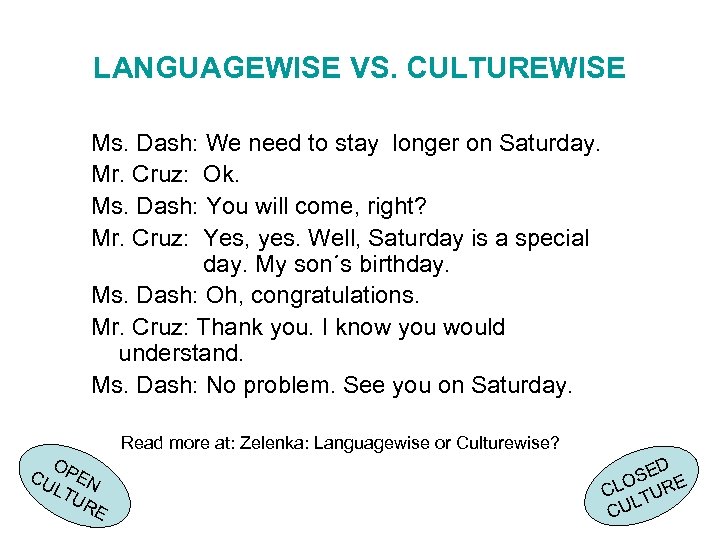 LANGUAGEWISE VS. CULTUREWISE Ms. Dash: We need to stay longer on Saturday. Mr. Cruz: Ok. Ms. Dash: You will come, right? Mr. Cruz: Yes, yes. Well, Saturday is a special day. My son´s birthday. Ms. Dash: Oh, congratulations. Mr. Cruz: Thank you. I know you would understand. Ms. Dash: No problem. See you on Saturday. Read more at: Zelenka: Languagewise or Culturewise? O CU PEN LT UR E D SE E O CL TUR L CU
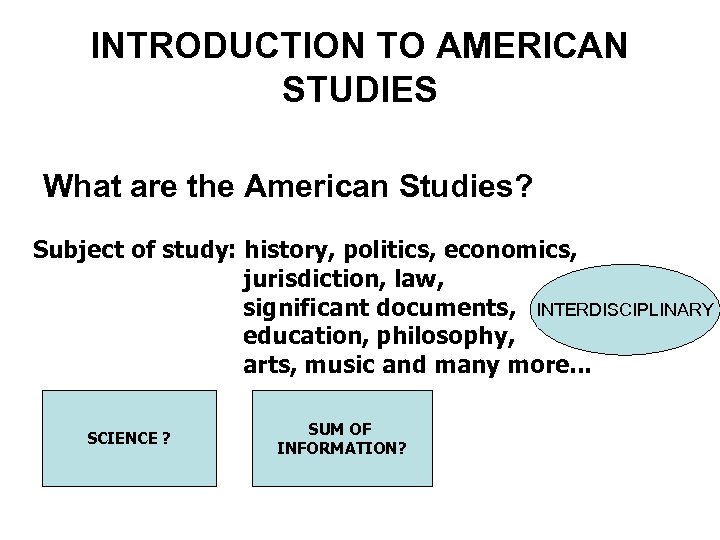 INTRODUCTION TO AMERICAN STUDIES What are the American Studies? Subject of study: history, politics, economics, jurisdiction, law, significant documents, INTERDISCIPLINARY education, philosophy, arts, music and many more. . . SCIENCE ? SUM OF INFORMATION?
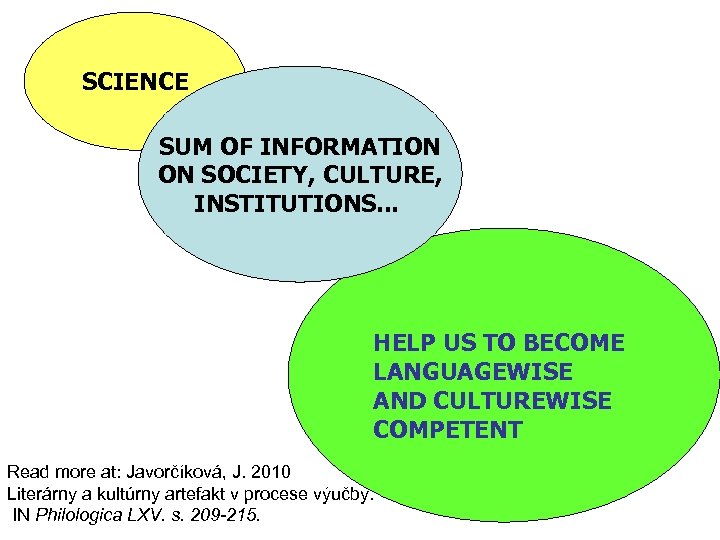 SCIENCE SUM OF INFORMATION ON SOCIETY, CULTURE, INSTITUTIONS. . . HELP US TO BECOME LANGUAGEWISE AND CULTUREWISE COMPETENT Read more at: Javorčíková, J. 2010 Literárny a kultúrny artefakt v procese výučby. IN Philologica LXV. s. 209 -215.
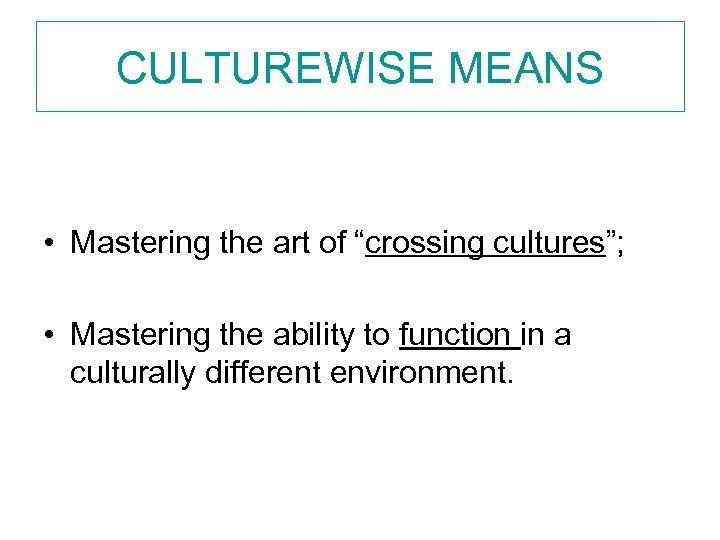 CULTUREWISE MEANS • Mastering the art of “crossing cultures”; • Mastering the ability to function in a culturally different environment.
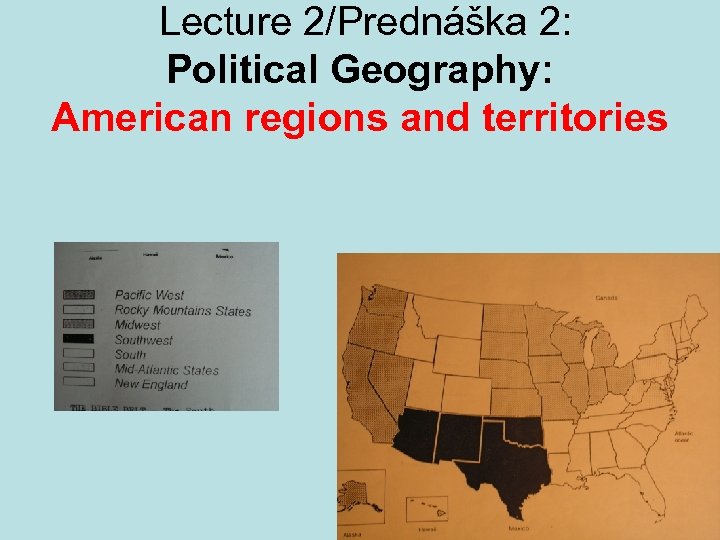 Lecture 2/Prednáška 2: Political Geography: American regions and territories
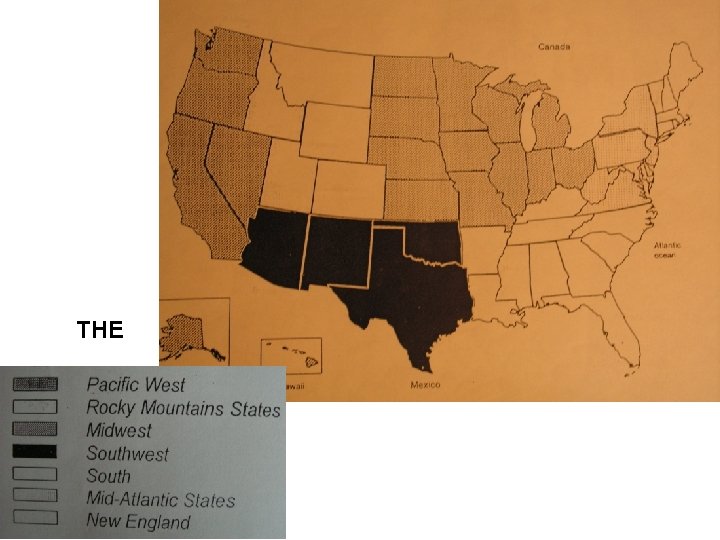 THE
THE
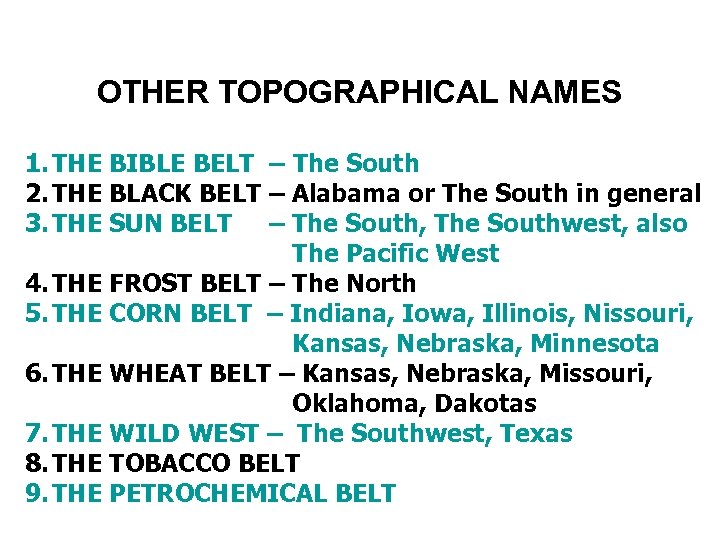 OTHER TOPOGRAPHICAL NAMES 1. THE BIBLE BELT – The South 2. THE BLACK BELT – Alabama or The South in general 3. THE SUN BELT – The South, The Southwest, also The Pacific West 4. THE FROST BELT – The North 5. THE CORN BELT – Indiana, Iowa, Illinois, Nissouri, Kansas, Nebraska, Minnesota 6. THE WHEAT BELT – Kansas, Nebraska, Missouri, Oklahoma, Dakotas 7. THE WILD WEST – The Southwest, Texas 8. THE TOBACCO BELT 9. THE PETROCHEMICAL BELT
 STATE NAMES AND NICKNAMES Each state has a nickname which indicates its history, politics and geography. For example, California is nicknamed “The Golden State” because the sunsets there are “golden” (ACU).
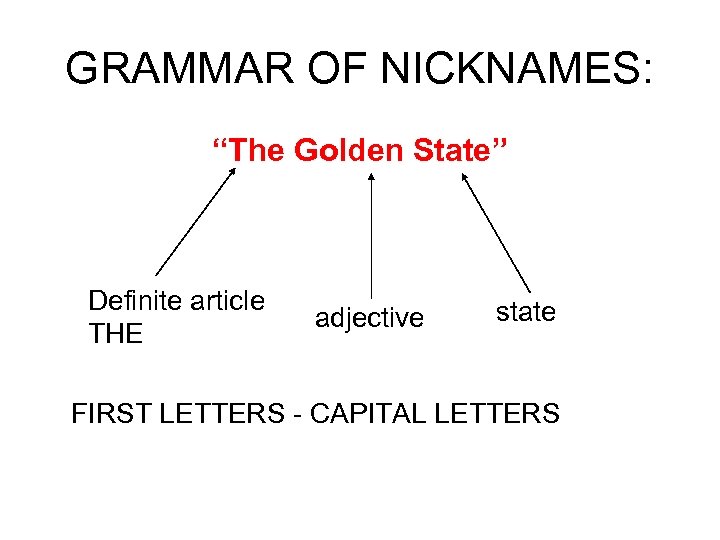 GRAMMAR OF NICKNAMES: “The Golden State” Definite article THE adjective state FIRST LETTERS - CAPITAL LETTERS
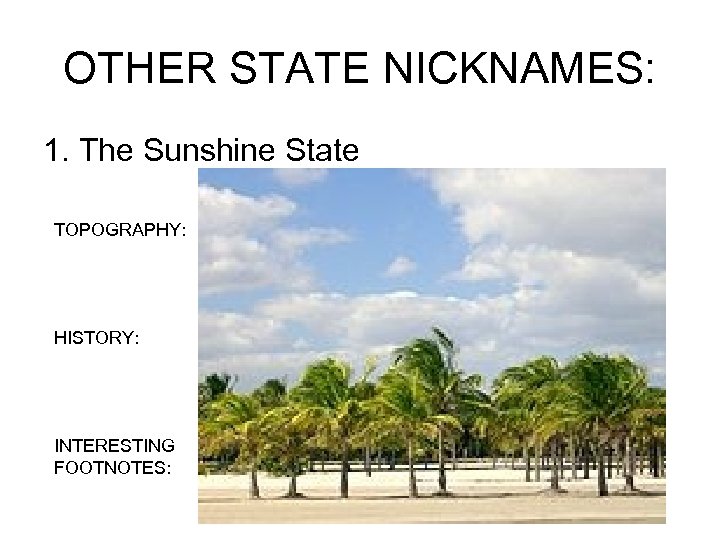 OTHER STATE NICKNAMES: 1. The Sunshine State TOPOGRAPHY: HISTORY: INTERESTING FOOTNOTES:
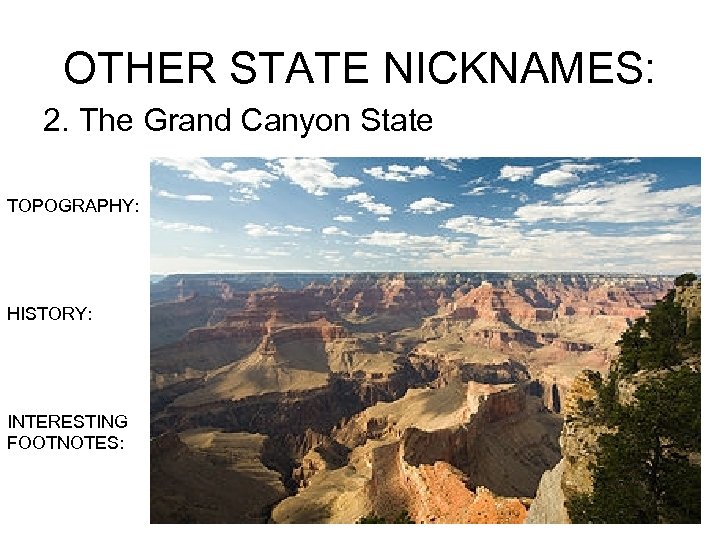 OTHER STATE NICKNAMES: 2. The Grand Canyon State TOPOGRAPHY: HISTORY: INTERESTING FOOTNOTES:
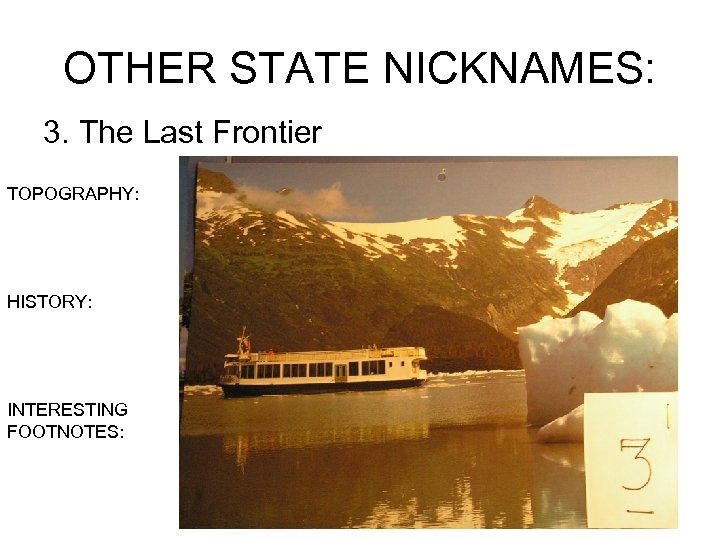 OTHER STATE NICKNAMES: 3. The Last Frontier TOPOGRAPHY: HISTORY: INTERESTING FOOTNOTES:
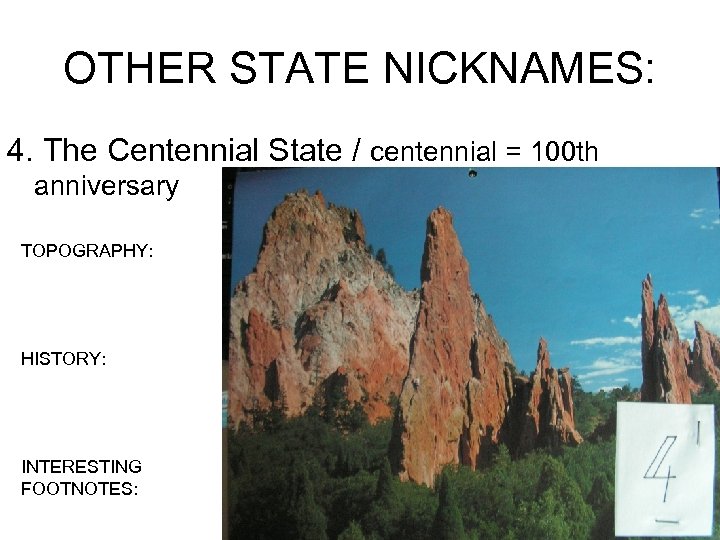 OTHER STATE NICKNAMES: 4. The Centennial State / centennial = 100 th anniversary TOPOGRAPHY: HISTORY: INTERESTING FOOTNOTES:
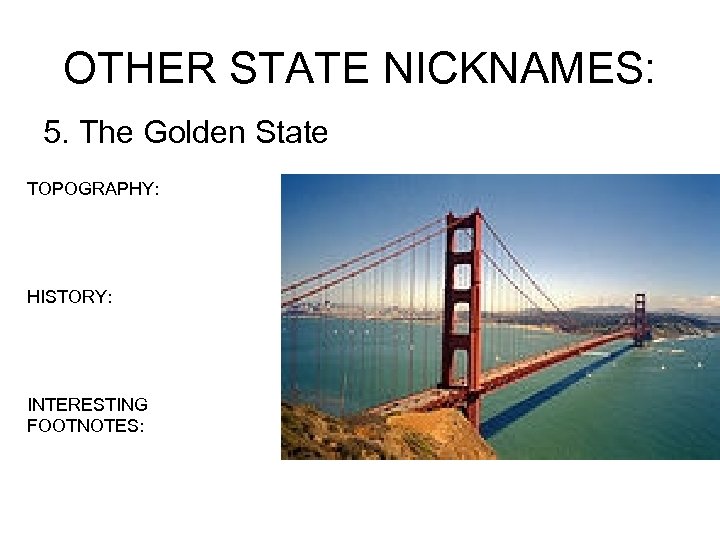 OTHER STATE NICKNAMES: 5. The Golden State TOPOGRAPHY: HISTORY: INTERESTING FOOTNOTES:
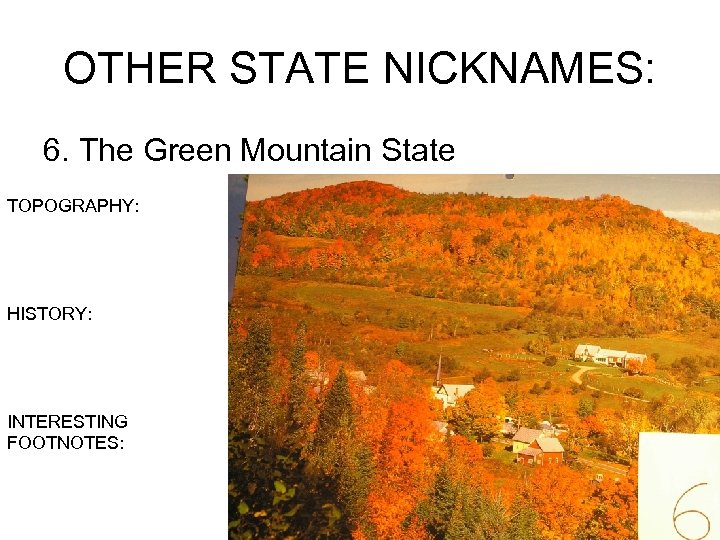 OTHER STATE NICKNAMES: 6. The Green Mountain State TOPOGRAPHY: HISTORY: INTERESTING FOOTNOTES:
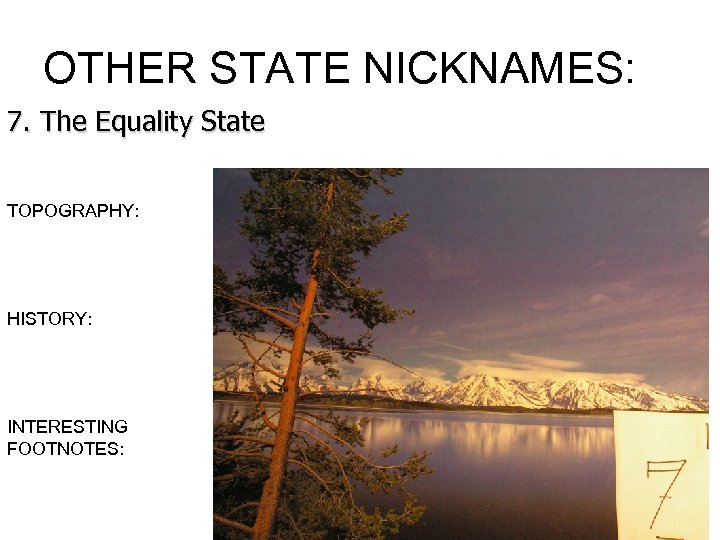 OTHER STATE NICKNAMES: 7. The Equality State TOPOGRAPHY: HISTORY: INTERESTING FOOTNOTES:
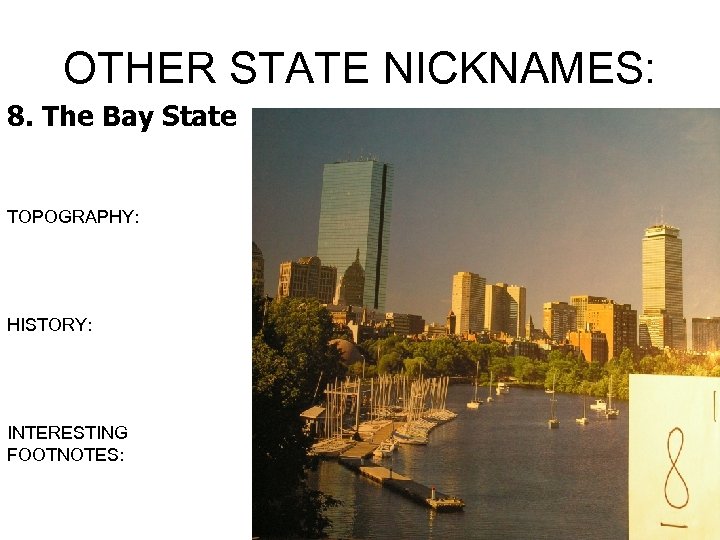 OTHER STATE NICKNAMES: 8. The Bay State TOPOGRAPHY: HISTORY: INTERESTING FOOTNOTES:
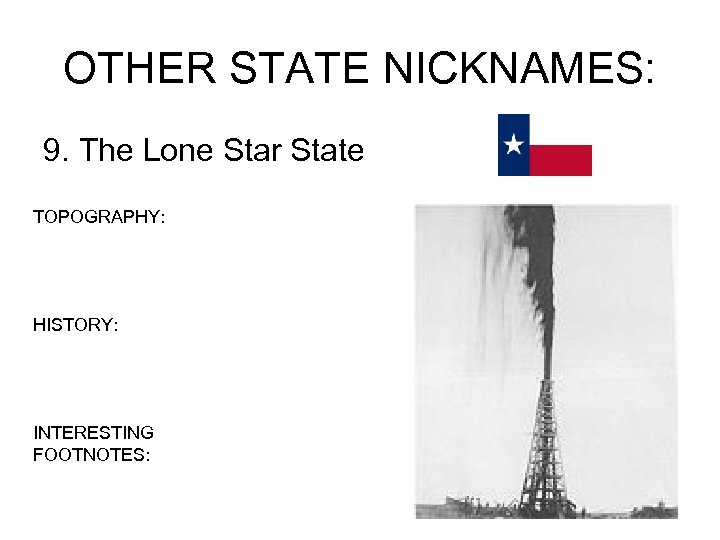 OTHER STATE NICKNAMES: 9. The Lone Star State TOPOGRAPHY: HISTORY: INTERESTING FOOTNOTES:
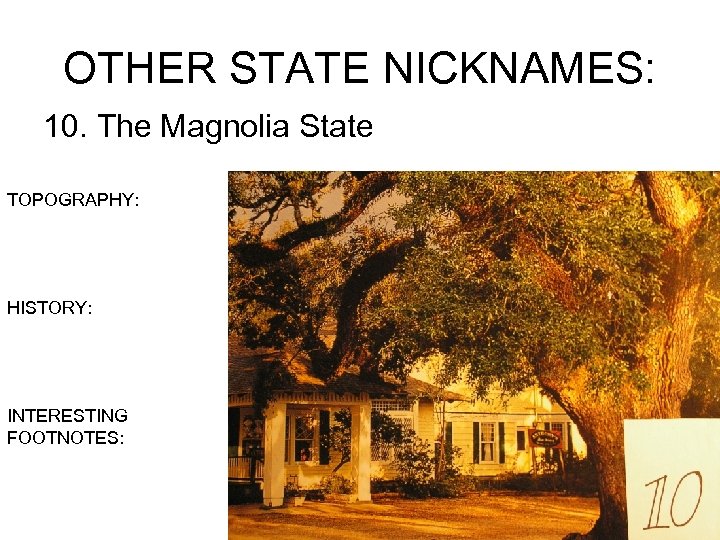 OTHER STATE NICKNAMES: 10. The Magnolia State TOPOGRAPHY: HISTORY: INTERESTING FOOTNOTES:
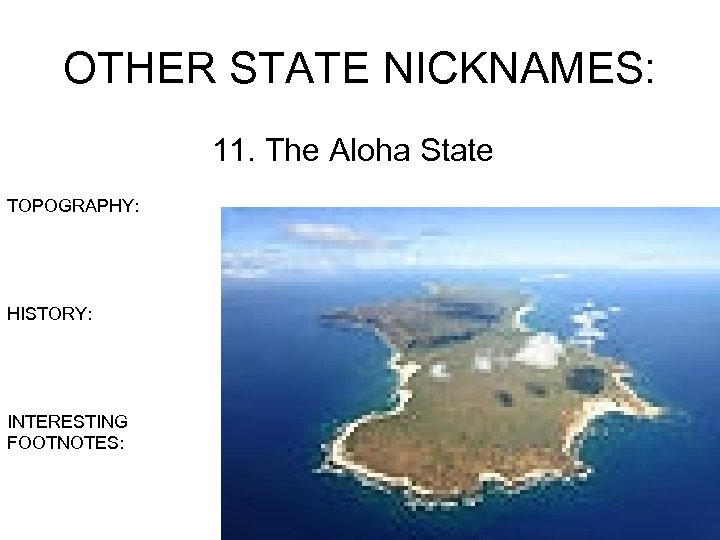 OTHER STATE NICKNAMES: 11. The Aloha State TOPOGRAPHY: HISTORY: INTERESTING FOOTNOTES:
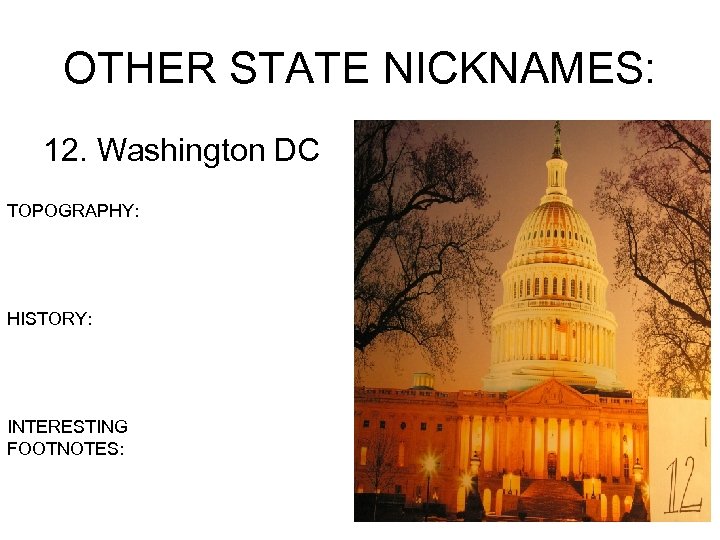 OTHER STATE NICKNAMES: 12. Washington DC TOPOGRAPHY: HISTORY: INTERESTING FOOTNOTES:
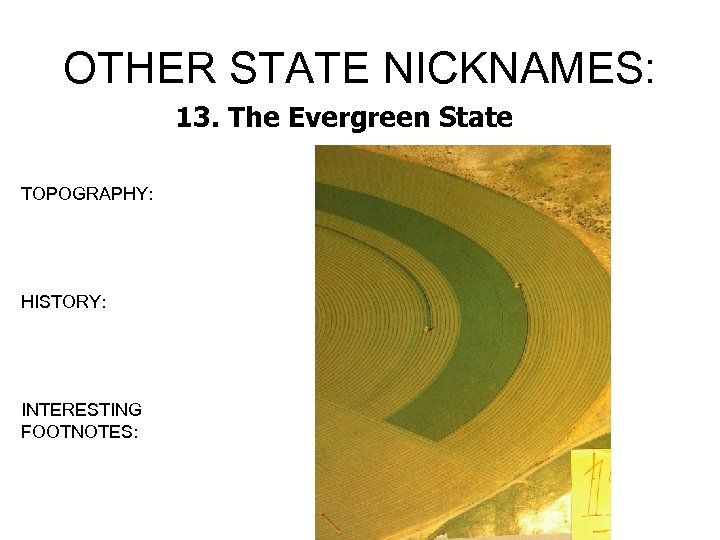 OTHER STATE NICKNAMES: 13. The Evergreen State TOPOGRAPHY: HISTORY: INTERESTING FOOTNOTES:
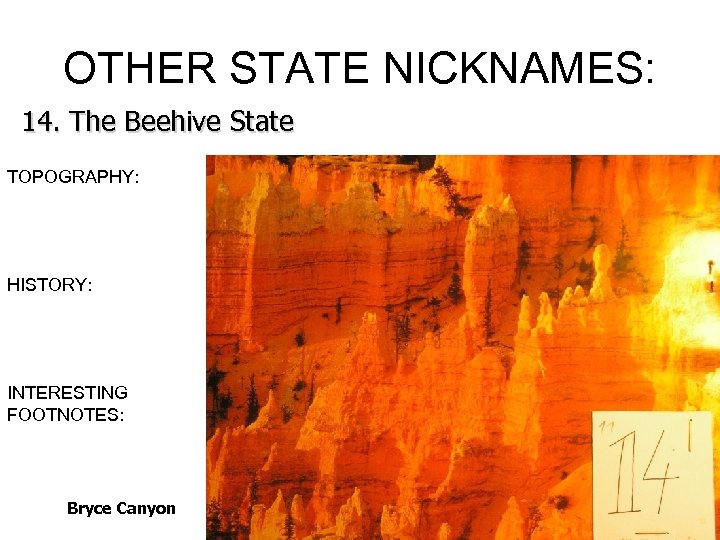 OTHER STATE NICKNAMES: 14. The Beehive State TOPOGRAPHY: HISTORY: INTERESTING FOOTNOTES: Bryce Canyon
 REVISE: WHAT HAVE WE LEANED IN LECTURE 1? • Unemployment has risen in The Petrochemical Belt. Which region is dicussed? • Arnold Schwartzenegger is the golden governor of The Golden State. • What type of metal can we find in Colorado? • What type of religion can we find in The Beehive State?
 Lecture 3/Prednáška 3: Early Beginnings: first settlements, Mayflower, Puritans, Pocahontas, American English
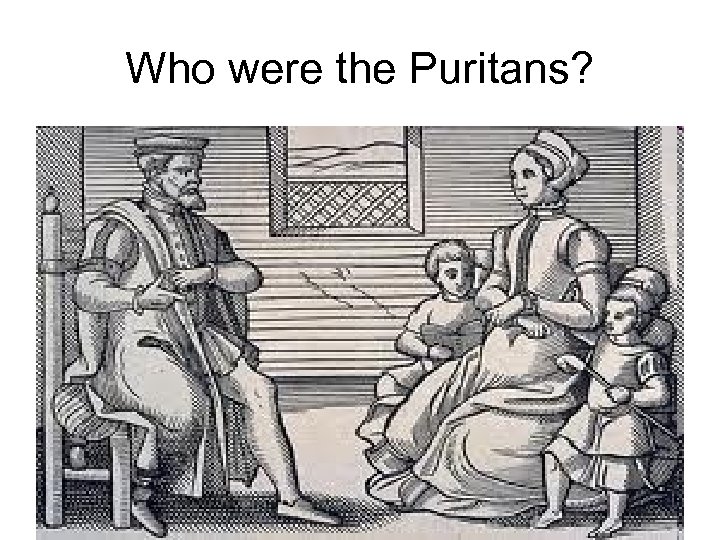 Who were the Puritans?
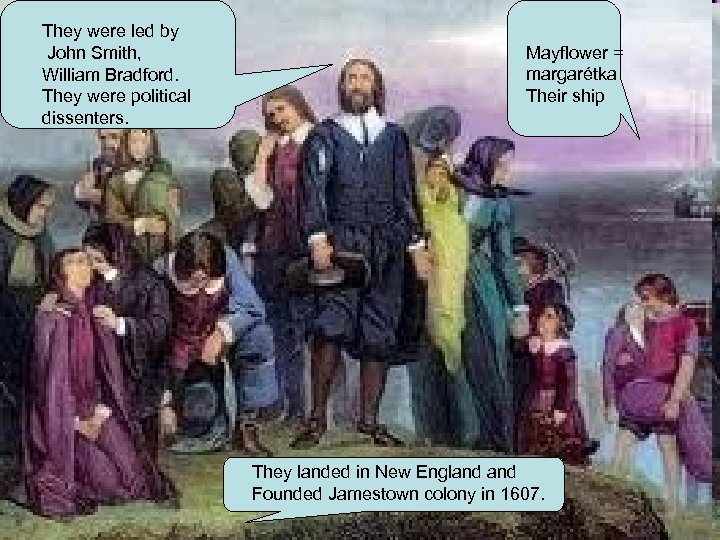 They were led by John Smith, William Bradford. They were political dissenters. Mayflower = margarétka Their ship They landed in New England Founded Jamestown colony in 1607.
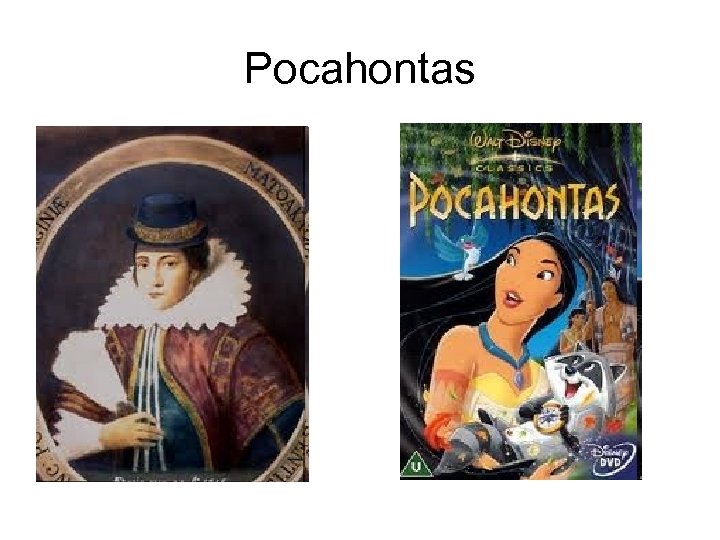 Pocahontas
 http: //www. youtube. com/watch? v=9 q 1 QF 8 G 47 o. U • 1. 2. 3. 4. 5. 6. 7. 8. 9. 10. 11. Which of these are mentioned in the film? (Find 2) thunderstorm, Fire water, Explorer, Canoe, Racoon, Totem, Pale visitors, Reindeer Owl, Yacht, eagle.
 Answer: 1. 2. 3. 4. What was her real name? (Matoka). What was her father´s name? (Powhatan). Who did she save? (John Smith, the colonizer How did she save him? (put her head on his shoulder). 5. Where did she live? (Virginia). 6. What religion did she adopt? (Catholic). 7. Where did she die? (England).
 Now form the answers: 1. 2. 3. 4. 5. 6. 7. Her real name was Matoka. Her father´s name was Powhatan. She saved John Smith, the colonizer. She saved him by putting her head on his shoulder. She lived in Virginia. She adopted Catholic religion and name Rebecca. She died in England.
 Lecture 4/Prednáška 4: American Indians: Tribes, Traditions, stereotypes
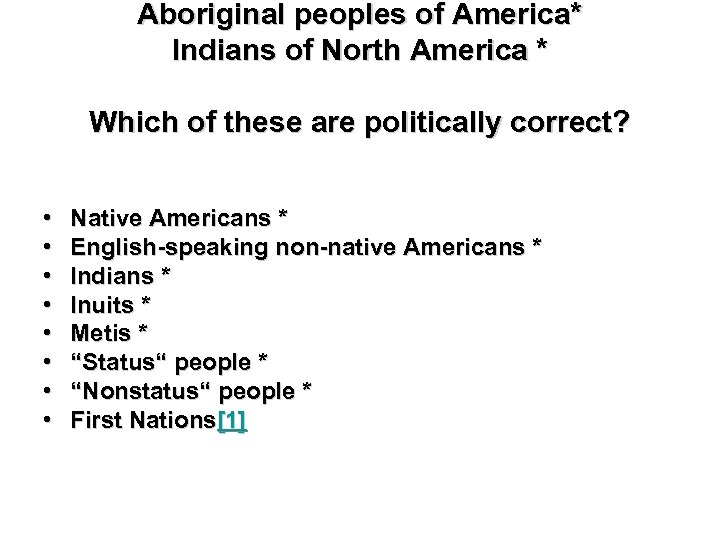 Aboriginal peoples of America* Indians of North America * Which of these are politically correct? • • Native Americans * English-speaking non-native Americans * Indians * Inuits * Metis * “Status“ people * “Nonstatus“ people * First Nations[1]
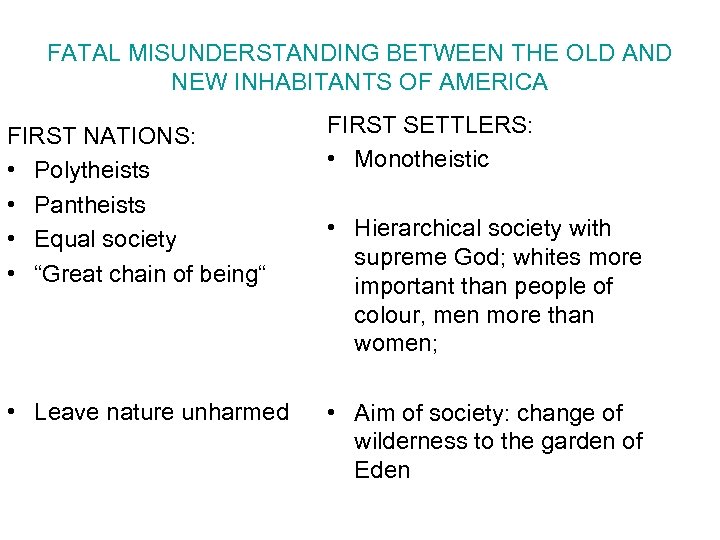 FATAL MISUNDERSTANDING BETWEEN THE OLD AND NEW INHABITANTS OF AMERICA FIRST NATIONS: • Polytheists • Pantheists • Equal society • “Great chain of being“ FIRST SETTLERS: • Monotheistic • Leave nature unharmed • Aim of society: change of wilderness to the garden of Eden • Hierarchical society with supreme God; whites more important than people of colour, men more than women;
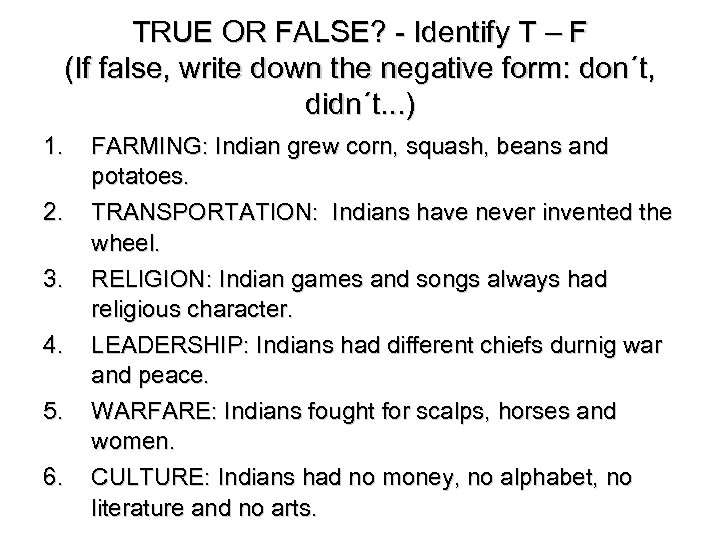 TRUE OR FALSE? - Identify T – F (If false, write down the negative form: don´t, didn´t. . . ) 1. 2. 3. 4. 5. 6. FARMING: Indian grew corn, squash, beans and potatoes. TRANSPORTATION: Indians have never invented the wheel. RELIGION: Indian games and songs always had religious character. LEADERSHIP: Indians had different chiefs durnig war and peace. WARFARE: Indians fought for scalps, horses and women. CULTURE: Indians had no money, no alphabet, no literature and no arts.
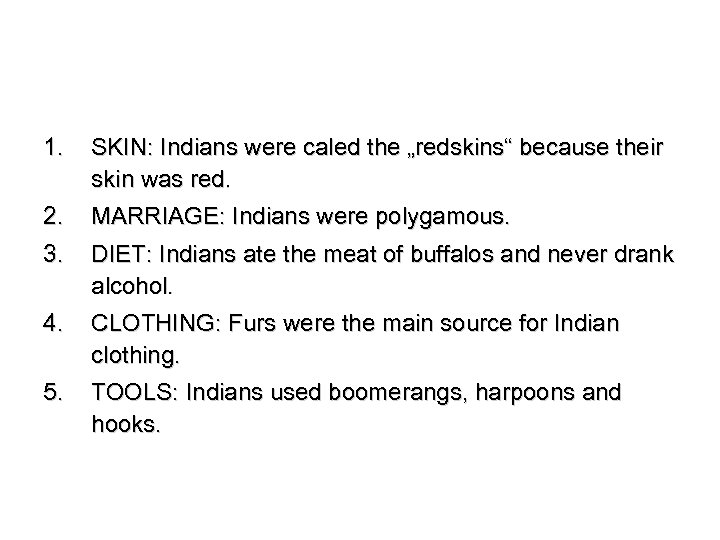 1. SKIN: Indians were caled the „redskins“ because their skin was red. 2. 3. MARRIAGE: Indians were polygamous. 4. CLOTHING: Furs were the main source for Indian clothing. 5. TOOLS: Indians used boomerangs, harpoons and hooks. DIET: Indians ate the meat of buffalos and never drank alcohol.
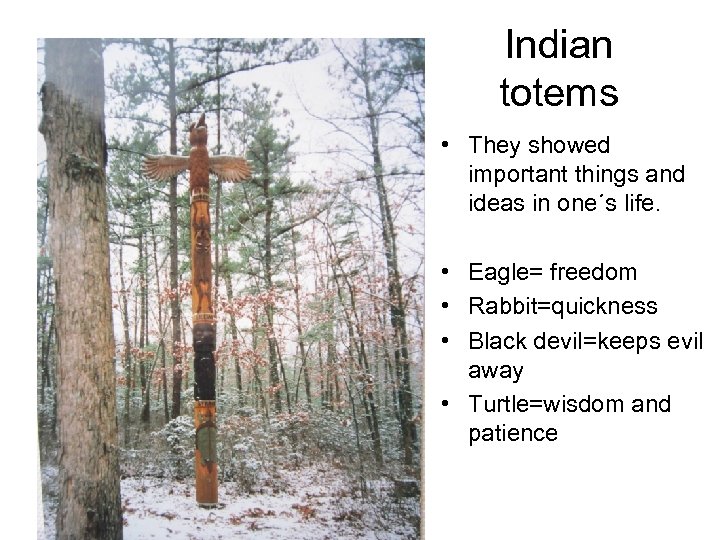 Indian totems • They showed important things and ideas in one´s life. • Eagle= freedom • Rabbit=quickness • Black devil=keeps evil away • Turtle=wisdom and patience
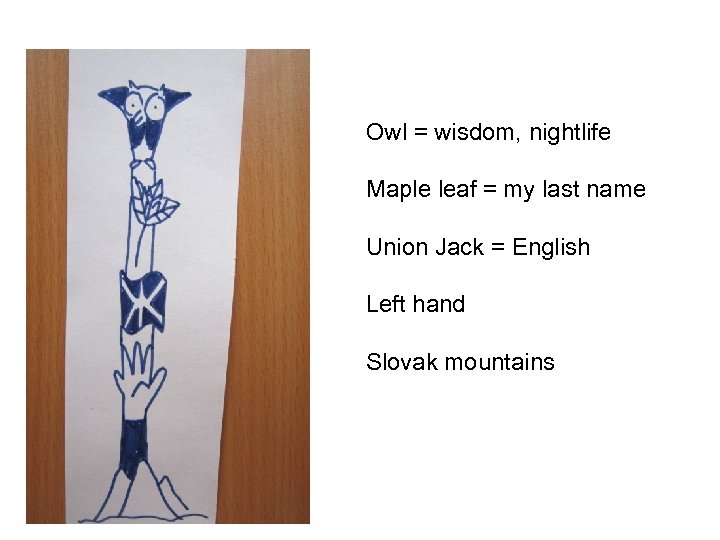 Owl = wisdom, nightlife Maple leaf = my last name Union Jack = English Left hand Slovak mountains
 Lecture 5/Prednáška 5: Waves of immigration: US holidays (Imigračné vlny, Americké sviatky).
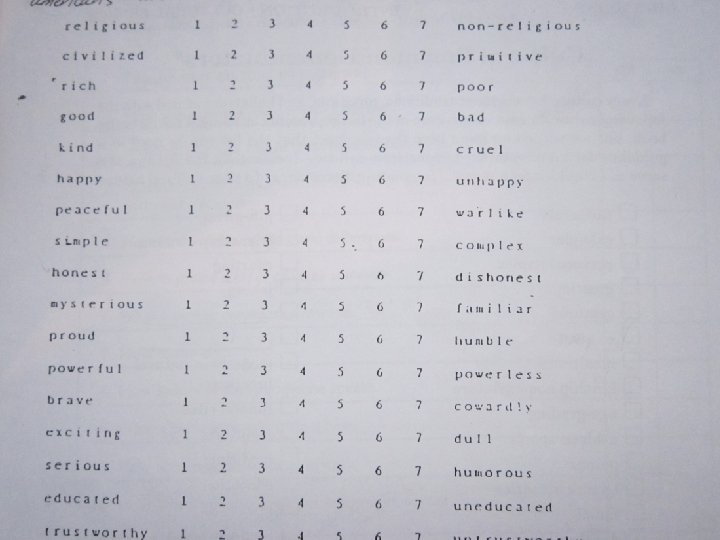
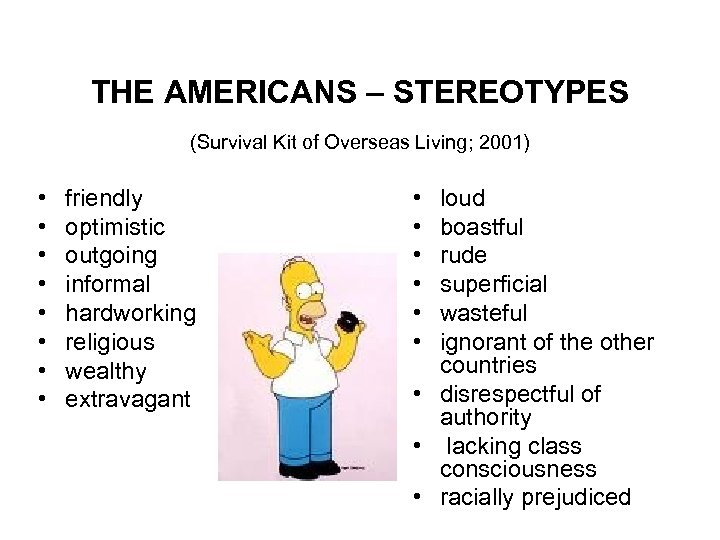 THE AMERICANS – STEREOTYPES (Survival Kit of Overseas Living; 2001) • • friendly optimistic outgoing informal hardworking religious wealthy extravagant • • • loud boastful rude superficial wasteful ignorant of the other countries • disrespectful of authority • lacking class consciousness • racially prejudiced
 USA = “Nation of Immigrants” = paradox WAVES OF IMMIGRATION: Not a wave: Founders 1 st wave of immigration 2 nd wave of immigration 3 rd wave of immigration 4 th wave of immigration (After 1960´s)
 USA = “Nation of Immigrants” = paradox WAVES OF IMMIGRATION: 1607 -1680 – “The Founders” (Pilgrims, Quakers) – not a wave yet; – called “The Founders” because they founded many laws and institutions; – pre-set the consmopolitan character of New York.
 Lecture 3 The Making of a “Nation of Immigrants” WAVES OF IMMIGRATION: 1680 -1776 – 1 st Wave of immigration: Afroamericans, Scottish, Irish, Germans CHEAP LABOUR FORCE - often misled by immigration recruiters
 1820 -1890 – 2 nd wave of immigration: – also called “old immigration” – Germans, British, Scandinavians, Irish (WASP); – Reason to come: skilled jobs First attempts to regulate immigration: 1882 – First National Immigration Law 1885 – Ellis Island 1891 – Fitness Law
 1890 -1930 – 3 rd wave of immigration: – also called “new immigration” “birds of passage” – East and South Europeans; – Reason to come: financial. RESULTS: 1870 – “Night Schools” 1892 – “The Pledge of Allegiance to the Flag”
 After WWII – 4 th wave of immigration – skilled professionals – “brain drain” – 1970´s Portorican nurses, doctors, teachers Post- 1965 immigration: - Colonies of Hmong in Minneapolis, Muslims in New Jersey. . .
 Statue of Liberty Give me your tired, your poor, Your huddled masses yearning to breathe free, The wretched refuse of your teeming shore. Send these, the homeless, Tempest-toss, to me, I lift my lamp beside the golden door! (Emma Lazarus, 1886)
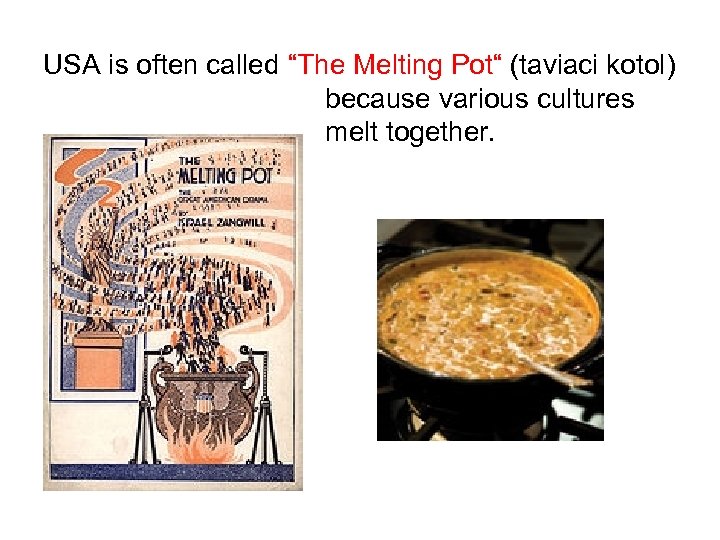 USA is often called “The Melting Pot“ (taviaci kotol) because various cultures melt together.
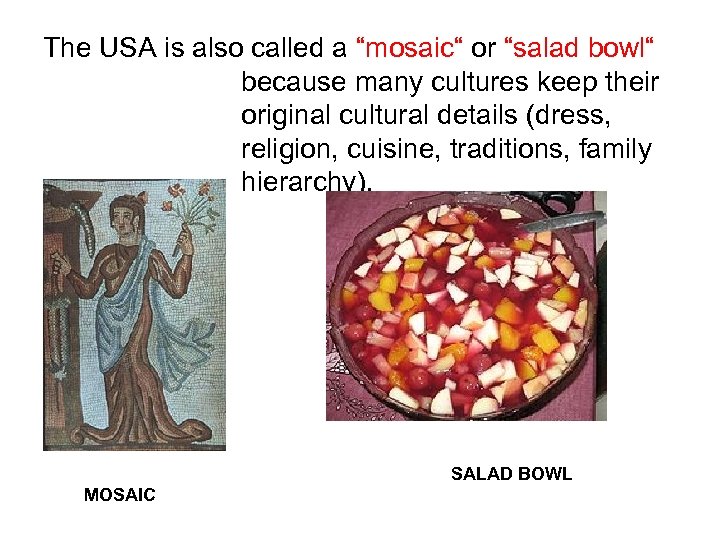 The USA is also called a “mosaic“ or “salad bowl“ because many cultures keep their original cultural details (dress, religion, cuisine, traditions, family hierarchy). SALAD BOWL MOSAIC
 • QUESTON: If the USA is the Melting Pot or Mosaic, or Salad Bowl of cultures, what is Slovakia? (Discuss with your partner and try to pick a meal as a metaphor).
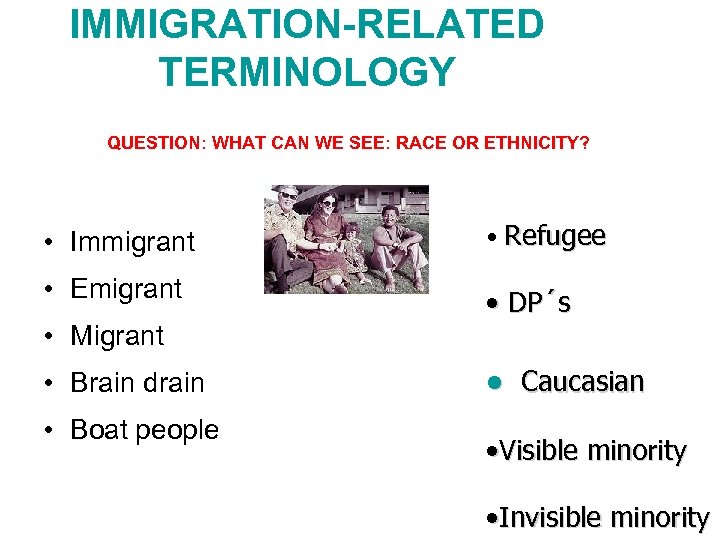 IMMIGRATION-RELATED TERMINOLOGY QUESTION: WHAT CAN WE SEE: RACE OR ETHNICITY? • Refugee • Immigrant • Emigrant • DP´s • Migrant • Brain drain • Boat people l Caucasian • Visible minority • Invisible minority
 AMERICAN ENGLISH Influenced by many linguistic and extra-linguistic phenomena: Need to name new phenomena (flora, fauna. . . ): 1. Coined a word: jimson weed; 2. Borrowed a word from other language: portage; 3. Borrowed an Indian word: catalpa; 4. Adopted an Indian word/phrase: to bury the hatchet; (for more examples see handouts from seminars)
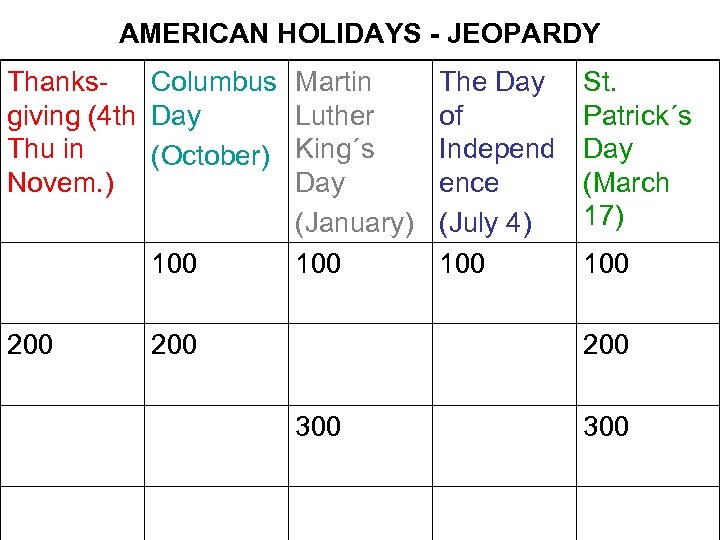 AMERICAN HOLIDAYS - JEOPARDY Thanks. Columbus giving (4 th Day Thu in (October) Novem. ) 100 200 Martin Luther King´s Day (January) 100 200 The Day of Independ ence (July 4) 100 St. Patrick´s Day (March 17) 100 200 300
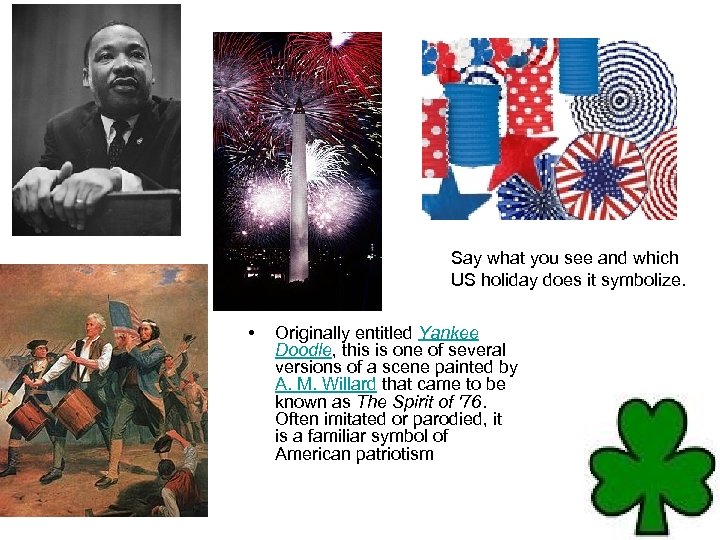 Say what you see and which US holiday does it symbolize. • Originally entitled Yankee Doodle, this is one of several versions of a scene painted by A. M. Willard that came to be known as The Spirit of '76. Often imitated or parodied, it is a familiar symbol of American patriotism
 Lecture 6/Prednáška 6: War of Independence: Declaration of Independence
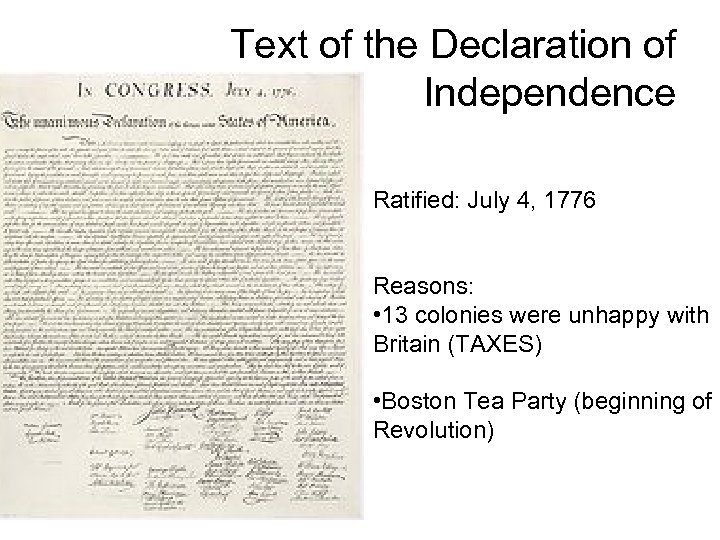 Text of the Declaration of Independence Ratified: July 4, 1776 Reasons: • 13 colonies were unhappy with Britain (TAXES) • Boston Tea Party (beginning of Revolution)
 Text of the Declaration of Independence We hold these truths to be self-evident, that all men are created equal, that they are endowed by their Creator with certain unalienable Rights, that among these are Life, Liberty and the pursuit of Happiness. STYLE: easy, clear, good argumentation
 Independence Day • Make sentences: 1. a Day is Independence holiday federal. 2. for 12 voted Declaration of colonies Independence the. 3. wrote the first of Jefferson draft (koncept) the Declaration. 4. was first Washington President George the American.
 Independence Day • Make sentences: 1. Independence Day is a federal holiday. 2. 12 colonies voted for the Declaration of Independence. 3. Jefferson wrote the first draft of the Declaration. 4. George Washington was the first American President.
 Lecture 7/Prednáška 7: Making of a Nation: The Constitution The Congress
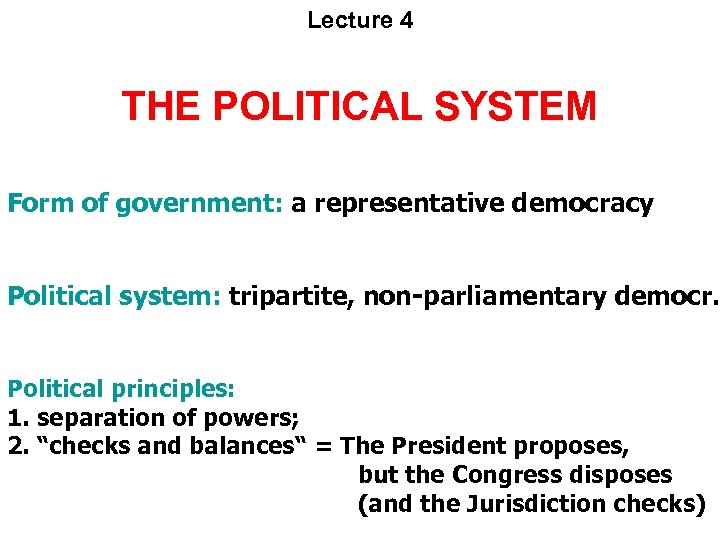 Lecture 4 THE POLITICAL SYSTEM Form of government: a representative democracy Political system: tripartite, non-parliamentary democr. Political principles: 1. separation of powers; 2. “checks and balances“ = The President proposes, but the Congress disposes (and the Jurisdiction checks)
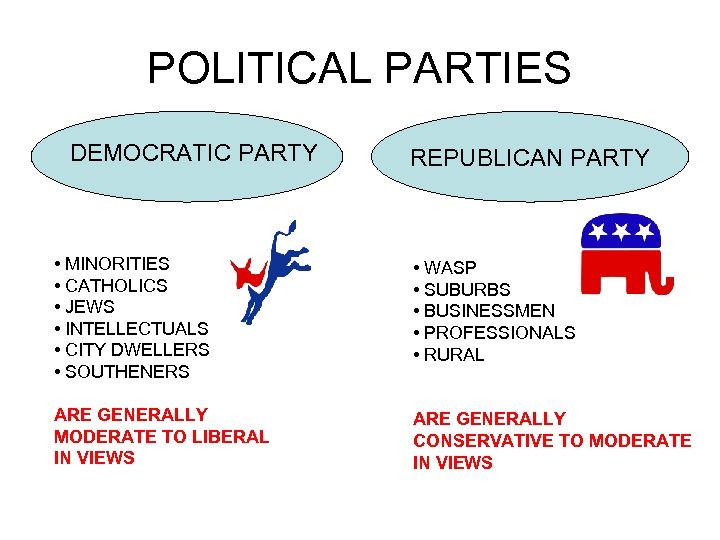 POLITICAL PARTIES DEMOCRATIC PARTY REPUBLICAN PARTY • MINORITIES • CATHOLICS • JEWS • INTELLECTUALS • CITY DWELLERS • SOUTHENERS • WASP • SUBURBS • BUSINESSMEN • PROFESSIONALS • RURAL ARE GENERALLY MODERATE TO LIBERAL IN VIEWS ARE GENERALLY CONSERVATIVE TO MODERATE IN VIEWS
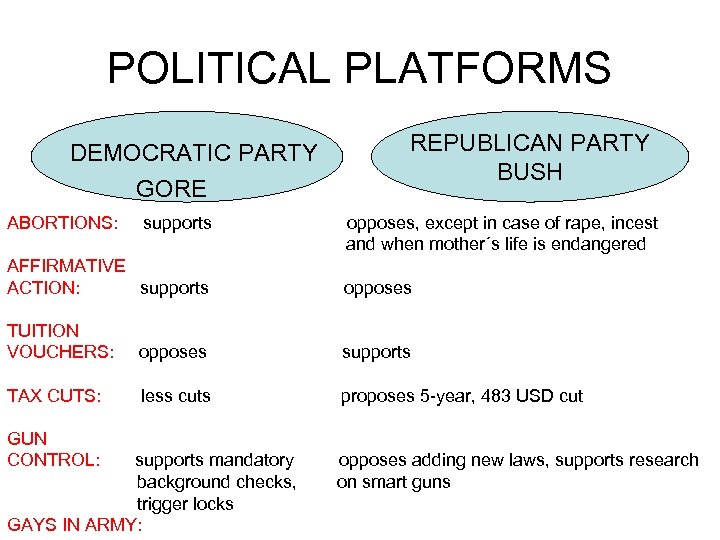 POLITICAL PLATFORMS DEMOCRATIC PARTY GORE REPUBLICAN PARTY BUSH ABORTIONS: supports opposes, except in case of rape, incest and when mother´s life is endangered AFFIRMATIVE ACTION: supports opposes TUITION VOUCHERS: opposes supports TAX CUTS: less cuts proposes 5 -year, 483 USD cut GUN CONTROL: supports mandatory opposes adding new laws, supports research background checks, on smart guns trigger locks GAYS IN ARMY:
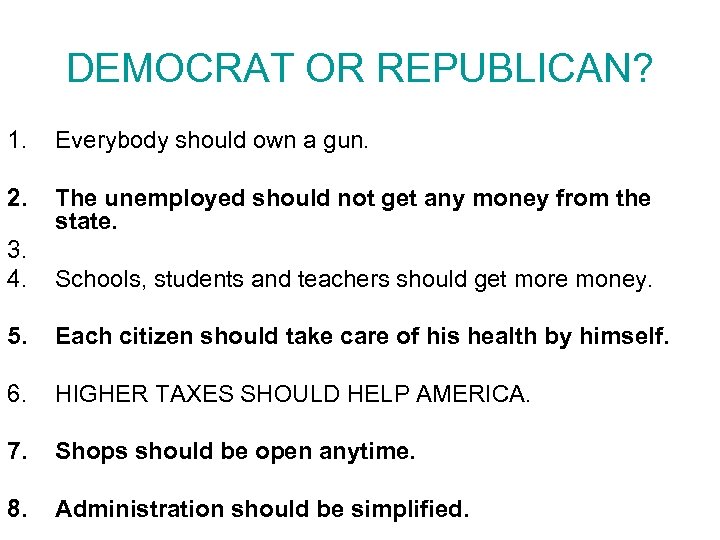 DEMOCRAT OR REPUBLICAN? 1. Everybody should own a gun. 2. 3. 4. The unemployed should not get any money from the state. Schools, students and teachers should get more money. 5. Each citizen should take care of his health by himself. 6. HIGHER TAXES SHOULD HELP AMERICA. 7. Shops should be open anytime. 8. Administration should be simplified.
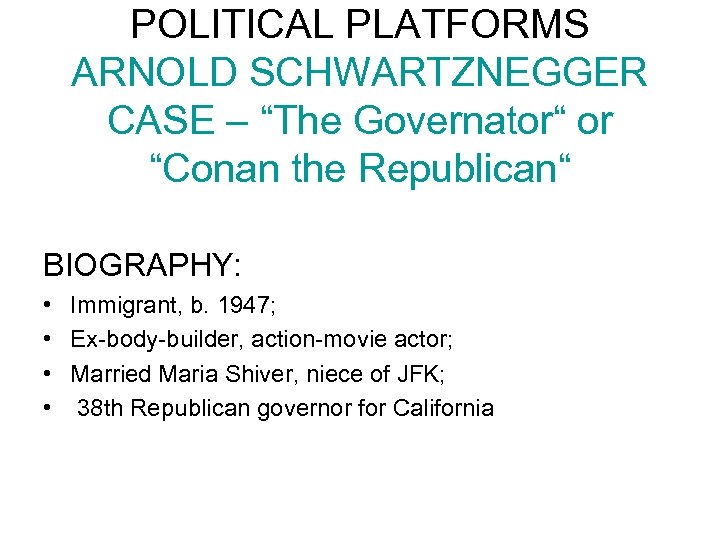 POLITICAL PLATFORMS ARNOLD SCHWARTZNEGGER CASE – “The Governator“ or “Conan the Republican“ BIOGRAPHY: • • Immigrant, b. 1947; Ex-body-builder, action-movie actor; Married Maria Shiver, niece of JFK; 38 th Republican governor for California
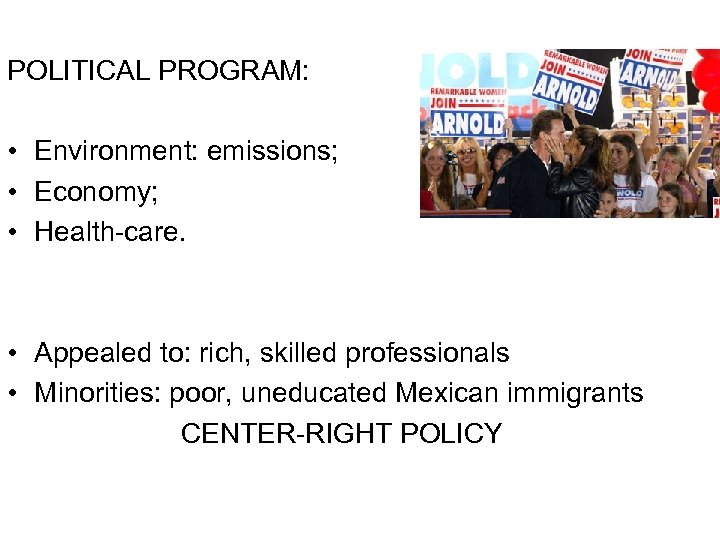 POLITICAL PROGRAM: • Environment: emissions; • Economy; • Health-care. • Appealed to: rich, skilled professionals • Minorities: poor, uneducated Mexican immigrants CENTER-RIGHT POLICY
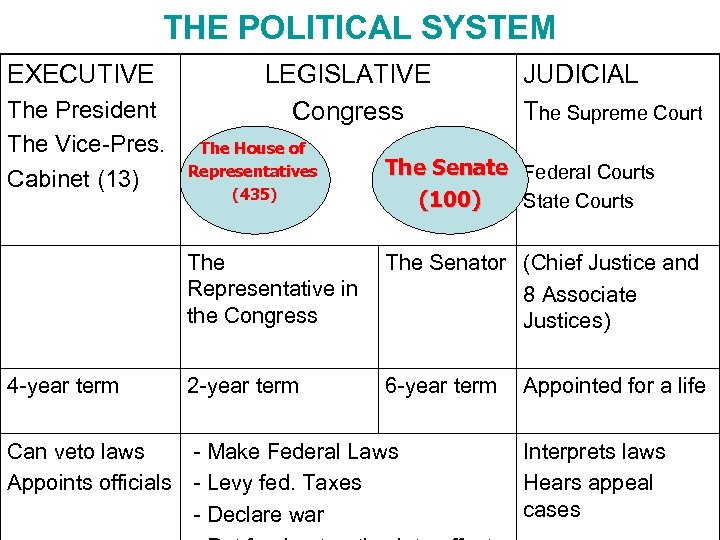 THE POLITICAL SYSTEM EXECUTIVE The President The Vice-Pres. Cabinet (13) LEGISLATIVE Congress The House of Representatives (435) JUDICIAL The Supreme Court The Senate Federal Courts (100) State Courts The Senator (Chief Justice and Representative in 8 Associate the Congress Justices) 4 -year term 2 -year term 6 -year term Can veto laws - Make Federal Laws Appoints officials - Levy fed. Taxes - Declare war Appointed for a life Interprets laws Hears appeal cases
 THE EXECUTIVE BRANCH (THE PRESIDENT) FUNCTION: • responsible for administering and executing laws. The president is the head of the government and head of the state. PRESIDENT´S DUTIES: • recommends programs and laws to Congress and requests money for Federal Government operations; • appoints federal judges, ambassadors; • signs or vetoes bills.
 THE LEGISLATIVE BRANCH (THE SENATE, THE H. OF REPRESENTATIVES) FUNCTION: - to make the laws and to finance the operation of the government through levying taxes.
 CHECKS AND BALANCES WHO DECLARES THE WAR? The President proposes but the Congress disposes (and the Jurisdiction checks). Ar. 1 Sec. 8: The Congress shall have power. . . to declare war. . . to raise and support armies. . . to provide and maintain a navy. . . Ar. II Sec. 2: The President shall be commander in chief of the army and navy of the USA. . . when called into the actual service of the USA. . .
 • The Congress – declares the war; • The President – conducts the war. • QUESTION: How long does it to declare the war? (war – question of days); • Nuclear war – question of hours.
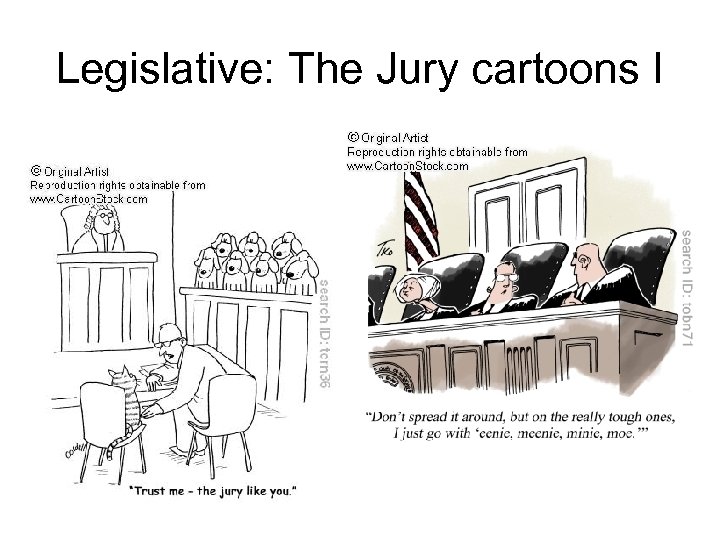 Legislative: The Jury cartoons I
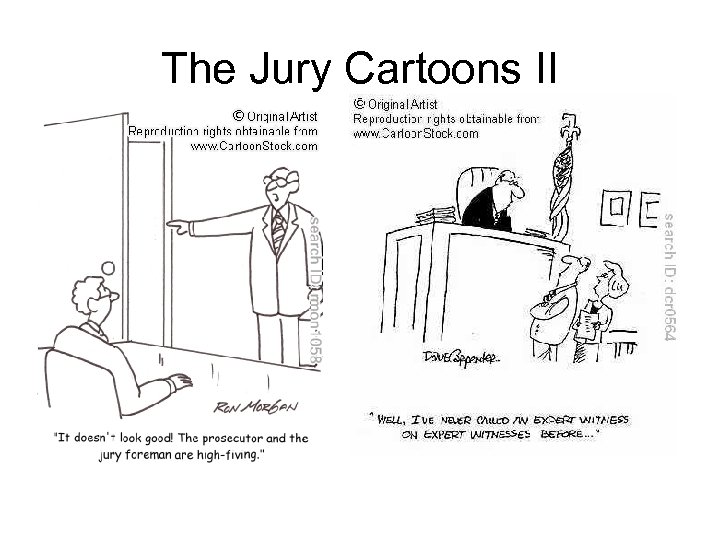 The Jury Cartoons II
 Lecture 8/Prednáška 8: Civil War: Slavery The North The South
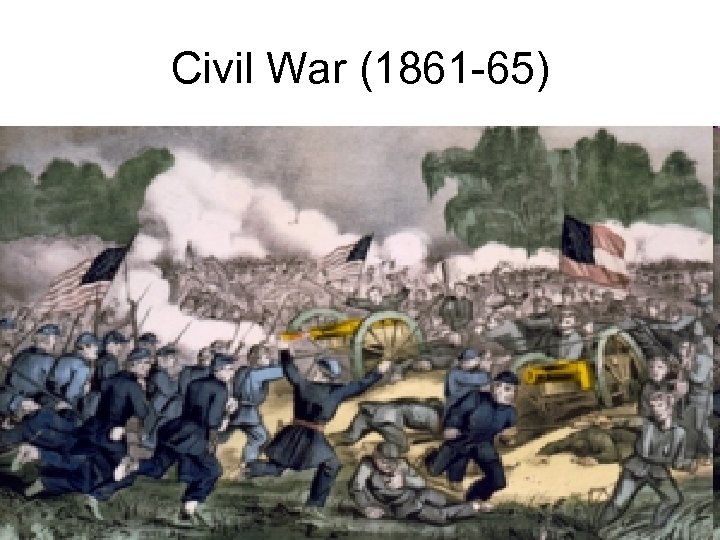 Civil War (1861 -65)
 Infinitívová väzba: I need a pen to write SK: . . . aby som písal/na napísanie • The North: industrial, needed educated workers to operate engines. • The South: slavery, needed uneducated workers to pick cotton, tobacco.
 • In response to the election of an anti-slavery Republican as President, 11 southern slave states declared their secession from the United States and formed the Confederate States of America ("the Confederacy"); the other 25 states supported the federal government ("the Union"). After four years of warfare, mostly within the Southern states, the Confederacy surrendered and slavery was outlawed everywhere in the nation. Issues that led to war were partially resolved in the Reconstruction Era that followed (wikipaedia)
 The Civil War was: (make superlatives): • • • Big conflict (in the USA); Deadly (750. 000 soldiers died); Cruel (many soldiers were crippled); Industrial war (mass weapons, etc. ); Modern (employed telegraph); Extended (covered the biggest territory);
 The Civil War was: (make superlatives): • Big (the biggest) conflict (in the USA); • Deadly (the deadliest) war(750. 000 soldiers died); • Cruel (the most cruel) (many soldiers were crippled); • Industrial war (the most industrial war) (mass weapons, etc. ); • Modern (the most modern war) (employed telegraph); • Extended (the most extended) (covered the biggest territory);
 • Dixie: http: //www. youtube. com/watch? v=zze. Loa 1 gw. CU&feature=related • When Johny comes marching home: http: //www. youtube. com/watch? v=7 v 2 m. W 21 M 0 cw&feature=related
 Lecture 9/Prednáška 9: 20 th century history: US Economy: Ford, Coca-Cola
 THE US ECONOMY PREDISPOSITIONS/Predpoklady: • Fast urban growth in the 19 th ct. /rýchly vznik miest; • Rich natural resources; bohaté prír. zdroje • The advanced system of transportation; vyvinutá doprava • Wide and demanding market/široké trhy, veľký dopyt.
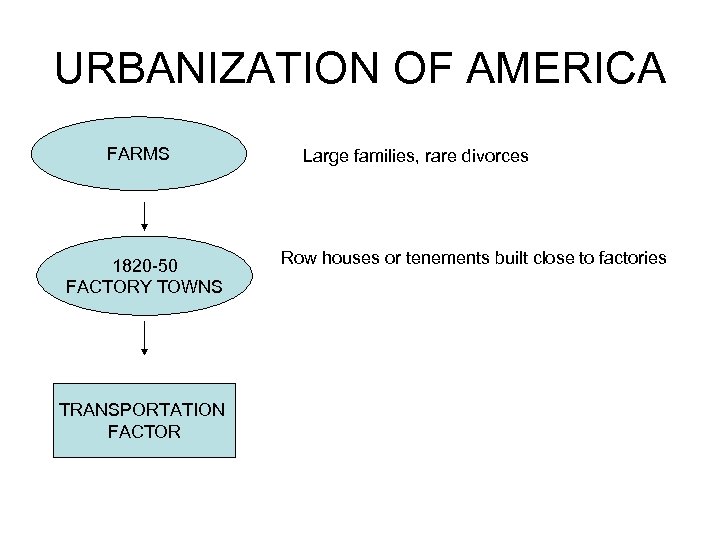 URBANIZATION OF AMERICA FARMS 1820 -50 FACTORY TOWNS TRANSPORTATION FACTOR Large families, rare divorces Row houses or tenements built close to factories
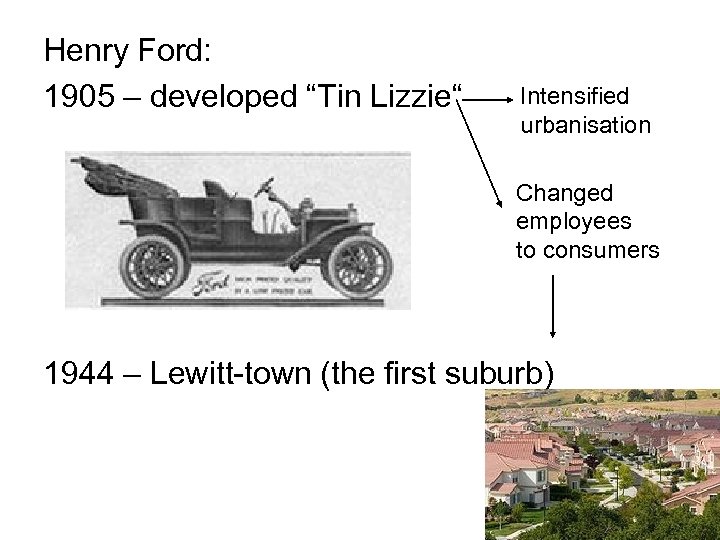 Henry Ford: 1905 – developed “Tin Lizzie“ Intensified urbanisation Changed employees to consumers 1944 – Lewitt-town (the first suburb)
 EFFECTS OF LEWITT-TOWNS • Middle class moved out of towns; • Abadoned inner cities, slums; • Loneliness
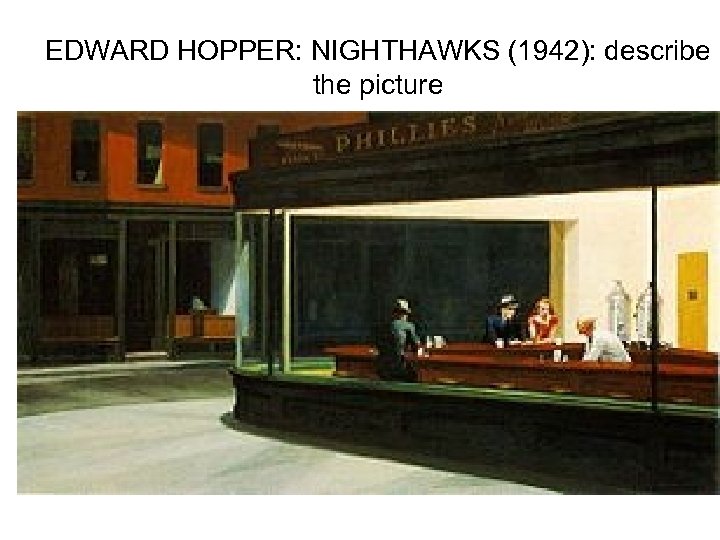 EDWARD HOPPER: NIGHTHAWKS (1942): describe the picture
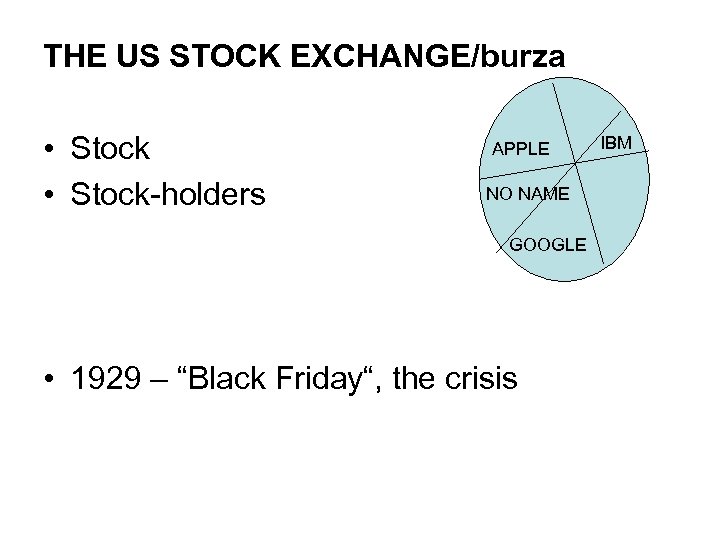 THE US STOCK EXCHANGE/burza • Stock-holders APPLE NO NAME GOOGLE • 1929 – “Black Friday“, the crisis IBM
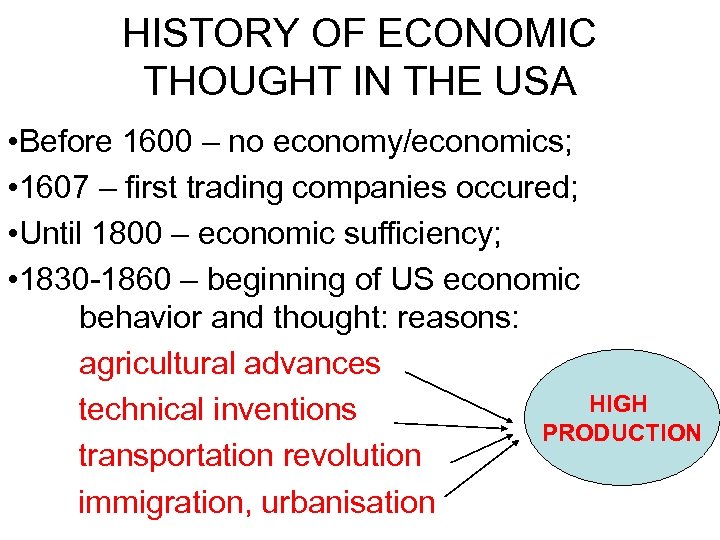 HISTORY OF ECONOMIC THOUGHT IN THE USA • Before 1600 – no economy/economics; • 1607 – first trading companies occured; • Until 1800 – economic sufficiency; • 1830 -1860 – beginning of US economic behavior and thought: reasons: agricultural advances HIGH technical inventions PRODUCTION transportation revolution immigration, urbanisation
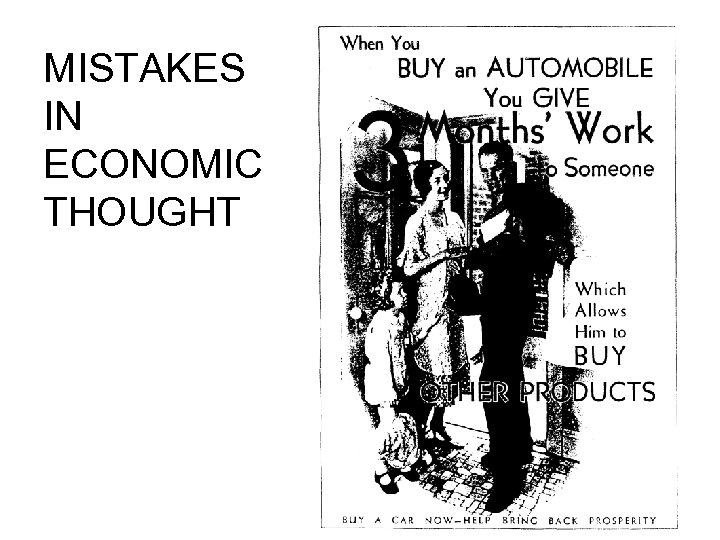 MISTAKES IN ECONOMIC THOUGHT
 Coca Cola – find odd word: 1. Coca Cola is red a soft drink. 2. It shoe was a medecine for patients. 3. It was invented by John Pemberton soldier in the 19 th century. 4. First, it was called “coca wine“ going. 5. Key ingredients were cocaine and slowly coffeine.
 Lecture 10/Prednáška 10: 20 th century history: History and culture of US cities: NY Washington San Francisco
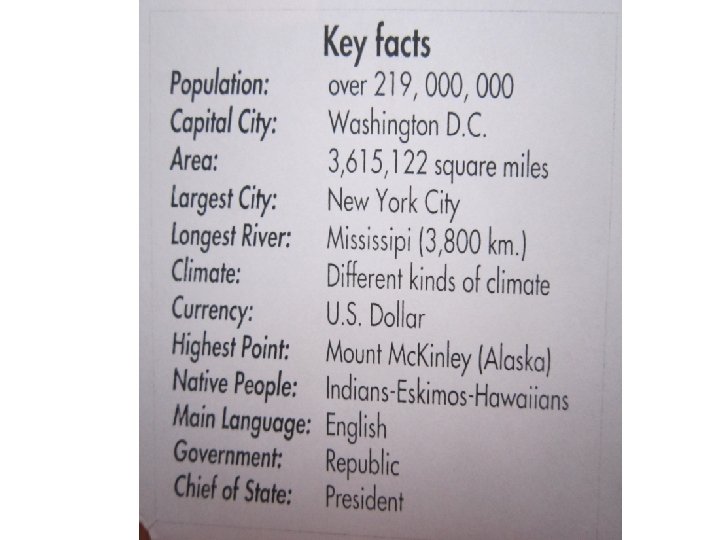
 Final Project – Instructions:
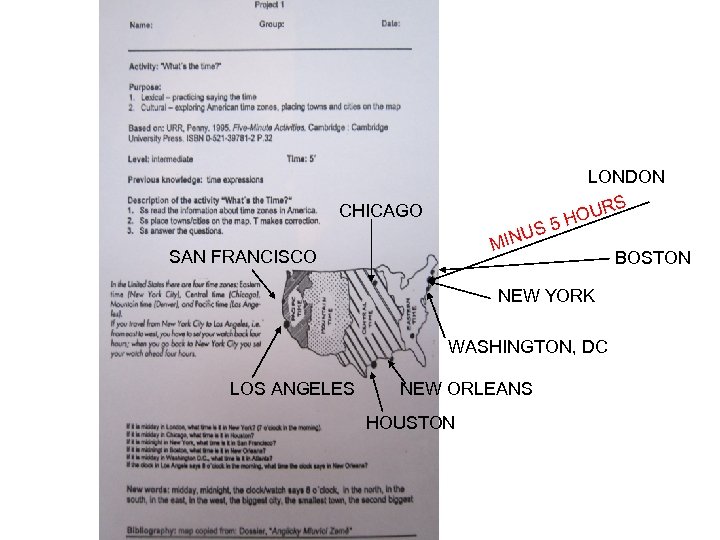 LONDON S OUR H S 5 U MIN BOSTON CHICAGO SAN FRANCISCO NEW YORK WASHINGTON, DC LOS ANGELES NEW ORLEANS HOUSTON