

Lectures 14 -17 Speech materials development. Competences


 Скачать презентацию Lectures 14 -17 Speech materials development. Competences
Lecture 14-17 Profile.ppt
- Количество слайдов: 38
Lectures 14 -17 Speech materials development. Competences
Teaching Listening in Profile school
Definition: • Listening is a communicative skill with the purpose of receiving, comprehending and interpreting an oral message.
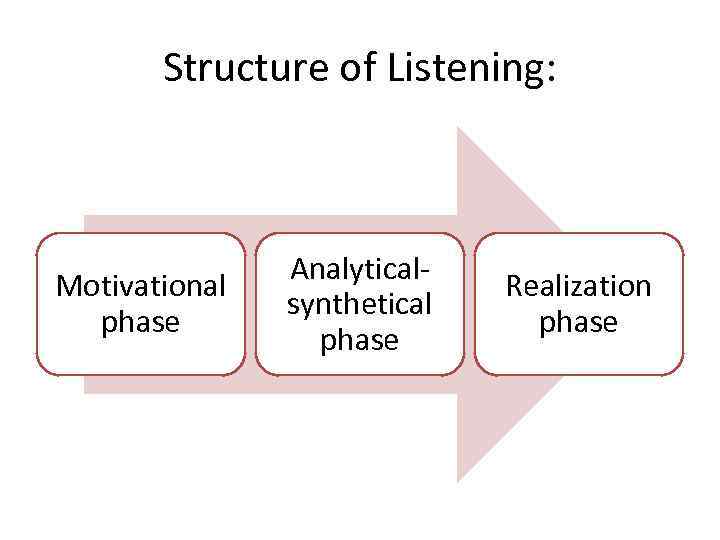
Structure of Listening: Analytical- Motivational Realization synthetical phase
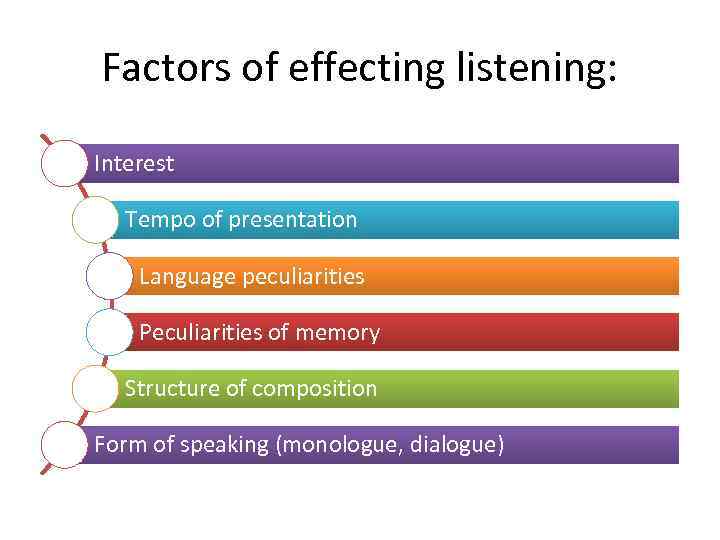
Factors of effecting listening: Interest Tempo of presentation Language peculiarities Peculiarities of memory Structure of composition Form of speaking (monologue, dialogue)
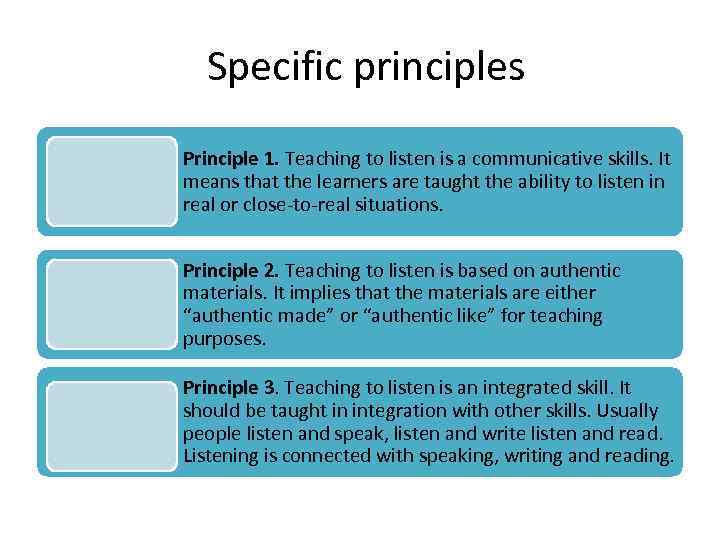
Specific principles Principle 1. Teaching to listen is a communicative skills. It means that the learners are taught the ability to listen in real or close-to-real situations. Principle 2. Teaching to listen is based on authentic materials. It implies that the materials are either “authentic made” or “authentic like” for teaching purposes. Principle 3. Teaching to listen is an integrated skill. It should be taught in integration with other skills. Usually people listen and speak, listen and write listen and read. Listening is connected with speaking, writing and reading.
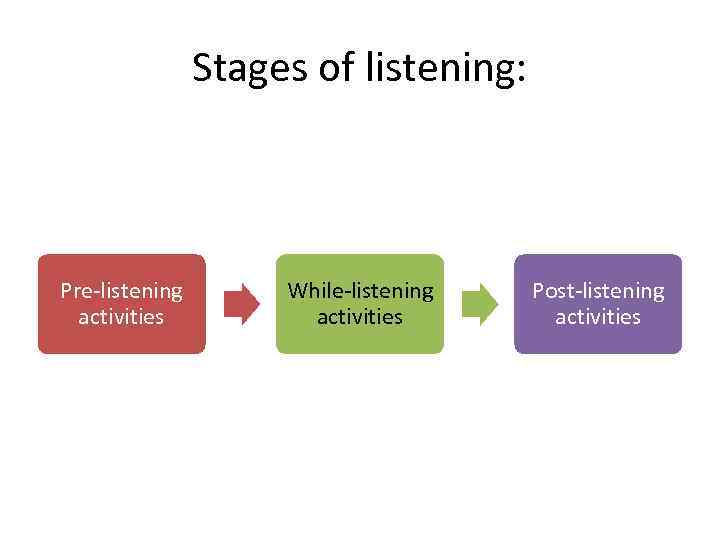
Stages of listening: Pre-listening While-listening Post-listening activities
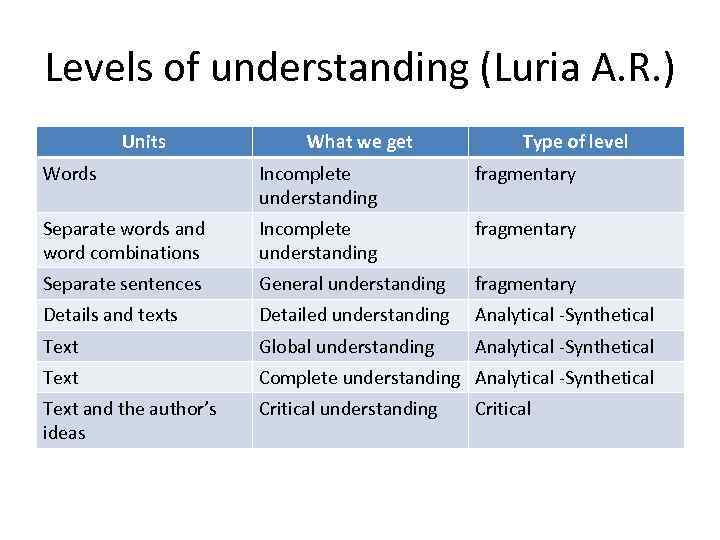
Levels of understanding (Luria A. R. ) Units What we get Type of level Words Incomplete fragmentary understanding Separate words and Incomplete fragmentary word combinations understanding Separate sentences General understanding fragmentary Details and texts Detailed understanding Analytical -Synthetical Text Global understanding Analytical -Synthetical Text Complete understanding Analytical -Synthetical Text and the author’s Critical understanding Critical ideas
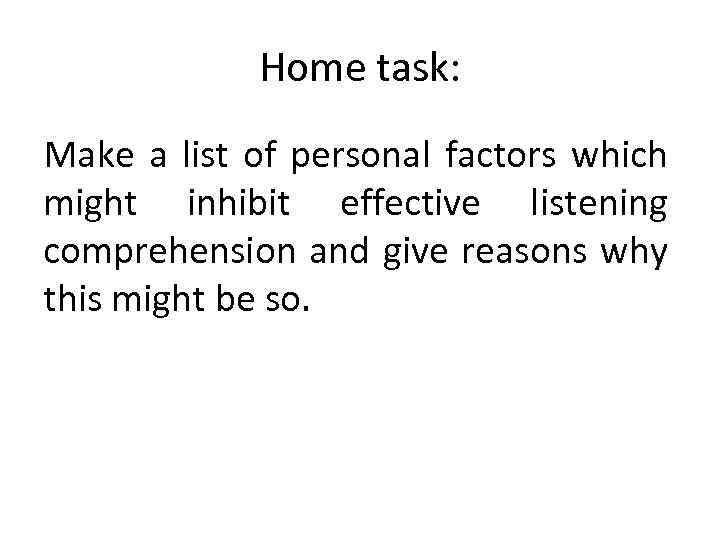
Home task: Make a list of personal factors which might inhibit effective listening comprehension and give reasons why this might be so.
Teaching reading in Profile school
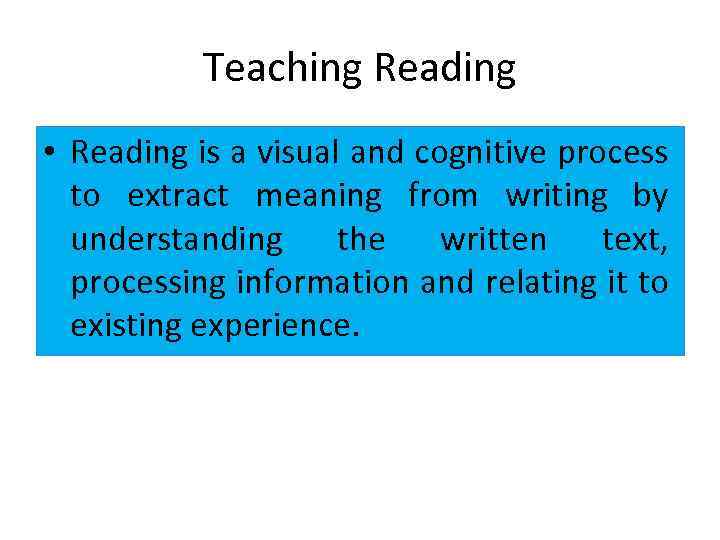
Teaching Reading • Reading is a visual and cognitive process to extract meaning from writing by understanding the written text, processing information and relating it to existing experience.
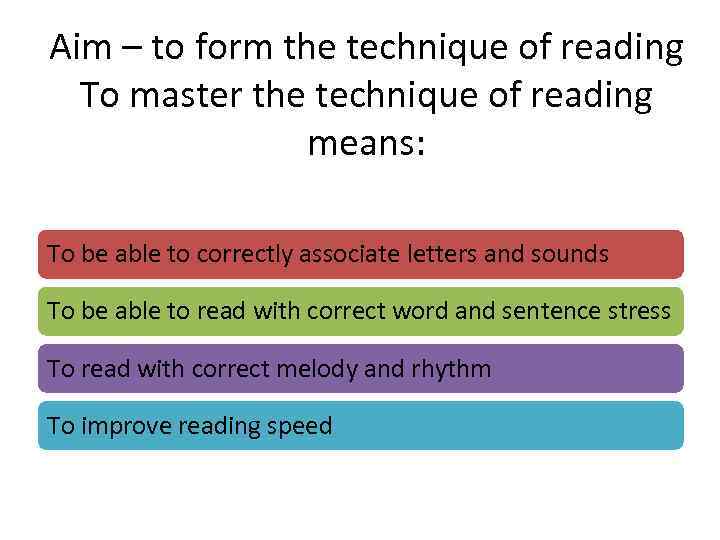
Aim – to form the technique of reading To master the technique of reading means: To be able to correctly associate letters and sounds To be able to read with correct word and sentence stress To read with correct melody and rhythm To improve reading speed
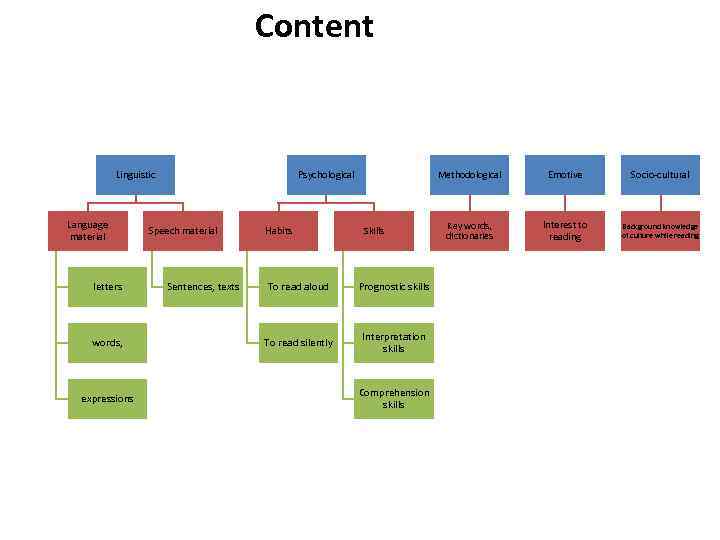
Content Linguistic Psychological Methodological Emotive Socio-cultural Language Key words, Interest to Background knowledge Speech material Habits Skills material dictionaries reading of culture while reading letters Sentences, texts To read aloud Prognostic skills Interpretation words, To read silently skills Comprehension expressions skills
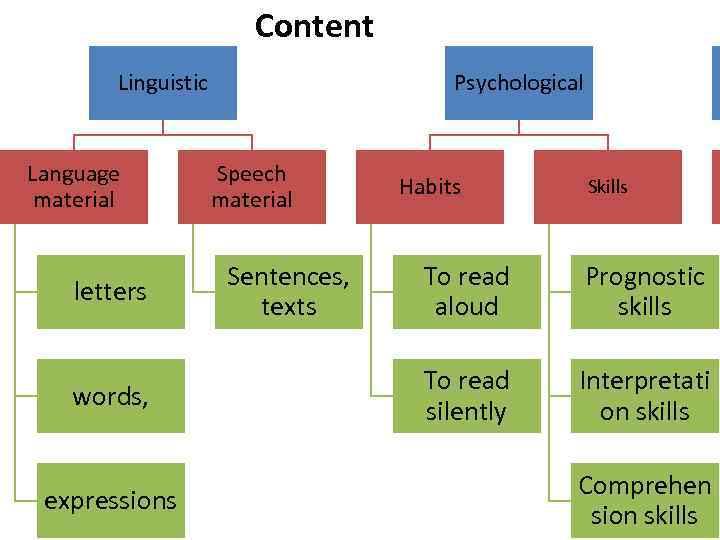
Content Linguistic Psychological Language Speech Habits Skills material Sentences, To read Prognostic letters texts aloud skills To read Interpretati words, silently on skills Comprehen expressions sion skills
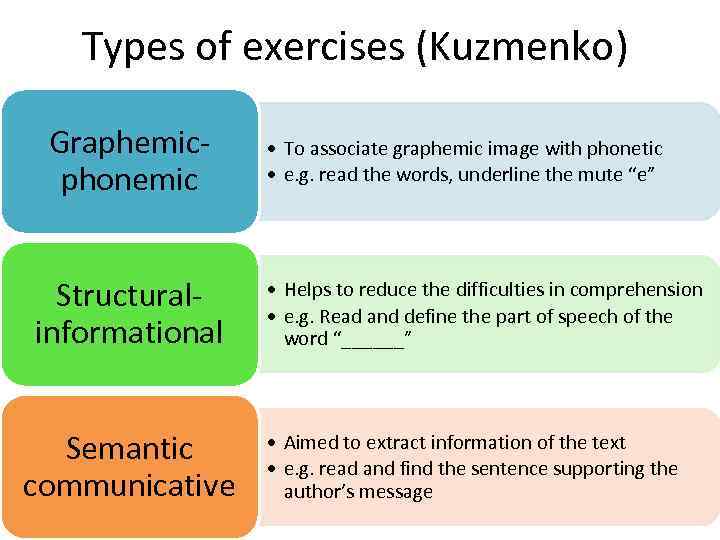
Types of exercises (Kuzmenko) Graphemic- • To associate graphemic image with phonetic phonemic • e. g. read the words, underline the mute “e” Structural- • Helps to reduce the difficulties in comprehension • e. g. Read and define the part of speech of the informational word “______” Semantic • Aimed to extract information of the text • e. g. read and find the sentence supporting the communicative author’s message
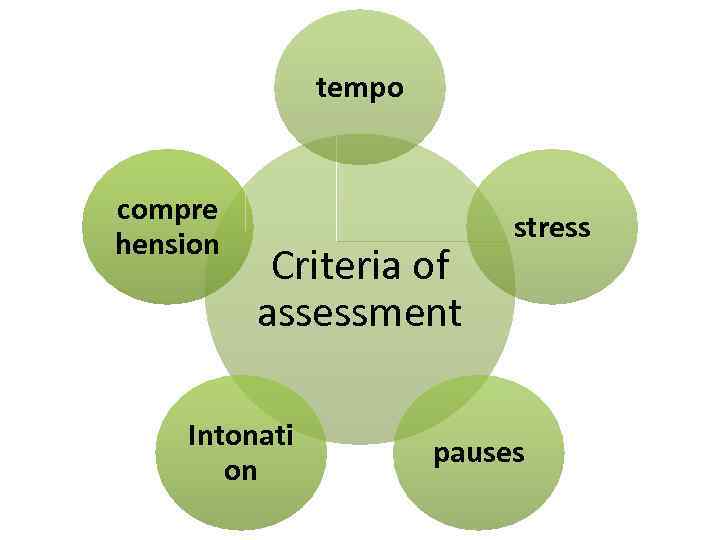
tempo compre stress hension Criteria of assessment Intonati pauses on
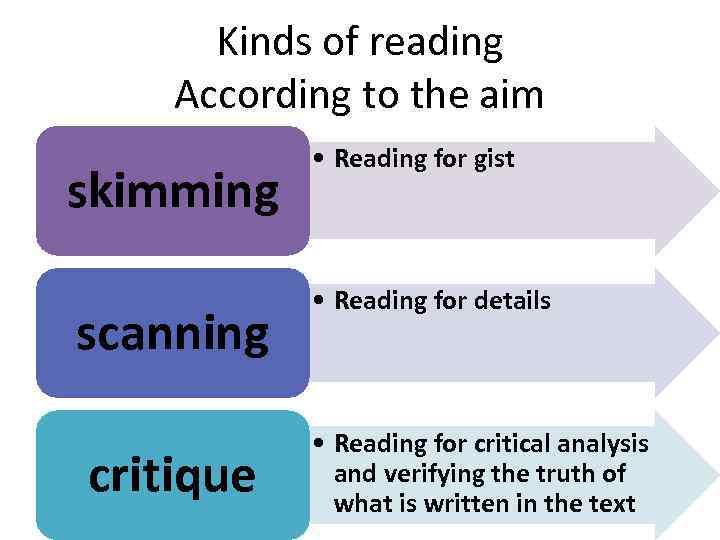
Kinds of reading According to the aim • Reading for gist skimming • Reading for details scanning • Reading for critical analysis critique and verifying the truth of what is written in the text
Teaching Speaking in Profile School
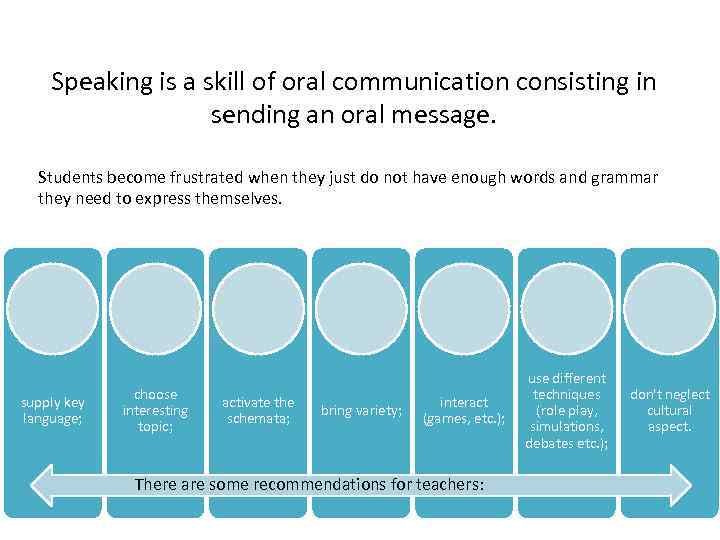
Speaking is a skill of oral communication consisting in sending an oral message. Students become frustrated when they just do not have enough words and grammar they need to express themselves. use different choose techniques don't neglect supply key activate the interact interesting bring variety; (role play, cultural language; schemata; (games, etc. ); topic; simulations, aspect. debates etc. ); There are some recommendations for teachers:
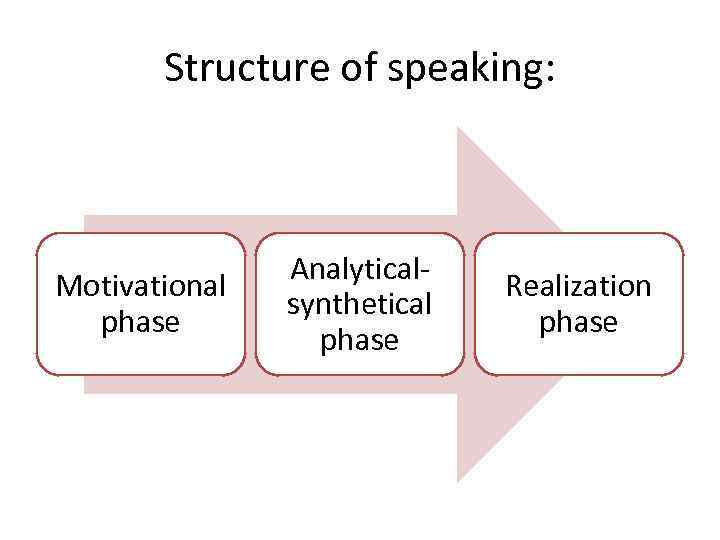
Structure of speaking: Analytical- Motivational Realization synthetical phase
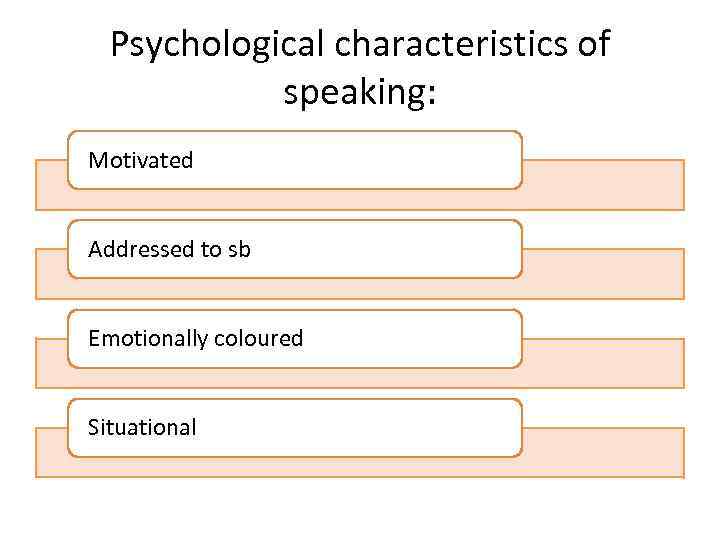
Psychological characteristics of speaking: Motivated Addressed to sb Emotionally coloured Situational
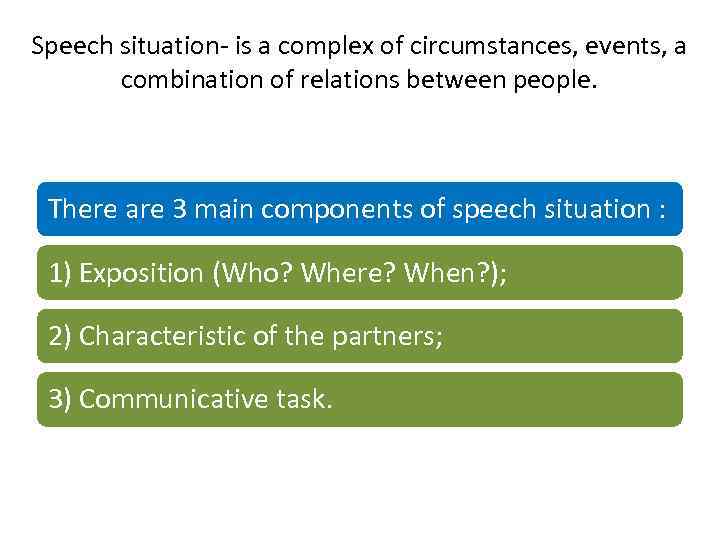
Speech situation- is a complex of circumstances, events, a combination of relations between people. There are 3 main components of speech situation : 1) Exposition (Who? Where? When? ); 2) Characteristic of the partners; 3) Communicative task.
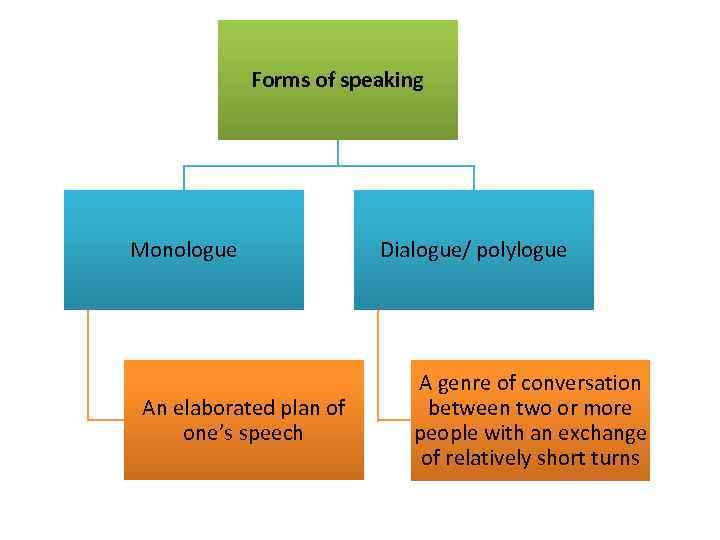
Forms of speaking Monologue Dialogue/ polylogue A genre of conversation An elaborated plan of between two or more one’s speech people with an exchange of relatively short turns
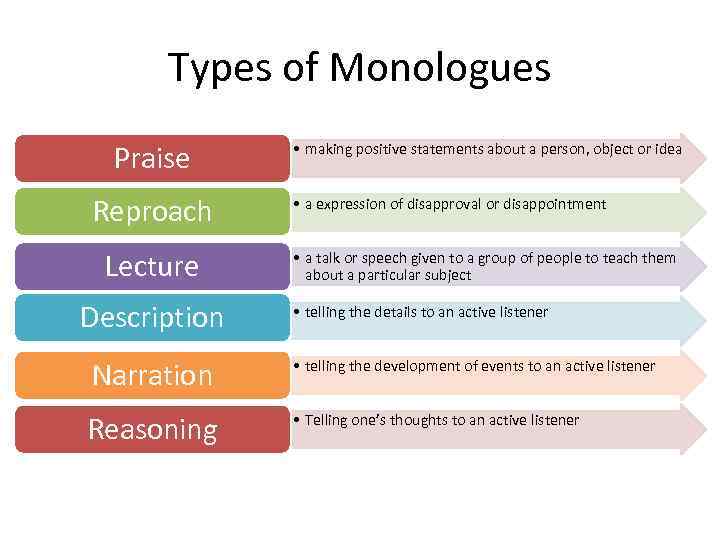
Types of Monologues Praise • making positive statements about a person, object or idea Reproach • a expression of disapproval or disappointment Lecture • a talk or speech given to a group of people to teach them about a particular subject Description • telling the details to an active listener Narration • telling the development of events to an active listener Reasoning • Telling one’s thoughts to an active listener
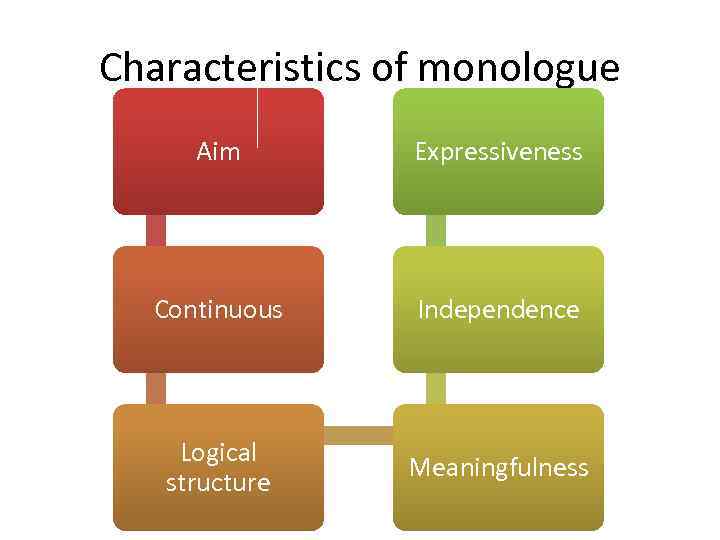
Characteristics of monologue Aim Expressiveness Continuous Independence Logical Meaningfulness structure
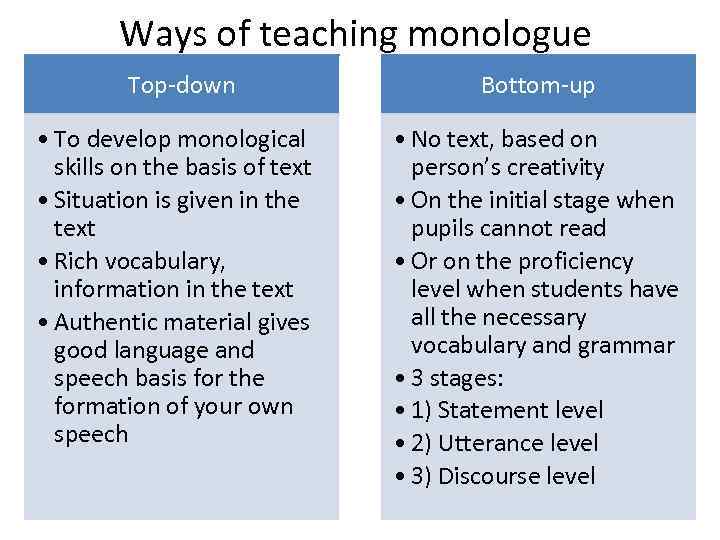
Ways of teaching monologue Top-down Bottom-up • To develop monological • No text, based on skills on the basis of text person’s creativity • Situation is given in the • On the initial stage when text pupils cannot read • Rich vocabulary, • Or on the proficiency information in the text level when students have • Authentic material gives all the necessary good language and vocabulary and grammar speech basis for the • 3 stages: formation of your own • 1) Statement level speech • 2) Utterance level • 3) Discourse level
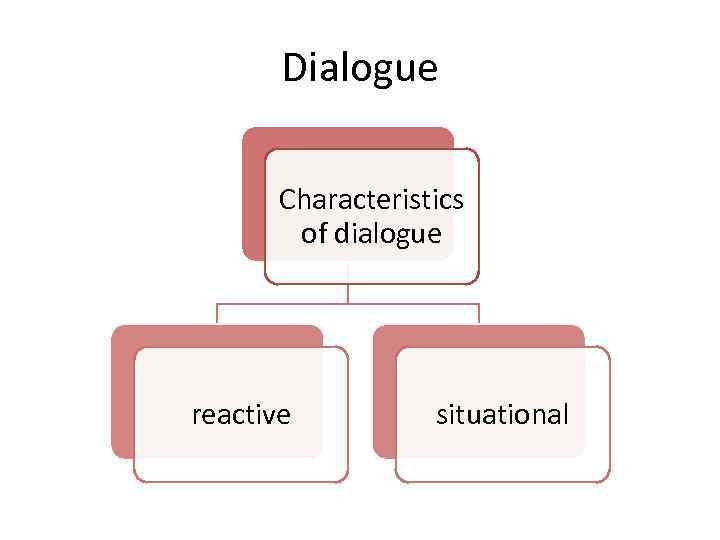
Dialogue Characteristics of dialogue reactive situational
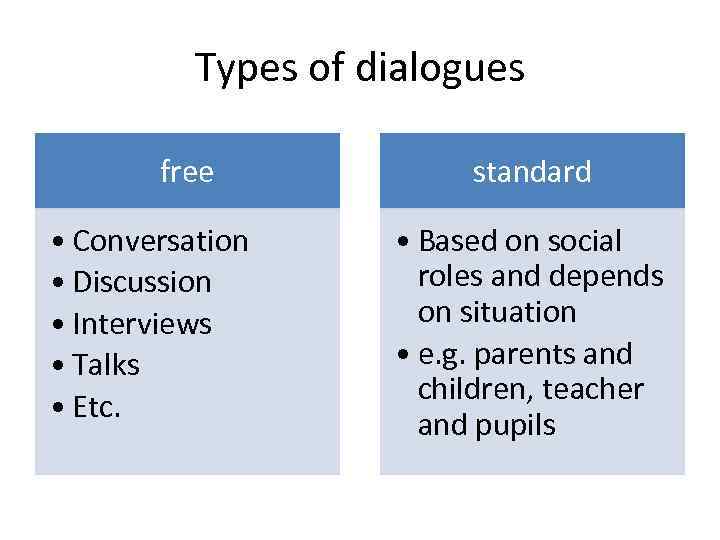
Types of dialogues free standard • Conversation • Based on social • Discussion roles and depends • Interviews on situation • Talks • e. g. parents and children, teacher • Etc. and pupils
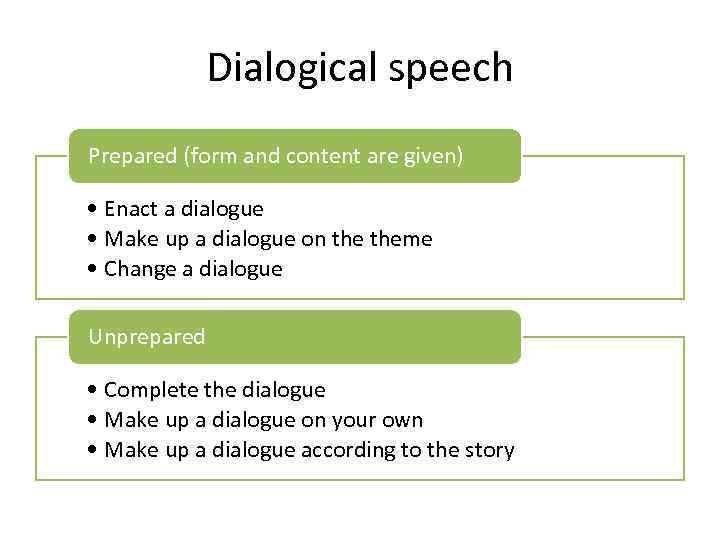
Dialogical speech Prepared (form and content are given) • Enact a dialogue • Make up a dialogue on theme • Change a dialogue Unprepared • Complete the dialogue • Make up a dialogue on your own • Make up a dialogue according to the story
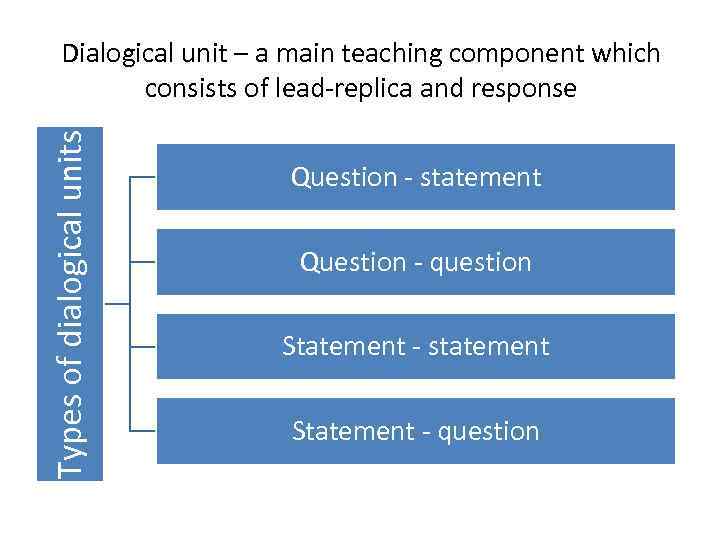
Dialogical unit – a main teaching component which consists of lead-replica and response Types of dialogical units Question - statement Question - question Statement - statement Statement - question
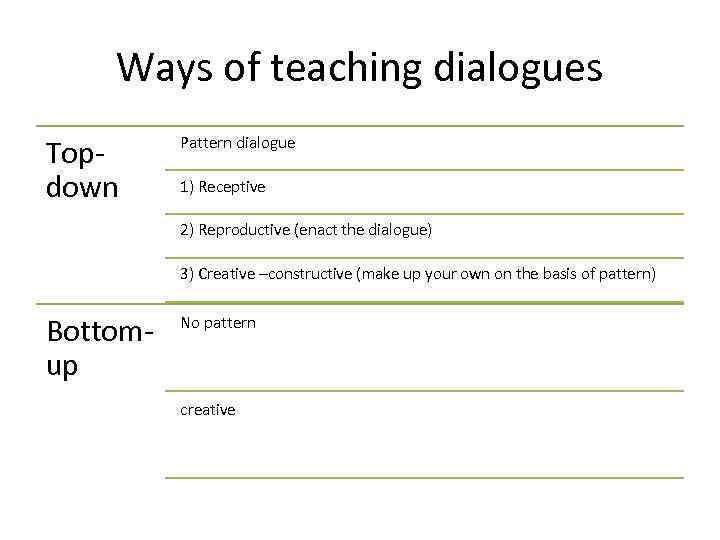
Ways of teaching dialogues Pattern dialogue Top- down 1) Receptive 2) Reproductive (enact the dialogue) 3) Creative –constructive (make up your own on the basis of pattern) Bottom- No pattern up creative
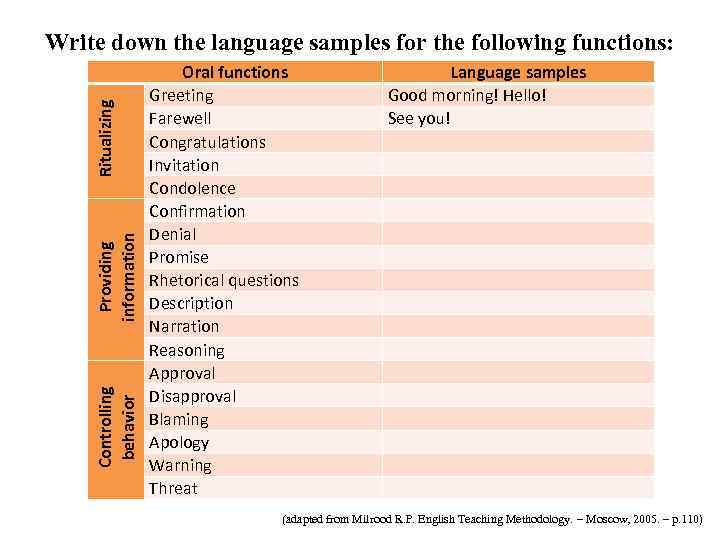
Write down the language samples for the following functions: Oral functions Language samples Greeting Good morning! Hello! Ritualizing Farewell See you! Congratulations Invitation Condolence Confirmation Denial information Providing Promise Rhetorical questions Description Narration Reasoning Approval Disapproval Controlling behavior Blaming Apology Warning Threat (adapted from Milrood R. P. English Teaching Methodology. – Moscow, 2005. – p. 110)
Teaching writing in Profile school
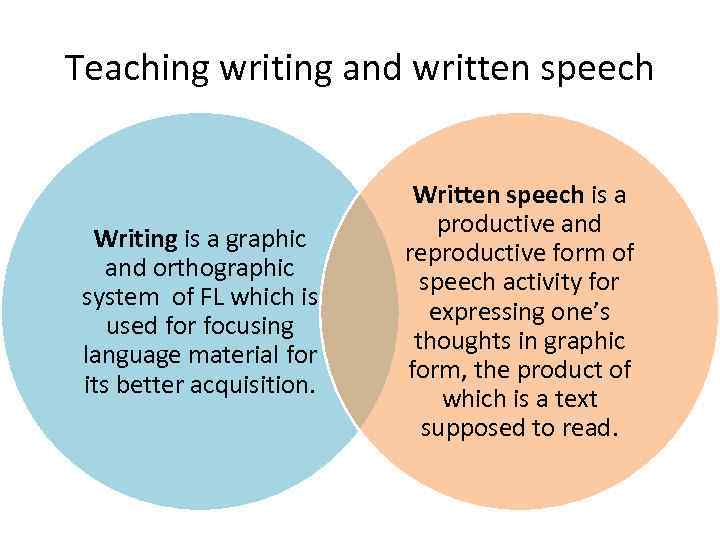
Teaching writing and written speech Written speech is a productive and Writing is a graphic reproductive form of and orthographic speech activity for system of FL which is expressing one’s used for focusing thoughts in graphic language material for form, the product of its better acquisition. which is a text supposed to read.
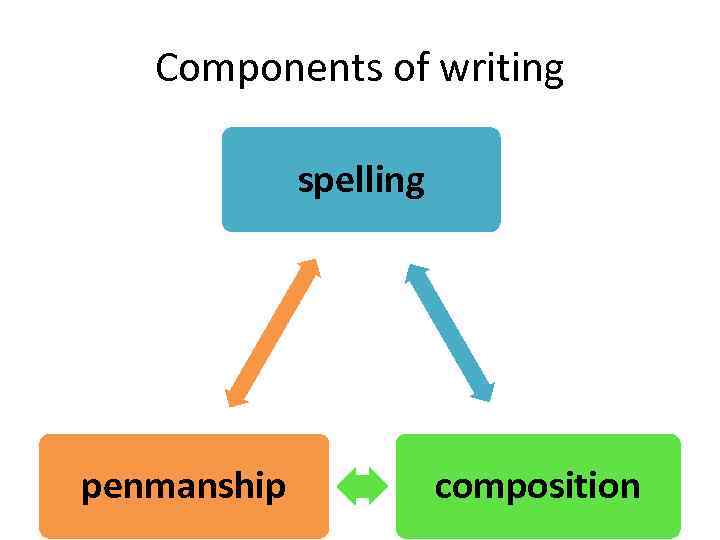
Components of writing spelling penmanship composition
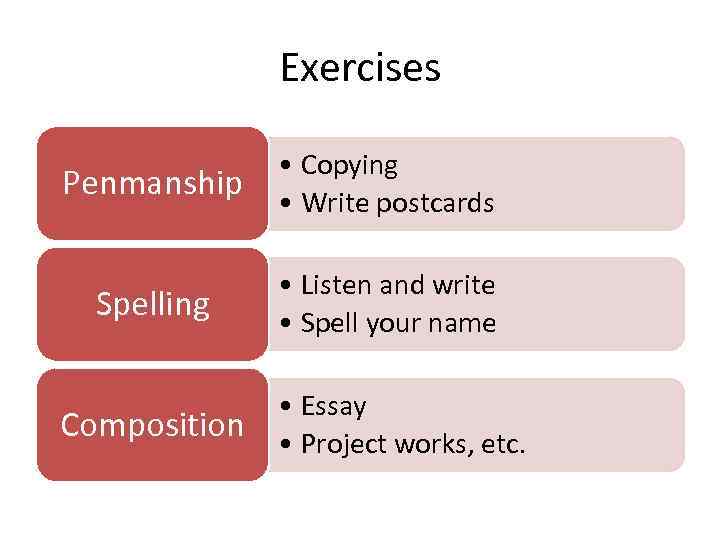
Exercises • Copying Penmanship • Write postcards • Listen and write Spelling • Spell your name • Essay Composition • Project works, etc.
Thanks for your attention!