


 Скачать презентацию Lecture Presentation Chapter 7 Mass Wasting 2012
bc1dc9f6ae854146a3a2f01b138ff980.ppt
- Количество слайдов: 41
 Lecture Presentation Chapter 7 Mass Wasting © 2012 Pearson Education, Inc.
 Learning Objectives § Understand slope processes and the different types of landslides § Know the forces that act on slopes and how they affect the stability of a slope § Know what geographic regions are at risk from landslides § Know the effects of landslides and their linkages with other natural hazards © 2012 Pearson Education, Inc.
 Learning Objectives, cont. § Understand how people can affect the landslide hazard § Be familiar with adjustments we can make to avoid death and damage caused by landslides © 2012 Pearson Education, Inc.
 Introduction § Mass wasting § Rapid downslope movement of rock or soil as a coherent mass § Include earth flows, rock falls, and avalanches § Described collectively as landslides § Slope processes § All slopes are constantly evolving and materials are always in motion downslope § Slopes are composed of different segments: § § § High cliff or free face Talus slope Convex slope Straight slope Concave slope © 2012 Pearson Education, Inc.
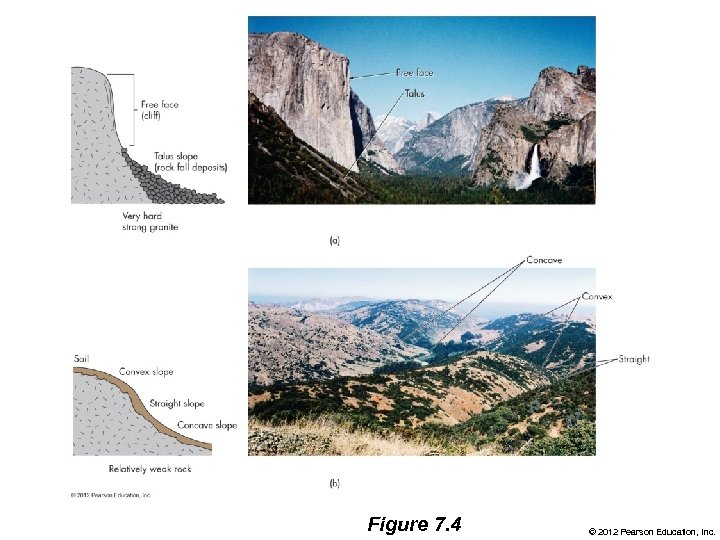 Figure 7. 4 © 2012 Pearson Education, Inc.
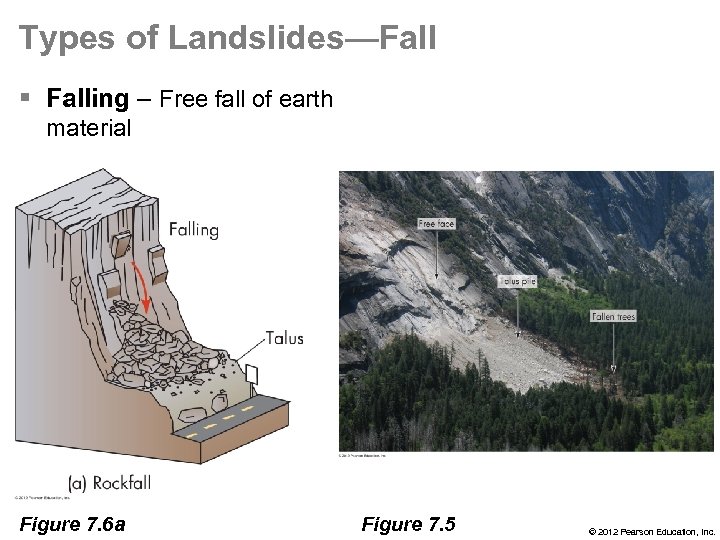 Types of Landslides—Fall § Falling – Free fall of earth material Figure 7. 6 a Figure 7. 5 © 2012 Pearson Education, Inc.
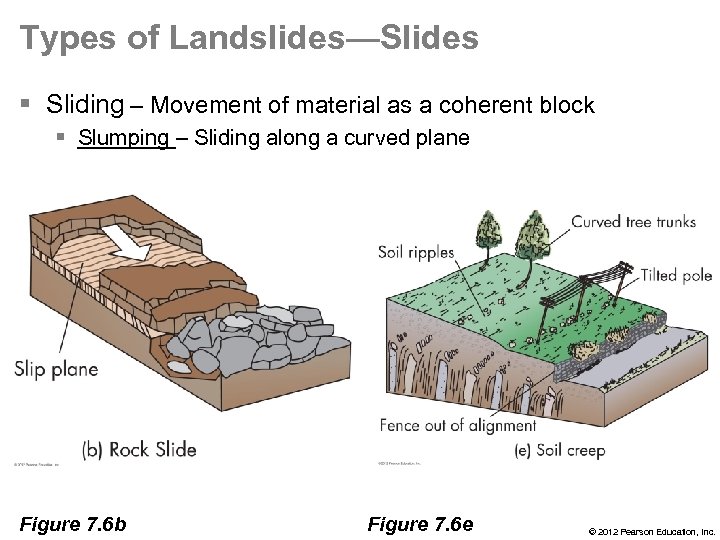 Types of Landslides—Slides § Sliding – Movement of material as a coherent block § Slumping – Sliding along a curved plane Figure 7. 6 b Figure 7. 6 e © 2012 Pearson Education, Inc.
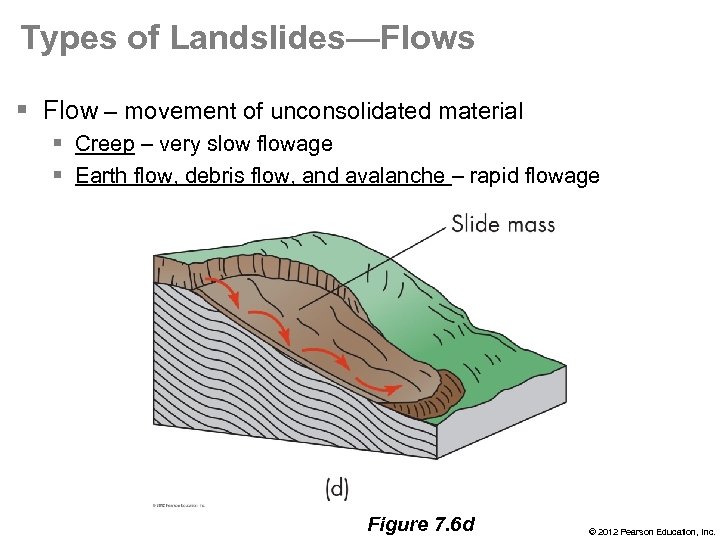 Types of Landslides—Flows § Flow – movement of unconsolidated material § Creep – very slow flowage § Earth flow, debris flow, and avalanche – rapid flowage Figure 7. 6 d © 2012 Pearson Education, Inc.
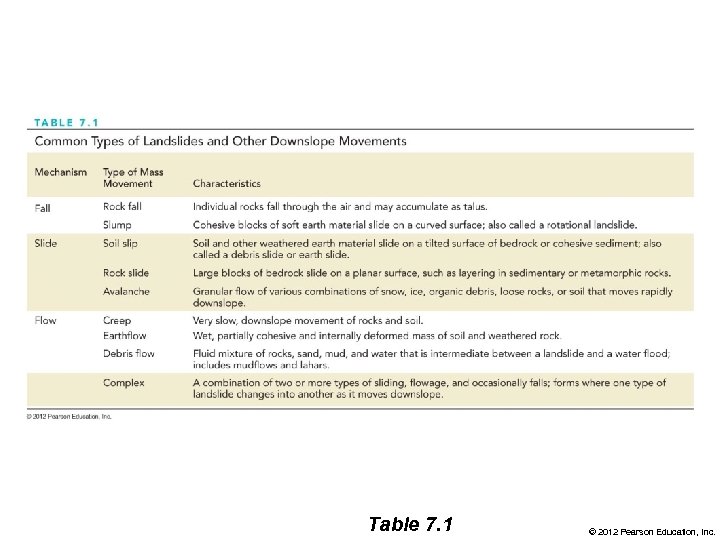 Table 7. 1 © 2012 Pearson Education, Inc.
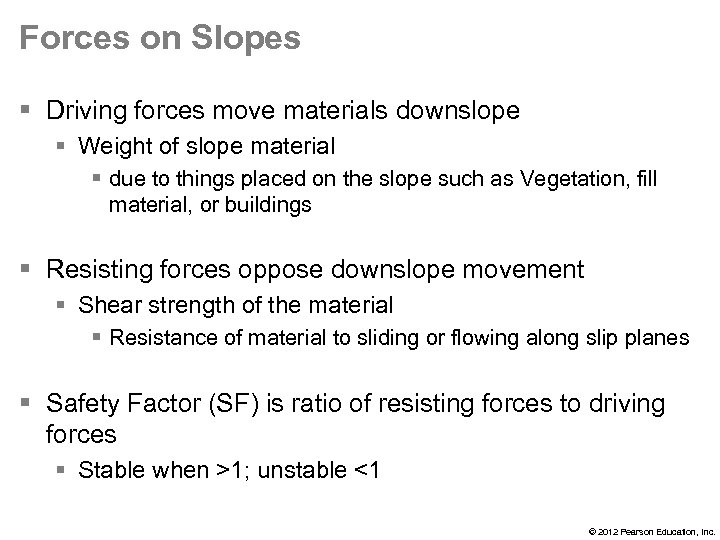 Forces on Slopes § Driving forces move materials downslope § Weight of slope material § due to things placed on the slope such as Vegetation, fill material, or buildings § Resisting forces oppose downslope movement § Shear strength of the material § Resistance of material to sliding or flowing along slip planes § Safety Factor (SF) is ratio of resisting forces to driving forces § Stable when >1; unstable <1 © 2012 Pearson Education, Inc.
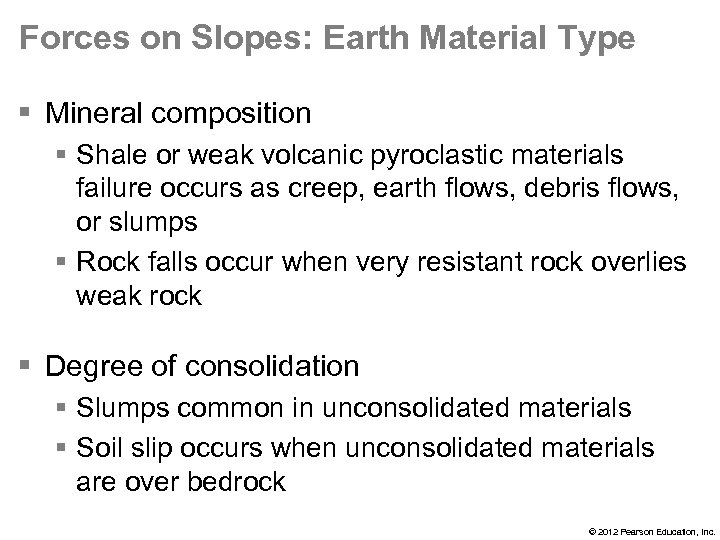 Forces on Slopes: Earth Material Type § Mineral composition § Shale or weak volcanic pyroclastic materials failure occurs as creep, earth flows, debris flows, or slumps § Rock falls occur when very resistant rock overlies weak rock § Degree of consolidation § Slumps common in unconsolidated materials § Soil slip occurs when unconsolidated materials are over bedrock © 2012 Pearson Education, Inc.
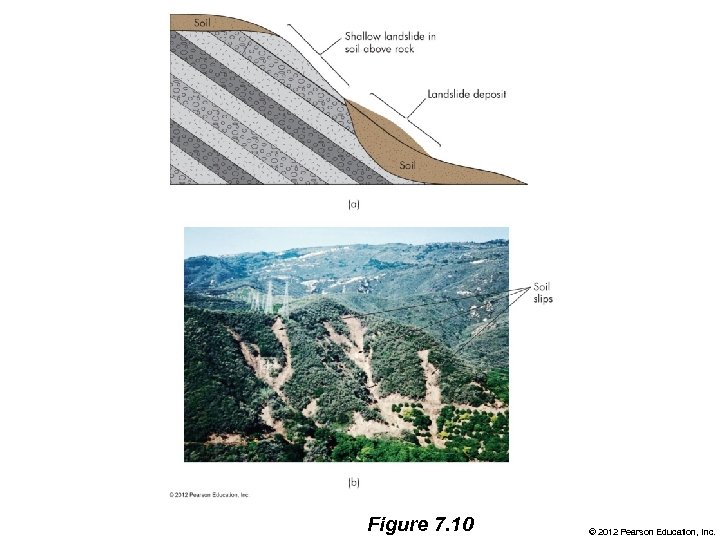 Figure 7. 10 © 2012 Pearson Education, Inc.
 Forces on Slopes: Earth Material Type, cont. § Presence of zones of weakness § Slip planes, natural breaks in consistency of materials § Bedding planes in sedimentary rocks, weak clay layers, foliation planes in metamorphic rocks § Rotational slides have curved slip surfaces § Translational slides have planar slip surfaces § Permeability – Ability to transmit water § Soil slips occur when layers have contrasts in permeability © 2012 Pearson Education, Inc.
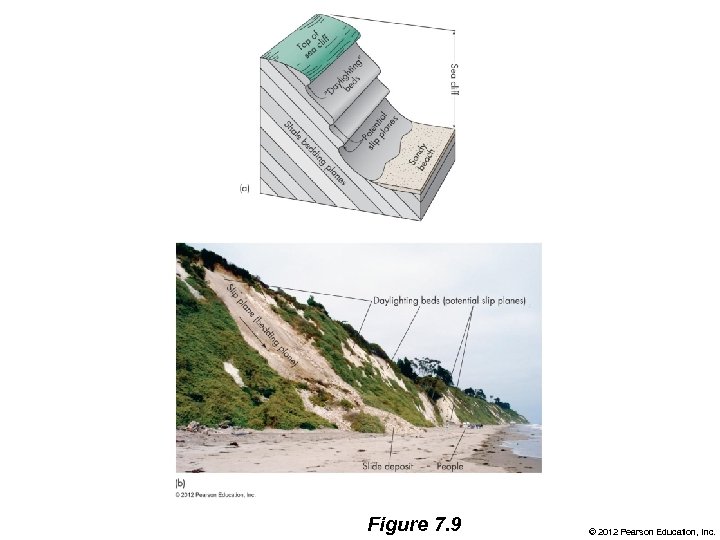 Figure 7. 9 © 2012 Pearson Education, Inc.
 Forces on Slopes: Slope and Topography § Steepness of slope or incline § Steeper the slope, the greater the driving force § Steep slopes are associated with rock falls, avalanches, soil slips § Moderate slopes are associated with earth flows § Gentle slopes are associated with creep § Topographic relief or height of hill above land § Mass wasting occurs more in high relief areas © 2012 Pearson Education, Inc.
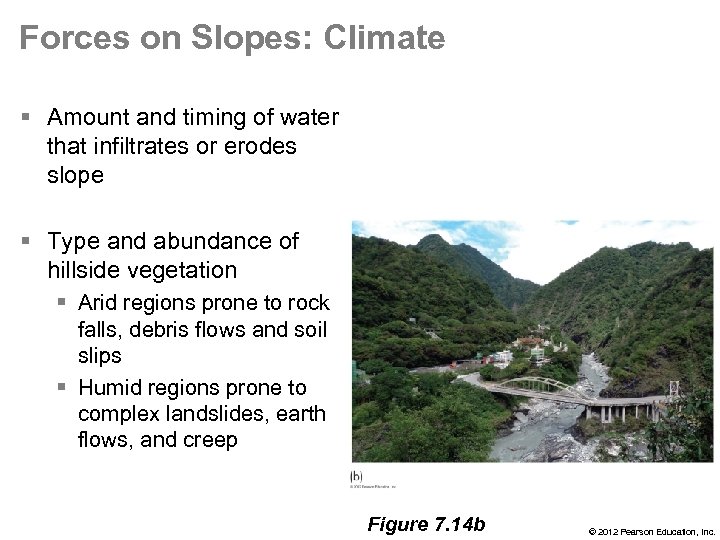 Forces on Slopes: Climate § Amount and timing of water that infiltrates or erodes slope § Type and abundance of hillside vegetation § Arid regions prone to rock falls, debris flows and soil slips § Humid regions prone to complex landslides, earth flows, and creep Figure 7. 14 b © 2012 Pearson Education, Inc.
 Forces on Slopes: Vegetation § Function of climate, soil type, topography, and fire history § Vegetation provides protective cover that slows surface erosion § Roots add strength and cohesion to slope materials § Vegetation adds weight to slopes © 2012 Pearson Education, Inc.
 Forces on Slopes: Water § Water saturates soil causing soil slips and debris flows § Slumps develop after deep infiltration of water § Water erodes base of slope to decrease stability § Water can cause spontaneous liquefaction or quick clay § Fine grained material that loses strength when disturbed and flows like a liquid © 2012 Pearson Education, Inc.
 Forces on Slopes: Time § Forces change with time § Driving and resisting forces change with season due to changes in moisture content or water table § Chemical erosion occurs slowly over time § Carbonic acid from plants dissolves limestones © 2012 Pearson Education, Inc.
 Snow Avalanches § Rapid downslope movement of snow and ice § Sometimes with rock and vegetation § Thousands occur each year in United States and Canada § Depend on steepness of slope § Angle of repose describes steepest stable slope § Snow slopes >25° are unstable, depending on temperature, wetness and shape of snow grains § Stability of snowpack § Weather © 2012 Pearson Education, Inc.
 Snow Avalanches, cont. § Loose-snow avalanches § Widen as move downslope § Slab avalanches § Move as cohesive block § More dangerous and damaging § Triggered by overloading slope or zones of weakness in the snowpack § Avalanches move down chutes § Avoiding these areas can minimize hazard © 2012 Pearson Education, Inc.
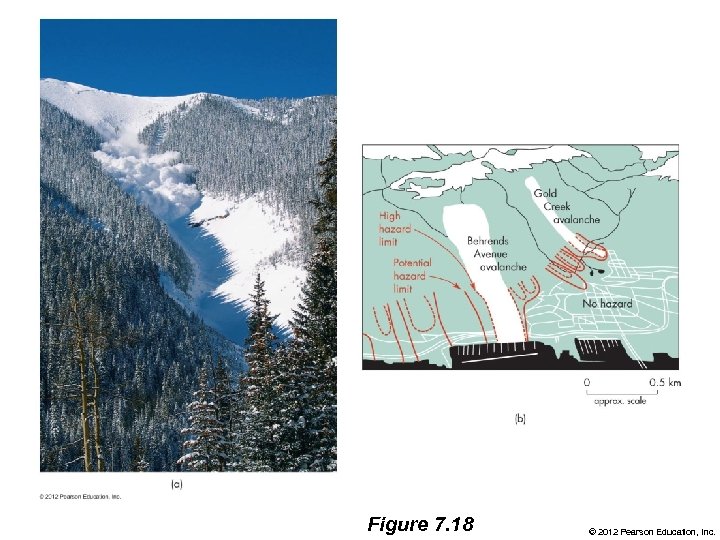 Figure 7. 18 © 2012 Pearson Education, Inc.
 Geographic Regions at Risk from Landslides § Anywhere that have significant slopes and mountains are at risk § Factors expected to increase landslide activity: § Urbanization and development of landslide-prone areas § Tree cutting in landslide-prone areas § Changing global climate patterns © 2012 Pearson Education, Inc.
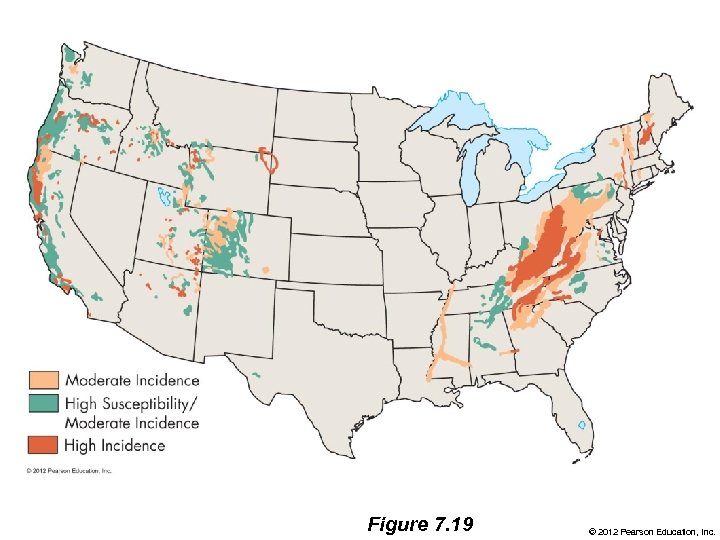 Figure 7. 19 © 2012 Pearson Education, Inc.
 Effects of Landslides § Can do significant damage § In United States 25 people are killed each year, damages >$1 billion § People hit with or buried in falling debris § Slides may damage homes, roads, and utilities § Slides may block roads, impeding travel or block streams causing flooding § Disease © 2012 Pearson Education, Inc.
 Links to Other Natural Hazards § Linked to almost all other hazards § Earthquakes, volcanoes, storms, and fires may cause landslides § Landslides may cause flooding or tsunamis © 2012 Pearson Education, Inc.
 Natural Service Functions of Landslides § Produce deposits that become mineral resources § Such as gold or diamonds § Creation of new habitats in forests and aquatic ecosystems § Increases plant and animal diversity © 2012 Pearson Education, Inc.
 Human Interaction with Landslides § Landslides are a natural phenomenon § Humans increase through: § Expansion of urban areas, transportation networks, and natural resource use § Humans can decrease incidence through: § Grading of land surfaces can increase instability of surfaces § Building stabilizing structures and improving drainage can decrease landslide incidents © 2012 Pearson Education, Inc.
 Human Interaction with Landslides, cont. 1 § Timber harvesting § Clearcutting § Removing all of the trees from a defined area § Road building § Building of network of logging roads § Increases erosion (soil slips) on geologically unstable land § Interrupts surface drainage, alters subsurface movement of water, and changes distribution of earth materials © 2012 Pearson Education, Inc.
 Human Interaction with Landslides, cont. 2 § Urbanization increases landslide activity § § Removal of anchoring vegetation Construction of roads Building at higher elevations Grading § Benches are cut into slopes for home sites § Placing fill materials on slopes © 2012 Pearson Education, Inc.
 Identifying Potential Landslides § Crescent-shaped crack or terraces on hillside § Tongue-shaped area of bare soil or rock on hillside § Large boulders or talus piles at base of cliff § Linear path of cleared vegetation extending down a hill § Exposed bedrock with layering parallel to slope © 2012 Pearson Education, Inc.
 Identifying Potential Landslides, cont. § Tongue-shaped masses of sediment at base of slope § An irregular land surface at the base of a slope § Information can be used to create slope stability map or landslide hazards map © 2012 Pearson Education, Inc.
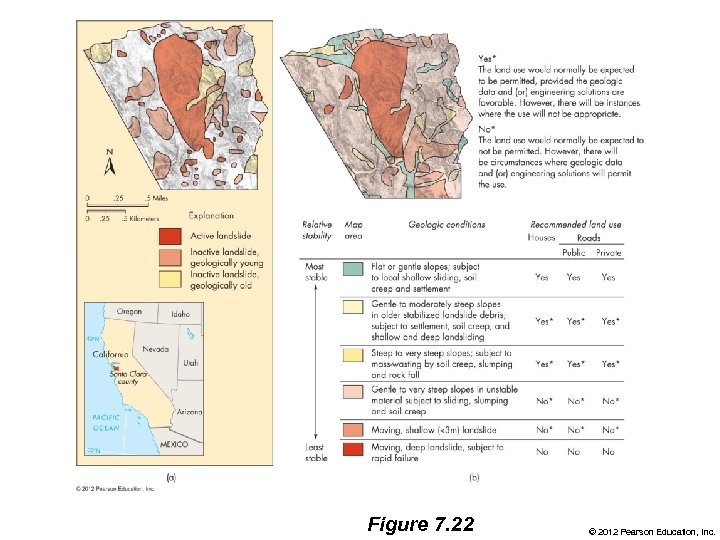 Figure 7. 22 © 2012 Pearson Education, Inc.
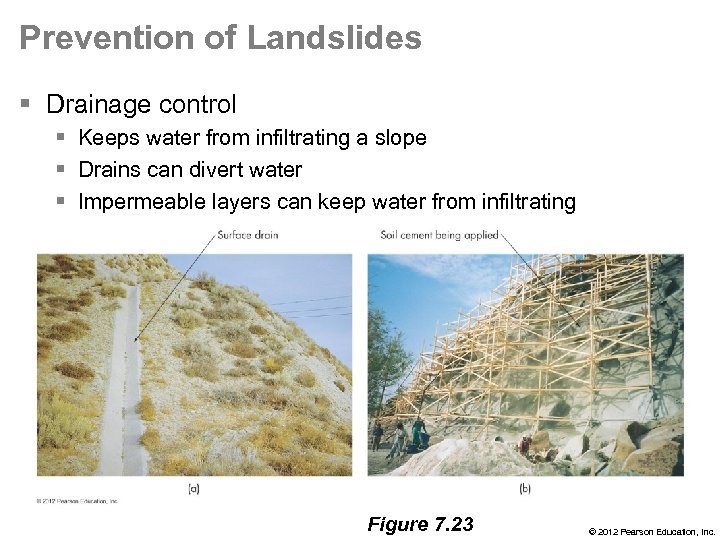 Prevention of Landslides § Drainage control § Keeps water from infiltrating a slope § Drains can divert water § Impermeable layers can keep water from infiltrating Figure 7. 23 © 2012 Pearson Education, Inc.
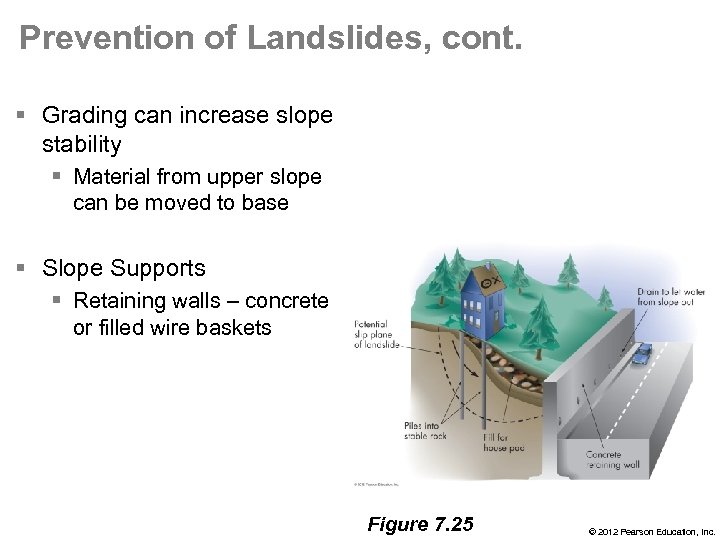 Prevention of Landslides, cont. § Grading can increase slope stability § Material from upper slope can be moved to base § Slope Supports § Retaining walls – concrete or filled wire baskets Figure 7. 25 © 2012 Pearson Education, Inc.
 Landslide Warning Systems § Provide time for people to evacuate § Human monitoring for changes or small rockfalls § Electrical systems, tiltmeters, and geophones § USGS installed acoustic flow monitors in Washington state to detect lahars § Wells can indicate dangerous amounts of water © 2012 Pearson Education, Inc.
 Adjustment to Hazard, Community Preparations § Movement of critical facilities § Hospitals, schools and police stations should be placed in safe locations § Landslide correction § Landslide may be stopped after it starts using drains © 2012 Pearson Education, Inc.
 Adjustments to the Hazard, Personal Preparations § Get a geologic evaluation of property § Avoid homes at mouth of valley or canyon § Consult local agencies § Monitor small landslides on property § Look for cracks in house walls, leaning retaining walls, doors or windows that stick © 2012 Pearson Education, Inc.
 Adjustments to the Hazard, Personal Preparations, cont. § Be wary of leaks in swimming pools or septic tanks, trees or fences that tilt, or sagging or taut utility wires § Be wary of small springs § Look for surface features § Don’t buy a home that has a landslide hazard © 2012 Pearson Education, Inc.
 Things to be Aware of in Avalanches § Most avalanches are triggered by victims or others in their party § Obtain forecasts from nearest avalanche center before you go out § Most people who survive avalanches are rescued by the other members of their party § Learn avalanche safety procedures and how to evaluate snow conditions before traveling to avalanche-prone area © 2012 Pearson Education, Inc.
 End Mass Wasting Chapter 7 © 2012 Pearson Education, Inc.