 Скачать презентацию Lecture Power Point to accompany Molecular Biology Fifth
ede1953a2f1cdd8aac3e5e00c268e506.ppt
- Количество слайдов: 82




Lecture Power. Point to accompany Molecular Biology Fifth Edition Robert F. Weaver Chapter 5 Molecular Tools for Studying Genes and Gene Activity Copyright © The Mc. Graw-Hill Companies, Inc. Permission required for reproduction or display.
5. 1 Molecular Separations • Often mixtures of proteins or nucleic acids are generated during the course of molecular biological procedures – A protein may need to be purified from a crude cellular extract – A particular nucleic acid molecule made in a reaction needs to be purified • Gel electrophoresis is used to separate different species of: – Nucleic acid – Protein 2
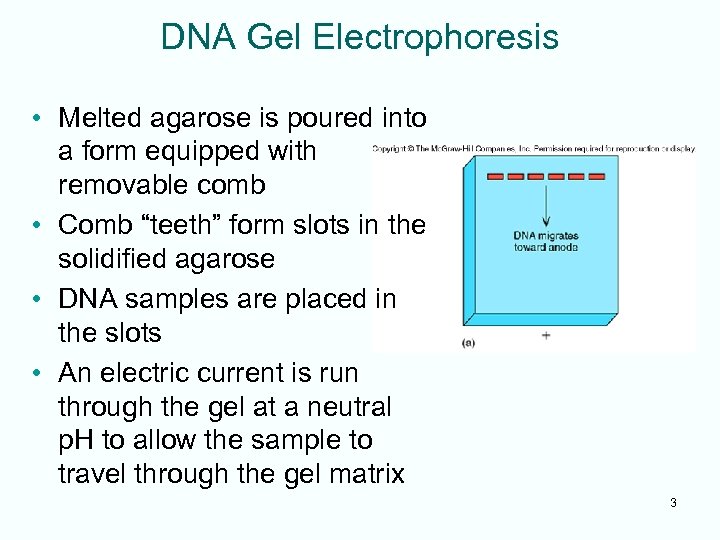
DNA Gel Electrophoresis • Melted agarose is poured into a form equipped with removable comb • Comb “teeth” form slots in the solidified agarose • DNA samples are placed in the slots • An electric current is run through the gel at a neutral p. H to allow the sample to travel through the gel matrix 3
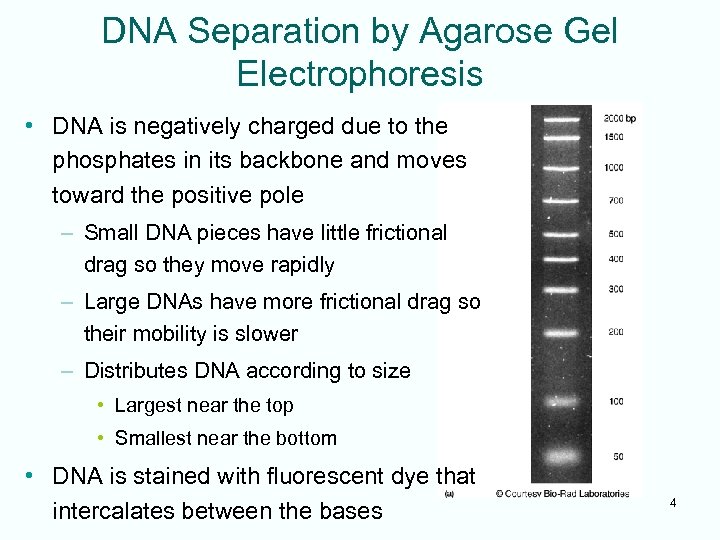
DNA Separation by Agarose Gel Electrophoresis • DNA is negatively charged due to the phosphates in its backbone and moves toward the positive pole – Small DNA pieces have little frictional drag so they move rapidly – Large DNAs have more frictional drag so their mobility is slower – Distributes DNA according to size • Largest near the top • Smallest near the bottom • DNA is stained with fluorescent dye that intercalates between the bases 4
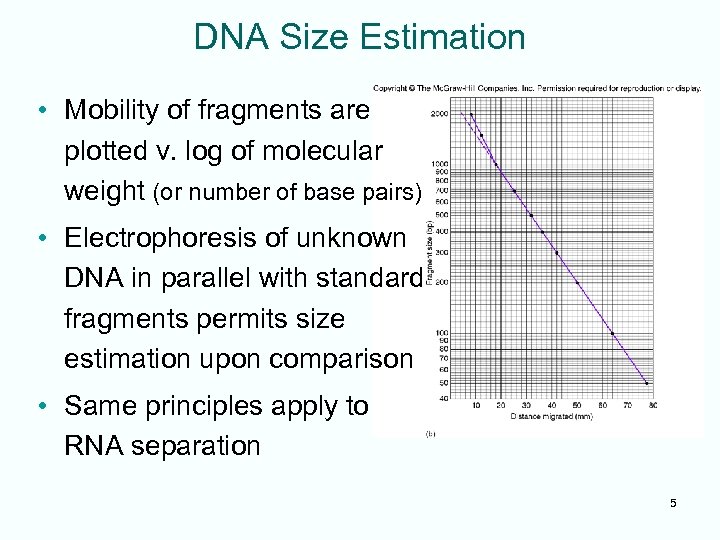
DNA Size Estimation • Mobility of fragments are plotted v. log of molecular weight (or number of base pairs) • Electrophoresis of unknown DNA in parallel with standard fragments permits size estimation upon comparison • Same principles apply to RNA separation 5
Electrophoresis of Large DNA • Special techniques are required for DNA fragments larger than about 1 kilobases • Instead of constant current, alternate long pulses of current in forward direction with shorter pulses in either opposite or sideways direction • Technique is called pulsed-field gel electrophoresis (PFGE) 6
Protein Gel Electrophoresis • Separation of proteins is done using polyacrylamide gel electrophoresis (PAGE) – Treat proteins to denature subunits with detergent such as sodium dodecyl sulfate (SDS) • SDS coats polypeptides with negative charges so all move to anode • Masks natural charges of protein subunits so all move relative to mass not charge – As with DNA smaller proteins move faster toward the anode 7
Summary • DNAs, RNAs, and proteins of various masses can be separated by gel electrophoresis • Most common gel used in nucleic acid electrophoresis is agarose but polyacrylamide is typically used in protein electrophoresis • SDS-PAGE is used to separate polypeptides according to their masses 8
Two-Dimensional Gel Electrophoresis • While SDS-PAGE gives good resolution of polypeptides, some mixtures are so complex that additional resolution is needed • Two-dimensional gel electrophoresis: – Nondenaturing gel electrophoresis (no SDS) uses 2 consecutive gels each in a different dimension – Sequential gels with distinct p. H separation and polyacrylamide gel concentration 9
A Simple 2 -D Method • Samples are run in 2 gels – First dimension separates using one concentration of polyacrylamide at one p. H – Second dimension uses different concentration of polyacrylamide and p. H – Proteins move differently at different p. H values without SDS and at different acrylamide concentrations 10
A More Powerful Two-Dimensional Gel Electrophoresis Technique A two process method: • Isoelectric focusing gel: mixture of proteins electrophoresed through gel in a narrow tube containing a p. H gradient – Negatively charged protein moves to its isoelectric point at which it is no longer charged – Tube gel is removed and used as the sample in the second process 11
A More Powerful Two-Dimensional Gel Electrophoresis Technique continued • Standard SDS-PAGE: – Tube gel is removed and used as the sample at the top of a standard polyacrylamide gel – Proteins partially resolved by isoelectric focusing are further resolved according to size • When used to a compare complex mixtures of proteins prepared under two different conditions, even subtle differences are visible 12
Ion-Exchange Chromatography • Chromatography originally referred to the pattern seen after separating colored substances on paper • Ion-exchange chromatography uses a resin to separate substances by charge • This is especially useful for proteins • Resin is placed in a column and the sample is loaded onto the column material 13
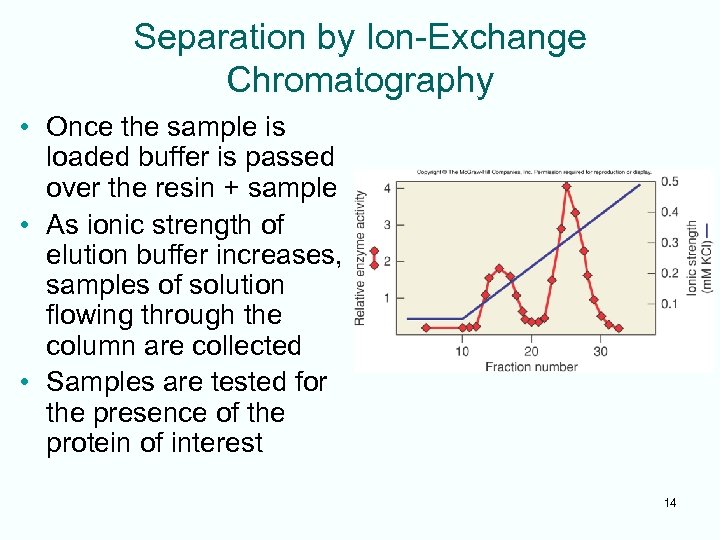
Separation by Ion-Exchange Chromatography • Once the sample is loaded buffer is passed over the resin + sample • As ionic strength of elution buffer increases, samples of solution flowing through the column are collected • Samples are tested for the presence of the protein of interest 14
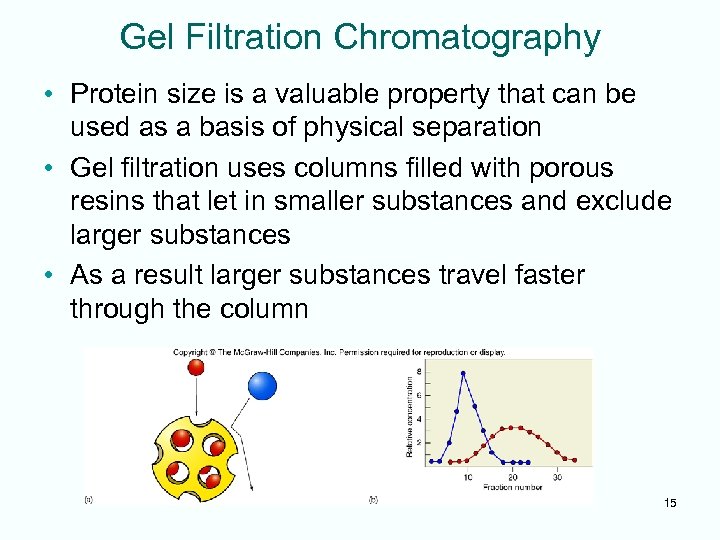
Gel Filtration Chromatography • Protein size is a valuable property that can be used as a basis of physical separation • Gel filtration uses columns filled with porous resins that let in smaller substances and exclude larger substances • As a result larger substances travel faster through the column 15
Affinity Chromatography • The resin contains a substance to which the molecule of interest has a strong and specific affinity • The molecule binds to a column resin coupled to the affinity reagent – Molecule of interest is retained – Most other molecules flow through without binding – Last, the molecule of interest is eluted from the column using a specific solution that disrupts their specific binding 16
Summary • High-resolution separation of proteins can be achieved by two-dimensional gel electrophoresis • Ion-exchange chromatography can be used to separate substances according to their sizes • Gel filtration chromatography uses columns filled with porous resins that let in smaller substances but exclude larger ones • Affinity chromatography is a powerful purification technique that exploits an affinity reagent with strong and specific affinity for a molecule of interest 17
5. 2 Labeled Tracers • For many years “labeled” has been synonymous with “radioactive” • Radioactive tracers allow vanishingly small quantities of substances to be detected • Molecular biology experiments typically require detection of extremely small amounts of a particular substance 18
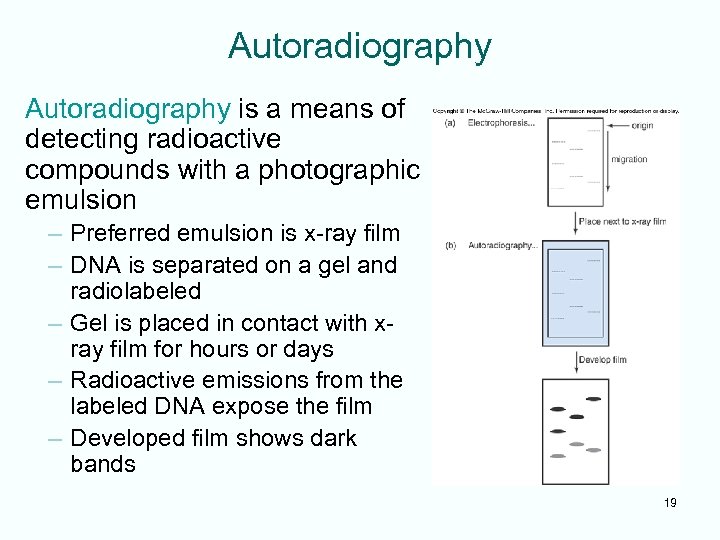
Autoradiography is a means of detecting radioactive compounds with a photographic emulsion – Preferred emulsion is x-ray film – DNA is separated on a gel and radiolabeled – Gel is placed in contact with xray film for hours or days – Radioactive emissions from the labeled DNA expose the film – Developed film shows dark bands 19
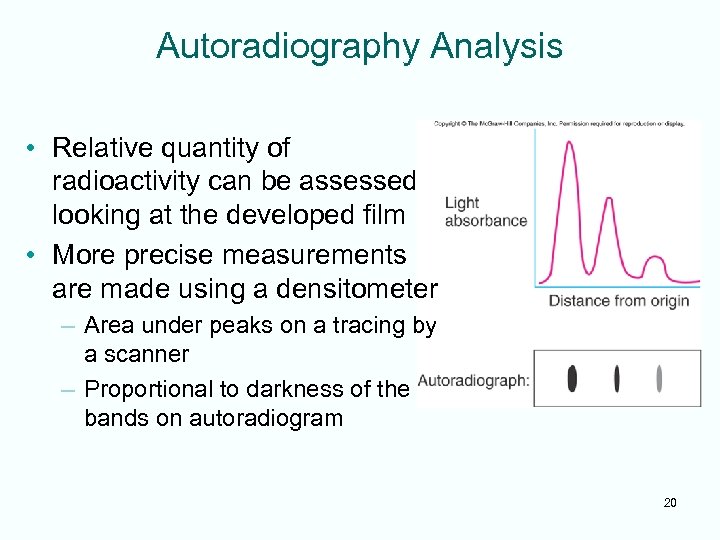
Autoradiography Analysis • Relative quantity of radioactivity can be assessed looking at the developed film • More precise measurements are made using a densitometer – Area under peaks on a tracing by a scanner – Proportional to darkness of the bands on autoradiogram 20
Phosphorimaging This technique is more accurate in quantifying amount of radioactivity in a substance – Response to radioactivity is much more linear – Place gel with radioactive bands in contact with a phosphorimager plate – Plate absorbs b electrons that excite molecules on the plate which remain excited until plate is scanned – Molecular excitation is monitored by a detector 21
Liquid Scintillation Counting Radioactive emissions from a sample create photons of visible light are detected by a photomultiplier tube in the process of liquid scintillation counting – Remove the radioactive material (band from gel) to a vial containing scintillation fluid – Fluid contains a fluor that fluoresces when hit with radioactive emissions – Acts to convert invisible radioactivity into visible light 22
Nonradioactive Tracers • Newer nonradioactive tracers now rival older radioactive tracers in sensitivity • These tracers do not have hazards: – Health exposure – Handling – Disposal • Increased sensitivity is from use of a multiplier effect of an enzyme that is coupled to probe for molecule of interest 23
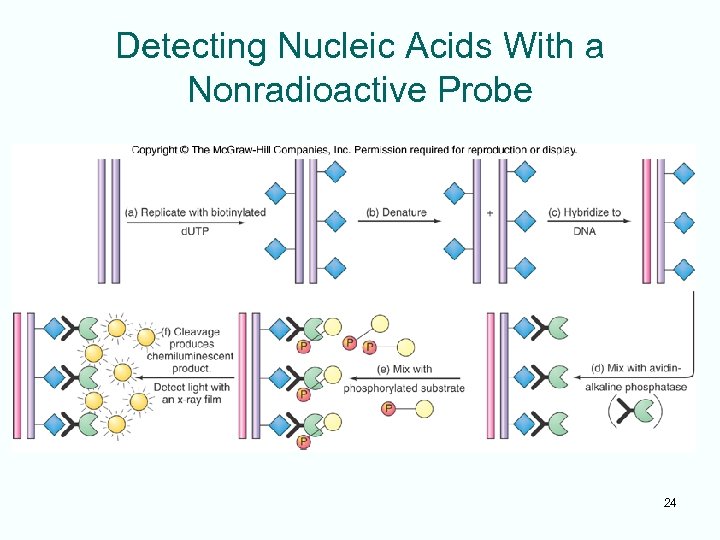
Detecting Nucleic Acids With a Nonradioactive Probe 24
5. 3 Using Nucleic Acid Hybridization • Hybridization is the ability of one singlestranded nucleic acid to form a double helix with another single strand of complementary base sequence • Previous discussion focused on colony and plaque hybridization • This section looks at techniques for isolated nucleic acids 25
Southern Blots: Identifying Specific DNA Fragments • Digests of genomic DNA are separated on a gel • The separated pieces are transferred to filter (nitrocellulose) by diffusion, or more recently by electrophoresing the DNA onto the filter • The filter is then treated with alkali to denature the DNA, resulting ss. DNA binds to the filter • A labeled c. DNA probe that is complementary to the DNA of interest is then applied to the filter • A positive band should be detectable where hybridization between the probe and DNA occurred 26
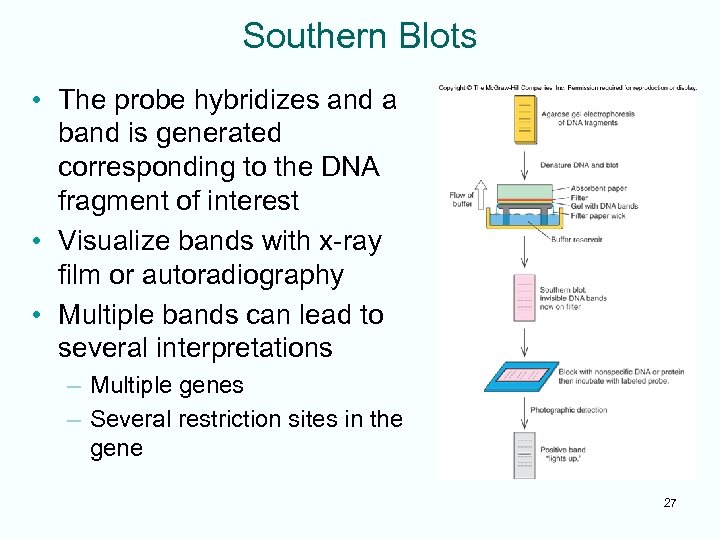
Southern Blots • The probe hybridizes and a band is generated corresponding to the DNA fragment of interest • Visualize bands with x-ray film or autoradiography • Multiple bands can lead to several interpretations – Multiple genes – Several restriction sites in the gene 27
DNA Fingerprinting and DNA Typing • Southern blots are used in forensic labs to identify individuals from DNA-containing materials • Minisatellite DNA is a sequence of bases repeated several times, also called a DNA fingerprint – Individuals differ in the pattern of repeats of the basic sequence – The difference is large enough that 2 people have only a remote chance of having exactly the same pattern of repeats 28
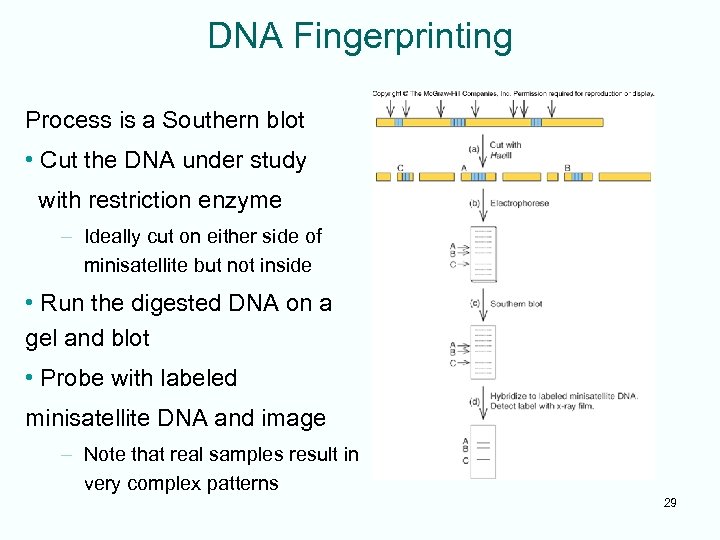
DNA Fingerprinting Process is a Southern blot • Cut the DNA under study with restriction enzyme – Ideally cut on either side of minisatellite but not inside • Run the digested DNA on a gel and blot • Probe with labeled minisatellite DNA and image – Note that real samples result in very complex patterns 29
Forensic Uses of DNA Fingerprinting and DNA Typing • While people have different DNA fingerprints, parts of the pattern are inherited in a Mendelian fashion – Can be used to establish parentage – Potential to identify criminals – Remove innocent people from suspicion • Actual pattern has so many bands they can smear together indistinguishably – Forensics uses probes for just a single locus – Set of probes gives a set of simple patterns 30
In Situ Hybridization: Locating Genes in Chromosomes • Labeled probes can be used to hybridize to chromosomes and reveal which chromosome contains the gene of interest – Spread chromosomes from a cell – Partially denature DNA creating single-stranded regions to hybridize to labeled probe – Stain chromosomes and detect presence of label on particular chromosome • Probe can be detected with a fluorescent antibody in a technique called fluorescence in situ hybridization (FISH) 31
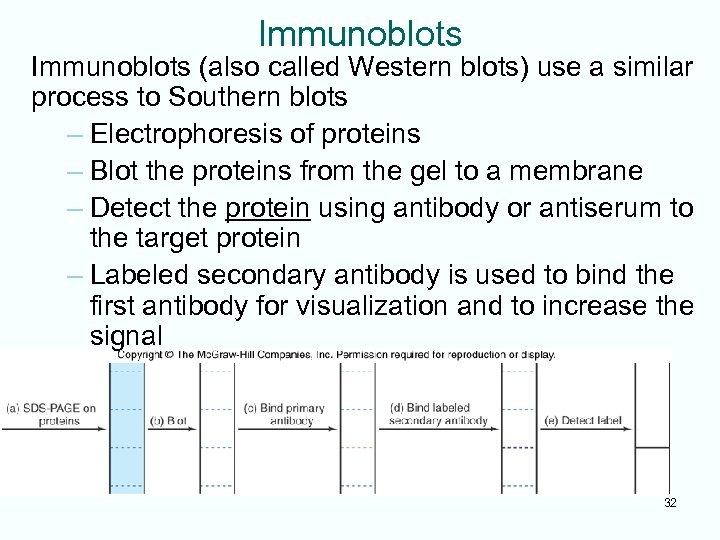
Immunoblots (also called Western blots) use a similar process to Southern blots – Electrophoresis of proteins – Blot the proteins from the gel to a membrane – Detect the protein using antibody or antiserum to the target protein – Labeled secondary antibody is used to bind the first antibody for visualization and to increase the signal 32
Summary • Labeled DNA (or RNA) probes can be used to hybridize to DNAs of the same or very similar sequence on a Southern blot • DNA fingerprinting can be used as a forensic tool or to test parentage • In situ hybridization can be used to locate genes or other specific DNA sequences on whole chromosomes • Proteins can be detected and quantified in a complex mixture using Western blots 33
5. 4 DNA Sequencing • Sanger, Maxam, and Gilbert developed 2 methods for determining the exact base sequence of a cloned piece of DNA • Modern DNA sequencing is based on the Sanger method and uses dideoxy nucleotides to terminate DNA synthesis – The process yields a series of DNA fragments whose size is measured by electrophoresis – The last base in each fragment is known as that dideoxy nucleotide was used to terminate the reaction – Ordering the fragments by size tells the base sequence of the DNA 34
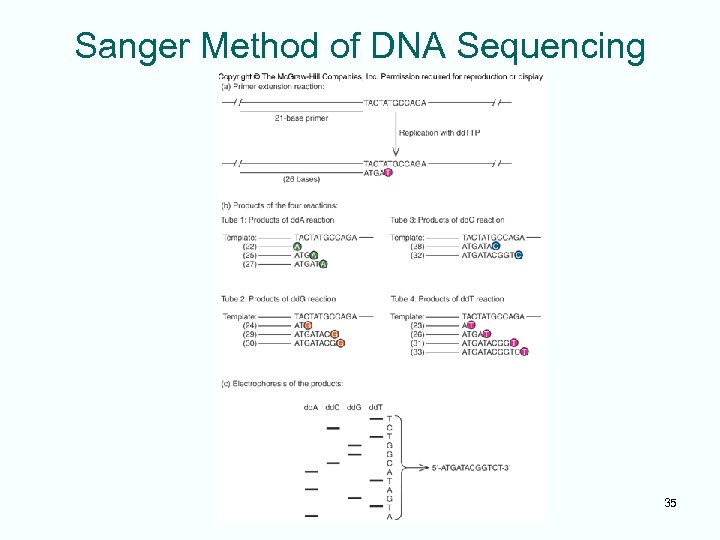
Sanger Method of DNA Sequencing 35
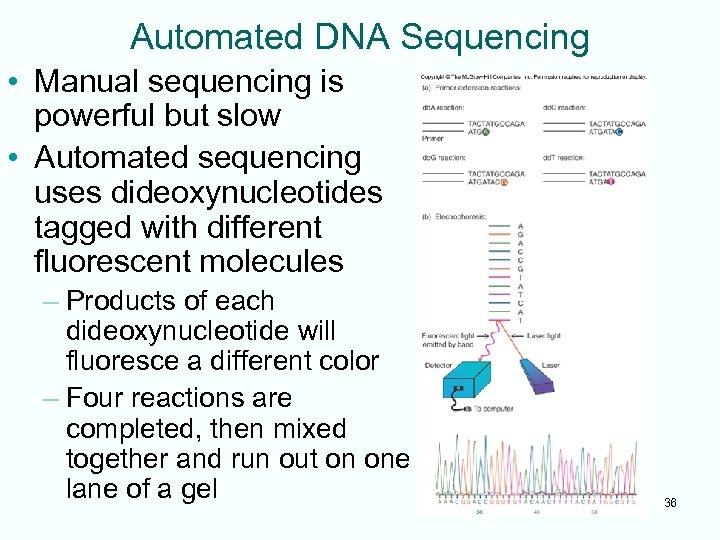
Automated DNA Sequencing • Manual sequencing is powerful but slow • Automated sequencing uses dideoxynucleotides tagged with different fluorescent molecules – Products of each dideoxynucleotide will fluoresce a different color – Four reactions are completed, then mixed together and run out on one lane of a gel 36

High Throughput Sequencing • Once an organism’s genome sequence is known, very rapid sequencing techniques can be applied to sequence the genome of another member of the same species • Produces relatively short reads or contiguous sequences (25 -35 bp or 200 -300 bp, depending on the method) that can easily be pieced together if a reference sequence is available 37
High Throughput Sequencing • Pyrosequencing is one example that is an automated system with the advantages of speed and accuracy - nucleotides are added one by one and the incorporation of a nucleotide is detected by a release of pyrophosphate, which leads to a flash of light • Another method (Illumina company) starts by attaching short pieces of DNA to a solid surface, amplifying each DNA in a tiny patch on the surface, then sequencing the patches together by extending them one nucleotide at a time using fluorescent chain-terminating nucleotides, whose fluoresce reveals their identity 38
Restriction Mapping • Prior to the start of large-scale sequencing preliminary work is done to locate landmarks – A map based on physical characteristics is called a physical map – If restriction sites are the only map features then a restriction map has been prepared 39
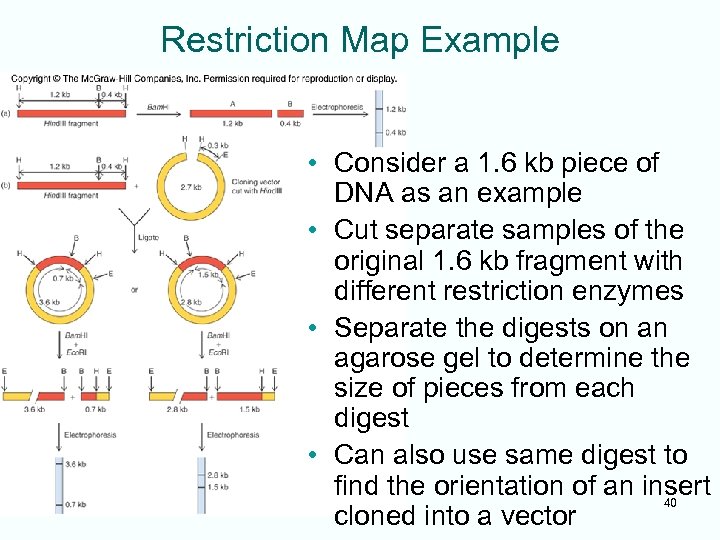
Restriction Map Example • Consider a 1. 6 kb piece of DNA as an example • Cut separate samples of the original 1. 6 kb fragment with different restriction enzymes • Separate the digests on an agarose gel to determine the size of pieces from each digest • Can also use same digest to find the orientation of an insert 40 cloned into a vector
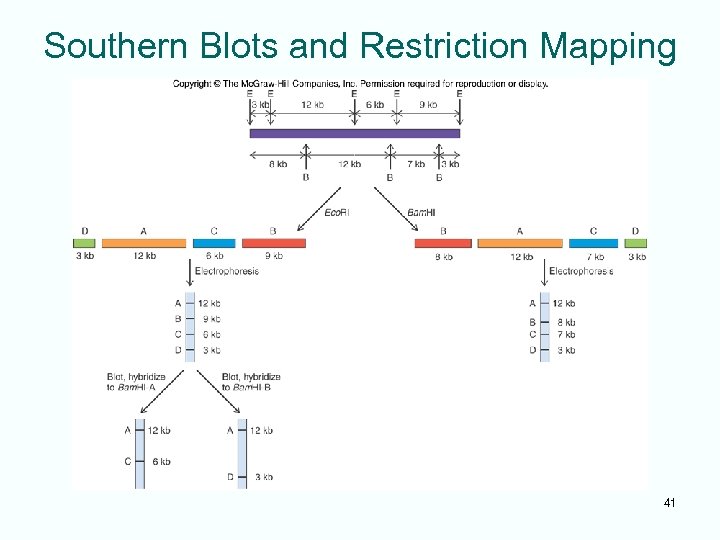
Southern Blots and Restriction Mapping 41
Summary • Physical maps tell about the spatial arrangement of physical “landmarks” such as restriction sites – In restriction mapping cut the DNA in question with 2 or more restriction enzymes in separate reactions – Measure the sizes of the resulting fragments – Cut each with another restriction enzyme and measure size of subfragments by gel electrophoresis • Sizes permit location of some restriction sites relative to others • Improve process by Southern blotting fragments and hybridizing them to labeled fragments from another restriction enzyme to reveal overlaps 42
5. 5 Protein Engineering With Cloned Genes: Site-Directed Mutagenesis • Cloned genes permit biochemical microsurgery on proteins – Specific bases in a gene may be changed – Amino acids at specific sites in the protein product may be altered as a result – Effects of those changes on protein function can be observed 43
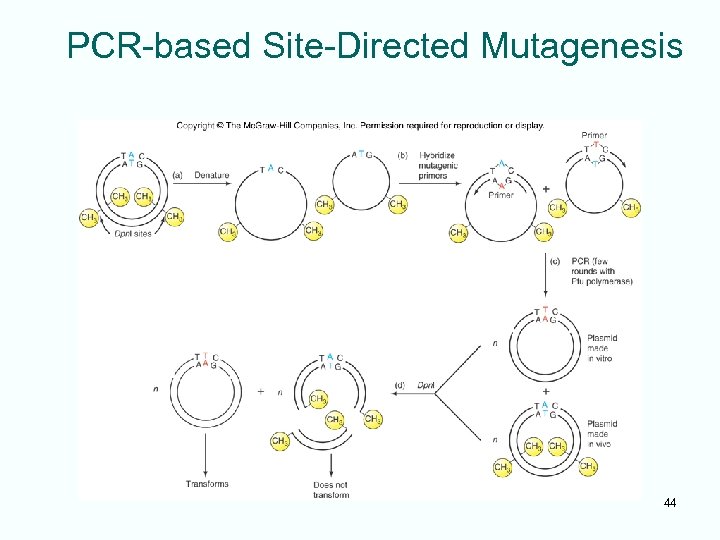
PCR-based Site-Directed Mutagenesis 44
Summary • Using cloned genes, one can introduce changes that may alter the amino acid sequence of the corresponding protein products • Mutagenized DNA can be made with: – Double-stranded DNA – Two complementary mutagenic primers – PCR • Digest the PCR product to remove wild-type DNA • Cells can be transformed with mutagenized DNA 45
5. 6 Mapping and Quantifying Transcripts • In the field of molecular biology mapping (locating start and end) and quantifying (how much transcript exists at a set time) transcripts are common procedures • Often transcripts do not have a uniform terminator, resulting in a continuum of species smeared on a gel • Techniques that are specific for the sequence of interest are important 46
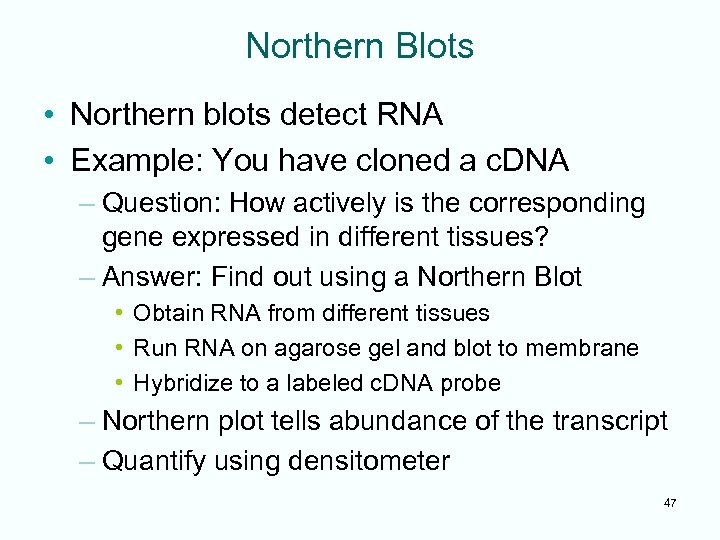
Northern Blots • Northern blots detect RNA • Example: You have cloned a c. DNA – Question: How actively is the corresponding gene expressed in different tissues? – Answer: Find out using a Northern Blot • Obtain RNA from different tissues • Run RNA on agarose gel and blot to membrane • Hybridize to a labeled c. DNA probe – Northern plot tells abundance of the transcript – Quantify using densitometer 47
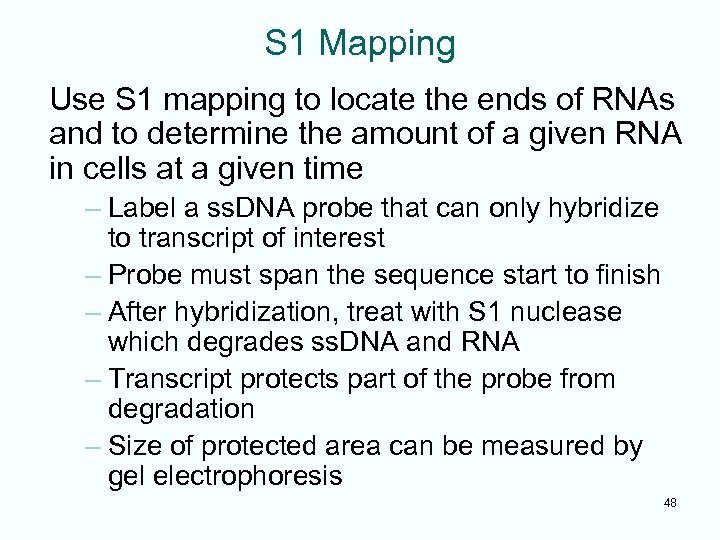
S 1 Mapping Use S 1 mapping to locate the ends of RNAs and to determine the amount of a given RNA in cells at a given time – Label a ss. DNA probe that can only hybridize to transcript of interest – Probe must span the sequence start to finish – After hybridization, treat with S 1 nuclease which degrades ss. DNA and RNA – Transcript protects part of the probe from degradation – Size of protected area can be measured by gel electrophoresis 48
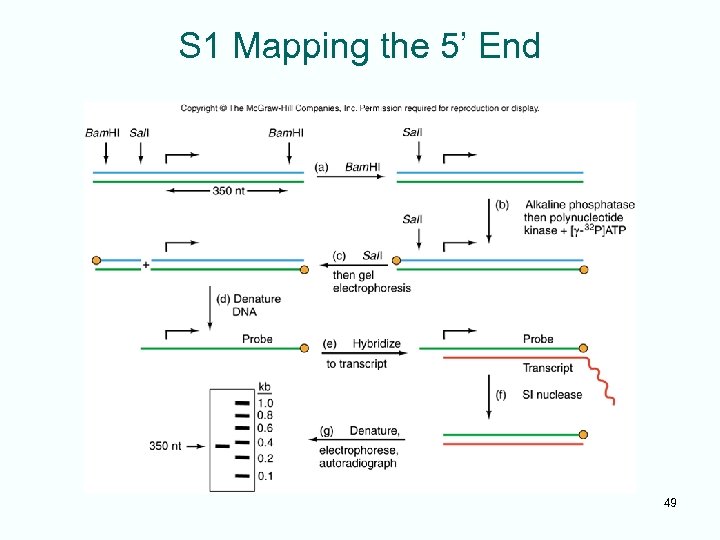
S 1 Mapping the 5’ End 49
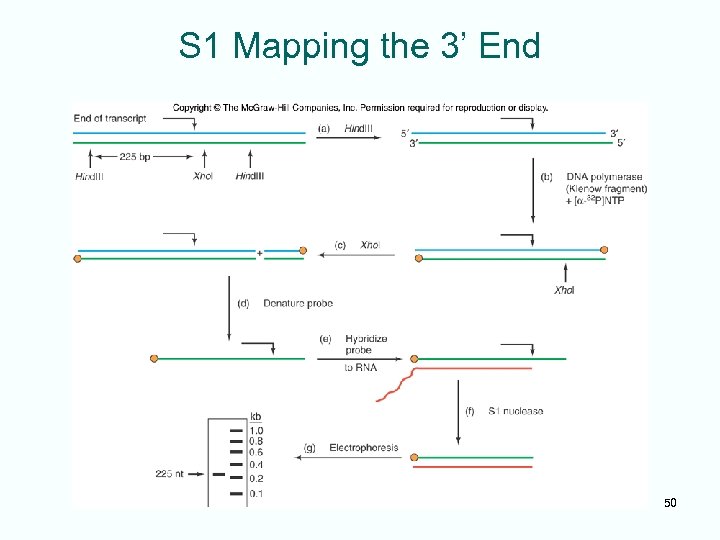
S 1 Mapping the 3’ End 50
Summary • A Northern blot is similar to a Southern blot but is a method used for detection of RNA • In S 1 mapping, a labeled DNA probe is used to detect 5’- or 3’-end of a transcript • Amount of probe protected is proportional to concentration of transcript, so S 1 mapping can be quantitative • RNase mapping is a variation on SI mapping that uses an RNA probe and RNase 51
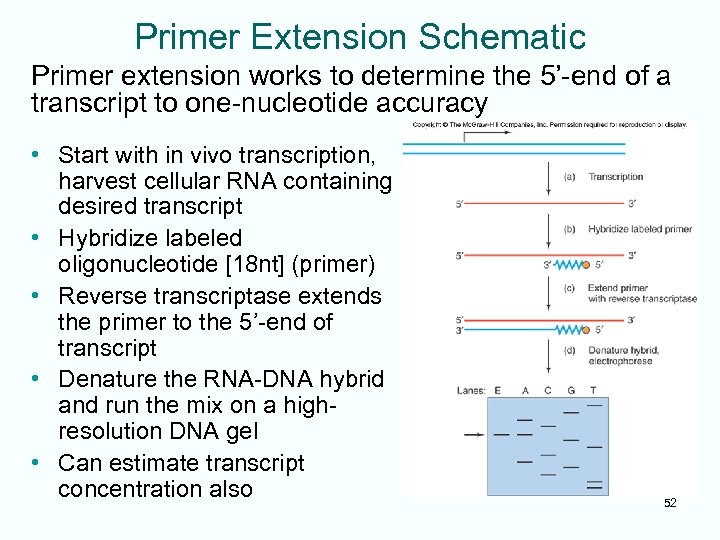
Primer Extension Schematic Primer extension works to determine the 5’-end of a transcript to one-nucleotide accuracy • Start with in vivo transcription, harvest cellular RNA containing desired transcript • Hybridize labeled oligonucleotide [18 nt] (primer) • Reverse transcriptase extends the primer to the 5’-end of transcript • Denature the RNA-DNA hybrid and run the mix on a highresolution DNA gel • Can estimate transcript concentration also 52
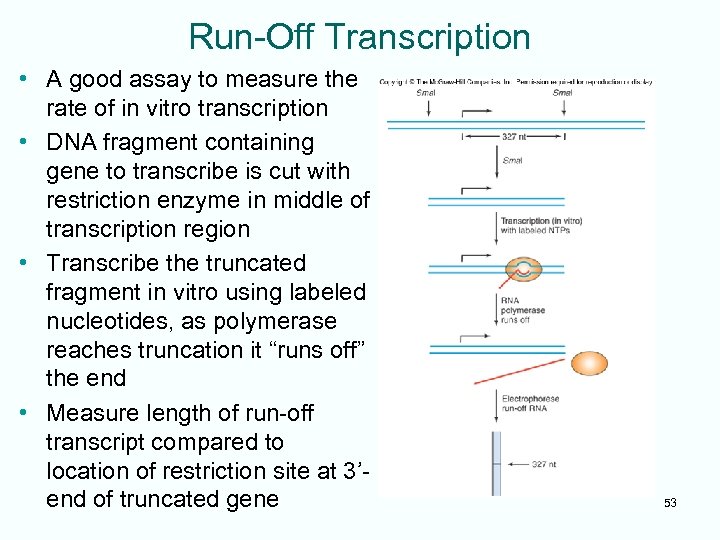
Run-Off Transcription • A good assay to measure the rate of in vitro transcription • DNA fragment containing gene to transcribe is cut with restriction enzyme in middle of transcription region • Transcribe the truncated fragment in vitro using labeled nucleotides, as polymerase reaches truncation it “runs off” the end • Measure length of run-off transcript compared to location of restriction site at 3’end of truncated gene 53
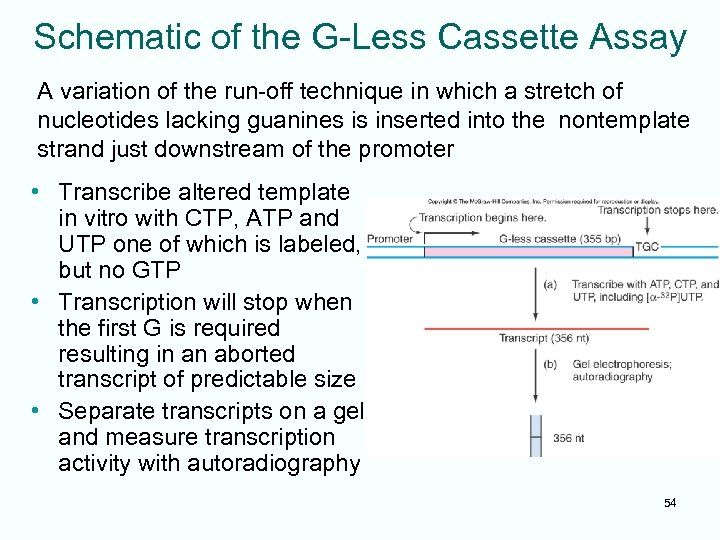
Schematic of the G-Less Cassette Assay A variation of the run-off technique in which a stretch of nucleotides lacking guanines is inserted into the nontemplate strand just downstream of the promoter • Transcribe altered template in vitro with CTP, ATP and UTP one of which is labeled, but no GTP • Transcription will stop when the first G is required resulting in an aborted transcript of predictable size • Separate transcripts on a gel and measure transcription activity with autoradiography 54
Summary • Run-off transcription is a means of checking efficiency and accuracy of in vitro transcription – Gene is truncated in the middle and transcribed in vitro in presence of labeled nucleotides – RNA polymerase runs off the end making an incomplete transcript – Size of run-off transcript locates transcription start site – Amount of transcript reflects efficiency of transcription • In G-less cassette transcription, a promoter is fused to ds. DNA cassette lacking Gs in nontemplate strand – Construct is transcribed in vitro in absence of of GTP – Transcription aborts at end of cassette for a predictable size band on a gel 55
5. 7 Measuring Transcription Rates in Vivo • Primer extension, S 1 mapping and Northern blotting will determine the concentration of specific transcripts at a given time • These techniques do not really reveal the rate of transcript synthesis as concentration involves both: – Transcript synthesis – Transcript degradation 56
Nuclear Run-On Transcription • The idea of this assay is to isolate nuclei from cells, allow them to extend in vitro the transcripts already started in vivo • RNA polymerase that has already initiated transcription will “run-on” or continue to elongate the same RNA chains • Effective as initiation of new RNA chains in isolated nuclei does not generally occur • Results will show transcription rates and an idea of which genes are transcribed 57
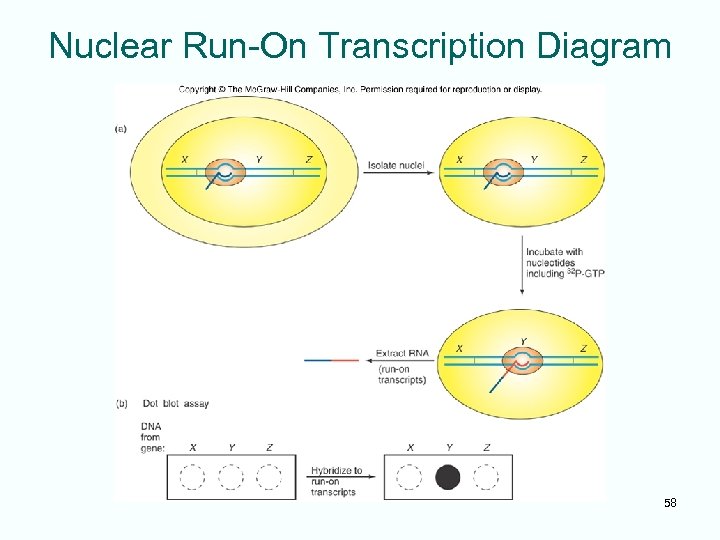
Nuclear Run-On Transcription Diagram 58
Reporter Gene Transcription • Place a surrogate reporter gene under the control of a specific promoter and measure the accumulation of the product of this reporter gene • The reporter genes are carefully chosen to have products very convenient to assay – lac. Z produces b-galactosidase which has a blue cleavage product – cat produces chloramphenicol acetyl transferase (CAT) which inhibits bacterial growth – Luciferase produces a chemiluminescent compound that emits light 59
Measuring Protein Accumulation in Vivo • Gene activity can be monitored by measuring the accumulation of protein, the ultimate gene product • There are two primary methods of measuring protein accumulation – Immunoblotting / Western blotting (discussed earlier) – Immunoprecipitation • Immunoprecipitation typically uses an antibody that will bind specifically to the protein of interest followed with a secondary antibody complexed to Protein A on resin beads using a low-speed centrifuge 60
5. 8 Assaying DNA-Protein Interactions • Study of DNA-protein interactions is of significant interest to molecular biologists • Types of interactions often studied: – Protein-DNA binding – Which bases of DNA interact with a protein 61
Filter Binding Filter binding is used to measure DNAprotein interaction and based on the fact that double-stranded DNA will not bind by itself to a filter, but a protein-DNA complex will – Double-stranded DNA can be labeled and mixed with protein – Assay protein-DNA binding by measuring the amount of label retained on the filter 62
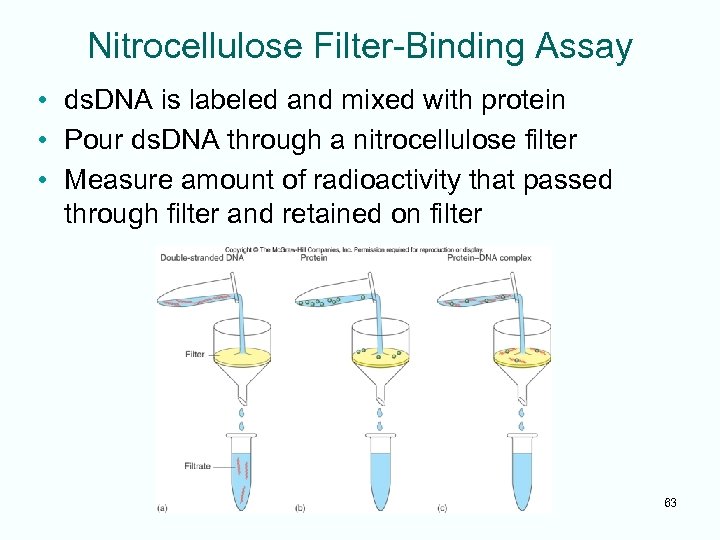
Nitrocellulose Filter-Binding Assay • ds. DNA is labeled and mixed with protein • Pour ds. DNA through a nitrocellulose filter • Measure amount of radioactivity that passed through filter and retained on filter 63
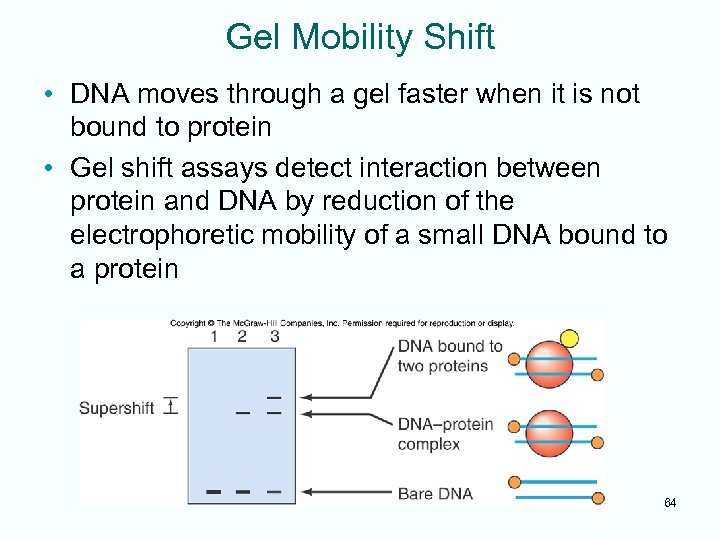
Gel Mobility Shift • DNA moves through a gel faster when it is not bound to protein • Gel shift assays detect interaction between protein and DNA by reduction of the electrophoretic mobility of a small DNA bound to a protein 64
Footprinting • Footprinting detects protein-DNA interaction and will show where a target lies on DNA and which bases are involved in protein binding • Three methods are very popular: – DNase footprinting – Dimethylsulfate footprinting – Hydroxyl radical footprinting 65
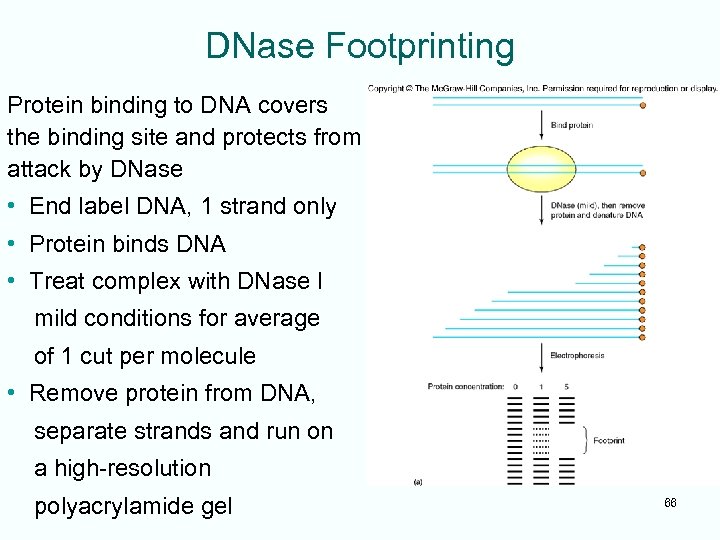
DNase Footprinting Protein binding to DNA covers the binding site and protects from attack by DNase • End label DNA, 1 strand only • Protein binds DNA • Treat complex with DNase I mild conditions for average of 1 cut per molecule • Remove protein from DNA, separate strands and run on a high-resolution polyacrylamide gel 66
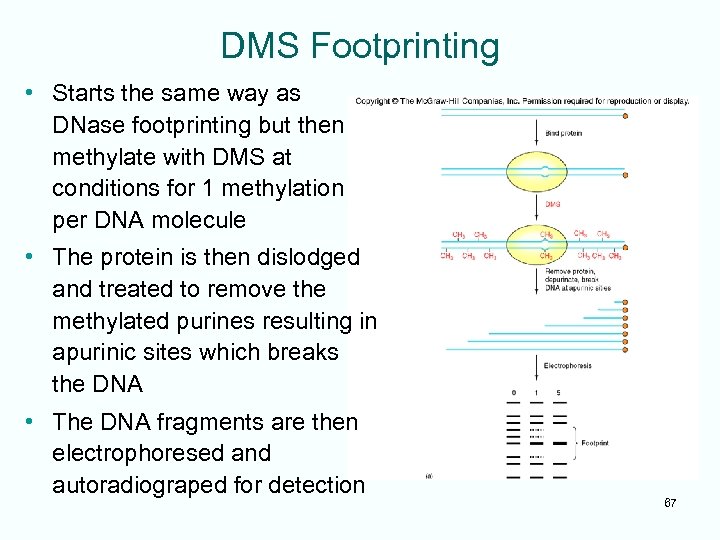
DMS Footprinting • Starts the same way as DNase footprinting but then methylate with DMS at conditions for 1 methylation per DNA molecule • The protein is then dislodged and treated to remove the methylated purines resulting in apurinic sites which breaks the DNA • The DNA fragments are then electrophoresed and autoradiograped for detection 67
Summary • Footprinting finds target DNA sequence or binding site of a DNA-binding protein • DNase footprinting binds protein to end-labeled DNA target, then attacks DNA-protein complex with DNase • DNA fragments are electrophoresed with protein binding site appearing as a gap in the pattern where protein protected DNA from degradation • DMS, DNA methylating agent is used to attack the DNA-protein complex • Hydroxyl radicals – copper- or iron-containing organometallic complexes generate hydroxyl 68 radicals that break the DNA strands
Chromatin Immunoprecipitation (Ch. IP) • Ch. IP is a method used to discover whether a given protein is bound to a given gene in chromatin - the DNA-protein complex that is the natural state of the DNAnin a living cell • Ch. IP uses an antibody to precipitate a particular protein in complex with DNA, and PCR to determine whether the protein binds near a particular gene 69
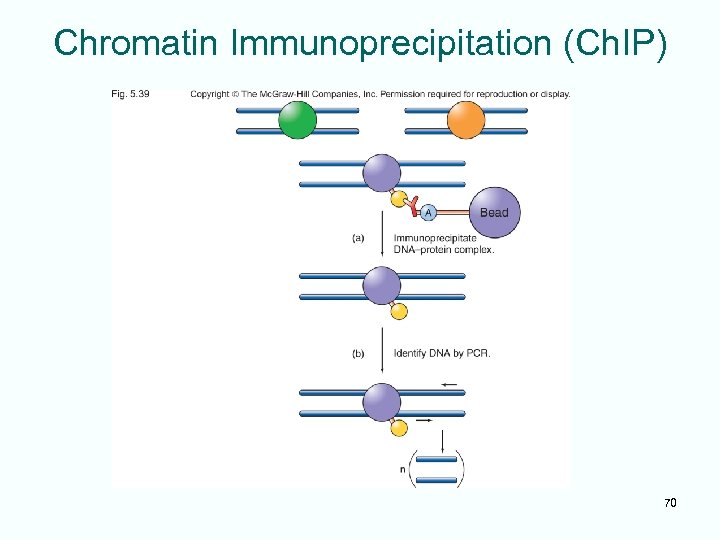
Chromatin Immunoprecipitation (Ch. IP) 70
5. 9 Assaying Protein-Protein Interactions • Immunoprecipitation uses an antibody that will bind specifically to the protein of interest and, using a low-speed centrifuge, will ‘pull-down’ any proteins associated with the protein of interest • The yeast-two-hybrid assay is used to demonstrate binding (even transient) between two proteins • The yeast-two-hybrid assay can also be used to fish for unknown proteins that interact with a known protein 71
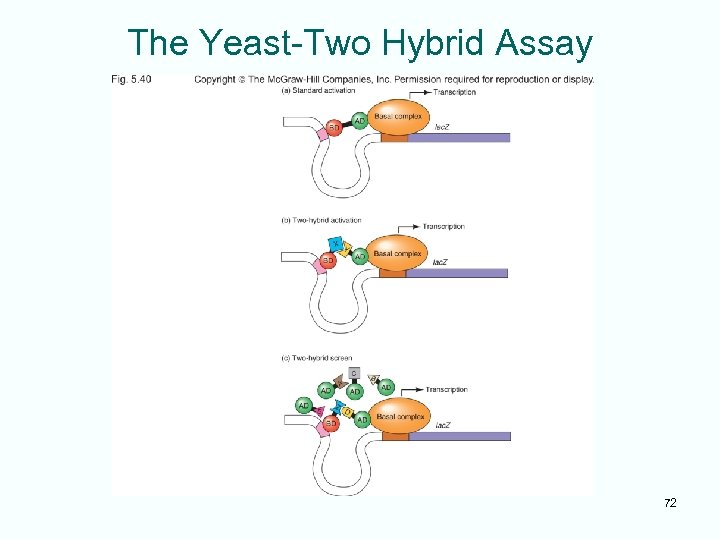
The Yeast-Two Hybrid Assay 72
5. 10 Finding RNA Sequences That Interact With Other Molecules • SELEX is systematic evolution of ligands by exponential enrichment • SELEX is a method to find RNA sequences that interact with other molecules, even proteins – RNAs that interact with a target molecule are selected by affinity chromatography – Convert to ds. DNA and amplify by PCR – RNAs are now highly enriched for sequences that bind to the target molecule 73
Functional SELEX • Functional SELEX is a variation where the desired function alters RNA so it can be amplified • If desired function is enzymatic, mutagenesis can be introduced into the amplification step to produce variants with higher activity 74
5. 11 Knockouts and Transgenes • Probing structures and activities of genes does not answer questions about the role of the gene in the life of the organism • Targeted disruption of genes is now possible in several organisms • When genes are disrupted in mice the products are called knockout mice • Foreign genes, called transgenes, can also be added to an organism, such as a mouse, to create transgenic mice 75
Stage 1 of the Knockout Mouse • Cloned DNA containing the mouse gene to be knocked out is interrupted with another gene that confers resistance to neomycin • A thymidine kinase gene is placed outside the target gene • Mix engineered mouse DNA with stem cells so interrupted gene will find way into nucleus and homologous recombination will occur between the altered gene and the resident, intact gene • These events are rare, many cells will need to be screened using the introduced genes 76
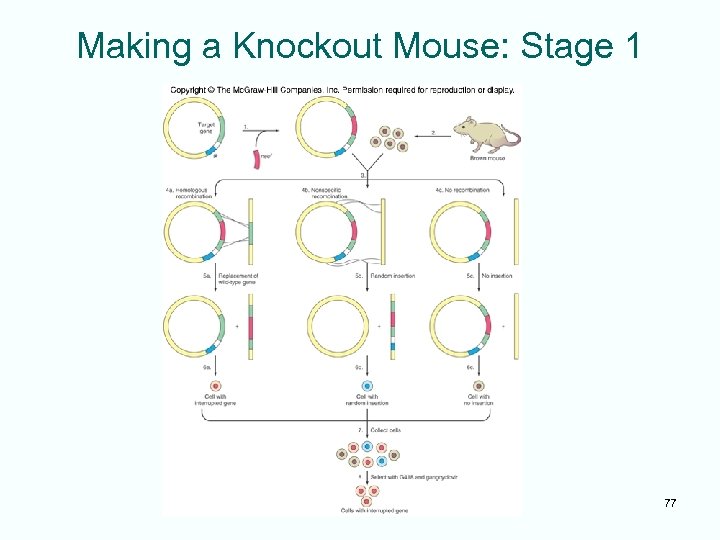
Making a Knockout Mouse: Stage 1 77
Stage 2 of the Knockout Mouse • Introduce the interrupted gene into a whole mouse • Inject engineered cells into a mouse blastocyst • Implant the embryo into a surrogate mother who will give birth to chimeric mouse • True heterozygote results when chimera mates with a black mouse to produce brown mice, half of which will have interrupted gene 78
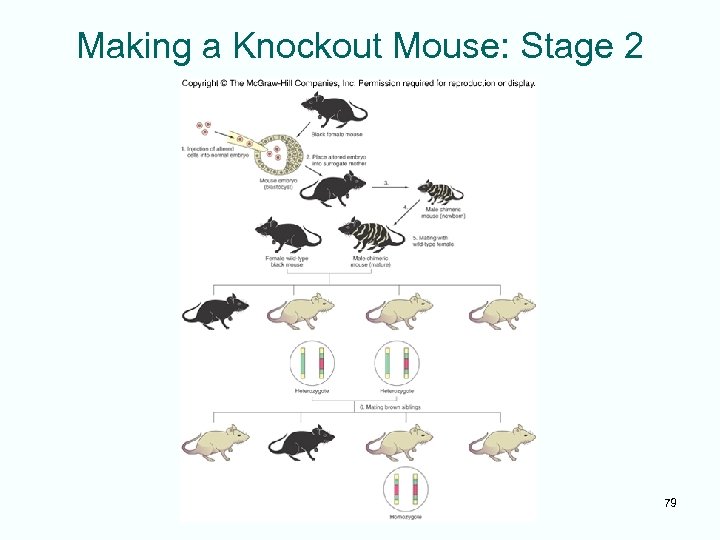
Making a Knockout Mouse: Stage 2 79
Knockout Results • Phenotype may not be obvious in the progeny, but still instructive • Other cases can be lethal with the mice dying before birth • Intermediate effects are also common and may require monitoring during the life of the mouse 80
Methods to Generate Transgenic Mice • Two methods to generate transgenic mice: • 1. Injection of cloned foreign gene into the sperm pronucleus just after fertilization of a mouse egg but before the sperm and egg nuclei have fused to allow for insertion of the foreign DNA into the embryonic cell DNA • 2. Injection of cloned foreign DNA into mosue embryonic stem cells, creating transgenic ES cells • Both methods produce chimeric mice that must undergo several rounds of breeding and selection to find true transgenic animals 81
Summary • To probe the role of a gene, molecular biologists can perform targeted disruption of the corresponding gene in a mouse and then look for the effects of the mutation in the ‘knockout mouse’ or insert the foreign gene as a transgene in the ‘transgenic mouse’ 82
Скачать презентацию Lecture Power Point to accompany Molecular Biology Fifth
ede1953a2f1cdd8aac3e5e00c268e506.ppt