 Скачать презентацию Lecture 8 CHAPTER MANAGING PRODUCTS SERVICES AND BRANDS
Questions 27, 36 - Lecture08.ppt
- Количество слайдов: 36



Lecture 8 CHAPTER MANAGING PRODUCTS, SERVICES, AND BRANDS Associate professor of Plekhanov REA marketing department Irina I. Skorobogatykh (Ph. D) marketing, lecture 8 ass. prof. I. I. Skorobogatykh (Ph. D) 1 Slide 11 -2
LECTURE QUESTIONS: • Product life-cycle (PLC) concept and marketing strategy related to each stage of PLC • Difference in product life cycles for various products and their implications for marketing decisions. marketing, lecture 8 ass. prof. I. I. Skorobogatykh (Ph. D) 2 Slide 11 -5
LECTURE QUESTIONS: • Different approaches to managing a product’s life cycle. • Elements of brand personality and brand equity and the criteria for the good brand name. marketing, lecture 8 ass. prof. I. I. Skorobogatykh (Ph. D) 3 Slide 11 -6
LECTURE QUESTIONS: • Different branding strategies employed by companies. • Role of packaging and labeling in the marketing of a product. marketing, lecture 8 ass. prof. I. I. Skorobogatykh (Ph. D) 4 Slide 11 -7
THE PRODUCT LIFE CYCLE • Product Life Cycle • Introduction Stage § Primary Demand § Selective Demand § Skimming Pricing § Penetration Pricing marketing, lecture 8 ass. prof. I. I. Skorobogatykh (Ph. D) 5 Slide 11 -11
Product Life Cycle The product life cycle describes the stages a new product goes through in the marketplace: introduction, growth, maturity, and decline. marketing, lecture 8 ass. prof. I. I. Skorobogatykh (Ph. D) 6 Slide 11 -78
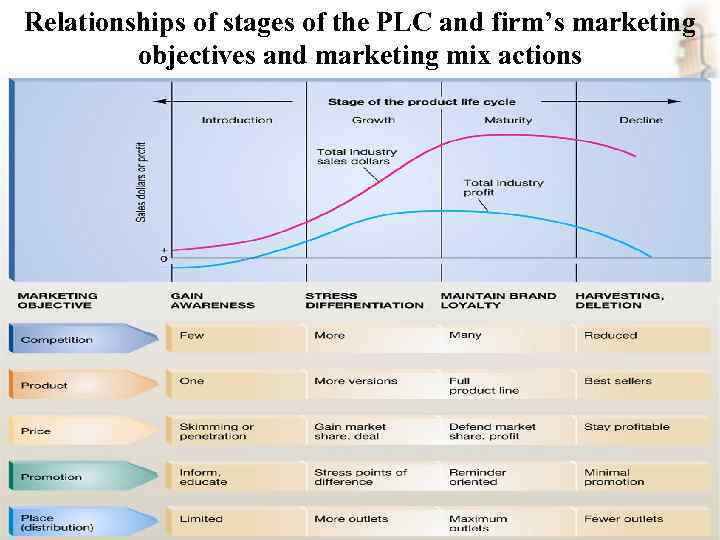
Relationships of stages of the PLC and firm’s marketing objectives and marketing mix actions marketing, lecture 8 ass. prof. I. I. Skorobogatykh (Ph. D) 7 Slide 11 -12
THE PRODUCT LIFE CYCLE • Growth Stage § Repeat Purchasers • Maturity Stage • Decline Stage § Deletion § Harvesting marketing, lecture 8 ass. prof. I. I. Skorobogatykh (Ph. D) 8 Slide 11 -16

THE PRODUCT LIFE CYCLE • Some Dimensions of the Product Life Cycle § The Life Cycle and Consumers • Diffusion of Innovation marketing, lecture 8 ass. prof. I. I. Skorobogatykh (Ph. D) 9 Slide 11 -24
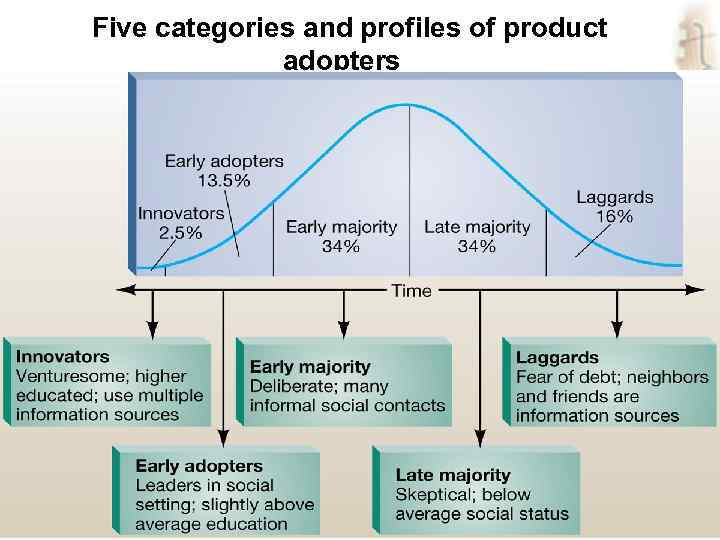
Five categories and profiles of product adopters marketing, lecture 8 ass. prof. I. I. Skorobogatykh (Ph. D) 10 Slide 11 -25
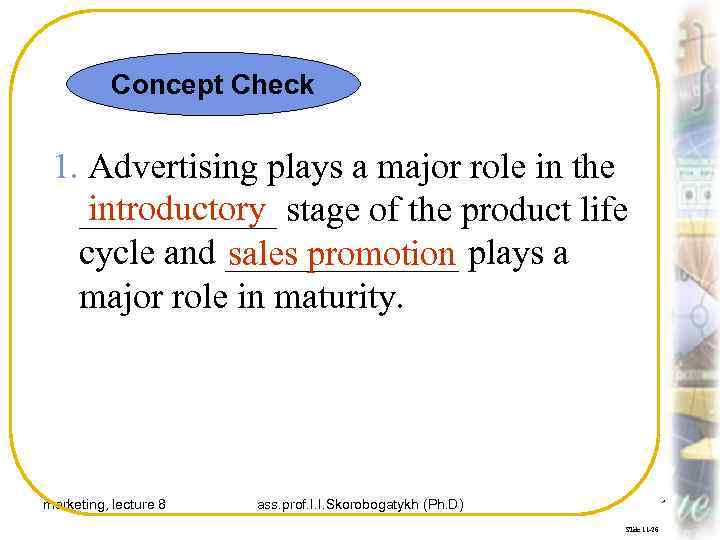
Concept Check 1. Advertising plays a major role in the introductory ______ stage of the product life cycle and _______ plays a sales promotion major role in maturity. marketing, lecture 8 ass. prof. I. I. Skorobogatykh (Ph. D) 11 Slide 11 -26
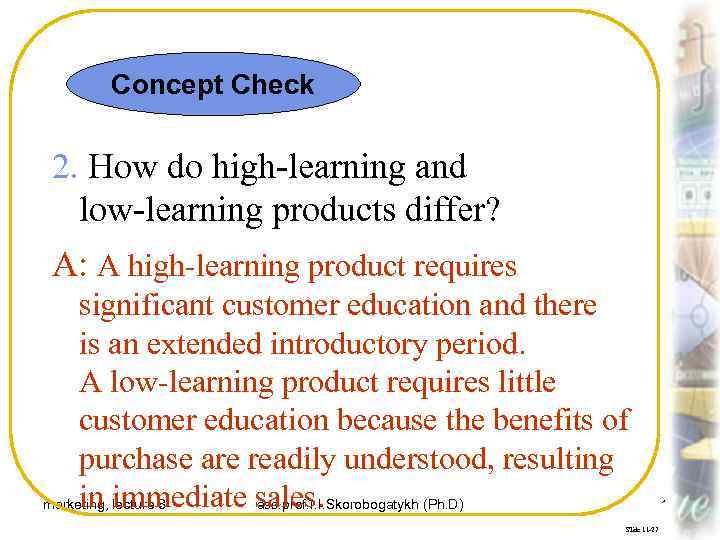
Concept Check 2. How do high-learning and low-learning products differ? A: A high-learning product requires significant customer education and there is an extended introductory period. A low-learning product requires little customer education because the benefits of purchase are readily understood, resulting in lecture 8 marketing, immediate sales. ass. prof. I. I. Skorobogatykh (Ph. D) Slide 11 -27 12

MANAGING THE PRODUCT LIFE CYCLE • Modifying the Product § Product Modification • Modifying the Market § Market Modification § Finding New Users § Increasing Use § Creating New Use Situations ass. prof. I. I. Skorobogatykh (Ph. D) marketing, lecture 8 13 Slide 11 -28
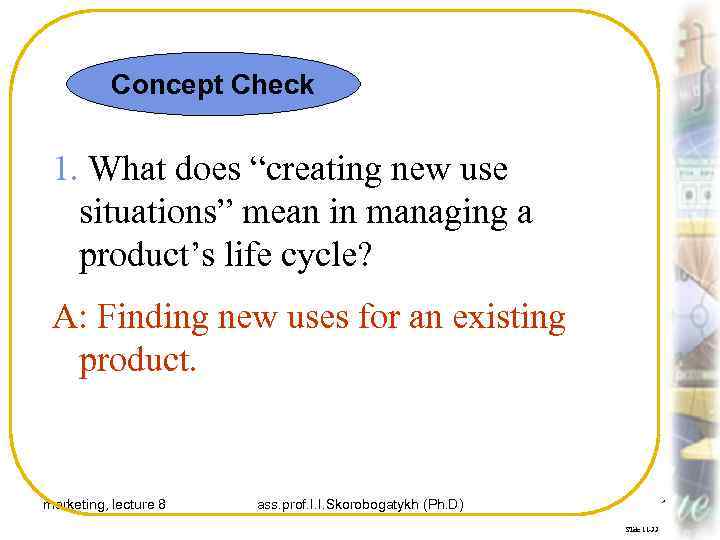
Concept Check 1. What does “creating new use situations” mean in managing a product’s life cycle? A: Finding new uses for an existing product. marketing, lecture 8 ass. prof. I. I. Skorobogatykh (Ph. D) 14 Slide 11 -33
Concept Check 2. Explain the difference between trading up and trading down in repositioning. A: Trading up involves adding value to the product (or line) through additional features or higherquality materials. Trading down involves reducing the number of features, quality, and price, or downsizing—reducing the content of packages without changing package size and maintaining or increasing the package price. marketing, lecture 8 ass. prof. I. I. Skorobogatykh (Ph. D) 15 Slide 11 -34
BRANDING AND BRAND MANAGEMENT • Branding • Brand Name • Brand Personality and Brand Equity § Brand Personality § Brand Equity § Creating Brand Equity § Valuing Brand Equity (Ph. D) ass. prof. I. I. Skorobogatykh marketing, lecture 8 16 Slide 11 -35
Branding is a marketing decision, in which an organization uses a name, phrase, design, symbol, or combination of these to identify its products and distinguish them from those of competitors. marketing, lecture 8 ass. prof. I. I. Skorobogatykh (Ph. D) 17 Slide 11 -79
Brand Name A brand name is any word, “device” (design, sound, shape, or color) or combination of these to distinguish a seller’s goods or services. marketing, lecture 8 ass. prof. I. I. Skorobogatykh (Ph. D) 18 Slide 11 -80
Brand Equity Brand equity is the added value a given brand name gives to a product beyond the functional benefits provided. marketing, lecture 8 ass. prof. I. I. Skorobogatykh (Ph. D) 19 Slide 11 -82
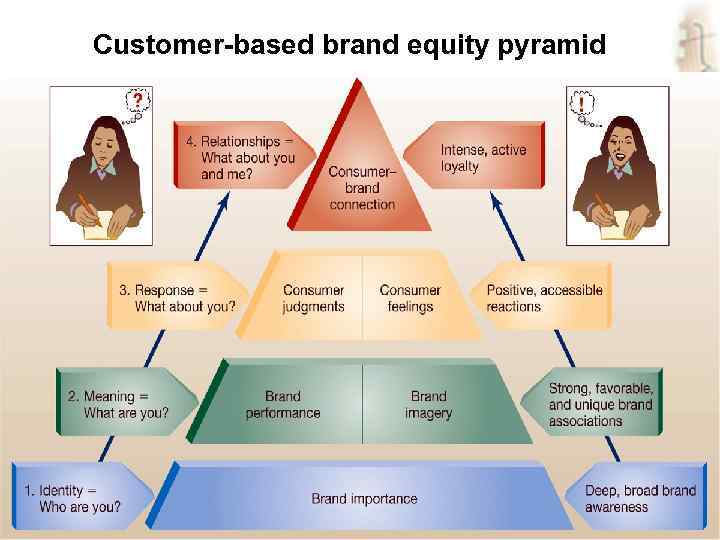
Customer-based brand equity pyramid marketing, lecture 8 ass. prof. I. I. Skorobogatykh (Ph. D) 20 Slide 11 -38
BRANDING AND BRAND MANAGEMENT • Picking a Good Brand Name • Branding Strategies § Manufacturer Branding • Multiproduct Branding • Line Extension • Brand Extension • Subbranding § Multibranding (blanket) strategy marketing, lecture 8 ass. prof. I. I. Skorobogatykh (Ph. D) 21 Slide 11 -39
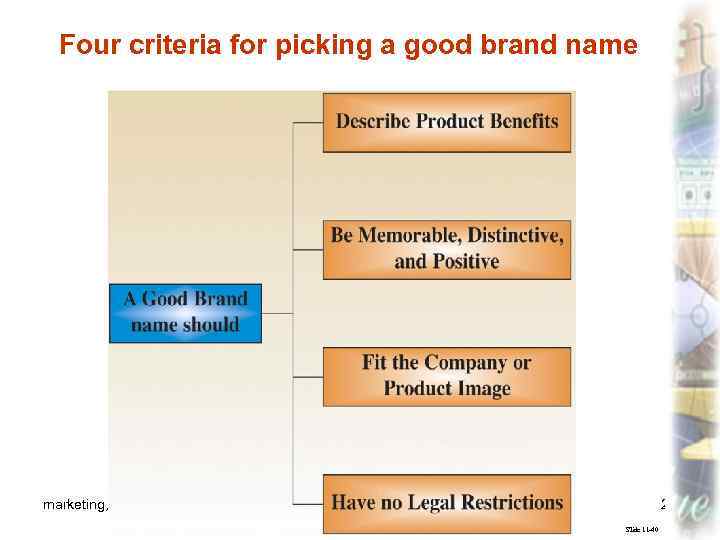
Four criteria for picking a good brand name marketing, lecture 8 ass. prof. I. I. Skorobogatykh (Ph. D) 22 Slide 11 -40
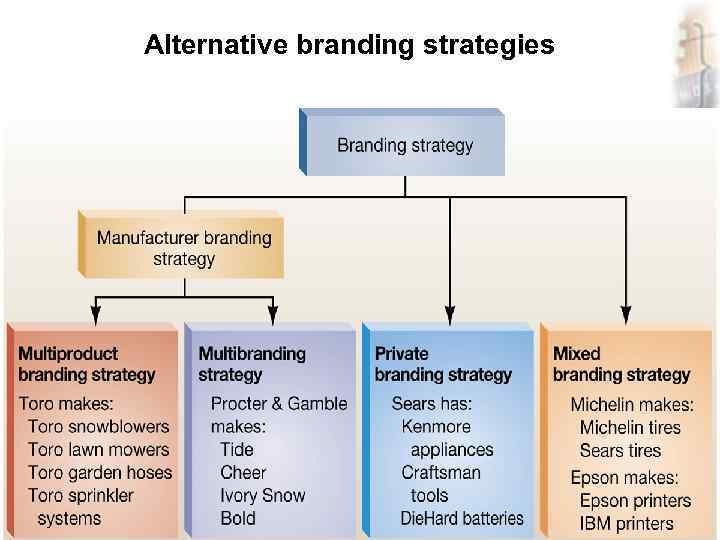
Alternative branding strategies marketing, lecture 8 ass. prof. I. I. Skorobogatykh (Ph. D) 23 Slide 11 -41
Multiproduct Branding Multiproduct branding is when a company uses one name for all its products. marketing, lecture 8 ass. prof. I. I. Skorobogatykh (Ph. D) 24 Slide 11 -83
Multibranding involves giving each product a distinct name. marketing, lecture 8 ass. prof. I. I. Skorobogatykh (Ph. D) 25 Slide 11 -84
BRANDING AND BRAND MANAGEMENT • Branding Strategies § Private Branding • Private Labeling • Reseller Branding § Mixed Branding marketing, lecture 8 ass. prof. I. I. Skorobogatykh (Ph. D) 26 Slide 11 -45
CREATING CUSTOMER VALUE THROUGH PACKAGING AND LABELING • Packaging § Label • Communication Benefits • Functional Benefits • Perceptual Benefits marketing, lecture 8 ass. prof. I. I. Skorobogatykh (Ph. D) 27 Slide 11 -46
Packaging is any container in which a product is offered for sale and on which label information is conveyed. marketing, lecture 8 ass. prof. I. I. Skorobogatykh (Ph. D) 28 Slide 11 -85
MANAGING THE MARKETING OF SERVICES • Product (Service) § Exclusivity § Branding § Capacity Management marketing, lecture 8 ass. prof. I. I. Skorobogatykh (Ph. D) 29 Slide 11 -49
Capacity Management Capacity management involves integrating the service component of the marketing mix with efforts to influence consumer demand. marketing, lecture 8 ass. prof. I. I. Skorobogatykh (Ph. D) 30 Slide 11 -86
MANAGING THE MARKETING OF SERVICES • Pricing § Off-Peak Pricing • Place (Distribution) • Promotion marketing, lecture 8 ass. prof. I. I. Skorobogatykh (Ph. D) 31 Slide 11 -50
Off-Peak Pricing Off-peak pricing consists of charging different prices during different times of the day or days of the week to reflect variations in demand for the service. marketing, lecture 8 ass. prof. I. I. Skorobogatykh (Ph. D) 32 Slide 11 -87
Concept Check 1. What is the difference between a line extension and a brand extension? A: A line extension is the practice of using a current brand name to enter a new market segment in its product class, whereas a brand extension is the practice of using a current brand name to enter a completely different product class. marketing, lecture 8 ass. prof. I. I. Skorobogatykh (Ph. D) 33 Slide 11 -51
Concept Check 2. Explain the role of packaging in terms of perception. A: A package can communicate status, economy, and product quality to prospective buyers. marketing, lecture 8 ass. prof. I. I. Skorobogatykh (Ph. D) 34 Slide 11 -52
Concept Check 3. How do service businesses use off-peak pricing? A: Service businesses use off-peak pricing, which consists of charging different prices during different times during the day or days of the week, to reflect variations in demand for the service. marketing, lecture 8 ass. prof. I. I. Skorobogatykh (Ph. D) 35 Slide 11 -53
Brand Personality A brand personality is a set of human characteristics associated with a brand name. marketing, lecture 8 ass. prof. I. I. Skorobogatykh (Ph. D) 36 Slide 11 -81
Скачать презентацию Lecture 8 CHAPTER MANAGING PRODUCTS SERVICES AND BRANDS
Questions 27, 36 - Lecture08.ppt