


 Скачать презентацию Lecture 7 Technical Analysis Economics 98 198
c08a3cb7b8d77813fbc957006d65d1ce.ppt
- Количество слайдов: 45
 Lecture 7 Technical Analysis Economics 98 / 198 Fall 2007
 Announcements • Hand in homework by the end of class
 Current Events / News Simulation Discussion
 Lecture Content
 Today… • Introduction to technical analysis – Basics & definitions – Stock charts & chart types – Moving Averages – Trends / Channels – Support & Resistance – Volume
 Technical Analysis? Huh? • Don’t get intimidated when hear “technical analysis” • Comes down to your supply and demand – How is this different from fundamental analysis? • Tries to make sense of market emotions by studying the market actions
 Technical Analysis: Introduction to Stock Charts CHART BASICS
 Basic Terms • • • Volatility Fluctuations 52 -week high / low Price / trading range Open / closing price
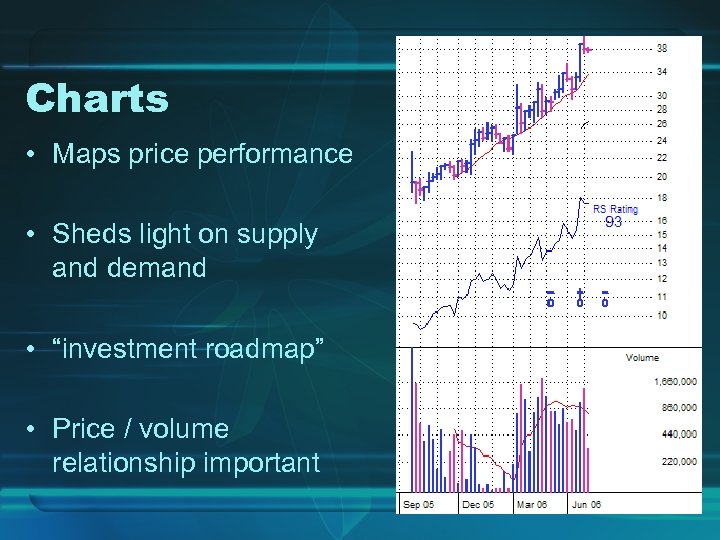 Charts • Maps price performance • Sheds light on supply and demand • “investment roadmap” • Price / volume relationship important
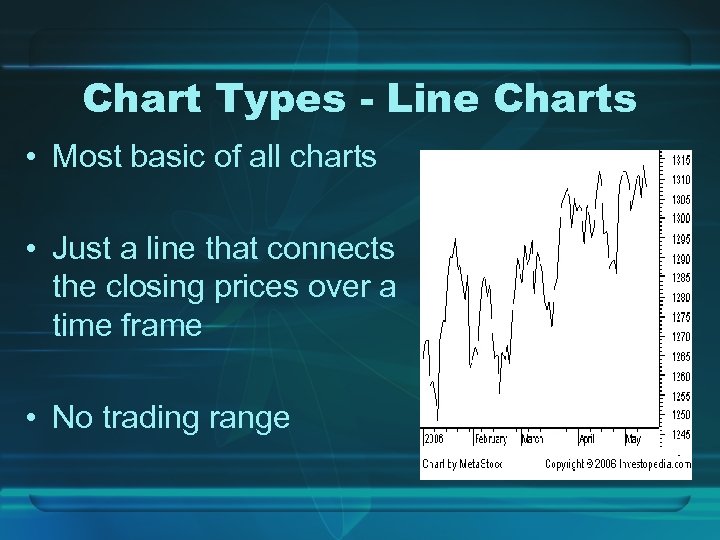 Chart Types - Line Charts • Most basic of all charts • Just a line that connects the closing prices over a time frame • No trading range
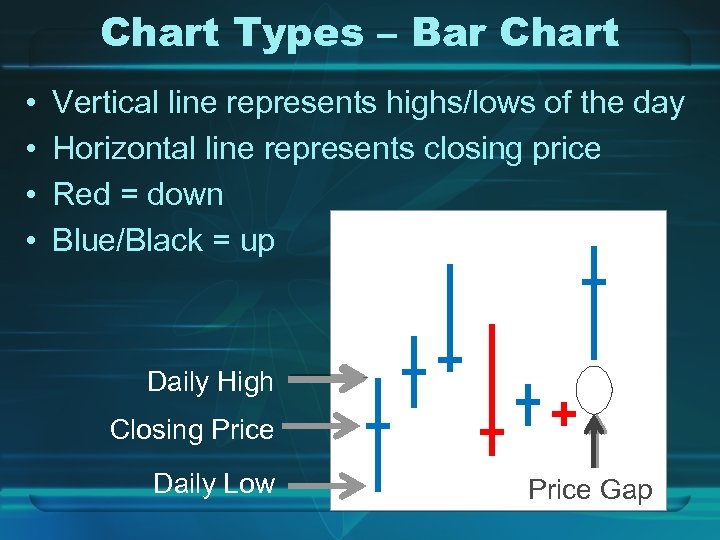 Chart Types – Bar Chart • • Vertical line represents highs/lows of the day Horizontal line represents closing price Red = down Blue/Black = up Daily High Closing Price Daily Low Price Gap
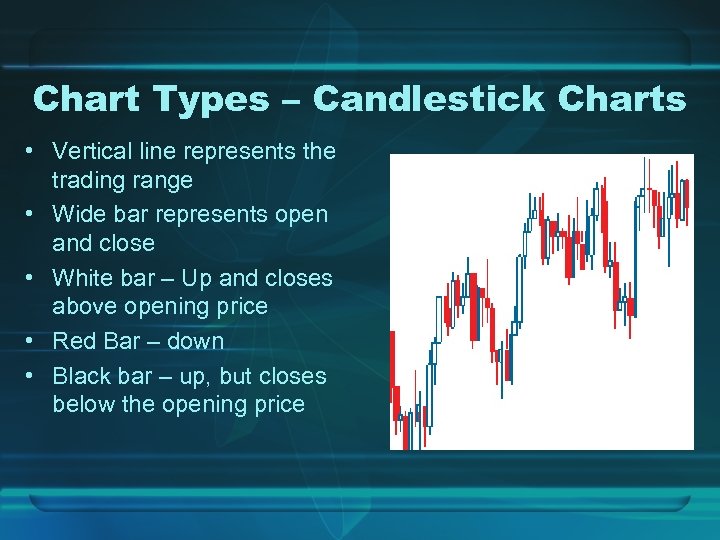 Chart Types – Candlestick Charts • Vertical line represents the trading range • Wide bar represents open and close • White bar – Up and closes above opening price • Red Bar – down • Black bar – up, but closes below the opening price
 Chart Basics – Time Scale • Time Scale – Dates along bottom of chart (varies from seconds to decades) – Common Types: intraday, daily, weekly, monthly – Subtle differences between different time scales
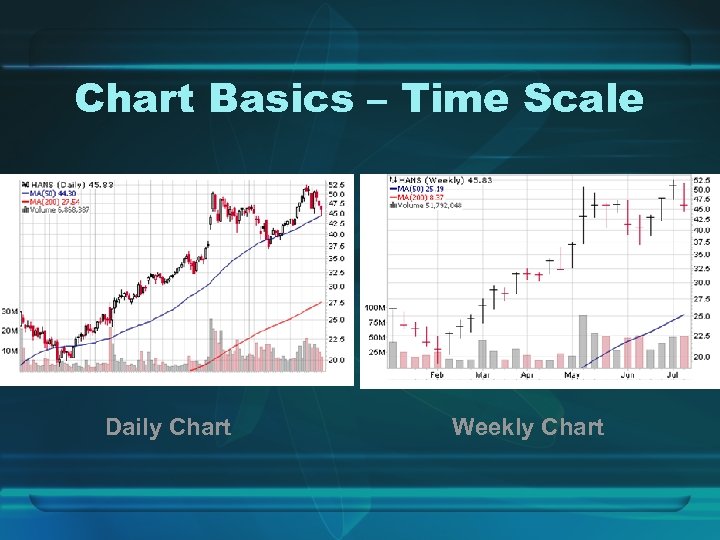 Chart Basics – Time Scale Daily Chart Weekly Chart
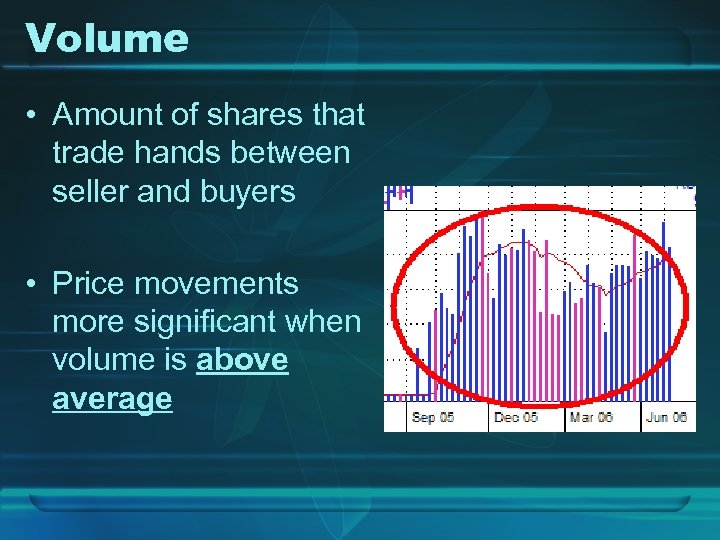 Volume • Amount of shares that trade hands between seller and buyers • Price movements more significant when volume is above average
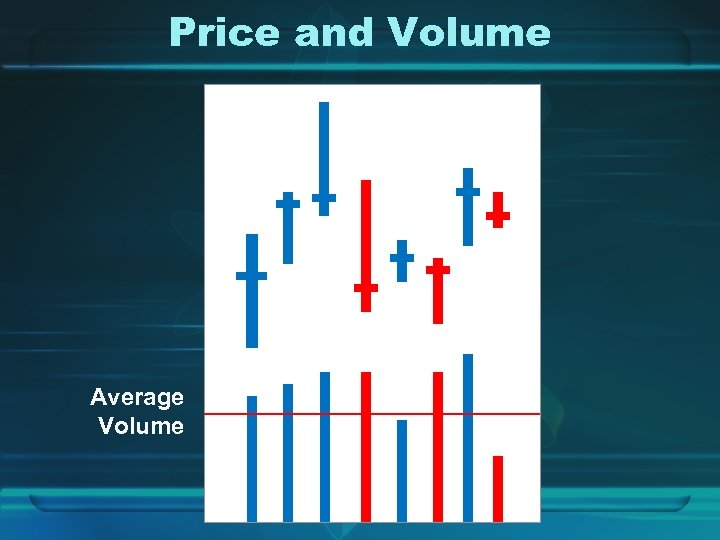 Price and Volume Average Volume
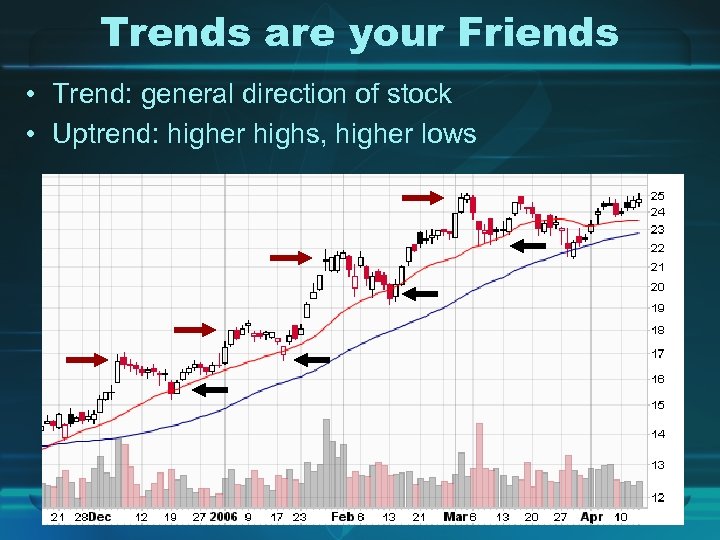 Trends are your Friends • Trend: general direction of stock • Uptrend: higher highs, higher lows
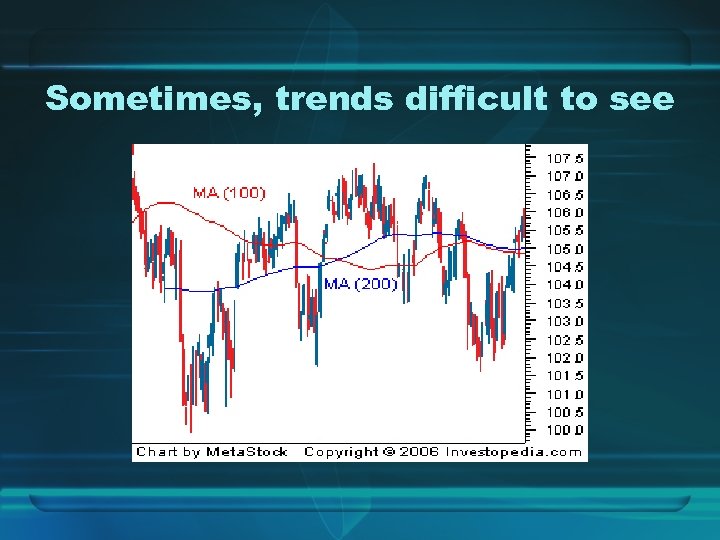 Sometimes, trends difficult to see
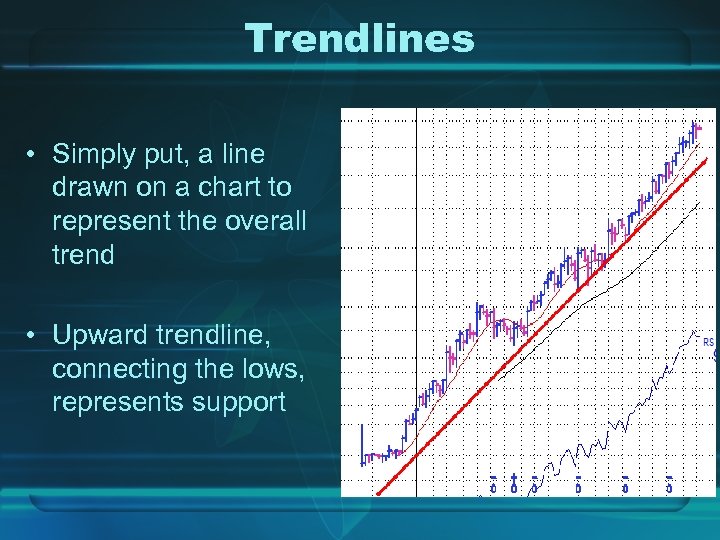 Trendlines • Simply put, a line drawn on a chart to represent the overall trend • Upward trendline, connecting the lows, represents support
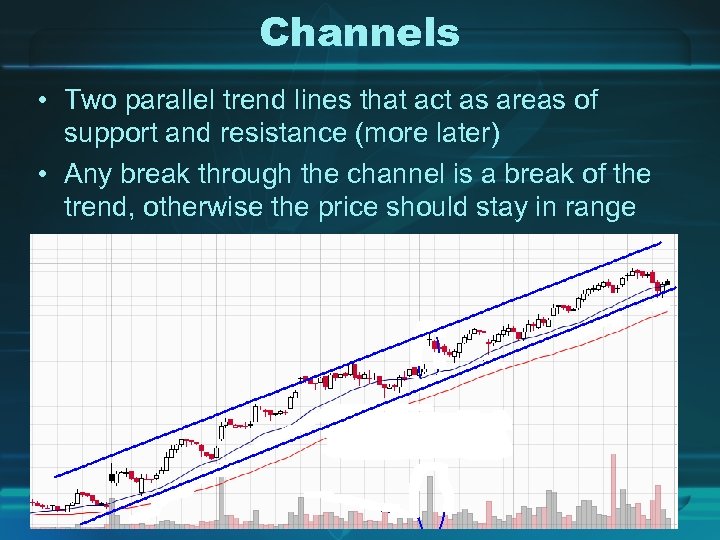 Channels • Two parallel trend lines that act as areas of support and resistance (more later) • Any break through the channel is a break of the trend, otherwise the price should stay in range
 Technical Analysis: Introduction to Stock Charts SUPPORT / RESISTANCE By Johns Wu & thebulltrader. com
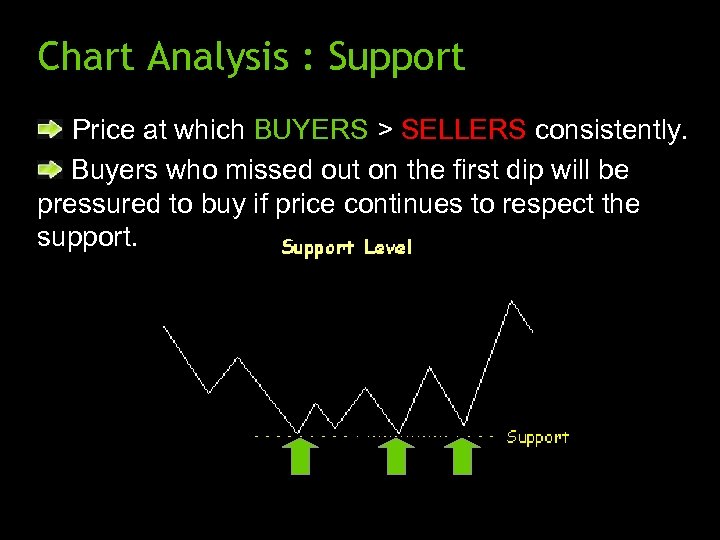 Chart Analysis : Support Price at which BUYERS > SELLERS consistently. Buyers who missed out on the first dip will be pressured to buy if price continues to respect the support.
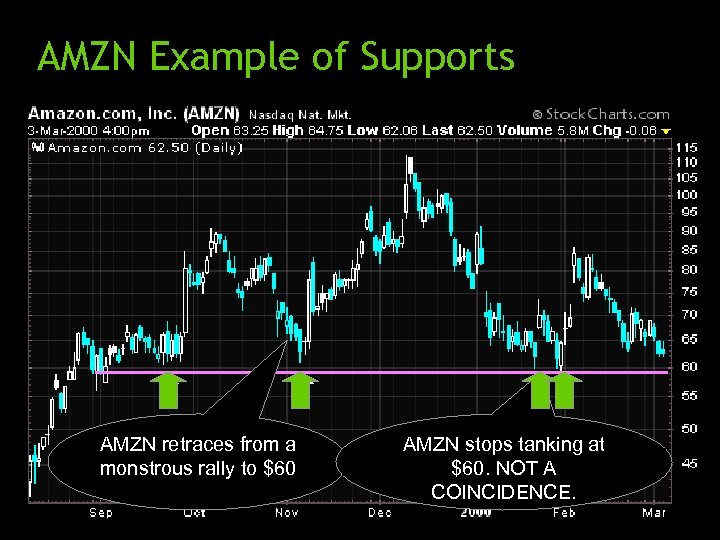 AMZN Example of Supports AMZN retraces from a monstrous rally to $60 AMZN stops tanking at $60. NOT A COINCIDENCE.
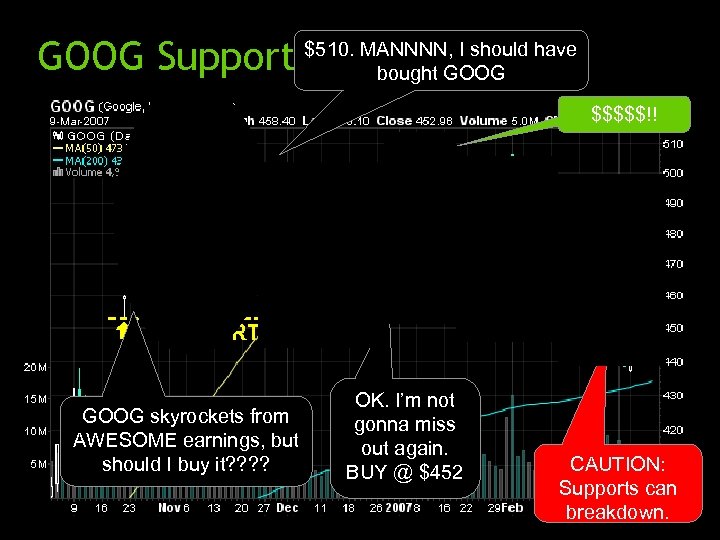 GOOG Support Psychology $510. MANNNN, I should have bought GOOG $$$$$!! GOOG skyrockets from AWESOME earnings, but should I buy it? ? OK. I’m not gonna miss out again. BUY @ $452 CAUTION: Supports can breakdown.
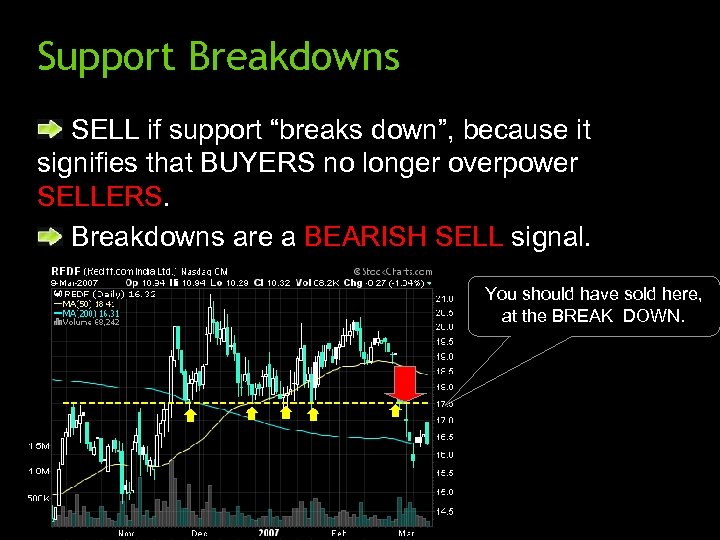 Support Breakdowns SELL if support “breaks down”, because it signifies that BUYERS no longer overpower SELLERS. Breakdowns are a BEARISH SELL signal. You should have sold here, at the BREAK DOWN.
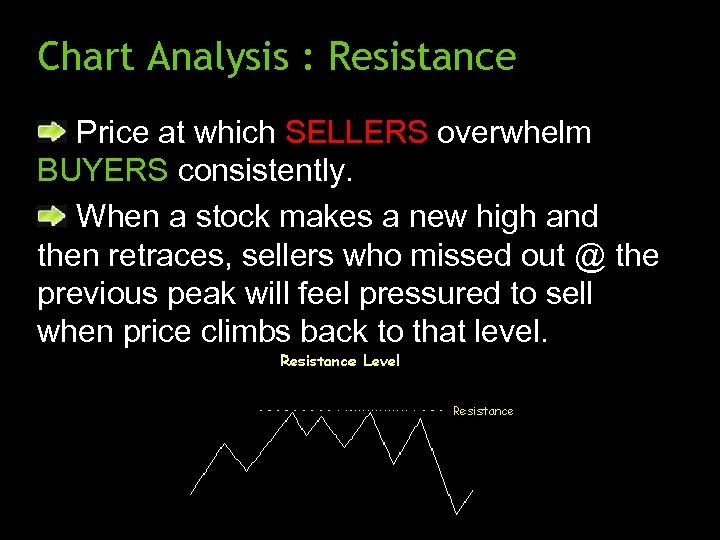 Chart Analysis : Resistance Price at which SELLERS overwhelm BUYERS consistently. When a stock makes a new high and then retraces, sellers who missed out @ the previous peak will feel pressured to sell when price climbs back to that level.
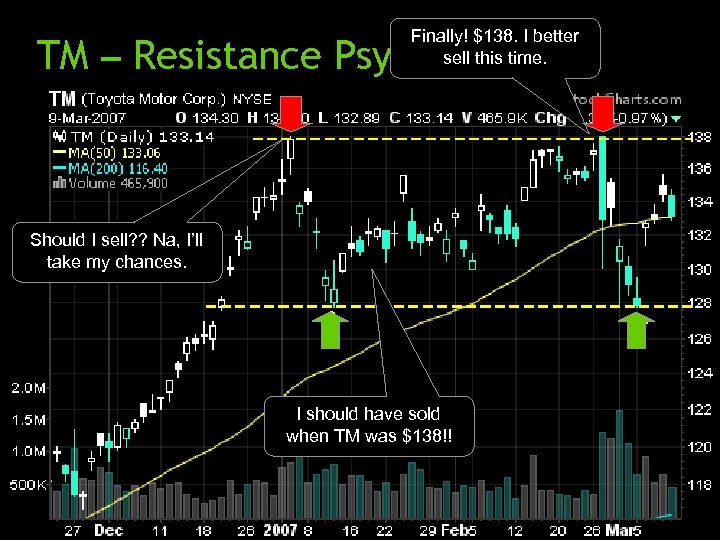 TM – Resistance Psychology Finally! $138. I better sell this time. Should I sell? ? Na, I’ll take my chances. I should have sold when TM was $138!!
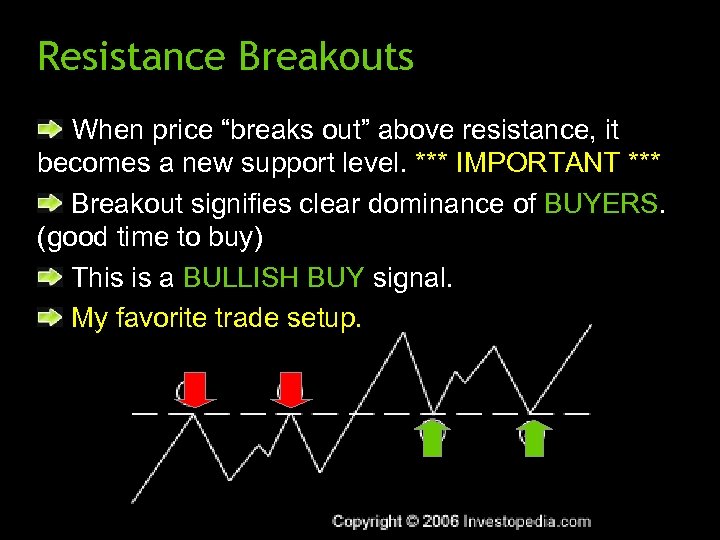 Resistance Breakouts When price “breaks out” above resistance, it becomes a new support level. *** IMPORTANT *** Breakout signifies clear dominance of BUYERS. (good time to buy) This is a BULLISH BUY signal. My favorite trade setup.
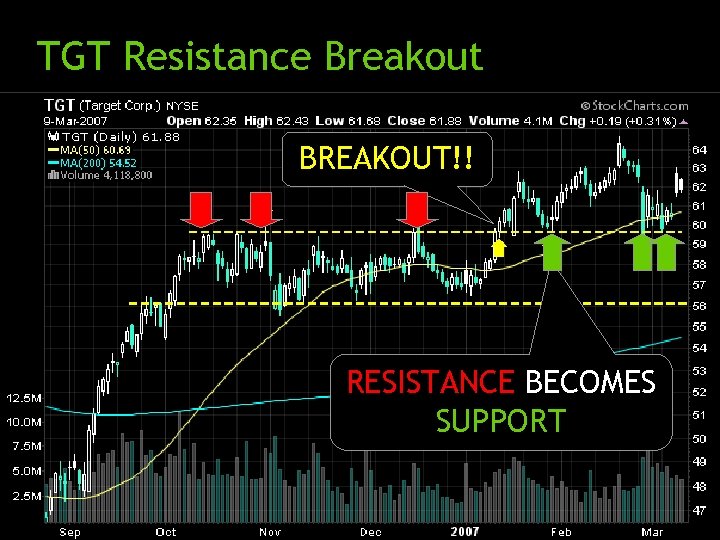 TGT Resistance Breakout BREAKOUT!! RESISTANCE BECOMES SUPPORT
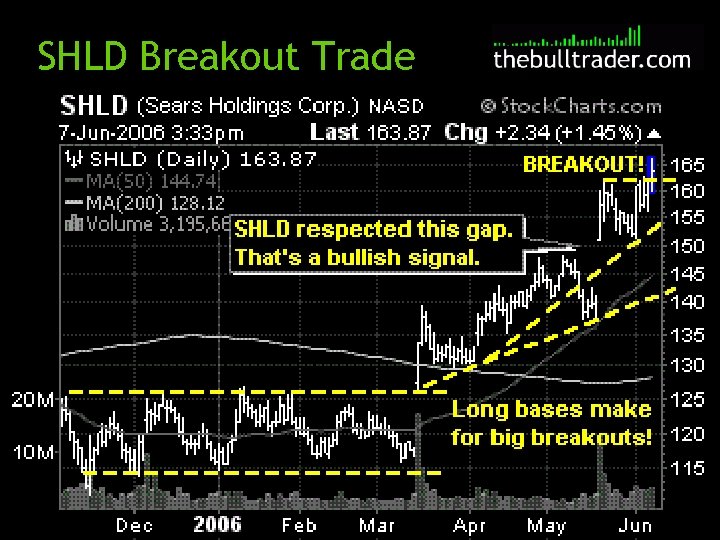 SHLD Breakout Trade
 Technical Analysis: Introduction to Stock Charts MOVING AVERAGES
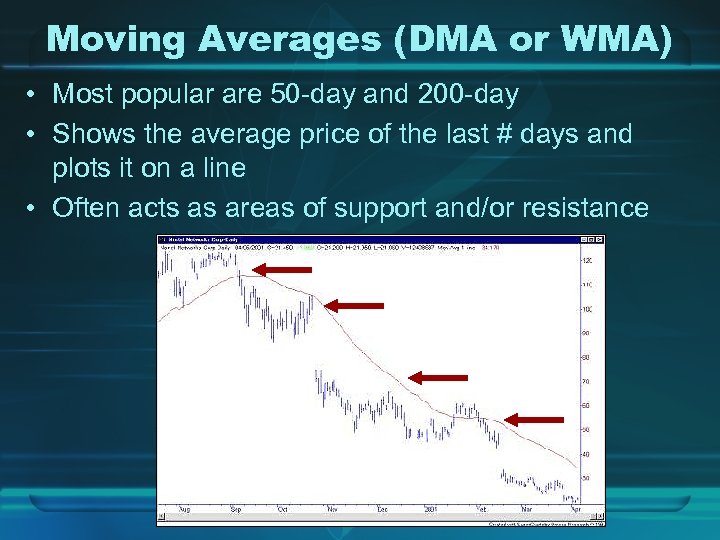 Moving Averages (DMA or WMA) • Most popular are 50 -day and 200 -day • Shows the average price of the last # days and plots it on a line • Often acts as areas of support and/or resistance
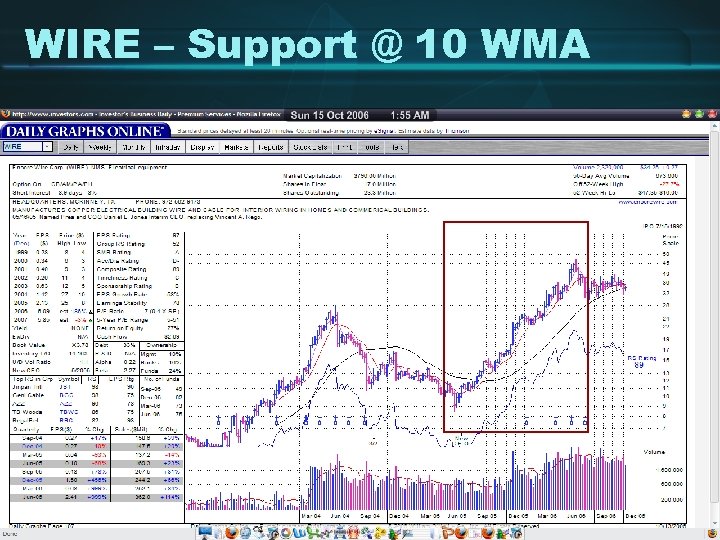 WIRE – Support @ 10 WMA
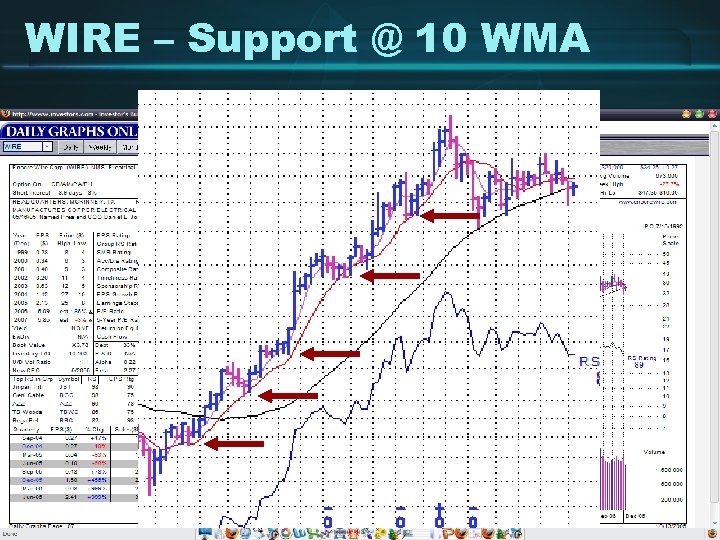 WIRE – Support @ 10 WMA
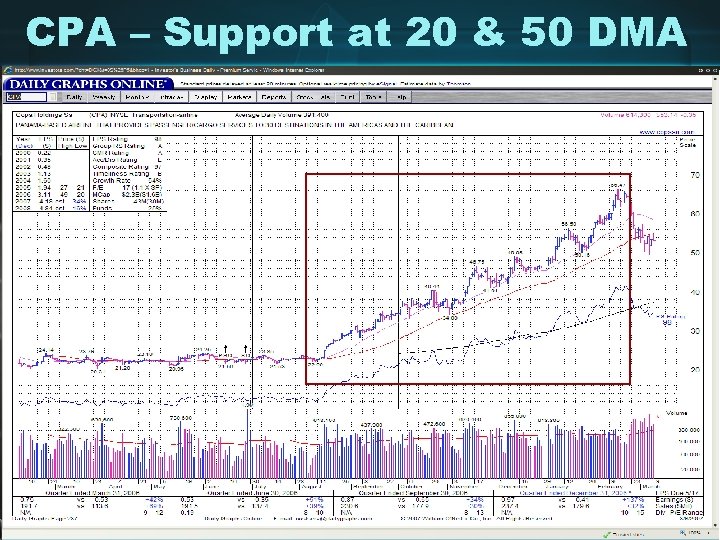 CPA – Support at 20 & 50 DMA
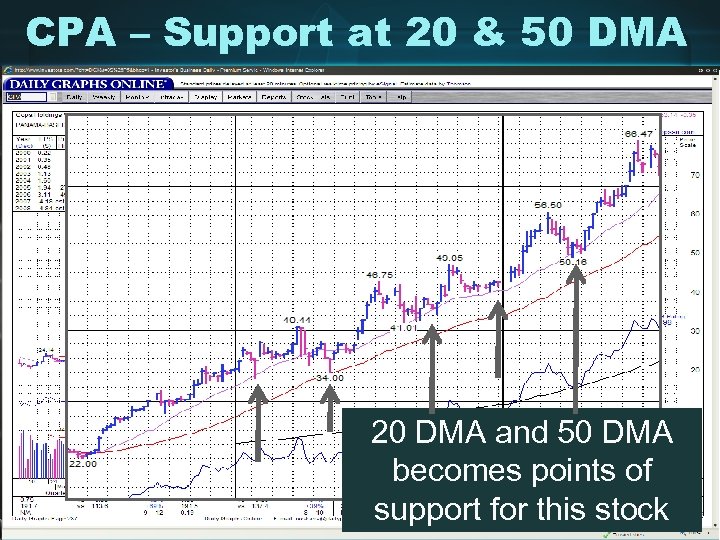 CPA – Support at 20 & 50 DMA 20 DMA and 50 DMA becomes points of support for this stock
 So… • Charts are fundamental to technical analysis • Important to understand what is shown on a chart and the information it conveys • Chart patterns and bases to come…
 Technical Analysis: Introduction to Stock Charts TOOLS FOR STOCK CHARTS
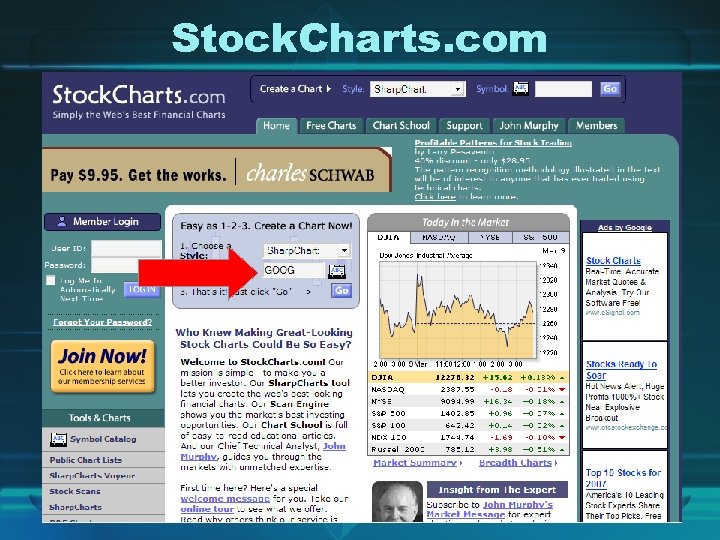
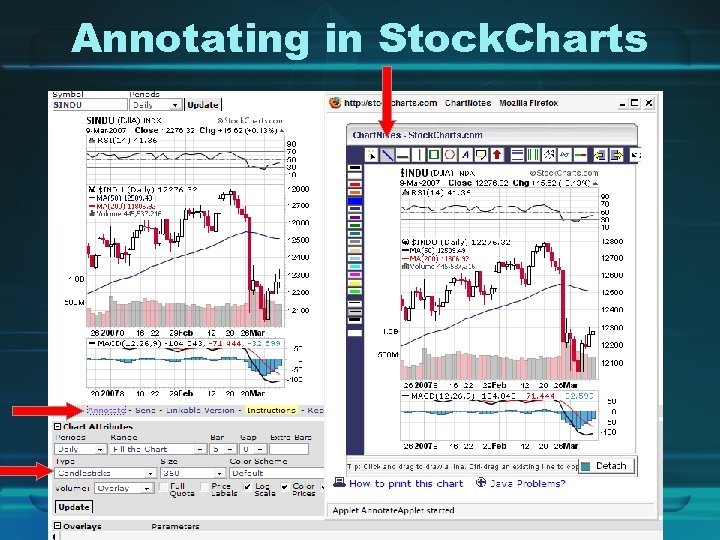
 Charting on Stock. Charts. com Getting comprehensive stock charts • Type in the company symbol • Once you’re at the stock page, click on annotate to draw your own trendlines. • From there, you will get lots of tools for analyzing stock charts
 Stock. Charts. com
 Annotating in Stock. Charts
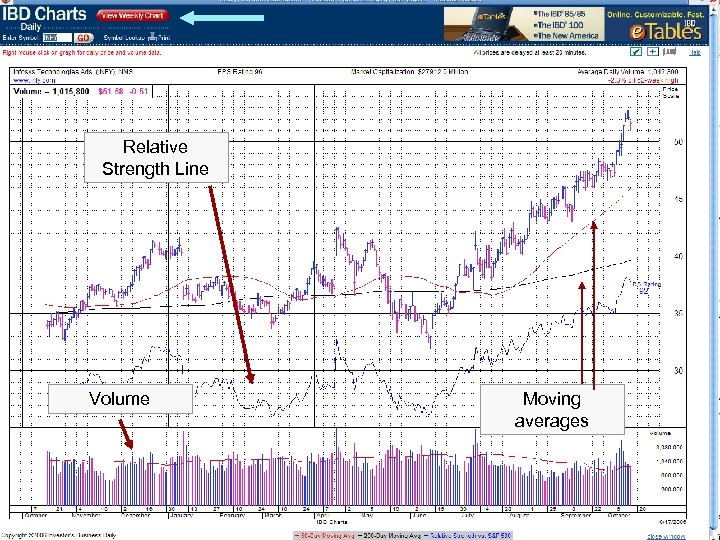
 Using Charts on Investors. com • Log in using your username and password (you all have one as of now) • Enter a symbol for the stock and then click on IBD Charts just below it – There are links throughout the website that link to IBD charts – Right clicking on the chart will give you important data for that day or week
 Relative Strength Line Volume Moving averages
 Homework / Reading • “Technical Analysis: Introduction” – Investopedia Tutorial – Link is on the download page of the website
 Next Week • We’ll be going over strategies using charts to buy stocks – Timing market bottoms – Identifying chart bases / patterns – Timing your stock purchases (after you’ve done your research / stock screens) • This is going to be the most technical / complicated part so make sure you understand the basics