 Скачать презентацию Lecture 5 SUBJECT HEAT MASS TRANSFER
f6ede27c540ddfa0bb4227832662fe98.ppt
- Количество слайдов: 21



Lecture 5 SUBJECT : HEAT & MASS TRANSFER Date : 15/02/2013
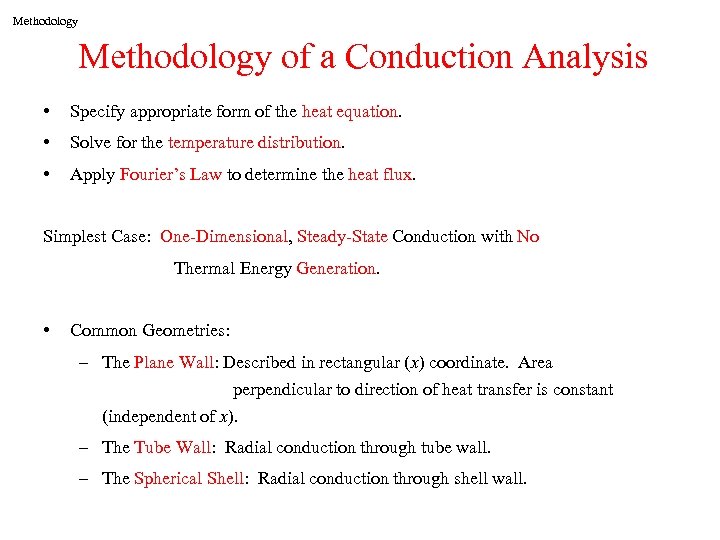
Methodology of a Conduction Analysis • Specify appropriate form of the heat equation. • Solve for the temperature distribution. • Apply Fourier’s Law to determine the heat flux. Simplest Case: One-Dimensional, Steady-State Conduction with No Thermal Energy Generation. • Common Geometries: – The Plane Wall: Described in rectangular (x) coordinate. Area perpendicular to direction of heat transfer is constant (independent of x). – The Tube Wall: Radial conduction through tube wall. – The Spherical Shell: Radial conduction through shell wall.
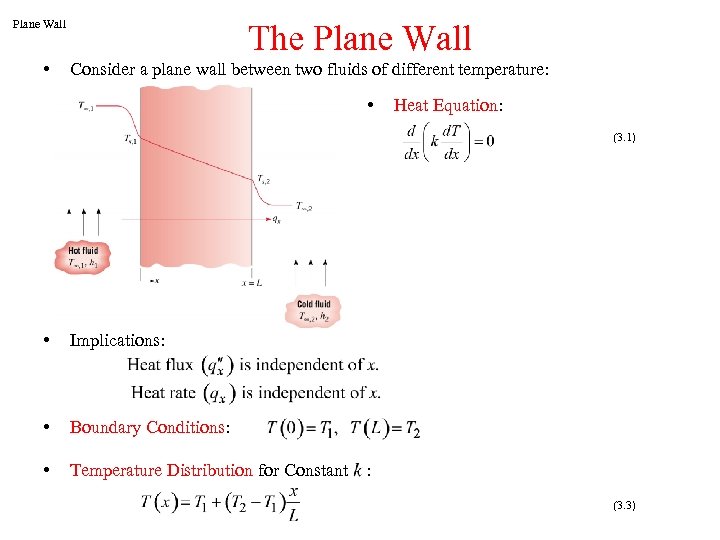
Plane Wall • The Plane Wall Consider a plane wall between two fluids of different temperature: • Heat Equation: (3. 1) • Implications: • Boundary Conditions: • Temperature Distribution for Constant : (3. 3)
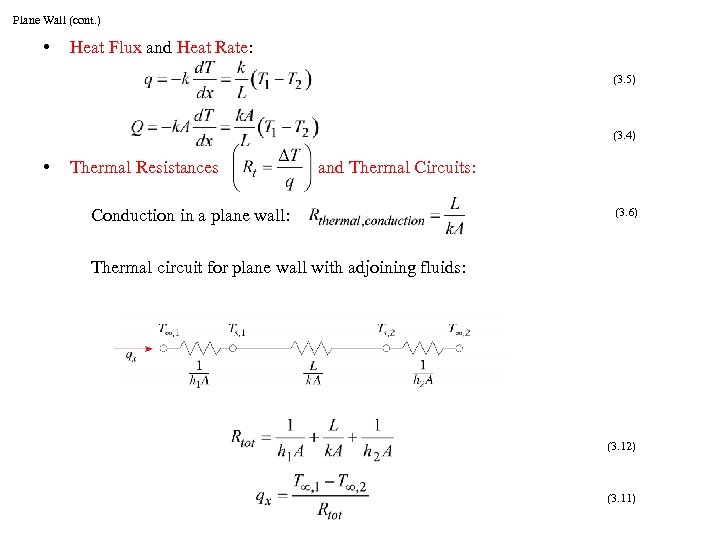
Plane Wall (cont. ) • Heat Flux and Heat Rate: (3. 5) (3. 4) • Thermal Resistances and Thermal Circuits: Conduction in a plane wall: (3. 6) Thermal circuit for plane wall with adjoining fluids: (3. 12) (3. 11)
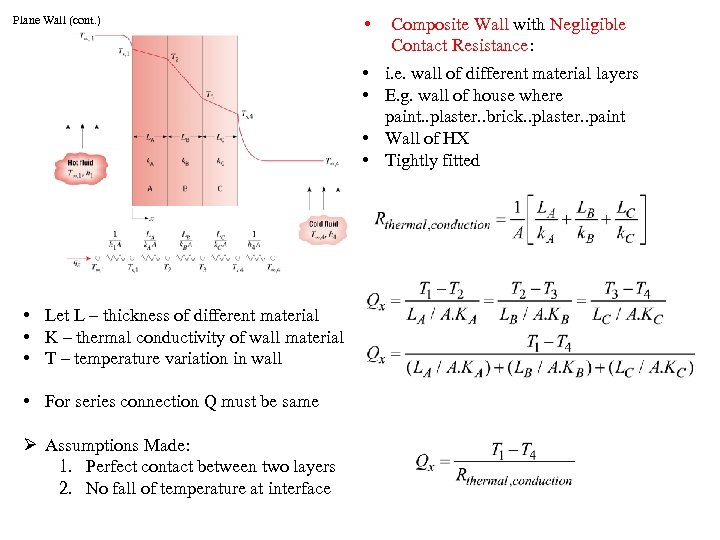
Plane Wall (cont. ) • Composite Wall with Negligible Contact Resistance: • i. e. wall of different material layers • E. g. wall of house where paint. . plaster. . brick. . plaster. . paint • Wall of HX • Tightly fitted • Let L – thickness of different material • K – thermal conductivity of wall material • T – temperature variation in wall • For series connection Q must be same Ø Assumptions Made: 1. Perfect contact between two layers 2. No fall of temperature at interface
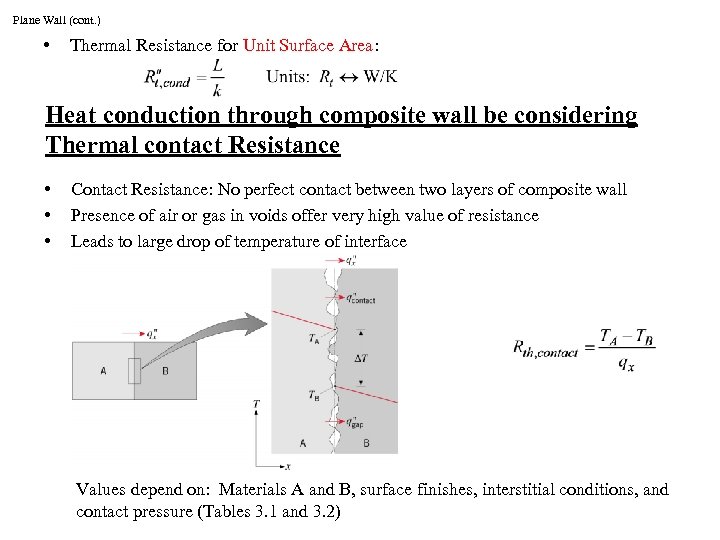
Plane Wall (cont. ) • Thermal Resistance for Unit Surface Area: Heat conduction through composite wall be considering Thermal contact Resistance • • • Contact Resistance: No perfect contact between two layers of composite wall Presence of air or gas in voids offer very high value of resistance Leads to large drop of temperature of interface Values depend on: Materials A and B, surface finishes, interstitial conditions, and contact pressure (Tables 3. 1 and 3. 2)
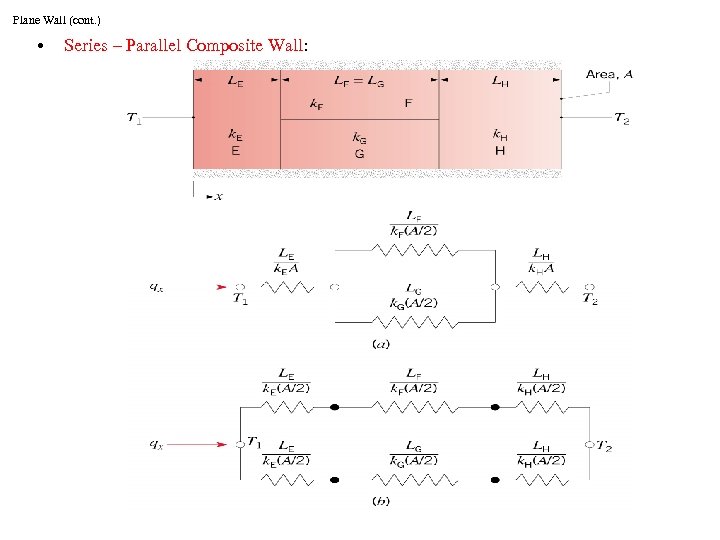
Plane Wall (cont. ) • Series – Parallel Composite Wall:
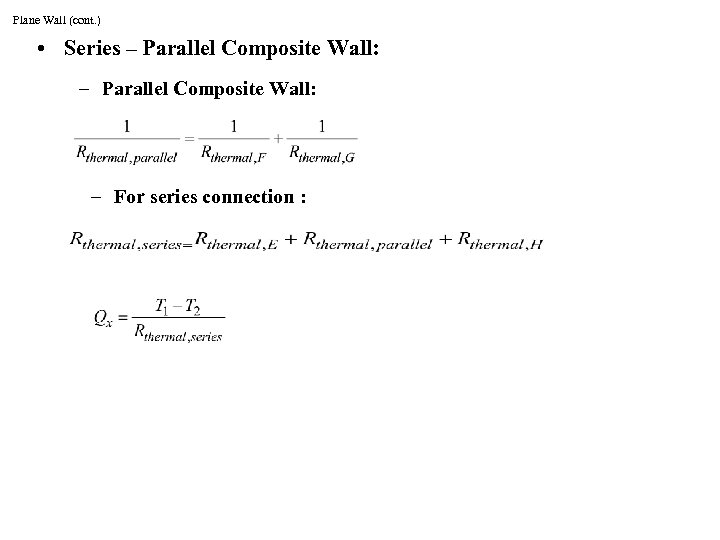
Plane Wall (cont. ) • Series – Parallel Composite Wall: – For series connection :
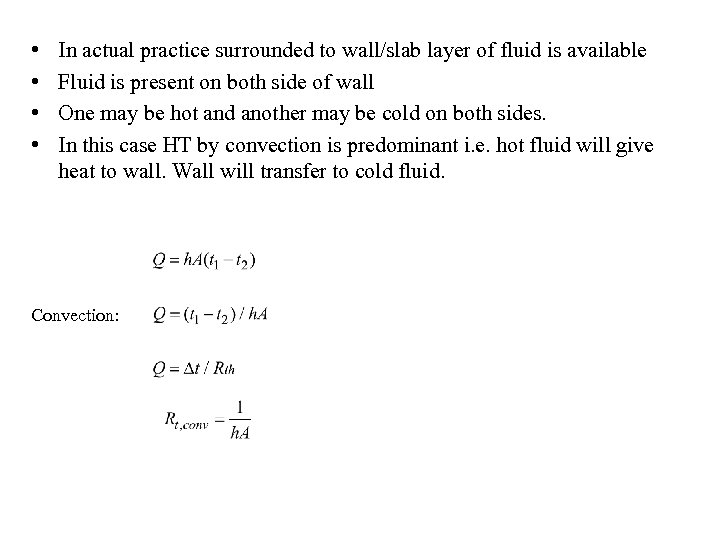
• • In actual practice surrounded to wall/slab layer of fluid is available Fluid is present on both side of wall One may be hot and another may be cold on both sides. In this case HT by convection is predominant i. e. hot fluid will give heat to wall. Wall will transfer to cold fluid. Convection:
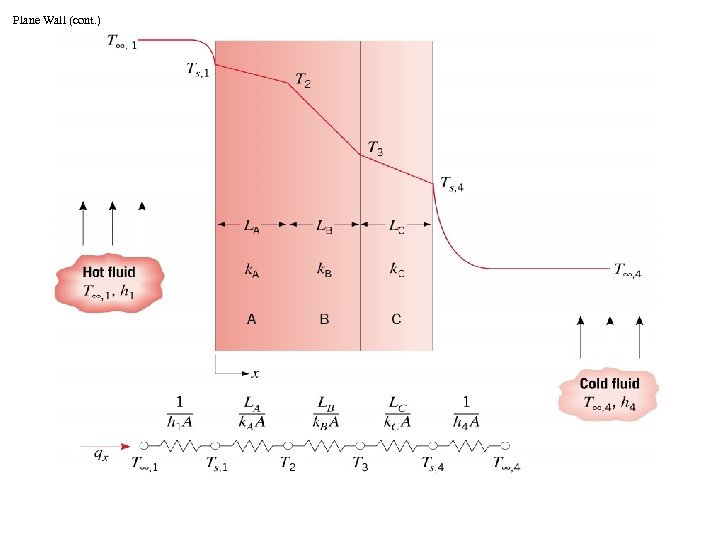
Plane Wall (cont. )
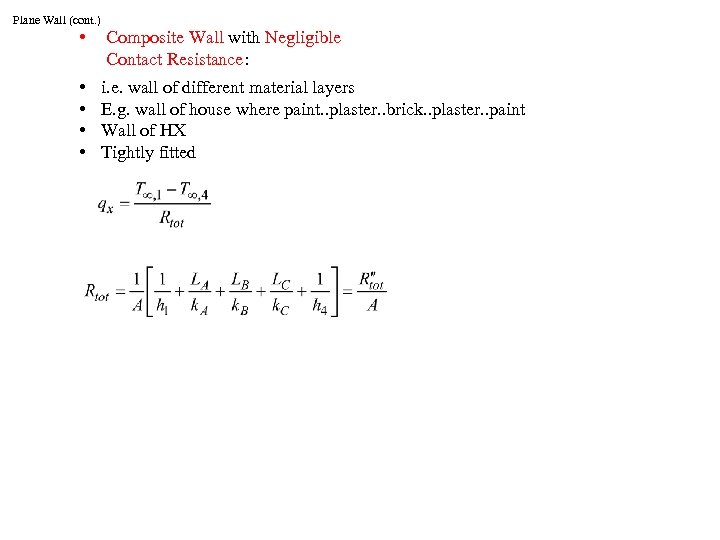
Plane Wall (cont. ) • Composite Wall with Negligible Contact Resistance: • • i. e. wall of different material layers E. g. wall of house where paint. . plaster. . brick. . plaster. . paint Wall of HX Tightly fitted
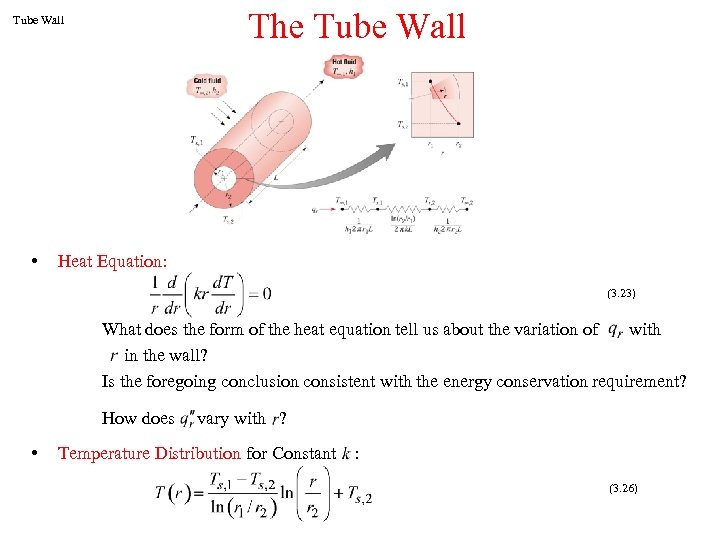
The Tube Wall • Heat Equation: (3. 23) What does the form of the heat equation tell us about the variation of with in the wall? Is the foregoing conclusion consistent with the energy conservation requirement? How does • vary with ? Temperature Distribution for Constant : (3. 26)
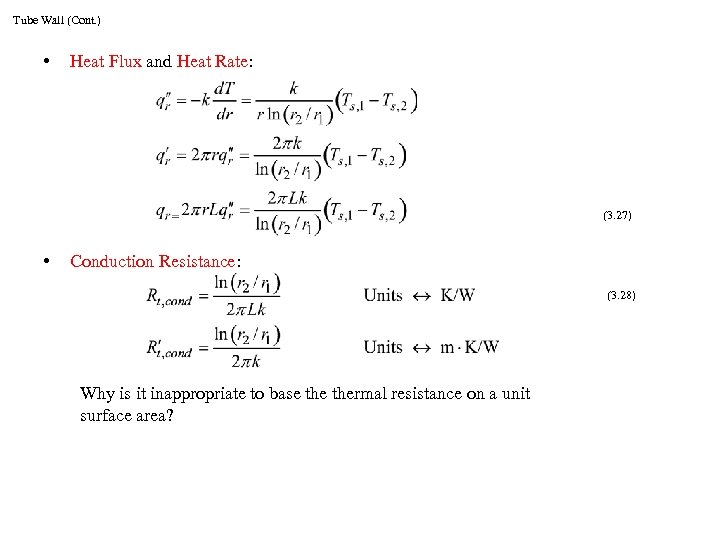
Tube Wall (Cont. ) • Heat Flux and Heat Rate: (3. 27) • Conduction Resistance: (3. 28) Why is it inappropriate to base thermal resistance on a unit surface area?
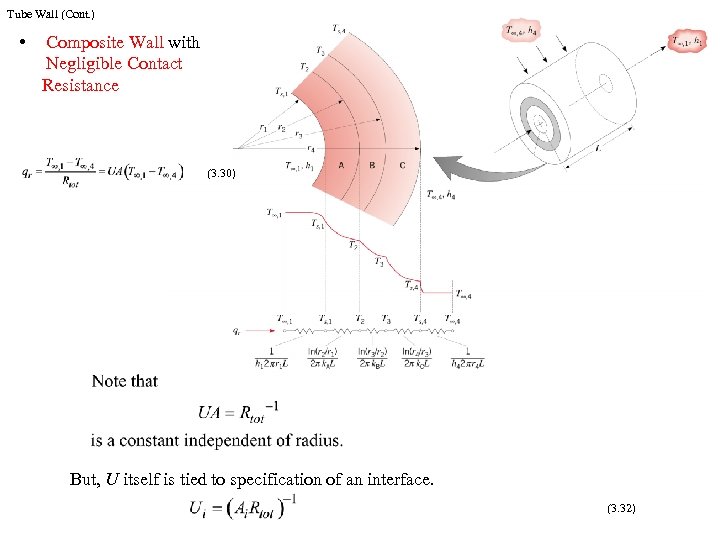
Tube Wall (Cont. ) • Composite Wall with Negligible Contact Resistance (3. 30) But, U itself is tied to specification of an interface. (3. 32)
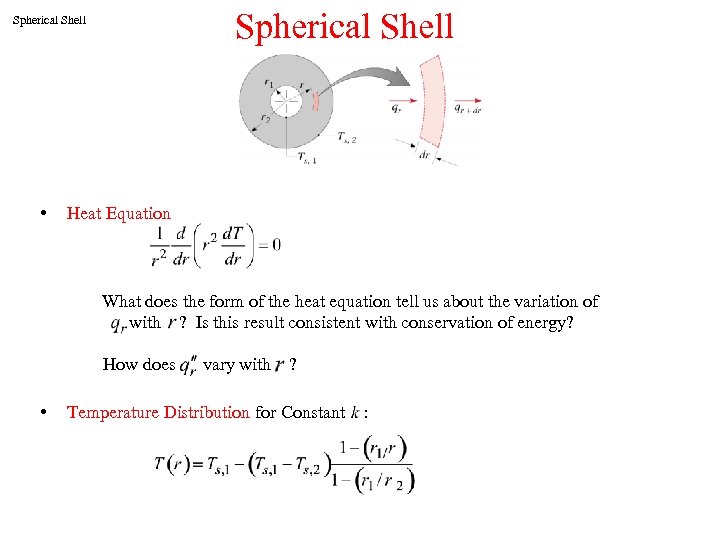
Spherical Shell • Heat Equation What does the form of the heat equation tell us about the variation of with ? Is this result consistent with conservation of energy? How does • vary with ? Temperature Distribution for Constant :
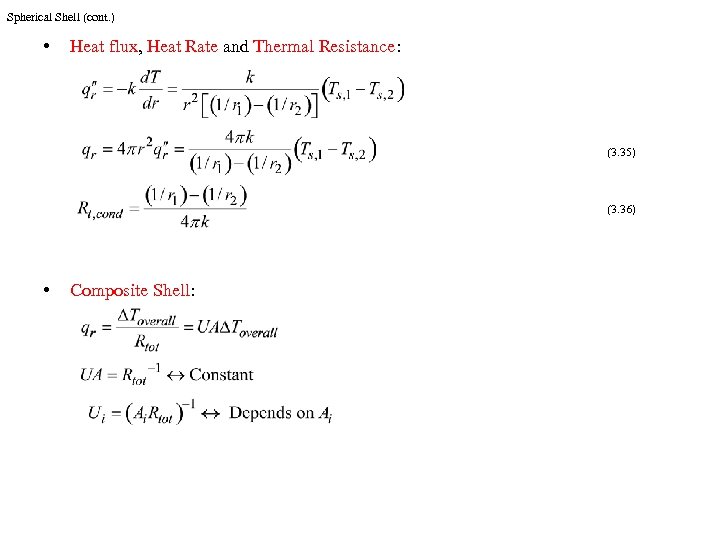
Spherical Shell (cont. ) • Heat flux, Heat Rate and Thermal Resistance: (3. 35) (3. 36) • Composite Shell:
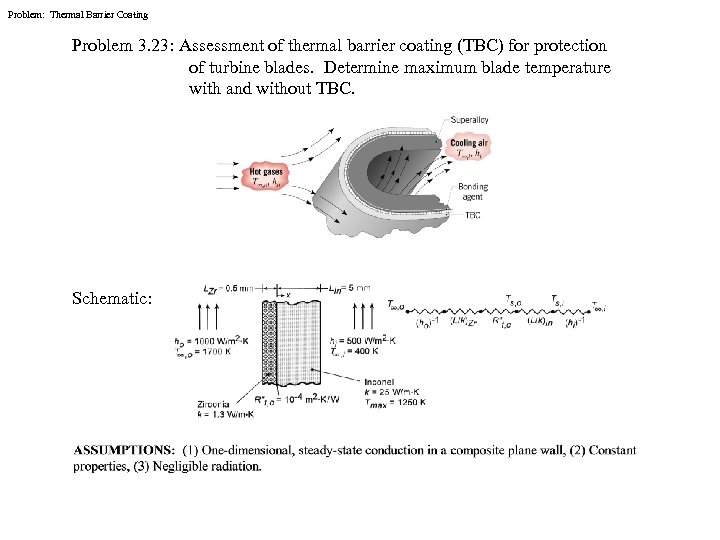
Problem: Thermal Barrier Coating Problem 3. 23: Assessment of thermal barrier coating (TBC) for protection of turbine blades. Determine maximum blade temperature with and without TBC. Schematic:
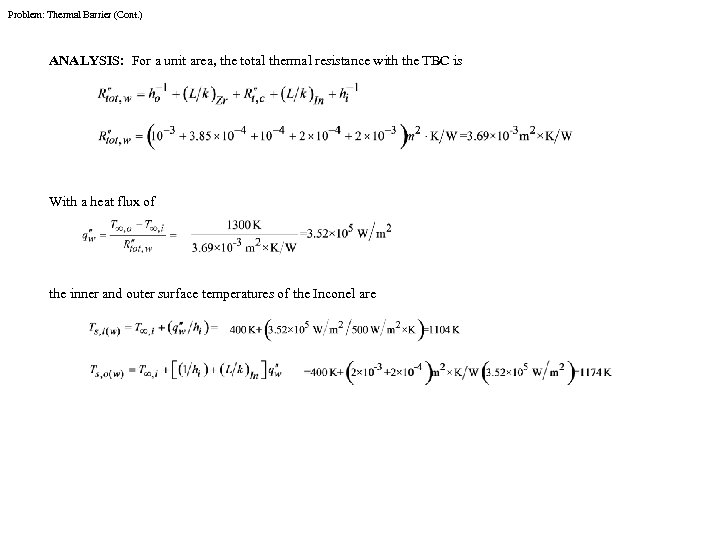
Problem: Thermal Barrier (Cont. ) ANALYSIS: For a unit area, the total thermal resistance with the TBC is With a heat flux of the inner and outer surface temperatures of the Inconel are
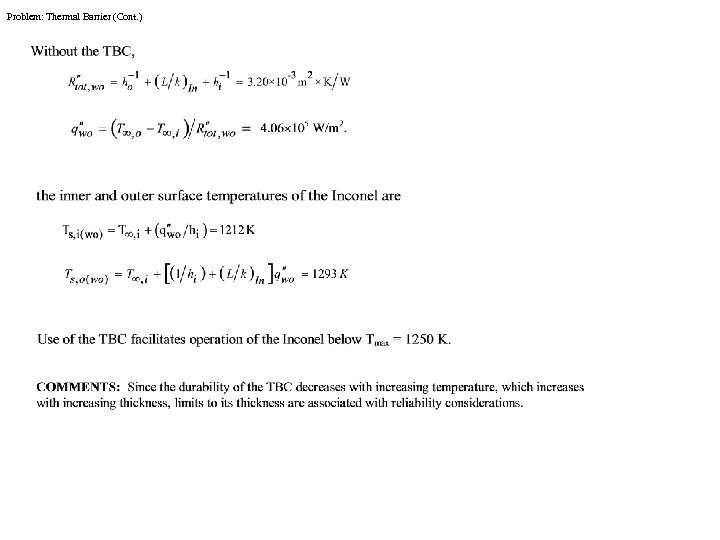
Problem: Thermal Barrier (Cont. )
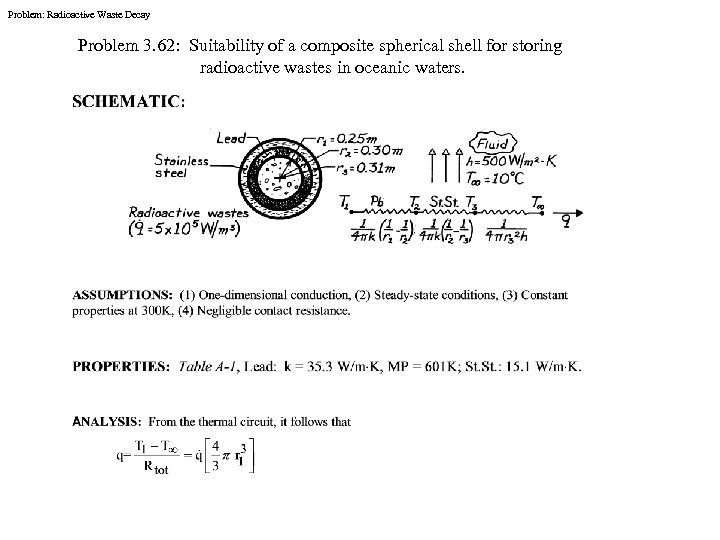
Problem: Radioactive Waste Decay Problem 3. 62: Suitability of a composite spherical shell for storing radioactive wastes in oceanic waters.
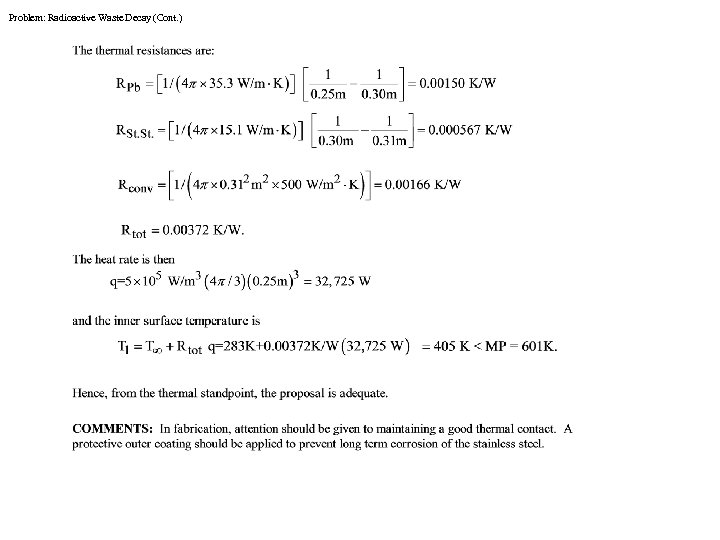
Problem: Radioactive Waste Decay (Cont. )
Скачать презентацию Lecture 5 SUBJECT HEAT MASS TRANSFER
f6ede27c540ddfa0bb4227832662fe98.ppt